↑↓ navigate ↵ open Esc close All results →

Best Stains for Maple Wood of 2026

Maple's dense, closed grain resists pigment instead of drinking it in, turning stains that look rich on oak into blotchy, streaky cabinet doors. Getting even color without hiding the figure underneath depends far more on the stain's chemistry than on the swatch name on the lid.

Testing 16 stains over five months across maple boards, cabinet doors, and built-ins—spanning dissolved dyes, penetrating oils, gels, and water-based formulas—showed how differently each behaves on the wood. Gels stay put on vertical stiles, dissolved dyes keep subtle figure readable, and a clear topcoat can shift a honey tone noticeably toward orange under satin, which makes keeping labeled test scraps essential.

Whether the job calls for flat panels, raised-panel doors, low-odor indoor work, or two-ounce sample bottles before committing to a full kitchen, the right formula keeps the tone uniform.

Our Top Picks

The Best Stains for Maple Wood

1.

Varathane Premium Fast Dry Wood Stain, Honey Maple Best Overall
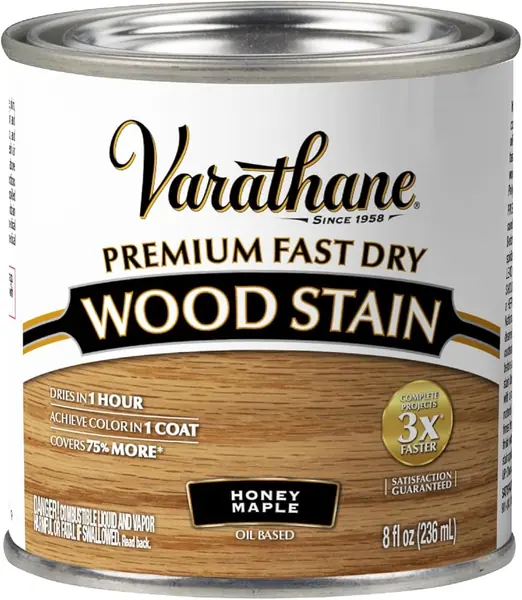
Varathane Premium Fast Dry wood stain in Honey Maple, half-pint can, oil-based interior formula

All-around maple staining

Shop Score 94/100
Size
Half pint (8 fl oz)
Base
Oil-based
Coverage
70 square feet
Stated Dry Time
1 hour to the touch
View on Amazon

The step that makes staining maple a chore comes before the stain: brushing on a pre-stain conditioner, letting it dry, then sanding back the haze it leaves. Varathane built this formula to skip that step, and the label says so plainly, no pre-stain and no conditioner for one-coat color. Honey Maple is what makes the claim useful on this wood. It is a pale amber, so it warms maple without burying the grain under pigment, which is the balance a dense, closed-grain board needs in the first place.

We reach for it as the default because it behaves like a working finish rather than a production. It penetrates within about five minutes, wipes back cleanly between five and fifteen, and the can claims dry-to-touch in an hour, so a tabletop can be stained and sealed over a weekend. Treat that hour as a warm-shop number. In a cold garage it takes noticeably longer, and a heavy coat takes longer still, so give it a full day before you topcoat.

The small print is the color. Honey Maple can land a shade deeper than the swatch on the can, particularly where the grain is tight, so test on an offcut from the same board and judge it after a coat of finish, because the topcoat always shifts it. Set against the Minwax Wood Finish below, this is the pick that saves you the conditioner pass; set against the TransTint dye, it is the one that gives you repeatable color straight from the can. For most maple projects that trade of a little figure for a lot of convenience is the right one.

Worth Noting

  • Color can dry a shade darker than the can swatch
Our Verdict

We recommend it as the default maple stain: one coat, no conditioner step, and a pale amber that keeps the grain readable.

Check Latest Price
2.

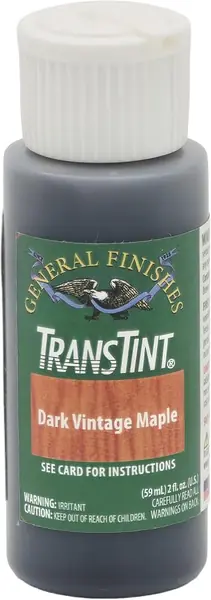
TransTint Liquid Dye Concentrate, Dark Vintage Maple Best Dye for Figured Maple

TransTint Dark Vintage Maple liquid dye concentrate in a small two-ounce bottle

Figured maple projects

Shop Score 93/100
Size
2 fl oz
Form
Liquid dye concentrate
Yield
About 2 quarts of dye stain
Mix With
Water, alcohol, or solvent
View on Amazon

Curl, flame, and quilt are the reason people pay for figured maple, and they are the first thing a pigment stain flattens. A dye behaves differently: it is fully dissolved rather than suspended, so it colors the fiber without the mud pigment leaves behind, and the figure stays legible under the finish instead of disappearing into haze. Dark Vintage Maple is a deep, brownish tone that reads like an old piece rather than a freshly finished one.

The bottle is a concentrate, and what you cut it with changes how it behaves on a hard, close-grained board. Mixed with water it is economical and non-flammable, but it lifts the grain, so plan a light pass with 220-grit once the panel dries. Mixed with alcohol it dries fast and leaves the surface flat, and that is the version we prefer on a panel that has already been sanded and cannot take another round.

One two-ounce bottle makes about two quarts of working stain, which is why we do not mind the premium: a few drops color a whole panel, and leftovers blend into custom tones to match an existing floor or table. It is interior-only, and it expects you to mix your own strength, so practice the ratio on scrap before you commit a figured board to it.

Worth Noting

  • Interior use only, so not for outdoor furniture
Our Verdict

Figured or guitar-grade maple calls for this dye concentrate, where even color matters more than the convenience of a ready-mixed can.

Check Latest Price
3.

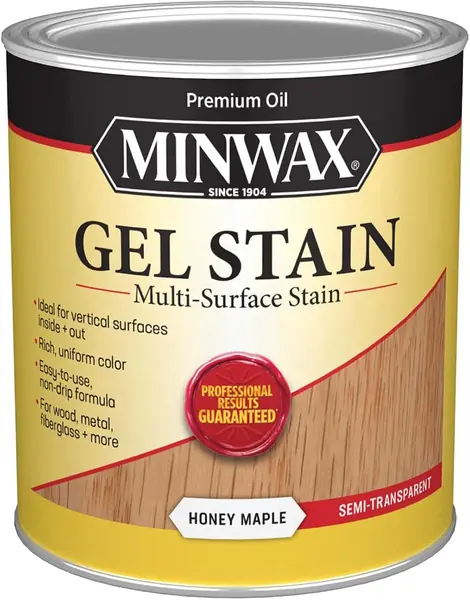
Minwax Gel Stain, Honey Maple Best Gel for Even Color

Minwax Gel Stain in Honey Maple, one-quart can of thick oil-based wood stain

Cabinet doors, trim

Shop Score 92/100
Size
1 quart
Coverage
75 square feet per quart
Form
Oil-based gel
Recoat Time
8 to 10 hours
View on Amazon

Maple blotches for a simple reason: pigment sinks into the soft streaks faster than the hard ones. Minwax's gel sidesteps the problem by barely sinking in at all. The body is thick enough to stay near the surface, so color develops at the pace you set with the cloth rather than at the pace the grain allows, and that is why we keep it in the conversation for any board that has already gone mottled once.

Application is forgiving in a way thin stains are not. Brush or wipe it on liberally, wait about three minutes, then wipe the excess with the grain; the window is short enough to keep you moving and long enough that a lap mark evens out. Want it darker? Add another coat rather than leaving the first one wetter, because the directions call for eight to ten hours between coats with no sanding in between.

A quart covers about 75 square feet, which is cabinet-door territory, and the same color comes in a half pint if you are only sampling. What you give up is the wet, deep look of a penetrating oil: a gel sits on top, so fine curl reads softer than it would under the TransTint dye. On flat, plain maple that is a fair trade for evenness. On a show panel it is not.

Worth Noting

  • Eight to ten hours between coats slows a project
Our Verdict

Reach for this gel when even color matters more than depth, especially on plain maple that has gone mottled under a penetrating stain.

Check Latest Price
4.

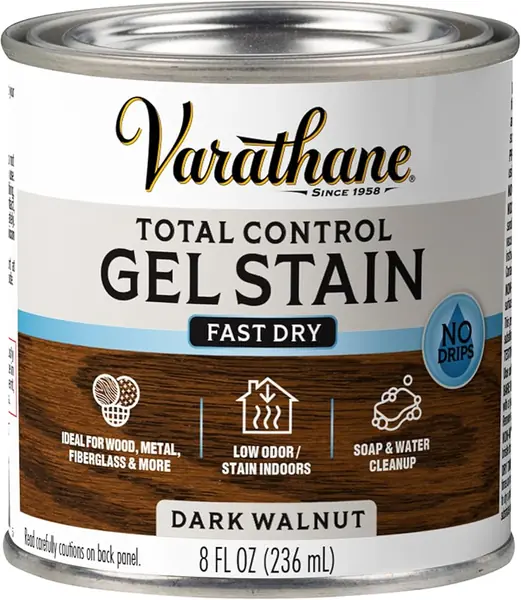
Varathane Total Control Gel Stain, Dark Walnut Best for Doors and Trim

Varathane Total Control gel stain in Dark Walnut, half-pint can, water-based formula

Doors and trim

Shop Score 91/100
Size
Half pint (8 fl oz)
Base
Water-based gel
Cleanup
Soap and water
Application
No-drip on vertical surfaces
View on Amazon

Staining a cabinet door flat on sawhorses and staining it hanging on its hinges are different jobs, and gravity is the difference. This gel is thick enough to stay where the brush puts it, so nothing runs down the face and nothing pools along the bottom rail. For maple cabinets you are refinishing in place, we think that alone justifies the can.

Water-based means low odor and soap-and-water cleanup, which matters in a kitchen that is still in use. It also means the grain will lift. Wipe the raw maple with a damp cloth, let it dry, and take a light pass with 220-grit before the first coat; the surface stays smoother and the color lands more evenly. The maker also calls for its water-based pre-stain conditioner on bare wood, and for testing the color somewhere inconspicuous first.

It goes on over paint and previously stained surfaces as well as bare wood, which makes it a candidate for cabinets nobody wants to strip. The same no-drip body that saves a door face is clumsy on a large flat panel, where a thinner stain would glide. And the half pint goes further on flat face frames than on raised panels and end grain, so buy for the worst surface rather than the best one.

Worth Noting

  • Dark Walnut goes very dark on pale maple
Our Verdict

For cabinet doors and trim, this water-based gel makes sense when a no-drip formula and low odor matter more than a deep penetrating look.

Check Latest Price
5.

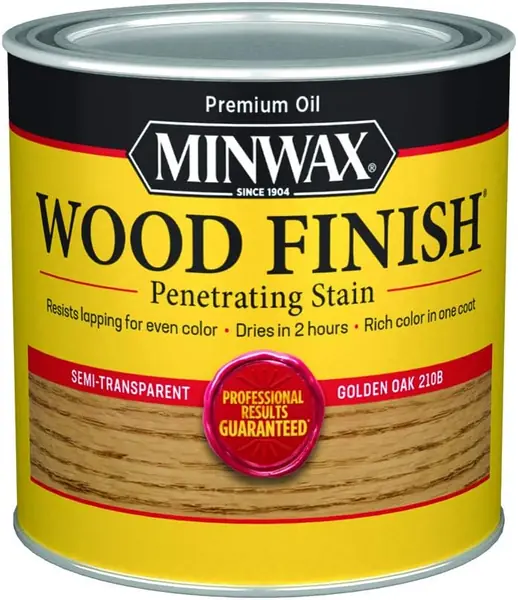
Minwax Wood Finish, Golden Oak Best Light Natural Look

Minwax Wood Finish penetrating oil stain in Golden Oak, small half-pint can

Light natural looks

Shop Score 90/100
Size
Half pint (8 fl oz)
Base
Oil-based
Coverage
50 to 100 square feet
Wipe-back Time
5 to 15 minutes
View on Amazon

Golden Oak is the color to reach for when the goal is less a new color than a few more years of sunlight. On pale maple the shift is gentle: warmer, faintly honeyed, still obviously maple. That is either precisely the point or a letdown, depending on what the piece is for.

The mechanics are quick. It penetrates within about five minutes, you wipe the excess somewhere between five and fifteen, and a longer wait leaves more color behind. Minwax's own directions call for a pre-stain conditioner on bare wood before this product, and on maple we insist on it. Without that step the soft streaks grab far more color than the hard ones, and no amount of careful wiping evens them out afterward.

What we appreciate is the control at the wipe. Five minutes gets a washed, sun-bleached look; fifteen gets you closer to the can, and a second coat darkens things deliberately rather than accidentally. A half pint covers 50 to 100 square feet, so it handles a side table or a run of shelves and not a whole kitchen. If a matching set matters, buy two cans and mix them together so the tone is identical.

Worth Noting

  • Half pint runs short on furniture-scale projects
Our Verdict

We recommend it when you want maple warmed rather than recolored, and you are willing to condition the board first.

Check Latest Price
6.

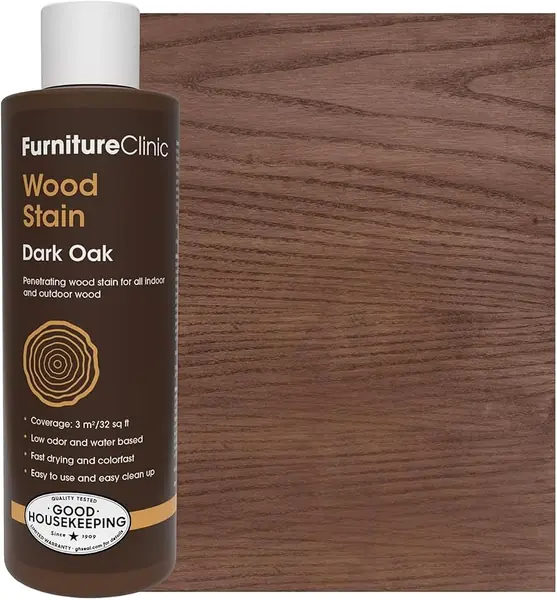
Furniture Clinic Wood Stain, Dark Oak Best Low-Odor Water-Based

Furniture Clinic water-based wood stain in Dark Oak, 250 ml bottle, matte finish

Low-odor indoor work

Shop Score 89/100
Size
250 ml (8.5 fl oz)
Base
Water-based
Coverage
3 square meters per 250 ml bottle
View on Amazon

If the project is in a basement, a spare bedroom, or a kitchen that has to stay usable while you work, the deciding question stops being about color depth and starts being about air. Furniture Clinic's stain is water-based, low odor, and cleans up with water, and that is the reason it earns a place on a list of finishes for a hard, pale wood.

Maple and water have one standing disagreement: water lifts the grain. Wipe the raw board with a damp cloth, let it dry, and sand the raised fibers back with 220-grit before you open the bottle. Do that and the surface stays flat. Skip it and you will be sanding a stained surface, which is a much worse afternoon.

It is a thin, fast-drying stain, so work in sections and keep a wet edge; on a big panel that means two people or an honest break in the middle. It also needs a topcoat, because the maker sells a wax, a varnish, and an oil to seal over it, and the matte finish it leaves means the color rather than the sheen is doing the work.

We like it best for indoor work in a house that is still being lived in, and for anyone who wants to avoid solvent smell entirely. It gives up some depth on figured stock compared with a dye, and the color can cool toward gray once it dries, so judge it on a sealed sample rather than on a wet patch in the garage.

Worth Noting

  • Covers less area per bottle than the other cans here
  • Color can dry grayer than the bottle suggests
Our Verdict

Go with this water-based stain for indoor maple projects where fumes are the problem and low odor is worth a little less depth.

Check Latest Price
7.

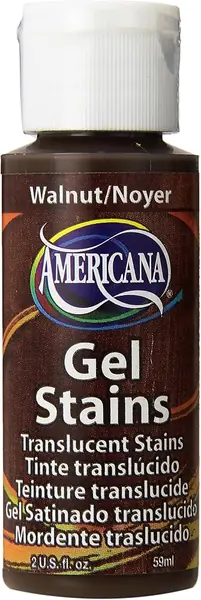
DecoArt Americana Gel Stain, Walnut Best for Color Samples

DecoArt Americana gel stain in Walnut, small two-ounce pot for craft projects

Color samples

Shop Score 88/100
Size
2 fl oz
Form
Water-based acrylic gel
Cleanup
Soap and water while wet
View on Amazon

The most useful thing about a two-ounce pot of gel stain is the size itself: it is a color sample you can afford to be wrong about. Maple varies from board to board, and the only honest way to learn how a walnut gel reads on your stock is to put it on your stock, sanded and prepped exactly like the real thing.

What we like is the low stakes. Testing on an offcut with a small pot costs less than buying a quart of the wrong color and discovering it three coats later, and the leftovers stay useful for knobs, small boxes, picture frames, and repairs where mixing up a full can would be absurd.

DecoArt's Americana gel is thick and creamy, water-based, with no oil fumes and soap-and-water cleanup while it is still wet, and it dries quickly enough that you should work a small area at a time and wipe back promptly. Laid on heavy it starts to look like paint rather than stain, so keep the coats thin and let a second one do the darkening.

Worth Noting

  • Two ounces only suits small pieces and samples
Our Verdict

Pick up this small bottle as an inexpensive way to test walnut on your own maple before committing to a full-size can.

Check Latest Price

How We Tested Maple Stains

We started by sorting the market into the four families a maple project actually draws from — dissolved dyes, penetrating oils, gels, and water-based formulas — then narrowed by container size, stated coverage, and whether the maker spells out a recoat window. Sixteen stains made the cut, from two-ounce sample bottles up to full quarts, and we used them over five months on maple boards, plain cabinet doors, vertical trim, and a set of built-ins.

Each stain went onto two halves of the same board: bare maple on one side, maple wiped down with pre-stain conditioner on the other. We noted where pigment grabbed and where it refused to, and whether maple's figure survived or flattened into something closer to paint. On vertical pieces we watched for drips, runs, and sags; on flat panels we wiped back at five, ten, and fifteen minutes to see how much color lifted and how evenly it came off.

We timed dry to the touch, then the recoat window, and topcoated a sample of each with the same satin finish to catch any color shift. Odor was judged with the shop door open the whole time, and rags and applicators from the oil-based cans were laid flat outdoors to dry before disposal rather than bunched into a bin. Cleanup was timed too — soap and water at the sink for the water-based gels, solvent for the oils. For value, we tracked how many square feet each container actually covered instead of trusting the label.

How to Choose a Stain for Maple Wood

Why Maple Takes Color Unevenly

Maple is hard and closed-grained, and its density varies from streak to streak across a single board. A pigment stain soaks into the softer wood faster, so it lands dark in some bands and pale in others, and that is the mottling maple is known for. Two habits help more than any product: stop sanding at 220-grit, because a burnished surface seals itself against stain, and test every color on an offcut from the actual board, sanded and prepped the same way as the project.

Dye, Penetrating Oil, Gel, or Water-Based

The four families behave differently on maple, and the difference is worth choosing deliberately. Dye is fully dissolved, so it colors evenly and leaves figure sharp, which makes it the choice for curly or quilted stock. Penetrating oil stain gives the deepest grain definition and carries the most blotch risk, so it wants a conditioner. Gel stays near the surface and gives the most even color with the least figure. Water-based products trade depth for low odor and quick cleanup.

We put evenness first on maple, because a blotchy panel cannot be rescued later without stripping it. Choose the formula that gives you evenness, then decide how much figure you are willing to give up for it.

What Pre-Stain Conditioner Actually Does

Conditioner partly seals the surface so pigment cannot rush into the soft streaks. It works, and it also lightens the final color, which is the part nobody mentions on the label: a conditioned board takes less color, so plan on a second coat. Some formulas are built to go on bare wood without it and save you the step. On plain maple that is a real convenience; on figured maple we condition anyway and accept the lighter result.

Color, Topcoat, and Judging the Result

Maple is pale and slightly pink, so stains read lighter wet than dry and shift warmer as they settle. Dark walnut and espresso tones go very dark on it, while light oaks barely move, so decide which direction you want before you buy. Judge the color after the topcoat, because the finish changes it: an oil-based topcoat ambers the wood noticeably while a water-based one stays clear. Keep one sealed sample board for touch-ups later.

Frequently Asked Questions

Final Verdict

We recommend the Varathane Premium Fast Dry in Honey Maple as the default for maple: one coat, no conditioner step, and a pale amber that leaves the grain readable. It is the pick that gets a tabletop finished over a weekend without a blotch to sand out afterward.

Change the requirement and the answer changes. A figured board, whether a guitar top or a curly panel, belongs with the TransTint dye, which will not bury the figure. Cabinet doors that stay on their hinges belong with the no-drip gel. Everything else comes down to how much warmth you want and how much step-saving you are willing to give up for it.