↑↓ navigate ↵ open Esc close All results →

Best Stains for Pine Wood for Even Color of 2026

First-time woodworkers often blame their brush technique when pine turns striped, yet the culprit is usually the wood itself paired with the wrong can. Pale earlywood drinks liquid stain like a paper towel while denser latewood a half-inch away rejects it, turning quick-drying formulas into high-contrast streaks.

Over six months of staining dresser drawers, cabinet doors, and test boards with 15 gel, penetrating oil, and water-based acrylic formulas, format proved far more decisive than brand. Gels sit on the surface and buy working time to even out a coat, whereas penetrating liquids sink fast, grab the earlywood first, and leave bolder grain contrast.

Container math also catches buyers short: a small can that finishes a nightstand barely covers a run of cabinet doors, so matching format and volume to the project prevents mid-job color mismatches.

Our Top Picks

The Best Stains for Pine Wood for Even Color

1.

General Finishes Oil Base Gel Stain Best Overall
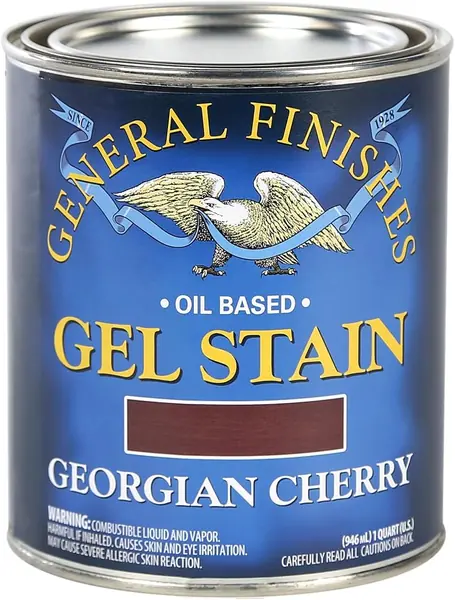
Quart can of General Finishes oil base gel stain in Georgian Cherry

Furniture and cabinets

Shop Score 95/100
Size
1 quart
Color
Georgian Cherry
Base
Oil-based gel
Coverage
35-50 sq.ft.
View on Amazon

Pine is the wood that makes a thin stain look like a mistake. The hard latewood and the soft earlywood between it take color at different rates, so anything that soaks in fast leaves the soft bands darker and the whole face looks bruised rather than stained. A gel is the standard answer to that, because it stays near the surface instead of racing into the softer wood.

That is exactly the job this one does, and it does it better than anything else here. General Finishes builds it heavy-bodied and names aspen and pine among the difficult woods it evens out, and the difference shows up as control: you wipe it on with a cloth or a foam brush, move it around until the color is even, then wipe the excess back. Nothing runs down the side of a door while you work. The satin sheen that comes out the other end reads as grain under a finish rather than as a coat of color.

Do the arithmetic before you commit, though — a quart covers 35 to 50 square feet, which is a dresser or a small vanity and not much more. A run of kitchen cabinets is three or four cans, and that is real money at this price. We still think a visible piece of furniture is where it pays that back, and a big flat run of shop shelving is better served by the Varathane below.

One thing it will not do is leave pine looking like pine. Georgian Cherry pushes a pale board toward a warm reddish brown, closer to cherry than to a natural finish, which is the point if you were trying to make the piece read as something older. For pine that should stay pale, the Minwax Ipswich Pine is the pick.

Worth Noting

  • A quart covers only 35 to 50 square feet
  • Occasional streaking instead of an even tone
Our Verdict

For pine's uneven grain, this is the can we hand people: the gel body holds color even where earlywood and latewood disagree, and the satin sheen flatters both.

Check Latest Price
2.

Varathane Premium Fast Dry Wood Stain Best for Large Projects

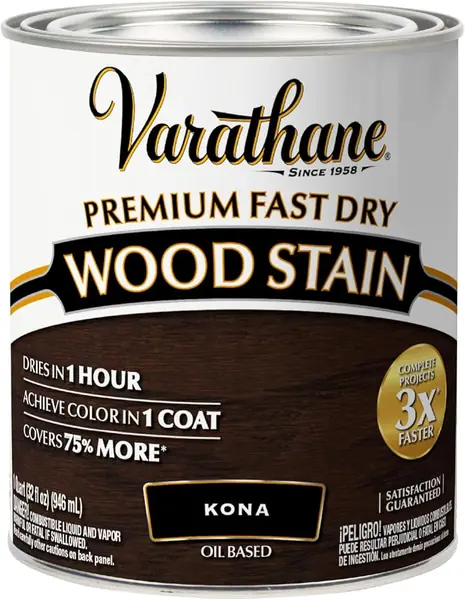
Quart can of Varathane Premium Fast Dry wood stain in Kona

Large pine projects

Shop Score 94/100
Size
1 quart
Color
Kona
Coverage
275 square feet
Dry Time
1 hour to the touch
View on Amazon

Two hundred seventy-five square feet from a single quart is the number that decides this one. Pine is cheap, so people stain a lot of it at once — shelving, a bench top, a whole set of built-ins — and this is the stain here that is built for that scale instead of for one careful tabletop.

It is a fast-drying oil that the maker says needs no pre-stain conditioner, and on pine that saves a step and a coat's worth of waiting. Color goes down in one pass rather than building toward a tone, and the five-to-ten-minute wipe window is the control you have over depth; wipe back early and Kona reads as a medium brown instead of the near-black it can be on pale pine.

An hour is the can's touch-dry figure, and touch-dry is not the same as ready for a second coat or a topcoat — treat it as the earliest moment you can put a hand on the piece and judge the color. On a big project that still beats waiting overnight, and one weekend covers a set of shelves and their topcoat. What we keep coming back to is the cost per square foot: nothing else here covers a room's worth of pine for anything close.

Worth Noting

  • Kona lands darker than the lid suggests
  • Thirsty boards may still need a second coat
Our Verdict

For a big run of pine, this is the can we buy: one coat, an hour to the touch, and 275 square feet per quart for the least money here.

Check Latest Price
3.

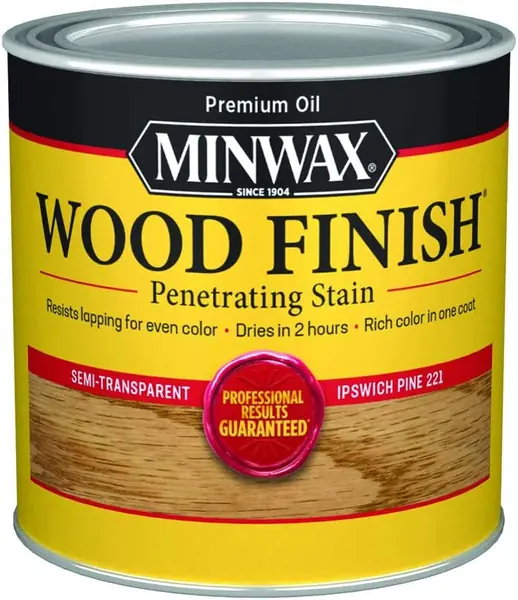
Minwax Wood Finish Ipswich Pine Best Natural Pine Tone

Half-pint can of Minwax Wood Finish penetrating oil stain in Ipswich Pine

Natural pine look

Shop Score 93/100
Size
1/2 pint
Color
Ipswich Pine
Base
Oil-based penetrating
Dry Time
As little as 2 hours
View on Amazon

Ipswich Pine is the rare stain that just makes pine look better rather than making it look like something else: a pale, warm wash that deepens the color and lets the grain stay legible under a clear topcoat. If you are matching existing pine trim or want a floor that still reads as light wood, this is the tone.

It is a penetrating oil, so it goes into the pores rather than sitting on them — Minwax says the color is in within about five minutes and dries in as little as two hours. That same penetration is what blotches on pine, and the maker's own label calls for their Pre-Stain conditioner on bare wood to head off streaks. On a hidden panel we skip that step; on a tabletop people will actually look at, we don't.

The half-pint is the size to buy when you want to see the tone on an offcut before committing to a bigger can, which is the smartest way to use it — pine's yellow base shifts every color you put over it. Depth is on a dial, too: a five-minute wipe gives a wash, a fifteen-minute one gives something close to honey, and the same can does both.

Worth Noting

  • Color can dry lighter than the swatch
  • Half-pint goes fast on furniture
Our Verdict

When the goal is pine that still looks like pine, this is the tone we choose: a light wash that keeps the grain and the pale warmth instead of burying them.

Check Latest Price
4.

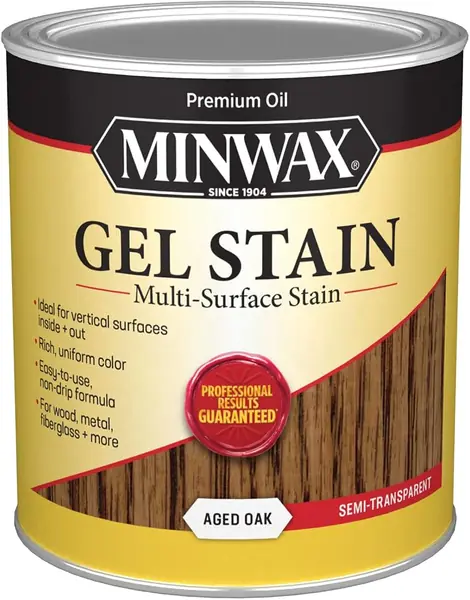
Minwax Gel Stain Aged Oak Best for Vertical Surfaces

Quart can of Minwax gel stain in Aged Oak with a non-drip formula

Doors and trim

Shop Score 91/100
Size
1 quart
Color
Aged Oak
Base
Oil-based gel
Recoat Time
8 to 10 hours
View on Amazon

Stain a door lying flat and you get an even color plus drips down the edges; stand it up and a liquid stain runs before you can wipe it back. Gel is the fix, and this one is thick enough to hold its place on a stile or a cabinet front while you work down the panel — Minwax builds it to stay near the surface rather than soak in.

The directions are three minutes on, then wipe the excess off in the direction of the grain, and that short window is the whole technique. Work a door in small sections rather than all at once and the color stays even across the face; leave the coat sitting and it turns tacky and fights the rag.

Aged Oak is a medium brown that reads closer to classic oak than to pine's own warmth, which is what you want when the goal is to make knotty pine cabinets look older than they are. On a pale board it reads heavier than the General Finishes gel — closer to a tinted coat than to open grain — and on a contractor-grade cabinet front that is usually the trade you want.

Where it clearly wins is the price of a quart: the same thick, controllable application as our top pick for a fraction of the money, which is what makes a whole set of doors affordable to do at once.

Worth Noting

  • Eight to ten hours between coats
Our Verdict

Doors, trim and cabinet fronts are where we reach for this one: the thick gel stays put instead of running, and the color builds where you leave it.

Check Latest Price
5.

DecoArt Americana Gel Stain Best for Small Pine Crafts

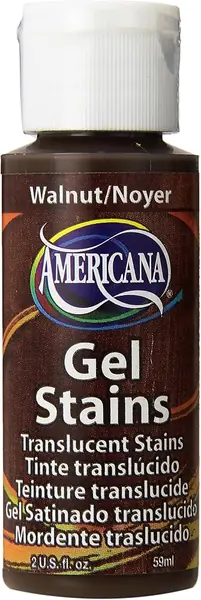
Small two-ounce bottle of DecoArt Americana gel stain in Walnut

Small pine crafts

Shop Score 89/100
Size
2 fluid ounces
Color
Walnut
Base
Water-based acrylic
Cleanup
Soap and water while wet
View on Amazon

Two ounces of water-based gel is a different tool from a quart of oil stain, and the difference shows before you open it: no mineral spirits, no solvent smell hanging in the shop afterward, and cleanup with soap and water while it is still wet. The maker calls it non-toxic, and on a winter project in a closed basement that matters more than coverage does.

It goes on as a thick, creamy acrylic that you wipe on and wipe back, and we like it best on small pine pieces — toys, ornaments, a picture frame, a carved blank — where a quart of oil stain would be absurd. The color moves fast, so work a section at a time and keep a rag handy for the edges.

We also like it for the price of entry: a handful of colors costs less than one can of the good oil-based gel, and mixing two tones is easy when a project needs a shade you don't have. It is the version to hand a teenager or to use in a basement corner where solvent fumes would sit all evening.

Worth Noting

  • Two-ounce bottle covers only small pieces
Our Verdict

Small pine crafts rather than furniture: this water-based gel wipes up with soap and water, has no solvent smell, and costs little enough to keep a few colors on hand.

Check Latest Price

How We Tested the Best Stains for Pine

We started with a list of more than 40 cans sold for interior wood, then narrowed it by base type — gel, oil-based penetrating, and water-based acrylic — along with the color range, the can size, and whether the product could be reordered once a project was already underway. Fifteen of them came home with us, and we've been using them for six months on pine: a dresser and its drawers, a set of cabinet doors, and a shoebox of small craft cutouts.

To judge blotch control, we brushed stripes of several stains across the same pine board, so every stripe crossed both earlywood and latewood, then compared them after one coat and again after two. We wiped each one back at different intervals to see how much grain survived and whether the color went muddy, and we painted color swatches on offcuts to compare against the can lid in daylight and again under a lamp at night. Coverage got measured the boring way: a known board area, a can, and a calculator.

Application was tested upright as well as flat, with cabinet doors on sawhorses and the stain brushed vertically, while we noted drips, lap marks, and whether it came out of the can smooth or needed stirring. We timed touch-dry with a finger and a paper towel, watched what happened when a second coat went on early, and worked with the garage cross-ventilated and solvent-resistant gloves on. Rags and pads went flat on the driveway to dry or into a sealed metal can of water, never into a pile. Finally, we topcoated the cured pieces and have been opening, shutting, and setting things down on them ever since.

How to Choose a Stain for Pine Wood

Why Pine Blotches in the First Place

Pine grows a hard, resinous band of latewood and then a soft, porous band of earlywood, and the two absorb stain at completely different rates. Anything thin and fast-penetrating floods the soft band first, which is why a stained pine tabletop can look mottled even when the application was careful. The grain figure is not the problem; the density difference is.

That single fact drives most of the choice. If the piece will be looked at — a tabletop, a cabinet door, a stair rail — pay for a product that gives you time to even the color out. If it is shop shelving, a liquid stain and a fast wipe are fine.

Gel or Liquid: Pick by the Surface

Gel sits on top of the wood. It stays wet long enough to move around, it does not run down a vertical face, and it holds back from the soft bands enough to keep blotching down. The cost is coverage and transparency: our top pick lists 35 to 50 square feet per quart, and a heavy gel reads closer to a tinted coat than to open grain.

Liquid stain soaks in, which is why it highlights grain so well and covers so much more ground — the Varathane quart claims 275 square feet. It also gives you less time to work. Choose gel for visible vertical faces and blotch-prone pine, and liquid for big flat runs where speed and cost per square foot matter.

Test the Color on Your Own Board

No can lid, printed chip or product photo tells you what a stain does to pine. Those swatches are printed ink, and photographs are almost always shot on oak or maple, which start browner and less yellow than pine. Pine's own yellow base shifts every color you put over it, and a topcoat shifts it again.

Buy the smallest can, sand an offcut from the actual project through 220 grit, stain it, and put the topcoat on before you judge. A half pint is enough for several test patches, and it is the cheapest mistake you can make on a pine project.

Do the Coverage Math Before You Order

The coverage figure decides how many cans you buy, and the spread across this category is enormous — 35 to 50 square feet for a quart of gel against 275 for a fast-drying liquid. Multiply by both faces of every board, then add the waste that comes off on the rag during wipe-back.

Measure the project rather than guessing. A dresser or a small vanity is one quart of gel; a kitchen's worth of cabinet fronts is three or four; a wall of shelving is one quart of liquid stain with plenty left over.

Schedule Around Dry Time and a Topcoat

Stain alone is not a finish. On pine it needs a topcoat for durability and to keep the color from looking chalky, and the can of our top pick says so plainly. The gap between coats is what catches people out: an hour to the touch for one product, two hours for another, eight to ten hours between gel coats for a third.

Read fast dry as the earliest moment you can touch the piece, not the moment you can sand it or topcoat it. Plan the second coat for the next day and the topcoat after that, and the schedule stops surprising you.

Frequently Asked Questions

Final Verdict

For most pine projects, the General Finishes gel is the can we point people to. Pine's soft and hard bands are what make a stain go blotchy, and a heavy gel is the most reliable way to even them out — you trade coverage and money for color that looks intentional. A dresser takes one quart and comes out looking like furniture.

When the project is big, flat and budget-driven, the Varathane changes the arithmetic: one coat, an hour to the touch, and a quart that covers several times the square footage. And when the goal is pine that stays pale, the Minwax Ipswich Pine is the one here that does it.