↑↓ navigate ↵ open Esc close All results →

Best Finishes for Walnut Wood of 2026

Buying a walnut finish before deciding whether the wood needs color correction or pure protection leads to mismatched sapwood stripes and muddied grain. Walnut's open pores absorb oil unevenly, and pale sapwood along a board edge can dry two shades lighter than the heartwood beside it unless the finish is chosen to blend or celebrate that contrast.

Brushing and wiping 14 penetrating oils, oil-and-varnish blends, hardwax oils, gel stains, wiping stains, and dye concentrates over four months on offcuts, cabinet doors, a sideboard, and a butcher block highlighted how differently each sits weeks later. Odor, coverage, dry time, and surface feel under a hand all mattered once the wood went past raw sanding—though no topcoat hides skipped grits.

One-coat sealers, thick gels suited to vertical doors and trim, and targeted dyes for stubborn sapwood matching handle both paths: feeding the grain from within or armoring the surface from above.

Our Top Picks

The Best Finishes for Walnut Wood

1.

Watco Light Walnut Danish Oil Best Overall
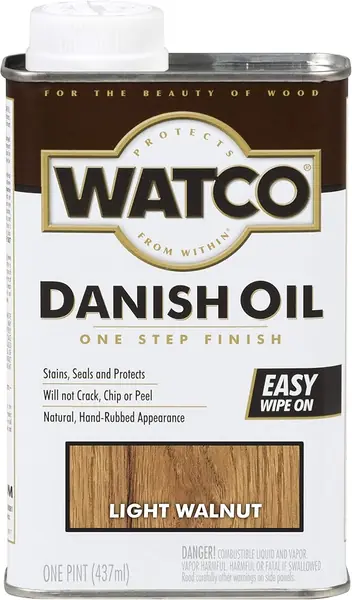
Watco Light Walnut Danish Oil wood finish in a one-pint can

Walnut furniture

Shop Score 97/100
Color
Light Walnut
Coverage
Up to 85 sq ft per pint
Base
Oil and varnish blend
Dry Time
About 6 hours to touch
View on Amazon

Walnut is usually the color people are trying to match, not the color they need to change, so the first decision is whether you're buying a finish that adds tone or one that protects what's already there. For most of the walnut we've worked with — furniture, small boxes, a countertop — we want the second.

Watco's Danish oil is an oil and varnish blend that soaks into the pores and hardens there instead of building a coat on top. A pint covers up to 85 square feet and dries to the touch in about six hours, quick enough for two coats in a weekend. It wipes on and off with a rag, and the wet-sanding trick — sanding with the oil as lubricant so the slurry fills the open pores — is where a walnut panel starts looking like something out of a showroom. That's the technique we come back to, because walnut's open grain is exactly what it fixes.

Coverage is honest for a penetrating finish: a pint handles a chair or a side table with enough left for a second coat, and the built-in Light Walnut tint sits warmly on the wood rather than over it. Because it's a blend rather than a pure oil, it belongs on furniture and trim.

What settles it for us is repairability. If a corner dries out or a scratch appears, a fresh coat melts into the old one and the repair disappears — you can't do that with polyurethane. It's an interior furniture finish rather than a floor finish, and a tabletop that takes hot cups and spilled wine still wants a clear topcoat over it.

Worth Noting

  • Warms and darkens walnut past its natural tone
Our Verdict

For most walnut projects we reach for this Danish oil first: it deepens the grain and seals in one wipe-on step, and a pint handles a chair.

Check Latest Price
2.

Rubio Monocoat Oil Plus 2C Best One-Coat Finish

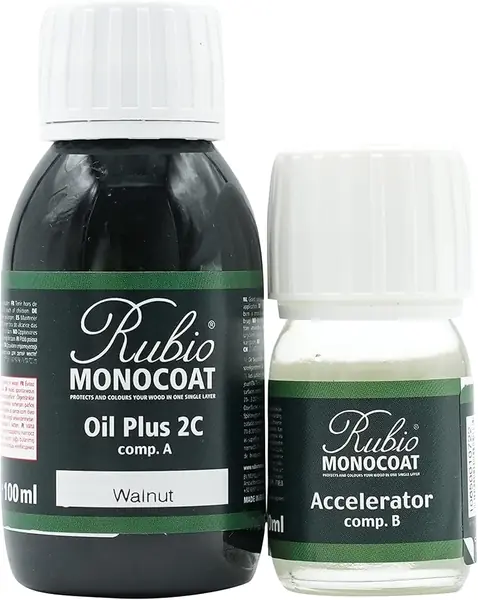
Rubio Monocoat Oil Plus 2C hardwax oil in a 130 mL Walnut bottle

One-coat furniture

Shop Score 96/100
Coverage
39 to 65 sq ft
Sheen
Matte
Bottle Size
130 mL
VOC Content
0% VOC
View on Amazon

A 130 mL bottle looks like a sample, and the label's 39 to 65 square feet of coverage looks optimistic until you pour some out. This is a hardwax oil rather than a stain, and a single thin coat both colors the wood and seals it.

The one-coat claim is the reason it earns a place here. There's no second product, no sanding between coats, and no film to sand off later; you mix in the accelerator, spread it thin, and buff away what doesn't soak in. On walnut the color option called Walnut lands as a warm, even mid-brown that keeps the grain readable, and the matte sheen is the closest thing in this group to bare, oiled wood.

The 0% VOC formula is the other half of the appeal. Finishing a table in a spare room or a basement without solvent fumes is a real difference rather than a marketing line, and the slight smell clears quickly. It's also certified for food contact and toys, which matters if the walnut in question is a counter or a child's step stool.

What you pay for all this is money: per square foot it runs several times what the stains here cost, and the small bottle means a large project gets expensive fast. For a walnut dining table, or anything where one coat and a matte look are the whole point, we think it's worth it.

Worth Noting

  • Costly per square foot on large projects
Our Verdict

We keep this for projects where a single coat has to color and protect — the matte result and lack of fumes justify the higher cost.

Check Latest Price
3.

Minwax Wood Finish Special Walnut Best for a Darker Tone

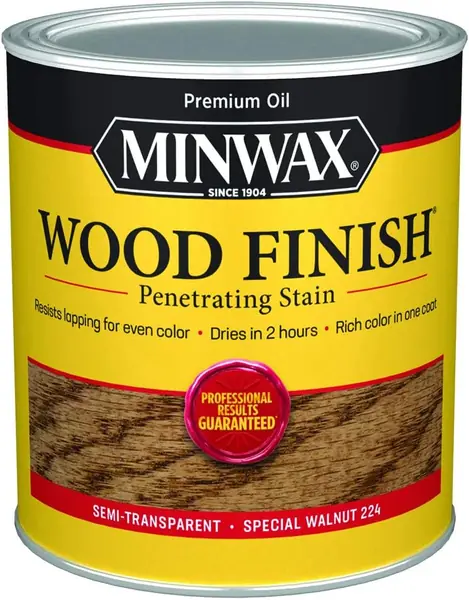
Minwax Wood Finish penetrating oil stain in a Special Walnut quart can

Pale walnut boards

Shop Score 95/100
Color
Special Walnut
Coverage
Up to 250 sq ft per quart
Base
Oil-based
Dry Time
As little as 2 hours
View on Amazon

Compared with the Danish oil we put first, this is a different job: Minwax Wood Finish exists to change the color of the wood. Walnut heartwood is rich, but sapwood comes out pale, and boards vary enough that a tabletop can look patchy next to its own legs; a penetrating stain is the cheapest way to pull everything toward one brown.

Special Walnut is a deep, slightly cool brown that gives grayish walnut some depth without going red. Apply it with a rag or brush, let it sit five to fifteen minutes, and wipe it back; the dwell time is your color control, so the same can gives you a light wash or a dark chocolate depending on how long you leave it. It penetrates the pores within about five minutes, dries in as little as two hours, and a quart covers up to 250 square feet.

We treat this as the budget color step. On pale walnut it does more for the look than any oil, and one quart handles a dining set. Coverage and drying vary with the wood's porosity — end grain and thin veneer drink far more than a face — so buy a size up if the project is close to the limit.

Worth Noting

  • Colors only and needs a separate topcoat
Our Verdict

Pale or gray walnut goes darker with this quart, and it's the cheapest color step we recommend before an oil or topcoat.

Check Latest Price
4.

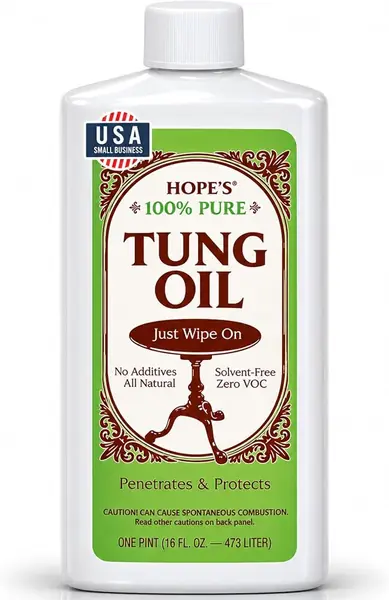
Hope's 100% Pure Tung Oil Best Pure Oil Finish

Hope's 100% Pure Tung Oil wood finish in a 16-ounce bottle

Food-safe woodware

Shop Score 94/100
Size
16 fl oz
Type
100% tung oil
Food Contact
Safe once cured
View on Amazon

Pure tung oil asks for more patience than anything else here. It cures slowly, it wants several thin coats, and a board that feels dry after two days can still be curing a week later. We keep it near the top of this list anyway, because nothing else in this group leaves walnut looking so much like wood and so little like furniture.

The mechanism is simple: the oil soaks into the fibers and hardens inside them, so there's no film to chip, peel, or sand off. Hope's is 100 percent tung oil with nothing added, which is why it suits cutting boards, utensils, and a wooden bowl once it is fully cured. On walnut it deepens the color slightly and lifts the figure without the amber shift you get from linseed.

Application is wipe on, wait, wipe the excess off, and repeat. The failure mode isn't the oil; it's leaving too much on the surface, which turns tacky and takes forever to cure. Two or three thin coats with a day or more between them in a warm room will do more than one flooded coat. The smell is real while it's wet and then fades, and ventilation helps either way.

The 16-ounce bottle goes a long way — you'll use ounces on a chair, not half the bottle — so the cost per project is lower than the price suggests. Just plan the schedule around it, because a tung-oiled walnut table is a week-long project rather than a weekend one.

Worth Noting

  • Days between coats and a long cure
Our Verdict

Our pick for a finish that leaves walnut looking oiled rather than coated, provided you can give it days between coats.

Check Latest Price
5.

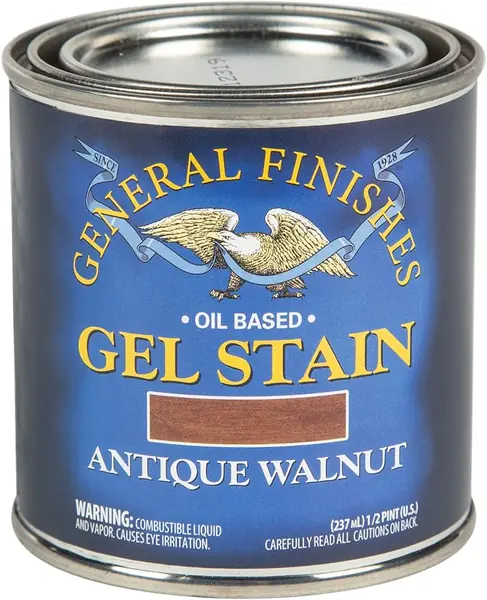
General Finishes Oil Base Gel Stain Best for Even Color

General Finishes oil-based gel stain in an Antique Walnut half-pint jar

Cabinets and trim

Shop Score 93/100
Size
1/2 pint
Color
Antique Walnut
Coverage
35 to 50 sq ft
Base
Oil-based gel
View on Amazon

Gel stain has a body closer to pudding than to liquid, and that thickness is the whole point. It sits on the surface instead of diving into the pores, so it builds color evenly on walnut that's already blotchy, on a piece with mixed heartwood and sapwood, or on cabinets you'd rather not sand back to bare wood.

General Finishes calls this the most finishing-feel of its stains, and the phrase makes sense once it's on a rag: it wipes on like a thin paste, doesn't run down a vertical face, and covers a lot of sins in one pass. It also goes over existing finishes, which makes it the practical answer for darkening a walnut table you don't want to strip.

The trade is grain. A gel sits on top, so the color is more even but flatter — the figure stays visible, though the depth an oil gives walnut is reduced. Work it in thin coats and wipe with the grain; overworking it is where streaks come from, and in a cool shop a heavy coat can stay tacky for a long time.

We keep a jar for exactly two jobs: evening out a mismatched walnut glue-up, and refreshing a finished piece without stripping it. On a bare board where you want the grain to glow, the Danish oil or a dye will beat it. Coverage is 35 to 50 square feet per half pint, and that really is enough for a pair of nightstands.

Worth Noting

  • Long dry time in a cool shop
  • Flattens the grain compared with an oil
Our Verdict

This gel earns its place when the walnut is uneven or already finished: it builds even tone on top instead of soaking in.

Check Latest Price
6.

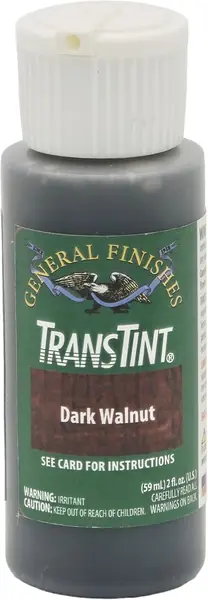
TransTint Dark Walnut Dye Best for Color Matching

TransTint Dark Walnut concentrated liquid wood dye in a 2-ounce bottle

Color matching

Shop Score 92/100
Size
2 fl oz
Color
Dark Walnut
Yield
About 2 quarts of dye stain
Mixes With
Water, alcohol, or finish
View on Amazon

A walnut board with one pale sapwood streak is the case that sends people looking for a walnut stain, and it's usually the wrong tool — a pigment stain sits in the pores, and the pale streak takes it differently from the dark wood beside it. Dye is the fix that works, because it colors the fibers themselves.

TransTint is a concentrated liquid dye, fully dissolved, so there's no pigment to settle into the pores or leave mud in the figure. Two ounces makes about two quarts of dye stain, and you mix it with water for economy or alcohol for speed and no grain raise. We've used it to pull a grayish walnut board warmer and to bring pale sapwood within a shade or two of the heartwood, and the grain stays sharp the whole time.

It's a colorant rather than a finish, so it needs an oil or a topcoat over it — that's the price of the control it gives you. It's also genuinely concentrated: a few drops too many and the board goes dark fast, so mix weak and build. Wear gloves, because it dyes skin and rags, and it flashes off quickly enough that large panels are easier to do in sections.

Worth Noting

  • Flashes off too fast for large panels
Our Verdict

A bottle of this lives in our shop for pale sapwood and gray casts: dye evens tone without the mud a pigment stain leaves.

Check Latest Price
7.

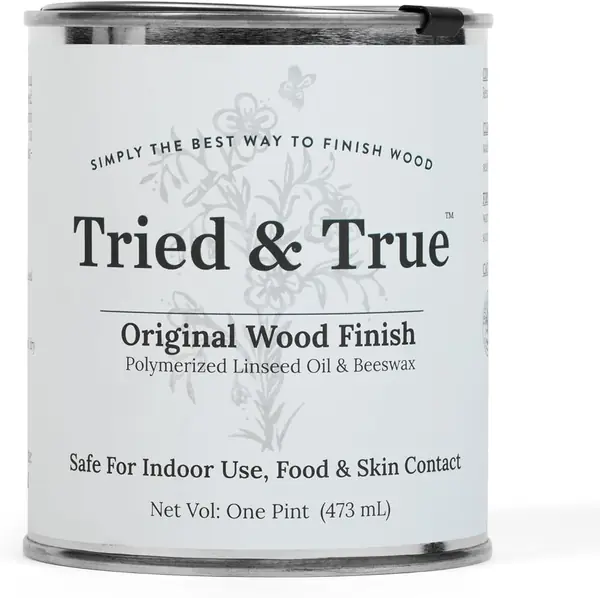
Tried & True Original Wood Finish Best for Small Indoor Shops

Tried & True Original wood finish pint of linseed oil and beeswax

Small indoor shops

Shop Score 91/100
Size
16 fl oz
Formula
Linseed oil and beeswax
Solvents
None
View on Amazon

If your walnut lives in a basement shop or a spare bedroom, the solvent question changes what you can use. Tried & True Original is linseed oil and beeswax with no solvents and no metallic driers, polymerized so it cures without the boosters found in a can of boiled linseed oil.

The oil soaks in and the wax leaves a soft, low sheen that reads as hand-rubbed rather than applied. The routine is the one on the label: sand to at least 320, wipe it on, buff it dry, wait a day, burnish with 4/0 steel wool, and repeat until the surface stops drinking. That's slow, but each step is short and there's nothing to sand back between coats.

We like it most for the repair story: a scuff or a worn spot gets a fresh wipe of the same blend and blends into the surrounding finish, which is not true of any film finish in this group. It's food safe, so a walnut serving board is fair game once everything has cured. The routine is slow and the pint isn't cheap, but nothing else here leaves walnut feeling this close to bare wood.

Worth Noting

  • Needs refreshing on daily-use surfaces
Our Verdict

Where solvent fumes are a problem, this is the finish we choose for walnut — a soft hand-rubbed sheen with nothing to strip later.

Check Latest Price
8.

Varathane Fast Dry Dark Walnut Stain Best for Quick Small Projects

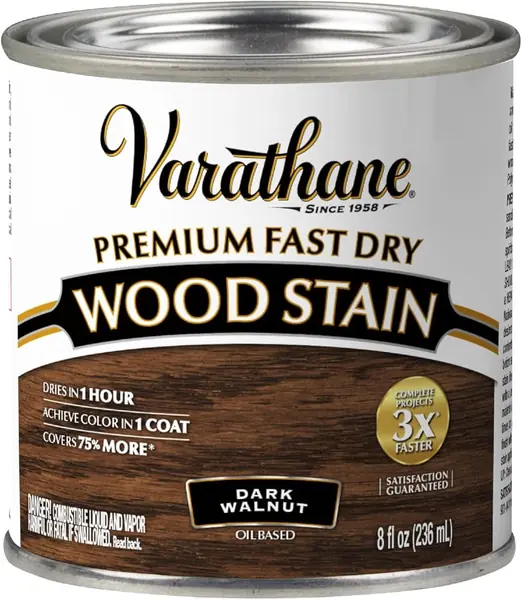
Varathane Fast Dry Dark Walnut oil-based stain in a half-pint can

Quick small projects

Shop Score 90/100
Size
1/2 pint
Color
Dark Walnut
Coverage
Up to 70 sq ft
Dry Time
1 hour to touch
View on Amazon

One hour is the number on the label, and it's the reason this stain earns a place: you can put color on a walnut shelf in the morning and handle it the same afternoon. We think of it as the fast, cheap color option rather than the best-looking one.

Dark Walnut is a deep, slightly cool brown that adds depth on walnut, though it can come out darker than the sample card suggests. Keep coats thin, wipe back promptly, and test on an offcut before you commit a tabletop. The half pint covers up to 70 square feet, and no pre-stain conditioner is needed — one less step on a wood that doesn't blotch badly anyway.

Worth Noting

  • Heavy coats read as paint rather than stain
Our Verdict

When a small walnut project needs color before the day is out, we use this and accept a flatter, more painted result.

Check Latest Price

How We Tested the Best Finishes for Walnut

We began with labels and technical data sheets, winnowing roughly 40 walnut-compatible products down to 14 that represent the real choices a shopper faces: penetrating oils, oil-and-varnish blends, hard wax oils, gel stains, wiping stains, and a dye concentrate. We bought each at retail and used it over four months, because a finish behaves differently on the third coat than on the first.

Each one went onto matched pairs of walnut offcuts, one heartwood and one sapwood, so we could see how far apart the two ends read once the color developed. Then they went to work on a blotch-prone sideboard in a garage shop, a set of cabinet doors, a desk top that gets leaned on daily, and a butcher block that gets washed. We applied each the way its label instructs and checked for lap marks and streaks under a raking light.

We timed touch-dry and recoat windows with a clock rather than a guess, and counted the days before a finished piece could be handled or washed. To check coverage claims, we marked off square-foot sections and measured how far a can actually went, which gave us a real cost per square foot. Odor was judged while we worked with the windows open and gloves on, as the labels instruct, and sheen was judged by eye and by hand once cured.

Oil- and solvent-soaked rags were spread flat on the driveway to dry, and any we couldn't lay out went into a bucket of water before disposal. Nothing labeled food safe touched food until it had cured for the full time on the label. Last, we scuffed cured patches with 220-grit and re-coated them to see which finishes could be repaired in place instead of stripped.

How to Choose a Finish for Walnut Wood

Color, Protection, or Both

A can labeled walnut is a pigment or dye blend built to imitate walnut on other woods; on real walnut it can deepen the tone or muddy it. If your boards are dark and even, skip color and go straight to an oil or hardwax oil that protects while it deepens the figure.

If the wood is pale, grayish, or mismatched — sapwood is the usual culprit — you need a color step first. A dye gives the most control and won't blotch, a penetrating stain is the cheapest way to darken a whole project, and a gel stain lays an even coat over uneven grain. Whichever you choose, something protective goes on top.

Penetrating Oil or a Film Finish

An oil soaks in and hardens inside the wood. Nothing sits on the surface to chip, and a worn spot takes a fresh coat without stripping, which is why Danish oil, tung oil, and hardwax oil are the traditional choices for walnut furniture. A film finish gives more protection against water rings and hot dishes, at the cost of looking like a coat — and on walnut's open grain, that trade shows.

Our middle path is an oil or oil-varnish blend for the look, with a film topcoat only on surfaces that take daily abuse: a dining table, a bar top, a kitchen counter. A paste wax over a cured oil adds a little sheen and a smoother feel, but it's a topper, not protection.

Handling Uneven Grain and Sapwood

Walnut blotches less than cherry or pine, but it isn't immune, and the bigger problem is the color gap between dark heartwood and the pale sapwood at the edges of a board. Three approaches, in order of control: dye the whole piece to even the tone before any oil; seal the surface with a thin coat of shellac so a stain can't soak in unevenly; or use a gel stain, which sits on top and builds color without diving into the pores.

A pre-stain conditioner does the shellac job on a larger project, and it's worth the extra step on walnut plywood, where the face veneer can be thin and thirsty. Whichever route you take, test on an offcut from the same board before the tabletop.

Time, Coverage, and What a Project Actually Costs

Two numbers on the can matter more than the sticker: coverage and cure time. A quart of penetrating stain covers up to 250 square feet, a half pint of gel stain 35 to 50, and a 130 mL bottle of hardwax oil 39 to 65 — so the small can that looks expensive can cost less per square foot than the big one that looks cheap.

Dry to the touch is not the same as cured. A Danish oil is touch-dry in about six hours but keeps hardening for days, and a pure oil can need a week or more before anything goes over it. Plan the schedule around the slowest step, not the fastest.

Frequently Asked Questions

Final Verdict

Walnut doesn't need much help, which is why Watco Light Walnut Danish Oil is our default: it deepens the grain, seals the surface, and stays repairable, and a pint covers a chair or a side table.

If the wood is pale, mismatched, or gray, buy the color step first — TransTint for control over sapwood, Minwax Special Walnut for cheap overall darkening. And when one coat, no odor, and a matte finish matter more than budget, Rubio Monocoat is the one we buy.