↑↓ navigate ↵ open Esc close All results →

Best Stains for Plywood of 2026

Stain a cabinet side of rotary-cut plywood the same way you stain solid oak and the face veneer turns striped and muddy. Because sheet-good veneers absorb pigment unevenly across glue lines and lathe checks, a plywood stain has to level out the color without burying the grain underneath.

Working through 11 gel, penetrating oil, and water-based stains over eight months on sheet-good panels in both a garage shop and a damp basement made the trade-off clear. Gel stains give beginners generous wipe-back time on a wide panel, while penetrating oils reveal sharper grain texture at the cost of punishing a heavy hand.

Published quart coverage also assumes a smooth, sealed surface that raw plywood rarely offers. Each interior formula below keeps face-veneer color even, leaves the grain readable, and accepts a clear topcoat without fighting the finish.

Our Top Picks

The Best Stains for Plywood

1.

Varathane Premium Gel Stain Best Overall
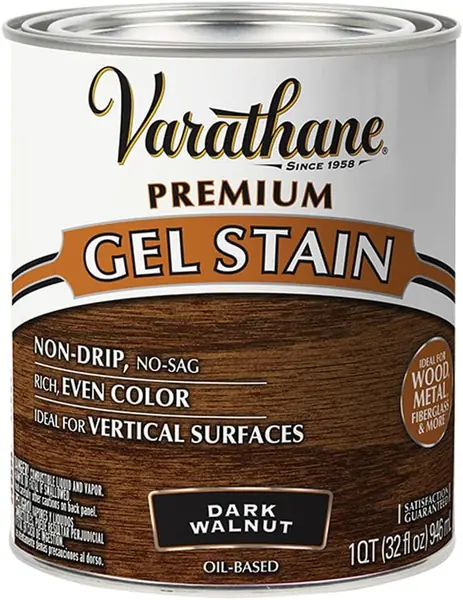
Varathane Premium Gel Stain quart can in Dark Walnut, oil-based stain for wood

Plywood sheet goods

Shop Score 94/100
Size
1 quart
Type
Oil-based gel stain
Color
Dark Walnut
Coverage
250 square feet per quart
View on Amazon

Two hundred and fifty square feet per quart is the number that makes this gel the practical choice for a plywood build. A 4-by-8 sheet is 32 square feet a side, so one can carries a bookcase's worth of panels through a couple of coats with plenty left over. The formula is thick enough to sit where you put it instead of wicking into the face veneer at whatever rate each pore allows, and that is the whole problem with plywood.

We took it to a conditioned sheet of birch plywood and got color without the splotchy map of light and dark patches a penetrating stain leaves on a rotary-cut face. On vertical panels such as cabinet doors and the gable ends of a built-in, the low-drip body means you can load a brush and not chase runs. That combination is why it is our default for sheet goods.

What you trade for the evenness is grain clarity. A gel rides on the surface, so the pore pattern reads softer than it does under a penetrating oil, and on a utility face there is not much figure to lose. On a sheet you picked for its figure, the Varathane Premium Fast Dry lets more of it through. The color also arrives closer to a tinted coat than a soaked-in dye, so one pass already lands dark.

Worth Noting

  • Not intended for floors or decks
Our Verdict

For even color across a plywood panel without chasing blotches, this is the gel we reach for first.

Check Latest Price
2.

General Finishes Oil Base Gel Stain Best Color Depth

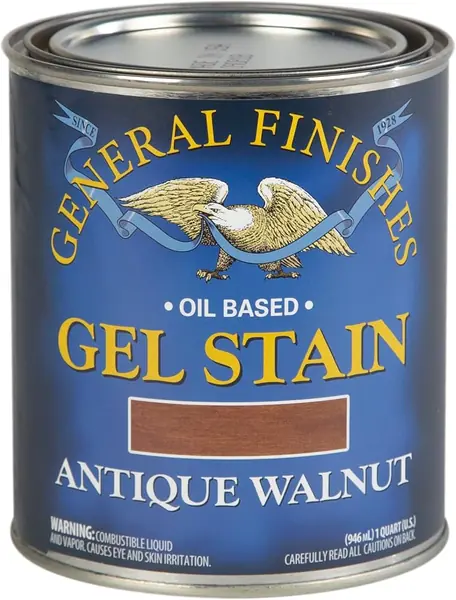
General Finishes Oil Base Gel Stain quart can in Antique Walnut

Visible cabinet faces

Shop Score 93/100
Size
1 quart
Type
Oil-based gel stain
Color
Antique Walnut
Coverage
35-50 square feet per quart
View on Amazon

General Finishes builds this gel heavy-bodied enough that it barely penetrates, and that is precisely what a rotary-cut veneer needs: the pigment stays near the surface instead of racing down pores of different sizes. If the panel is going to be sanded flat, topcoated, and looked at for years, this is the can we buy.

The control is the other thing worth noticing. It wipes on with a cloth or a foam brush, with no spills and no splashes, and it buffs to a lustrous surface that takes a topcoat beautifully. On a set of cabinet doors or a desk top, that is what separates a piece that looks refinished from one that looks stained. The maker also calls it out specifically for even results on difficult woods such as aspen and pine, and a plywood face qualifies.

Oil gel is slow, though, and humid weather makes it slower. A thick pass can stay tacky well past the point where you want to handle it, and one wiped unevenly will dry streaky. Thin coats, wiped with the grain, with more time between them than feels necessary, head off both problems.

Worth Noting

  • Premium price per quart
  • Quart covers only 35 to 50 square feet
Our Verdict

When the panel will be looked at up close, this is the gel we choose, with deep even color and almost no blotch risk.

Check Latest Price
3.

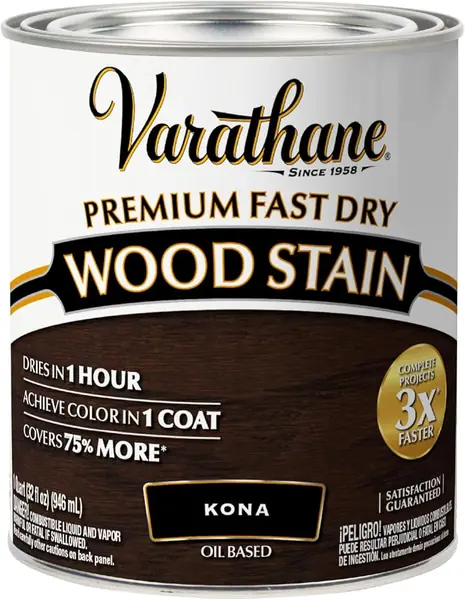
Varathane Premium Fast Dry Wood Stain Best Value

Varathane Premium Fast Dry Wood Stain quart can in Kona brown

Shop-grade plywood

Shop Score 92/100
Size
1 quart
Type
Oil-based penetrating stain
Color
Kona
Coverage
275 square feet per quart
View on Amazon

One hour to the touch and 275 square feet per quart: Varathane's fast-dry line is built for people who want the staining finished in an afternoon. Kona is a deep coffee brown that lands in a single coat and lands the same way on the next panel, so a run of shelves comes out matching.

Where it fits on a plywood project is the material you are not going to baby: shelving, jigs, cabinet boxes, shop fixtures. The cheapest full-size can here with the most square footage per quart is a combination that lets you stop rationing.

The catch is what a penetrating oil does to a rotary-cut face. It soaks in according to what the veneer offers, and the veneer offers nothing evenly, so open grain drinks darker than the tight grain beside it. On paint-grade stock nobody will notice. On a face you care about, run a conditioner over it first and keep a wet edge, and expect some variation to remain. We reach for a gel when that matters and for this can when it does not.

Worth Noting

  • Touch-dry time can stretch well past an hour
Our Verdict

For shop cabinets and utility plywood, this is the value pick: one coat, full color, and the most square footage per quart here.

Check Latest Price
4.

General Finishes Water Based Wood Stain Best Water-Based

General Finishes Water Based Wood Stain quart bottle in Tobacco brown

Indoor low-odor work

Shop Score 90/100
Size
1 quart
Type
Water-based stain
Color
Tobacco
Coverage
50-75 square feet per quart
View on Amazon

A basement workshop, a spare room, a garage with the door shut in January: the places where people actually finish plywood are often the places where you cannot open a window. This stain is built for that room, with low odor, low VOC, water cleanup, and no solvent can to store afterward.

It behaves more like an oil stain than you might expect from a water-based product. It brushes out with workable open time, sprays cleanly if you have the equipment, and it is the only pick here you can intermix with other colors or use to tint a topcoat. We found the one habit it demands is an immediate wipe-off with a cotton rag; leave a wet edge sitting and it dries streaky.

The catch is pace. A water-based stain gives you a shorter working window on a big flat panel than an oil gel does, so work panel by panel instead of coating a whole sheet and then wiping it. If you like to work slowly, the General Finishes Oil Base Gel Stain rewards that patience more.

Worth Noting

  • Covers less area per quart than the gels
  • Color lands darker than the sample shows
Our Verdict

For indoor work where fumes and cleanup decide the product, this is the stain we bring into the room.

Check Latest Price
5.

DecoArt Americana Gel Stain Best for Small Craft Projects

DecoArt Americana Gel Stain two-ounce jar in Walnut

Small craft projects

Shop Score 89/100
Size
2 fluid ounces
Type
Water-based acrylic gel
Color
Walnut
Cleanup
Soap and water
View on Amazon

Two ounces is the whole story: this is a craft-scale gel stain, sized for a plywood box, a set of coasters, a sign blank or a dollhouse. Walnut goes on thick and creamy, cleans up with soap and water while it is wet, and carries no solvent smell at all.

The mess-free part is what we appreciate most, along with how quickly it sets when you are brushing around small parts. No fumes, no mineral spirits, and forgiving enough that a slip wipes away with a damp rag. Build it in thin coats; laid on heavy, it reads as brown paint rather than stain.

Worth Noting

  • Two ounces will not finish a full sheet
Our Verdict

We keep this jar for small plywood work such as models, signs, and trim, and pick up a quart can the moment a panel is involved.

Check Latest Price

How We Tested Plywood Stains

We started with the fine print rather than the color chip: which cans were rated for interior use, what recoat window the maker published, and how much square footage a quart was claimed to cover. That narrowed a long shelf of options down to 11 stains worth opening — gel, penetrating oil, and water-based — which we tested over eight months.

Each stain went onto panels cut from the same sheet of rotary-cut plywood, half sanded to 150 grit and half left as shipped, then clamped upright on sawhorses so we could watch for drips and lap marks the way you would on a cabinet side. We brushed and wiped each one in a garage with the door up, then repeated the run in a humid basement to see how the same formula behaved when the air would not cooperate. We noted where pigment grabbed the veneer in patches, whether the grain stayed readable under the color, how flat or sheened the dry film looked, and how closely the panel matched the swatch in daylight and under shop light.

We timed first dry and recoat in both spots, since a formula that flashes off in an hour in the garage can still be tacky at four in a basement, and we tracked odor and cleanup as we went. Coverage was measured by how far a quart actually stretched across panels, with cut edges sealed first, because a raw edge pulls stain away from the face. Once cured, each panel got the same water-based topcoat to see whether the stain lifted, beaded, or went blotchy underneath. Solvent-soaked rags were spread flat on concrete to dry, never balled up, and the garage door stayed up throughout.

How to Choose a Stain for Plywood

Read the Face Before the Color Chip

Plywood face veneer is peeled or sliced across the log, so the pores open at every angle across a sheet and a penetrating stain soaks in at every rate. That is why a panel that looked perfect bare dries into a map of light and dark patches. Cut a scrap from the actual sheet you are building with, stain it, and include an edge. Every sheet in a stack can behave differently, and a five-minute test on an offcut beats refinishing a bookcase.

Gel or Penetrating Oil

This is the choice that does most of the work. A gel sits on the surface and releases color slowly, so uneven absorption matters far less, and its thick body hangs on vertical panels without running. A penetrating oil soaks in, shows more grain, covers more square feet per quart, and is much less forgiving on a rotary-cut face. We keep a gel for the panels anyone will look at and a liquid can for shop shelving and jigs. One trap: gel is not blotch-proof, since a heavy coat wiped unevenly still dries streaky.

Do the Square-Footage Math

Count both faces of every panel, add the parts, and double it for two coats before you choose a can size. A 4-by-8 sheet is 32 square feet per side, so a bookcase with five panels runs well past 300 square feet of surface. A quart listed at 250 square feet is generous; a quart listed at 35 to 50 square feet barely finishes one side of one sheet. The cheaper can stops being cheaper when you need three of them.

Water-Based or Oil, and Where You Will Work

Oil gives you open time, a wet edge that stays workable while you finish a panel, and it warms the wood slightly. Water-based dries faster, cleans up with soap and water, and lets you work indoors without an open garage door, but it raises the grain, so plan on a damp-sponge pass and a light sanding before the first coat. If the piece lives in a basement, choose water; if you are brushing a large flat sheet and want time to think, choose oil.

Seal the Edges, Then Topcoat

Plywood edges are end grain in stripes and pull stain far darker than the face, often nearly black. Sand them smooth and either seal them with a sanding sealer before staining or accept the dark line as part of the look. And remember that stain colors wood without protecting it: a topcoat of polyurethane or lacquer is what keeps a plywood desktop from drying out, sticking, and showing every ring.

Frequently Asked Questions

Final Verdict

The Varathane Premium Gel Stain in Dark Walnut is the can we point most plywood builders toward: a quart covers a serious amount of panel, the thick body holds color evenly on a face that wants to blotch, and it stays put on vertical work. When the piece is furniture rather than shop furniture, the General Finishes Oil Base Gel Stain buys deeper color and a finer finish.

And when the whole job is one small box, skip the quart entirely and take the two-ounce craft gel.