↑↓ navigate ↵ open Esc close All results →

Tested: The Best Stains for Poplar Wood of 2026

Poplar is inexpensive and easy to machine, yet its uneven density and green-gray cast force a clear trade-off the moment stain hits the board. Warm browns can turn muddy or pink, and unconditioned soft spots drink thin pigment into dark stripes next to pale blotches.

Body, cleanup, and ventilation separated the 14 gel, oil-and-varnish, and water-based stains we tested over four months. Thick gels sit on the surface long enough to wipe even without pre-conditioning, while thin penetrating liquids demand a wood conditioner first; water-based formulas clean up with soap and water and low odor, whereas oils require an open garage door.

Built-in stain-and-sealers save a step on simple builds, while separate topcoats give tighter sheen control—and checking coverage carefully keeps a half-pint from running dry halfway across a cabinet front.

Our Top Picks

Our Full Reviews

1.

Varathane Premium Gel Stain Best Overall
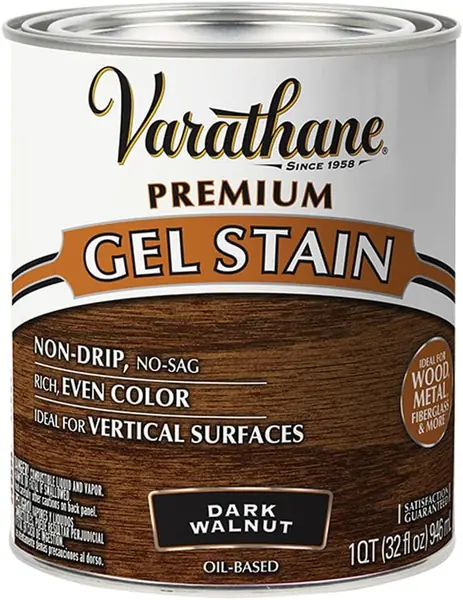
Varathane Premium Gel Stain in a dark walnut quart can with metal lid

Furniture and trim

Shop Score 94/100
Size
1 quart
Coverage
250 square feet
Dry To Touch
1 hour
Recoat
2 hours
View on Amazon

Poplar is the reason this guide exists. Its grain takes stain at wildly different rates across a single board, so a thin liquid that looks beautiful on oak can leave a tabletop looking like a weather map. A gel avoids most of that. It sits on the surface instead of diving in, which means you're wiping color back off rather than waiting to find out where the wood drank deepest.

The quart is the biggest can in this group, and the coverage line explains why: 250 square feet, roughly twice what a traditional oil-based stain of the same volume claims. It dries to the touch in about an hour and takes a second coat after two, so a pair of cabinet doors fits into an afternoon. Dark Walnut reaches full color in one pass, and on poplar that matters, since the less you work the surface, the smaller the chance of a streaky patch.

Application is as forgiving as the consistency suggests. Brush or rag it on with the grain, wait five to ten minutes, then wipe. Because the color rides on the surface, the grain still telegraphs through, and a lap mark blends while the gel is still soft. We paid close attention to the color before committing to a whole board: Dark Walnut lands darker than the can's photo, and poplar's green-gray cast can cool it further, so spread a sample on an offcut from your actual stock and let it dry.

What settles it for us is even color plus enough volume to finish a real project. A first-time stainer can use this without buying a conditioner, and someone refinishing a run of doors won't run out halfway through. It's the most expensive can here, and on wood as uncooperative as poplar we think that's the right place to spend.

Worth Noting

  • Not for floors, decks or siding
  • Can take overnight in humid weather
Our Verdict

The gel consistency is what wins us over: it keeps color even on poplar's hungry grain, and one quart covers a full dresser or a run of doors.

Check Latest Price
2.

Watco Danish Oil Wood Finish Best One-Step Finish

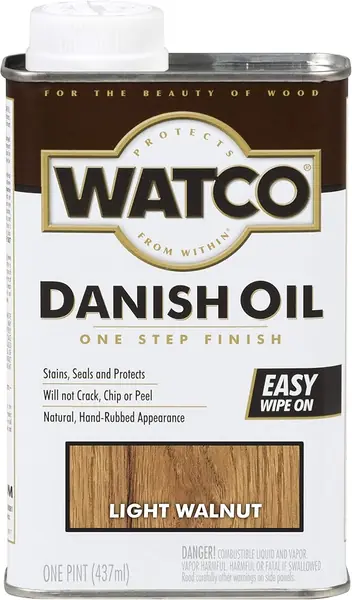
Watco Danish Oil Wood Finish in a light walnut pint can

Hand-rubbed natural look

Shop Score 93/100
Size
1 pint
Coverage
Up to 85 sq ft
Dry To Touch
6 hours
Formula
Oil and varnish blend
View on Amazon

Stain, seal and protect is a lot to ask of one pint, but that's the pitch behind an oil-and-varnish blend: wipe it on, let the oil soak in, wipe off the excess, and the varnish component hardens inside the wood instead of forming a skin on top. On poplar the combination is flattering. The wood is flat-grained and a little green, and an oil finish warms it into something that reads amber rather than sallow.

We like it best for shelves, small tables, shop jigs and anything where a film finish is more protection than the piece needs. A pint covers up to 85 square feet and dries to the touch in about six hours, so a pair of shelves is one evening's work with no separate topcoat to buy or schedule. Light Walnut is a gentle color, a warm brown that gives pale poplar depth without hiding the grain.

The color is the part to test. On pale stock the amber builds faster than the name suggests, and once it cures the change is permanent, so brush a wet sample on an offcut and let it sit overnight before you commit the whole board. For a natural, low-sheen look on poplar, that's a trade most people are happy to make.

Worth Noting

  • Not recommended for floors
  • Strong solvent smell while it cures
Our Verdict

One wipe-on product that stains, seals and protects: we reach for it when someone wants a warm hand-rubbed look on poplar without a separate topcoat.

Check Latest Price
3.

Minwax Wood Finish Best Budget Pick

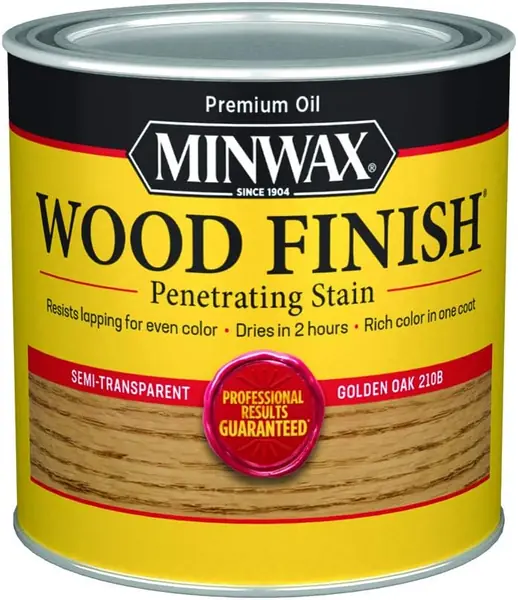
Minwax Wood Finish half-pint can of Golden Oak oil-based stain

Small projects

Shop Score 92/100
Size
1/2 pint
Coverage
50-100 square feet
Dry Time
2 hours
Wipe Time
5-15 minutes
View on Amazon

Half a pint, 50 to 100 square feet of coverage, and a wipe window you control: this is the can we suggest for someone testing a color or finishing one chair. It's the classic Minwax penetrating oil, thin enough to soak in and darken in a single pass, and Golden Oak is a warm honeyed light oak that nudges poplar's green-gray cast toward something sunnier.

Technique matters more than the product here. Apply with the grain, let it sit five to fifteen minutes, then wipe off the excess; the longer it sits, the deeper the color, so a scrap board and a timer teach you more than any color chip. It dries in about two hours, which keeps a small project moving, and the line comes in larger sizes if the half pint proves the color.

The prep is what this one asks of you. Minwax's own directions point to a pre-stain conditioner to prevent streaks and blotches, and skipping that step on poplar is how people end up with a patchy chair. Buy the two together and you have a predictable, inexpensive way to color a board, the opposite of a product that promises to do the thinking for you.

Worth Noting

  • Color can land darker or lighter than the chip
Our Verdict

Our pick when you want to try a warm traditional color on poplar without committing to a big can, as long as you buy the pre-stain conditioner too.

Check Latest Price
4.

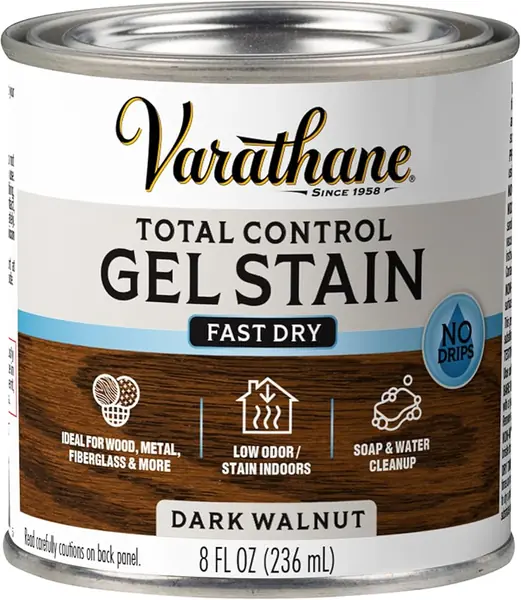
Varathane Total Control Gel Stain Best Low-Odor Gel

Varathane Total Control water-based gel stain half-pint can in dark walnut

Indoor vertical projects

Shop Score 91/100
Size
1/2 pint
Base
Water-based
Cleanup
Soap and water
Surfaces
Wood, metal and fiberglass
View on Amazon

Most staining assumes a garage and an open door. That plan falls apart in January, or when the piece is a door you can't lay flat. This one is water-based, so the odor stays mild enough for a basement workspace, and the gel is thick enough to hold on a vertical face instead of running down it; the maker recommends it for doors, trim and banisters. Cleanup is soap and water while it's wet.

We keep it for exactly those jobs: a door, a banister, a small cabinet, anything vertical or indoors. It's also the most beginner-friendly can here, since you brush it on, wipe back for a lighter tone, and correct a heavy patch before it sets. The half pint is the catch; it suits a door or a piece of furniture, not a whole kitchen, so buy two or move up to the quart.

Worth Noting

  • Can need a second coat on porous wood
Our Verdict

For staining indoors or on vertical pieces, this water-based gel is the one we point to: no fumes to plan around and no drips to chase.

Check Latest Price
5.

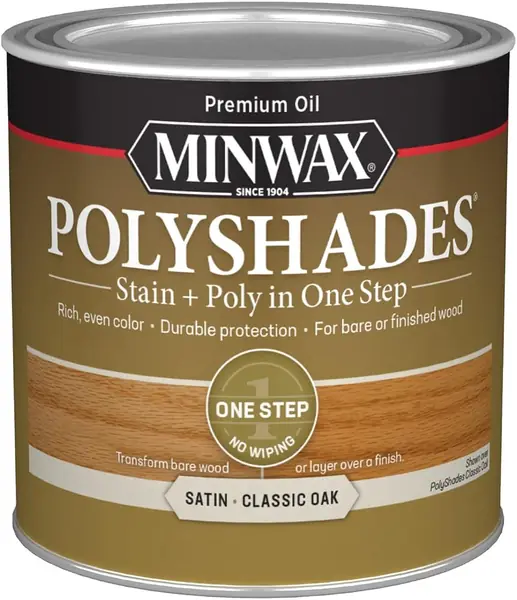
Minwax PolyShades Best for Finished Pieces

Minwax PolyShades half-pint can of Classic Oak satin stain and polyurethane

Refinishing sealed furniture

Shop Score 90/100
Size
1/2 pint
Type
Stain and polyurethane in one
Sheen
Satin
Over Existing Finish
Yes, after light sanding
View on Amazon

Every other pick here wants bare wood. PolyShades doesn't. It's a stain and polyurethane in one, designed to go over an existing polyurethane finish after a light sanding with fine paper, which turns a factory-finished poplar bookcase or a sealed table into an afternoon instead of a stripping job.

On bare poplar it works too, with one difference: it builds a film rather than soaking in, so the color sits on top and the grain reads under a smooth coat. Classic Oak in satin is a light, warm tone that keeps poplar from going gray, and satin is the right sheen for a wood with so little figure, since gloss would only emphasize how plain it is.

What we appreciate is that it doesn't pretend to be a penetrating stain. You're adding a colored coat, and it protects while it colors, so a shelf or a small table comes out finished in one product. On raw poplar we still reach for the gels and oils first; on a piece that's already sealed, this is the shortcut that saves the weekend.

Worth Noting

  • Builds a surface film instead of penetrating raw wood
Our Verdict

We use this when the piece is already sealed: it recolors an existing polyurethane finish in one step instead of sending you back to the stripper.

Check Latest Price
6.

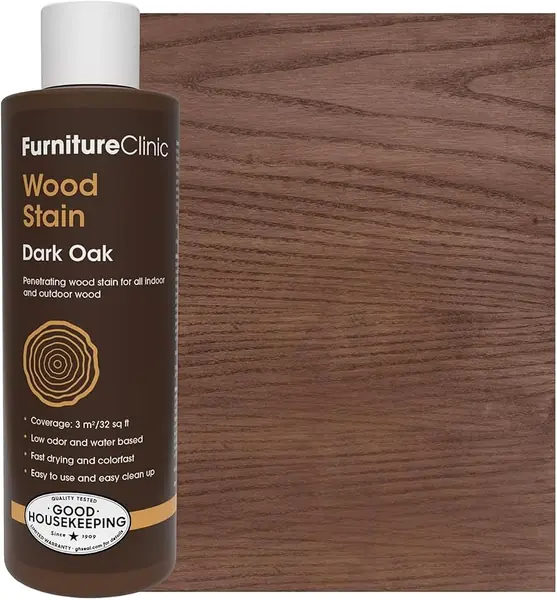
Furniture Clinic Wood Stain Best for Furniture Touch-Ups

Furniture Clinic water-based wood stain in a dark oak 8.5-ounce bottle

Furniture touch-ups

Shop Score 89/100
Size
8.5 fluid ounces
Base
Water-based
Colors
12
Finish
Matte
View on Amazon

It dries matte. Not satin, not a hint of sheen: flat, even color that looks like bare stained wood, because that's what it is. The look is deliberate, since this is the coloring step rather than the finished surface.

The coloring is what it does well. The formula is water-based, so there's little odor and cleanup is a rinse, and it goes on evenly enough for drawer fronts, chair legs and small repairs where a full refinish is overkill. The 8.5-ounce bottle suits that scale of work.

Thin coats build more evenly than one wet one, and a flat color makes it obvious where you've already been, which helps when you're blending a repair into a surrounding panel. Work with the grain, keep a rag handy for edges, and give it the full dry time before anything goes over it.

Where it earns a place here is small furniture and repair work: it's controllable, it's pleasant to use indoors, and a flat base takes whatever topcoat you choose evenly once it's dry. We treat it as the coloring half of a two-part job, and we decide the second half before we open the bottle.

Worth Noting

  • Requires a separate topcoat
  • Color can dry ashy or darker than expected
Our Verdict

A low-odor water-based stain we like for furniture touch-ups, as long as you plan on a topcoat to finish the job.

Check Latest Price
7.

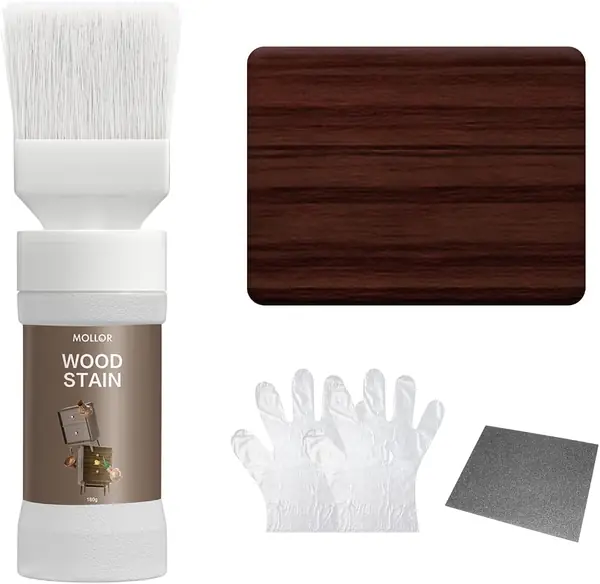
Mollor Wood Stain and Sealer Best for Quick Repairs

Mollor wood stain and sealer bottle with built-in brush cap in dark oak

Quick repairs

Shop Score 88/100
Size
5.29 fluid ounces
Base
Water-based
Dry Time
4 hours
Included
Built-in brush, gloves and sandpaper
View on Amazon

The brush is in the cap. Unscrew it, dab, done: no tray, no rag, no second can of sealer, and the box adds gloves and a sanding pad. For a scuffed baseboard or a set of drawer faces, that's a genuinely appealing kit.

It's water-based and low in odor, it seals as it colors, and the surface is dry enough for normal use in about four hours. Dark Oak is a warm brown that sits comfortably on poplar's yellow-green base. The cap brush is the weak point on flat panels, where it leaves streaks; use your own brush there and save the built-in one for edges and corners.

That's why ours lives with the touch-up supplies rather than on the finishing shelf. It's the bottle to grab for a scratch on a door frame or a small panel you want darker this afternoon, and its fast dry time rewards working in small sections rather than going back over a half-set edge.

Worth Noting

  • Small bottle covers one door at most
Our Verdict

We keep this compact stain-and-sealer for touch-ups and small pieces, where the brush in the cap saves more time than the small bottle costs.

Check Latest Price
8.

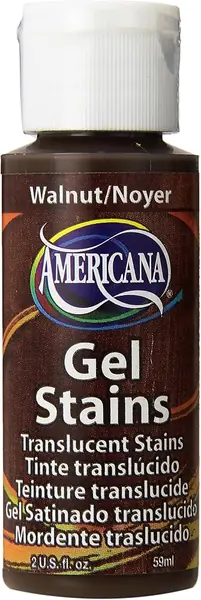
DecoArt Americana Gel Stain Best for Craft Pieces

DecoArt Americana gel stain in a two-ounce walnut jar

Craft pieces

Shop Score 87/100
Size
2 fluid ounces
Base
Water-based acrylic
Cleanup
Soap and water
Texture
Thick and creamy
View on Amazon

Thick and creamy is the right consistency for small work: the gel stays where the brush puts it, one pass gives a true brown, and a mistake wipes off with a damp rag before it sets. We noticed how little it takes to load a detail brush. It's water-based, so there's no solvent smell at a workbench, and it blends with the rest of the Americana line when you want to mix a custom tone.

Where it goes wrong is hand. The color builds fast and a heavy pass reads closer to paint than grain, so work thin, wipe back, and add a second coat rather than a heavier first one. Its other use is repair: a touch of walnut on a scratch or a chipped edge disappears once it dries.

Worth Noting

  • Covers craft-sized surfaces only
Our Verdict

We keep this acrylic gel for sample boards and small craft pieces; the walnut tone is true and it wipes back easily with water.

Check Latest Price

How We Tested Stains on Poplar

We started by reading reviews and spec sheets for several dozen stains, sorting them by base — gel, oil-and-varnish blend, water-based — and by can size, since coverage per can matters more than the per-ounce cost on a small project. That filtered down to 14 we bought and tested over four months.

Every stain went on poplar from the same batch of boards, sanded to 150 grit: cabinet doors and face frames, a shelf, a nightstand with an existing sealed finish, and a few small craft blanks. We conditioned half the test boards and left half bare, then noted where the color grabbed and where it went streaky. One panel from each test sat upright against the shop wall for a week so we could see which formulas dripped, ran, or left lap marks on a vertical face.

Each stain went on with both a rag and a brush, and we wiped back at the interval the label recommended, watching how much work it took to reach an even tone and whether poplar's green-gray cast came through warm or sour. We timed dry-to-touch and recoat, checked gloss after a topcoat or straight from the can for the stain-and-finish products, and noted where the water-based ones raised the grain enough to need a light sanding. We also handed a brush to people who had never stained anything and watched where they hesitated.

Solvent-based products were opened in a garage with the door up and fans running, well away from the water heater's pilot light. Oil-soaked rags went flat on the driveway to dry, or into a sealed metal can of water — never balled up in a bag. The picks are the ones that made poplar look even without a fight.

How to Choose a Stain for Poplar Wood

Pick for Blotch Control First

Poplar's grain is interlocked and inconsistent, so a thin stain wicks in at different rates across a single board and leaves streaks that no amount of sanding fixes afterward. There are two ways out. A pre-stain conditioner slows absorption so the color goes on evenly, or a gel stain sits on the surface and never soaks in far enough to blotch.

The gels we recommend here need no conditioner; Minwax's Wood Finish asks for one on this wood. Either way, sand with the grain to 220, vacuum the dust, and test on an offcut from your actual board. A color chip printed on oak tells you very little about how poplar will take the same can.

Gel, Liquid, or Oil-and-Varnish

Three formats behave three ways. Gel is thick, stays where you put it, and wipes back for control, which makes it the safest choice on blotch-prone wood and the only sensible one on a vertical face. A thin penetrating oil gives you five to fifteen minutes of wet time to wipe color deeper or lighter, which rewards speed and punishes a big tabletop. An oil-and-varnish blend stains and seals in the same pass for a softer, hand-rubbed look.

Pick the format that matches the control you need, then choose the color. For a first piece of poplar furniture, we favor the gel every time.

Oil Base or Water Base

Oil stains add amber warmth, stay open longer, and smell like solvent; cleanup is mineral spirits. Water-based gels are low-odor, dry fast, and clean up with soap and water, which makes them the practical choice for a basement shop or a winter project. Water-based color also reads a little cooler and clearer, so on poplar's green cast a warm oil is often the friendlier match.

Water-based formulas can lift the grain slightly. A light scuff with fine paper between coats settles it.

Does the Stain Have to Be the Finish?

Poplar is soft. A stained surface with nothing over it will dent, drink a spill, and gray out. Some products solve that in one step: PolyShades carries its own polyurethane, the Mollor bottle seals as it colors, and Danish oil hardens inside the wood. Others, including Minwax Wood Finish and the Furniture Clinic stain, need a topcoat of polyurethane, varnish, or wax.

Tabletops, kitchen cabinets, and anything handled weekly need the film. Shelves and shop fixtures are fine with oil alone.

Match the Can to the Job

Coverage numbers are the easiest thing to misread. A half pint of Minwax Wood Finish lists 50 to 100 square feet, a pint of Danish oil up to 85, and the quart gel 250. But Varathane's Total Control half pint quotes its coverage per quart, so the can in your hand does a fraction of what the label suggests.

Poplar's end grain and every sanded edge soak up extra, and a first project always drinks more than the second. Buy one size up, and keep the leftover for touch-ups.

Frequently Asked Questions

Final Verdict

Poplar is a wood that punishes optimism, so we start with the product that removes the most variables. The Varathane Premium Gel Stain stays where it's brushed, builds full color in one coat, and covers a real piece of furniture, which is why it's the can we name first.

Want a natural, hand-rubbed look instead of dark walnut? The Watco Danish Oil stains and protects in a single step. Already have a sealed piece? PolyShades skips the stripper entirely.