↑↓ navigate ↵ open Esc close All results →

Best Wood Fence Stains of 2026

Choosing a fence stain by the color chip on the rack is an expensive mistake when a warm cedar tone dries pink across eighty feet of boards. With no practical way to sand a full fence back to bare wood, selecting the right opacity comes before picking a shade, and testing an offcut from the actual fence prevents costly surprises.

Running 12 oil, water-based, acrylic, and mineral stains through 10 months on new cedar, weathered rough-sawn boards, and full fence lines showed how dramatically coverage varies—the same perimeter can take four gallons or twelve depending on the formula. Transparent and semi-solid coats handle aging differently, and matching the base to existing wood keeps lap marks from telegraphing along long runs.

Whether protecting new cedar, preserving weathered gray boards, stretching gallon coverage on a large yard, or touching up a single gate with a spray can, the right exterior finish holds its color through a wet spring.

Our Top Picks

The Best Wood Fence Stains

1.

Wood Defender Transparent Fence Stain Best Overall
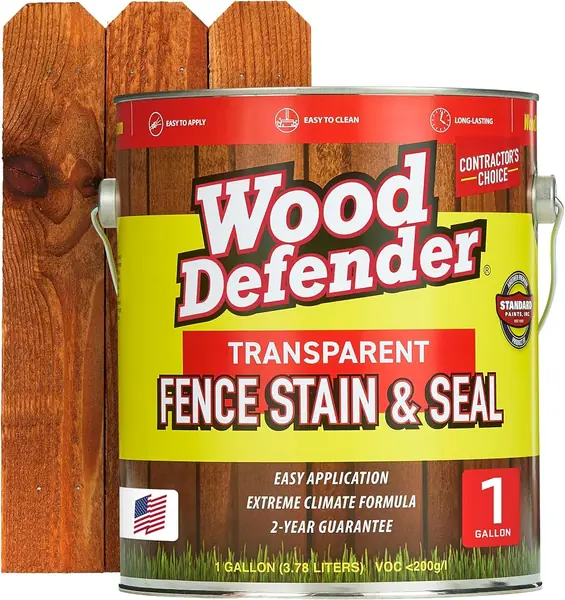
One-gallon can of Wood Defender transparent cedar tone fence stain

New cedar fences

Shop Score 94/100
Base
Oil-based
Coverage
100-150 sq ft per gallon
Opacity
Transparent
Color
Cedar Tone
View on Amazon

A transparent stain is the least forgiving finish on a fence: every lap, drip, and uneven board stays in view. Wood Defender is built for that job, with a fence-specific oil formula and ultra-fine pigment that adds a cedar tone without turning the wood into a painted surface. We like that it is designed for new builds and one-coat application, because a fence already has enough linear feet to worry about.

Application is built around one coat and no back-brushing, which is what we want on a long fence run. The formula is meant to go on without runs, drips, or streaks, and the transparent finish lets the grain and the natural variation of the boards do the work.

The look is warm and natural rather than opaque. On a new cedar privacy fence, Cedar Tone adds depth while keeping the boards distinct, which is exactly what we want from a transparent stain. It does not hide gray, knots, or mismatched boards; for a tired fence that needs camouflage, a semi-solid like TWP 101 is the better tool.

The result is a fence that still reads as wood, not as a coating. That clarity is the reason we choose it for a new fence.

Worth Noting

  • Low coverage means several gallons for a long fence
Our Verdict

If you're staining a new or freshly cleaned fence and want the grain to stay visible, this is the fence-specific stain we recommend first.

Check Latest Price
2.

KILZ Waterproofing Wood Stain Best Coverage

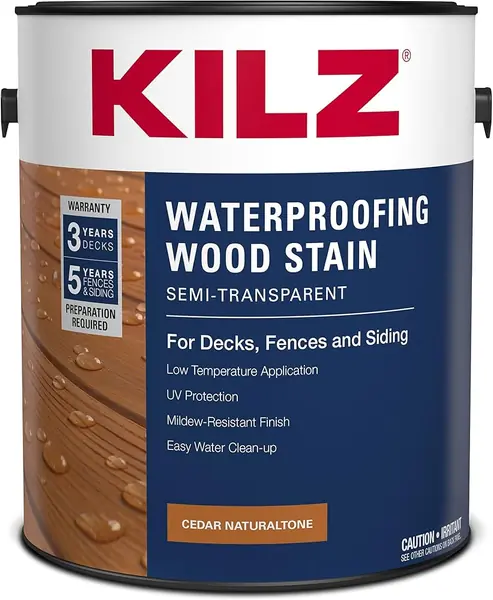
One-gallon can of KILZ cedar naturaltone semi-transparent waterproofing wood stain

Large fences

Shop Score 93/100
Base
100% acrylic
Coverage
250-500 sq ft
Opacity
Semi-transparent
Fence Warranty
Up to 5 years
View on Amazon

A long fence turns coverage into a real budget line. KILZ lists 250 to 500 square feet per gallon, a much bigger spread than our top pick, and it is a 100% acrylic semi-transparent stain rather than a thin toner. The five-year fence warranty is a useful backstop for a whole-perimeter job.

We like that combination for a whole-perimeter job: fewer gallons to carry, a finish that resists water and UV, and a warranty that covers fences longer than decks. Cedar Naturaltone is a warm midtone that adds color while letting some grain show through.

The acrylic formula is made for new to moderately weathered wood, up to about ten years of exposure, so it is a better match for a fence that still has sound boards than for one that is checked and gray.

Against Wood Defender, KILZ gives up some transparency and the fence-specific focus, but it makes up for that in gallons per fence and warranty length. We choose it when the job is large and the wood still has life in it.

Worth Noting

  • Color can read redder than the cedar name
Our Verdict

When the fence is long, we reach for KILZ: it spreads farther per gallon than our top pick and carries a five-year fence warranty.

Check Latest Price
3.

TWP 101 Pro-Series Stain Best for Weathered Fences

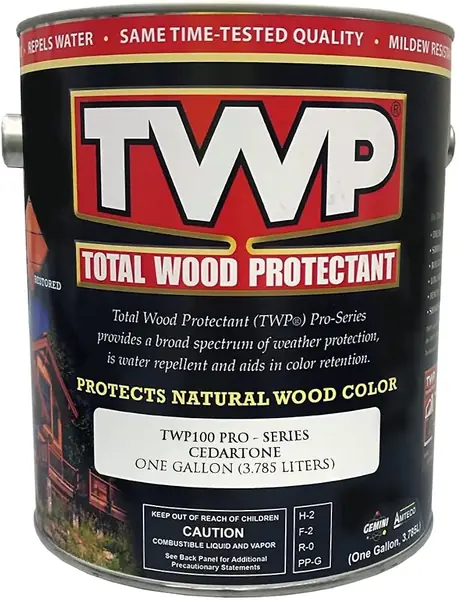
One-gallon can of TWP 101 Pro-Series cedartone oil-based exterior stain

Weathered rough-sawn fences

Shop Score 92/100
Base
Oil-based
Coverage
Up to 300 sq ft per gallon
Opacity
Semi-solid
Size
1 gallon
View on Amazon

Gray, checked boards need more than a transparent toner. TWP 101 is a semi-solid oil stain, so it carries enough pigment to even out a rough-sawn fence while still leaving texture visible. It is listed for decks, fences, siding, and log homes, and it covers up to 300 square feet per gallon.

We like that it is built to penetrate rather than sit on top. The oil formula is meant to repel water and resist mildew, and the semi-solid finish gives an old fence a more uniform color without looking like paint. On rough-sawn cedar, that combination is more useful than a clear film that can fail at the first check.

The trade-off is a heavier look. Semi-solid stain puts more color between you and the grain, so it is the wrong choice if you want the wood to read as raw cedar.

We save TWP 101 for the fence that needs help, not the one that just needs a refresh. If the boards are still crisp and you want maximum grain, Wood Defender is the better fit.

Worth Noting

  • Premium price per gallon
Our Verdict

For a fence that has gone gray and rough, we choose TWP's semi-solid oil formula to add color, hide checking, and resist mildew.

Check Latest Price
4.

Eco Wood Treatment Best for a Gray Patina

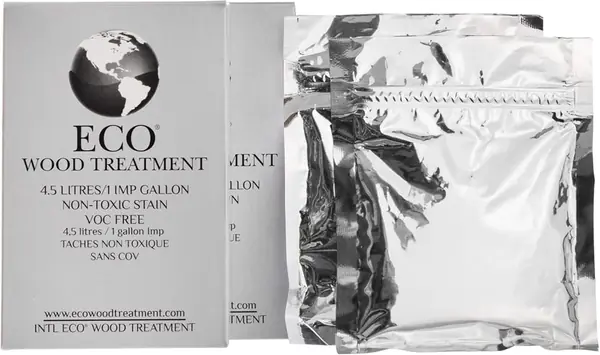
Two-pack of Eco Wood Treatment powder concentrate for silvery patina wood

Gray weathered look

Shop Score 91/100
Base
Mineral powder
Coverage
150 sq ft per gallon
Size
1 Gallon (Pack of 2)
Finish
Silvery patina
View on Amazon

Not every fence should look like new cedar. Eco Wood Treatment is a mineral powder that mixes with water and ages the wood to a silvery patina, and we like it for a fence where that weathered look is the goal rather than a compromise. It is a one-application treatment that will not wear off, fade, or peel.

The application is simple: mix the powder with water and apply with a brush, sprayer, or roller. Because it is a mineral treatment rather than a film-forming sealer, it works into the wood and changes the color as it reacts, which is why it can blend new and old wood.

The finish is the point. It does not add a warm brown or a glossy sheen; it pushes the fence toward a soft ash gray that looks intentional on modern horizontal fencing and natural on a garden fence. We appreciate that it is non-toxic, low-odor, and cleans up with soap and water.

It will not hide rot or failed boards, so repair those first. We treat it as a look-first preservative for the right fence, not a rescue coat for every fence.

Worth Noting

  • Not a water-beading waterproofing sealer
  • Coverage is 300 square feet per two-pack
Our Verdict

If you want the weathered silver look without letting the wood rot, Eco Wood Treatment is the one we choose for that job.

Check Latest Price
5.

Thompson's WaterSeal Semi-Transparent Best One-Coat Option

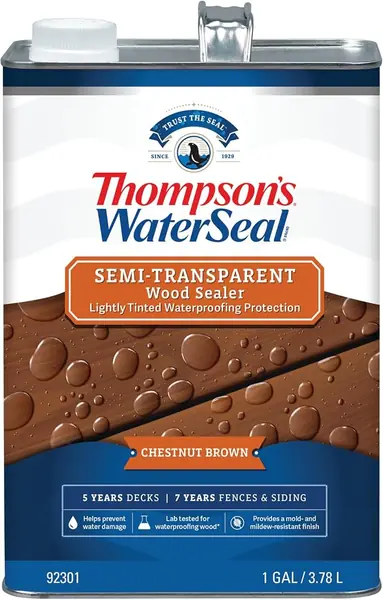
One-gallon jug of Thompson's WaterSeal chestnut brown semi-transparent wood stain

Fast one-coat refreshes

Shop Score 90/100
Base
Water-based
Coverage
150-400 sq ft per gallon
Opacity
Semi-transparent
Fence Warranty
7 years
View on Amazon

One coat is the pitch, and on a fence with a lot of linear feet, that is a real selling point. Thompson's WaterSeal Semi-Transparent is a water-based stain and sealer that goes on with a brush, roller, or sprayer and is warranted for five years on decks and seven years on fences. It is also formulated to resist mold and mildew.

Chestnut Brown is the wild card. The semi-transparent finish adds moderate color while letting medium grain show, but the brown can land redder than the name suggests, and on some wood it reads pink before it settles. Brush a test board and let it dry in the sun before you commit to the whole fence.

We like Thompson's best as a fast refresher for a fence that is sound but faded. The one-coat application and long fence warranty make it easy to recommend for a weekend job, provided the color on your test board is the color you want.

The finish life is the caveat: some fences hold it for years, while others look ready for another coat much sooner than the warranty implies. If coverage matters more than one-coat speed, KILZ is the better pick.

Worth Noting

  • Chestnut Brown tone can skew redder than expected
  • Real-world finish life may fall short of warranty
Our Verdict

We like Thompson's for a fast one-coat refresh with a seven-year fence warranty, as long as you test the chestnut color first.

Check Latest Price
6.

SaverSystems #1 Deck Premium Best for Deep Brown Fences

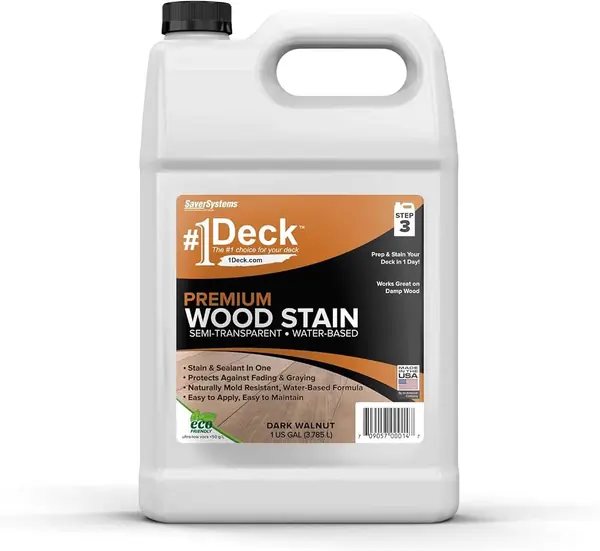
One-gallon jug of SaverSystems #1 Deck Premium dark walnut stain

Deep brown fences

Shop Score 89/100
Base
Water-based
Coverage
100 sq ft per gallon
Opacity
Semi-transparent
Color
Dark Walnut
View on Amazon

Dark Walnut is the reason to pick this one. SaverSystems #1 Deck Premium is a semi-transparent water-based stain that gives a fence a deep, even brown while keeping the grain visible. It is a color-first choice, not a neutral cedar toner.

The formula is thin and watery, which helps it soak in but makes it easy to drip down vertical boards. A drop cloth and a slow, steady pass matter more here than they do with a thicker stain. It dries quickly and cleans up with water, and it is listed as effective on damp wood after the surface is visibly dry.

We like the color depth enough to forgive the fussier application. On a fence that is meant to be a dark backdrop for a garden, the rich walnut tone is more interesting than a standard cedar brown, and the matte finish keeps it from looking like plastic.

Against Wood Defender, SaverSystems gives up transparency and the fence-specific formula but wins on color depth. We choose it when the brown is the point.

Worth Noting

  • Only 100 square feet per gallon
Our Verdict

SaverSystems is the pick when the fence needs a deep, even walnut brown; we like that its water-based finish shows grain without a plastic sheen.

Check Latest Price
7.

Ready Seal Turbo Spray Best for Gates and Touch-Ups

A 24-ounce spray can of Ready Seal natural cedar exterior wood stain

Gates and touch-ups

Shop Score 88/100
Base
Oil-based
Coverage
Up to 50 sq ft per can
Opacity
Semi-transparent
Size
24 oz
View on Amazon

A full fence is the wrong job for a 24-ounce can. Ready Seal's Turbo Spray is an oil-based semi-transparent stain in an aerosol, with a 10-inch spray fan and a listed coverage of up to 50 square feet per can. That makes it a tool for gates, repair boards, and touch-ups, not a whole privacy fence.

The formula is an oil-based, semi-transparent stain with no laps, runs, or streaks and no back-brushing required. It dries to the touch in about an hour, which is quick enough to spray a gate and move on.

Natural Cedar is a warm, semi-transparent tone that lets the grain show through, and the spray pattern is wide enough to cover a picket or a rail without a brush. Mask adjacent surfaces; a spray fan is fast, but it does not stay where you point it.

We keep a can of Ready Seal for the jobs too small to justify a gallon: a new gate, a repaired board, a stained post cap. It is a convenience product, and we judge it that way; the speed and no-brush cleanup are the reason it earns shelf space.

Worth Noting

  • 50-square-foot coverage suits touch-ups, not full fences
  • Wide spray fan requires masking adjacent surfaces
Our Verdict

We keep Ready Seal's spray can for gates and touch-ups, where its no-streak cedar tone beats hauling out a gallon.

Check Latest Price
8.

Seal-Once Marine Best for Coastal Wet Climates

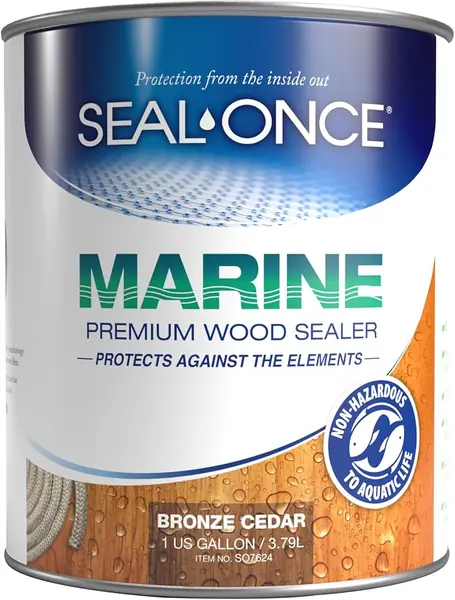
One-gallon jug of Seal-Once Marine bronze cedar waterproof wood sealer

Coastal wet climates

Shop Score 87/100
Base
Water-based
Size
1 gallon
Color
Bronze Cedar
Finish
Matte
View on Amazon

Most fences do not need a marine sealer. Seal-Once Marine is aimed at docks, retaining walls, and decks near salt water, where wood faces constant moisture and sun. For a fence in that setting, the water-resistant barrier is the reason to pay attention.

The formula is water-based, low in VOCs, and designed to form a flexible, breathable barrier around wood fibers. It is a stain and sealer in one, with a matte Bronze Cedar finish that adds color while letting texture show.

Application is easy with a brush, roller, or sprayer, and it dries fast enough to put on two coats in a day. The water-based formula cleans up before it cures, and the flexible finish is a better match for a fence that moves with weather than a rigid film.

We choose Seal-Once Marine for the fence that gets salt spray or constant damp. In a dry backyard, a standard stain is the more sensible place to spend.

Worth Noting

  • Premium price per gallon
  • Finish can fade within a season in full sun
Our Verdict

Salt spray and constant damp are the conditions that make Seal-Once Marine worth its premium; we use it as a coastal specialist.

Check Latest Price

How We Tested Fence Stains, From New Cedar to Weathered Gray

We started by gathering the exterior wood stains and sealers sold for fences in gallon cans and in a spray can, then narrowed to 12 that spanned the choices a fence owner actually weighs: transparent through semi-solid, oil, water-based, acrylic, and mineral. Every product was labeled for exterior wood, and every one went on outdoors on a breezy day with gloves on, following the label's direction for solvent-based formulas.

Testing ran for 10 months on real fence boards — a new cedar run, gray rough-sawn pickets, and a gate — through a wet spring, a hot summer, and into fall. We applied each by brush and, where the label allowed, by pump sprayer, timing how long we could work a wet edge before lap marks set in and counting the drips that ran down the face of a board.

Coverage was measured, not assumed: we stained marked-off sections and tracked how far a gallon actually went, then compared that with the number on the label. Color got judged on wood, not a paper chip — we photographed each section at application, after curing, and at the end of testing, and noted which browns turned red or pink as they dried.

Durability was checked after every storm: whether water still beaded, whether a shaded stretch near a downspout had gone mildewy, and whether the finish had chalked or faded. We weighed value the way a fence owner does, by the gallons a measured run would take and the time before a recoat, rather than by price per can. The eight picks went on evenly, held their color, and came back after a wet season looking like the sample.

How to Choose a Wood Fence Stain

Start with opacity, not the color chip

Opacity decides how much of the fence's history stays visible. A transparent stain adds tone but leaves grain, knots, and gray boards in view; a semi-transparent stain adds more color while keeping texture; a semi-solid stain hides more checking and unevenness. We reach for transparent Wood Defender on a new cedar fence and a semi-solid like TWP 101 on a weathered one. The trap is thinking transparent means no color. It does not. If you want a consistent brown across mismatched boards, move up in opacity rather than buying more of a transparent stain.

Measure the fence, then do the coverage math

Coverage is where a stain's price per gallon stops meaning much. Wood Defender lists 100 to 150 square feet per gallon, TWP 101 up to 300, and KILZ 250 to 500; the same fence can take two gallons of one and four of another. Measure the face you plan to coat, not the fence's footprint, and remember that rough or dry wood drinks more than smooth wood. Buy enough for a wet edge and a little touch-up; running out mid-fence is how lap marks start.

Choose oil or water-based for the wood and the weather

Oil-based stains penetrate rough, weathered wood and tend to leave a natural, low-sheen finish; water-based acrylics are easier to clean up, lower in odor, and often carry longer warranties. We like TWP 101 for a rough-sawn fence that needs oil, and KILZ when coverage and a five-year fence warranty matter more. Neither is automatically better. On a sound new fence, a water-based stain can be the simpler choice; on a dry, checked fence, an oil formula can be more forgiving. Match the base to the boards, not to a slogan.

Test the color on your wood, not a paper chip

A stain color changes as it dries and as it reacts with the wood. A chestnut brown can read redder than expected, and a transparent cedar tone looks different on new pine than on old cedar. Brush a sample on an offcut or a hidden board, let it dry in the sun, and check it at different times of day. The trap is judging wet stain; most finishes darken or shift as they cure. If the sample is wrong, change the color before you open a second gallon.

Read the warranty and plan the recoat

A fence warranty is a useful clue, but it assumes proper preparation, the right number of coats, and normal exposure. Thompson's tops this group with seven years on fences; KILZ offers up to five. We treat those numbers as a maintenance horizon, not a promise that the fence will look new the whole time. Keep a little leftover stain for touch-ups, and recoat when water stops beading or the color starts to chalk. A fresh coat on a clean, sound fence is far easier than a rescue job later.

Frequently Asked Questions

Final Verdict

Wood Defender is the fence stain we recommend first for a new or well-kept fence. Its transparent Cedar Tone keeps the grain visible, and the one-coat oil formula is built for the job rather than adapted from a deck product. If coverage and a five-year fence warranty matter more than maximum clarity, choose KILZ. For a gray, weathered fence that needs more masking, TWP 101 is the better tool. And for gates, repairs, and touch-ups, keep a can of Ready Seal on the shelf.