↑↓ navigate ↵ open Esc close All results →

Best Wood Stains of 2026

The swatch on a stain lid rarely survives contact with real lumber. One brown tone turns amber on pine, goes muted on oak, and darkens near black on cherry, leaving projects stuck in endless test-board loops when a finish laps at overlap lines or needs four coats to look even.

Base chemistry controls that behavior far more than color names, which is why testing 12 formulas over eight months across dresser drawers, cabinet fronts, pine trim, and a cedar deck required separating penetrating oils, gels, water-based coats, dye powders, hardwax oils, and stain-and-poly blends. Gels hang onto vertical panels and tame blotchy softwoods alongside pre-stain conditioners, whereas water-based formulas cut odor and dry fast enough for multi-coat days.

From half-pint interior cans for furniture touch-ups to five-gallon exterior containers built for decks, these eight finishes balance pigment depth, open working time, and predictable coverage.

Our Top Picks

The Best Wood Stains

1.

Minwax Wood Finish Provincial Best Overall
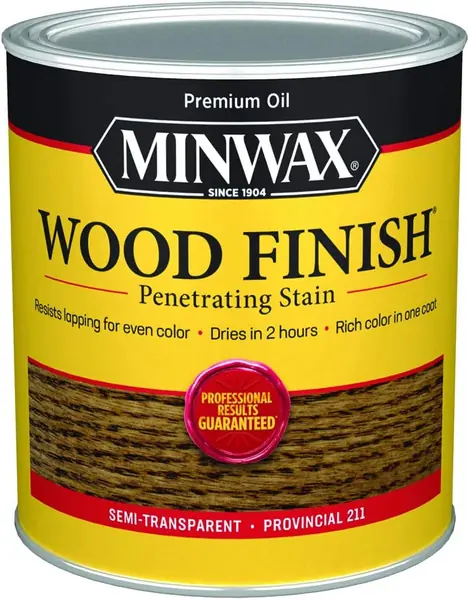
Minwax Wood Finish Provincial wood stain in a one-quart can

Furniture and trim

Shop Score 96/100
Base
Oil-based
Size
1 quart
Color
Provincial
Coverage
500 ft²/gal - 600 ft²/gal
View on Amazon

Minwax Wood Finish is the can we reach for when a project needs to look like wood, not like a coating. The oil-based formula soaks into the grain, wipes back to leave the pores visible, and lets you work a tabletop or a set of cabinet doors without chasing drips. Provincial is a deep brown with classic undertones, and the five-to-fifteen-minute wipe window gives you time to even out a lap before it sets. That control is why it is our default for furniture, trim, and doors.

What sold us on the quart is the coverage relative to the work: the label rates it at 500 to 600 square feet per gallon, so a single quart goes a long way on narrow stock and cabinet fronts. It also resists lapping, which matters when you are staining several boards and need them to match. This is a penetrating stain, not a surface film, so you still need a topcoat for protection. The color will shift with the wood underneath, which is part of the appeal and part of the risk.

Screen swatches and can lids are not the wood in your shop, and dark Provincial can read closer to a near-opaque brown on porous pine than it does on white oak. Test on offcuts from the actual project, keep a wet edge while you wipe, and write down your wipe time so the next batch matches. On a first project, the quart is the safer commitment; a gallon belongs on a floor-sized job.

Worth Noting

  • Dry time can stretch beyond two hours
Our Verdict

Our default for most interior furniture and trim is Minwax Wood Finish: it wipes on evenly, keeps grain visible, and a quart handles a serious project.

Check Latest Price
2.

General Finishes Java Gel Stain Best for Cabinets

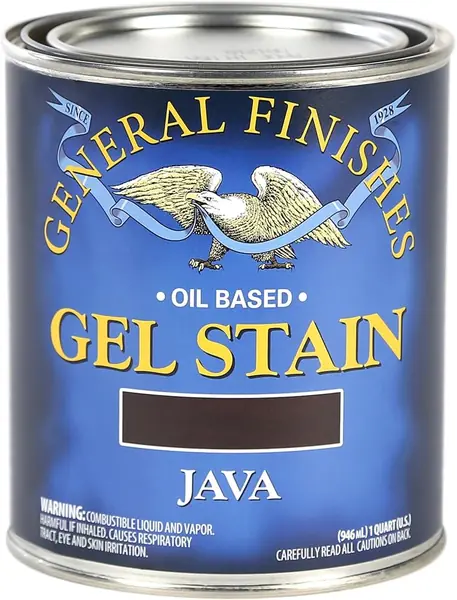
General Finishes Java gel stain in a one-quart can

Cabinet fronts

Shop Score 95/100
Base
Oil-based gel
Size
1 quart
Color
Java
Dry Time
6-12 hours
View on Amazon

A gel stain earns its keep on surfaces where a liquid stain runs away from you. General Finishes' Java is thick enough to stay where the cloth puts it, so cabinet fronts, door frames, and furniture legs get color without a curtain of drips. It also sits closer to the surface than a penetrating oil, which is why it can darken a finish and why it feels more like a wipe-on glaze than a soak-in stain.

We like it best for cabinets that need a deep, even Java tone without a full strip-down. The heavy body is forgiving on vertical faces, and it builds color quickly with a cloth or foam brush. The lustrous, close-to-the-wood look is the part we prefer to a painted-on dark stain. It is our pick when the job is vertical and the color is dark.

The catch is technique. Overwork the gel and it can turn streaky; work in the direction of the grain, keep the coats thin, and stop fussing once the color is even. A clean rag and a light touch matter more than an expensive brush. On a cabinet door, thin coats are the difference between a custom-looking finish and a muddy one.

Worth Noting

  • Long 6-to-12-hour dry time
Our Verdict

We choose this gel when cabinet fronts or vertical trim need a deep Java tone and we want the color to stay put instead of dripping down the face.

Check Latest Price
3.

Varathane Fast Dry Dark Walnut Best for Small Projects

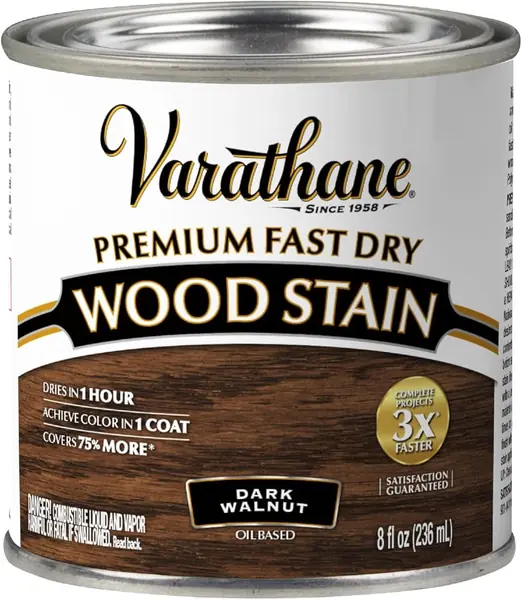
Varathane Dark Walnut fast-dry wood stain in a half-pint bottle

Samples and touch-ups

Shop Score 94/100
Base
Oil-based
Size
0.25 quart (half pint)
Color
Dark Walnut
Coverage
70 sq ft
View on Amazon

Varathane's half-pint is the stain we keep around for samples, small repairs, and the chair that needs a quick refresh rather than a full refinish. The oil-based formula is built for one-coat color, and the label's one-hour touch-dry time makes it possible to add a second coat or move on to topcoat without losing the day. Dark Walnut is a rich, warm brown that highlights grain rather than flattening it.

The fast-dry chemistry cuts both ways: it is convenient on a small piece, but it leaves less time to wipe back and even out the color before it starts to set. Work in small sections and keep a rag in hand. The half-pint covers about 70 square feet, so it suits a sample board or a small table; a full dining set calls for a larger can.

We reach for it when the job is small enough that speed matters more than a long open time, and when we want to see Dark Walnut on the actual wood before committing to a larger can. It is also a useful way to compare two colors on the same board. A half-pint and a scrap board tell you more than any color chart.

Worth Noting

  • Fast-dry formula leaves less time to wipe back color
  • Half-pint 70-square-foot coverage falls short for large furniture sets
Our Verdict

This half-pint stays in our shop for samples, small repairs, and quick refreshes where fast color matters more than a long open time.

Check Latest Price
4.

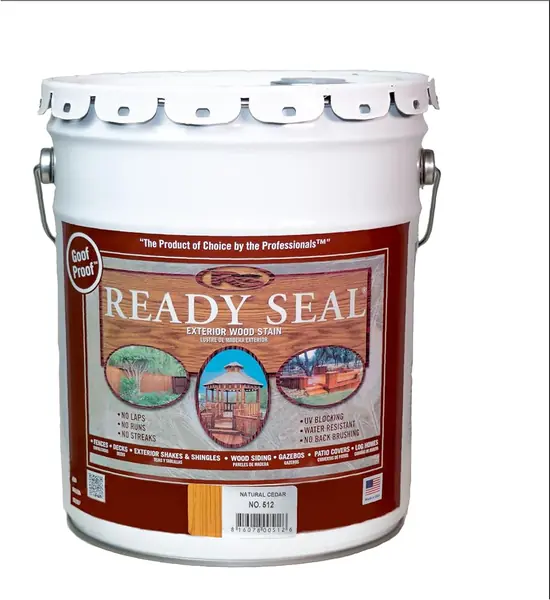
Ready Seal Exterior Stain & Sealer Best for Decks

Ready Seal Natural Cedar exterior stain and sealer in a five-gallon pail

Decks and fences

Shop Score 93/100
Base
Oil-based
Size
5 gallons
Color
Natural Cedar
Coverage
625 sq ft per pail
View on Amazon

A five-gallon pail is the right format for a deck or fence, and Ready Seal's Natural Cedar formula is built to be applied in bulk without the usual wet-edge anxiety. It goes on with a sprayer, roller, or brush, blends itself, and does not require back-brushing. That forgiveness is exactly what we want when a whole side of a house is waiting.

The oil-based semi-transparent finish leaves the grain and texture visible while adding UV protection and water resistance. Natural Cedar is a warm, reddish brown, and the label lists a true color that develops after about two weeks, so the wet look on day one is not the final result. Two light coats about 45 minutes apart are the prescribed routine, and the pail covers up to 625 square feet.

On a deck or fence, the no-lap, no-streak behavior is the reason to choose it over a conventional wiping stain. The finish is semi-transparent, so it will not hide mismatched boards or fill cracks the way a paint would. That is the trade-off we accept for keeping the wood looking like wood, and it is why this stays in the exterior slot.

Worth Noting

  • Five-gallon pail is a large-project commitment
Our Verdict

For a whole deck or fence, we reach for Ready Seal when we want a forgiving exterior stain that goes on without laps or back-brushing.

Check Latest Price
5.

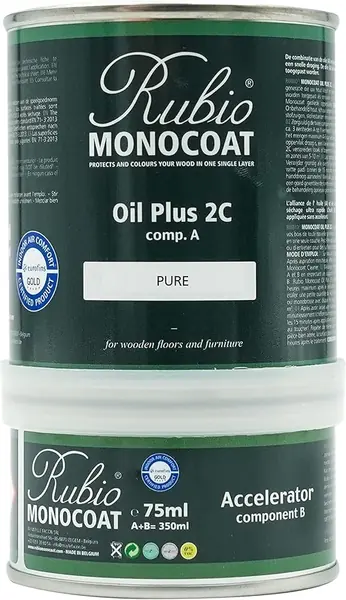
Rubio Monocoat Oil Plus 2C Best Premium Finish

Rubio Monocoat Oil Plus 2C Pure hardwax oil in a 350 mL can

Furniture and countertops

Shop Score 92/100
Base
Linseed hardwax oil
Size
350 mL
Color
Pure
Coverage
105-175 ft²
View on Amazon

Rubio Monocoat's Oil Plus 2C is the finish we choose when we want color and protection to arrive in the same coat, with a matte finish that feels like wood rather than a film. The 350-milliliter can is small, but the one-coat hardwax oil spreads further than its size suggests; the maker rates it at 105 to 175 square feet, depending on the surface.

We like Pure best on a tabletop, countertop, or piece where the grain is the point: the clear version adds warmth and depth without a strong color shift. The linseed-based formula also carries a zero-VOC claim and a food-contact and toy-safety certification from the maker, which is meaningful for a surface that will see daily handling.

We appreciate that one coat is often enough, and that a little goes a long way. The finish rewards a thin application and a project where the wood is the star. On a walnut table, the clear coat is the point; on a pine shelf, it may be more finish than the wood deserves.

Worth Noting

  • High cost for a small can
Our Verdict

We pick Rubio when we want color and protection in one coat with a matte, wood-in-the-hand finish.

Check Latest Price
6.

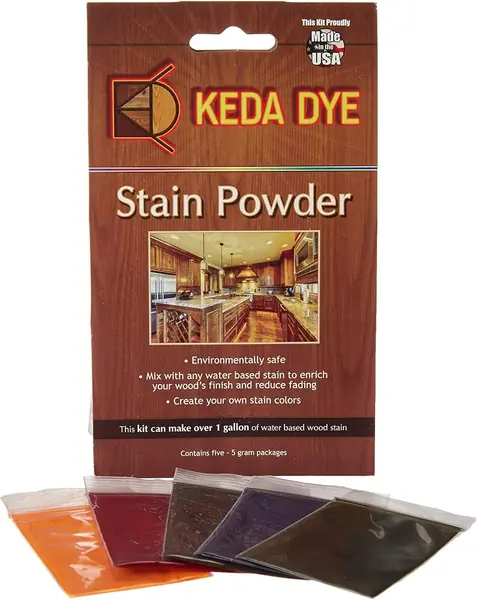
Keda Dye 5-Color Wood Dye Kit Best for Custom Color

Keda Dye five-color wood dye powder kit with five jars

Custom color mixing

Shop Score 91/100
Base
Water-based
Coverage
Up to 150 ft² per color
Yield
5 quarts
Kit Contents
5 powder colors
View on Amazon

A five-jar dye kit is not a can of stain, and that is exactly why we keep the Keda set in the cabinet. You mix the powders with water or denatured alcohol, so one kit can make five quarts of liquid dye and cover up to 150 square feet per color. The five primaries blend into custom shades, which is the kind of control a furniture maker wants when a project calls for a specific deep red or espresso.

We like the kit for small woodworking projects and for anyone who wants to tweak a color instead of accepting the nearest can. The dyes are water-based and concentrated, so a little goes a long way; the powder also lets you mix a weak wash for a light tone or a stronger bath for a saturated one. On a test board, we prefer to build three light coats rather than gamble on one heavy one.

The fuss is in the mixing. A dye that looks right in the jar can dry differently on pine, maple, or oak. Strain the liquid if you see grit, test on an offcut, and keep the mix ratios written down so you can repeat the color. This is a tool for custom work, not a wipe-on-and-go stain for a quick cabinet refresh.

Worth Noting

  • Powder can clump if not fully dissolved
Our Verdict

Our custom-color kit is Keda's five-powder set, which earns its place on small woodworking projects where mixing a dye is part of the job.

Check Latest Price
7.

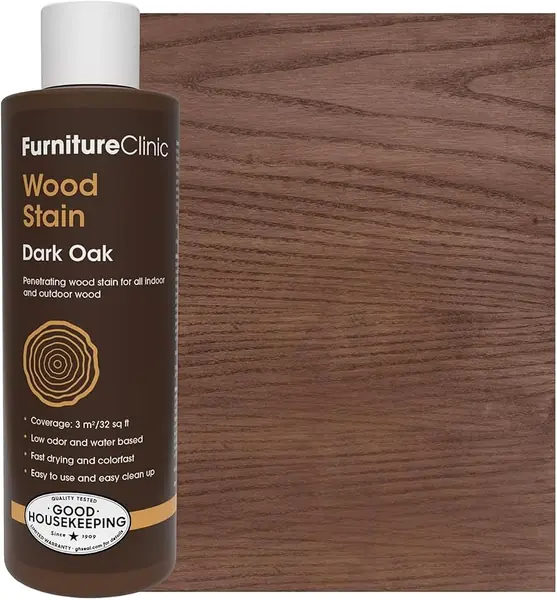
Furniture Clinic Water-Based Wood Stain Best Water-Based

Furniture Clinic Dark Oak water-based wood stain in a 250 mL bottle

Low-odor indoor projects

Shop Score 90/100
Base
Water-based
Size
250 mL
Color
Dark Oak
Coverage
3 m²
View on Amazon

Furniture Clinic's water-based stain is the low-odor option we reach for when a project has to come indoors before the smell clears. It goes on with a brush, cloth, or sponge, dries quickly, and cleans up with water, which makes it a friendlier choice for a spare-room dresser or a set of dining chairs. Dark Oak is a deep, cool brown rather than a red mahogany, and the matte finish keeps the wood from looking plastic.

We found the formula easy to work on vertical surfaces because it does not drip like a thin oil, and one coat gives visible color; a second coat deepens it without turning opaque. The finish is matte, so it will not add the sheen of a polyurethane, and you will want a separate topcoat for a table that sees heavy use. On a chair or a dresser, the simple brush-and-wipe routine is enough.

The 250-milliliter bottle covers about three square meters, so it is sized for furniture and touch-ups, not a floor. That is a useful size for a first project or a color test, but a whole kitchen of cabinets will need more than one bottle. Buy the small bottle when you are still choosing a color; buy the larger size when the project is already measured.

For a dresser or a set of chairs, the trade is easy to accept. We reach for it when the project is small, the room is occupied, and a low-odor finish matters more than a deep, oily grain pop. The finish levels quickly with a brush, so you can work in a normal room without building a spray booth.

Worth Noting

  • Color can dry ashier than expected
Our Verdict

For indoor furniture where odor and cleanup matter, we choose Furniture Clinic's water-based stain.

Check Latest Price
8.

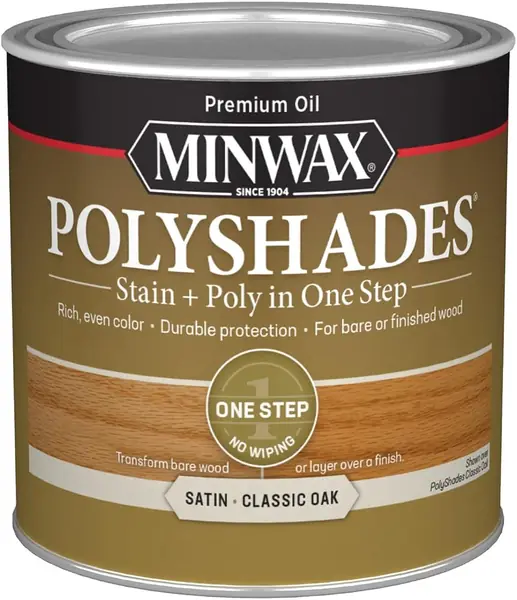
Minwax PolyShades Classic Oak

Minwax PolyShades Classic Oak satin stain and poly in a half-pint can

Refreshing finished furniture

Shop Score 89/100
Base
Oil-based stain and poly
Size
0.5 pint
Color
Classic Oak
Finish
Satin
View on Amazon

The appeal of PolyShades is simple: it lets you recolor a finished piece without stripping it back to bare wood. The oil-based formula combines stain and polyurethane in one can, so a light sanding and a couple of thin coats can refresh a dated cabinet or chair. Classic Oak is a warm, light brown with a satin sheen, and the finish is meant to build without wiping back.

We like it on already-finished furniture that is structurally sound but cosmetically tired, especially when a full refinish is not worth the time. It goes on with a natural-bristle brush and does not need to be wiped back, which sounds easier than it is. A heavy hand leaves brush marks, bubbles, and a sticky film that takes longer to cure.

The thick, sticky consistency is the catch. Two-plus thin coats are better than one heavy one, and you need to sand lightly between coats. On a vertical face, brush it on thinly and do not go back over a half-set area, or you can leave streaks and brush marks. The finish is durable once it cures, but it looks more like a coating than a stain that has soaked into the grain.

We keep PolyShades for the piece that needs a quicker color change over an existing finish, not for a furniture-grade restoration. It is a problem-solver for a rental kitchen or a hand-me-down dresser, and a poor fit for someone who wants a wipe-on stain that lets the grain show through. A half-pint is enough to test the color on a drawer front before you commit to the whole piece.

Worth Noting

  • Six-hour minimum wait between coats
Our Verdict

PolyShades is our pick for refreshing a finished piece without stripping, provided you are comfortable brushing thin, careful coats.

Check Latest Price

How We Tested the Best Wood Stains

We started by reading labels and technical data sheets, then narrowed the field to 12 stains that covered each formula family — penetrating oil, gel, water-based, dye powder, hardwax oil, and stain-and-poly — plus both interior and exterior ratings. We skipped anything that duplicated a formula we already had in a different can, and made sure the sizes ran from half-pints for samples up to a five-gallon pail for deck work.

Application happened in a ventilated garage, on sawhorses, across eight months of weekend projects. We brushed, wiped, and padded each stain onto labeled boards of oak, pine, maple, and cherry, then onto real furniture: a dresser, a set of cabinet doors, and a stretch of cedar decking. We timed how long each stayed workable, watched whether it dripped down cabinet fronts hung vertically, and noted every lap mark and streak where two passes met.

Color was judged in daylight against the maker's chip, after one coat, two coats, and whatever the label called maximum. We clocked dry and recoat times with a timer and a fingertip, and stirred every can to see whether pigment stayed suspended or settled into a hard layer. Coverage got measured, not estimated: we marked off square footage and tracked how far a quart actually went. We also recorded whether a separate topcoat was required and how each finish sat under a water-based poly.

Softwoods got a separate pass — pine and cherry, half conditioned and half bare — because blotching is what ruins most first attempts. Deck boards sat outside through rain and foot traffic for the full eight months, and we checked whether water still beaded. Value came down to cost per square foot of finished surface, not the price on the can. Oil-based products stayed in the ventilated garage, away from the water heater, and every oily rag was spread flat to dry before disposal; exterior formulas never came inside.

How to Choose a Wood Stain

Start with the job and the wood

Decide whether the piece will live indoors or outside, then check whether the wood is bare or already finished. A penetrating oil stain needs bare, porous wood to soak in; a gel or a stain-and-poly product can sit on top and may work over an existing finish. Exterior projects need a product rated for sun and moisture, while interior furniture needs a formula you can live with in a closed room.

On bare wood, species matters as much as the can. Pine and aspen absorb unevenly, while oak and ash show grain strongly. That is why we test every color on an offcut from the actual project before opening a full can. The same Provincial or Dark Walnut can look like two different stains on two boards, and the test board is the only honest preview.

Choose the formula for control

Penetrating oils give the most wood-like result: they soak in, leave the grain visible, and wipe back for a subtle build. Gel stains sit closer to the surface and stay put on vertical faces, which makes them our choice for cabinets and trim. Water-based stains and dyes dry faster and clean up with water, but they can raise the grain and leave less open time. Hardwax oils and stain-and-poly products combine color with protection, though they cost more or demand a more careful brush.

The trap is assuming every product called a stain works the same way. A gel stain can look more like a glaze on an existing finish, and a stain-and-poly is a coating, not a wipe-on dye. Match the formula to the job: Minwax Wood Finish for a classic wipe-on oil, General Finishes for gel control on cabinet fronts, Keda for custom dye colors, and Ready Seal for an exterior deck or fence.

Read color and coverage together

Color charts are a starting point, not a promise. The same can looks different on pine, oak, and maple, and a dark brown that reads rich on a sample can look nearly opaque on a porous board. Buy a small size when you can, test it on an offcut, and note how many coats it takes to reach the tone you want. Two thin coats usually give more control than one heavy coat.

Coverage numbers are just as easy to misread. Check whether the figure is for the can in your hand or for a gallon, and multiply by the number of coats you expect. A half-pint is a sample-size purchase; a quart is a furniture-size purchase; a five-gallon pail is for a deck or fence. If the project is large, buy all the stain at once and mix the cans together so the color stays consistent.

Plan for dry time and a topcoat

Dry to the touch is not the same as ready to sand or topcoat. Oil stains can stay workable for a while, gels can need a long window between coats, and water-based products may dry quickly but still need a full cure. Follow the label for recoat intervals, and test a hidden spot before you add polyurethane.

Most penetrating stains need a separate topcoat for protection, while a hardwax oil or stain-and-poly may do both jobs in one step. That convenience is worth paying for on a tabletop or cabinet, but it is not a shortcut on a floor or a deck. For exterior work, choose a product rated for UV and moisture, and plan the application around the weather rather than the other way around.

Frequently Asked Questions

Final Verdict

Most woodworking projects need one dependable stain, and that is Minwax Wood Finish for us. It wipes on with enough open time to keep the color even, leaves the grain visible, and a quart covers a surprising amount of furniture and trim. If you are doing cabinet fronts and want a no-drip gel, choose General Finishes; if the job is a deck or fence, Ready Seal is the exterior pick we trust.

Start with the surface and the topcoat, then buy the smallest size that tests the color honestly.