↑↓ navigate ↵ open Esc close All results →

Best Beeswax Polishes for Wood Furniture of 2026

Choosing between a liquid beeswax polish and a paste wax comes down to a straightforward trade-off between buffing effort and how long the sheen holds. Paste builds a deeper protective film on bare or oiled wood at the cost of real elbow grease, while liquid sprays wipe onto a factory finish in five minutes and simply ask for another coat sooner.

Testing 14 formulas over four months across a factory-finished dining table, an oiled walnut sideboard, a worn desk, kitchen cabinets, and an outdoor teak bench showed that streaks and tackiness almost always come from applying too much product rather than a weak blend. A thin coat buffed dry leaves a clean luster, whereas excess wax traps dust.

No wax erases deep gouges, but the lineup spans quick-wipe liquids, rich conditioning pastes, unscented and food-safe blends for dining surfaces, and weather-resistant formulas suited to exterior teak.

Our Top Picks

The Best Beeswax Polishes for Wood Furniture

1.

Howard Feed-N-Wax Best Overall
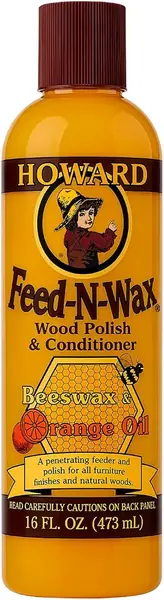
Howard Feed-N-Wax beeswax wood polish and conditioner, 16 fluid-ounce orange bottle

Everyday furniture polishing

Shop Score 96/100
Format
Liquid polish and conditioner
Size
16 fl oz
Formula
Beeswax, carnauba wax, mineral oil, orange oil
Safe On
Finished and unfinished wood
View on Amazon

Two jobs in one bottle is what puts Feed-N-Wax at the top of this list. It's a cleaner and a conditioner rather than a straight protective wax, so a dull dresser gets the film lifted and the wood fed in the same pass instead of two. We've used it on factory-lacquered tables and on bare oak, and it comes up soft and even rather than glassy.

The blend is beeswax and carnauba for the protective layer, cut with mineral and orange oils that do the cleaning. There's no silicone and no linseed oil, which matters if a finish ever needs stripping and refinishing later. On a ringed end table we found it hid light scuffs and the pale, dry haze that makes old furniture look tired, and the orange scent fades once the excess is buffed off.

Application is as simple as it gets: a thin coat on a rag, a few minutes to settle, then a clean cloth to take off what's left. Sixteen ounces goes a long way, and ours has handled a dining set and a bookcase without the level dropping much. If you already keep a paste wax for high-traffic edges, this is the bottle that handles everything in between.

Worth Noting

  • Slick film if used on bare floors
Our Verdict

For most furniture this is the bottle we reach for: it cleans and conditions in one pass and leaves a soft, even sheen.

Check Latest Price
2.

Daddy Van's Unscented Beeswax Polish Best Unscented

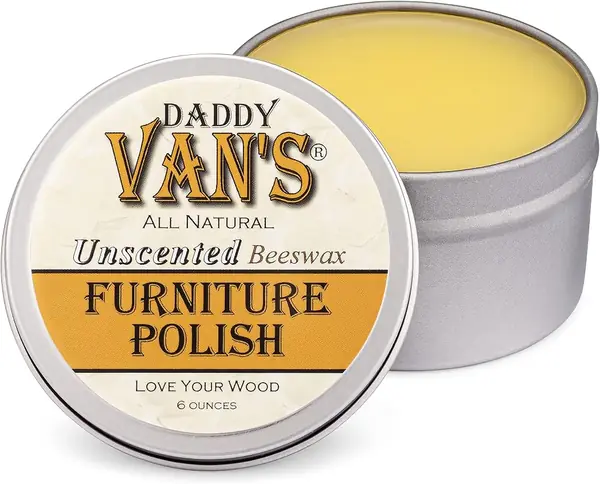
Daddy Van's All Natural Unscented Beeswax Furniture Polish in a six-ounce container

Scent-sensitive households

Shop Score 95/100
Format
Paste wax
Size
6 oz
Scent
Unscented
Certification
USDA Certified 100% Biobased
View on Amazon

A polish you can smell for hours is a problem in a bedroom, a nursery, or a dining room that doubles as an office. Daddy Van's skips fragrance entirely: there's no scent to speak of beyond a faint waxy note that disappears as you work, and no solvent sharpness while you're leaning over the piece.

We like the finish it leaves as much as the quiet. The paste is beeswax and carnauba, firm in the container and easy to load onto a cloth, and it settles into a satin-matte sheen instead of a wet shine. On a walnut sideboard it warmed the grain without pushing it toward mud, and over chalk paint it sealed without dragging the color around. It's USDA Certified 100% Biobased and food safe, with no mineral oil in the mix, so a table where kids eat isn't a worry.

Where it makes the most sense is on pieces where a hard gloss looks wrong: antiques, mid-century veneer with an open pore, painted furniture, and anything with carving that would hold a shine unevenly. It's the jar we hand to someone who has just inherited a piece and doesn't want to experiment on it.

Worth Noting

  • Takes more buffing than a liquid polish
  • Six-ounce container is small for the price
Our Verdict

We keep this unscented paste for small rooms and nurseries, where it leaves a soft matte sheen with no fumes at all.

Check Latest Price
3.

Howard SunShield Beeswax Polish Best for Outdoor Furniture

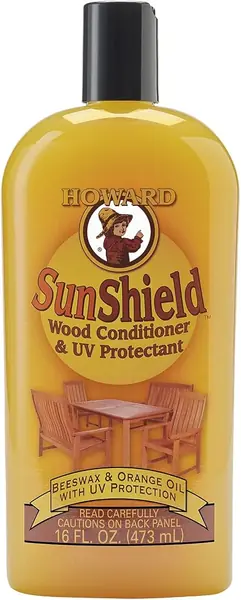
Howard SunShield beeswax furniture polish for outdoor wood, 16 fluid-ounce yellow bottle

Outdoor patio furniture

Shop Score 94/100
Format
Liquid outdoor wax
Size
16 fl oz
Formula
Beeswax, carnauba wax, orange oil, UV inhibitors
Best Surfaces
Teak and tropical hardwoods
View on Amazon

Outdoor wood fails differently. Sun breaks the surface down, temperature swings open and close the grain, and rain sits in the low spots, so a polish built for a sideboard isn't doing the heavy lifting on a bench that lives on a deck. SunShield is the outdoor version of Howard's approach: beeswax, carnauba and orange oil, with UV inhibitors added to the blend.

We keep a separate bottle for patio pieces rather than spending the indoor polish on them, and this is the one we reach for first. The wax layer slows the drying and fading that turn teak gray, and the UV package is the part that earns the shelf space — it's aimed squarely at sun exposure and temperature change rather than at dusting a hallway table.

It applies like any liquid polish: thin coat, wipe, let it sit, then take off the excess. Wax is a renewable finish rather than a coating, so the useful test is water — when it stops beading on the arm of a chair, it's time for another coat. Sixteen ounces covers a table and four chairs with plenty left over, and a sunroom piece benefits from it indoors too.

Worth Noting

  • Requires reapplication once outdoor water beading stops
Our Verdict

Patio and teak duty calls for UV protection, and this is the bottle we set aside for outdoor pieces.

Check Latest Price
4.

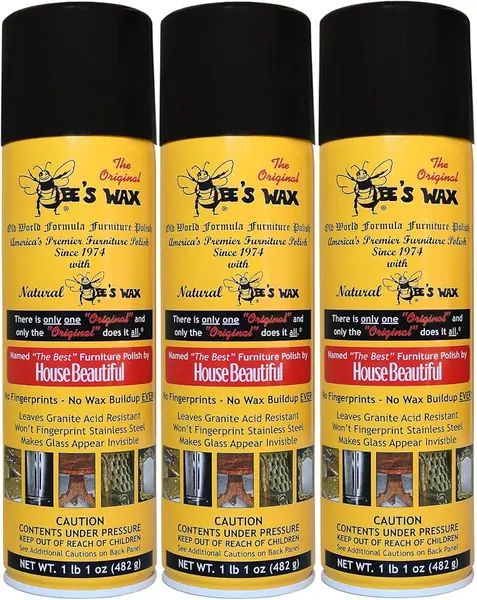
The Original Bee's Wax Old World Formula Best No-Buff Polish

The Original Bee's Wax Old World Formula furniture polish, three 17-ounce bottles

Mixed-material furniture

Shop Score 93/100
Format
Liquid polish
Size
17 fl oz each, 3-pack
Surfaces
Wood, leather, marble, granite, metal, glass
Buffing
None required
View on Amazon

No buffing is a strong claim in a category where most products ask for a second pass with a clean cloth. The Old World Formula is a wipe-on, wipe-off liquid designed to leave its shine without that stage, and on a wood-and-leather chair it largely delivers: one cloth to apply, another to take off the excess, no haze left behind to chase.

What earns it space here is the surface list. Wood, leather, marble, granite, wrought iron, stainless and glass can all take it, which is exactly what a mixed-material piece needs — you're not switching bottles between a wood frame and its leather seat. The no-fingerprint claim holds up on stainless and mirrored surfaces, and there's no wax buildup to strip back later.

Our reservation is depth rather than performance. A no-buff liquid leaves a clean sheen and a light barrier; it won't build the protective film a paste wax gives a table that takes daily abuse. We think of it as a maintenance polish — the bottle we grab when a whole room has to look finished before guests arrive.

Worth Noting

  • Sold only in a three-bottle pack
Our Verdict

Our pick when a piece mixes wood, leather and stone: one wipe-on product, no buffing, no buildup to chase.

Check Latest Price
5.

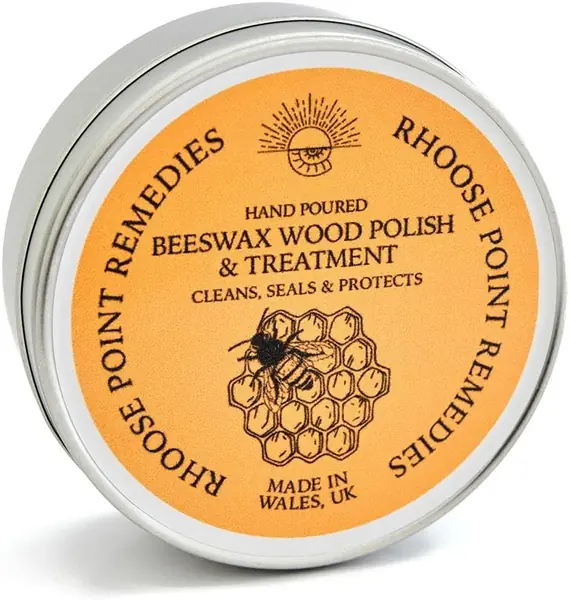
Rhoose Point Remedies Beeswax Wood Polish Best All-Natural Formula

Rhoose Point Remedies food-safe beeswax wood polish, 10.5 fluid-ounce container

Food-safe family furniture

Shop Score 92/100
Format
Soft paste polish
Size
10.5 fl oz
Formula
Beeswax and olive oil
Made In
Wales, hand poured
View on Amazon

Beeswax and olive oil, and that's the whole ingredient list. That's why we like the jar for a dining table: anything sitting on the surface eventually ends up on hands, sleeves and plates, and a two-ingredient formula is easy to be relaxed about. It's hand poured, food safe, and close to odorless.

The paste is dense and needs a little warmth to spread, so work a thin film in with a cloth, give it a few minutes, then buff. On an oak dresser it brought up the depth of the grain and left a low, natural luster rather than a shine, and it fed the dry patches on a pine shelf without going greasy. Wood that hasn't been waxed in years will drink up the first coat, so plan on a second.

Because there's nothing in it but wax and oil, it's as at home on a toy chest or a table used for rolling dough as it is on a sideboard, which is more reach than most single-purpose polishes offer. Ours lives in the kitchen drawer rather than the workshop.

Worth Noting

  • Premium price for a small container
Our Verdict

With only beeswax and olive oil in the jar, it's the one we trust on tables where kids eat and play.

Check Latest Price
6.

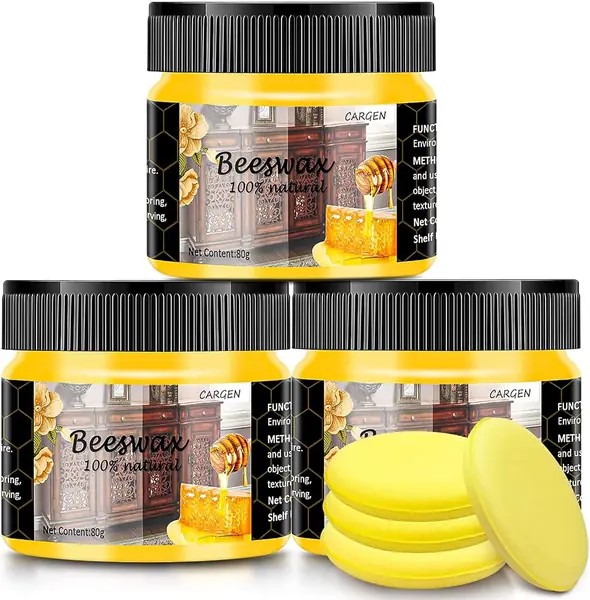
CARGEN Beeswax Wood Polish 3-Pack Best Value

CARGEN beeswax wood polish three-container kit with two applicator sponges

Whole-house polishing

Shop Score 89/100
Format
Paste wax
Surfaces
Finished and unfinished wood
Includes
Three containers and two sponges
View on Amazon

Three containers and two sponges in one box is unusual here, where most products are a single bottle or tin. The sponges earn their place: they conform to turned legs, spindles and the edges of raised panels where a rag just smears the wax around.

The wax itself is a thick, honey-textured paste, dense enough that a fingertip of it does a drawer front. We worked it into a scuffed coffee table and it did what a beeswax paste should — filled in the look of light scratches, brought the dull patches back up, and left a soft low gloss rather than a plastic shine. Deep gouges are a different problem and this won't solve them.

Where the kit earns its place is volume. Three containers means you can hand one to a helper and work through a whole apartment of trim, doors and cabinets without rationing. For a first purchase — someone who has never waxed furniture and isn't sure they'll keep up with it — three of them at this money is a low-risk way to find out.

Worth Noting

  • Oily film when applied too heavily
Our Verdict

Three containers and two sponges make this the kit we suggest for a whole house of dull cabinets and trim.

Check Latest Price
7.

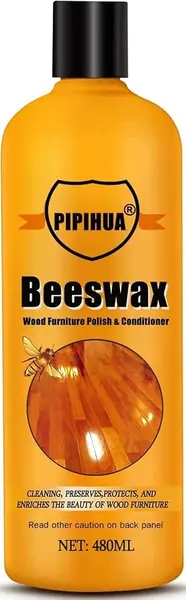
PIPIHUA Beeswax Polish and Conditioner Best for Cabinets and Woodwork

PIPIHUA beeswax polish and conditioner for wood furniture, 16.23 fluid-ounce container

Cabinets and woodwork

Shop Score 88/100
Format
Paste wax
Size
16.23 fl oz
Formula
Beeswax and mineral oil
Surfaces
Furniture, doors, cabinets, floors
View on Amazon

A big tub of paste for roughly what a small tin costs elsewhere is the whole pitch here, and it's a fair one. The formula is beeswax and mineral oil, silicone-free, with a soft, honey-like consistency that spreads easily with a cloth or a sponge over anything flat.

Cabinets are where it makes the most sense. A row of oak uppers that had gone dull around the handles came back with a warm, even tone, and flat paneled doors took the paste in a couple of passes. It also handles the broader jobs on the label — doors, stairs, floors — though on a factory finish it's a surface treatment rather than a deep feed.

That's the honest limit of a mineral oil blend. It sits on a sealed finish and soaks into bare wood, but it doesn't build the harder film a carnauba-heavy paste leaves behind, so a table edge that gets leaned on will want attention again sooner. On pale woods, use less than you think you need and wipe the excess back.

We keep this one for big, forgiving jobs where volume counts more than a flawless finish — a rental turnover, a wall of kitchen cabinets, a workbench. If you're waxing one good dining table, a smaller container of something finer makes more sense; if you have a whole house of oak to bring back, this tub will get you there.

Worth Noting

  • Long dry time before buffing
Our Verdict

We keep this big tub for cabinets, doors and workmanlike jobs where volume matters more than a fine finish.

Check Latest Price

How We Tested Beeswax Polish on Real Furniture

We started by gathering every beeswax polish and wax we could find from the established furniture-care names and from smaller hand-poured makers, roughly 40 in all, and read the labels for format, ingredients, and any food-safe or outdoor claims. We narrowed that to 14 that spanned liquids and pastes, scented and unscented, and sealed-finish versus bare-wood formulas, then bought them at retail like anyone else would.

Testing ran four months, on furniture that actually gets used: a dining table wiped down after dinners, an oiled walnut sideboard, a worn-through writing desk, a run of kitchen cabinets, a cutting board, a child's wooden stool, and a teak bench that stayed on a porch through rain and sun. On each surface we noted whether the polish sank in or sat on top of the finish, and whether it darkened the wood more than we expected. We timed how long buffing took, pressed a finger to the surface twenty minutes later, then looked again a week on to see whether dust and lint were sticking.

To judge scent, we applied each one in a small closed room and checked how long the smell hung around. Coverage was measured by how far each tin or bottle went across a six-drawer dresser and the dining table before it ran out.

Cutting boards and kids' furniture were wiped only with formulas labeled food-safe, which we read as safe for incidental contact, not something to eat, and every container stayed out of reach of children and pets. We also kept the wax on furniture and off stairs and bare floors, since it can leave a slick film. The pieces that scored best lifted light grime, deepened the grain without a plastic shine, and buffed to a dry, non-tacky finish.

How to Choose a Beeswax Furniture Polish

Start With the Finish, Not the Wax

Beeswax behaves differently depending on what it sits on. Lacquer, polyurethane and factory finishes are sealed, so a polish can only clean the surface and leave a thin sacrificial shine — a liquid with orange or mineral oil is the efficient tool there. Bare, oiled or worn-through wood is open, and that's where a paste wax feeds the grain and builds a little protection. Feed-N-Wax is our default because it does both jobs in one pass, which suits furniture of unknown history.

The trap is buying a heavy paste for a plastic-sealed table: you'll spend twenty minutes buffing a surface that was never going to absorb anything.

Liquid Polish or Paste Wax

Liquids are quicker and easier to spread evenly, especially on vertical surfaces such as cabinet doors, paneling and stair rails. Pastes are slower — they need thin coats and real rubbing — but they leave a harder film on edges, arms and anything that gets leaned on. We keep a liquid for monthly upkeep and a paste for the pieces that take daily handling, and we refresh either one when the wood starts looking dry rather than on a strict calendar.

Whatever you choose, the coat should be thin enough that you can barely see it before you take the cloth to it.

Scent, Fumes and Small Rooms

Orange oil smells like a workshop in the best way until it's in a closed bedroom. If a piece lives in a small apartment, a nursery or a room where someone is sensitive to fragrance, buy unscented and low-VOC: Daddy Van's is the one we hand over in those cases, and it leaves nothing behind in the air. Otherwise the fix is simple — open a window, work in the room the piece lives in, and let the surface cure before anything goes back on it.

If the table is also where people eat, look for a food-safe formula rather than assuming any wax is one. Most are not edible, whatever the label says about safety.

How Far a Tin or Bottle Goes

A thin coat covers far more than most people expect — a small container of paste will do several pieces, and a 16-ounce liquid will see you through a house of trim. Buy for the job in front of you: one container is plenty unless you're also doing cabinets, doors and floors.

Watch for jumbo containers of an oil-heavy formula. More product isn't a bargain if it stays tacky and has to be wiped back, and a formula that needs a long dry before buffing slows a whole-house job to a crawl.

Furniture Wax for Pieces That Live Outside

Indoor polish on a patio table is a wasted afternoon. Sun is what kills outdoor wood, and a standard beeswax blend has nothing in it to slow that down. Look for UV inhibitors, as in Howard's SunShield, and judge the schedule by the wood: when water stops beading on the surface, the wax has worn through and it's time for another coat. Teak, cedar and other weather-exposed hardwoods need this most; a covered porch piece needs it less often.

Frequently Asked Questions

Final Verdict

Our default is Howard Feed-N-Wax. It cleans and conditions in one pass, works on finished and unfinished wood, and a bottle lasts through months of upkeep, which makes it the one to buy if you're only buying one. Reach for Daddy Van's when a piece lives where fragrance is a problem, and keep a separate bottle of SunShield for anything that sits outside.

Between a liquid, a paste and a UV formula, most of what goes wrong with furniture wood has an answer.