↑↓ navigate ↵ open Esc close All results →

Best Wood Finishes of 2026

Every wood finish settles one threshold choice before a brush touches the board: whether it builds a protective film on top or soaks down into the pores. Choosing a glossy surface coat when open-grain warmth was the goal—or letting an oil-modified clear coat amber pale maple—creates problems that take heavy sanding to reverse.

Testing 14 stains, oils, waxes, and clear coats over six months on scrap panels, cabinet doors, and working furniture confirmed two reliable shop habits: thin coats level far cleaner than heavy ones, and label recoat windows act as minimums rather than loose estimates. Price rarely predicts satisfaction compared with dry-odor speed, container sizing, and how forgivingly a finish goes down without lap marks.

Sorted by the project at hand, these ten finishes span color stains, penetrating oils and waxes, and durable clear topcoats for furniture and trim.

Our Top Picks

The Best Wood Finishes

1.

General Finishes High Performance Topcoat Best Overall
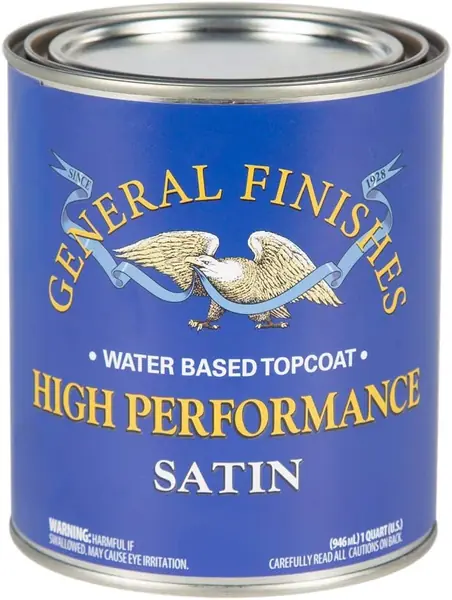
General Finishes High Performance water-based topcoat in a quart can, satin sheen

Furniture and cabinets

Shop Score 98/100
Coverage
125-150 sq ft per quart
Base
Water-based
Finish
Satin
Recoat
1-2 hours between coats
View on Amazon

An hour or two between coats is what makes this topcoat practical. A dresser, a run of cabinet doors, or a dining table can go from bare wood to finished in a single day instead of tying up the garage for a week, and the finish brushes out smooth with a foam applicator with almost no odor — which counts for a lot when the piece lives in the room you're working in.

What we care about most in a clear coat is that it stays clear, and this satin doesn't muddy pale woods or shift the color of the stain underneath. The film also feels genuinely hard under a fingernail, slick rather than rubbery, which is why we recommend it for cabinet fronts and tabletops that get handled every day. Satin is the sheen for furniture you don't want to see your reflection in.

One label note worth taking seriously: don't use it over bright white paint, where a reaction with the paint can yellow the coat. Over bare wood, stain, or a mid-tone paint you won't see that shift. It's interior-only as well, so porch furniture and exterior doors need a different product. For a single shelf or a picture frame, the Minwax Polycrylic below is the cheaper way in; for a kitchen's worth of cabinets, the bigger can and the wider sheen range here are worth the step up.

Worth Noting

  • Satin sheen reads glossier than expected
  • Thin film wants three or four coats
Our Verdict

We recommend this topcoat to anyone finishing furniture or cabinets who wants a clear, hard satin film and doesn't want to lose days between coats.

Check Latest Price
2.

Minwax Polycrylic Protective Finish Best Budget Clear Coat

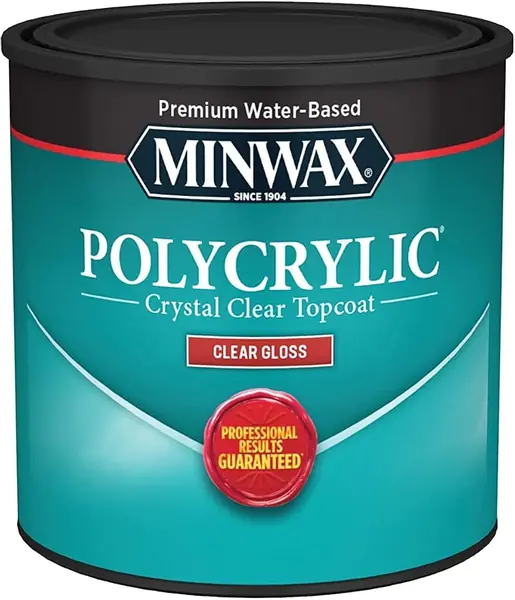
Minwax Polycrylic water-based protective finish half-pint can with a clear gloss label

Small projects

Shop Score 97/100
Coverage
Up to 150 sq ft per 0.5 pint
Base
Water-based
Sheen
Gloss
Recoat
2 hours
View on Amazon

Half a pint sounds like a sample, but for a bookshelf, a picture frame, a side table, or a chest it's the sensible size — you're not buying a quart that skins over before you get back to it. We keep a can on the shelf for exactly that kind of small job.

It goes on milky and dries clear, which makes it forgiving over both oil- and water-based stain and over light woods like maple and birch, where an amber oil-based coat would show. Recoats come two hours apart, cleanup is soap and water, and the finish is a true high gloss. The listed coverage runs up to 150 square feet, which is optimistic for two coats on a real bookcase and generous for a frame.

Thin coats are the trick with any water-based clear coat: load a foam brush, lay the finish down in long passes with the grain, and don't go back over anything that has started to set. Two coats over a stain is usually enough for a shelf or a frame, and the film stays clear rather than going amber the way an oil-based varnish does.

Worth Noting

  • Gloss is the only sheen in this listing
  • Half pint limits it to small pieces
Our Verdict

We buy this by the half pint for small pieces: it dries clear over oil or water stain, cleans up with soap and water, and recoats in about two hours.

Check Latest Price
3.

Minwax Wood Finish Penetrating Stain Best Oil Stain for Color

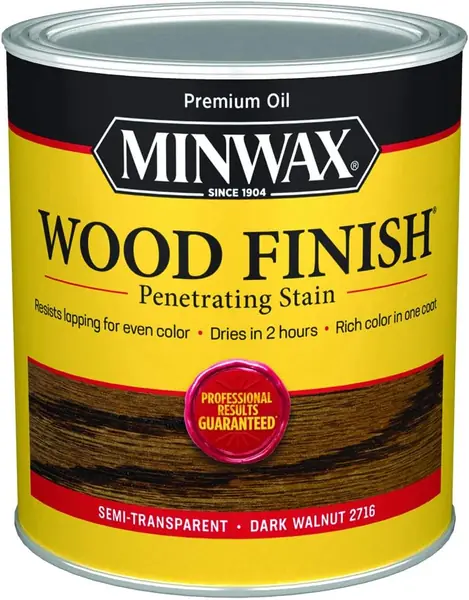
Minwax Wood Finish oil-based penetrating stain quart can in Dark Walnut

Furniture color

Shop Score 96/100
Coverage
100 sq ft per quart
Base
Oil-based
Color
Dark Walnut
Dry Time
2 hours
View on Amazon

A quart of Dark Walnut covers about 100 square feet, which is a dresser and four chairs with a little to spare. The timing matters as much as the number: brush or wipe it on with the grain, then wipe the excess off inside the five-to-fifteen-minute window on the label, because that window is where the color gets decided.

We like an oil stain for the way it sinks in and leaves the grain visible instead of sitting on top like paint. This one resists lapping, so the overlaps where you stopped and restarted don't dry darker than the rest of the panel — the flaw that ruins a lot of first-time staining jobs. One coat gives the color; a second deepens it.

The formula comes in dozens of tones, which matters when you're matching new trim to an old floor or blending a repair into an existing piece, and it's built for interior furniture, cabinets, doors, and trim. Plan on about two hours before you handle the piece. Test the color on an offcut or the back of a drawer first: Dark Walnut reads cooler and darker on some woods than the can's photo suggests, and pine takes it differently than oak.

Worth Noting

  • Colors only, so a clear topcoat is still needed
Our Verdict

We hand this to anyone who wants rich brown color on furniture or trim: one coat, a quick wipe back, and the grain still shows through.

Check Latest Price
4.

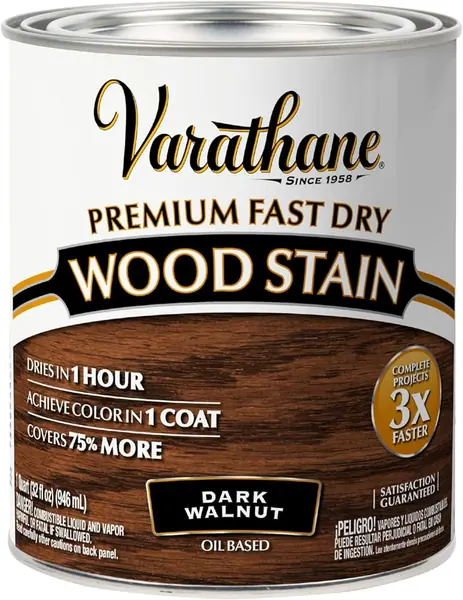
Varathane Premium Fast Dry Wood Stain Best Fast-Drying Stain

Varathane Premium Fast Dry wood stain quart can in Dark Walnut

Fast cabinet jobs

Shop Score 95/100
Coverage
275 sq ft per quart
Base
Oil-based
Color
Dark Walnut
Dry Time
1 hour to the touch
View on Amazon

No wood conditioner, no pre-stain, no waiting overnight — this is the stain to reach for when the project is already half apart in the garage and you want color on it today. It seals the pores as it colors, dries to the touch in about an hour, and we noticed the difference most on cabinet doors, where a fast dry means you can topcoat the same afternoon instead of losing the weekend.

Coverage is the other reason it earns a place: a quart does up to 275 square feet, close to three times what the Minwax quart claims, so a run of cabinets or a long bookshelf doesn't leave you short. One coat carries the color, and the pigments highlight grain rather than flattening it.

Two things to watch. A heavy coat on open grain can read more like paint than stain, so wipe back hard and keep the layers thin. And the color can land darker or more saturated than the can's photo, especially on tight-grained woods, so test a drawer side before you commit to a whole piece.

Worth Noting

  • The one-hour dry assumes warm, dry air
Our Verdict

For furniture and cabinets on a deadline, we recommend this stain: one coat of color, an hour to the touch, and no conditioner needed.

Check Latest Price
5.

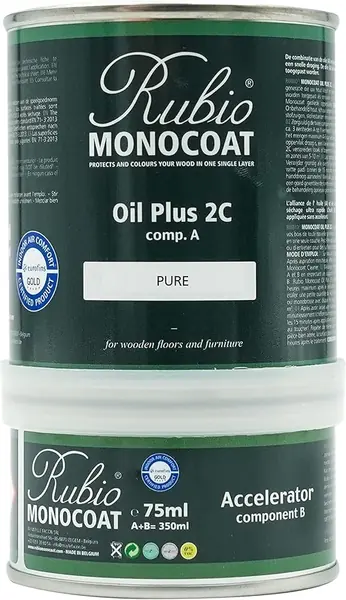
Rubio Monocoat Oil Plus 2C Best One-Coat Hardwax Oil

Rubio Monocoat Oil Plus 2C 350 ml can of clear matte hardwax oil

Tables and counters

Shop Score 94/100
Coverage
105-175 sq ft per 350 ml
Color
Pure
Coats
One
VOC Rating
0% VOC
View on Amazon

Part A, Part B, one coat worked in and buffed off — that's the whole schedule, with no sanding between layers and no film to build. A table or a countertop can be back in use about a day later, which is why we suggest this when a piece can't come out of the room for a week.

What sold us is the look. The oil sits in the wood rather than on it, so walnut and oak keep their texture and read as wood instead of as a plastic shell, and the matte surface is forgiving of the small marks daily life adds. On a live-edge top or a butcher-block counter it looks like the wood was always that way.

We think the coverage makes more sense of the price than the tag suggests: 350 ml covers 105 to 175 square feet in a single coat, so a dining table uses a fraction of the can. The line comes in dozens of mixable colors, the formula is rated 0% VOC, and it's certified for food contact and toys — which matters if you're finishing a countertop in a room the family lives in.

Worth Noting

  • Matte is the only sheen listed
Our Verdict

For tables and countertops where the wood should look like wood, this single-coat hardwax oil is the one we recommend if the budget stretches.

Check Latest Price
6.

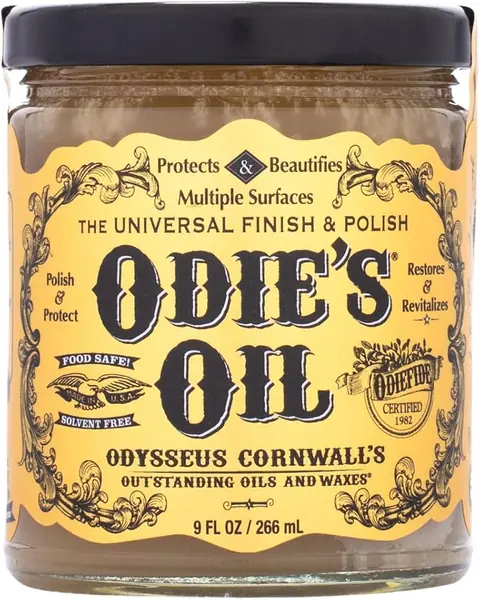
Odie's Universal Oil Best Natural Multi-Surface Oil

Odie's Universal Oil nine-ounce jar of solvent-free hardwax oil finish

Mixed-material projects

Shop Score 93/100
Coverage
270+ sq ft per 9 oz jar
Sheen
Any sheen level
Surfaces
Six including wood, leather and stone
Application
Wipe on, buff off
View on Amazon

Nothing in this jar evaporates away, which is why a small jar goes so far: with no solvents in the formula, the thin film you wipe on is the film that cures. The coverage runs past 270 square feet, and after using it on a tabletop we stopped doubting that number.

The routine is wipe on, wait, buff off — no sanding between coats, no two-part catalyst to measure, no gloves. It's food safe once cured, it carries UV inhibitors so outdoor pieces resist yellowing, and it works on leather, metal, stone, and vinyl as readily as on wood. That makes it the one jar to grab for a table with a steel base or a stool with a leather top.

Buffing is the part to get right. Wipe off everything that hasn't soaked in and the surface cures to a soft sheen; leave it on heavy and it can stay tacky much longer than you want. We keep it for pieces where you want to feel the wood — a countertop, a chair arm, a live-edge top — rather than for a surface that needs a hard, glassy film.

Worth Noting

  • Takes a couple of days to cure
Our Verdict

We recommend it when a project mixes materials or touches food: no solvents, no gloves, and a jar that covers far more than it looks like it will.

Check Latest Price
7.

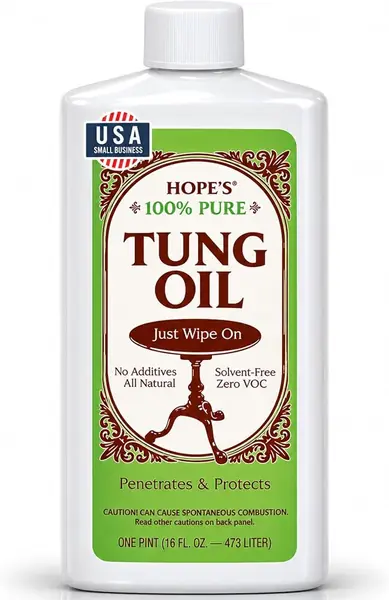
Hope's 100% Pure Tung Oil Best for a Natural Wood Feel

Hope's 100% Pure Tung Oil sixteen-ounce bottle for wood finishing

Natural wood feel

Shop Score 92/100
Finish
Satin, in the wood
Form
100% pure tung oil
Volume
16 fl oz
Food Contact
Safe once cured
View on Amazon

Tung oil is the slowest finish on this list and it isn't close: coats go on thin, soak in, and need days before the next one, with a full cure measured in weeks. We think that's a fair trade for what you get, but plan the project around the calendar and the rest is easy — wipe on, wipe off, wait.

The payoff is a finish that lives in the wood instead of on it. There's no film to chip at a corner and no plastic sheen, just a satin surface that shows the grain and keeps the texture of the wood under your hand. On walnut or oak it reads like a piece that has been cared for rather than coated, which is what we want on furniture that gets handled every day.

Work in thin coats and wipe off anything that hasn't soaked in; puddles are what turn tung oil sticky, and a heavy coat can take far longer to cure than a thin one. Once it's fully cured it's rated for food contact and it holds up outdoors, so it suits a countertop or a table that lives on a porch. Give it ventilation while it dries.

Worth Noting

  • Strong odor while it cures
  • Darkens light woods slightly
Our Verdict

For a countertop or a table that should feel like wood, we recommend this pure tung oil — provided you can give it weeks, not hours.

Check Latest Price
8.

Jolie Finishing Wax

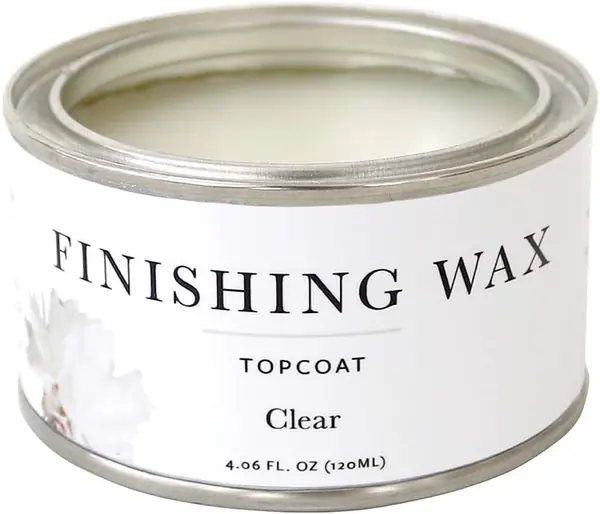
Jolie Finishing Wax 120 ml tin of clear matte furniture wax

Painted furniture

Shop Score 91/100
Coverage
75 sq ft
Sheen
Matte, buffable
Recoat
8 hours
Size
120 ml
View on Amazon

Chalk paint needs something over it, and a matte wax is the traditional answer: it takes the chalky tooth off the paint without adding a plastic shine, and you can buff it to whatever soft sheen you like.

Almost nothing goes wrong with this one. It's creamy, it goes on with a wax brush or a lint-free cloth, and it's the finish we're most comfortable handing to someone who has never topcoated anything. We use it on painted dressers, frames, and bookcases, and it leaves the paint color exactly where it started.

Allow eight hours between coats, keep them thin, and buff after the second; a heavy coat is what leaves a surface tacky weeks later. The colored waxes in the same line can be layered over the clear for texture on carved or distressed pieces, and the clear takes a very light hand — you'll get three or four small pieces out of one tin.

Worth Noting

  • Not for surfaces that take daily wear
Our Verdict

We keep this wax for painted furniture: it goes on creamy, buffs to a soft matte sheen, and doesn't change the color underneath.

Check Latest Price
9.

Furniture Clinic Boiled Linseed Oil

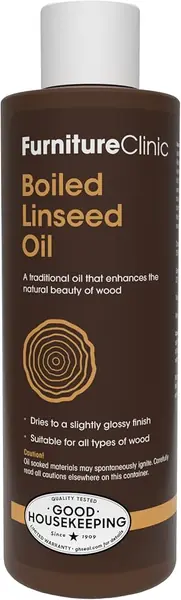
Furniture Clinic boiled linseed oil 8.5-ounce bottle for wood and stone

Dry thirsty wood

Shop Score 90/100
Coverage
50 sq ft
Finish
Slightly glossy
Size
8.5 fl oz
Surfaces
Wood, stone, terracotta, metal
View on Amazon

Dried-out wood is its own problem: a sun-bleached chair, a frame that has spent years near a radiator, a workbench top that drinks whatever you put on it. Boiled linseed oil is the cheap fix — wipe it on, let the dry wood drink, wipe off the rest, and the grain comes back.

We like it for exactly that job and not much beyond it. It penetrates instead of filming, so it won't shed a spilled glass the way a polyurethane will, but it revives tired wood for less money than anything else here and leaves a soft, slightly glossy glow rather than a coat.

A cloth or a sponge is all you need. It's labeled for stone, terracotta, and metal as well as wood, indoors and out, which makes it handy for a porch chair or a stone step as well as furniture. Two coats, with drying time in between, will feed wood that hasn't been oiled in years.

Worth Noting

  • Pungent odor while it cures
  • One bottle covers about 50 sq ft
Our Verdict

We reach for this on dry, thirsty wood: it soaks in fast, brings the grain back, and it's the least expensive finish on this list.

Check Latest Price
10.

Varathane Ultimate Water-Based Polyurethane Best for Small Painted Pieces

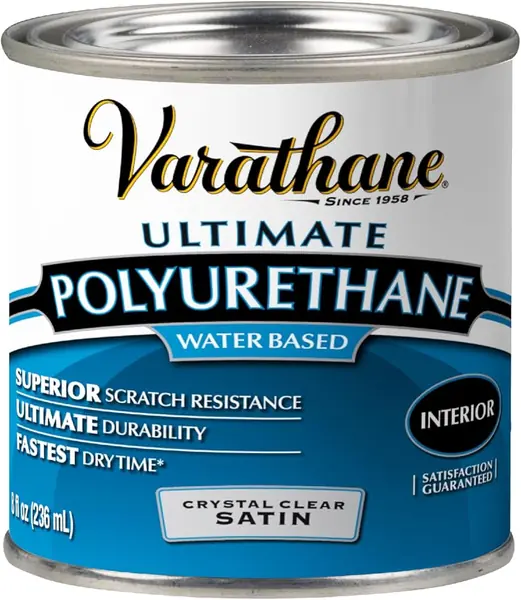
Varathane water-based ultimate polyurethane half-pint can in satin finish

Small painted pieces

Shop Score 89/100
Coverage
62 sq ft per half pint
Base
Water-based
Sheen
Satin
Cleanup
Soap and water
View on Amazon

If the mirror gloss of Minwax Polycrylic is more shine than your piece wants, this is the same idea in satin. It's water-based and water-clear, it cleans up with soap and water, and it dries fast enough that two coats fit into an evening.

We use it on painted shelves, cabinet interiors, and small furniture where we want protection without a sheen anyone will notice. The half pint covers about 62 square feet — a bookcase or a pair of nightstands — which is the right amount for a small job and enough to finish a paint project without a quart going to waste.

Thin coats, a foam brush, and long passes with the grain are the whole technique; the film dries quickly and needs very little leveling. Where it stops is fine furniture that takes a beating: for a dining table in daily use, our top pick builds a harder, more forgiving film. On a shelf or a drawer box, this is plenty.

Worth Noting

  • Can yellow over bright white paint
  • Satin still reads a little glossy
Our Verdict

We point people to this satin version for shelves and small painted pieces: water-based, water-clear, and quick enough to recoat the same evening.

Check Latest Price

How We Tested Wood Finishes

We built the shortlist by sorting every finish we could find by what it actually does: adds color or only protects, builds a film or soaks into the grain, water-based or oil-based. From there we filtered by sheen, container size against the size of a typical project, and whether cleanup takes soap and water or a solvent. Fourteen finishes made the cut and went into testing for six months.

Most of the work happened where finishing actually happens — a garage bench, a kitchen's worth of cabinet doors, and a dining table in daily use. Each product went onto scrap maple and oak first, side by side, so we could compare stain coverage and color directly instead of from memory. Then it went onto a real piece, sometimes two. We also kept a tally of how much square footage each container covered compared with what the label promised.

We timed drying with a fingertip and a fresh coat, and noted whether the second pass dragged or leveled out. Raking a light across each cured surface showed brush marks, bubbles, and uneven sheen, and we recorded whether the grain still showed through or vanished under film. Coated boards sat in a bright room for the length of the test so we could check for yellowing against an uncoated control, and we wrote down how long the smell lingered after the room was ventilated.

Durability got the abuse: a wet glass left overnight, a hot mug, a dropped set of keys, and for the food-safe oil, a cutting board. First-timers on the team applied every product, and we counted drips, runs, and lap marks that wouldn't buff out, since forgiveness matters more than a spec sheet. Oil-soaked rags were dried flat outdoors or soaked in water before disposal, every single time.

How to Choose a Wood Finish

Color First, Then Protection

Stains color the wood and clear coats protect it, and a few products do both in one step. If the wood is already the tone you want, go straight to a topcoat — the General Finishes and Minwax Polycrylic here are both clear. If you're changing the color, pick the stain first and the clear coat second. A water-based clear coat is the safe pair for either an oil- or a water-based stain, which is why we suggest it when you're unsure.

One label check before you commit: several interior stains, including the Minwax and Varathane quarts here, are labeled for furniture, cabinets, doors, and trim rather than floors. If the project is a floor, buy a product rated for floors instead.

Film, Oil, or Wax

Film finishes — polyurethane, polycrylic, and one-coat hardwax oils like Rubio Monocoat — build a protective surface that shrugs off a wet glass and takes daily handling. They can chip at an edge, and repairing a spot means recoating the whole panel. Penetrating oils such as tung, linseed, and Odie's sit in the wood: nothing to chip, a natural look, and a surface you refresh with another coat instead of sanding back. Wax is the lightest option, best over paint and on pieces that don't see much traffic. The trap is a dining table: an oiled or waxed top will show water rings that a film finish ignores.

Water-Based or Oil-Based

Water-based products win on workflow: recoats in an hour or two, soap-and-water cleanup, and little smell, so you can finish a piece in the room where it will live. Oil-based products buy working time and a warm tone that flatters walnut and oak, at the cost of fumes, solvent cleanup, and a slower dry. One misconception worth dropping: water-based doesn't automatically mean no yellowing, and a couple of these clear coats can shift bright white paint. Test a hidden spot when white is involved.

Match the Can to the Project

Coverage figures are the easiest way to avoid a second order. A quart of Minwax Wood Finish does about 100 square feet; the same size of Varathane Fast Dry claims 275. One-coat products change the math again — 350 ml of Rubio covers 105 to 175 square feet because there's no second pass. A half pint of clear coat is genuinely enough for a shelf or a frame, while a kitchen's worth of cabinet doors will eat a quart. On a first project, buy the smaller can and a second one later rather than opening a quart you can't finish.

Working Time and Where You're Working

Recoat windows run from an hour to a week: Varathane's stain is dry to the touch in about an hour, Jolie's wax wants eight hours between coats, and tung oil needs days, with a cure measured in weeks. If the piece can't leave the house, favor a water-based product or a solvent-free hardwax oil, and ventilate anyway — even the low-odor products off-gas while they set. Match the finish to your patience as much as to the furniture: a beautiful oil finish that gets rushed looks worse than an ordinary film coat applied on schedule.

Frequently Asked Questions

Final Verdict

For furniture and cabinets, we keep coming back to the General Finishes High Performance topcoat: it stays water-clear, brushes out smooth, and recoats in an hour or two, which is what lets a project finish in a day. If your job is color rather than protection, start with Minwax Wood Finish in Dark Walnut and seal it afterward.

And if you want the wood to look like wood — one coat, no sanding between, a matte surface you can feel the grain through — Rubio Monocoat is the premium pick that earns the extra spend on a table or a countertop.