↑↓ navigate ↵ open Esc close All results →

Best Finishes for Wood Countertops of 2026

Finishing a wood countertop comes down to a single kitchen trade-off: a hard film finish blocks water rings and stains on a baking or prep-free island yet chips under a chef's knife, while a penetrating oil forgives blades and refreshes quickly in exchange for regular upkeep. Getting that choice wrong leaves either a scarred coating or a thirsty board covered in coffee stains.

Testing 16 food-contact-labeled finishes on butcher-block counters and cutting boards over six months tracked dry time, lingering odor, yellowing, and tackiness alongside real spills of water, coffee, and tomato sauce wiped at ten minutes and beyond. Cure schedules proved just as decisive as stain resistance, since any surface used for direct chopping needs oils or waxes cured completely through.

Whether the counter serves as a daily cutting block or a light-prep pastry station, the eight tested formulas balance stain resistance, repairability, and food-safe prep.

Our Top Picks

The Best Finishes for Wood Countertops

1.

Howard Butcher Block Conditioner Best Overall
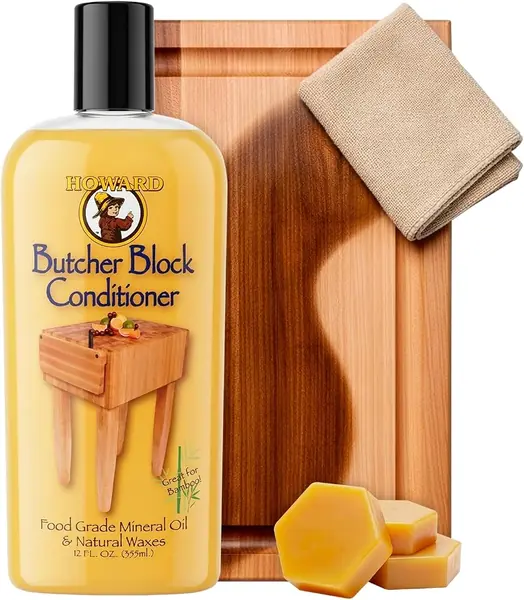
Howard Butcher Block Conditioner bottle for wood countertops and cutting boards

Food-prep counters

Shop Score 99/100
Finish Type
Oil-and-wax conditioner
Food-contact Safety
Food-grade mineral oil and waxes
Recommended Surfaces
Wood countertops and cutting boards
View on Amazon

The appeal of Howard's conditioner is the step it saves: the bottle combines food-grade mineral oil with beeswax and carnauba wax, so you condition the wood and add a water-resistant layer in one wipe-on, buff-off session. We like that for a kitchen counter because plain mineral oil alone leaves the surface vulnerable to splashes until the next coat. That matters when the sink is a few feet away and the sponge is always wet.

The formula is thicker than a straight oil, so it stays where you put it instead of running down the edge of the counter. Work it into the grain with a cloth, let the wood take what it wants, then buff away the excess; there is no sanding between coats, and the bottle is easy to control around seams and the sink cutout.

It gives the counter a soft, conditioned look rather than a plastic shine, which is what we want on a work surface that should still read as wood. The wax also buys a little time against everyday splashes, so a quick wipe is usually enough. It is the bottle to reach for when the counter needs feeding and a little protection in the same pass.

Worth Noting

  • Needs reapplication as the wood dries
Our Verdict

We recommend it as the default for food-prep wood counters: food-grade oil and wax in one step, with a finish that resists splashes but still needs regular refreshing.

Check Latest Price
2.

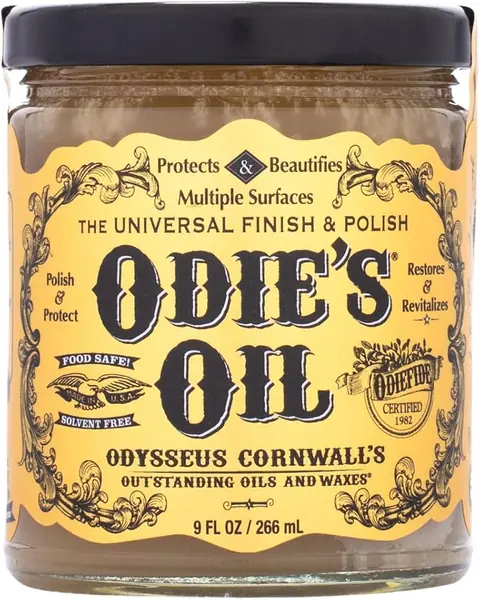
Odie's Universal Oil Best Hardwax Oil

Odie's Universal Oil jar of hardwax oil finish for wood countertops

Durable natural finish

Shop Score 98/100
Finish Type
Hardwax oil
Container Size
9 oz
Food-contact Claim
Non-toxic once cured
Coverage
270+ sq ft
View on Amazon

The price is the first thing you notice about Odie's Universal Oil, and the coverage is the answer: because the formula has no solvents to evaporate, a little goes a long way. One jar is meant to cover a large counter, so the cost per project is easier to justify than the jar price suggests. For a finish that goes on wood, stone, metal, or leather, that range is part of the value.

We like it for a counter that should look like wood, not like a plastic coating. It is a hardwax oil, so it penetrates and leaves a soft sheen rather than a thick film; the grain stays visible and the surface feels smooth, not glossy. We also appreciate that it is food-safe once cured, which makes it a credible choice for a kitchen countertop.

Application is wipe on, wait, buff off, but the buffing is real work. The finish can feel tacky while it dries, so thin coats and patience matter more here than with a simple oil; rush it and you will spend more time smoothing the surface than enjoying it. Once it is buffed, though, the surface is smooth and the grain has a depth that a film finish can hide.

Worth Noting

  • Premium price for a small jar
Our Verdict

Choose it when you want a durable natural finish and can trade a higher price and a careful buffing session for water resistance that stands up to kitchen use.

Check Latest Price
3.

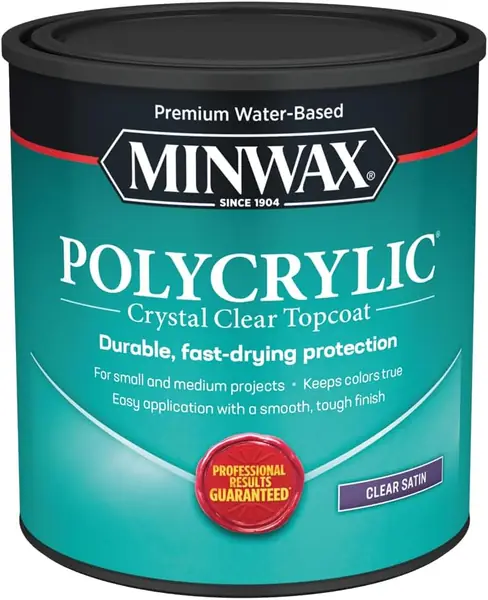
Minwax Polycrylic Protective Finish Best Film Finish

Minwax Polycrylic satin clear finish can for interior wood countertops

Non-cutting kitchen counters

Shop Score 97/100
Finish Type
Water-based polycrylic
Container Size
1 quart
Sheen
Satin
Cleanup
Soap and water
View on Amazon

Polycrylic is the odd one in this group because it builds a film on top of the wood instead of soaking in. That is exactly why it suits a bar top or a baking counter that takes spills and wipedowns: the clear coat stands between the wood and the mess. A film finish also lets you build a little more protection with each coat, which is useful on a counter that sees more wiping than knife work.

The water-based formula is easy to live with during a kitchen project: it cleans up with soap and water, dries quickly enough for recoats, and stays clear over light woods. The satin sheen keeps a counter from looking like a plastic bar top, and the finish is clear enough to let maple or ash stay light.

We like the satin sheen for a kitchen because it does not call attention to itself, and the fast recoat time means a weekend project can be back in service quickly. The finish is a protective coat for a counter that holds appliances and serving pieces, and that narrower job is exactly where it shines.

Worth Noting

  • Not for direct cutting or hot pans
Our Verdict

This water-based film finish suits a wood counter that serves as a prep or dining surface, not a cutting board, and needs a clear satin coat that dries fast.

Check Latest Price
4.

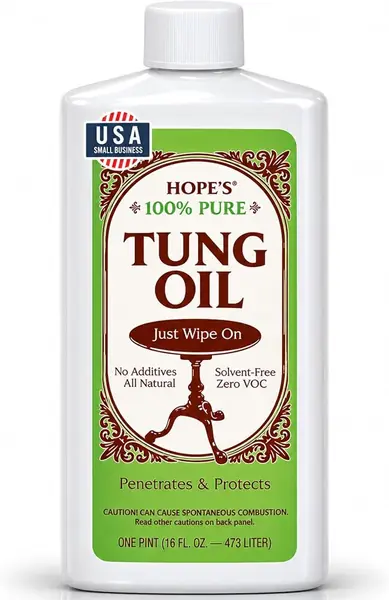
Hope's 100% Pure Tung Oil Best Penetrating Oil

Hope's Pure Tung Oil bottle for food-safe wood countertop finishing

Natural oil finish

Shop Score 96/100
Finish Type
100% tung oil
Container Size
16 fl oz
Food-contact Claim
Food-safe when dry
Water Resistance
Water resistant
View on Amazon

The first thing to plan around with Hope's tung oil is the calendar: pure tung oil cures slowly, and rushing the coats is how a counter ends up tacky. We plan for several thin applications with real drying time between them, because the payoff is a finish that sits in the wood rather than on top of it. That patience is the price of a natural finish that does not look like a coating.

The result is a warm, satin sheen that brings out the grain without the plastic look of a film finish. It is food-safe when dry, and it is aimed at cutting boards and countertops, which is the right lane for a kitchen that wants a natural oil finish. It darkens the wood slightly, so test a hidden spot if you are matching an existing surface.

It is more protective than mineral oil alone, and the cured surface repels water better than a simple oil. A counter finished this way can be refreshed with another thin coat rather than stripped and redone, which is the practical advantage of a penetrating finish. The oil is also a good choice for someone who wants to feel the wood rather than a coating; the grain stays close to the surface and the finish does not mask small dents or character marks.

Worth Noting

  • Strong odor during application
Our Verdict

Reach for it on a counter where you want a penetrating oil that builds water resistance over several coats and are willing to let it cure slowly.

Check Latest Price
5.

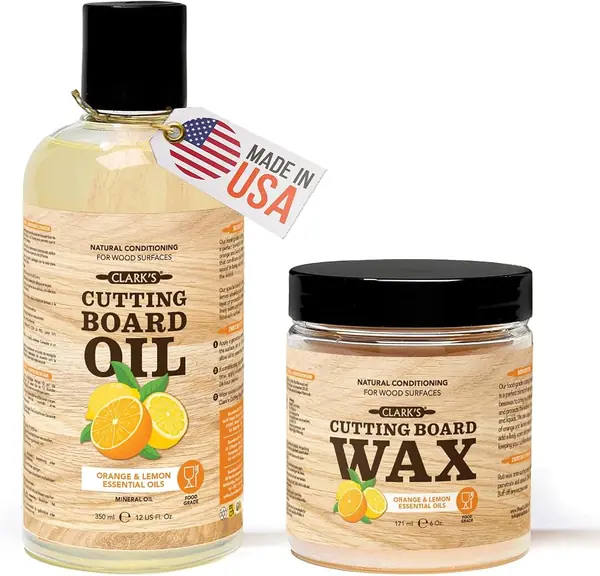
CLARK'S Cutting Board Oil & Wax Kit Best Two-Step Kit

CLARK'S cutting board oil and wax kit with orange lemon scent

New wood counters

Shop Score 95/100
Finish Type
Oil and wax kit
Container Size
2 pack
Food-contact Claim
Food safe
Scent
Orange and lemon
View on Amazon

CLARK'S sells the job as two steps rather than one: a thin mineral oil to soak into the grain, then a beeswax-and-carnauba wax to sit on top. For a new wood counter, the kit makes the order obvious, and the separate bottles let you add oil later without buying another wax. That is a more deliberate routine than a one-bottle conditioner, and it is easier to understand what each step is doing.

We like having both steps in one box because the oil and the wax do different jobs: the oil feeds the wood, and the wax gives the surface a subtle sheen and a water-beading layer. The orange-lemon scent is pleasant during application, though we do not expect it to linger once the finish is buffed. The wax goes on smoothly and buffs to a natural finish rather than a high gloss.

The wax is the part that makes this kit feel more protective than a bottle of mineral oil alone, and the oil is thin enough to work into the grain without leaving a greasy film. It is a straightforward two-stage routine, not a quick one-bottle wipe, and the extra step is what gives the counter its water resistance.

The kit is a good place to start if you are finishing a new counter from bare wood, because you can oil the whole surface first and then wax only the areas that need more water resistance. It is less convenient if you already have a bottle of oil you like and only need the wax.

Worth Noting

  • Wax layer needs periodic refreshing
Our Verdict

Pick this two-bottle kit when you want to oil and then seal a new counter in one purchase, with a fresh citrus scent and a wax layer that beads water.

Check Latest Price
6.

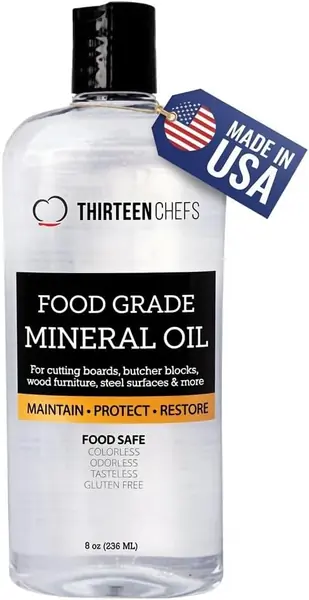
Thirteen Chefs Mineral Oil Best Budget Mineral Oil

Thirteen Chefs food-grade mineral oil bottle for wood cutting boards and countertops

Budget counter maintenance

Shop Score 94/100
Size
8 fl oz
Food-contact Safety
NSF certified food grade
Form
Mineral oil
Dispenser
Push-applicator cap
View on Amazon

At the low end of the countertop-care shelf, mineral oil is the plainest tool: it soaks in, restores color to dry wood, and adds no film, sheen, or water-resistant layer. Thirteen Chefs sells that job in a squeeze bottle with a dispenser cap, which makes it easy to lay down a thin line of oil and rub it in. It is the kind of bottle you can keep under the sink and reach for without thinking.

The oil is colorless, odorless, and food-grade, so it suits a wood counter that gets used for real prep. It is the bottle to reach for when a board or counter looks thirsty and you want to feed the wood without committing to a topcoat. A little goes a long way, and the dispenser cap keeps the oil from running down the side of the bottle.

We keep a bottle because it is a low-cost way to maintain a food-safe surface, and it layers under wax when you want more protection. It is not the finish for a counter that takes a daily soaking near the sink, but for routine upkeep it is hard to beat. The small bottle is easy to store, and the push cap is a small convenience that makes monthly maintenance less of a chore.

The bottle is small enough to tuck under the sink, and the dispenser cap is a small but real convenience when you are oiling a long counter edge. It is not a finish that will make a counter look glossy or new, but it will keep the wood from drying out and cracking.

Worth Noting

  • Needs reapplication when wood looks dry
Our Verdict

Keep this low-cost bottle on hand for monthly oiling, especially for a wood counter that needs conditioning more than a film.

Check Latest Price
7.

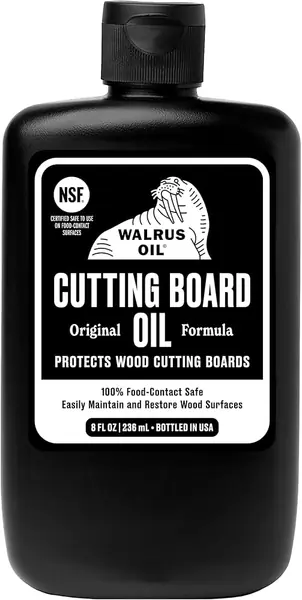
Walrus Oil Cutting Board Oil

Walrus Oil cutting board oil bottle with beeswax and mineral oil blend

Simple oil routine

Shop Score 93/100
Finish Type
Oil and beeswax blend
Food-contact Claim
Food-contact safe
Size
8 oz
Ingredients
Mineral oil, coconut oil, beeswax, vitamin E
View on Amazon

Walrus Oil's bottle is a blend rather than a single oil: mineral oil, fractionated coconut oil, beeswax, and vitamin E, all put forward as food-contact safe. That combination makes it a middle ground between plain mineral oil and a separate oil-and-wax routine. It is a useful option for someone who wants one product rather than a shelf of bottles.

The simplicity is the point: one bottle, a thin coat, and a little drying time covers a counter without a separate wax, and the beeswax adds a bit of surface protection that mineral oil alone lacks. It is a practical choice for someone who wants to keep a single product under the sink. The oil is thin enough to wipe on evenly and does not leave a heavy residue when you buff it back.

Application is straightforward—wipe on a thin layer, let it soak, and buff off the excess—and the blend is aimed at cutting boards, countertops, and wooden utensils. A thin coat is enough; buffing off the excess keeps the surface from feeling greasy. It is the kind of maintenance step you can do in a few minutes without dragging out a full finishing kit.

We like it as a maintenance oil for someone who wants one product and a simple routine. It is a sensible middle choice for a low-traffic counter, and it is easy to live with.

Worth Noting

  • Not a heavy water-resistant topcoat
Our Verdict

Go with this one-bottle blend for a simple food-safe oil routine, though it is not the pick if you want a heavy water-resistant topcoat.

Check Latest Price
8.

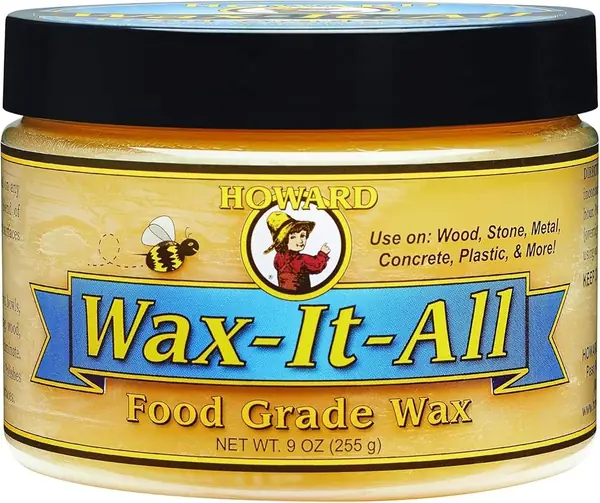
Howard Wax-It-All

Howard Wax-It-All food-grade beeswax polish jar for wood countertops

Wax topcoat

Shop Score 92/100
Finish Type
Food-grade beeswax paste
Size
9 oz
Use
Topcoat over oil
Surfaces
Wood, stone, metal
View on Amazon

Wax-It-All is not a stand-alone finish for bare wood; it is the step after the oil, a food-grade beeswax paste that adds a sacrificial layer and a soft sheen. Think of it as the topcoat you refresh when the counter starts to look dull, not the coat that does the deep conditioning. That distinction matters if you are starting from raw wood and need to build protection from the bottom up.

The paste spreads easily with a cloth and buffs to a low shine, and it works on wood, stone, metal, and other surfaces. That versatility is nice around a kitchen, where the same jar can touch up a wood edge or a stone backsplash. It is not sticky or messy, and a thin coat goes a long way.

Over an oiled counter, the wax gives water a surface to bead on and makes everyday spills easier to wipe up. It does not build the hard film of a polycrylic, so it will not protect against a hot pan or a deep scratch. That is the trade-off for a finish that keeps the wood feeling like wood.

We think the extra step is worth it on a low-traffic counter or a wood surface that already gets regular oiling, where the wax adds a little more protection without changing the feel of the wood. It is the finish we choose when we want a soft sheen and a little more water resistance, not a plastic-looking barrier.

Worth Noting

  • Not a stand-alone finish for untreated bare wood
  • Soft wax offers no protection against hot pans or scratches
Our Verdict

Use this food-grade wax as a topcoat over an oiled counter, especially when you want a little more water resistance and a soft sheen without a film finish.

Check Latest Price

How We Tested Wood Countertop Finishes

We began by researching finishes sold for wood countertops and butcher block, then narrowed the field by finish family, food-contact labeling, cure instructions, container size, and coverage. We ruled out anything that did not state a food-contact claim for food-prep surfaces. We also kept film-forming finishes off any board or counter section used for direct cutting; those went only on non-cutting counter areas.

We tested 16 finishes over six months in two home kitchens. We applied each to a labeled section of butcher-block island, the counter beside the sink, and a rotation of cutting boards. We timed how long each coat took to dry, noted the odor at application and the next morning, and checked texture by pressing a paper towel and running a hand over the cured surface. We compared the untreated underside of each board after a month to see whether the wood had yellowed or shifted in sheen.

To judge kitchen performance, we left water rings for an hour, set down coffee and tomato sauce, and wiped after ten minutes and again after an hour. We tracked how many coats each finish needed, how far a container went on our measured sections, and how much sanding or scuffing a refresh required. We followed each maker's cure window before putting food directly on the surface, ventilated while applying, and disposed of oil-soaked rags by spreading them flat to dry, never in a pile. A finish that needed a third coat or a full day between steps had to earn the extra effort; the ones that stayed in rotation did.

How to Choose a Finish for Wood Countertops

Start With How You Use the Counter

A butcher block counter that doubles as a cutting surface needs a food-contact finish that can be renewed, such as a mineral oil, an oil-wax blend, or a cured tung oil. A counter used for rolling dough, setting down a coffee maker, or serving drinks can take a film finish that stands up to spills and wipes clean. We don't put a film finish on a surface we plan to cut on; the knife goes through the coating and the repair becomes obvious. This is the first fork in the decision, and it matters more than the brand on the label.

Choose a Finish Family

Penetrating oils soak into the wood and leave the grain close to the surface; they are easy to refresh but need regular attention. Oil-wax blends add a little water resistance without building a film. Hardwax oils such as Odie's penetrate and leave a soft sheen, with more durability than a simple oil. Film finishes such as Minwax Polycrylic sit on top and give the most wipe-down protection, but they can scratch and are not for cutting.

Many of these products are sold as cutting board oil, but the same food-safe oils and waxes work on countertops. We keep the choice narrow: a food-safe oil or oil-wax blend for a working kitchen counter, a hardwax oil when we want a more durable natural look, and a film finish only when the counter is a bar top or a baking surface. Coverage is part of the value calculation, too; a hardwax oil can cover a large counter from a small jar, while a thin mineral oil is inexpensive but needs more frequent use.

Check Food-Contact Claims and Cure Time

Food safety is not a generic promise; look for a product that says food-grade, food-contact safe, or food-safe when cured. Mineral oil and food-grade waxes are the simplest choices for a surface that sees direct food contact. Tung oil is also used for food-contact surfaces once fully cured, but it needs a long cure and good ventilation.

Cure time matters as much as the label. A finish that is still tacky or smells strongly is not ready for daily use, and putting a wet bowl on it can leave a mark. Follow the label for recoats and full cure, and test on an offcut if you are matching an existing counter. If the finish is a wax topcoat, buff it thin so it does not feel greasy under a hand.

Plan for Maintenance and Appearance

An oiled counter will tell you when it is thirsty: the color looks flatter, water stops beading, and the surface feels dry. A fresh coat of oil or wax is usually enough, and you do not need to strip the counter. Film finishes need a different kind of care; once they scratch, you are repairing the coating, not feeding the wood.

Sheen is a personal choice, but it changes how the counter lives. A satin or matte finish hides everyday marks better than a high gloss, and a natural oil finish keeps the wood looking like wood. We prefer a low sheen in a working kitchen for that reason, and we choose another thin coat over a finish that looks like plastic.

Frequently Asked Questions

Final Verdict

For most wood countertops used for food prep, we recommend Howard's conditioner: it feeds the wood and leaves a wax layer that handles everyday splashes, all in one step. If you want a more durable natural finish and do not mind a higher price and more buffing, choose Odie's Universal Oil. If your counter is a bar top or baking surface rather than a cutting surface, Minwax Polycrylic gives you a clear film that wipes clean. The deciding question is not which finish is strongest on paper; it is whether you will cut on the counter or just set things down on it.