↑↓ navigate ↵ open Esc close All results →

Best Food Safe Wood Finishes for Cutting Boards of 2026

Buying a bottle simply because the front label reads "food safe" is an easy trap, since that phrase carries no single regulatory standard. Without an NSF, USP, or FDA notation—or an explicit statement that the cured film is safe for food contact—the finish on a cutting board or butcher block remains guesswork.

Formula choice determines maintenance schedules on maple, bamboo, end grain, and wooden spoons: pure mineral oil penetrates and repels water, oil-and-wax blends add surface holdout, and curing oils such as tung oil polymerize into a drier, longer-lasting barrier. Timing soak-in speed, residual odor, and coverage across 14 finishes over four months revealed that practical details like non-drip caps and wax clarity matter nearly as much as chemistry.

Whether maintaining a daily prep board with quick wipe-on oil or sealing a countertop for months between coats, each formula balances cure time, buffing effort, and durability differently.

Our Top Picks

The Best Food Safe Wood Finishes for Cutting Boards

1.

Walrus Oil Cutting Board Oil Best Overall
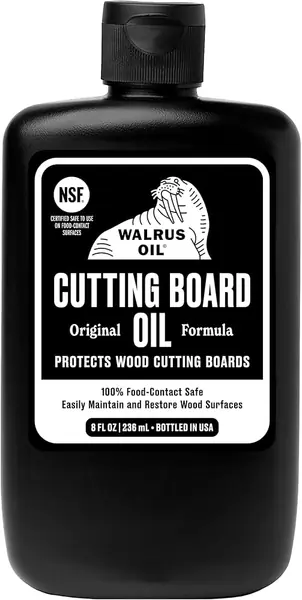
Black 8-ounce bottle of Walrus Oil cutting board oil and wood conditioner

All-purpose board care

Shop Score 99/100
Form
Oil-and-wax blend
Size
8 oz (1/2 pint)
Formula
Beeswax, fractionated coconut oil, mineral oil, vitamin E
Certification
FDA compliant, NSF certified
View on Amazon

Four ingredients separate this from the single-ingredient oils that fill the rest of this list: mineral oil and fractionated coconut oil to carry it in, beeswax to seal, and vitamin E. The wax is what you notice in use. Rather than a board that drinks oil and stays soft, you get one that feels dry to the touch and sheds a splash of water instead of soaking it up.

That blend is why we made it our top pick. It's FDA compliant for food contact and NSF certified for restaurant kitchens, so it holds up as a legitimate choice for boards you sell or use professionally, and it's the bottle we reach for when charcuterie boards need the grain to pop. Flood on a thin coat, let the wood take what it wants, buff off the rest.

The only real annoyance is the pour. Oil runs down the outside of the bottle and leaves a ring on the shelf, so wipe the neck after each use or decant it into a squeeze bottle with a finer tip. Eight ounces also sounds small next to the 12-ounce oils here, though the wax carries further than straight oil does.

What we keep coming back to is how long a coat lasts. A board treated with this goes back into rotation for weeks rather than days, and it takes a refresh with a smear and a buff instead of a full soak. For a board that gets washed after every onion, that's the difference between a routine and a chore.

Worth Noting

  • Bottle drips down the neck when pouring without decanting
  • Smaller 8-ounce bottle than competing 12-ounce board oils
Our Verdict

We recommend it as the best all-around food-safe finish here: it conditions like an oil, seals like a wax, and carries the certifications a board you cook on deserves.

Check Latest Price
2.

Thirteen Chefs Mineral Oil Best Pure Mineral Oil

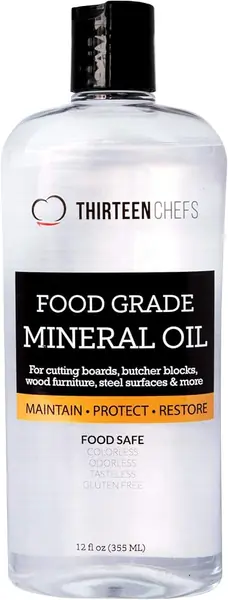
Thirteen Chefs food-grade mineral oil in a 12-ounce clear squeeze bottle with applicator cap

Everyday board maintenance

Shop Score 98/100
Form
100% mineral oil
Size
12 fl oz
Certification
NSF certified food grade
Dispenser
Push-applicator squeeze cap
View on Amazon

An NSF mark on a bottle of mineral oil isn't decoration. It means the oil has been reviewed against a published food-equipment standard, which is a firmer claim than a label that simply says food grade. That's the first thing we check on a bottle headed for a kitchen.

The rest is execution. A push-applicator cap on a squeeze bottle lets you lay a bead of oil exactly where you want it, with no funnel and no rag soaked through, and the 12-ounce bottle is a sensible size for a household with several boards. A treatment for a board up to 18 inches takes about an ounce.

It's useful well past the cutting board, too. We've run it over knife blades, the metal collar of a meat grinder, and a soapstone counter that had gone chalky — all of it on the maker's own list of uses, and all of it handled without leaving a film behind.

Where it falls behind the wax-fortified finishes is staying power: mineral oil never cures, so a daily-use board wants another coat every few weeks. We accept that trade for a finish that can't chip or go rancid and takes five minutes with a rag, and of the straight mineral oils here this is the one we recommend first.

Worth Noting

  • Pricier than the other mineral oils here
Our Verdict

For straight mineral oil, this is the bottle to buy: NSF certified, genuinely odorless, and dispensed from a cap that puts the oil where you aim it.

Check Latest Price
3.

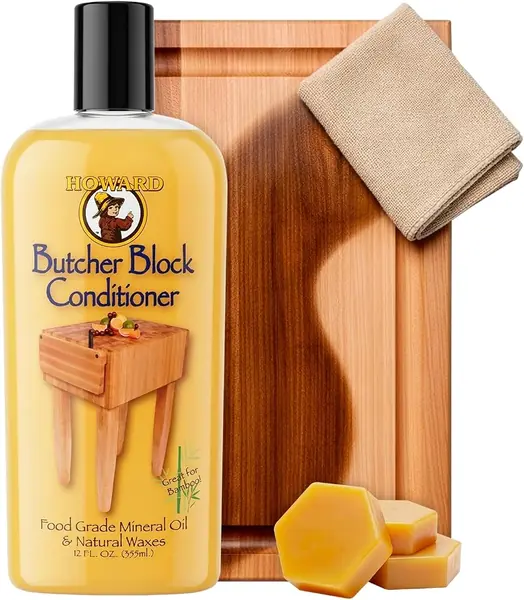
Howard Butcher Block Conditioner Best Oil-And-Wax Conditioner

Howard Butcher Block Conditioner bottle of food-grade mineral oil and natural waxes

Sealing seasoned boards

Shop Score 97/100
Form
Gel conditioner
Size
12 fl oz
Formula
Mineral oil, beeswax, carnauba wax
Surfaces
Hardwoods and bamboo
View on Amazon

It comes out closer to a gel than an oil, and that texture is the whole trick: mineral oil carries beeswax and carnauba wax into the grain, then the waxes stay behind as a thin barrier. A board treated with it feels dry within minutes and beads water instead of drinking it.

Application runs about five minutes a coat. Spread it thin with a cloth, give it time to soak, then buff the excess off with a dry rag — the greasy feel that comes from leaving a film behind is easy to avoid by working thin and finishing with a clean cloth. One 12-ounce bottle handles a big block several times over.

We reach for this when a board is already seasoned and needs protection that outlasts a week of washing, not when the wood is bone dry and thirsty. On a neglected board we oil first and condition after, because wax seals what's already there rather than pulling moisture into the grain. Treated that way, a butcher block counter or a heavy end-grain board stays slick through weeks of daily chopping, and a fresh coat is all it takes when the surface stops feeling slick under your hand.

Worth Noting

  • Needs plain oil underneath on bone-dry or neglected wood
Our Verdict

The pick for a board that's already oiled and needs protection that outlasts a week of washing — the waxes do a job plain oil can't.

Check Latest Price
4.

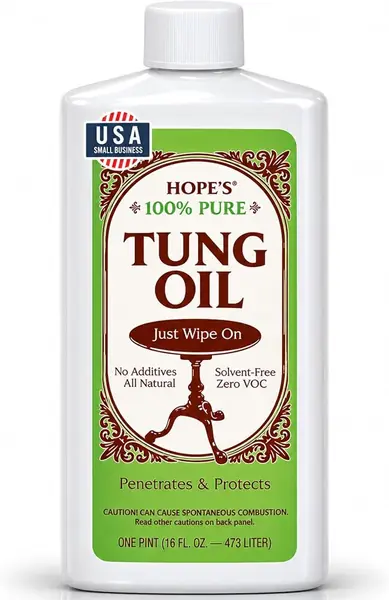
Hope's 100% Pure Tung Oil Best Curing Finish

Hope's 100% pure tung oil in a 16-ounce bottle for food-safe wood finishing

New boards and blocks

Shop Score 96/100
Form
100% pure tung oil
Size
16 fl oz
Uses
Cutting boards, countertops, utensils
Finish
Satin hand-rubbed
View on Amazon

Tung oil is a different animal from everything else here. It doesn't sit inside the wood the way mineral oil does; it reacts with air and cures into a flexible solid that becomes part of the fibers. A tung-finished board doesn't need re-oiling every month because there's nothing left to wash out.

The food-safe claim deserves a careful read. Hope's is food safe because it's non-toxic once fully dry, which means the board is food safe after the cure, not during it. Coat it, wait, and keep it out of service until the smell is gone and the surface feels hard.

Expect to work thin. Three or four coats, wiped back hard each time so only a film remains, give a satin finish that shows grain instead of burying it. A 16-ounce bottle covers several boards that way.

Patience is the price of all that durability. Tung oil cures over days, and a thick puddle stays tacky far longer than a thin wipe, so a ventilated room and time between coats are part of the project.

We recommend it for boards being built rather than boards being maintained, and for butcher block tops that take real abuse. It's a finish that gets harder over time instead of washing off, and on a new board that's worth the extra wait.

Worth Noting

  • Adds a warm amber tint to pale woods
Our Verdict

The one to build a board with rather than maintain it: tung oil cures inside the wood for protection mineral oil can't match.

Check Latest Price
5.

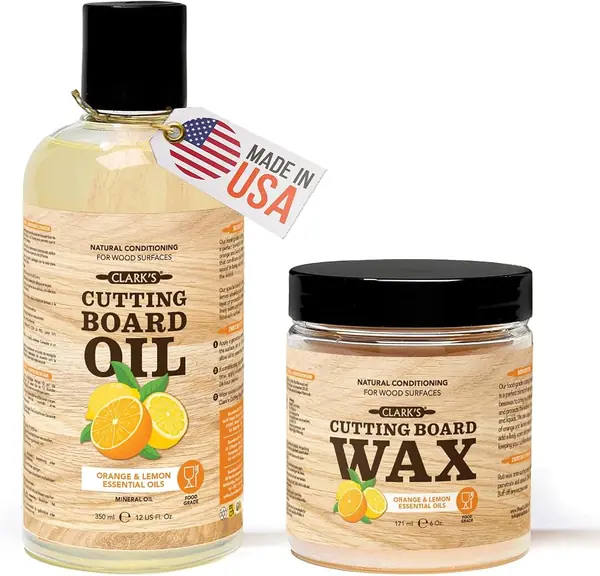
CLARK'S Cutting Board Oil & Wax Kit Best Two-Step Kit

CLARK'S cutting board oil and wax kit with two bottles in orange lemon scent

First board setups

Shop Score 95/100
Grade
Food-grade mineral oil and beeswax
Scent
Orange and lemon extracts
Steps
Oil first, then wax
Includes
Mineral oil and beeswax
View on Amazon

Oil or wax is the question we hear most from people who've just bought their first good board. This kit answers both, and that's why we recommend it: the mineral oil goes on first and hydrates, the beeswax goes on second and forms the barrier that keeps water out. Neither part does alone what the pair does together.

Two bottles, one order, no guessing about which product to buy first or whether they're compatible. For a gift or a first board it removes the decision entirely, and it makes a sensible housewarming present for someone who has just installed a butcher block counter.

The method is simple: coat with oil, wait an hour or so, buff, then wax and buff again. The orange-lemon scent is pleasant in a kitchen and fades from the wood rather than flavoring food, and the finish left behind is a soft sheen rather than a gloss. Boards we've treated with the pair have held their water resistance noticeably longer than ones we've simply oiled.

Worth Noting

  • Every version of the kit is scented
Our Verdict

Buy it if you want the whole routine in one box — oil to hydrate, wax to seal, and a citrus scent that doesn't linger on food.

Check Latest Price
6.

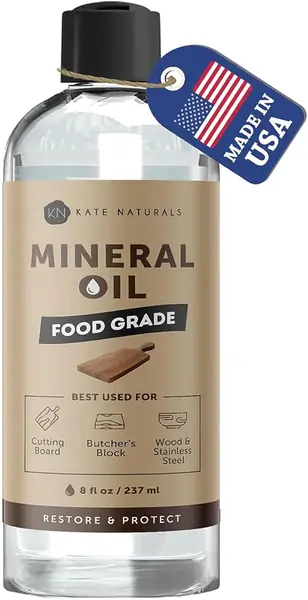
Kate Naturals Mineral Oil

Kate Naturals food-grade mineral oil in an 8-ounce bottle for cutting boards and utensils

Single-board upkeep

Shop Score 94/100
Form
Lightweight oil
Size
8 fl oz
Grade
USP food-grade mineral oil
Absorb Time
15–20 minutes
View on Amazon

Fifteen to 20 minutes is all Kate Naturals asks you to wait before wiping off the excess, the shortest soak time of any oil here. That's a real convenience if you're conditioning a board on a weeknight and don't want it sitting on the counter until morning.

It's a straightforward USP food-grade mineral oil and it behaves like one: clear, odorless, no film, and it sinks into thirsty wood quickly. On utensils and small boards it does exactly what you want, and a capful covers a board face, so the bottle lasts months.

The 8-ounce bottle is the right size for someone with one board and a handful of spoons. It's the kind of bottle we keep in a cabinet rather than on display — plain, unbranded, nothing to fuss with.

Where it loses ground to the Howard conditioner is sealing: this is hydration only, so a board that gets washed every week eventually wants something with wax in it. For plain upkeep of a board you already own, it's the bottle we hand people first and the one we keep coming back to.

Worth Noting

  • Cap can work loose in transit
Our Verdict

We recommend it for a first board: food grade, odorless, quick to wipe off, and easy to justify buying a second bottle.

Check Latest Price
7.

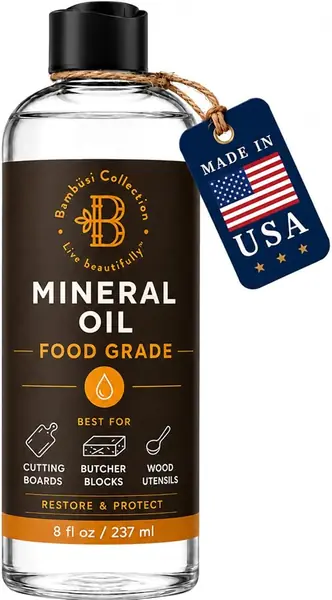
Bambüsi Mineral Oil

Bambüsi food-grade mineral oil in an 8-ounce bottle with a flip-top cap

Budget board upkeep

Shop Score 93/100
Form
100% pure white mineral oil
Size
8 fl oz
Scent
Unscented
Cap
Flip-top
View on Amazon

Nothing in the bottle but white mineral oil — no scent, no wax, no additives. Bambüsi sells it in an 8-ounce flip-top that drizzles neatly along a spoon handle, it costs less than any other oil we recommend, and a bottle goes further than the size suggests.

On pale, chalky bamboo it does what a mineral oil should: the grain comes back, the surface stops feeling rough, and a second coat a day later holds the color. We used it on teak and olive wood utensils too, with no darkening beyond the temporary wet look that fades as the oil settles in. Two treatments brought a neglected maple board back to an even color.

It's a maintenance oil rather than a finish, which is exactly what we recommend it for. If you already own boards you like and want to keep them alive, this is the least expensive route to that. If you're sealing new wood or a countertop, spend a little more on something with wax or tung oil in it.

Worth Noting

  • Lacks wax or drying oils for sealing new countertops
Our Verdict

The least expensive way into proper board care, and the flip cap makes it painless on utensils and small boards.

Check Latest Price
8.

Howard Wax-It-All Best for Top Coat for Boards

Howard Wax-It-All food-grade beeswax paste in a 9-ounce tub

Top coat for boards

Shop Score 92/100
Form
Paste wax
Size
9 oz
Grade
Food-grade beeswax
Surfaces
Wood, stone, metal, cement
View on Amazon

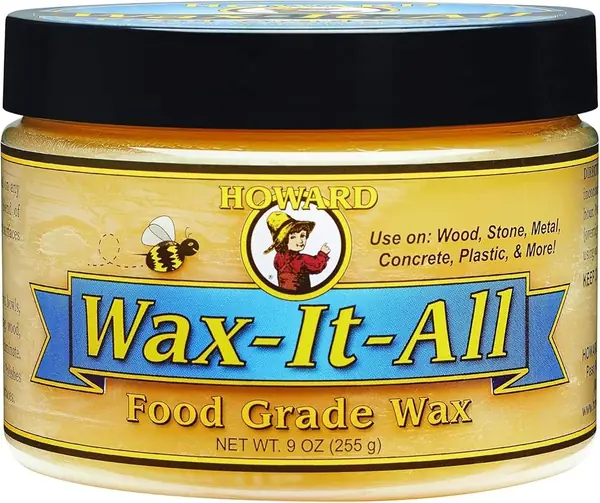
Wood, stone, metal, cement, paint, plastic — this is the only wax here meant to be used past the edge of the cutting board, and that's why we keep a tub of it. It buffs to a soft sheen on butcher block and does the same job on a soapstone counter or a brass cabinet pull.

On a board it goes on as a thin paste and buffs back to a matte finish that resists spills. Think of it as a top coat rather than a conditioner: it seals wood that already has oil in it instead of reviving dry fiber, so it belongs after the oil, not instead of it.

A fingertip of wax covers a board face, so the 9-ounce tub outlasts most of the bottles on this list. We like it best as the finishing step on a board that's already been oiled, where it adds a water-resistant surface that survives a few washes.

It's also the simplest way to buy wax on its own. If you already keep a mineral oil you like, this is the second jar to add; if you're starting from nothing, the CLARK'S kit bundles both and takes the guesswork out.

Worth Noting

  • Hazes over if it isn't buffed out
Our Verdict

Worth keeping on the shelf if you want one wax that finishes a cutting board and polishes the countertop it sits on.

Check Latest Price
9.

Odie's Universal Oil Best for Countertops and Islands

Odie's Universal Oil hardwax finish in a 9-ounce jar for wood and countertops

Countertops and islands

Shop Score 91/100
Form
Solvent-free hardwax oil
Size
9 oz
Coverage
270+ square feet
Application
Wipe on, buff off
View on Amazon

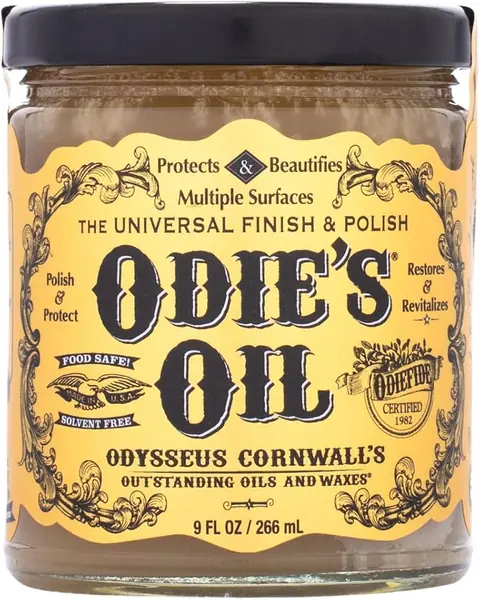
Solvent-free means there's nothing in the jar to evaporate, so what you wipe on stays on the piece. No driers, no catalyst to mix, no solvent smell to ventilate away. That's also why the coverage is unusual: the maker rates one 9-ounce jar at more than 270 square feet, which is a countertop and then some.

On butcher block counters and a walnut island, this is the finish we trust most when the wood is going to be looked at as much as used. Three thin coats buff to a satin sheen that shows grain instead of hiding it, and water beads and wipes instead of soaking in.

Application is wipe on, wait, buff off, with no sanding between coats. It also handles stone, leather, and metal, which is unusual for a food-safe product and handy on an island with a stone top and a wooden edge.

One thing to know before you commit: it can feel tacky while it cures, and that isn't a defect — a second buff the next day brings up the slick surface. Give it the time it asks for and it's as smooth as anything here.

Worth Noting

  • Premium price for a small jar
Our Verdict

For a countertop or an island that sees food and company, this hardwax oil delivers a satin finish nothing else here matches.

Check Latest Price

How We Tested Food Safe Wood Finishes

Our shortlist started with a couple of dozen bottles and jars drawn from the names that come up in woodworking forums and restaurant supply aisles. We dropped anything that could not point to an NSF, USP, or FDA notation or an explicit claim of food safety once dry, then narrowed by finish family and container size so we were not comparing a pint of tung oil against a nine-ounce tin of hardwax. Fourteen finishes made the cut, and we used them for four months.

Testing happened where boards actually live: on the counter beside the sink, in the stack by the stove, and in the crock of wooden spoons. We worked each finish into maple, bamboo, end grain, and a butcher block countertop, timing how long it took to soak in and noting whether it drank in evenly or pooled in the corners. We counted how many applications a single bottle gave us before it ran dry, whether a squeeze cap or flip-top spread cleanly without running down the side of the board, and how the surface felt after buffing — dry and smooth, or still tacky an hour later.

Water resistance got a real test: a tablespoon of water left sitting for ten minutes, then checked for a dark ring and for how quickly it beaded back up. We tracked the weeks until a board looked thirsty again, and sniffed each surface at one hour, at 24 hours, and after the first wash, since odor is what ends up next to your bread.

Boards treated with a curing oil stayed out of the kitchen entirely until the film felt hard and the smell was gone, and we never let a scented body or baby oil stand in for food-grade mineral oil. We also watched appearance, because a wax that leaves a haze on a dark board is a wax you stop reaching for.

How to Choose a Food-Safe Wood Finish

What Food Safe Actually Means on a Label

Terms like food grade, food contact safe, and non-toxic get used loosely. The marks worth looking for are specific. NSF certification means a product was reviewed against a published standard for food equipment, which is what Thirteen Chefs and Walrus Oil carry. USP on a mineral oil bottle means a pharmaceutical grade with nothing added.

The other phrase to read closely is safe once dry. Tung oil is the classic example: it's approved for food contact after it cures, not while it's wet, so timing is part of the safety instruction. Our rule is to buy from a maker who names a standard and to treat a bare claim of food safe like a bare claim of waterproof.

Oil, Oil-and-Wax, or a Curing Oil

Three families cover nearly everything. Straight mineral oil hydrates wood and never cures, so it needs refreshing regularly but can't chip, crack, or go rancid. Oil-and-wax blends — often sold as a butcher block oil or conditioner — add beeswax or carnauba for water resistance that lasts weeks rather than days. Curing oils such as pure tung oil harden inside the fibers and last longest, at the cost of days between coats.

For a board you already own and wash regularly, an oil or an oil-wax blend is the practical choice, and it's what most of this list is. For a board you're building from scratch, a curing oil earns its extra time; Howard's conditioner is the middle option when you want a board to shed water without a week of curing.

Matching the Finish to the Wood and the Workload

End-grain butcher blocks drink far more than edge-grain boards and need repeated coats before they stop absorbing, while bamboo is dense and takes very little. Utensils and bowls wear fastest because they're washed constantly, so a wax blend pays off there. Butcher block countertops sit between furniture and cutting surface — they need a finish that resists water and can be refreshed without sanding back to bare wood.

The trap is assuming one product covers all of them. A thin oil that's perfect for a monthly board wipe is too little for a countertop, and a hardwax oil built for a countertop is overkill on a wooden spoon. Buy for the piece you're actually finishing, not for the whole kitchen.

Scent, Additives, and What Reaches Your Food

Most mineral oils are odorless and tasteless and stay that way. Wax blends and kits are often scented with citrus, lavender, or coconut, which is pleasant at the counter and generally fades out of the wood — but if you want nothing added, buy unscented oil and unscented wax separately rather than a scented kit.

Solvents and metallic driers are the things to avoid on a surface you cut on. A solvent-free, drier-free product may take longer to cure, but for a cutting board it's the safer default, and on a board that sees raw meat and hot soapy water, safer is the only sensible setting.

Frequently Asked Questions

Final Verdict

Walrus Oil is what we point most people to. It's a food-contact-safe butcher block oil and wax blend that hydrates like mineral oil and seals like wax, so one bottle covers both jobs and a board stays protected for weeks instead of days. That combination, backed by NSF certification, is why it's our top pick.

If you're finishing a board you just built rather than maintaining one you already own, Hope's pure tung oil is the better answer: it cures hard in the grain and outlasts everything else here, provided you can give it the time. And if you simply want wax to layer over an oil you already trust, Howard's Wax-It-All is the jar to add.