↑↓ navigate ↵ open Esc close All results →

Best Cordless Oscillating Tools of 2026

Buying an oscillating multi-tool for its accessory pack while ignoring blade-mount standards and low-end speed controls locks buyers into costly proprietary blades and aggressive, chattering starts. Doorjamb undercuts and drywall cutouts behind baseboards almost always happen in tight corners far from an outlet, making cordless maneuverability essential despite the battery trade-off.

Eight months of room-by-room remodeling across 10 cordless oscillating tools showed that oscillation angle and clamp design define how smoothly a cut tracks. A tool-free universal interface keeps blade costs reasonable long after the starter pack wears out.

From compact one-handed trim tools to higher-output cutters and complete starter kits, these six cordless models match bare-tool and full-kit budgets to the remodeling jobs they handle best.

Our Top Picks

The Best Cordless Oscillating Tools

1.

DEWALT 20V MAX XR Oscillating Multi-Tool (DCS356B) Best Overall
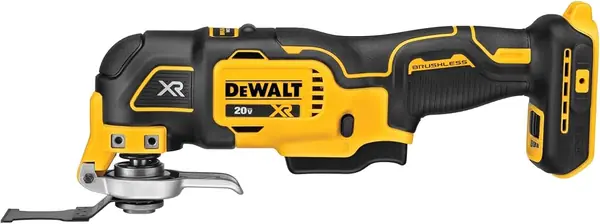
DEWALT 20V MAX XR brushless cordless oscillating multi-tool with two wood cutting blades

Trim and cutouts

Shop Score 96/100
Tool Weight
2.4 lb
Battery Platform
20V MAX (tool only)
Oscillations Per Minute
0-13,000/ 0-17,000/ 0-20,000 OPM
Blade Changes
Tool-free Quick-Change
View on Amazon

Three selectable speed ranges, not a single dial, are what set the DCS356B apart from the other picks here. You choose a band — 0–13,000, 0–17,000 or 0–20,000 OPM — and the Dual-Grip trigger varies speed within it, so you get a ceiling you cannot accidentally blow past when you are paring veneer around a cabinet, then click up two bands to chew through a door casing. The low band is the part we appreciate most: it is calm enough for plastic and thin trim.

The rest of the package is what makes it our default: a brushless motor, an LED that lands where the blade is, tool-free Quick-Change, and a universal adapter that takes most other brands' blades. We keep coming back to that adapter, because blades are the real running cost of an oscillating tool and an inexpensive multipack from any brand will fit. At 2.4 lb it is light enough to run one-handed under a cabinet.

Where it gives ground is thick, nail-heavy stock. The M18 FUEL and the Makita brushless cut faster there, and if that is most of your work, pay for one of them. For trim, drywall cutouts, flooring patches and the occasional stubborn PVC joint, it is the tool we reach for first.

Worth Noting

  • Tool only, so batteries and charger cost extra
Our Verdict

We recommend it as the default cordless oscillating tool: three speed ranges, tool-free blade changes and a universal adapter, all on the 20V MAX packs a lot of woodworkers already own.

Check Latest Price
2.

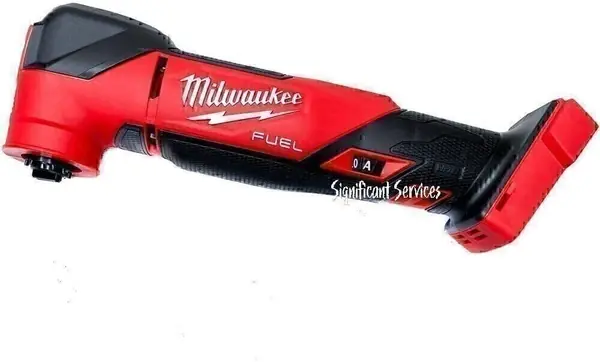
Milwaukee M18 FUEL Oscillating Multi-Tool (2836-20) Best for Heavy Cutting

Milwaukee M18 FUEL cordless oscillating multi-tool in red with a variable speed dial

Heavy stock removal

Shop Score 95/100
Tool Weight
3.1 lb
Battery Platform
M18 (tool only)
Oscillation Angle
4.2 degrees
Speed Control
Variable speed dial with auto-load
View on Amazon

A 4.2-degree oscillation angle is the widest swing in this group, and it is why the M18 FUEL removes material like a small corded saw: every pass takes a longer bite, so a plunge cut into 2x4 stock does not bog down. Auto-load starts the tool slow for a controlled entry, then ramps it to full speed once the blade is under load, which is the behavior you want when you are cutting a vent hole in finished drywall.

We think it is the pick for anyone whose multi-tool is a production tool rather than a problem solver: nails, thick trim, subfloor, cut after cut. Vibration dampening keeps it civil for its size, the variable speed dial covers everything from grout to hardwood, and the 180-degree LED wraps the head so the cut line stays lit from either side.

It is a premium bare tool on the M18 platform, so the math only works if you already run those packs or you are cutting enough to justify the jump. For trim and the odd cutout, the smaller Milwaukee below does the same work in a handier package and leaves money in your pocket.

Worth Noting

  • 3.1 lb gets tiring in overhead work
Our Verdict

For heavy cutting — nails, thick trim, subfloor — this is the tool we hand someone who wants corded-tool speed without dragging a cord across the floor.

Check Latest Price
3.

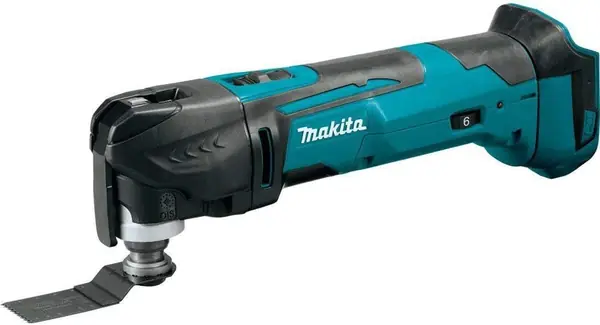
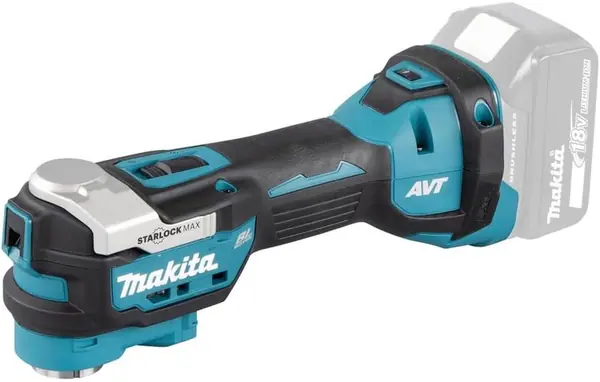
Makita 18V LXT Brushless Multi-Tool (DTM52Z) Best for Smooth, Quiet Cuts

Makita 18V LXT brushless multi-tool in blue with a tool-less accessory clamp

Smooth finish cuts

Shop Score 94/100
Tool Weight
2.87 lb
Oscillations Per Minute
10,000-20,000 OPM
Oscillation Angle
3.6 degrees
Accessory Clamp
Tool-less
View on Amazon

What struck us first about the DTM52Z is how little it shakes. Run it along a length of oak trim and the buzz that usually numbs your hand after ten minutes mostly is not there, and the noise stays low enough for work inside a finished room. It is the calmest cutter in this group, and that is worth real money when you are cutting overhead or working near a wall you cannot scuff.

Underneath is a 370-watt brushless motor turning 10,000 to 20,000 OPM, with soft start for clean entries and constant speed control that adds power when the blade loads up, so the rate holds instead of sagging in hardwood. The tool-less clamp is the quickest accessory change here — no wrench to hunt for and no bolt to lose in a pile of sawdust.

It is the most expensive tool here and the second heaviest, so it is a considered buy rather than an impulse one; the 12-volt Milwaukee covers the overhead work this one is least suited to. What you pay for is a cut you can steer with two fingers and keep up all afternoon.

Worth Noting

  • Starlock blades cost more than plain-fitment ones
Our Verdict

If vibration and noise are what keep you from reaching for an oscillating tool, this is the one we point you to for indoor finish work.

Check Latest Price
4.

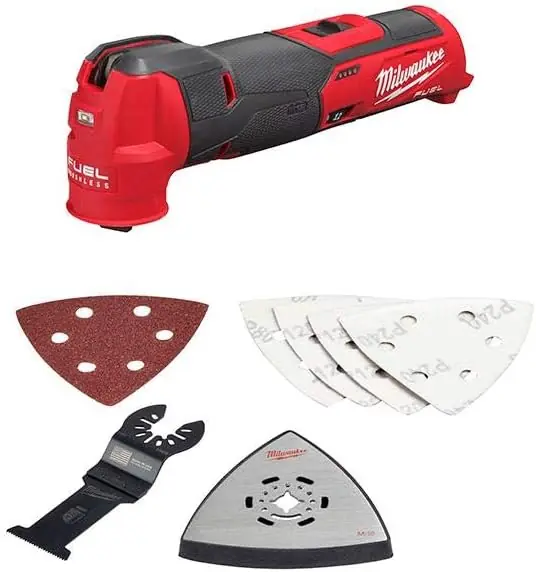
Milwaukee M12 FUEL Oscillating Multi-Tool (2526-20) Best Compact

Milwaukee M12 FUEL 12-volt oscillating multi-tool in red with sanding pad and bag

Overhead and one-handed

Shop Score 93/100
Tool Weight
1 lb
Battery Platform
M12 (tool only)
Oscillations Per Minute
10,000-20,000 OPM
Speed Settings
12-setting dial
View on Amazon

If your cuts happen above shoulder height — under-cabinet trim, ceiling patches, anything inside a closet — the one-pound M12 FUEL is the tool we hand over. It is the lightest pick here by a wide margin, and the small body puts the blade in places the 18-volt tools simply cannot reach without dismantling something.

Do not read 12 volts as weak. The brushless motor runs 10,000 to 20,000 OPM, the same ceiling as the 18-volt picks, and the 12-setting dial lets you drop to plastic, drywall or hardwood deliberately. The vibration-isolating body keeps long sessions comfortable, and the tool-less blade change means no wrench in your pocket.

What you give up is stamina in thick stock: this is a trim and cutout tool, not a subfloor saw, and the 18-volt picks earn their weight in hardwood. For the work you do one-handed, that trade is worth making.

Worth Noting

  • M12 batteries and charger sold separately
Our Verdict

The one we reach for overhead: a pound of brushless 12-volt tool that still tops out at 20,000 OPM and fits where 18-volt heads will not.

Check Latest Price
5.

Makita 18V LXT Cordless Multi-Tool (XMT03Z) Best Value Bare Tool

Makita 18V LXT cordless multi-tool in blue with small barrel grip and adapters

Detail and scraping

Shop Score 92/100
Battery Platform
18V LXT (tool only)
Oscillations Per Minute
6,000-20,000 OPM
Oscillation Angle
3.2 degrees
Barrel Grip Diameter
2-3/8 inches
View on Amazon

Value is the whole argument for the XMT03Z. It is the least expensive bare tool in this group, and it ships with adapters that let it run most other brands' accessories — more than a couple of the costlier tools here include.

The dial runs 6,000 to 20,000 OPM, the lowest floor in this group, which is what you want for scraping and for plastic vents where a fast blade just melts the edge. The 3.2-degree swing is the tightest here, so thin stock does not chatter, and the 2-3/8-inch barrel grip lets you hold it like a pencil and steer with your fingertips.

We like it as a second oscillating tool or a sensible first one on a budget: 18V LXT packs are everywhere, the body is small in the hand, and the slow end of the dial covers scraping and grout that the faster tools rush. It will not match the DEWALT's three bands or the brushless picks' appetite for hardwood, and it is a tool you buy for value rather than refinement.

Worth Noting

  • Tightest swing here means slower going in thick stock
Our Verdict

Our value pick: it costs the least of the bare tools here and still turns 20,000 OPM with a pencil-thin grip that steers easily.

Check Latest Price
6.

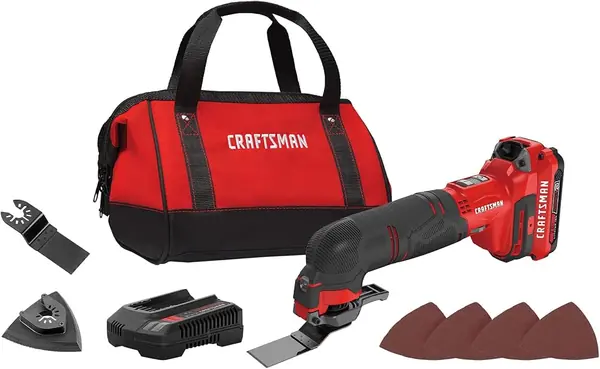
CRAFTSMAN V20 Oscillating Tool Kit (CMCE501D1) Best Complete Kit

CRAFTSMAN V20 oscillating tool kit in black and red with battery charger and bag

First oscillating tool

Shop Score 91/100
Speed Control
Variable speed dial
In The Box
Two blades, sanding pad, four sheets, bag
Accessory Mount
Tool-free universal
Battery Included
20V 2.0Ah and charger
View on Amazon

Everything needed to start cutting is in the box: the tool, a 20V 2.0Ah battery, a charger, a wood blade, a wood-and-metal blade, a sanding pad with four sheets, and a storage bag. It is the only pick here you can hand to someone who owns no batteries at all and say, start cutting.

The tool itself is straightforward. A variable speed dial stays where you set it, an LED lights the work, a tool-free universal attachment takes other brands' blades, and the body clips into Craftsman's VERSATRACK wall system if you want it off the bench. Nothing exotic, and the dial is easier to set for repeat cuts than a trigger you have to hold at the same squeeze every time.

We point beginners here because the kit removes every excuse: battery, charger, blades, sanding pad and bag for about the same money as some bare tools in this group. What it gives up is a brushless motor and the top-end power of the 18-volt picks — fine for trim, cutouts and sanding, less so for cutting out a whole subfloor.

Worth Noting

  • Only one 2.0Ah battery included
Our Verdict

Buy this if you own no 20V batteries at all: it is the one pick here that arrives with a battery, a charger and blades, ready to cut.

Check Latest Price

How We Tested Cordless Oscillating Tools

We started with every cordless oscillating tool we could find across the major battery platforms, then narrowed by the things that actually change a buying decision: whether the tool ships bare or as a kit, how slow the slow end of the speed range goes and whether speed comes from a dial, a band selector, or a trigger, the blade mount, weight and body size, and what still has to be bought before the first cut. Ten tools made the test.

For eight months they lived in a house being renovated one room at a time. They undercut door jambs for new flooring, made plunge cuts in drywall for outlet boxes, notched cabinet toe kicks, cut PVC, scraped old adhesive off concrete, and sanded a painted cabinet. We timed blade changes with a stopwatch, counted battery swaps per task, and did the ceiling work one-handed from a ladder to see what weight and vibration felt like after ten minutes overhead.

Durability got its own pass: repeated plunge cuts in plywood and in lumber with nails in it, then a check for slop in the blade clamp after dozens of changes. Every run happened in eye and hearing protection, with a respirator for drywall dust and sanding, and we confirmed the clamp was tight and the accessory rated for the tool before each cut. We're still using all of them and will update if a clamp loosens or a motor fades.

How to Choose a Cordless Oscillating Tool

Start With the Battery You Already Own

An oscillating tool is an occasional-use tool, so buying into a new battery platform rarely pays. Five of the picks here are bare tools, which means the true cost is a pack and charger if you are not already on that line — 20V MAX, M18, M12 or 18V LXT. If you own none of those, a kit such as the CRAFTSMAN CMCE501D1 is the cheapest complete way in, because the battery, charger and blades come with it. If you do run one of those systems, put the money into the tool instead.

Look at the Slow End of the Speed Range

Most tools here top out around 20,000 OPM, so the headline number rarely separates them. What matters is the floor and how the speed is set. A dial that goes down to 6,000 OPM, as the Makita XMT03Z does, holds a slow steady rate for scraping grout or cutting a plastic vent without melting it; a trigger like the DEWALT's gives you fine control at the bottom of each band, which is a different feel from dialing in a number and leaving it there. For trim and flooring work, we care more about a usable slow speed than another 1,000 OPM at the top.

Oscillation Angle and Vibration Decide How the Cut Feels

The angle is how far the blade swings each cycle: 3.2 degrees on the Makita XMT03Z, 3.6 on the DTM52Z, 4.2 on the Milwaukee M18 FUEL. A wider swing clears material faster; a tighter one leaves a tidier edge in thin stock and shakes less. Vibration is the other half of the story — a three-pound tool that buzzes your hand numb is one you stop reaching for. If you will be sanding or cutting for more than a few minutes at a stretch, weight and vibration isolation matter more than another degree of swing.

Check the Blade Mount Before You Commit

Blades are the running cost of a multi-tool, and over a couple of years they can outrun the price of the tool itself. A universal adapter, as on the DEWALT and the CRAFTSMAN, lets you run inexpensive multipacks from any brand; a tool-less clamp like the Makita DTM52Z's is faster to change but takes Starlock blades, which cost more per blade. Neither approach is wrong — buy the interface whose blades you can actually find locally. The trap is a bargain bare tool that accepts only one expensive blade pattern.

Match the Size to Where You Cut

The Milwaukee picks bracket the weight range: 1 lb for the M12 FUEL, 3.1 lb for the M18 FUEL, and that gap decides which tool you can hold overhead for ten minutes. A compact body also reaches into cabinets and closets where an 18-volt head will not fit. One trap to watch: compact in a listing often describes the bare body, not the tool with a 5.0Ah pack hanging off the back — add the battery's weight before you decide it is a one-hander.

Frequently Asked Questions

Final Verdict

The DEWALT DCS356B is the cordless oscillating tool we point most people to. Three speed ranges, wrench-free blade changes and a universal adapter make it the most flexible tool here, and it runs on 20V MAX packs plenty of woodworkers already own.

Cut thick stock and nails all day and the Milwaukee M18 FUEL earns its extra weight; work overhead and the one-pound M12 FUEL is the better hand. Own no batteries at all, and the CRAFTSMAN kit is the complete answer.