↑↓ navigate ↵ open Esc close All results →

Best Dremel Rotary Tools of 2026

Rotary tools tackle the tightest detail jobs in a shop—cutting off a stripped screw, sanding inside a chair spindle, or trimming a 3D print—yet power source splits the category straight down the middle. Corded models hold steady speed through long cuts while trailing a wire across the bench, whereas cordless units move freely anywhere until the battery sags mid-pass.

Working pine, walnut, aluminum, and printed parts across eight months with 12 corded and cordless tools at a benchtop vise and kitchen table separated strong motors from overheating ones. Speed under load proved decisive: motors that maintained rpm through sustained grinding stood apart from tools that bogged and ran hot, while accessory kits packed with useful guides and a flex shaft outperformed boxes stuffed with disposable wheels.

Quick-fix cordless convenience and continuous corded muscle both have clear roles, and the seven models ranked below delivered reliable speed control without stalling under light pressure.

Our Top Picks

The Best Dremel Rotary Tools

1.

Dremel 4300-5/40 Best Overall
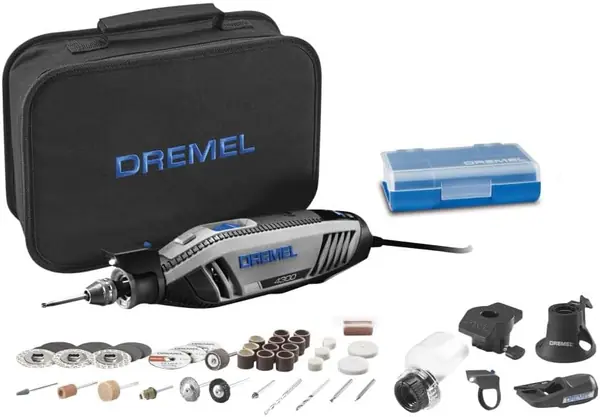
Dremel 4300 corded rotary tool kit with attachments, accessories, and storage case

All-around woodworking

Shop Score 95/100
Speed
5,000-35,000 RPM
Included Kit
5 attachments and 40 accessories
Power
Corded 120V
Chuck
Universal 3-jaw
View on Amazon

The feature that makes the 4300-5/40 the easiest of these tools to live with is the three-jaw chuck. It accepts every Dremel shank size, so you can switch from a 1/8-inch sanding drum to a 1/32-inch bit without hunting for a collet or a wrench. On a mixed woodworking bench, that's the difference between a tool you use and one you skip because changing bits is a chore. The 5,000-35,000 RPM range and electronic feedback give you slow control for plastic and high speed for hardwood, while the corded motor holds speed under load better than a small battery tool.

We also appreciate the kit around the tool. The pivot light, A550 shield, A576 sanding/grinding guide, 565 cutting guide, and 675 garden tool sharpener turn a rotary tool into something closer to a small cut-off and sanding station. The cutting and sanding guides are the pieces we value most for woodworking, because they give you a rest or fence instead of asking you to freehand every pass. The 40 accessories cover common cutting, sanding, and polishing chores, and the case keeps the whole set together.

The 1.2-pound body is heavier than a pen-style tool when you work overhead, but we still reach for this one first for cutting and grinding because it has the muscle and the guides to do those jobs cleanly. If your work is mostly quick detail inside the house, a smaller cordless tool is more pleasant; for a shop bench, the 4300-5/40 is the kit we keep set up.

Worth Noting

  • Requires an outlet while working
Our Verdict

For most woodworkers, the 4300-5/40 is the rotary tool kit we recommend: corded power, a tool-free chuck, and useful guides in one box.

Check Latest Price
2.

Dremel 4000-2/32 Best Corded Value

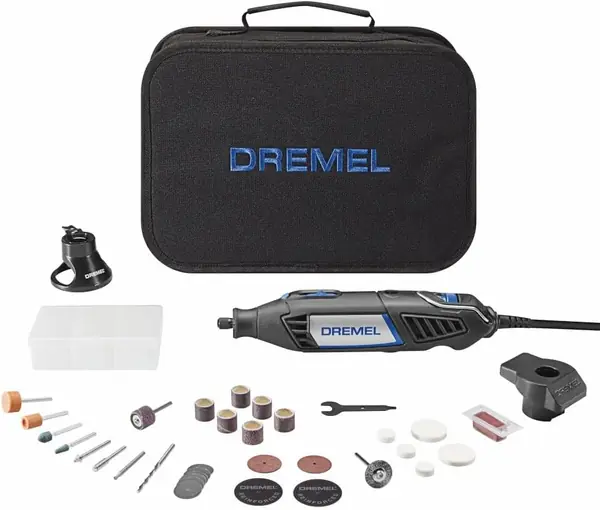
Dremel 4000 corded rotary tool with 32 accessories and two attachments

Corded shop work

Shop Score 94/100
Speed
5,000-35,000 RPM
Included Kit
2 attachments and 32 accessories
Motor
1.6 amp
Power
Corded 120V
View on Amazon

The 4000-2/32 is the corded Dremel we point to when the 4300's kit is more than you need. Its 1.6-amp motor and 5,000-35,000 RPM range give you the same speed spread for cutting, sanding, and grinding, and the cord means no battery to manage. You give up the top kit's three-jaw chuck and extra guides, but the money goes into the motor and a simpler set of 32 accessories. For a woodworker who already owns bits and wants a strong full-size tool, that's the sensible trade.

We like the 360-degree grip and electronic speed control for longer sessions. The two attachments are enough to start, and the 3-pound body feels planted on a bench. This is not the tool for reaching into a tight cabinet or working on a ladder; that's a job for a compact cordless model. If your work happens at the bench and you want the most motor for the least kit, the 4000-2/32 is the one.

Worth Noting

  • Only two attachments included
Our Verdict

The 4000-2/32 is the corded Dremel we point to when you want serious power and a lower kit price, with fewer extras to pay for.

Check Latest Price
3.

Dremel 8250-5 Best Cordless for Heavy Work

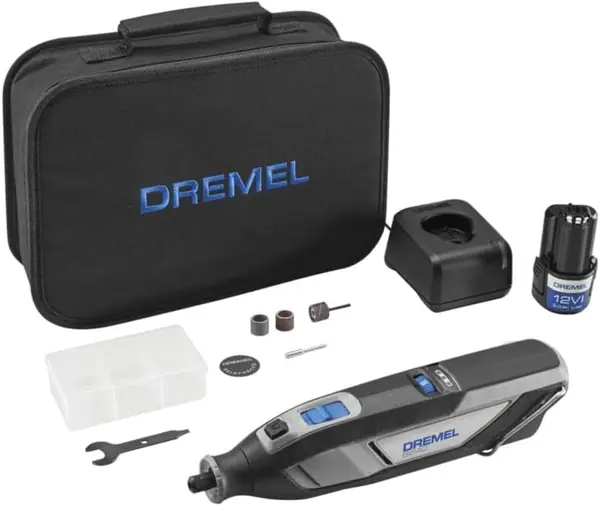
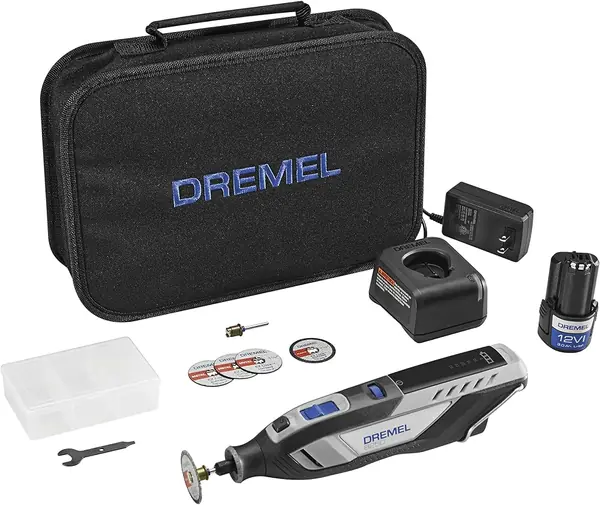
Dremel 8250 cordless rotary tool with 12V battery, charger, and tool bag

Cordless heavy cutting

Shop Score 93/100
Speed
5,000-30,000 RPM
Included Kit
5 EZ Lock accessories
Battery
12V 3.0Ah
Motor
Brushless
View on Amazon

The 8250-5's brushless 12-volt motor is the reason it can stand in for a corded tool. Dremel rates it at 20% more power than the 4300, and the 3.0Ah battery is the largest in this group. The 5,000-30,000 RPM dial and digital display give you a clear read on speed, and the tool is compatible with the full Dremel accessory line. For cutting, grinding, and sanding away from a bench, that's a serious advantage.

We like the battery platform most: the 3.0Ah pack is the largest in this group, and the charger is included. The EZ Lock accessories change quickly, and the tool bag keeps the kit together. The 13.8-ounce body gives it a planted feel for cutting and grinding, and the digital screen takes the guesswork out of the speed setting.

The price is the real hurdle. This is a premium tool, and you're paying for brushless power and runtime. If your work is mostly light engraving, the 8240-5 does it for less; if you cut and grind on job sites, the 8250-5 earns the extra spend. We keep it for tasks where a cord would be a nuisance, not as a replacement for a corded bench tool.

Worth Noting

  • Only five accessories included
  • Heavier for fine detail work
Our Verdict

We recommend the 8250-5 when you need cordless freedom without giving up cutting power; it's the premium choice for big jobs away from an outlet.

Check Latest Price
4.

Dremel 8240-5 Best Cordless Value

Dremel 8240 cordless rotary tool kit with 12V battery, charger, and carry bag

Cordless home shop

Shop Score 92/100
Speed
5,000-35,000 RPM
Included Kit
5 accessories
Battery
12V 2.0Ah
Weight
1.5 lb
View on Amazon

A 35,000 RPM top speed in a cordless tool is the number that makes the 8240-5 worth a look. That's the same ceiling as the corded 4300, and it comes from a 12-volt, 2.0Ah battery that's included with a charger. The EZ Twist nose cap changes accessories without a wrench, and the 360-degree grip is shaped for a full hand rather than a pen grip. For sanding, polishing, and light cutting, it has the range to handle a real shop list.

We like the 1.5-pound body for flat work: it feels planted when you're sanding a panel or polishing a larger piece. The battery is shared with other Dremel 12-volt tools, which makes it easy to keep a spare on the charger. The carry bag is practical for moving between the shop and the house.

We think the 8240-5 hits the sweet spot for a home woodworker who wants cordless convenience without paying for the 8250's brushless motor and 3.0Ah pack. It has enough speed for most tasks, and the battery platform is the same. If you cut hardwoods all day, the corded 4300 is still the better tool; for quick work in the garage or on a project away from the bench, this is the cordless one we pick.

Worth Noting

  • Bulkier than pen-style tools
  • Only five accessories included
Our Verdict

The 8240-5 is our pick for a cordless Dremel that feels strong enough for real shop tasks without the 8250's premium.

Check Latest Price
5.

Milwaukee M12 2460-20 Best for M12 Battery Users

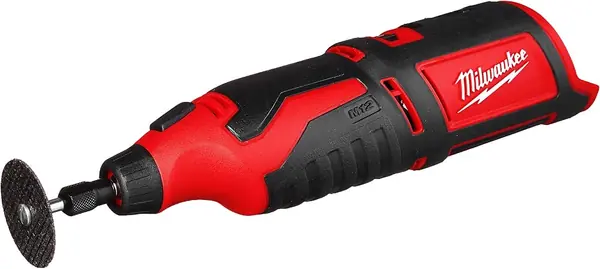
Milwaukee M12 cordless rotary tool in red and black with wrench and cutting wheels

M12 battery users

Shop Score 91/100
Speed
5,000-32,000 RPM
Battery
12V M12 (not included)
Collet
1/8 inch
Warranty
5 years
View on Amazon

The 2460-20 makes the most sense if your shop already runs on Milwaukee's M12 batteries. The 12-volt motor, 5,000-32,000 RPM range, and 1/8-inch collet put it in the same working class as the cordless Dremels. The LED light and slide switch with speed dial are familiar Milwaukee touches. For a tool that lives on the same charger as your drill and impact driver, that's a practical kind of convenience.

We like the compact 14.4-ounce body and the five-year warranty, both of which matter when you're holding a rotary tool for long sessions. The 1/8-inch collet accepts standard rotary accessories, so your existing bits fit. The tool has enough power for cutting and grinding, but it's happiest when you let the bit do the work instead of forcing it. We treat it as a portable problem-solver for metal, plastic, and light wood tasks rather than a full-time carving tool.

If you already run M12 batteries, this is a smart addition that avoids another battery platform. For everyone else, a complete kit like the 4300-5/40 is the easier first purchase, because it includes the tool, guides, and a starter set of accessories. The Milwaukee's five-year warranty is a real advantage, and that matters if the tool will see hard use. We recommend it to the woodworker who already has the batteries and wants a compact rotary tool in the same system.

Worth Noting

  • Battery and charger sold separately
  • Few accessories included
Our Verdict

If you already own Milwaukee M12 batteries, the 2460-20 is the rotary tool we recommend: compact, powerful, and backed by a five-year warranty.

Check Latest Price
6.

PHALANX 139-Piece Rotary Tool Kit Best Budget Corded Kit

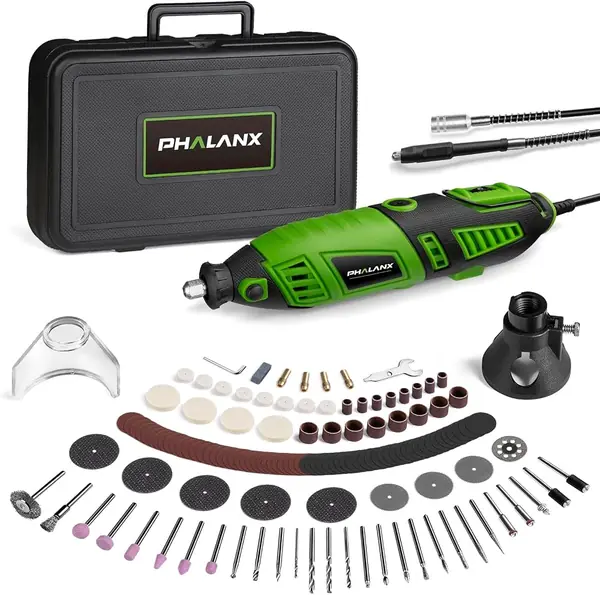
PHALANX corded rotary tool kit with flex shaft, accessories, and storage case

Budget starter kit

Shop Score 90/100
Speed
8,000-32,000 RPM
Included Kit
139 accessories
Motor
180W
Flex Shaft
Included
View on Amazon

The PHALANX kit leads with quantity: 139 accessories, a flex shaft, and a six-speed dial on a 180-watt, 1.5-amp corded motor. That combination is aimed at the buyer who wants to try rotary work without spending much. The flex shaft is the piece we like most, because it moves the weight of the tool out of your hand and lets you work closer to the workpiece for detail sanding and engraving. The 8,000-32,000 RPM range covers the same broad territory as the name-brand tools.

We also appreciate the four collet sizes, which let you use several shank diameters without buying extra hardware. The kit is sold on accessory volume rather than a premium finish, and that's the right way to read it: it's a starter set for light sanding, polishing, and engraving, not the tool to choose for heavy hardwood removal. If you want a low-cost way to learn what a rotary tool can do, this is the one we point to; if you already know you'll cut hardwoods, spend more on a Dremel.

Worth Noting

  • Corded design limits mobility
Our Verdict

The PHALANX kit is the budget corded pick we recommend for buyers who want a flex shaft and a large accessory set without spending much.

Check Latest Price
7.

Fanttik F2 Master

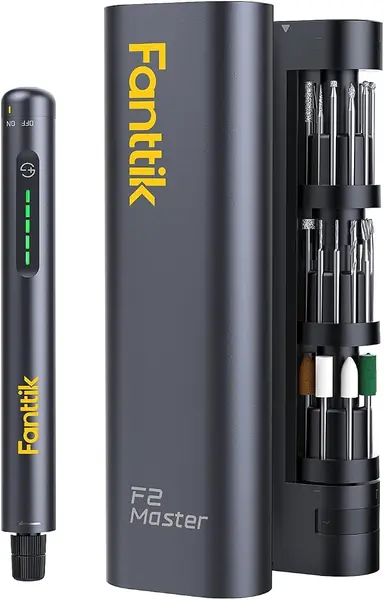
Fanttik F2 Master mini cordless rotary tool with aluminum case and accessory hub

3D-print cleanup

Shop Score 89/100
Speed
12,000-25,000 RPM
Included Kit
35 accessories
Battery
3.6V
Collet
3/32 inch
View on Amazon

The F2 Master is small enough to mistake for a marker, and that's the point. It's a 3.6-volt cordless tool with a 12,000-25,000 RPM range, a 3/32-inch collet, and a magnetic rotating hub that holds 35 accessories in the case. The aluminum case has a one-click pop-out design, so the tool and bits arrive organized rather than loose in a bag. For a desk-scale hobby tool, the presentation is unusually thoughtful.

We like the quiet brushless motor and the integrated speed button; the tool is easy to hold like a pen for engraving, polishing, and sanding small plastic parts. The pen-like body lets you keep the bit in view, which is the reason to choose it over a full-size tool for tiny work. The magnetic hub is clever, and the case makes the whole set easy to keep together.

The F2 Master is at its best on plastic, resin, and light wood; a full-size corded tool is the better choice for hardwood and metal. That's not a knock for what it is: a precision tool that fits where a full-size body cannot. If your projects are models, miniatures, or 3D prints, the small format is an advantage rather than a compromise.

We keep the F2 Master for the jobs a full-size rotary tool is too clumsy for: cleaning up a 3D print, polishing a small metal part, or engraving a detail where the tool body would block the view. It's a specialist, and the price reflects the machining and case. Buy it as a second tool, not your only one.

Worth Noting

  • 3/32-inch collet limits bit choices
  • Premium price for a second tool
Our Verdict

The F2 Master is the precision mini we recommend for 3D-print cleanup and tiny detail work, with a clever magnetic accessory hub.

Check Latest Price

How We Tested Rotary Tools

We started by surveying current rotary tools from the major brands and the budget kits, then filtered on power source, motor type, speed range, chuck or collet style, what comes in the box, warranty coverage, and price. That left 12 tools, corded and cordless, from bare-bones starter kits to brushless models. We spent eight months with them in a garage shop, at a kitchen table, and over a benchtop vise, cutting, grinding, sanding, and polishing a mix of pine, walnut, aluminum, and 3D-printed parts.

For power under load, we clamped eighth-inch aluminum plate and made repeated 20-second cuts with a cutoff wheel, listening for the motor to drop pitch and checking how warm the housing got between passes. We timed every bit change with a stopwatch — from unplugged or battery-pulled to the new bit spinning — and noted whether the wrench or an onboard lock cost us a second hand. Cordless tools ran a sanding drum over medium-density fiberboard until they quit, and we logged both the run time and the recharge.

Hand fit got its own pass: we weighed each tool with the battery in, then had testers with different hand sizes engrave for five minutes and note where the nose sat and whether their grip crept. Over the eight months we watched for collet wobble, switch slop, and loose battery contacts, and we read the warranty terms before the first cut. Kits were judged on the accessories we reached for more than once — guides, flex shaft, cutters — not the ones that stayed in the case. Every session ran with eye protection and a dust mask, workpieces clamped down, and speeds kept under each accessory's rating.

How to Choose a Rotary Tool for Woodworking

Start with the power source

For sustained cutting and grinding at a bench, we favor a corded tool. A corded motor holds speed under load, never needs charging, and usually costs less than a comparable battery tool. Cordless makes more sense for quick repairs, detail work, and jobs away from an outlet. Within cordless, 12-volt tools such as the Dremel 8240-5 and 8250-5 have enough muscle for real shop tasks; a 4-volt or 3.6-volt mini tool is for light detail. If you cut hardwood or metal regularly, start corded and add a compact cordless tool later.

Look at speed under load

A 35,000 RPM ceiling is useful, but the number that matters is how well the tool holds speed when the bit bites. Amp and watt ratings are clues; electronic feedback and a brushless motor help too. We pay more attention to motor size and speed control than to the highest number on the dial. For heavy cutting in wood or metal, a 1.6-amp corded tool or a 12-volt brushless model has an advantage. For engraving and polishing, a lower-power tool with fine speed steps can be easier to control.

Choose a chuck or collet you can live with

The 4300-5/40 uses a three-jaw chuck that accepts all Dremel shank sizes, so you can switch between 1/8-inch and 1/32-inch bits without changing collets. Most other rotary tools use collets sized to the bit shank: the Milwaukee 2460-20 takes 1/8-inch accessories, while the Fanttik F2 Master takes 3/32-inch. If you change bits often, a tool-free chuck or EZ Twist nose cap saves time. If you use one shank size, a collet is precise and simple. Check the collet size before you buy a kit of bits.

Buy the kit for its useful extras

Accessory count is a poor way to compare kits. A 139-piece set looks generous, but many pieces are consumables you will replace. The extras that change how the tool works are more valuable: a cutting guide, a sanding guide, a shield, and a flex shaft. We value the 4300-5/40's guides for straight cuts and controlled sanding, and the PHALANX kit's flex shaft for detail work. A flex shaft adds reach but also another connection to manage. Choose the kit whose extras match your projects; you can add bits later.

Plan for hand fit and the long run

Weight and balance matter more than a spec sheet suggests. A 1.5-pound cordless tool feels steady on a flat panel but tiring overhead; a sub-1-pound mini tool reaches tight spots but has less power. Hold the tool before you commit if you can, or buy from a seller with a straightforward return policy. Warranty coverage is the other long-run check: most corded Dremels carry two years, the Milwaukee 2460-20 carries five, and the 8250-5 carries a limited lifetime warranty. Keep the vents clear and store bits dry.

Frequently Asked Questions

Final Verdict

Buy the Dremel 4300-5/40 if you want one rotary tool for a woodworking bench. The three-jaw chuck, 5,000-35,000 RPM range, and useful guides make it the most complete kit here, and the corded motor gives you power that doesn't fade. It is the one we keep set up for cutting, sanding, and grinding.

If you work away from an outlet, the Dremel 8250-5 is the cordless step up; if you already own Milwaukee M12 batteries, the 2460-20 is the compact alternative. For a first kit on a tight budget, the PHALANX 139-piece earns its place.