↑↓ navigate ↵ open Esc close All results →

Best Edge Banding Trimmers of 2026

Trapped between a utility knife and a hasty block, fresh edge banding easily tears, chips melamine veneer, or gouges the finished face just as a cabinet build wraps up. Dedicated trimmers register off the panel surface to shear overhang flush without diving into the substrate.

No single blade geometry handles every trim job, as six months of testing 12 edge banding trimmers on melamine closet panels, plywood shelving, and refaced cabinet doors proved. Single-face trimmers, dual-blade cutters that clean both sides in one pass, and end trimmers that square overhanging tails each fill a distinct role—and checking the box for replaceable blades keeps a dull edge from turning the whole tool into trash.

Our Top Picks

The Best Edge Banding Trimmers

1.

Virutex AU93 Double Edge Trimmer Best Overall
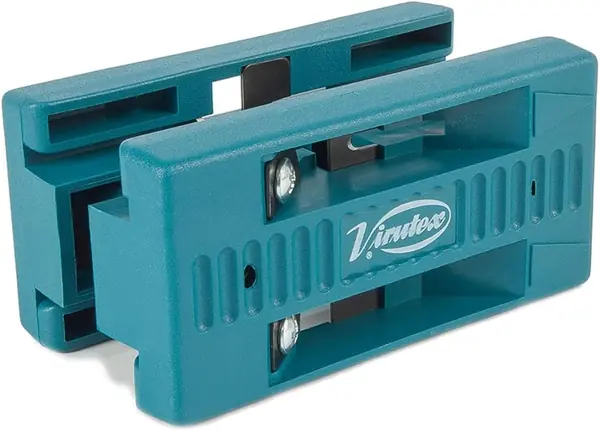
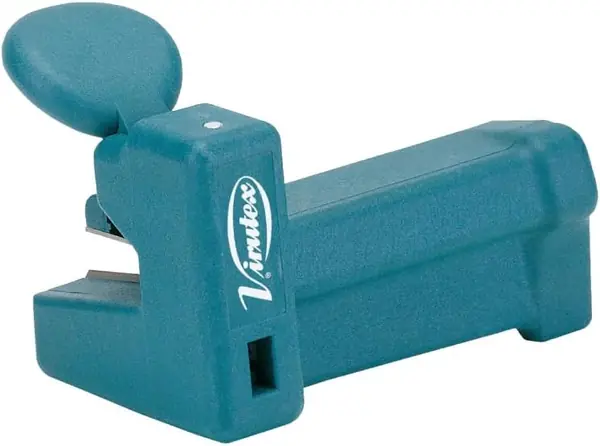
Blue Virutex AU93 double edge trimmer with two cutter heads and metal springs

Full cabinet runs

Shop Score 88/100
Weight
3.53 oz
Blade Material
Replaceable alloy steel
Edge Width
Up to 40 mm
Edge Coverage
Both sides in one pass
View on Amazon

One pass along an edge and both faces of the banding come back flush. That is the case for the AU93, and it is why this is the trimmer we reach for first on any job with more than a couple of panels in it. Virutex built the original double edge trimmer and still pulls the two cutter heads together with metal springs rather than rubber bands, which gives the frame an even squeeze instead of a rubbery one.

The frame covers edges up to 40 mm wide. Past that, the two halves separate and you trim each face on its own — useful when a countertop or a tall panel will not fit between the heads. We got more out of the scraper side than we expected, too: a light pull takes off glue squeeze-out and the fine burr the cutter leaves at the top of the band.

Cut quality asks for a little discipline. On prefinished plywood the heads can press a shallow line into the veneer if you bear down or cock the tool, so test on scrap and keep the pressure even; two light passes beat one heavy one. What you get in return is symmetric cuts down both sides without repositioning the tool, which is the part that saves real time across a run of shelves.

At 3.5 ounces it lives in the drawer with the banding roll rather than in a case on a shelf, which is where a trimmer belongs — close enough to grab for a two-second touch-up.

Worth Noting

  • Trims long edges only, not band ends
Our Verdict

We recommend the AU93 to anyone banding more than a few panels: it trims both faces in one pass and splits into two trimmers when a panel outgrows the frame.

Check Latest Price
2.

NECAMOCU Upgraded Edge Trimmer Best Value

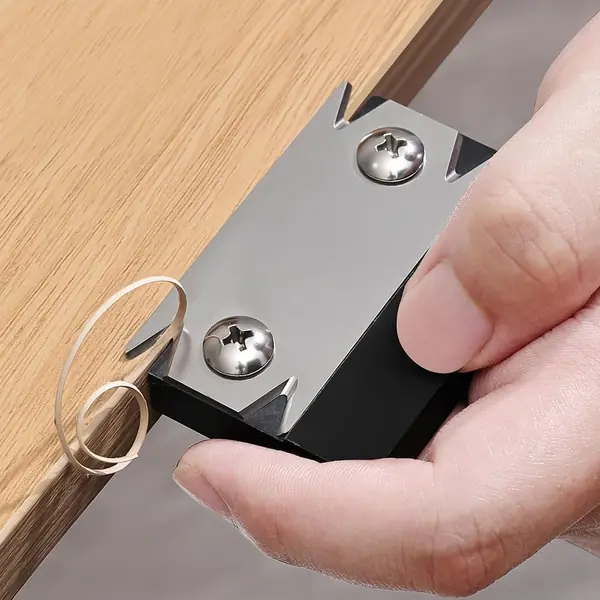
Black NECAMOCU mini edge banding trimmer with stainless V-blade and compact body

First-time banding

Shop Score 87/100
Weight
2 oz
Blade Material
420 stainless steel
Body Size
2.56 x 1.57 x 0.6 inches
Edge Shapes
Straight and curved
View on Amazon

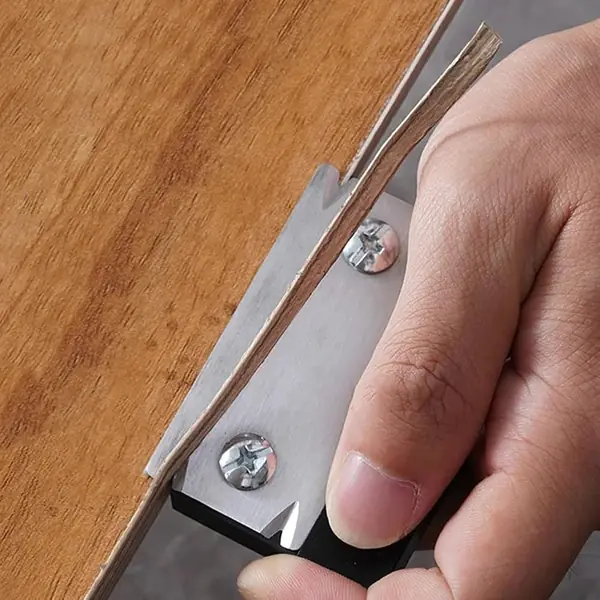
Pressure decides whether this trimmer works. Set the V-blade over the overhang, draw it along with almost no downward force, and it lifts a clean ribbon of PVC or melamine off the panel; lean into it and the edge goes ragged. There is nothing clever inside — two angled cutting edges, a small body, a screwed-down blade — so the hand holding it is the whole control system.

At 2.56 by 1.57 inches and two ounces it slips between a shelf and a cabinet side where a bigger trimmer will not fit, and the maker lists it for straight runs and gentle curves alike. The 420 stainless blade is the trade-off: it takes a fine edge for wood veneer and thin PVC, but melamine is abrasive and wears it faster than veneer does. Turn or replace it as soon as it starts to skate rather than shave.

We think of it as the trimmer to buy first and keep as a spare. Nothing needs adjusting, the V registers itself against the panel face, and the lifetime warranty means a bad one gets replaced rather than argued over. Two screws hold the blade, so a change takes about as long as finding the screwdriver.

Worth Noting

  • No spare blades in the box
Our Verdict

We think this is the smart first trimmer: light, inexpensive enough to keep as a spare, and easy to control once you stop pushing hard.

Check Latest Price
3.

Virutex RC21E End Trimmer Best End Trimmer

Black and white Virutex RC21E end trimmer with lever handle and carbide blades

Band ends

Shop Score 86/100
Weight
8.8 oz
Band Width
Up to 54 mm
Blade Type
Carbide double blades
Handle Action
Automatic return
View on Amazon

The ends give a banded panel away: a whisker of tape curling over the top corner, a torn shoulder where somebody cut the band with a knife. Those are the first things anyone sees on a finished piece. The RC21E exists for that one operation and does it with a lever instead of a blade dragged by hand.

You set the tool against the panel end, squeeze, and the mechanism multiplies your grip into a square cut through the overhang; a spring returns the handle for the next one. What struck us first was the stability — the body sits flat on the panel rather than skating, which is what turns a square cut into something repeatable across a stack of shelves. Two carbide blades cover banding up to 54 mm wide and come out for replacement when they dull.

The cut is clean enough that we stopped reaching for a chisel to tidy the corner afterward. It is the tool to buy once banding is a regular part of your work; a handful of shelves a year does not justify it. Virutex also sells it as a set with the AU93 double trimmer, and if you know you want both, buying the pair is the sensible way in.

Worth Noting

  • Premium price for one operation
Our Verdict

If square, tear-free band ends matter to your finished work, this is the tool we hand over without hesitation — it costs more and it earns it.

Check Latest Price
4.

Draxzor Wooden Handle Trimmer Best Grip and Spare Blades

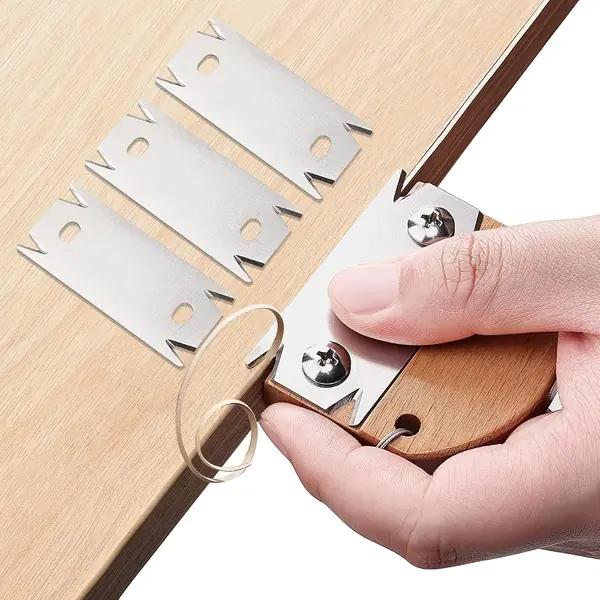
Wood-handled Draxzor edge trimmer with stainless V-blade and three spare blades

Long trim sessions

Shop Score 85/100
Weight
1.5 oz
Blade Material
Stainless steel
Handle Material
Natural wood
Spare Blades
3 included
View on Amazon

Most trimmers in this category are a flat slab with a blade screwed underneath, and after twenty minutes your thumb knows it. The Draxzor puts a shaped wooden handle on top of the blade holder instead, and that single change is why we kept picking it up for the longer sessions.

The blade is stainless and V-shaped, held by two screws, with the point of the V guiding the cut away from your fingers — a small thing that matters when you are pulling toward yourself along a narrow shelf edge. Three replacement blades come in the box, and that is the detail we value most: banding dulls an edge quickly, so a fresh blade is a minute's work instead of a trip to the store. It handles straight runs and gentle curves, and the maker lists it for PVC, ABS, melamine, laminate, and veneer.

The behavior to plan for is clogging. Glue and shavings pack into the V and the cut stops being clean until you pick them out, so keep a rag and a little solvent at the bench and wipe the blade between panels. Do that, and the wooden grip and the spares are what you notice rather than the upkeep.

Worth Noting

  • Glue and shavings can clog the V-blade between panels
Our Verdict

We like the Draxzor for long sessions and dull-blade days: a comfortable wooden grip and three spares in the box change how the tool wears.

Check Latest Price
5.

FastCap Macro Flush Cut Trimmers

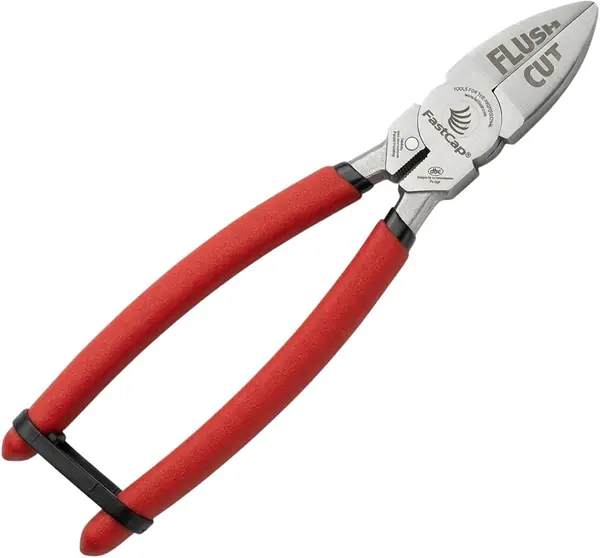
Red FastCap flush cut trimmer pliers with spring handle and carbon steel jaws

Thin veneer tape

Shop Score 84/100
Weight
2.24 oz
Blade Material
Carbon steel
Jaw Action
Spring-loaded
Banding Thickness
0.018 to 0.025 inch
View on Amazon

Read the rating before anything else: these are built for banding from 0.018 to 0.025 inch, and FastCap says plainly not to use them on 3 mm PVC. That is veneer tape and thin PVC territory. As a general edge trimmer they will disappoint; as the tool for the last inch of a band, they are the best thing here.

They cut by shearing, so the band comes away flush instead of folded, and the spring handle opens the jaws for you — a long run of band ends will not cramp your hand the way pliers usually do. The jaws also snip brad nails and pin nails flush, which none of the planer-style trimmers here can do. At 2.24 ounces they disappear into an apron pocket.

What we like most is the micro-cut. When the first squeeze leaves a sliver standing proud, a second, lighter bite takes it off without tearing the tape, which is exactly the control you want at a visible corner. Carbon steel will not stay sharp forever, so keep them for banding and light wire rather than hard plastic or metal.

Worth Noting

  • Handle grip can chip with heavy use
Our Verdict

We keep a pair of these for band ends and thin veneer tape — under about 0.025 inch there is nothing faster in this group.

Check Latest Price
6.

KETIPED Woodworking Edge Trimmer Best for Tight Budgets

Black KETIPED edge trimmer with bakelite handle and screwed high-carbon blade

Tight budgets

Shop Score 83/100
Blade Material
High carbon steel
Handle Material
Bakelite
Blade Corners
Four usable corners
Cutting Width
45 millimeters
View on Amazon

One blade, four usable corners, two screws. That is the entire design, and at the bottom of this group's price range it is the right one: instead of hunting for a replacement you loosen the screws, turn the blade a quarter turn, and carry on. There is no spring to lose and no lever to bend.

We keep coming back to how well the small body works on a shelf. At 2.56 by 1.77 inches it rides flat against the face while the blade takes the overhang, and it will follow a straight edge or a gentle curve. The high-carbon blade wants a light, steady pull rather than force — on veneer banding, run with the grain and it slices; run against it and it lifts fibers.

A couple of passes along a shelf edge leave the band flush, and the bakelite handle stays comfortable for the length of a small project. It is the trimmer that ends up in the kitchen drawer rather than the toolbox — sized for the one-shelf repair, not the cabinet run.

Worth Noting

  • High-carbon blade dulls faster on melamine
  • No spare blades or case included
Our Verdict

Our pick when the budget is the constraint: it trims a shelf's worth of banding cleanly if you work one edge at a time and turn the blade often.

Check Latest Price

How We Tested Edge Banding Trimmers

We built the shortlist by pulling every trimmer we could find that listed a rated band width, a blade material, and some way to replace or rotate the edge, then checked those spec sheets against the complaints in buyer reviews. From that pool we ordered 12 trimmers across the price range and ran them for six months in a garage shop banding melamine closet panels, plywood shelving, and cabinet doors headed for a refacing job.

Each one got used the way it would be at home: panel clamped, off hand behind the tool rather than on the trim line, one long pull stroke per edge. We trimmed a single face, then checked whether a dual-blade cutter really took both faces in one pass or left a lip on the second side, and we squared band ends wherever the tool claimed that job. We weighed every unit, ran it one-handed down a six-foot shelf to see where it wandered, and noticed how the grip felt after twenty minutes.

Cut quality got the closest look. We dragged a thumbnail along each finished edge, then held a work light low across the panel face to catch score marks, noting whether the blade sheared the PVC and melamine or tore and fuzzed it. On veneered and prefinished faces we watched for scratches, and we used the scraper edge on the tools that had one to lift glue squeeze-out before trimming.

Blade life was counted in linear feet: we kept going until the cut started pulling instead of slicing, then timed the swap and counted the spares in the box. After every session we picked dried glue out of the cutter and checked that the screws hadn't walked. The trimmers that held an edge through all of it are the ones on this list.

How to Choose an Edge Banding Trimmer

Decide Which Cut You Are Making

Band work splits into three operations, and no single tool here does all of them well. Trimming the long edge means removing the overhang above and below the panel face; the planer-style edge banding cutters do this one face at a time, while a double-edge frame like the Virutex AU93 does both faces in a single pass and then comes apart into two trimmers for panels too wide for the frame. Band ends are a different cut — the overhang at the board's end, where a shearing plier or the lever-driven Virutex RC21E works better than a planer.

For a run of shelves, buy the double-edge trimmer plus something for the ends. For a handful of panels a year, a single-sided trimmer and a scraper will get you a clean result without the second tool.

Carbide, Stainless, or Carbon Steel

Blade material sets how often you stop. Carbide holds an edge against melamine, which is abrasive and eats softer steel; stainless and high-carbon blades take a keener edge but dull faster, which is why the budget trimmers either rotate a blade to a fresh corner or ship with spares.

We care less about the material than about what happens when the edge goes. A tool with replaceable or rotatable blades is one you keep using, and a set of spares like the three that come with the Draxzor turns a dull afternoon into a one-minute swap.

Check the Rated Thickness and Width

Listings advertise materials — PVC, ABS, melamine, laminate, veneer — more readily than they state what the tool will actually take, and that is the trap. FastCap rates its flush cutters at 0.018 to 0.025 inch and rules out 3 mm PVC; the Virutex end trimmer covers bands up to 54 mm wide, while the AU93 covers edges up to 40 mm as a single unit.

If you run thick PVC, buy from a listing that quotes a range, and test on a scrap offcut before you commit a finished panel. A tool that only shaves sub-millimeter tape is still useful — just not for the 2 mm banding on a kitchen carcass.

Pressure, Grain, and Finished Faces

Force is behind most of the bad results with these tools. A V-blade that skates is dull; a V-blade that digs is being pushed, and on prefinished plywood that means a line pressed into the veneer that sanding will not take out. Read the grain direction on veneer banding before you cut, take two light passes rather than one heavy one, and try any new trimmer on scrap first.

The double-edge frames want the same discipline — flat against the face, even pressure, and a test piece before the first real panel.

Frequently Asked Questions

Final Verdict

We recommend the Virutex AU93 first: it trims both faces in one pass and splits into two trimmers when a panel outgrows the frame, which is what makes a run of shelves feel routine instead of fiddly.

If most of your work is patching a shelf or two, the NECAMOCU costs a fraction as much and rewards the same light touch. Add the Virutex RC21E when square band ends start showing up in your finished work.