↑↓ navigate ↵ open Esc close All results →

Best Low-Angle Block Planes of 2026

When a board sits a hair too long after the miter saw is already put away, a low-angle block plane trims the difference cleanly in a few strokes. Because the iron sits bevel-up at a shallow bed angle, it slices end grain instead of tearing it while steering easily with one hand — provided the sole is actually flat, the adjustable mouth closes tight for whisper-thin shavings, and the steel holds an edge.

Cheaper planes often need hours on lapping film and sandpaper before they cut predictably, so we logged real setup effort alongside cutting performance. Testing 12 low-angle block planes over six months across end grain, edge trimming, and chamfer work showed which ones worked cleanly straight from the box and which fought back.

Even the best factory bevel is only a starting point before a quick trip to the sharpening stones, and the four planes below justified that bench time with flat castings and crisp mouth control.

Our Top Picks

The Best Low-Angle Block Planes

1.

Spear & Jackson CBP65 Block Plane Best Overall
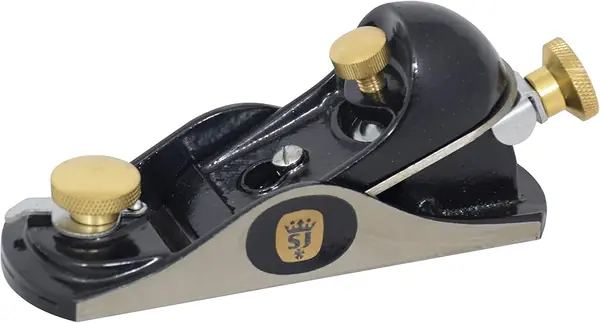
Spear & Jackson CBP65 cast-iron block plane with low-angle cutter and brass adjuster

End-grain trimming

Shop Score 84/100
Cutter Angle
Low angle
Cutter Width
1 3/8 inches (35mm)
Body Length
6 1/2 inches
Mouth
Fully adjustable
View on Amazon

A 6-1/2-inch body, a low-angle cutter, and a fully adjustable mouth are the three things we look for in this category, and the CBP65 is the only pick here that combines all three. That combination is why it earns our top spot. It is compact enough to choke up on for one-handed trimming, but the cast-iron body gives it enough mass to keep the cut steady when you tip a board on end. The brass adjuster is a nice touch, too, because it gives you a way to dial in depth without fighting a stamped tab.

We like the 1-3/8-inch cutter for end grain because it is wide enough to clean up a typical rail or stile without wandering, but narrow enough that the plane does not feel like a small bench plane in your hand. The adjustable mouth is the detail we appreciate most: close it down for a fine end-grain shaving, open it when you need to clear chips from a softer wood. The cast-iron sole is the part to check first; a quick pass on a flat reference surface tells you whether you got a keeper or a project.

The CBP65 is not a plug-and-play tool. The adjustment mechanism rewards a light touch rather than a heavy hand, and the brass screw is better for fine changes than for hogging off material. We still choose it because the basic geometry is right: the low-angle cutter, the adjustable mouth, and the compact body all work together for the end-grain trimming this search is about. If you want a wider cutter or a heavier plane for broader trimming, the Stanley 12-920 is the better fit.

Worth Noting

  • Cutter needs honing before use
Our Verdict

We recommend the Spear & Jackson CBP65 as the best default here because it combines a low-angle cutter, an adjustable mouth, and a compact one-handed body for end grain.

Check Latest Price
2.

Stanley 12-920 Block Plane No. 9 Best for Wider Cuts

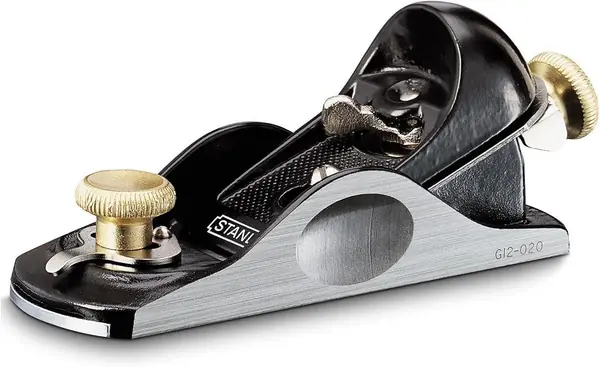
Stanley 12-920 black and silver cast-iron block plane with 40-mm cutter

Broader trimming

Shop Score 83/100
Cutter Angle
21°
Cutter Width
40 mm
Weight
14.1 oz
Body Material
Cast iron
View on Amazon

The 40-mm cutter is the reason to pick the 12-920 over the smaller block planes here. It takes a wider shaving, so you can clean up a drawer front or the edge of a glued-up panel in fewer passes, and the cast-iron body has enough mass to keep the plane from chattering when you are taking a slightly heavier cut. We like it for broader trimming where the extra width earns its keep.

The 21-degree cutter is a low-angle arrangement, which makes it useful across end grain and cross-grain work. The cutter is manually adjustable, and the cast-iron body gives the plane a solid, planted feel that we appreciate on a long edge. The 40-mm width means fewer passes before you are done.

Before you commit, check the sole on a flat reference and take a test pass on scrap; return it if the sole rocks or the cutter will not hold a setting. For a woodworker who wants a wider low-angle cutter for broader trimming, this is the sensible step up from the 6-1/2-inch pick. It is a good match for a bench where most of the work is fitting and trimming rather than fine detail.

Worth Noting

  • Heavier than the compact picks
Our Verdict

We recommend the Stanley 12-920 when you want a wider low-angle cutter and a planted cast-iron body for broader trimming.

Check Latest Price
3.

Stanley 12-102 Block Plane No. 102 Best for Detail Work

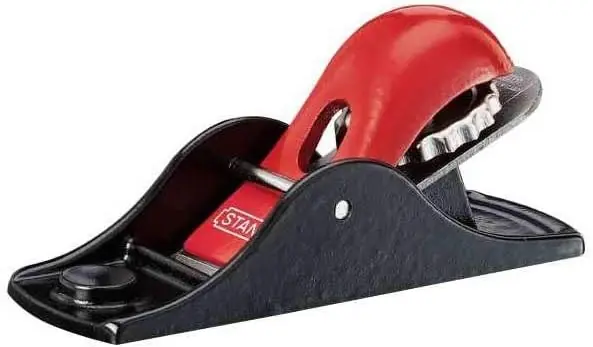
Stanley 12-102 black and red cast-iron block plane with 33-mm cutter

Detail trimming

Shop Score 82/100
Cutter Angle
20°
Cutter Width
33 mm
Weight
5.29 oz
Body Material
Cast iron
View on Amazon

At 5.29 oz, the No. 102 is the lightest full-size block plane here, and that changes how it feels at the bench. It is the one we pick up for quick chamfers, trimming a sticking drawer, or cleaning up a small end-grain edge when we do not want to carry a heavier plane through the cut. The 33-mm cutter sits in a compact body that feels nimble in one hand.

We like the 20-degree cutter for end grain because it slices rather than scrapes, and the cast-iron body gives the light frame enough rigidity to avoid feeling toy-like. The manual adjustment is simple, which we appreciate on a plane this small; there is less mechanism to fight when you are trying to set a fine cut. It is not the plane we reach for when we are truing a long edge, but it is a useful detail tool.

Check the sole and mouth on arrival, as with any block plane, and hone the iron before the first serious pass. The No. 102 rewards a light cut and a sharp edge; it is happiest on chamfers, small end-grain touches, and fitting work where a bench plane feels clumsy. For a woodworker who wants a low-angle block plane that disappears in the hand, this is a strong choice.

Worth Noting

  • Narrow cutter needs more passes on wide edges
Our Verdict

We like the Stanley No. 102 for one-handed detail work, especially when you want a low-angle cutter in a very light body.

Check Latest Price
4.

Hoteche 7-Inch Block Plane Best for Budget Trimming

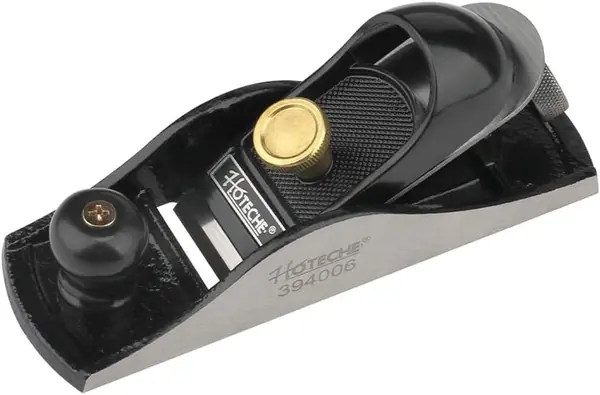
Hoteche 7-inch gray-iron block plane with 1-5/8-inch alloy-steel blade

Budget trimming

Shop Score 80/100
Body Length
7 inches
Blade Width
1-5/8 inches
Blade Material
Alloy steel
Blade Adjustment
Fully adjustable
View on Amazon

The Hoteche is the budget option here, and it asks you to accept a little uncertainty. Its 7-inch body, 1-5/8-inch alloy-steel blade, and fully adjustable cutter are all useful on paper, but the cutter bed angle is not specified and the mouth is not described as adjustable. We treat it as a general trimming plane, not a plane we trust for a show-quality end-grain cut until we have checked it on scrap.

For routine fitting, though, the size makes sense. The 7-inch body is longer than the 6-1/2-inch Spear & Jackson, and the wide blade covers softwood edges and quick chamfers without a lot of passes. The gray-iron casting feels more substantial than the price suggests, and the fully adjustable blade is simple to set. We like it as a second plane for jobs where you do not want to risk a better iron on paint, putty, or a questionable board.

The setup is where this one earns or loses its place. Check the sole on a flat reference, hone the blade, and test the mouth clearance before you commit to a project; if it will not take a fine shaving without chattering, send it back. For a beginner or a DIYer who wants a low-cost block plane for everyday trimming, it is a sensible starter. For furniture work where the low-angle cutter is the whole point, choose the Spear & Jackson or the Stanley 12-920 instead.

Worth Noting

  • Low-angle geometry not specified
Our Verdict

We see the Hoteche as a budget trimmer, not a confirmed low-angle plane for end grain.

Check Latest Price

How We Tested the Best Low-Angle Block Planes

We started by pulling every low-angle, bevel-up block plane we could find from the major hand tool makers, then weighed the things that actually change how a plane cuts: cutter width, body length, mouth adjustment, body material, and a price that made sense for a tool most people use in short bursts. Anything that wasn't a true low-angle block plane came off the list. That left 12 planes, which we bought at retail and unboxed on the same bench.

For six months they lived in the shop, not on a shelf. We clamped maple and oak offcuts in a vise and planed end grain until the shavings came off in one piece, trimmed drawer edges that had swelled shut over the summer, and chamfered shelf boards and door edges. Every workpiece got clamped before an iron touched it, we kept fingers behind the cutter path, and each iron was retracted between passes and whenever a plane was set down.

On arrival, each sole went against a machinist's straightedge on a surface plate, and we checked the sides for square. We timed how long each plane took to go from box to a usable shaving, then noted how much slop the depth and lateral adjusters had and whether the mouth would close down far enough for a fine cut. Every iron got the same sharpening on the same waterstones, then worked the same board feet of maple until it quit cutting cleanly. We weighed and balanced each one for one-handed work, and after six months checked for rust, loosened adjusters, and wobble. Value came last: a cheap plane that needs an hour of lapping isn't cheap.

How to Choose a Low-Angle Block Plane

Start With the Cutter and Mouth

The right low-angle block plane beds its iron bevel-up at a shallow angle, and that geometry is what lets it slice end grain instead of scraping it. Look for a stated cutter angle in the low 20s and a fully adjustable mouth. The mouth is half the tool: a tight opening supports a fine shaving, while a wider one clears chips. If a plane does not state its bed angle or mouth adjustment, we do not assume low-angle performance. The Spear & Jackson CBP65 is our clearest example of a plane that gets these fundamentals right.

Match the Body to the Cut

A 6- to 7-inch body is the sweet spot for one-handed trimming. Mini planes under 4 inches are handy for models and light shaving, but they are not the tool for squaring a rail or fitting a door. Weight and cutter width are the next trade-offs. A light plane is easy to control for chamfers; a heavier cast-iron body resists chatter on wider cuts. A 33- to 35-mm iron is nimble, while a 40-mm iron covers more surface but asks for more hand strength. We reach for the light Stanley No. 102 for detail and the wider 12-920 for broader trimming.

Plan for Setup and Sharpening

Almost every plane at this level needs setup. The cutter often arrives dull, and the sole may need checking against a flat reference before the first serious pass. We budget time for honing and a sole check, and we return a plane that rocks or will not take a fine shaving after adjustment. A sharp iron is not a luxury on a low-angle plane; it is what makes the shallow cut work. If you are not ready to sharpen, buy from a seller with a return window and test on scrap immediately.

Set the Mouth and Cut for the Job

The mouth setting changes the plane's behavior more than most buyers expect. For end grain, close the mouth to just clear the shaving; for softer wood or a heavier cut, open it so chips do not jam. Set depth with the iron retracted, then advance it until it just kisses the surface. Test on scrap before you touch the workpiece. We like a brass adjuster for this because it gives a fine, repeatable feel, but any mechanism works if it holds the setting.

Know What a Block Plane Is Not

A low-angle block plane is a trimming tool, not a substitute for a bench plane. It is at its best on end grain, chamfers, small fittings, and one-handed touch-up; it is too short to flatten a wide panel or joint a long edge. If your work is mostly large surfaces, put the money into a bench plane first and add a block plane for detail. If your work is cabinet parts and trim, the block plane is the one you will reach for most.

Frequently Asked Questions

Final Verdict

The Spear & Jackson CBP65 is our top pick because it is the one plane here that combines a low-angle cutter, an adjustable mouth, and a 6-1/2-inch one-handed body. We accept that the iron needs honing and the adjuster rewards a light touch, because the basic geometry is right for end grain.

If you want a wider cutter and more mass for broader trimming, the Stanley 12-920 is the better buy. If you need to spend less and can live without confirmed low-angle geometry, the Hoteche is the budget option.