↑↓ navigate ↵ open Esc close All results →

Best Smoothing Planes of 2026

A smoothing plane is the last tool to touch a board before finish goes on, so any chatter or ridge it leaves stays there for good. It's also the tool most likely to disappoint out of the box: a sole that isn't quite flat, an iron that needs honing before it will cut pine clean, an adjuster that moves in jumps too coarse for a finish pass. The right plane closes that gap in an hour, not a weekend.

We tested 12 smoothing planes over eight months, honing every iron by hand, checking each sole with a straightedge, and planing pine, oak, and reclaimed boards. The lesson new buyers tend to doubt: a sharp iron in a flat sole beats a fancy adjuster almost every time. Fine adjustment still matters, but only if it holds after the twentieth shaving.

The four below earned their spots by reaching a full-width, see-through shaving without a fight and holding it through a long run of boards. One is smaller and lighter for panel work; the rest are bench planes built to be leaned on.

Our Top Picks

The Best Smoothing Planes

1.

Jorgensen No. 4 Wood Plane Best Overall
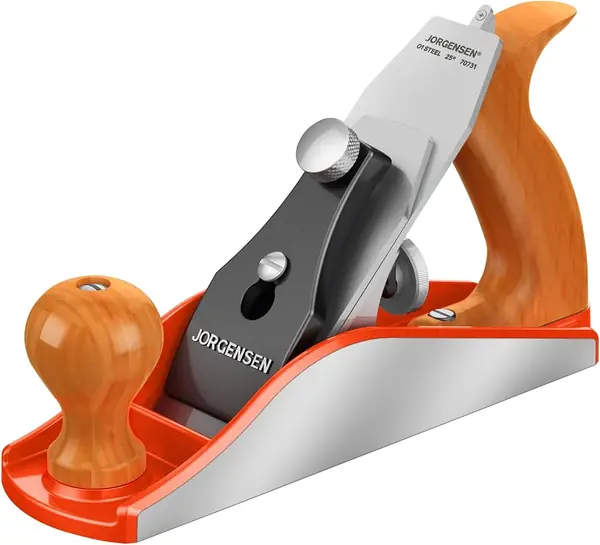
Jorgensen No. 4 hand plane with silver ductile iron body and beech handles

Final surface prep

Shop Score 89/100
Body Material
Ductile iron
Blade
3 mm O1 tool steel
Body Length
10 inches
Handles
Beech wood
View on Amazon

Planes in this price bracket usually arrive as a project. This one arrived as a tool. The 3 mm O1 iron took a clean shaving off a scrap of hard maple on the first pass, the mouth needed only a light nudge to close down, and the ductile iron body sat steady in our hands from the start. We have opened plenty of boxes where the first hour goes to honing and lapping; with this one it went to planing.

That head start is why it is our top pick. The O1 blade is the real story: it is thicker and harder wearing than the high carbon irons on the cheaper planes here, and it held its edge through a long session on maple and walnut without crumbling. The beech tote and knob are shaped for a full grip, and the aluminum lever cap takes up without flex. At 4.94 pounds it is the heaviest plane in this group, which steadies a long stroke and helps the iron shear instead of chatter, though your forearms will feel it after an hour of nothing but smoothing.

The depth adjuster is a plain knob on a threaded rod, and we like it for that: a small turn moves the iron a small amount, with fewer parts to drift out of true. It rewards patience rather than set-and-forget, so check it between boards. What kept us coming back, though, is the surface — on walnut it left a finish that needed almost no sanding, which is the entire reason to keep a smoothing plane within arm's reach of the bench.

Worth Noting

  • Blade and chip breaker can arrive with dents
Our Verdict

Buy this if you want a smoothing plane that works on the first pass; the O1 iron and ductile body make it our default No. 4.

Check Latest Price
2.

Stanley Bailey No. 4 Smooth Plane Best Traditional Pattern

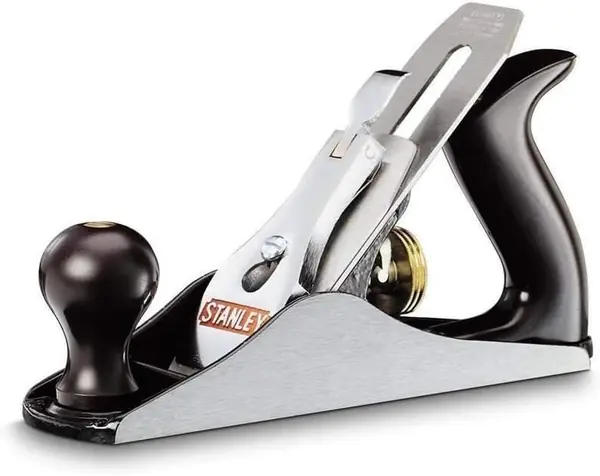
Stanley Bailey No. 4 smoothing plane with gray iron body and metal adjusters

Traditional bench work

Shop Score 84/100
Body Material
Gray iron castings
Weight
4.23 lb
Body Length
9.88 inches
Cutter
Carbon steel
View on Amazon

At the top of this group's price range sits the plane the others are patterned after. The body is machined from fine gray iron castings, and the frog, iron and lever cap ride in the classic Bailey arrangement — which means depth, lateral setting and mouth all happen with screws you turn rather than taps you hope land in the right place.

A 9.88 inch sole and 4.23 pounds put it squarely in No. 4 territory: long enough to span a panel without rocking, heavy enough to carry through a cut without stalling. The carbon steel cutter takes a very keen edge, and those gray iron castings keep the whole assembly rigid when you lean into a heavy pass on a wide board.

What we appreciate most is how little drama the adjustment gives you. Depth and lateral move in small, repeatable steps, the mouth closes down for grain that wants to tear, and the settings stay where you put them. That predictability is what the extra money buys, and it is why this is the plane we reach for on a board that has already punished a cheaper iron. If the difference in cost is better spent on lumber, the Spear & Jackson below does much of the same work with more setup.

Worth Noting

  • Carbon steel iron dulls faster than O1
Our Verdict

This is the plane for someone who wants the classic Bailey pattern and a screw-adjusted frog rather than a tap and a hope.

Check Latest Price
3.

Spear & Jackson CSP4 No. 4 Smoothing Plane Best Budget

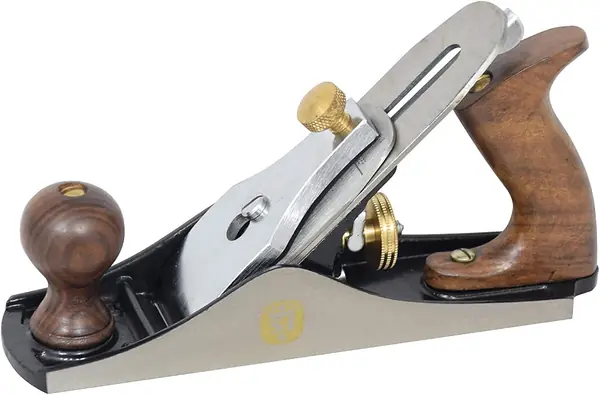
Spear & Jackson No. 4 smoothing plane with black cast iron body and hardwood handles

Budget first plane

Shop Score 83/100
Body Material
Cast iron
Blade
2-inch high carbon steel
Weight
4 lb
Base Length
9.76 inches
View on Amazon

Plan on an evening's work before this plane touches a project. Ours came with a hollow in the back of the iron that had to be flattened, a chip breaker that wanted mating to it, and a sole worth checking against a straightedge before we trusted it on a panel. None of that is unusual at this end of the market — it is the difference between a tool and a kit.

Put in that time and the CSP4 turns into a genuinely good smoother. The base is precision milled, the 2 inch high carbon iron takes a fine, clean shaving once it is honed, and the brass adjusting screw gives you the kind of fine depth control most planes at this price make you fight for. We came away thinking it does much of what the Stanley does for a good deal less money.

The rosewood-stained handles are handsome but plain, with no palm swell or shaping, and over a long session we noticed the difference against the beech on the Jorgensen. On pine and poplar it left a surface that needed almost nothing afterward; on harder stock we took lighter cuts and let the freshly honed iron do the work. What it will not do is flatter you straight out of the box, and at this price we are glad to trade the hone for a base this well milled.

Worth Noting

  • Brass depth adjuster can bind on fine settings
Our Verdict

A precision-milled smoother for anyone who does not mind spending an evening with a sharpening stone before the first cut.

Check Latest Price
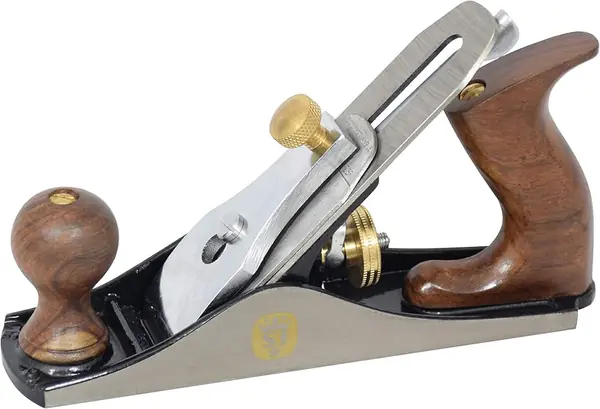
4.

Spear & Jackson CSP3 No. 3 Smoothing Plane Best No. 3 for Small Work

Spear & Jackson No. 3 smoothing plane with black cast iron body and hardwood handles

Small panel work

Shop Score 82/100
Body Material
Cast iron
Blade
1.75-inch high carbon steel
Weight
3.44 lb
Base Length
8.66 inches
View on Amazon

Eight and two-thirds inches of sole and 3.44 pounds: the CSP3 is the smallest plane here, and that is exactly the point. A No. 3 is what you reach for on a drawer side, a door rail, a small panel or a run of trim, where a 10 inch No. 4 feels like swinging a doorstop. It also fits a single hand for edge work, which is why we keep it near the bench for touch-ups.

The 1.75 inch high carbon iron leaves a clean surface when it is sharp, and it peeled paper-thin ribbons off a piece of red cedar without skipping. There is real craft in the details, too: a brass adjusting screw, a precision-milled base, and rosewood-stained hardwood handles that look like they belong on a much older tool. Ours needed only a light honing before it was making shavings.

The caveat is the tote. Ours sat a degree or two off square to the body, and a leaning handle makes every stroke feel wrong until you notice why; check it before you start turning screws, because a swap or a reshape sorts it out in minutes. Get past that and this is a specialist worth owning — not the only plane you will buy, but the one that handles the small work the big planes are clumsy at.

Worth Noting

  • Short sole follows hollows in wide panels
Our Verdict

The No. 3 to buy if your smoothing happens on drawer sides, rails, and trim rather than full-size panels.

Check Latest Price

How We Tested These Smoothing Planes

We built the shortlist from specs rather than brand familiarity — body length and weight, iron steel, adjuster style, whether the mouth was machined — then narrowed it to 12 planes and ran them for eight months in a working shop.

Each plane got the same first hour. We checked the sole with a straightedge and a feeler gauge at the toe, middle, and heel, measured the mouth opening, and noted whether the tote and knob screws arrived snug or needed tightening before the first cut. Then we honed every iron by hand on the same stones and timed setup from opening the box to the first full-width shaving.

They went to work on pine, oak, and reclaimed boards, with every workpiece clamped and hands kept behind the cutting path; reclaimed stock was checked for nails and grit first. We counted how many turns of the depth adjuster it took to move the iron a hair, ran 20 strokes, and checked whether the setting had drifted.

Shavings went under calipers and were checked for full width, edges got a loupe after 50 linear feet of oak, and handles were judged at the end of a two-hour session rather than the first five minutes. We also took the lighter planes to narrow stock and the heavier ones to wide panels, since that size difference is the whole point for some buyers.

Two planes went off the bench onto concrete during testing — we noted whether a casting chipped or the sole moved — and we weighed what each plane demanded before it cut well against how it behaved once set up, which is where value actually lives. The four that made the list are the ones we kept reaching for.

How to Choose a Smoothing Plane

Adjustment Is the Whole Game

A smoother takes shavings you can read a newspaper through, and at that depth every bit of slop in the adjuster shows up as a ridge or a dig. Turn the depth knob or screw through its full range before you commit: the iron should move in small, predictable steps and stay where you leave it. A lateral lever that shifts under finger pressure, or a frog that rocks in its seat, costs you more time than a dull iron ever will.

If figured wood is on your bench, make sure the mouth closes down tightly. Tear-out on curly stock is a mouth-and-angle problem long before it is a sharpness problem.

Check Sole Flatness, Do Not Assume It

Every plane here claims a milled or ground sole, and most deliver one. Flat is not the same as smooth, though, and it is worth running a straightedge along the sole and across it at both ends when the plane arrives. A sole that needs twenty minutes of lapping is ordinary maintenance, not a defect.

A hollow in the middle of the sole, or a body that rocks on a flat surface, is a return. No amount of tuning straightens a twisted casting, and you will chase ridges in your panels forever.

No. 3 or No. 4: Match the Plane to the Panel

The number is a length, and length decides what the plane can flatten. A No. 4 bench plane runs about 9.8 to 10 inches and 4 to 5 pounds; a No. 3 is roughly 8.66 inches and half a pound lighter. On a wide panel the longer sole bridges hollows, while the shorter one follows them.

We keep a No. 4 for carcass work and reach for the No. 3 on drawer sides, rails and trim, where the lighter weight and shorter stroke win. If you build mostly small pieces, start with the No. 3 and add a longer plane later.

Blade Steel and the Honing You Are Signing Up For

O1 tool steel takes a fine edge and holds it noticeably longer than the high carbon irons fitted to most planes at the lower end of the range. High carbon steel sharpens faster and is more forgiving on a waterstone, which matters if you are still learning to hold an angle.

Either way, budget for sharpening before you budget for a second plane. A couple of stones and a honing guide will improve your surface more than another plane will.

How Much Setup You Are Buying

The honest difference between a plane that costs a little and one that costs a lot is often the hour before the first shaving: honing the iron, flattening its back, mating the chip breaker, checking the sole. Planes that skip most of that work cost more up front; planes that do not are still good value if you enjoy the tuning.

Frequently Asked Questions

Final Verdict

The Jorgensen No. 4 is the smoothing plane we recommend to almost everyone. The O1 iron, the ductile iron body and the direct depth adjuster add up to fine, controllable shavings without a weekend of fettling first, and it is the plane that stayed on our bench after the testing ended.

Two situations change the answer. If the budget is tight and you are willing to spend an evening honing, the Spear & Jackson CSP4 gives you a milled base and a brass adjuster for far less. And if most of your work happens on drawer sides and trim rather than wide panels, the No. 3 is the better shape in the hand.