↑↓ navigate ↵ open Esc close All results →

Best Spoon Carving Tools of 2026

Carving a wooden spoon looks like a one-knife project until a straight blade meets the hollow of the bowl. Shaping the back wants a straight edge, scooping the bowl needs a curved hook knife, and fairing the neck often calls for a tighter sweep — trying to force the wrong radius turns clean slicing into sawdust and wrist strain.

Working green birch on a backyard stump alongside dry oak and maple blanks at the bench with 14 knives and starter kits over four months also highlighted two traits buyers routinely overlook. High-carbon steel takes a keen edge and strops back fast in the middle of a session, yet rusts quickly if put away damp, and hook bevels are handed: a right-ground blade forces a left-handed carver to fight the cut.

Matching blade curvature, steel care, and handedness to either a starter spoon or deeper bowl hollowing keeps chips peeling cleanly instead of tearing out the grain.

Our Top Picks

The Best Spoon Carving Tools

1.

BeaverCraft S14 Spoon Carving Set Best Overall
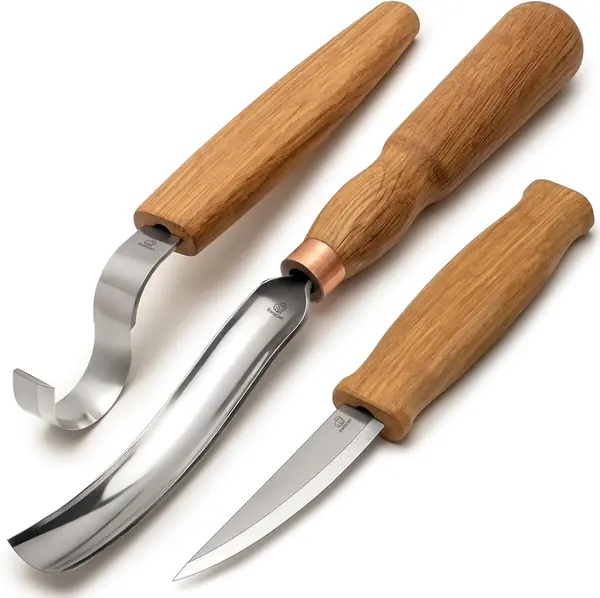
BeaverCraft S14 spoon carving set with hook knife, sloyd knife, and bent gouge

First spoon projects

Shop Score 92/100
Blade Material
1066 high-carbon steel
Handle Material
Oiled oak
Item Weight
10.6 oz
Tools Included
Hook knife, sloyd knife, bent gouge
View on Amazon

Three tools, three jobs. The sloyd knife shapes the handle and the back of the bowl, the hook knife hollows the bowl itself, and the bent gouge scoops the deeper recess and evens out where the bowl runs into the rim. Sets get sold on tool counts, but this is close to the smallest group that takes a spoon from a squared blank to something worth sanding — and that is why it beats buying one knife and improvising the rest.

We spent our carving time with the S14 on green birch, and the three tools handed off to each other cleanly: rough with the sloyd, hollow with the hook, tidy the bottom of the bowl with the gouge. The oiled oak handles are shaped plainly and stay comfortable through a long session, and the 1066 high-carbon steel answers a strop quickly, which matters because spoon carving dulls an edge faster than most bench work.

Sharpness on arrival is the variable. Ours cut straight out of the box, but a hook knife that shows up dull skates across the bowl instead of biting, so plan on a few minutes of honing before the first spoon and don't blame your technique. Dry hardwood is where the set feels its price — the edges are keen, but you'll be back on the strop more often with oak or ash than with fresh birch. None of that changes the recommendation: this is the kit we hand to someone who wants to make spoons, not collect knives.

Worth Noting

  • No strop, compound, or case included
Our Verdict

Our top pick: three spoon-specific tools that cover shaping, hollowing, and scooping for less than a single premium hook knife.

Check Latest Price
2.

Morakniv Wood Carving Hook Knife 164 Best for Hollowing

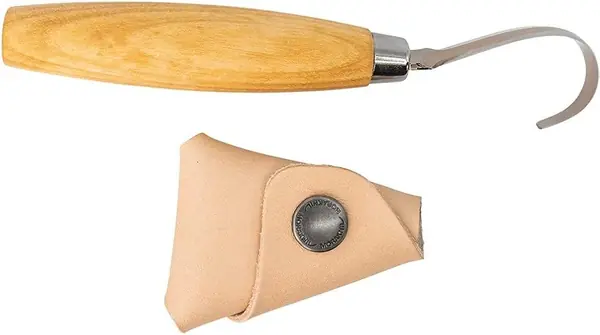
Morakniv Wood Carving Hook Knife 164 with birch handle and leather sheath

Hollowing kuksas and bowls

Shop Score 91/100
Blade Material
12C27 stainless steel
Handle Material
Oiled Scandinavian birch
Blade Length
2.2 inches
Blade Radius
0.5-inch open curve
View on Amazon

A 2.2-inch blade with an open half-inch curve looks almost too small to hollow a spoon, and that is the point: a short hook turns inside the bowl without the handle levering against the rim. We came back to the 164 every time a hollow had to be even, and the Swedish 12C27 stainless is a big part of why — it takes a fine edge and shrugs off the damp of green wood far better than the carbon blades here.

The barrel-shaped birch handle sits in the palm so the cut comes from the wrist rather than a locked grip, and the vegetable-tanned leather sheath earns its place in a tool roll, where an unprotected hook knife gets its inside edge knocked against everything else. Two things to settle before you order. This listing is the right-handed version and the grind favors a right hand on the pull; if you carve left-handed, the left-handed version is a separate purchase. The birch also wants hand washing and the occasional wipe of oil.

What it will not do is shape a spoon. A hook knife hollows; the outside of the bowl and the handle still need a straight blade, so this is the second knife most carvers buy rather than the first. Start with the C4 or the S14 set, then come back for the 164 when the hollow is the part you keep fighting.

Worth Noting

  • Right-handed grind only in this listing
Our Verdict

For even hollows in spoons and kuksas, this is the hook knife we recommend — just order the hand you carve with.

Check Latest Price
3.

BeaverCraft C4 Sloyd Knife Best Budget Knife

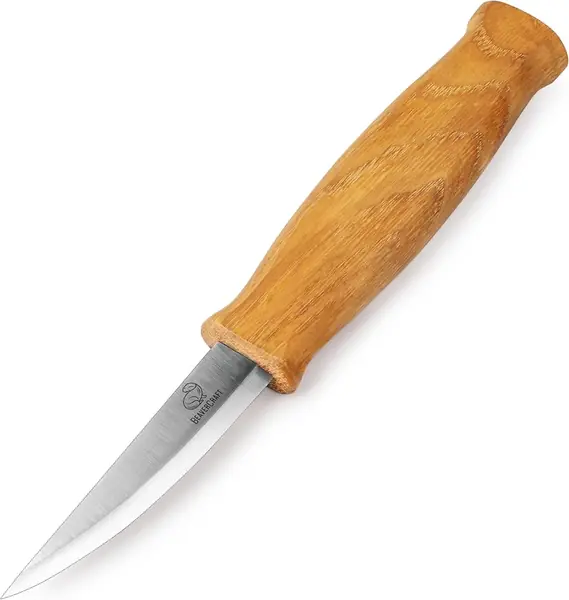
BeaverCraft C4 whittling sloyd knife with oiled oak handle and carbon steel blade

Beginners on a budget

Shop Score 90/100
Blade Material
1066 high-carbon steel
Handle Material
Oiled oak
Blade Length
3.14 inches
Grind
Scandi grind, 20-degree bevel
View on Amazon

One knife is where most people should start, and this is the one we point them to. The C4 is a sloyd — straight blade, Scandi grind, a 20-degree bevel — and it does the first half of spoon carving: splitting down the blank, roughing the handle, and paring the back of the bowl. If you are not sure carving will stick, a single knife and a strop beats a kit you might open twice.

The 3.14-inch blade is the part we appreciate most. It is long enough to take a confident slicing cut through a green branch and pointed enough to reach the tight transition where the bowl narrows into the handle, the spot where short blades stall. We also noticed the oiled oak handle has enough swell to it that the knife does not rotate on a hard paring cut, and the whole thing is light enough to work in one hand for an hour without your grip cramping.

High-carbon steel takes a keener edge than stainless and gives it back faster on a strop, and that is what you get here — along with the upkeep. Wipe the blade dry after green wood and put a drop of oil on it now and then, because 1066 will spot with rust if it lives damp in a toolbox. Add the Morakniv once you start hollowing and you have a two-knife setup that covers a whole spoon and will outlast most starter sets.

Worth Noting

  • Ships without a sheath or cover
Our Verdict

We recommend the C4 to anyone starting out: it shapes a spoon blank cleanly and costs less than any other knife here.

Check Latest Price
4.

WAYCOM 12-Piece Whittling Kit

WAYCOM 12-piece wood whittling kit with hook knife, gloves, and bamboo box

Complete starter kit

Shop Score 89/100
Blade Material
High-carbon steel
Kit Size
12 pieces
Components
Hook knife, detail knife, whittling knife, gloves, sheath, box
View on Amazon

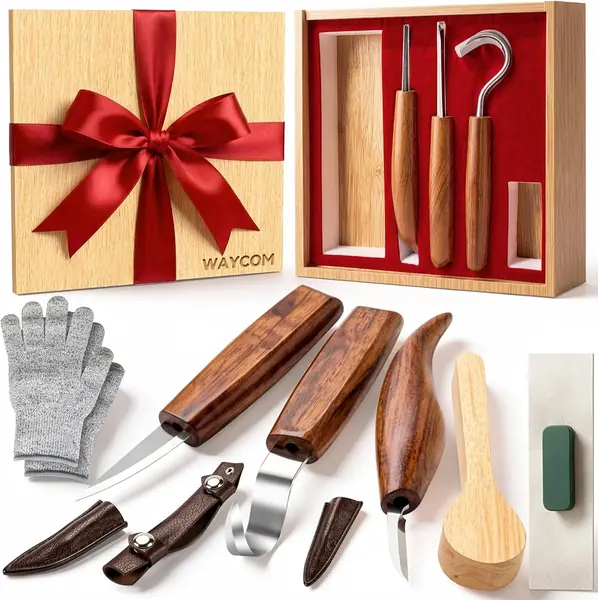
Twelve pieces, a leather sheath, a pair of cut-resistant gloves, and a bamboo box — as a first purchase for someone who has never held a carving knife, this kit is the least intimidating thing on the page. The gloves are the detail we noticed first. Almost every beginner cut happens on the hand holding the wood, not the hand holding the knife, and a box that puts a glove in your hands before you think to buy one is doing you a real favor.

The working set is a hook knife for hollowing, a detail knife for the fiddly end of a handle, and a straight whittling knife for roughing, plus the extra pieces that fill out the count. The bamboo box is not just packaging: the slots are cut to the shape of the tools, so nothing slides into an edge in transit, and it sits open on a bench like a tray. That is a nicer home than a fabric roll, and it keeps the whole set together on a shelf.

What you give up is refinement. These are plain tools with plain handles, the steel is ordinary high-carbon stock, and a twelve-piece box always includes a piece or two you will never reach for. None of that matters for a first spoon or two; all of it matters if you keep going, at which point a single better hook knife — the Morakniv above all — is the next purchase rather than a bigger kit.

Worth Noting

  • Ordinary high-carbon steel and plain, unrefined handles
  • Twelve-piece set includes extra pieces rarely used
Our Verdict

A well-stocked first kit for a beginner, with gloves and a fitted box doing as much for you as the knives.

Check Latest Price

How We Tested Spoon Carving Tools

We narrowed a longer list on paper first: steel type, hook curvature and blade width, which hand the hook was ground for, handle material, and what comes in the box. Kits padded with pieces that did the same job got judged on price per usable tool. That filter left 14 tools and kits to put in our hands.

Testing ran four months, mostly in weekend sessions. Each tool carved green birch on a backyard stump and dry oak and maple blanks at the workbench, in stretches long enough to notice a handle that rubbed. We wore a cut-resistant glove on the hand holding the wood every time — that's where a slipping blade lands.

Every box got opened and every edge shaved a curl off a birch offcut before any real carving, which told us whether a blade arrived ready or needed work. After an hour we gave each one 10 to 15 passes on a strop and carved again to see how quickly the steel came back. Hook knives were judged on how much material the curve could clear, whether the bowl walls came out smooth or torn, and how the neck handled a deeper scoop, with left-handed carvers taking a turn on every hook.

We also checked for wobble where the blade meets the handle, rust on high-carbon blades left damp overnight, and how a finish held up to a sweaty palm. Handles were rated at the two-hour mark rather than the first ten minutes. The ones that stayed sharp, felt steady, and covered shaping and hollowing without a filler piece are the ones below.

How to Choose Spoon Carving Tools

Match the Tool to the Cut

A sloyd knife, sometimes sold as a whittling knife, shapes the outside: it splits down the blank, rounds the handle, and pares the back of the bowl. A hook knife hollows the inside. A bent gouge scoops the deeper recess and cleans the ridge where the bowl meets the handle. Most sets are just some combination of those three.

If you buy one tool today, buy a sloyd. It does more of the work on a first spoon, and a shallow dip can be scraped and sanded afterward. Add the hook knife when the hollow is the part you care about, or buy the S14 set and get all three at once.

Hook Knife Geometry and Handedness

Two things decide whether a hook knife suits your carving. The first is the curve: an open radius, like the half-inch sweep on the Morakniv, cuts a wide, shallow bowl and rides easily along the walls; a tighter hook bites a narrow channel, which suits ladles and deep kuksas. Match the curve to the shape you want rather than to the size of the knife.

The second is handedness, and it is the trap. A hook knife is ground for one hand, and a right-handed grind used in a left hand puts the bevel on the wrong side of the cut, so you fight the tool all afternoon. Check which hand the grind is for before you order, not after.

Steel, Sharpening, and Upkeep

High-carbon steel such as the 1066 used in the BeaverCraft blades takes a very keen edge and gives it back quickly on a strop, but it spots with rust if it sits damp. Stainless like the Morakniv's 12C27 trades a little of that final sharpness for a blade you can use on wet green wood without babysitting it.

Either way, sharpening is part of carving rather than maintenance you get to later. A strop and compound belong in the kit from day one, and a few passes every half hour of carving keeps a knife working instead of skidding. If a new blade slides across the wood instead of biting, hone it before you blame your technique.

Handles, Grip, and Green Versus Dry Wood

Carving knives work in the hand, close to the body, so handle shape matters more than it looks. A handle that is too slim rotates on a hard paring cut and forces you to grip harder; one with a bit of swell, like the oiled oak on the C4, lets you relax. Handle length should match how you work — palm-length for control, longer for leverage when hogging off waste.

Wood choice sets the difficulty. Green wood cuts like butter, dries as it goes, and is the right place to learn, but it rusts carbon steel and moves as it dries. Dry hardwood demands more force and a stouter edge, and it is where a budget knife starts to feel like a budget knife.

Frequently Asked Questions

Final Verdict

Buy the BeaverCraft S14 if you want to make spoons rather than collect tools. It is the smallest set that covers shaping, hollowing, and scooping, it arrives with edges you can work with, and it costs less than the premium hook knife on this list.

If your blanks are already shaped and the hollow is what you are fighting, the Morakniv 164 is the tool we reach for — order the left-handed version if you carve left-handed. And if you are not sure carving will stick, start with the C4 and a strop. One sharp sloyd teaches you more about spoons than a drawer full of dull knives.