↑↓ navigate ↵ open Esc close All results →

Best Hand Planes for Woodworking of 2026

Run a palm over a glued-up panel and every faint seam the sander skipped still catches the skin. A tuned hand plane levels those ridges in a few passes and leaves glass-smooth grain ready for finish without abrasive dust.

The shop catch is what arrives straight out of the box: soles that rock, irons that lose their edge on the first board, and adjusters that jump past a light cut. Over six months, we tested 12 block, bench, and Japanese-style planes across pine, maple, and walnut—flattening glued-up panels and a warped cutting board, chamfering legs, and trimming end grain.

What separates dependable planes from frustrating castings is sole flatness, out-of-the-box edge retention, and a depth screw fine enough to dial in whisper-thin shavings. Nearly every model here needed a brief tune before cutting cleanly, and the lineup reflects how well each held an edge once dialed in.

Our Top Picks

The Best Hand Planes for Woodworking

1.

Jorgensen No.60-1/2 Low-Angle Block Plane Best Overall
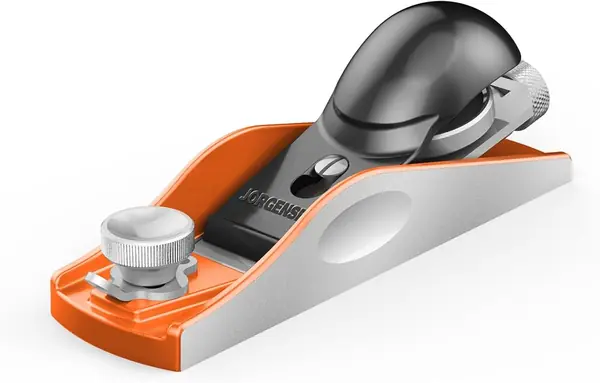
Jorgensen No.60-1/2 low-angle block plane with ductile iron body and adjustable mouth

All-around hand planing

Shop Score 92/100
Weight
1.5 lb
Blade Steel
O1 tool steel
Body Length
6-1/4 inches
Cutting Width
1.38 inches
View on Amazon

The job most hand planes actually get bought for is small and annoying: a door that sticks in July, a drawer that binds, a corner that needs easing. A 6-1/4-inch low-angle block plane handles all of that one-handed, and this Jorgensen is built like a tool rather than a toy — a ductile iron body, a 1-3/8-inch O1 tool steel cutter, an adjustable mouth, and 1-1/2 pounds of heft in the palm.

The iron on ours came sharp enough to take a shaving without touching a stone, which matters more than any figure at this size, because you can put it to work the day it arrives. We paid close attention to the sole, since a block plane that rocks rounds over a door edge instead of trimming it square. Run a straightedge along yours before the first cut, and if it isn't flat, lap it on a flat plate with adhesive-backed paper.

Depth adjustment is a knob, the mouth opens and closes on a screw, and the lateral setting is the one fussy part — sneak up on it in small taps rather than chasing the edge back and forth across the opening. At 1-1/2 pounds the plane balances at the front of your hand, so you can trim the top of a door without setting up a step stool and a second pair of hands.

What it won't do is flatten a glued-up tabletop; that takes the length and mass of the Jorgensen No.4 below. Keep the iron honed and this is the plane that stays out on the bench long after the novelty of the others has worn off.

Worth Noting

  • Lateral blade setting takes patience
Our Verdict

We recommend it as the first plane most people should buy: it's light, arrives sharp, and handles the door edges and end grain that send most of us shopping.

Check Latest Price
2.

Jorgensen No.4 Smoothing Plane Best for Smoothing Panels

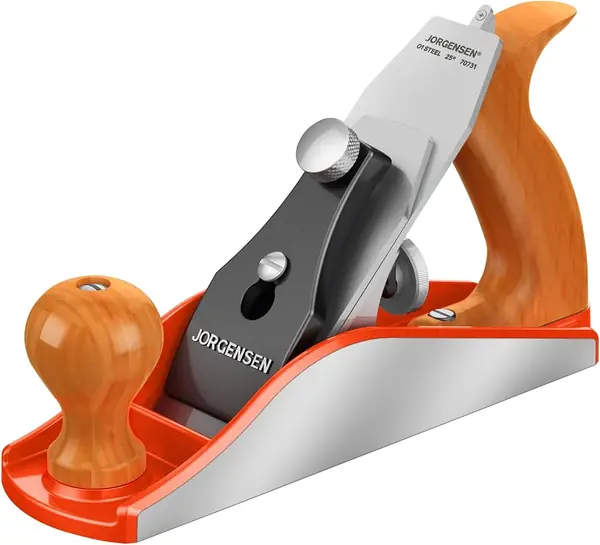
Jorgensen No.4 smoothing plane with ductile iron body and beech tote and knob

Flattening panels

Shop Score 90/100
Weight
4.94 lb
Blade Steel
3mm O1 tool steel
Body Length
10 inches
Handle Material
Beech wood
View on Amazon

Set the Jorgensen No.4 down on a bench and its numbers explain the job: a 10-inch sole, 4.94 pounds of ductile iron, and a 3mm O1 tool steel cutter under an aluminum lever cap. That's the weight and length it takes to bring a glued-up panel flat, and the beech tote and knob give you something solid to push with both hands.

Sharpness is where we were won over. The iron takes a fine, even edge and holds it long enough to finish a panel without stopping to hone. The cap iron can be set close behind the edge to calm tearout on figured stock, which is the real reason a bench plane beats a block plane on a wide surface — and the chip breaker arrives snug, so check it for light showing under the edge before the first session.

Check the sole against a straightedge when it lands. The machining is good, but a few minutes of lapping on a flat plate is worth the trouble before you trust it on a finished surface, and the same check applies to the cutting edge, which occasionally arrives with small nicks that need honing out. Adjustment is a depth knob plus a lateral lever, with very little backlash to fight.

If your work is door edges and trim, this is more plane than you need. For anything wider than a door frame, it's the plane we reach for, and the extra length shows up as flatness you can feel with a straightedge — the difference between sanding a tabletop and planing it.

Worth Noting

  • Iron can arrive with nicks
Our Verdict

Buy this one when the work is a panel rather than a door edge — we think the length and heft are what separate a flat tabletop from a wavy one.

Check Latest Price
3.

KAKURI Japanese Kanna 42mm Best Japanese-Style Plane

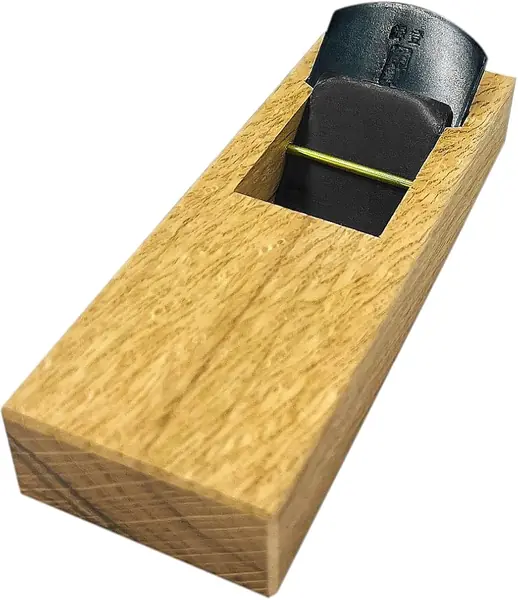
KAKURI Japanese kanna hand plane with oak body and 42mm steel blade

Japanese pull planing

Shop Score 89/100
Blade Steel
Japanese high-carbon steel
Body Material
ECO oak
Blade Width
42 millimeters
Body Size
5.9 x 2.1 x 1.6 inches
View on Amazon

You cut on the pull with a kanna — drawing the plane toward you with both hands on the back of the body — and that backward stroke is why a small Japanese plane can leave a surface that needs almost no sanding. This KAKURI is 5.9 inches of oak around a 42mm Japanese high-carbon steel blade, and it's the least expensive plane on this list.

Setup is a hammer, not a screwdriver. Depth and lateral alignment come from tapping the body and the blade, and the iron is held by friction against the oak bed. We like that on a finishing plane, since nothing works loose mid-pass, but it does mean every change is a small negotiation and the first few sessions feel clumsy while you learn how hard to tap.

The blade is where the money went. It arrives sharp, handles end grain better than the price suggests, and touches up in a few minutes on a stone because there's no cap iron to work around. Pull the plane with a light, steady stroke and take thin shavings; leaning into it digs the corners and leaves tracks across the board.

A little wax on the oak sole makes the stroke glide, and the compact size makes it easy to keep in a drawer between projects. If you already own a block plane and want to know what the pull stroke is about without buying a collectible, this is the sensible way in.

Worth Noting

  • Blade can wedge tightly in the body
Our Verdict

We like it as a low-risk introduction to pull planing: a sharp Japanese steel blade in an oak body, set with taps rather than screws.

Check Latest Price
4.

Amazon Basics No.4 Bench Plane Best Budget Bench Plane

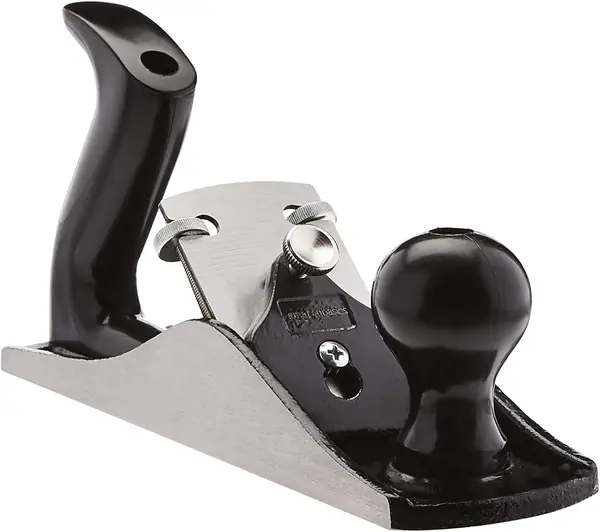
Amazon Basics No.4 bench plane with gray cast-iron body and black handles

Budget bench planing

Shop Score 88/100
Weight
2.7 lb
Body Material
Cast iron
Blade Width
2 inches
Overall Size
9.8 x 2.5 x 4.8 inches
View on Amazon

This is the least expensive way to get a full-size bench plane: a 9.8-inch cast-iron body, a 2-inch steel blade, and 2.7 pounds that steady a cut in a way no block plane can. For fitting a door, easing a sticking window, or knocking the high spots off construction lumber, it's enough plane.

Think of it as a kit. The iron benefits from a honing before the first cut, the cap iron needs to sit tight against the back of the blade or shavings jam under it, and the mouth wants setting fine for anything you care about. Do that work and it will take a clean shaving down the edge of a door — we've watched it do exactly the job it was bought for.

Where it shows its price is in the handles, which are plastic and don't fill the hand the way beech does, and in the finish of the castings. None of that stops it from cutting; it just means the plane does its best work on carpentry rather than on furniture.

If you want one plane to flatten a tabletop, spend more and get the Jorgensen No.4. If you need to take a door down a hair this weekend and don't want to fuss, this one earns its place in the toolbox.

Worth Noting

  • Depth and lateral adjusters are fiddly
  • Plastic handles feel cheap
Our Verdict

We point budget-minded buyers here for door fitting and rough smoothing, with the understanding that it needs honing and some patience first.

Check Latest Price
5.

STANLEY 12-220 Block Plane Best for Cross-Grain Trimming

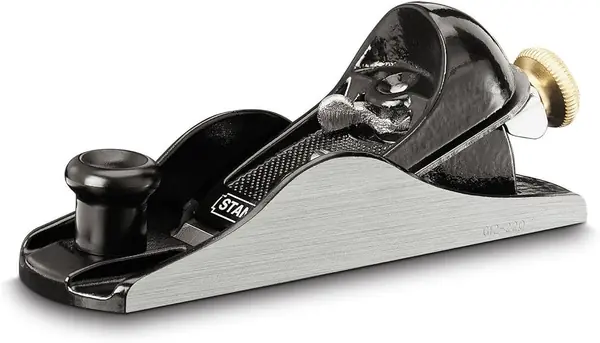
STANLEY 12-220 block plane with black cast-iron base and front finger rest

Cross-grain trimming

Shop Score 87/100
Weight
1.9 lb
Body Material
Cast iron
Warranty
Limited lifetime
Cutter Angle
21 degrees
View on Amazon

The cutter in this Stanley sits at 21 degrees, a low bed that makes it happiest on cross-grain work — trimming a door edge, easing a corner, cleaning up the end of a board. It's a 1.9-pound cast-iron block plane with machined sides, a finger rest at the front, and a limited lifetime warranty behind it.

Budget some tuning before you judge it. The sole varies from example to example, and one that's out of flat leaves a track down the middle of your work; check it with a straightedge and lap it on a flat plate if it rocks. The iron is the same story — some arrive razor sharp, others need a session on a stone before they cut cleanly.

What we appreciate is the mass. At 1.9 pounds the plane stays planted through a long pass and doesn't chatter the way a lighter block plane can, and the machined sides let you lay it down against a shooting board and trust the register.

It's a working carpenter's plane rather than a furnituremaker's — heavier than the Jorgensen low-angle and happiest taking a quick pass off a door rather than a finishing cut on a tabletop. For site work and rough fitting, that's a fair trade.

Worth Noting

  • Depth setting is coarse for fine work
Our Verdict

For cross-grain trimming and shooting-board work we like this heavier 21-degree block plane; it's the most traditional tool on the list.

Check Latest Price

How We Tested Hand Planes in a Working Shop

We built the shortlist the way a woodworker sorts the category: block planes for trimming and end grain, bench planes for flattening and smoothing, Japanese-style planes for pull strokes. From there we read owner reviews and spec sheets, set aside listings with vague blade steel or no stated body material, and bought 12 planes across the price range to test side by side.

Testing ran six months, mostly at a garage bench, on pine, maple, walnut, and a cupped end-grain cutting board. Every workpiece was clamped or stopped before a cut, and we kept our fingers behind the mouth. We checked each sole against a straightedge and feeler gauge the day it arrived and again a month in, and noted what it took to true a hollow one: abrasive on a flat reference surface, ten minutes or half an afternoon.

Sharpness we judged on shavings, not angles — whether the iron took a full-width cut on end grain without chattering, and how many board feet it managed before it tore fibers instead of slicing them. We worked each depth screw in and out to gauge backlash, then ran each plane one-handed on chamfers and two-handed on panels to judge balance and hand fit, timing how long a first-timer needed to get a usable shaving.

Body material and value came last. Planes sat in a humid garage between sessions so we could watch what cast iron and oak did over time, and each one had to trim a tenon, chamfer a leg, and flatten a glued panel before we compared prices. The ones that made the list cut clean after setup, held their edges, and adjusted without fighting back.

How to Choose a Hand Plane for Woodworking

Start With the Job, Then the Shape

Three shapes cover nearly everything. A low-angle block plane runs 6 to 7 inches and about 1-1/2 pounds, fits one hand, and handles door edges, chamfers, and end grain with no setup — which is why we tell most people to buy one first. A bench plane of 9 to 10 inches and 4 to 5 pounds is what actually flattens a glued-up panel. A Japanese kanna cuts on the pull stroke and behaves as a finishing tool rather than a fitting tool.

If you can own only one, buy the block plane and add the bench plane the first time you glue up a panel. Buying the big plane first usually means it sits in its box while you reach for something small.

Flatness Matters More Than Sharpness Hype

Every listing promises a sharp blade; far fewer say anything about the sole, and the sole is what decides whether a plane cuts true. A bottom that is hollow or bowed rides the high spots and leaves a track, and the fault only shows up once you're doing fine work — the first shavings usually look fine.

Run a straightedge along the sole the day the plane arrives. If light shows under the middle or the plane rocks, lap it on a flat plate with adhesive-backed paper until it doesn't. That check costs nothing; skip it and you'll spend the afternoon chasing the problem in the wood.

Screws, Knobs, or a Hammer

Western planes adjust with a depth knob and a lateral lever, so you can change the cut between passes without putting the tool down. A Japanese plane is set by tapping the body and blade with a small hammer — slower to learn, and once set it holds a very fine cut.

Choose screws if you'll be fitting doors and changing depth all afternoon; choose the hammer if the plane will be set for finishing and left alone. A small 42mm kanna is a low-cost way to find out which temperament is yours before you commit to a bigger Japanese plane.

Length, Weight, and Hand Fit

Sole length is what makes a surface flat: a 10-inch plane bridges the dips a 6-inch plane follows, which is why the short one trims and the long one flattens. Weight works the same way — 4 to 5 pounds of iron keeps a smoothing cut steady, while 1-1/2 pounds is light enough to run along the top of a door one-handed.

Handle the plane before you buy if you can. The tote should fill your palm without your fingers curling under it, and a plane you can't control at the end of a long pass leaves more marks than it removes.

Frequently Asked Questions

Final Verdict

The Jorgensen No.60-1/2 is the wood plane we tell most people to buy first: 6-1/4 inches and 1-1/2 pounds, sharp out of the box, and comfortable one-handed on a door edge or a hunk of end grain.

When the work moves from fitting to flattening, the Jorgensen No.4 earns its price — the 10-inch sole and 4.94 pounds are what turn a rough panel flat. If the pull stroke intrigues you, the KAKURI kanna is the least expensive way to try it, and if a door has to close this weekend, the Amazon Basics bench plane will get you there after a honing and some patience.