↑↓ navigate ↵ open Esc close All results →

Best Table Saw Sled Runners of 2026

Table saw miter slots are rarely identical from saw to saw, end to end, or even season to season, which means unadjustable sled runners that fit snugly in July can rattle by fall. Once the bars play inside the slot, a crosscut sled rocks on every pass and careful fence squaring goes out the window.

Checking 14 runner sets over four months on crosscut sleds, router tables, band saws, and small shop jigs started with caliper measurements at both ends of the actual slot rather than package numbers. Top-accessible adjustment screws let you tune out play after the sled is glued up, while predrilled, countersunk holes keep fasteners flush beneath the work.

From heavy dual-runner panel sleds to compact miter jigs and first-time builds, rigid bars that lock cleanly into your specific slot width make repeatable square cuts routine.

Our Top Picks

The Best Table Saw Sled Runners

1.

Fulton NoPlay Aluminum Miter Bars Best Overall
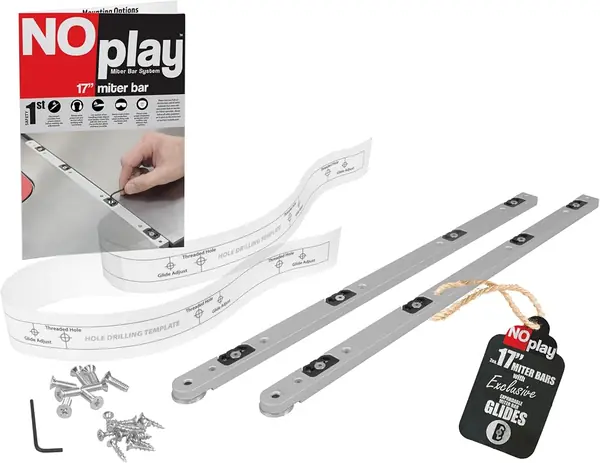
Fulton NoPlay aluminum miter bars, two gray and black bars with expandable glides and mounting screws

Full-size sleds

Shop Score 88/100
In The Box
2 bars, drilling template, wood and machine screws
Slot Fit
3/4 x 3/8 inch standard slots
Length
17 inches
Adjustment
Expandable glides, adjustable from above
View on Amazon

The glides on these bars tighten from the top, so you can chase the last bit of side play out of a sled that is already screwed together and sitting on the saw. That is the detail that earned them the top spot. A sled that shifts a hair in the slot cuts a hair out of square, and fixing that on a finished sled normally means pulling screws and starting the base over.

Fulton machines them from aluminum at 17 inches, long enough for a pair to span a full-size sled base, and the expandable glides cover the usual variation in standard 3/4-inch by 3/8-inch T-slots and plain U-slots. The box includes a clear drilling template plus both wood screws and machine screws, so you can fasten up from underneath into the sled base or drop machine screws through from the top. We reached for the template every time: laying out the holes by eye across a plywood base is how a runner ends up a degree off before it is ever tightened.

Fit is the one thing to settle before ordering. These are made for 3/4-inch slots, and Fulton specifies plainly that they will not work in the 5/8-inch slots found on some big-box saws, so put calipers on your slot first. Once that checks out, this is the set we reach for when a sled has to stay accurate through a few seasons of use rather than a single project.

Worth Noting

  • Costs more than plastic runners
Our Verdict

Our pick for most shop-built sleds: 17 inches of aluminum you can tighten from above once the sled is assembled, with a drilling template in the box.

Check Latest Price
2.

Microjig ZEROPLAY Miter Bar Set Best for Zero Play

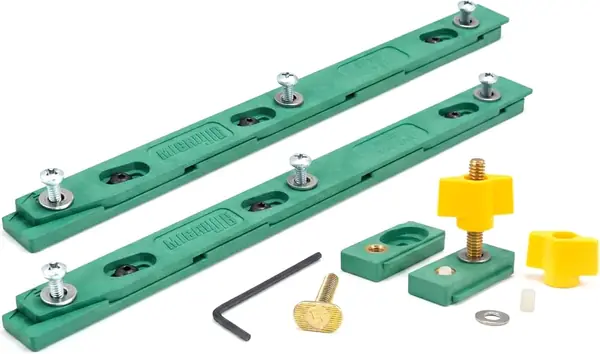
Microjig ZEROPLAY miter bar set with two short bars, two stops, and mounting hardware

Small sleds and jigs

Shop Score 87/100
In The Box
2 bars, 2 stops, hardware, plans
Slot Fit
3/4 x 3/8 inch T-slots
Adjustment
One-touch calibration
Bar Length
9.25 inches
View on Amazon

Two bars, two stops, a hex wrench, washers, machine screws, and a set of crosscut jig plans: this is the only set here that arrives as a small system rather than a pair of bars. The bars themselves measure 9.25 inches.

We like what that length is for. Turn a bar's one-touch calibration and it fills the width of the slot, so fit becomes something you set rather than something you hope for. The bars fasten down through the top of a sled or fixture, which keeps the assembly registered against the slot while you drive the screws instead of flipping it over and hoping it lands square. On small sleds and fixture work, that is a better use of five minutes than any amount of shimming.

The stops are the part we appreciate most. One behind the work and one as a reference turn repeat cuts into a placement rather than a measurement, and Microjig backs the set with a three-year warranty through authorized sellers. If your sleds are small and your jigs are many, this is the set that makes them behave.

Worth Noting

  • 9.25-inch bars limit long sleds
  • Highest price in this group
Our Verdict

We think the ZEROPLAY set earns its premium on small sleds and jigs, where one-touch calibration and top-down mounting do the most good.

Check Latest Price
3.

O'SKOOL Aluminum Miter Bars Best Aluminum Value

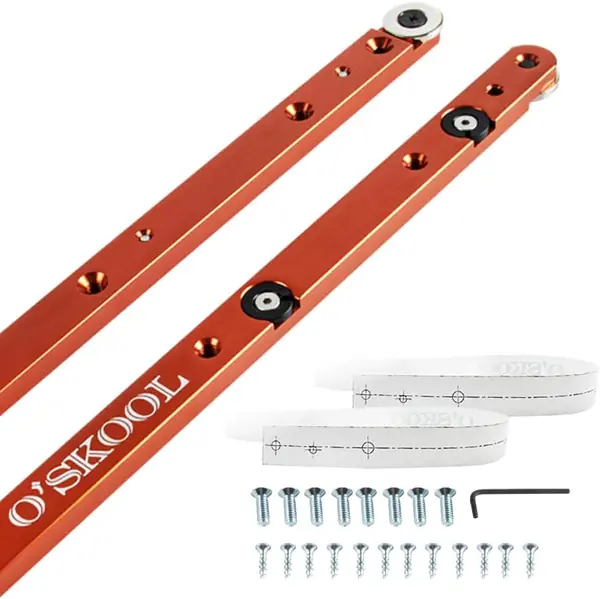
O'SKOOL orange aluminum miter bars, a pair of 430mm bars with expansion collars and hex key

Budget aluminum sleds

Shop Score 86/100
Slot Fit
3/4 x 3/8 inch T and U slots
Length
430 mm, two bars
Adjustment
Expansion collars with top access
Mounting
1/4-20 machine screws or wood screws
View on Amazon

A miter slot that runs a few thousandths wide is the usual reason a sled develops a wiggle, and the expansion collars on these bars are the answer to it. Turn each collar from above with the included hex key and the bar widens until the play is gone, with no tape and no sanding.

The pair measures 430mm, which lands within an inch of our top pick and spans a full-size sled base. Top-access holes let you reach the collars with the sled assembled, the rounded leading end helps a bar find the slot when you set the sled down, and the box includes mounting hardware for either 1/4-20 machine screws from above or wood screws from below. We paid attention to that second option: a sled that is already finished and squared is far easier to fasten from the top.

Two things to check before you buy. These are built for 3/4-inch by 3/8-inch T-slots and U-slots, and if your slot has no T-shoulder you will need to pull the retaining discs before the bar sits flat. They also do not drop into every slot cleanly on the first try, so put a bar in your slot and slide it before you drill a single hole. Do that, and this is the aluminum pair we hand to someone who wants tunable runners without paying top-pick money.

Worth Noting

  • Not for 5/8-inch miter slots
Our Verdict

We point budget-minded builders here: aluminum bars that adjust to the slot, close to our top pick in length, for a little less money.

Check Latest Price
4.

GYOFFULL UHMW Crosscut Sled Runners Best for Multiple Sleds

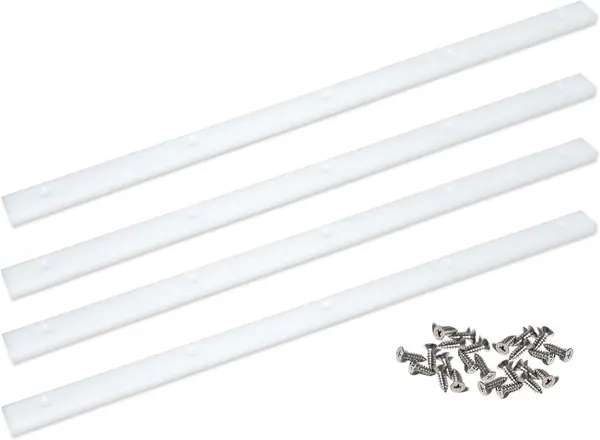
GYOFFULL white UHMW crosscut sled runners, four 17-inch bars with predrilled holes and screws

Multiple sled builds

Shop Score 85/100
In The Box
4 bars with screws
Slot Fit
3/4 x 3/8 inch
Length
17 inches
Material
UHMW plastic
View on Amazon

Four bars come in this box, each 17 inches, each with five countersunk holes and a matching screw. That is more runner than one sled needs, which is the point: a pair goes under the main sled and two bars stay in the drawer for a miter jig, a taper sled, or the smaller crosscut base you will want once the big one gets awkward.

The material is UHMW, the right plastic for this job, slick, self-lubricating, and stable enough that humidity will not move it the way it moves a hardwood runner. We liked that the holes arrive countersunk. A bar that sits flush in its counterbore does not ride on a screw head or catch on the edge of the slot, and it is one less thing to get wrong at the drill press. On price, this is the least expensive way here to put runners under two sleds.

The catch is consistency. Bars in a four-pack can vary enough in width that one slides freely and the next drags, so check each one in your slot before it goes near a screw, and set the loosest aside for jigs where a little play will not show. In a slot that already measures close to 3/4 inch that is a minor chore, and four bars for less than one aluminum pair is hard to argue with.

Worth Noting

  • Bar width can vary within a pack, needing test-fitting first
Our Verdict

We like this four-pack for anyone building a second sled or a jig to go with it; four 17-inch bars go a long way.

Check Latest Price
5.

POWERTEC HDPE Miter Bars Best for a First Sled

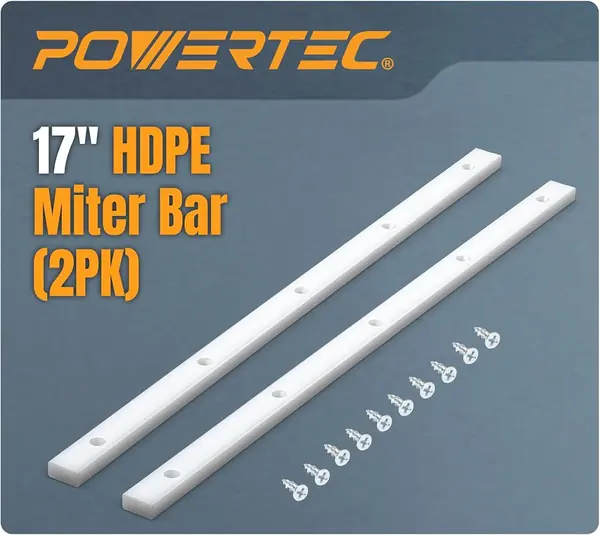
POWERTEC white HDPE miter bars, two 17-inch runners with flat-head mounting screws

First crosscut sled

Shop Score 84/100
In The Box
2 bars and 10 screws
Material
HDPE
Holes
Predrilled for flat-head screws
Bar Size
3/4 x 3/8 x 17 inches
View on Amazon

POWERTEC labels these HDPE rather than UHMW, and that is worth understanding before you buy. Both are polyethylene and both slide easily in a miter slot, but high-density polyethylene is the softer, less expensive grade. It will not swell with the seasons or raise a burr, and in a sled that sees weekend use it holds up fine; it simply wears faster than the UHMW bars here if the sled is in constant rotation.

What arrives is two 17-inch bars with predrilled holes and ten number 8 flat-head wood screws, enough to mount a standard sled. The screw choice matters more than it sounds. A flat head sits down in a countersunk hole, so nothing rides proud of the bar and drags in the slot. One habit to keep is not overdriving them: plastic bulges where a fastener pulls hard, and a bulged bar will bind halfway down the slot.

This is the pair we point at for a first sled. The holes are already there, the screws are in the bag, and there is nothing to adjust, which makes the build plywood, glue, and an afternoon. Slide a bar into your slot as soon as the box is open, because that one check tells you more than any listing will.

Worth Noting

  • Runs loose in some miter slots
Our Verdict

We suggest these for a first sled, where predrilled holes and included screws turn a weekend build into an afternoon one.

Check Latest Price
6.

Catcan Crosscut Sled Kit Best for Sleds with Stops

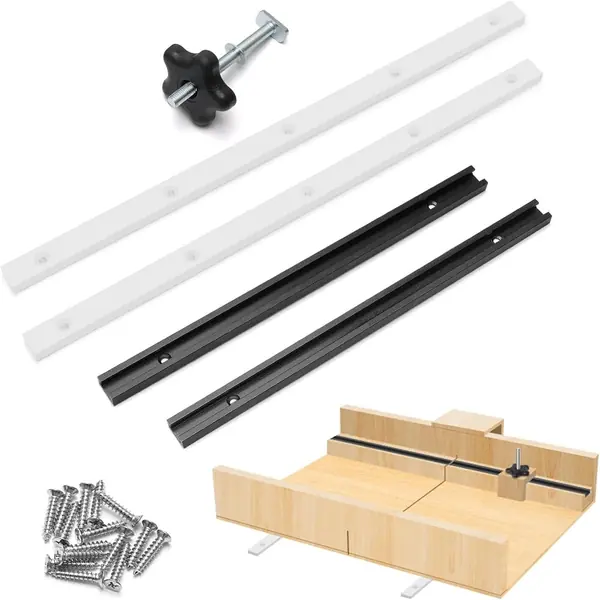
Catcan crosscut sled kit with black UHMW bars, aluminum T-track, star knob, and screws

Sleds with stops

Shop Score 83/100
Bars
2 UHMW, 17 inches
Track
2 aluminum, 12 inches
Pieces
21 total including screws
Hardware
Star knob, bolt, washer, screws
View on Amazon

Twenty-one pieces is the number on the listing, and it counts every screw. The parts that matter are two 17-inch UHMW bars, two 12-inch aluminum T-tracks, and a star knob with a bolt and washer: the hardware for a sled with a fence and an adjustable stop.

As runners, the bars are the same UHMW, the same 3/4-inch by 3/8-inch profile, and the same low-friction behavior as the plastic pairs here. You screw them down the same way, countersunk holes and all, and they will not swell the way a hardwood runner does.

The track is what changes the build. Extruded aluminum gives a fence something straight and rigid to ride in, and the star knob lets you lock a stop where you want it instead of clamping a block and hoping it holds. We like buying the track in the same box: order bars and track separately and you are waiting on two shipments to finish one sled.

The name says kit, not sled. There is no base, no plan, and nothing to follow, so come to this one with a layout in mind and a sheet of plywood on the bench. Do that and we think it is the shortest route from box to cutting for a compact sled with a fence and a stop.

Worth Noting

  • 12-inch track limits fence travel
Our Verdict

Buy the Catcan kit when you want runners, fence track, and a stop knob in one order instead of three.

Check Latest Price
7.

KETIPED UHMW Miter Slot Runners Best for Spare Runner Pairs

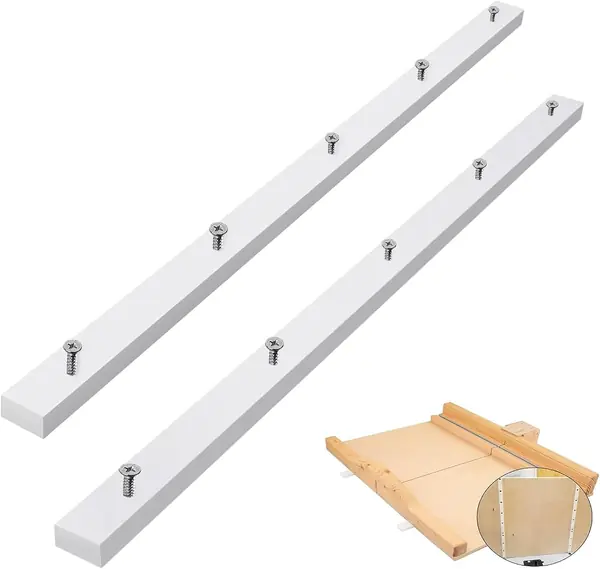
KETIPED white UHMW miter slot runners, two 17-inch bars with countersunk mounting holes

Spare runner pairs

Shop Score 82/100
In The Box
2 bars with screws
Material
UHMW
Holes
5 countersunk per bar
Bar Size
3/4 x 3/8 x 17 inches
View on Amazon

There is nothing clever in this bag, and that is most of its appeal: two 17-inch UHMW bars, five countersunk holes apiece, and a handful of screws. No collars, no template, no track. If you already own a drill, a countersink, and a straightedge, that is everything a runner actually has to be.

We like that there is nothing to set up. UHMW is the right material for a fixed-width runner: slick, moisture-resistant, and unlikely to raise a burr the way a wooden runner can after a season of sliding over a cast-iron top. Five holes give you enough fastening points that the ends will not lift, and the countersinks keep the screw heads below the surface.

Where we think this pair earns its place is as the second set: runners for a small miter jig, a spare sled set up for a second blade, or the bars you cut down for a shorter base. Two in the bag and a price that makes a spare easy, the geometry is the same as the bars on the sled you already trust.

Worth Noting

  • Fixed width with no adjustment
Our Verdict

The least expensive pair here: plain 17-inch UHMW bars with countersunk holes and screws, and almost nothing to set up.

Check Latest Price

How We Tested the Best Table Saw Sled Runners

We started with measurements, not shopping. Running calipers down the miter slots of four different saws in two shops showed they aren't identical end to end, or saw to saw, so the shortlist went to bars with a true standard cross-section, an adjustable side, and holes already drilled and countersunk. A couple of kits made the cut too, because what comes in the box changes the job.

Fourteen sets went onto sleds we built from the same sheet of plywood, and into existing jigs. We also slid them into a router table and a band saw slot to see whether they'd pull double duty. Each bar got measured at three points along its length before mounting and again afterward, and we compared the two bars in a pair against each other, since a set that's off by a few thousandths rocks worse than a loose one.

Installation came next, on a Saturday morning in the garage shop. We drilled and mounted every set, checking that screw tips stayed buried in the sled base instead of breaking through the top surface and that the heads sat flush enough for a workpiece to glide over. We followed the included instructions before improvising. Then we ran dozens of crosscuts per set, watching for rock at the start and end of each pass, tightened the side adjustment with a screwdriver from above with the sled assembled, and cut again.

Over the four months we rechecked everything for play and wear, particularly the plastic bars, which can polish smooth or swell with humidity; the aluminum ones scratched but held their size. We noted what each box didn't include — fasteners, a template, the drill size — because a cheaper set that sends you back to the hardware store isn't cheaper. Hands stayed clear of the blade path throughout, the guard stayed on, and every cut the guard allowed got a push stick.

How to Choose Table Saw Sled Runners

Measure the Slot Before Anything Else

A miter slot is called 3/4 inch by 3/8 inch, but that is a nominal size, and real slots run a few thousandths either side of it. Put calipers across the slot at the top and again at the bottom, because a T-slot can be wider below the surface than at the throat. If your slot measures under 3/4 inch, expect a fixed plastic bar to bind and an adjustable aluminum one to be the safer buy.

Depth matters as much as width. A bar has to sit below the table surface without bottoming out, and if it stands proud the sled rides on the bar instead of the saw top, which no amount of tuning will fix. Some saws use a 5/8-inch slot, and none of the runners here are made for those.

Plastic or Aluminum, and Whether You Need Adjustment

UHMW plastic is the default for good reason: slick, stable in humidity, and cheap enough that a four-pack costs less than a single aluminum pair. What plastic cannot do is change width, so it either suits your slot or it does not. Aluminum bars with expansion collars or glides cost more and take a few minutes of setup, but they let you dial out side play, often from above with the sled already assembled, as on the Fulton NoPlay and the O'SKOOL bars.

On a sled you intend to keep, we think the adjustment is the better money. On a jig you will rebuild next winter, a plastic pair is fine, and the four-bar GYOFFULL pack covers two builds for less than one aluminum set.

Length, Quantity, and How the Bars Attach

Seventeen inches is the common length, and a pair spans a typical sled base. Shorter bars, like the 9.25-inch Microjig set, are meant for small sleds and fixtures, where extra length only adds weight and drag. Two bars make a sled; four let you build a second one, or a jig, without reordering.

Look for predrilled, countersunk holes so a flat-head screw sits flush, since a proud screw head drags in the slot, and match screw length to your sled base so nothing breaks through the top surface. A drilling template, like the one in the Fulton set, takes the hole layout out of your hands.

What Is in the Box and What You Still Have to Buy

Screws are the difference between a runner and a runner you can install the night it arrives, and most sets here include them. The Catcan kit goes further, adding aluminum T-track, a star knob, and a washer for a fence and stop, which is genuinely useful if you were going to order track anyway.

No kit includes the sled base. Plywood, glue, and a plan are yours, so budget for them, and be skeptical of piece counts that include every screw: a kit described as 21 pieces is bars, track, and fasteners, not a sled.

Frequently Asked Questions

Final Verdict

We recommend the Fulton NoPlay bars for most sled builds. At 17 inches they span a full sled, the expandable glides let you take out play after the sled is assembled, and the included template keeps the holes where you meant them. Build small sleds and jigs instead, and the Microjig ZEROPLAY set is worth the premium for its calibration and stops; if this is a first sled on a tight budget, the POWERTEC pair and a sheet of plywood will get you cutting this weekend.