↑↓ navigate ↵ open Esc close All results →

Best Lubricants for Table Saw Gears of 2026

A table saw's gear train is quiet right up until it isn't: a dry rasp on startup, a stiff raise-and-tilt wheel, a smear of black paste on the arbor gears. A tube of grease costs less than a gear set, but the wrong one slings off a spinning gear in the first minute or turns sawdust into grinding paste. You want a film that stays put and stays visible enough to inspect.

We tested 14 lubricants over four months — grease tubes and cartridges, a gear oil, an aerosol — on contractor saws in a garage shop, on a job site, and on two neglected hand-me-down machines. The surprise was tack. A slick, greasy-feeling product can be the worst choice on an open gear train, because it flings off and takes your protection with it.

Most of us service more than one gear, so we favored lubricants that tolerate metal-to-plastic contact and a warm case without fuss. These five cover a tight adjustment gear, an enclosed worm drive case, and the linkages between.

Our Top Picks

The Best Lubricants for Table Saw Gears

1.

Super Lube Synthetic Multi-Purpose Grease Best Overall
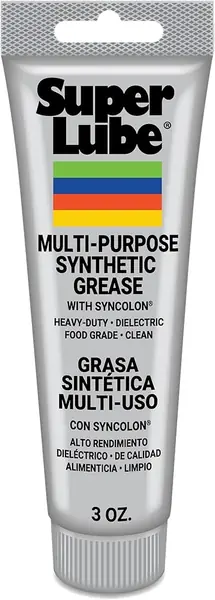
Super Lube synthetic multi-purpose grease in a 3-ounce squeeze tube, translucent white formula

Table saw gears

Shop Score 97/100
Size
3 oz tube
Formula
Synthetic grease with Syncolon
Upper Temperature Rating
450 °F
Certification
NSF H1 registered
View on Amazon

On a table saw the test is simple: is the grease still on the gear after the blade has been spinning for a while? This one holds its shape instead of slumping off the tooth, and its non-melting formula carries a 450 °F upper temperature rating. It also goes on translucent white, so you can look through the film and still see the tooth pattern underneath when you check for wear.

We keep the 3-ounce tube in the shop cabinet because its size suits the job. A bead run along the bevel trunnion and the elevation worm gear uses very little, and the tube lets you lay it directly on the teeth without pulling anything apart. The NSF H1 registration matters more in a food plant than in a garage, but we like that this sits at the mild end of the shelf rather than the harsh end.

What we watch is quantity. Three ounces is generous for one saw and thin for a shop with four machines, so a bigger container makes more sense if you are servicing everything you own. Apply a thin film rather than a blob, because heavy grease on an exposed gear collects sawdust until it turns into a gritty paste.

A thin coat on the trunnion and the elevation gears took the graunch out of the bevel crank on the saw we tested, and it did it without any of the grease migrating onto the table casting. That last part is what keeps us coming back to it.

Worth Noting

  • Only 3 ounces for a multi-saw shop
Our Verdict

This is the tube we recommend first for table saw gears: it stays on the teeth, handles gearbox heat, and lets you see the mesh underneath.

Check Latest Price
2.

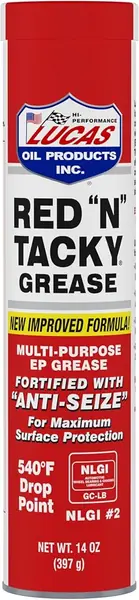
Lucas Red N Tacky Grease Best for Heavy Loads

Lucas Red N Tacky grease cartridge, 14 ounces, in red-labeled packaging

Heavy-load open gears

Shop Score 96/100
Size
14 oz cartridge
Formula
Tacky complex grease
Load Rating
4-ball weld load over 400 kgf
Water Resistance
Resists washout and spray-off
View on Amazon

A 4-ball weld load over 400 kgf is the number printed on the label, and it measures how much pressure the film survives before metal grinds on metal. That is more protection than a table saw's slow-turning gears will ever ask for, and it is why this grease is specified for open gears, plain bearings, and sliding parts rather than delicate mechanisms.

Where it earns its place in a woodworking shop is a machine that actually loads its gears: a big cabinet saw's tilt mechanism, an open drive on a sander, a gearbox that sees grit and damp. The tack is real, resisting sling-off and water washout, and the red tint shows exactly where the film has gone so you can spot a dry tooth at a glance.

For ordinary table saw maintenance we usually reach past it. Fourteen ounces is a lot of grease for one saw, and the formula is thick enough that you feel it resisting when you work it into a tight mesh. If you service several machines every season, though, one cartridge that refills all of them starts to look like the sensible buy.

Worth Noting

  • Cartridge requires a grease gun to dispense
  • Tacky enough to be messy to handle
Our Verdict

We reach for the red grease when the gears carry real load, as long as you own a grease gun and can live with sticky handling.

Check Latest Price
3.

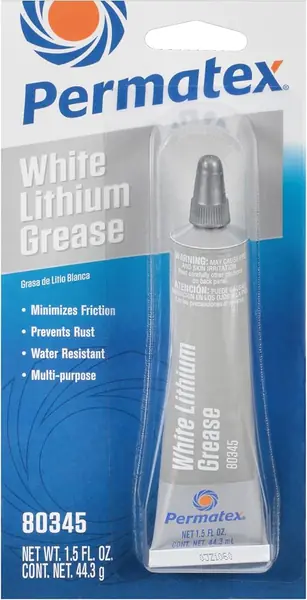
Permatex White Lithium Grease Best for Tight Spots

Permatex white lithium grease in a small 1.5-ounce tube

Tight adjustment gears

Shop Score 95/100
Size
1.5 oz tube
Form
White lithium grease
Compatible Materials
Metal-to-metal and metal-to-plastic
View on Amazon

At 1.5 ounces with a narrow tube, this is the one that gets behind the tilt handwheel, where a grease gun has no angle and a finger has no room. White lithium lays down a thin, slightly slick line, and it is the lightest-feeling grease here by a wide margin.

We hand it to someone doing a first tune-up. Nothing needs setting up, the tube puts a line exactly on the tooth flank, and it costs little enough that keeping one in the drawer is painless. It is also listed for metal-to-plastic contact, which matters on saws that use nylon wear plates and bushings in the adjustment linkage, and a line on each tooth settles a stiff handwheel quickly.

The reservation is duty, not quality. This is a light grease, so it belongs on the slow trunnion and elevation gears that only turn when you crank them, not on a drive spinning at speed, where a heavy bead has less to hold it in place. Apply it thin, wipe the excess back, and it stays tidy.

Worth Noting

  • Small tube for more than one machine
Our Verdict

We grab this small tube for gears we can barely reach, and the light film wipes clean when we overdo it.

Check Latest Price
4.

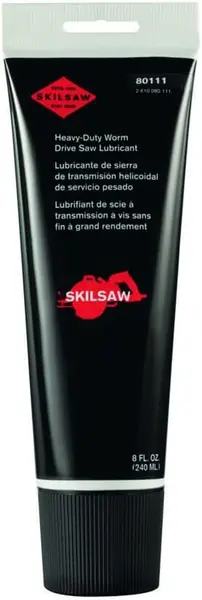
SKIL Worm Drive Saw Lubricant Best for Enclosed Gear Cases

SKIL worm drive saw lubricant in an 8-ounce squeeze tube

Enclosed gear cases

Shop Score 94/100
Size
8 fl oz tube
Form
Gear oil
Intended Use
Worm drive saw gear cases
View on Amazon

An oil, not a grease, and that single fact decides where this belongs. It is the fill SKIL specifies for worm drive saw gear cases, it pours like a heavy gear oil, and on an exposed trunnion gear it has nothing to hold it in place.

Where it does the job, it does it well. The squeeze tube feeds oil into a fill hole without a funnel, and running the tool briefly to warm the old oil before you open the case makes the drain go faster — unplug it before the plug comes out. If you are topping off or changing the fill in a gear case, this is the correct product rather than a compromise.

We keep a tube on the shelf for the one tool in the shop with an oil-filled case and reach for a grease everywhere else. One tube covers several refills, so it is worth having even if you only open that case every few years.

Worth Noting

  • Thin oil will not cling to exposed gears
Our Verdict

It is an oil rather than a grease, so we use it to refill an enclosed gear case and never on exposed teeth.

Check Latest Price
5.

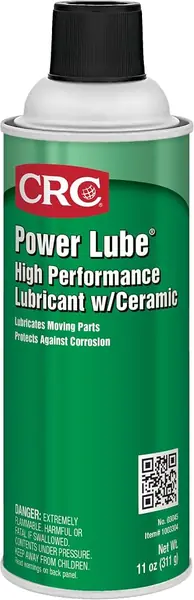
CRC Power Lube with PTFE Best for Hard-To-Reach Linkages

CRC Power Lube aerosol can with PTFE, 11 weight ounces

Hard-to-reach linkages

Shop Score 93/100
Size
11 wt oz can
Form
Aerosol with PTFE
Load Rating
4,500 lb Falex
Upper Temperature Rating
300 °F
View on Amazon

Reach is the only reason to keep an aerosol in the shop, and this one earns its shelf space: the straw gets into trunnion pivots and the collar around the elevation screw that nothing else touches. We use it for exactly those spots rather than for packing a gear mesh, since a can lays down a film and the carrier flashes off.

The formula is built for pressure, with extreme-pressure additives, PTFE, a 4,500-pound Falex rating, and a 300 °F ceiling. It displaces moisture as it goes, which is why a can of it ends up on hinge pins and garage door tracks as often as on a saw.

A thin film collects less sawdust than a heavy grease, and you can re-apply without wiping the gear down first. Treat the can as a top-up rather than a repack: we hit the pivots and the elevation collar a few times a season and keep a tube of grease for the gears we can actually reach.

Worth Noting

  • Nozzle can leak or stop spraying
Our Verdict

We keep the can for pivots and gear teeth a finger cannot reach, and we test the nozzle before we need it.

Check Latest Price

How We Tested the Best Lubricants for Table Saw Gears

We started with research, comparing spec sheets for temperature ratings, tack, water and corrosion resistance, and load figures, then narrowed by form and price so the shortlist included tubes, cartridges, gear oil, and an aerosol — the shapes someone servicing a table saw actually buys. Lubricants meant only for a sealed motor housing were out from the start, since we were after open gears, adjustment gears, and worm drive cases.

Over four months we ran 14 lubricants through the same routine on contractor saws in a garage shop, on a job site, and on two neglected hand-me-down machines. Each application began with the saw unplugged and the old grease brushed out, because fresh grease over grit is just grit with a new coat. We laid a thin film on the gears the maker intends you to service, kept it off the table surface, fence, and drive belts, then spent an afternoon cutting oak and pressure-treated lumber.

After the cuts we looked at what the grease had done. We checked the walls of the gear case for sling-off, ran a gloved finger along the arbor gears to see whether the film was still there and still clean, and noted whether sawdust sat on top of it or sank in and caked.

We counted how many applications a tube or can gave before it emptied, watched whether the brush, cartridge gun, or spray nozzle put product where we aimed it, and on saws with plastic adjustment gears we looked for softening or discoloration. A month in a humid garage told us about washout, and a warm gear case after a long run told us about heat. Anything that slung off, crusted over, or smeared well beyond the gear didn't stay in rotation.

How to Choose a Lubricant for Table Saw Gears

Find the Gears You Are Actually Servicing

Before you buy anything, tilt the blade and watch what moves. On most contractor and cabinet saws the bevel and height adjustments ride on a curved trunnion gear and a worm gear on the elevation screw, and those are the parts that grind when they dry out. The motor is usually sealed, and there is no lubricant you should be adding to it.

If your saw has a gear case with its own fill plug, that is a different job and takes a gear oil rather than a grease. Anything with no plug stays closed. Knowing which of the two you own is the whole decision.

Match the Form to the Gear

A grease is the default for exposed table saw gears: it stays where you put it, cushions the tooth contact, and does not run down into the cabinet. An oil only makes sense in an enclosed case that holds it, and an aerosol is a reach tool — thinner film, good for pivots and collars, no substitute for a packed mesh.

The trap is convenience. A spray can feels like it is doing more than it is, and a tube of grease will outlast it on the same gear by a wide margin. Buy the can for the spots your fingers cannot reach, not as your only lubricant.

Tack, Heat, and Sawdust

Two properties decide how a grease behaves on a saw. Tack keeps it on the tooth instead of slinging off; heat resistance keeps it from separating in a warm gear case. You want enough of both without going so sticky that the film grabs every bit of dust in the air.

That is the trade no listing warns you about: a heavy, tacky grease left in a blob on an exposed gear turns into a gritty paste, and grit wears teeth faster than a dry gear ever will. Apply a thin film and brush the old grease out before you add more. The stated temperature ratings here run from 300 °F to 450 °F, which a table saw will not approach — read the figure as a sign of a stable formula, not a limit you will test.

Buy for How You Will Apply It

One table saw's gear train takes a couple of ounces at most, which makes package size the most misjudged figure in this category. A 14-ounce cartridge is the least expensive way to buy grease and the wrong way to buy it for a single saw: it needs a grease gun, and you will store most of it.

A tube with a narrow nozzle reaches the teeth behind a handwheel, and a squeeze bottle is easiest for an oil fill. We buy the size that matches the saw we are servicing and keep the big cartridge for a shop with several machines.

Frequently Asked Questions

Final Verdict

We recommend the Super Lube synthetic grease for table saw gears. It balances the three things that matter: it clings instead of slumping, it does not break down in a warm gear case, and it goes on translucent enough that you can see the tooth pattern and catch wear before it becomes a replacement part.

Buy the Permatex tube instead if your gears sit behind a handwheel where nothing else fits, and take the Lucas cartridge only if you service several machines and already own a grease gun.