↑↓ navigate ↵ open Esc close All results →

Best Table Saw Throat Plates of 2026

Shoppers often pick throat plates by material or price before verifying exact throat dimensions and riving-knife cutouts, or simply tolerate the wide factory gap around the blade. Yet that open slot swallows narrow offcuts and leaves splintered fuzz along the underside of crisp crosscuts.

Fitting 12 zero-clearance, dado, and standard replacement plates across job-site, contractor, and older cast-iron cabinet saws over eight months reinforced a simple rule: physical fit comes first. Leveling screws that bring the insert dead flush with the tabletop and rear clearance for the blade guard and riving knife matter far more than phenolic versus aluminum construction.

Choosing a plate matched to your saw's exact opening lets you tighten up cut quality across standard and dado setups without stripping off essential safety hardware.

Our Top Picks

The Best Table Saw Throat Plates

1.

Leecraft RG-5 Zero-Clearance Plate Best Overall
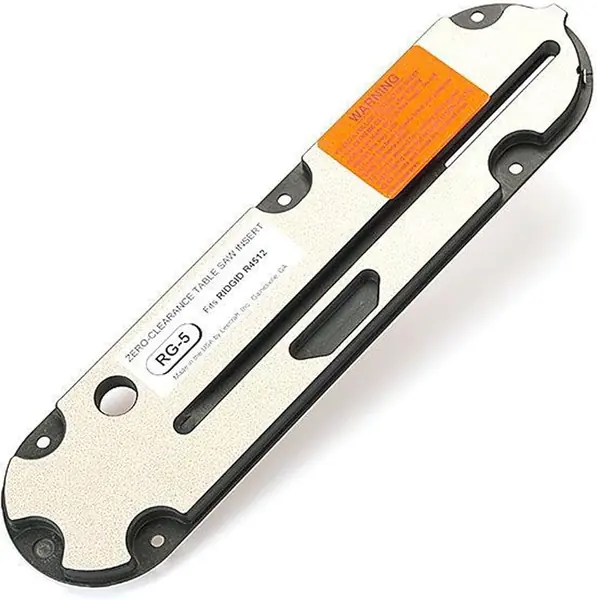
Leecraft RG-5 phenolic zero-clearance throat plate for the RIDGID R4512 table saw

RIDGID R4512 owners

Shop Score 91/100
Blade Opening
Uncut zero clearance with riving knife slot
Saw Compatibility
RIDGID R4512
Material
Coated phenolic
Dimensions
15-1/8 x 3-3/4 x 1/8 in
View on Amazon

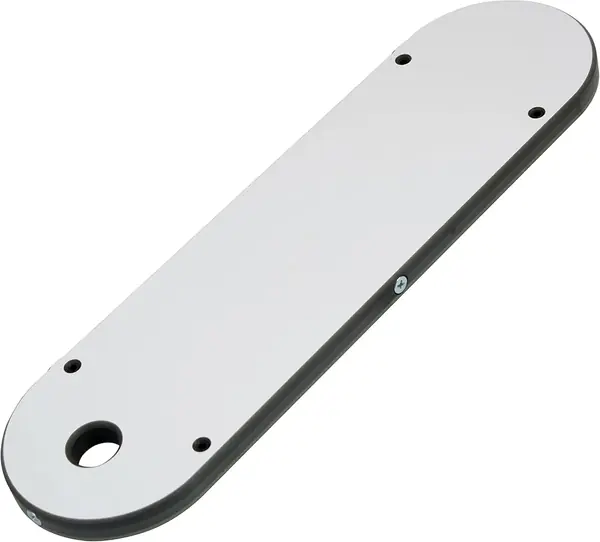
RIDGID's R4512 is one of the most common contractor saws in a home shop, and its factory throat plate has an opening wide enough to swallow a thin offcut. The RG-5 closes that gap: it arrives uncut, you raise your own blade through it, and the kerf ends up matching that blade and nothing more. That is the change we noticed first — the underside of a plywood rip comes off clean instead of fuzzy, and narrow strips stop disappearing into the slot. It is the upgrade that changes the most about how the saw behaves.

Phenolic with a coated, low-friction surface is the right material for this part. It stays flat, it does not gall the way aluminum can, and stock slides across it with noticeably less drag than the painted steel plate the saw ships with. The set screws bring it flush with the cast-iron top, and the fit is snug once you have taken up the side play. This is a five-minute job with a straightedge and a hex key, not an afternoon.

One step in the setup catches people. The plate has a slot for the riving knife, but the knife has to come off for the single pass that cuts your kerf, or you will snap the tongue off the back of the plate; put it back on before you rip anything. Worth checking the edges when the box arrives, too — the plate ships with minimal padding, and a chipped corner is the one flaw that ruins the fit.

Worth Noting

  • Kerf matches one blade, so buy one per blade
Our Verdict

For a RIDGID R4512, this is the plate we recommend first: uncut phenolic, adjustable to flush, and a kerf that matches your blade.

Check Latest Price
2.

SawStop TSI-SLD Lock Down Insert Best for SawStop Saws

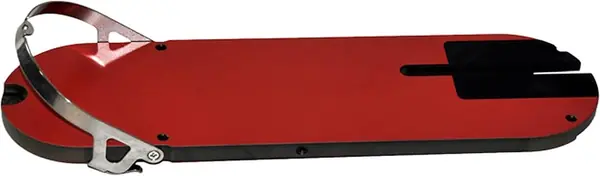
SawStop TSI-SLD red phenolic standard table saw insert with a tool-free locking latch

SawStop cast-iron saws

Shop Score 90/100
Blade Opening
Preformed guard and riving knife slots
Saw Compatibility
SawStop cabinet and contractor saws
Material
Phenolic with melamine faces
Locking
Tool-free positive locking latch
View on Amazon

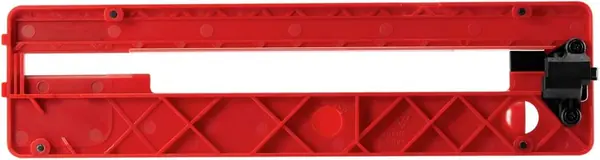
The latch is what sold us. SawStop's plate drops into the throat and locks with a flip of the lever, with no screwdriver and no fumbling under the table when you switch from a rip blade to a dado stack. That is the detail separating this from every other plate here, and on a saw that costs what a SawStop costs, having the part that matches the machine's own logic is worth something.

The rest of the plate is built around the saw's safety hardware. Preformed slots let the blade guard and riving knife drop through without you cutting anything, and dual metal wear plates give the anti-kickback pawls a surface that will not chew up the phenolic. Positioning screws set it flush, and ours stayed flush through a morning of ripping.

So the case for it is convenience and hardware clearance rather than cut quality. On a saw that gives you a riving knife, a guard and pawls, a plate that accepts all three without modification is the whole point — and the phenolic core with its melamine faces stays flat and slick through it. What it does better than anything else in this group is stay out of your way.

Worth Noting

  • Standard slot, so no zero-clearance tear-out control
  • The most expensive plate in this guide
Our Verdict

The tool-free latch is why we pick this for SawStop cabinet and contractor saws: no screwdriver, no re-leveling, and the guard drops straight in.

Check Latest Price
3.

Leecraft DW-3 Zero-Clearance Plate Best for DeWalt Saws

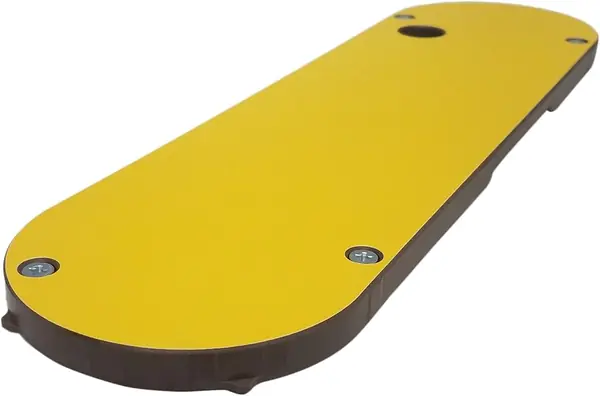
Leecraft DW-3 uncut phenolic zero-clearance throat plate for DeWalt table saws

DeWalt job-site saws

Shop Score 89/100
Blade Opening
Uncut zero clearance, regular or dado
Saw Compatibility
Seven DeWalt models, DW744 to DWE7499GD
Material
Phenolic
Dimensions
13-9/16 x 3-3/4 x 29/64 in
View on Amazon

Seven DeWalt models share this throat opening: the DW744 and DW745, the DW746, and the DWE7480, DWE7490X, DWE7491RS and DWE7499GD. The DW-3 drops into any of them uncut, and the kerf you raise through it is your kerf — which is the whole point on a job-site saw whose factory plate has an opening wide enough for a dado stack.

Phenolic is the right call for a saw that rides in a truck. It holds flat where an MDF plate would take on moisture, and the surface has less drag than the stamped steel plate DeWalt supplies, so a long rip feeds without that catch at the front of the throat. The leveling screws are small and stiff the first time; run each one in and out once with a good driver before you set the plate, and they free up.

What we like most is how little it asks of you: the plate seats, the screws level it, and you are cutting. Because it is uncut, it also covers the dado work the factory plate cannot — buy a second one, raise your stack through it, and keep the first for your rip blade. That is the version of this we keep coming back to for a portable DeWalt.

Worth Noting

  • Factory splitter must come off on DW744 and DW745
Our Verdict

We like this for DeWalt job-site saws because it drops into seven models uncut and still takes a dado stack.

Check Latest Price
4.

ZEROSERT 3-Pack for Delta Best Multi-Pack Value

Three ZEROSERT MDF zero-clearance throat plates for Delta 36-725 table saws

Delta 36-725 owners

Shop Score 88/100
Blade Opening
Uncut zero clearance, dado capable
Saw Compatibility
Five Delta models, 36-725 to 36-5000T2
Material
Commercial-grade MDF
Pack Size
3 plates
View on Amazon

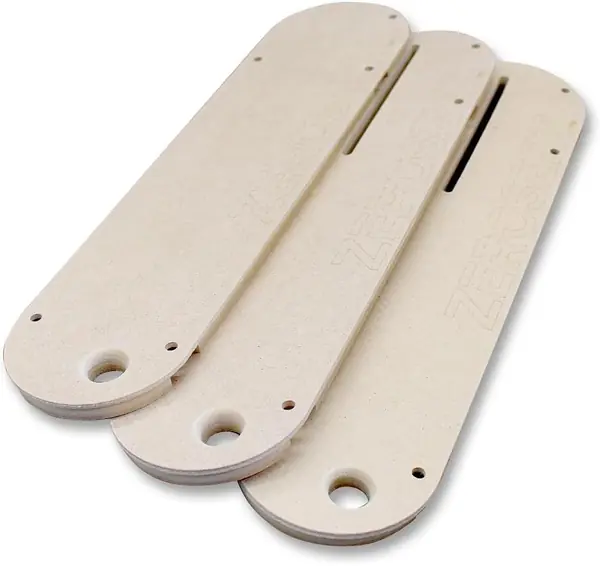
Three plates for roughly what one phenolic plate costs is the pitch, and it holds up. A zero-clearance plate only matches one blade, so the usual advice is to buy a second and a third anyway; this set gets you there in one order, each plate cut with a riving knife slot and enough material to raise a dado stack through.

The value is the story, and it is real: one plate stays on your rip blade, one takes the crosscut blade, one gets the dado stack, and you never swap and re-level in the middle of a project. MDF is why the math works. It is flat and cheap, and it usually needs a few minutes of 220 grit around the ends to seat without side play. Sand, test, sand again — you want snug, not forced.

What MDF will not do is survive a drop onto concrete. The corners ding, and a dinged corner is a plate that rocks in the throat. Treat the set as shop consumables, store them somewhere padded, and the three plates will cover every blade you own without another order. That is the trade we are happy to make at this price.

Worth Noting

  • MDF corners dent if a plate hits the floor
Our Verdict

For a Delta 36-725 or 36-5000 series saw, we think three plates for the price of one is the smartest buy here.

Check Latest Price
5.

Peachtree Phenolic Zero-Clearance Plate Best for Older Saws

Peachtree phenolic zero-clearance throat plate with leveling screws and snug-fit tabs

Older cast-iron saws

Shop Score 87/100
Blade Opening
Uncut zero clearance
Material
High-density phenolic
Dimensions
13.74 x 3.75 x 0.5 in
Adjustment
Side and front adjustment screws
View on Amazon

13.74 by 3.75 by a half inch: those numbers are the whole decision with this plate. It is sized to a family of older cast-iron saws rather than one model, so the first job is yours — pull your factory plate, measure length, width and thickness, and compare before you order. If your throat is close, the plate is generous enough at the ends to be trimmed down to a perfect fit.

What you get for the trouble is a half-inch slab of high-density phenolic, thicker and stiffer than most of what is on this page. Snug-fit tabs and adjustment screws at the sides and front take out both the side-to-side play and the front-to-back slop, and you can level it dead flush with the top. It takes thin-kerf, standard-kerf and carbide-tipped blades, so one plate covers the blades most small shops actually run.

The trimming is the part to be honest about. The plate can arrive slightly wide at the ends and need material taken off the corners to drop in, and that is a job for a sander or a flush-trim bit, not a file and hope. If you want to open a box and cut, this is not the plate for you.

Where it earns its place here is the saws nobody else covers — cast-iron machines from the eighties and nineties whose throat openings do not match anything current. We like the phenolic and the multi-point adjustment enough to put up with the fitting work, and at about the same money as the saw-specific plates here, that is a fair trade for a saw that would otherwise get a shop-made plate or none at all.

Worth Noting

  • Often arrives slightly wide and requires sanding or routing to fit
Our Verdict

We reach for this one on older cast-iron saws that nobody makes a plate for: measure, fit, and it sits flat and adjustable.

Check Latest Price
6.

SKIL STA6307 Dado Insert Plate Best for SKIL TS6307-00 Owners

SKIL STA6307 dado throat plate for the TS6307-00 ten-inch table saw

SKIL TS6307-00 owners

Shop Score 86/100
Blade Opening
Dado insert for 90-degree cuts
Saw Compatibility
SKIL TS6307-00
Included Hardware
Combination washer and nut
View on Amazon

The TS6307-00 ships with one throat plate, and it is the plate for a single blade. SKIL's own dado plate is the boring answer to that: it is the part the saw was designed around, it seats and locks the way the factory plate does, and it comes with the combination washer and nut you need to hold it down.

What we like about buying the original part is that the fit question disappears — the one thing that sinks most aftermarket plates is whether they will sit flush on your particular saw. Setup takes a couple of minutes with the included hardware, and there are no directions worth reading in the package and none needed. If you have never set up a dado plate, watch a video first, because a stack that is not centered in the opening lets stock catch on the plate edge.

Worth Noting

  • Fits only the SKIL TS6307-00 table saw
Our Verdict

If you own the SKIL TS6307-00, this is the dado plate we point you to: it seats like the factory part and needs no trimming.

Check Latest Price
7.

GEAIN 089240035702 Ryobi Throat Plate Best for Ryobi RTS12 Owners

GEAIN replacement throat plate for Ryobi RTS12 and RTS23 table saws

Ryobi RTS12 owners

Shop Score 81/100
Blade Opening
Wide opening for dado stacks
Saw Compatibility
Ryobi RTS12 and RTS23
Part Number
089240035702
View on Amazon

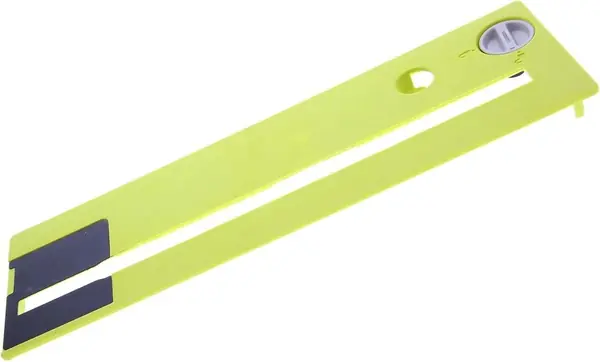
A cracked throat plate turns a working saw into a shelf, and on the RTS12 and RTS23 the replacement is a small plastic part that is not always in stock. This is the same part number, 089240035702, made by a third party — the least expensive way back to a usable saw in this guide.

It seats and locks in the throat the way the factory plate does, and the opening gives plenty of blade room, which matters if you are running a dado stack on a small saw. It is a molded plastic part rather than a machined phenolic one, though, so the fit is not as precise; a few passes with a file at the ends is sometimes what it takes to get it sitting flat, and that is a five-minute job rather than a project.

Where we land on it is that a working saw beats a broken one. This is a repair part, not an upgrade: it is the plate you buy when the original cracked and you have a shelf to finish this weekend, and at this price there is not much to argue about. Keep it in the case as the spare, and put a zero-clearance plate on the list for the cuts where finish matters.

Worth Noting

  • Wide opening gives no tear-out control
Our Verdict

If the factory plate on your Ryobi RTS12 or RTS23 has cracked, this replacement gets you cutting again at the lowest price here.

Check Latest Price

How We Tested Table Saw Throat Plates

We started by measuring throat openings. We pulled throat dimensions and blade-opening specs for the saws people are most likely to own — job-site saws that ride in a truck bed, contractor saws on casters in a two-car garage, and older cast-iron cabinet saws that never move — and used them to shortlist zero-clearance, dado, and plain replacement plates, weighing material, trim-to-fit versus drop-in, and cost per plate. Twelve plates followed, bought and fitted ourselves, tested over eight months.

Every fitting started with the saw unplugged and the blade dropped below the table. We set each plate in the throat, ran a straightedge across the table, and felt the seam with a fingernail to catch a plate sitting proud or low. We backed the leveling and side-to-side screws in and out to see how much travel they had and whether the plate shifted once locked down; anything that wobbled or wouldn't sit flush was set aside and never used for a cut. Then we checked guard and riving knife clearance without removing either.

In use, we raised the blade through the uncut plates to cut the kerf, noting chatter and whether the edge came out ragged, then made repeat rips in oak and plywood to watch for tearout and for thin offcuts catching the opening. Dado plates got a stack and a test cut. Over the months we swapped plates dozens of times, watching for chipped edges, stripped screws, and any plate that had warped out of flat, and we trimmed the fit-it-yourself ones by hand to see how much filing and patience each asked for.

How to Choose a Table Saw Throat Plate

Match the Plate to Your Saw First

Throat plates are not universal. The opening on a RIDGID R4512 runs about 15-1/8 by 3-3/4 inches; a DeWalt job-site saw takes something closer to 13-9/16 by 3-3/4; SawStop's own locking plate covers its cabinet and contractor saws and pointedly not the Jobsite Saw. Pull your factory plate and measure length, width and thickness, then check those numbers against the listing rather than against the brand name on the box.

The trap is the word compatible. A listing that says compatible with a brand often covers a handful of models and nothing else, and a plate sized for a family of older saws is meant to be trimmed rather than dropped in. If your saw is old enough that nobody lists it, buy on dimensions and plan on fitting the ends.

Decide Between Zero-Clearance, Dado, and Replacement

Three different jobs hide behind one part number. A zero-clearance plate arrives uncut and you raise your own blade through it, so the opening matches that blade and nothing more — that is what reduces tear-out and keeps thin offcuts from dropping into the throat. A dado plate has an opening wide enough for a stack. A standard replacement keeps the factory slot and the clearance for the guard, riving knife and anti-kickback pawls.

Zero clearance is per blade, so budget for more than one: a three-pack costs about what a single phenolic plate does and lets each of your regular blades keep its own kerf. Whichever type you choose, check that the guard and riving knife clear it before the first cut, and never disable a guard or knife to make a plate fit.

Flatness and Material Matter More Than Features

Nothing else about a plate matters if it does not sit flat. A plate that rocks or bows changes your depth of cut and gives the workpiece an edge to catch on. Phenolic laminate is the material we prefer, because it holds flat, resists moisture and lets stock slide. MDF is flat and inexpensive but dents at the corners, UHMW is slick and light, and thin molded plastic flexes under a heavy workpiece.

Sight down the plate when it arrives and return it if it is bowed. That check costs a minute and saves a project.

Set It Flush, and Check the Hold-Down

Corner set screws do the leveling; side and front screws take out the play that lets a plate shift under a cut. Lay a straightedge across the plate at the front and again at the back and adjust until it sits level with the cast-iron top — a plate standing proud will catch the leading edge of every board you push across it, and one sunk below leaves a lip for offcuts to hang on.

Then look at how it stays put. Some plates reuse the factory screw, some use a rear pin, some a lever latch. Whatever the design, the plate should be locked down before the blade comes up.

Frequently Asked Questions

Final Verdict

Start with your saw, then buy the plate cut for it. For the RIDGID R4512, that is the Leecraft RG-5: uncut phenolic, adjustable to flush, and the cleanest record on fit and cut quality of any plate here.

If your saw is something else, match the plate instead. DeWalt owners get the widest coverage from the Leecraft DW-3, SawStop cabinet and contractor saws are best served by SawStop's own latching plate, Delta 36-725 owners get three kerfs for the price of one from the ZEROSERT set, and a saw old enough that nobody lists it is a measuring-tape job for the Peachtree phenolic plate.