↑↓ navigate ↵ open Esc close All results →

Best Band Saw Blades for Metal of 2026

The quickest way to ruin a metal cut is grabbing the wrong blade off the rack—a mistake that costs less than lunch yet stalls the job. A loop that misses your saw's exact length and width will wander off the wheels, while a blade with the wrong tooth pitch glazes and smokes in solid round bar or snags and strips teeth on thin-wall conduit.

Over six months, we ran 14 blades on portable and benchtop bandsaws through conduit, threaded rod, flat bar, and solid stock, judging fit, tracking, cut straightness, and how many cuts the teeth survived. Pitch is where buyers trip most often: fine teeth feel safer on paper but clog and overheat in thick plate, whereas coarse teeth grab thin tubing. Variable-pitch patterns bridge mixed thicknesses without forcing a blade swap.

Length and width remain non-negotiable for safe tracking, so the lineup spans both portable and benchtop formats across thin tubing and heavy bar stock.

Our Top Picks

The Best Band Saw Blades for Metal

1.

MK Morse Master Cobalt 44-7/8-Inch 14/18 TPI Best Overall
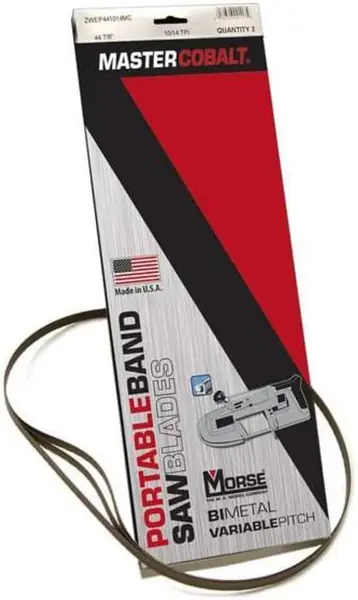
MK Morse Master Cobalt three-pack of bi-metal portable band saw blades

Portable metal cutting

Shop Score 93/100
Pack Size
3 blades
Tooth Pitch
14/18 TPI
Blade Size
44-7/8 x 1/2 x 0.020 inches
Cutting Edge
Matrix II cobalt
View on Amazon

The variable 14/18 TPI pitch is what makes the MK Morse Master Cobalt our default for portable metal cutting. Instead of forcing a choice between a fine tooth for thin wall and a coarser one for thicker stock, it splits the difference, and the cobalt cutting edge is built to hold up to heat. We reach for it when the day's work is a mix of angle, tube, and plate.

At 44-7/8 by 1/2 by 0.020 inches, it fits a long list of full-size portable saws, including Milwaukee, DeWalt, Bosch, Makita, and Wen models. The three-blade pack means a fresh edge is close by when a tooth dulls, and the variable pitch also settles vibration compared with a single-pitch blade. We appreciate that it doesn't ask you to change blades every time the stock thickness changes.

The length is the main boundary: this is not the blade for a compact 30-9/16- or 35-3/8-inch saw, and it is overkill for a 64-1/2-inch benchtop machine. For the full-size portable saw that sees general metalwork, though, it is the most balanced blade in this group. It stays as the first blade we load.

Worth Noting

  • Weld life can vary under heavy use
Our Verdict

The MK Morse Master Cobalt is our default because its 14/18 TPI edge handles mixed metal stock and fits most full-size portable saws.

Check Latest Price
2.

DEWALT DW3984C 32-7/8-Inch 24 TPI Best Budget for Thin Metal

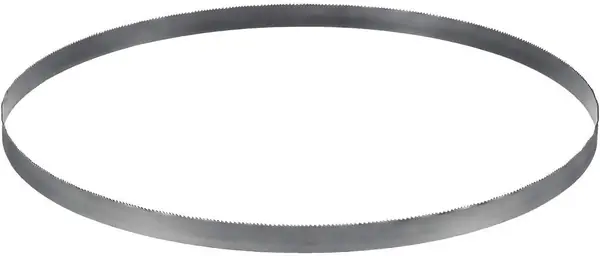
DEWALT DW3984C three-pack of 24 TPI portable band saw blades

Thin metal cuts

Shop Score 92/100
Pack Size
3 blades
Tooth Pitch
24 TPI
Blade Length
32-7/8 inches
Blade Thickness
0.020 inch
View on Amazon

A 24 TPI tooth count is the tell: the DEWALT DW3984C is a thin-metal specialist, not a general-purpose blade for plate. The 32-7/8-inch length fits a long list of DeWalt and other compact portable saws, and the three-blade pack keeps a spare in the case. The 0.020-inch thickness keeps the loop flexible around the small wheels, while the fine teeth leave a clean edge on conduit, thin-wall tube, and sheet.

We treat it as the budget blade for a saw that mostly cuts light-gauge stock; the fine pitch is why it leaves a smoother finish than a coarser blade. It is not the one we load for thick angle or heavy plate, where the teeth have too little room to clear the chip. For a homeowner or light fabricator, that trade is easy to accept. We also notice the fine tooth asks for a light, steady feed rather than a push, and that is a good habit on any portable saw.

If your work is mostly thin-wall tube and conduit, the clean cut is worth more than the versatility of a coarser blade. The three-pack means a dull edge doesn't stop the job, and the short length is easy to store in a tool bag. It is a focused blade, and that focus is the point.

Worth Noting

  • Weld failures can end a blade early
Our Verdict

For thin-gauge work on 32-7/8-inch saws, we keep the DEWALT three-pack within reach because its fine 24 TPI tooth count is the point.

Check Latest Price
3.

Milwaukee 48-39-0529 35-3/8-Inch 18 TPI Best for Milwaukee Compact Saws

Milwaukee 48-39-0529 three-pack of compact band saw blades

Milwaukee compact saws

Shop Score 91/100
Pack Size
3 blades
Tooth Pitch
18 TPI
Blade Length
35-3/8 inches
Blade Thickness
0.020 inch
View on Amazon

The OEM fit is the reason we choose the Milwaukee 48-39-0529 for the compact-saw case. It is a 35-3/8-inch blade built for Milwaukee's compact band saws, and the 18 TPI tooth count is right for the pipe, threaded rod, and angle iron that make up most of the work. We like that it cuts straight without a lot of wandering.

The three-pack is a practical size for a compact saw: the blades are short, the saw is easy to carry, and a spare doesn't take up much room. The 18 TPI pitch is fine enough for clean edges on conduit and rod but coarse enough to clear chips in light structural stock. It is not the blade for heavy plate; that is a different tooth count and a different saw.

For a Milwaukee compact owner, the length, tooth count, and three-pack line up without a compromise that matters. We recommend it when you want an OEM-style blade and aren't chasing the cheapest option. It is the low-drama choice for the saw it was built for.

Worth Noting

  • Fit can be fussy on non-Milwaukee saws
Our Verdict

OEM fit for a Milwaukee compact saw is why we recommend this 35-3/8-inch blade, especially for pipe, rod, and angle.

Check Latest Price
4.

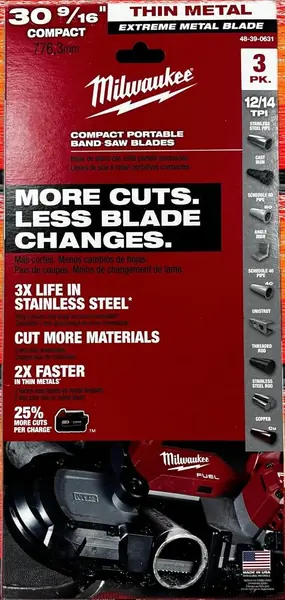
Milwaukee 48-39-0631 30-9/16-Inch 12/14 TPI Best for Thick Metal

Milwaukee 48-39-0631 three-pack of extreme thick metal band saw blades

Thick metal stock

Shop Score 90/100
Pack Size
3 blades
Tooth Pitch
12/14 TPI
Blade Length
30-9/16 inches
Blade Series
Extreme Thick Metal
View on Amazon

Thick metal is a different job, and the Milwaukee 48-39-0631 is built around it. The 30-9/16-inch length fits Milwaukee's compact saws, while the 12/14 TPI variable pitch gives the teeth more room to clear a chip in heavy stock and stainless. It suits the cut through a chunk of plate or a thick wall tube rather than conduit.

We appreciate the aggressive pitch because it doesn't force a compact saw to nibble at thick material with a fine tooth. The three-pack is sensible for a job site, where one blade can go before the day is over, and the 12/14 range covers several stock sizes without a change. This is a specialist, though: on thin sheet, the coarser teeth can feel grabby, and a finer blade leaves a better edge.

For a compact Milwaukee saw that spends its time in thick metal, this is the specialist we want in the case. It is not the one for a full-size 44-7/8-inch saw, and it is not the pick for a mixed light-gauge day. The three-blade pack makes the specialist role easier to live with.

Worth Noting

  • Coarser teeth grab on thin sheet metal
  • Fits compact 30-9/16-inch saws, not full-size 44-7/8-inch frames
Our Verdict

Thick metal and stainless are the jobs we send to this 12/14 TPI Milwaukee blade for compact saws.

Check Latest Price
5.

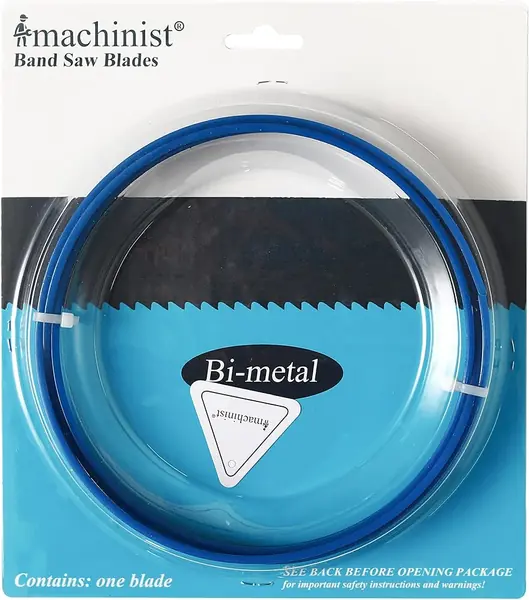
Imachinist S64514 64-1/2-Inch 14 TPI Best for Benchtop Band Saws

Imachinist S64514 64-1/2-inch bi-metal band saw blade

Benchtop band saws

Shop Score 89/100
Pack Size
1 blade
Tooth Pitch
14 TPI
Blade Size
64-1/2 x 1/2 x 0.025 inches
Material
M42 bi-metal
View on Amazon

The 64-1/2-inch length is the first thing to check: this Imachinist blade is sized for the 4x6 horizontal band saws that show up in small shops and garages. The 14 TPI pitch is a general-purpose choice for mild steel, and the M42 bi-metal edge is the same family of material used in the pricier blades here. It is a one-blade pack, so the value comes from the low replacement cost rather than a bulk box.

We pick it for the small benchtop saw that runs a few cuts at a time. The 14 TPI tooth count leaves a decent finish on angle and tube, and the blade has a reputation for holding up over repeated cuts. It is not a high-production blade, and the tracking can wander on a saw that isn't set up well, so spend the time on tension and guide adjustment.

For a 4x6 saw cutting mild steel, this is the value pick in this group. The low cost makes it easy to keep a spare on the shelf, which is the real advantage for a small shop. It is a simple blade that lets the saw do the work.

Worth Noting

  • Soft ferrous metal only
Our Verdict

For 4x6 benchtop saws, we like this Imachinist blade because it cuts mild steel cleanly and costs little enough to keep spares.

Check Latest Price
6.

FOXBC 44-7/8-Inch 10/14 TPI Best for Mixed Metal Thickness

FOXBC 44-7/8-inch three-pack of 10/14 TPI band saw blades

Mixed metal thickness

Shop Score 88/100
Pack Size
3 blades
Tooth Pitch
10/14 TPI
Blade Size
44-7/8 x 1/2 x 0.020 inches
Material
M42 bi-metal
View on Amazon

The compatibility list is unusually long for a portable blade: this FOXBC 44-7/8-inch model is listed for Milwaukee, DeWalt, Bosch, Makita, and Wen saws, among others. That makes it a useful spare for a shop that runs more than one brand. The 10/14 TPI variable pitch is coarser than the 14/18 blade we recommend as the default, and the three-pack gives you a couple of spares.

We prefer the coarser pitch for thicker angle, plate, and tube because the teeth have more room to clear chips. The M42 bi-metal edge is the right material for metal cutting, and the variable tooth spacing helps settle vibration in the cut. It is not as fine a finish as a 24 TPI blade, but it is more versatile across stock sizes.

For a 44-7/8-inch saw that sees a real mix of thick and thin metal, this is the blade we pick when the 14/18 default feels too fine. It is a practical middle ground, and the broad fit makes it easy to keep on hand. We keep one in the van for the odd job.

Worth Noting

  • Tooth life can vary by stock
Our Verdict

A 44-7/8-inch saw that sees mixed thick and thin metal is where we choose this FOXBC blade and its coarser 10/14 TPI edge.

Check Latest Price
7.

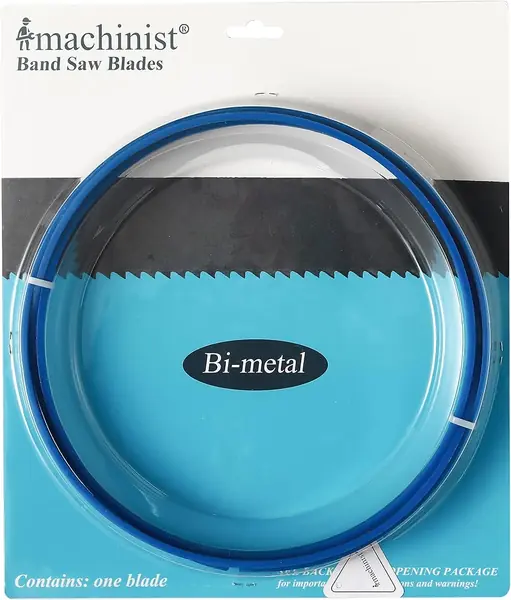
Imachinist S9334812 93-Inch 8/12 TPI Best for Large Stationary Saws

Imachinist S9334812 93-inch 8/12 TPI bi-metal band saw blade

Large stationary saws

Shop Score 87/100
Pack Size
1 blade
Tooth Pitch
8/12 TPI
Blade Size
93 x 3/4 x 0.035 inches
Material
M42 bi-metal
View on Amazon

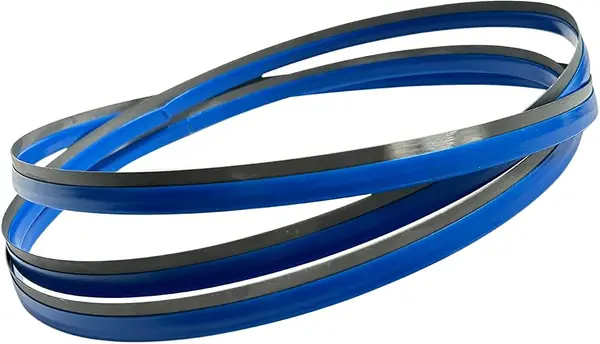
The 93-inch length and 3/4-inch width put this Imachinist blade in a different class from the portable blades here. It is sized for larger stationary band saws, and the 8/12 TPI variable pitch is aimed at small-diameter tube and solid bar. The M42 cobalt edge and 0.035-inch thickness are built for a machine that can put real tension on the blade.

The 8/12 pitch is the reason we choose it for general shop work; it handles both tube and solid stock without a change. The cobalt edge resists heat, which matters on a saw that runs continuously, and the variable teeth break up the cut instead of letting the blade sing. It is not a fine-finish blade; the coarser pitch leaves a rougher edge than a 14 TPI.

This is a one-blade pack, so the value depends on how long it lasts. We treat it as a working blade for a larger saw rather than a precision finishing blade. The 93-inch size is not going to fit a 4x6 benchtop saw.

For a larger stationary saw cutting tube and solid bar, we see it as a solid midrange choice. It gives you the width and tooth count that class of saw wants, and the cobalt edge is the right material for the work. It is not the blade for a compact portable saw, and it is not the fine-tooth choice for thin wall.

Worth Noting

  • Blade can wobble on some machines
Our Verdict

Larger stationary saws cutting tube and solid bar are where we suggest this 93-inch Imachinist blade and its 8/12 TPI pitch.

Check Latest Price
8.

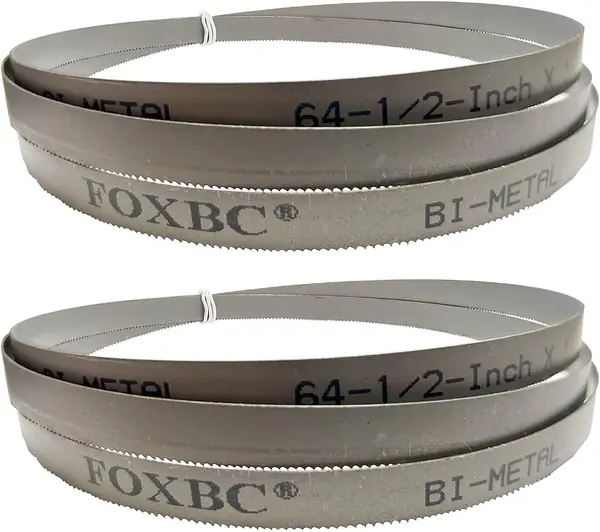
FOXBC 64-1/2-Inch 24 TPI

FOXBC 64-1/2-inch two-pack of 24 TPI band saw blades

Stationary thin metal

Shop Score 83/100
Pack Size
2 blades
Tooth Pitch
24 TPI
Blade Size
64-1/2 x 1/2 x 0.02 inches
Material
M42 bi-metal
View on Amazon

A 24 TPI tooth count on a 64-1/2-inch blade points to one job: thin-wall metal on a benchtop saw. This FOXBC two-pack is listed for Harbor Freight, Wen 3970, and Jet band saws, and the fine pitch is meant to leave a clean edge on tube, sheet, and small angle. It is a different animal from the 14 TPI blade we like for general 4x6 work.

We reach for the fine tooth on thin stock because it puts more teeth in the cut and reduces the chance of snagging. The M42 bi-metal edge is the right material for metal, and the two-pack is a reasonable size for a saw that doesn't run all day. The 24 TPI pitch is slow in thick plate, though, and it is not the blade we load when the stock gets heavy.

The 64-1/2-inch length is the hard limit here. It fits the saws it is listed for, but it will not fit a 44-7/8-inch portable saw or a 93-inch stationary machine. Check the length on your saw before you order, especially if you have an older Harbor Freight or Jet model.

For a 64-1/2-inch saw dedicated to thin-wall work, this is a useful two-pack. It gives you a spare and a fine finish without asking you to buy a box of blades. It is not the general-purpose blade for a mixed shop, but it is the right tooth count for the thin stock.

Worth Noting

  • Durability can disappoint on stainless
Our Verdict

A 64-1/2-inch saw dedicated to thin-wall metal is where we reach for this FOXBC two-pack and its fine 24 TPI cut.

Check Latest Price

How We Tested Band Saw Blades for Metal

We started with a research pass, cross-checking blade length, width, and thickness against the spec sheets for the portable and benchtop saws we knew readers actually run, then filtered the field by cutting edge, tooth pitch, pack count, and cost per blade. Anything that didn't publish exact dimensions, or that only fit an oddball saw, stayed on the shelf. Fourteen blades were ordered and kept in rotation for six months.

The cutting happened where these blades live: a benchtop saw working through quarter-inch mild steel plate, solid round, and angle, and a portable saw on sawhorses chewing through threaded rod, thin-wall conduit, pipe, and flat bar. We wore eye protection, kept the guards on, let each saw reach full speed before the teeth touched metal, and ran every blade at the speed recommended for the stock.

Every cut got checked against a scribed line with a machinist's square, which is how we caught blades that wandered in thick stock or chattered their way through thin wall. We counted cuts between changes, logged teeth that stripped or dulled, and ran a thumbnail along the weld seam after each session looking for cracks. Fit got the same scrutiny: whether the blade seated on the wheels without modification, whether it tracked true under load, and whether swapping one in meant rethinking the setup.

Cost per blade went into the notes next to pack count, because a single blade that dies mid-job isn't a bargain at any price. The blades that made the list are the ones that fit their saw the first time, tracked true, and were still cutting on the line when the teeth finally gave out.

How to Choose Band Saw Blades for Metal

Match the Blade to the Saw First

A band saw blade has to fit the machine before it can cut well. Length, width, and thickness all need to match the saw's specification, and the saw's manual or the old blade is the fastest way to confirm them. A 35-3/8-inch blade for a Milwaukee compact saw is not a substitute for a 44-7/8-inch blade on a full-size portable saw, and a 64-1/2-inch benchtop blade will not fit either. We start every search with those three numbers, because a bargain blade that jumps off the wheels is no bargain.

Pick Tooth Pitch for the Stock

Tooth pitch, or TPI, is the number of teeth per inch, and it decides how the blade handles chip clearance. A fine 24 TPI blade leaves a clean edge on thin-wall tube and sheet, while an 18 TPI blade is a better match for pipe and rod. Variable pitches such as 14/18 or 10/14 cover a range of thicknesses, which is why we favor them for mixed shop work. The trap is assuming more teeth always means a better cut: in thick plate, a fine tooth can clog and overheat.

Portable and Stationary Saws Need Different Blades

Portable band saw blades use short, flexible loops, often in three-packs, because the blade is exposed to more handling and the saw is built for quick cuts. Stationary saws use longer and wider blades, such as 64-1/2-inch or 93-inch models, and they reward a stiffer blade with better tracking. We do not shop by blade length alone; we shop by the saw we own. Buying the longest blade because it looks more substantial is a common way to end up with a blade that will not tension.

Look for Bi-Metal or Cobalt Edges

A metal-cutting blade needs a hardened cutting edge and a tough backing. Bi-metal blades combine a high-speed steel or cobalt tooth edge with a spring-steel back, which gives the teeth heat resistance and the loop fatigue resistance. M42 and cobalt edges are the ones we look for in this group, and they are the reason a blade can survive the heat of a continuous cut. A woodworking blade may look similar, but its tooth geometry and hardness are wrong for metal.

Buy Packs by the Cut You Do

Pack size is a practical choice, not a specification to maximize. A three-pack makes sense for a portable saw that travels and changes blades on the job; a two-pack or single blade is enough for a stationary saw if you keep a spare on the shelf. The cheapest blade per pack is not always the lowest cost per cut if it dulls early. We weigh the pack against the work and keep one spare, which is usually the difference between finishing the job and stopping to order more.

Frequently Asked Questions

Final Verdict

We recommend the MK Morse Master Cobalt as the default because its 14/18 TPI edge covers the mixed stock most portable saws see, and the 44-7/8-inch length fits a wide range of full-size machines. It is the blade we load first when the next cut could be tube, angle, or plate.

If your saw is a compact Milwaukee, the 48-39-0529 is the OEM-fit choice, and the 48-39-0631 is the one for thick metal. For a 4x6 benchtop saw, the Imachinist S64514 is the value pick, while the DEWALT three-pack is the budget thin-metal blade. Match the length first, then the tooth pitch, and the choice gets simple.