↑↓ navigate ↵ open Esc close All results →

Best Carbide Scrapers of 2026

Carbide edges lift cured gasket material, dried glue, paint, and rust cleanly, yet they give zero warning before chattering across soft aluminum or biting a gouge into wood trim. How a scraper behaves on the workpiece comes down to blade width, bevel geometry, and a handle balanced enough to keep downward pressure steady.

Fourteen scrapers ran through four months of stripping paint, clearing baked-on water-pump gaskets, and cleaning adhesive off flat panels and trim, evaluated on out-of-the-box keenness, edge life, grip comfort, and overall value. Tool weight and balance mattered just as much as blade flatness when working overhead or in tight engine bays.

Because tungsten carbide cannot be tuned back up with a quick file pass like tool steel, reversible or replaceable tips outlast a slightly sharper fixed blade over the long haul. Choosing among the eight scrapers below comes down to matching blade shape and handle length to the surface in front of you.

Our Top Picks

The Best Carbide Scrapers

1.

Bahco BAH665 Carbide Scraper Best Overall
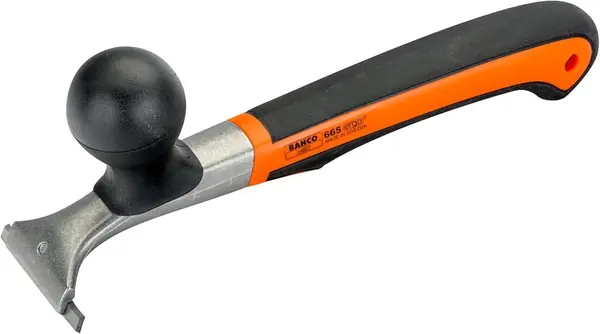
Bahco BAH665 carbide scraper with 2-1/2-inch blade and two-hand grip

Wide flat scraping

Shop Score 96/100
Blade Width
2.5 inches
Weight
7.4 oz
Handle Design
Dual-component two-hand grip
Blade Type
Double-edged carbide
View on Amazon

The 2-1/2-inch blade and the large knob at the front are what make the Bahco BAH665 our default. One hand wraps the main grip; the other pulls the knob, so you can lean into old paint or glue without your wrist taking the whole load. On a flat door or a long run of trim, that width covers ground quickly, and we like that the carbide edge is double-sided.

At 7.4 ounces, it has enough mass to feel steady without becoming a club. The two-component handle is shaped for a full hand, and the front knob gives your other hand a place to pull. The slim head gives you a clear view of the edge. We also appreciate that Bahco builds this around interchangeable carbide blades; the 2-1/2-inch double-edged blade is the one to start with for heavy removal.

This is a heavy-removal tool, not a finishing scraper. For glued-up panels, painted cabinet doors, and broad runs of siding, the width and two-hand stance are exactly what we want. The limited lifetime warranty is a sensible match for a tool that will see hard use.

Worth Noting

  • Wide head will not fit narrow profiles
Our Verdict

Our default pick for broad paint and glue removal: the wide two-hand design keeps long scraping sessions controlled and productive.

Check Latest Price
2.

Lisle 81780 Carbide Scraper Set Best for Engine Work

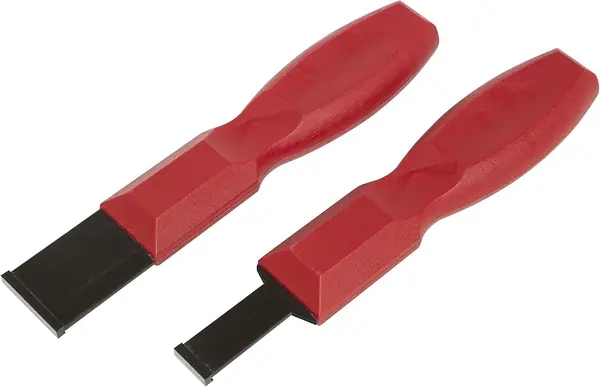
Lisle 81780 carbide scraper set with 1-1/4-inch and 5/8-inch blades

Engine gasket work

Shop Score 95/100
Handle Length
6 inches
Blade Material
Tungsten carbide
Blade Widths
1-1/4 and 5/8 inches
View on Amazon

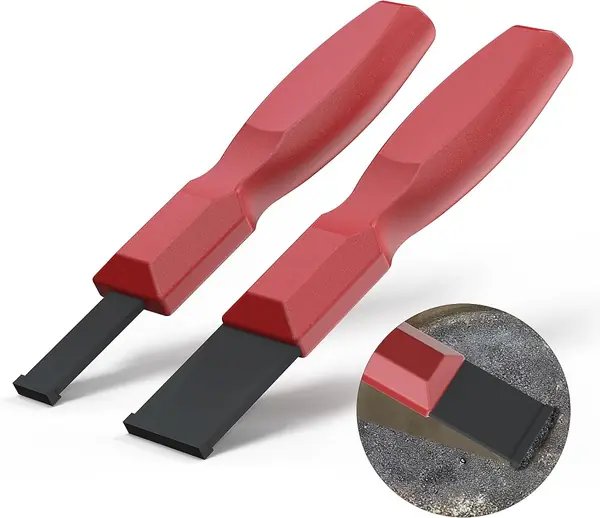
Two blade widths, 1-1/4 and 5/8 inches, are the whole point of the Lisle 81780 set. The wider scraper clears a gasket line across a head or manifold; the narrower one reaches around ports and into tight spots. Both use tungsten-carbide tips brazed to a steel blade, with a six-inch handle that keeps your hand above the work.

We reach for this pair on engine work because the flat steel blade sits against a machined surface instead of rocking like a flexible putty knife. The carbide tips are precision ground and stay sharp, so the tool cuts gasket residue rather than smearing it. We like the fixed blade for that reason; there is no flex to round over an edge. Keep the pressure light on aluminum, because carbide is harder than the surface and can leave a mark if you lean on it.

The set is specialized, and that is the appeal. The two widths let you switch without hunting for another tool, and the six-inch handle gives your hand clearance. The set carries a lifetime warranty, which suits a tool that lives in an engine bay. Having both widths in the same handle style means fewer tools to sort through during a teardown.

Worth Noting

  • Narrow blades are slow on broad paint panels
Our Verdict

A dedicated gasket set we reach for on engine teardowns, with two widths that cover broad surfaces and tight ports.

Check Latest Price
3.

Bahco Ergo Pocket Scraper Best for Detail Work

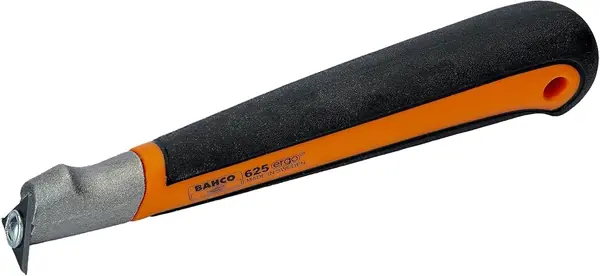
Bahco Ergo Pocket Scraper with triangular carbide blade and plastic handle

Trim and sash

Shop Score 94/100
Blade Width
1 inch
Weight
5.61 oz
Blade Shape
Triangular carbide
Handle Design
Two-component ergonomic
View on Amazon

A window sash with decades of paint is where the Bahco Ergo Pocket Scraper makes sense. Its one-inch triangular carbide blade gets into the shadow lines around glazing and molding, and the three edges let you rotate to a fresh corner without stopping to change a blade. The 25 mm triangular blade is the right shape for paint that has settled into a corner.

We like the small head for control. At 5.61 ounces, the tool is light enough to use overhead or in awkward positions without fighting it, and the two-component handle fills the hand. The handle also leaves room for two hands when you need extra pressure. The carbide edge is the reason to choose this over a steel putty knife; it keeps cutting after a steel edge has dulled.

We keep it close for sash, trim, and small repairs, where the edge needs to follow a profile. The triangular blade rotates to a fresh edge, so one tool keeps cutting through a long detail job. The compact body makes it an easy tool to leave in the finish bag for the next sash.

Worth Noting

  • Small blade covers little area per pass
Our Verdict

The detail scraper we keep for window sash and trim, where a one-inch triangular edge beats a wide blade.

Check Latest Price
4.

Onemake 2-1/2-Inch Carbide Scraper Best Budget Wide Scraper

Onemake 2-1/2-inch carbide scraper with reversible blade and ergonomic handle

Budget wide scraping

Shop Score 92/100
Blade Width
2-1/2 inches
Handle Design
Dual-textured with swivel ball
Blade Type
Reversible double-sided carbide
Blade Change
Standard screwdriver
View on Amazon

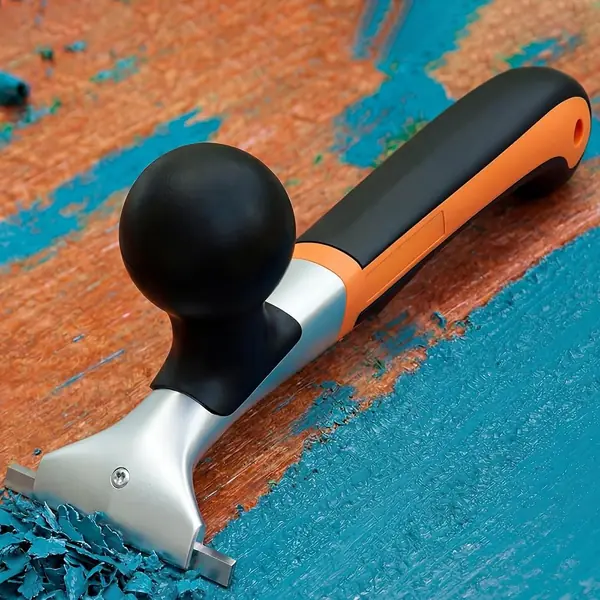
The Onemake is the lower-cost route to a wide two-hand scraper, and it gets the important parts right: a 2-1/2-inch reversible carbide blade, a textured handle, and a swivel ball for your second hand. It is a familiar layout, with a wide blade for flat panels and a front grip for leverage.

We noticed the handle first. The ball gives your off hand a place to pull, which is what makes a wide scraper controllable on a sticky patch of adhesive. The blade is double-sided and extra-long, so you can flip it when one edge dulls, and the handle is built to take a hammer strike when a stubborn spot needs a nudge.

This is a working tool, not a showpiece. The standard screwdriver blade change is simple, and the handle has enough texture to stay put in a dusty shop. It covers the same wide-panel work as our top pick for less money, and we don't expect the finish to feel as refined as the Bahco, but the working parts are all here. For a second scraper or a first wide one, that trade is easy to accept.

Worth Noting

  • This listing includes only one blade
Our Verdict

A budget-minded wide scraper with a reversible blade and a second-hand swivel that make it easy to control.

Check Latest Price
5.

Titan 17010 Carbide Scraper Best for Tight Spaces

Titan 17010 carbide scraper with 5/8-inch blade and aluminum handle

Tight gasket work

Shop Score 91/100
Blade Width
5/8 inch
Weight
4.32 oz
Handle Length
6 inches
Blade Length
2 inches
View on Amazon

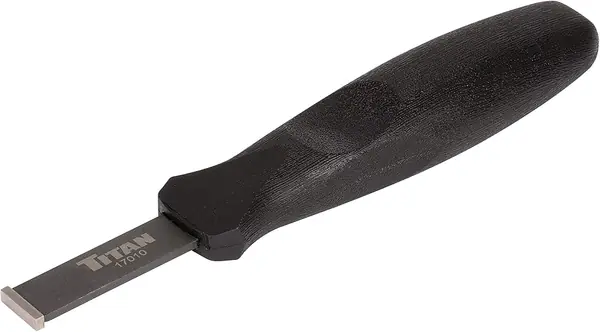
A 5/8-inch edge and eight sharp edges around the carbide tip are what set the Titan 17010 apart. This is a narrow detail scraper: a two-inch blade on a six-inch aluminum handle, built for gasket residue, carbon, and rust in places a wide scraper cannot start. It also deburrs metal edges, which makes it more than a one-job tool.

The small carbide tip bites with less force than a razor blade, and the eight edges mean one corner can dull without ending the job. At 4.32 ounces, the tool is light enough to control with one hand. The six-inch handle gives your knuckles clearance, and the two-inch blade is long enough to keep the tool steady in a channel. It is a simple tool, with no blade changes to slow you down.

We reach for the Titan when a gasket surface has a narrow channel or when a full-width blade would bridge the area we need to clean. It is a specialist, not a one-tool answer, and that is exactly why it stays in the engine box. For tight trim repairs, the narrow edge is just as useful, and the aluminum handle wipes clean after a greasy job.

Worth Noting

  • Small edge is slow on wide flat areas
Our Verdict

A narrow specialist for gasket channels and tight engine work, with eight edges around a 5/8-inch carbide tip.

Check Latest Price
6.

Astro Tools 9532 Carbide Scraper Best for Flat Metal

Astro Tools 9532 tungsten carbide scraper with rectangular blade

Flat metal surfaces

Shop Score 90/100
Blade Shape
Rectangular 90-degree
Blade Material
Tungsten carbide
Maintenance
No sharpening required
View on Amazon

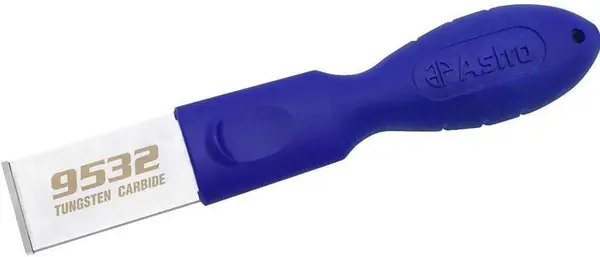
The rectangular 90-degree edge is the reason to pick the Astro 9532. It sits flat on a machined head or manifold, so the carbide cuts gasket residue and carbon without the rocking you get from a flexible blade. The tip is precision ground and needs no sharpening.

We like this style for flat metal because there is no profile to follow and no edge to sharpen. The rectangular carbide is nearly impervious to wear, and it also handles rust, weld slag, glue, and paint, which makes it more versatile than its automotive label suggests. Use a light touch on aluminum so the carbide does not scar the surface.

The flat edge is not the tool for window sash or molding; that is where a triangular or narrow scraper earns its place. But for gasket surfaces, weld tables, and flat paint removal, the Astro is the one we want in hand. It is a simple, dependable shape that does one kind of work very well, and that is enough.

Worth Noting

  • Flat edge cannot follow window sash or molding profiles
  • Heavy pressure can scar soft aluminum surfaces
Our Verdict

Our pick for flat metal and gasket surfaces, where a rectangular 90-degree carbide edge sits steady and needs no sharpening.

Check Latest Price
7.

OUXIO Carbide Scraper Set

OUXIO carbide scraper set with 1-1/4-inch and 5/8-inch blades

Gasket removal

Shop Score 89/100
Weight
7.2 oz
Handle Length
5.75 inches
Blade Material
Tungsten carbide
Blade Widths
1-1/4 and 5/8 inches
View on Amazon

Two gasket widths in one set is the simple appeal of the OUXIO carbide scraper set. The 1-1/4-inch blade covers a broad mating surface; the 5/8-inch blade reaches into the tighter spots around ports and bolt holes. Both are tungsten carbide on a 5.75-inch handle.

The set is aimed at engine work, and the long handle gives you room to keep both hands clear while you pull a gasket off an oil pan or differential cover. The carbide tips are flat and sharp, and there are eight sharp tips to work with before you need to think about replacement. At 7.2 ounces, the set feels substantial without being heavy.

On aluminum, the carbide can mark the surface if you press too hard; use light pressure and let the edge cut the residue rather than the metal. That is the same caution that comes with any hard scraper, and it is worth taking seriously on a mating surface. The handle is comfortable enough for a long teardown, and the two widths cover the common jobs.

We see this as a solid value alternative to the Lisle set: two useful widths, a comfortable handle, and a lower price. If the Lisle's lifetime warranty matters to you, it is the safer buy; if you want both widths for less, this set does the job.

Worth Noting

  • Heavy pressure can mark soft aluminum surfaces
  • Lacks the Lisle set's lifetime warranty coverage
Our Verdict

A two-width gasket set that covers broad and narrow surfaces for less than our premium pick with a comfortable long handle.

Check Latest Price
8.

Bates 1-Inch Carbide Scraper Best for Corner Scraping

Bates one-inch carbide scraper with triangular blade and TPR handle

Corner scraping

Shop Score 88/100
Blade Width
1 inch
Blade Shape
Triangular three-edged
Overall Length
9.45 inches
Handle Material
TPR
View on Amazon

The triangular blade and the compact body are what make the Bates 1-inch scraper easy to reach for. Three edges meet at a point, so you can work a corner, rotate the tool, and keep going without changing a blade. The aluminum head keeps the front end rigid.

We like the size for trim, small repairs, and detail work where a wide scraper feels clumsy. At 9.45 inches overall, the tool fits in a crowded drawer or a nail bag, and the narrow head lets you see the point of contact.

The TPR handle is the other detail we noticed. It has a slightly soft, secure feel that makes a difference when you are working in short strokes around trim, and the aluminum head adds rigidity up front without much weight. For a compact scraper, the balance is pleasant.

For a first carbide scraper or a spare for detail work, we think the Bates is an easy call. It gives you a triangular edge and a comfortable handle, and it is the one we reach for when the scraper has to fit between a stop and a casing.

Worth Noting

  • One-inch blade is slow on broad panels
Our Verdict

A compact triangular scraper for corners and detail work, and the least expensive way into carbide here.

Check Latest Price

How We Tested Carbide Scrapers

We started with a list of roughly 40 carbide scrapers sold by tool brands and automotive suppliers, then cut it down using the specs that actually change how a scraper works: blade width and edge shape, whether the edge was reversible or replaceable, handle length and grip material, and overall weight. Anything too narrow to sit flat on a panel or too wide to fit a gasket channel got set aside. That left 14 scrapers in the shop for four months, from pocket-sized detail tools to wide two-hand pull scrapers.

Testing followed the work rather than a lab bench. We stripped six layers of paint from a door frame and window trim, lifted a baked-on water-pump gasket, and pulled dried adhesive and putty off a flat panel, with safety glasses on the whole time. On a scrap sheet of aluminum we deliberately compared light pressure against heavy to see which edges dug in; we never took a scraper to glass. Between jobs we timed blade changes with a screwdriver, checked whether an edge had rolled or chipped, and noted how our hands felt after 20 minutes of continuous scraping.

Sharpness was measured in passes, not impressions: how many strokes it took to clear a six-inch strip of trim, and whether the fourth pass still cut the way the first did. We weighed each scraper, judged balance in a two-handed grip, and compared what each one cost against how much blade and handle you got for the money. The ones that made the list stayed flat, stayed comfortable, and kept their edge.

How to Choose a Carbide Scraper

Start With Blade Width and Shape

Width decides how much surface you cover and how tightly you can turn. A 2-1/2-inch blade is our choice for broad flat panels, painted doors, and long trim runs; it removes more per pass and lets a second hand add pressure. A 1-inch triangular blade is better for sash, molding, and corners, where three rotating edges keep the tool working. For gasket work, a gasket scraper with 1-1/4-inch and 5/8-inch blades covers broad mating surfaces and narrow ports. Do not buy one width for every job.

Look at the Handle and Your Stance

Scraping is a pressure job, so handle shape matters as much as the blade. A two-component grip with a front knob or swivel ball lets your second hand pull while your lead hand steers, which is why we prefer that layout for wide blades and long sessions. Small detail scrapers can get by with a single comfortable handle, but it should fill your palm without forcing a death grip. Check handle length too: a six-inch handle keeps your knuckles clear of engine parts, while a compact body fits trim work and a toolbox.

Match the Edge to the Surface

Tungsten carbide is harder than steel and stays sharp longer, but hardness has limits. On wood, a sharp carbide edge can lift cured paint and glue, though too steep an angle can dig into soft grain. On aluminum, use light pressure; carbide can scratch a soft mating surface. Keep carbide scrapers off glass, where they can scratch. For flat gasket surfaces, a gasket scraper with a rectangular 90-degree edge sits steadier than a flexible putty knife. For profiles and corners, a triangular edge gives you more working angles.

Frequently Asked Questions

Final Verdict

For most woodworking and remodeling jobs, we recommend the Bahco BAH665. The 2-1/2-inch double-edged blade covers flat panels quickly, and the two-hand grip keeps long scraping sessions under control. If your work is engine gaskets rather than paint, the Lisle 81780 set is the better fit; its 1-1/4-inch and 5/8-inch blades reach places the wide Bahco cannot. For window sash and trim, step down to the Bahco Ergo Pocket Scraper.