↑↓ navigate ↵ open Esc close All results →

Best Woodworking Mallets of 2026

Buying a woodworking mallet by ounce weight alone overlooks the spec that controls both joint accuracy and chisel-handle life: head material. Steel hammers mushroom and split wooden chisel handles fast, yet even between safe options, urethane deadens rebound and softens shop noise while dense beech and other hardwoods transfer crisp force straight into the blade.

Swinging 12 mallets across eight months of chopping dovetails, driving deep mortises, and tapping glue-ups square showed how strongly balance and grip geometry affect forearm fatigue. On one rough-finished sample, a quick pass with sandpaper and oil was all that kept the handle comfortable over a full afternoon at the bench.

Built exclusively with wood or urethane heads to protect wooden handles, the five mallets ranked below split cleanly by bench role—heavy mortising drives, controlled paring taps, and assembly duty.

Our Top Picks

The Best Woodworking Mallets

1.

Schaaf 15 oz Urethane Mallet Best Overall
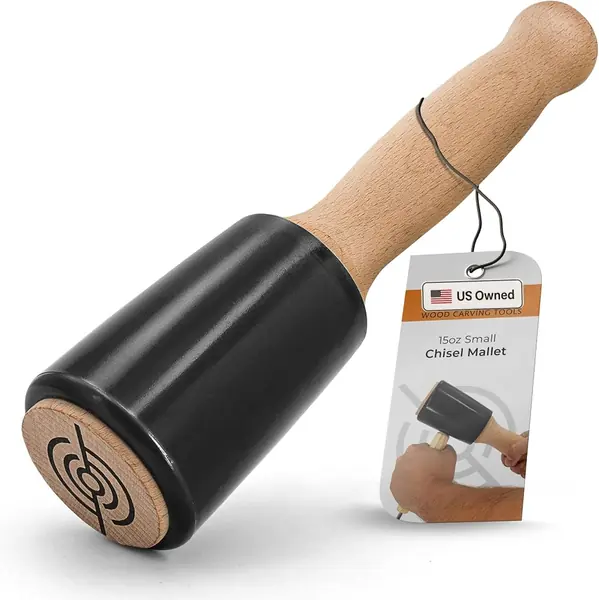
Schaaf urethane-headed woodworking mallet with black head and beech handle

All-purpose bench work

Shop Score 93/100
Head Material
Polyurethane
Head Weight
15 oz
Handle Material
Beech wood
Head Style
Bevel
View on Amazon

Fifteen ounces of urethane on a beech handle is the combination that ended up on our bench more than any other mallet here. The head is heavy enough to drive a full-size chisel through a mortise and soft enough that the shock stops at the mallet instead of traveling down into the chisel handle. Strikes land as a low thud rather than a crack, and the chisel goes where you aimed it.

What tipped it to the top of this list is how much ground it covers. One mallet handled chopping dovetail waste, cleaning up a mortise, and knocking a glued frame together without a mid-project swap. The handle is thick and hand-filling, the kind of shape that keeps you from gripping too hard, and the beveled face gives you a defined striking surface without sharp corners that dig into a chisel's handle.

The handle does arrive rough — coarse enough that you notice it on the first cut. Ten minutes with 220-grit and a wipe of oil fixes that, and once it's done the bare beech grabs a sweaty hand better than a lacquered handle does. That sanding is the only fiddling this mallet asks of you.

What we keep coming back to is the weight. Fifteen ounces is enough for a mortise chisel in white oak and light enough to tap a paring cut without bouncing the chisel off your line. Schaaf is the only maker here who built a urethane mallet in that middle range, and that is the whole argument for it.

Worth Noting

  • Beech handle arrives rough and needs light sanding
Our Verdict

We recommend the Schaaf as the first mallet most woodworkers should buy: 15 ounces of urethane that drives chisels and gouges with control, lands quietly, and spares the chisel handle.

Check Latest Price
2.

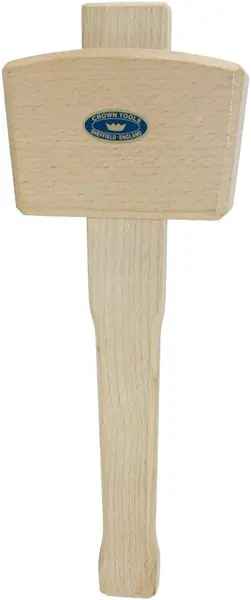
Crown 106 Beechwood Mallet Best for Mortising

Crown 106 beechwood carvers mallet with 4-1/2-inch flat head and contoured handle

Mortising and heavy joinery

Shop Score 92/100
Head Material
Kiln-dried beech
Head Weight
20 oz
Handle Material
Beech wood
Head Diameter
4-1/2 inches
View on Amazon

A 4-1/2-inch flat face is a big target, and that is most of the Crown's appeal: there is very little mallet to miss with when you are leaning over a mortise and can't get your eye straight above the chisel.

Twenty ounces of kiln-dried beech delivers a livelier blow than the urethane heads here, and the weight sits right behind the face where you want it. On mortise work the bigger blows meant fewer of them, and the flat face registered squarely even at the awkward angles a deep mortise puts you in. It is also a genuinely good-looking tool, dense and pale and neatly turned, the sort you leave on the bench because it belongs there.

That combination makes it the most satisfying mallet in this group to swing on heavy work. Beech behaves like wood, so expect the faces to dent and wear over time; you can plane or sand them back square when they do, which we prefer to a head that has to be thrown away once it is chewed up.

Where it gives ground to the urethane mallets is noise and shock. Beech rings out on impact and sends more of the blow back up into your hand, which you feel after twenty minutes of steady chopping. For joinery in short, decisive bursts that is a fair trade, and it is the mallet we hand someone who wants to feel exactly how hard they are hitting.

Worth Noting

  • Head can work loose on the handle
Our Verdict

Buy the Crown for mortising and heavy joinery: 20 ounces of beech behind a big flat face that lands hard and forgives a slightly off-square swing.

Check Latest Price
3.

Wood Is Good WD201 Mallet Best Splurge

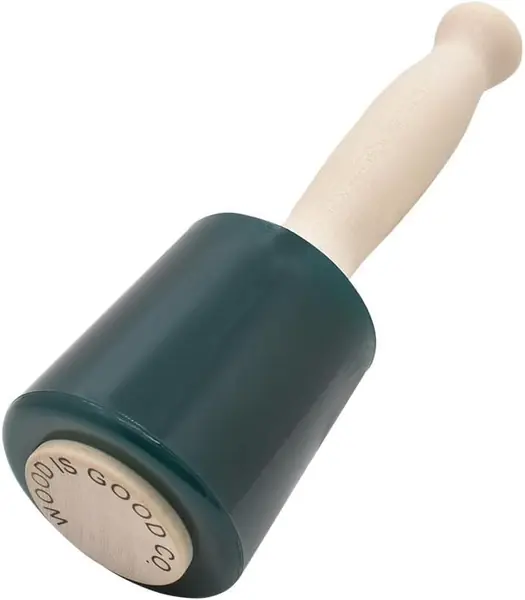
Wood Is Good WD201 20-ounce mallet with black urethane head and smooth hardwood handle

Quiet, low-vibration strikes

Shop Score 91/100
Head Material
Polyurethane
Head Weight
20 oz
Handle Material
Hardwood
Head Diameter
3-1/2 inches
View on Amazon

The most expensive mallet in this group is a 3-1/2-inch urethane head on a polished hardwood handle, made in the U.S., and you are paying for the finish as much as the function.

Where we noticed the difference was in the hand. The strike has a dead-blow quality to it — the head lands, the energy goes into the chisel, and very little of it comes back up your arm — and the urethane face leaves nothing behind on a chisel handle or on the work. Having used both urethane mallets here, we prefer this handle by a wide margin; it comes sanded smooth, where the Schaaf's needs work out of the box.

Twenty ounces and a 3-1/2-inch face is also more mallet than a carver needs. For paring and fine gouge work the mass gets in the way and the light Narex is the better-matched tool. For mortising, assembly, and any chisel work where you want three decisive blows instead of eight, we liked having the extra weight and the forgiving face.

One thing we appreciate about urethane generally: the head does not split or need reshaping the way beech does, so the premium is partly a pay-once calculation. The maker guarantees the head unbreakable, which is the kind of claim a beech mallet cannot make. Whether that is worth the top price here depends on how hard your bench works.

Worth Noting

  • The most expensive mallet in this group
Our Verdict

If you want the most refined strike in this group and the budget allows, this is the mallet we point to: the urethane head does the work and your wrist doesn't pay.

Check Latest Price
4.

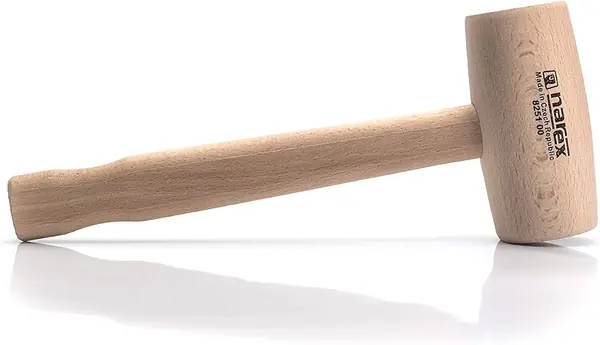
Narex Beech Carving Mallet Best Light Carving Mallet

Narex unfinished European beech carving mallet, 12 inches long, natural wood

Carving and paring

Shop Score 90/100
Head Material
Unfinished European beech
Overall Length
12 inches
Weight
11 oz (300g)
Head Size
4 3/4" long by 2 1/4" diameter
View on Amazon

Eleven ounces is light for a woodworking mallet, and that is exactly the point: this one is built for the taps that walk a gouge through a curve, not for pounding a mortise.

The beech is left unfinished and unvarnished, and we like it more the longer we use it. Bare wood stays put in a warm hand in a way a lacquered handle doesn't, and a coat of oil smooths it without making it slick. The head is 4 3/4 inches long across a 2 1/4-inch face, so there is a generous striking surface to work across when you come at a cut at an angle instead of straight down.

Light is what you want for paring, cleaning up a curved shoulder, or settling a small part into place with a tap. A 20-ounce mallet overwhelms that work and the chisel goes deeper than you meant it to. The 12-inch overall length is another quiet virtue: it fits a tool roll and does not crowd the bench when three projects are already sitting on it.

There are two pieces of beech here and nothing else — no urethane, no plastic, no finish — and it rewards being kept oiled. If you chop mortises more often than you carve, the Crown's extra heft serves you better. At a carving bench, this is the mallet we reach for first.

Worth Noting

  • Light 11-ounce head is underpowered for chopping mortises
  • Unfinished beech requires periodic oiling to maintain
Our Verdict

Our pick for carving and paring: 11 ounces of unfinished beech that gives you control the heavier mallets here can't match.

Check Latest Price
5.

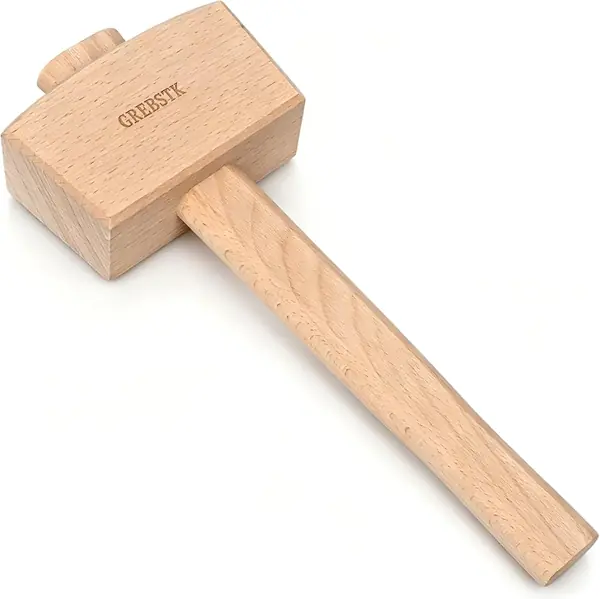
GREBSTK Solid Beech Mallet Best for Budget Glue-Ups

GREBSTK solid beech wood mallet with unfinished natural wood handle, 12 inches

Budget glue-ups

Shop Score 89/100
Head Material
Solid beech
Head Style
Flat
Overall Length
12 inches
Item Weight
10.7 oz
View on Amazon

At the bottom of this group's price range sits a plain, unfinished beech mallet that handles most of what the expensive ones do.

The solid beech head and handle are left raw, and that turned out to be the part we liked most. Bare wood grips better than a lacquered handle once your hands warm up, and a couple of minutes with oil smooths it if the grain feels fuzzy. The flat faces land cleanly when you are tapping a joint closed, and at 10.7 ounces it is easy to swing one-handed while your other hand holds the workpiece still.

What makes it worth buying is that the low price never shows up in the strike: the grain is tight, dense beech, and the faces sit square to the handle. Twelve inches overall gives you room for a two-handed tap on a stubborn joint while still being short enough to keep out of the way on a crowded bench.

For glue-ups, light chisel work, and a second mallet parked by the sharpening station, it is plenty. If this is going to be your only mallet and you chop a lot of joinery, the Schaaf's extra weight and urethane head are worth the step up.

Worth Noting

  • Lightest head here, so heavy mortising outruns it
Our Verdict

The mallet we suggest when the budget is tight: solid beech that strikes cleanly for glue-ups and light chisel work without feeling like a compromise.

Check Latest Price

How We Tested Woodworking Mallets

We started by reading spec sheets and owner reviews for about 30 mallets and cut the list to twelve on head material, weight, face size, handle shape, and price, since a light paring mallet and a heavy mortising one aren't solving the same problem. Only wood and urethane heads made the cut — a steel hammer has no business near a chisel handle. Before the first swing on every mallet, we pressed the head down by hand and checked the joint for movement.

Testing ran eight months, mostly at a garage bench on weekends with shorter evening sessions for detail work. We weighed each mallet on a kitchen scale and set its face against the chisel handles it would actually be hitting, then spent those months chopping mortises in white oak, paring dovetails, carving spoons on the porch, and knocking apart glue blocks.

At the end of each session we checked a pencil line drawn across the head-to-handle joint for any shift, and noted whether a handle raised a blister, shed splinters, or needed sanding within the first week. We paid attention to how far up the handle we had to choke for control during light paring, and how much the mallet's balance changed with it. A phone decibel app at arm's length recorded how loud each strike was, and we compared that to how much sting came back through our hands on cold mornings.

What ranked the mallets in the end was simple: how squarely the face landed on a chisel handle, how quiet and dead the blow felt, whether the head stayed seated, how the handle felt after an hour, and whether the price matched the work the tool could take. The mallets are still in rotation, and we'll update if a handle loosens or a face starts to chip.

How to Choose a Woodworking Mallet

Start With the Head Material

Urethane heads absorb the shock of the blow, keep the noise down, and leave chisel handles unmarked — the Schaaf and the Wood Is Good are both built this way. The trade-off is a deader feel in the hand than wood, which some carvers miss. Beech delivers a crisper, more traditional strike and can be reshaped when a face gets chewed up, but it sends more vibration back into your wrist and will dent with use.

We lean urethane for a first mallet and daily chisel work, and beech when you want the feel of a traditional carver's mallet or you are doing heavy mortising.

Match the Weight to the Work

The mallets here run from about 11 to 20 ounces, and more is not automatically better. Light heads give you the control for gouge carving and paring, where you want a series of small, accurate taps. Fifteen ounces is the middle ground most benches can live with — it handles dovetails, general chisel work, and knocking a joint together without a swap. Twenty ounces is for mortising and heavy assembly, where a few decisive blows beat a dozen light ones.

Be honest about which of those is most of your work. Swing a 20-ounce head at a carving bench all afternoon and your shoulder will tell you about it.

Look at Balance, Handle, and Face

A good mallet feels like an extension of your forearm: balance point close to the head, handle thick enough to fill your palm without forcing a death grip. A rough, unfinished handle grips better than a varnished one but may need a light sanding first. Face size matters more than shape for most work — the Crown's broad 4-1/2-inch face forgives a slightly off-square swing, while a narrow face demands accuracy.

Whatever you choose, strike with the face and not the cheek of the head, which is where handles split and heads crack.

Check How the Head Is Fitted

Most wooden mallets, including the Crown and the Narex, hold the head by friction: it is driven onto a tapered handle and stays put by interference. That joint can creep with seasonal humidity or a dry winter shop. Seat the head hard before the first project, check it again after a few weeks of use, and if it keeps backing off, a little wood glue ends the problem permanently.

It is worth two minutes the day the mallet arrives, before a loose head surprises you over a half-cut mortise.

Frequently Asked Questions

Final Verdict

For most benches the Schaaf is the mallet to buy first. Fifteen ounces of urethane gives you enough force for dovetails and mortises without the wrist fatigue of a 20-ounce beech head, and the quiet, non-marking strike protects both your chisels and your ears. It is the one mallet here that covers carving, chisel work, and assembly without a compromise you will notice.

Two situations change that. If most of your time goes to gouges and paring, the light Narex gives you control the heavier mallets cannot. And if you want the most refined strike in the group and the budget allows it, the Wood Is Good is the upgrade worth making.