↑↓ navigate ↵ open Esc close All results →

Best Crosscut Blades for Table Saws of 2026

Crosscutting figured maple, veneered plywood, or prefinished melamine with a general-purpose or rip blade tears out exit fibers and leaves ragged edges that take lengthy sanding to clean up. Switching to a 60- or 80-tooth blade with an ATB or Hi-ATB grind produces crisp, glue-ready joints straight off the table saw.

Eight months of feeding solid hardwood, plywood, and melamine through 12 crosscut blades measured exit tearout, startup vibration, and edge longevity before resharpening was needed. Kerf width also pairs directly with saw horsepower: a thin-kerf blade keeps a benchtop saw moving smoothly, while full-kerf plates stabilize heavier cabinet saws.

Ranging from 60-tooth everyday cutters to 80-tooth trim and sheet-goods blades, these seven 10-inch blades are matched to the clean crosscuts each tooth geometry does best.

Our Top Picks

The Best Crosscut Blades for Table Saws

1.

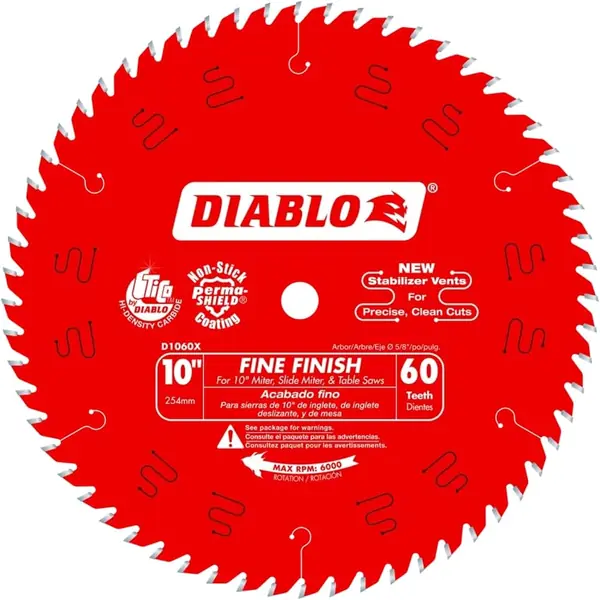
Diablo D1060X 10-Inch 60-Tooth Blade Best Overall
Diablo D1060X 10-inch 60-tooth Hi-ATB table saw blade in red

General crosscuts

Shop Score 97/100
Kerf
0.098 in
Arbor
5/8 in
Teeth
60
Tooth Geometry
Hi-ATB
View on Amazon

Sixty teeth with a Hi-ATB grind is the combination we keep coming back to for table-saw crosscuts: dense enough to leave a polished end grain, open enough that the blade doesn't slow a contractor saw to a crawl. The Diablo D1060X is the clearest expression of that balance in this group, and it is the blade we reach for first when a project calls for clean shoulders, trim, and cabinet parts.

The 0.098-inch kerf is another detail we appreciate. It removes less material than a full-kerf blade, so the saw doesn't have to work as hard, and the cut feels quick without turning into a rough rip. On a jobsite saw or a smaller hybrid, that difference is practical: more of the motor's power reaches the teeth instead of being spent on a wide channel.

In solid wood, the 60-tooth pattern leaves a finish that needs little more than a light pass with a sanding block. It also handles plywood and melamine with less chip-out than a general-purpose combination blade, though a zero-clearance insert is still the best way to protect the underside of a veneered sheet. The 5/8-inch arbor fits the 10-inch table saws most shoppers are upgrading.

We also like that it doesn't ask much of the saw. The blade starts a cut without a lot of drama and leaves enough tooth clearance to keep the feed moving. For the crosscuts that make up most furniture and trim work, it is the sensible default; for the most fragile veneers, the 80-tooth picks below are the better specialist.

Worth Noting

  • Not a heavy-ripping blade
Our Verdict

Our go-to 10-inch crosscut blade for a general table saw: the 60-tooth Hi-ATB grind balances a clean finish, easy feed, and everyday shop use.

Check Latest Price
2.

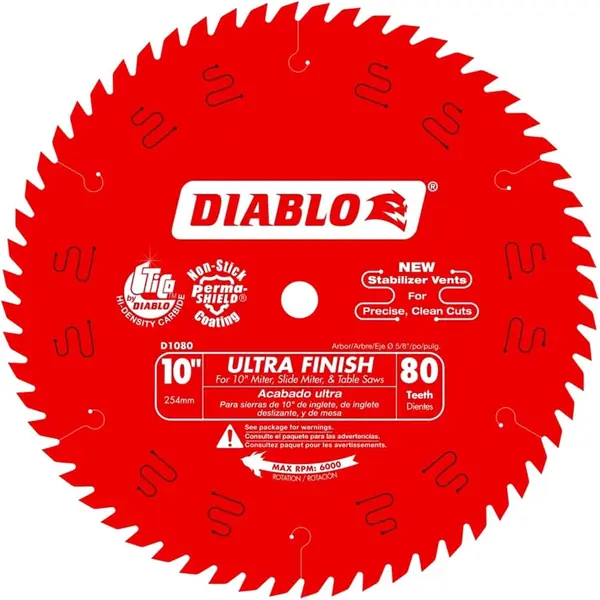
Diablo D1080X 10-Inch 80-Tooth Blade Best for Ultra-Clean Cuts

Diablo D1080X 10-inch 80-tooth Hi-ATB table saw blade with red finish

Ultra-clean trim

Shop Score 96/100
Kerf
0.098 in
Arbor
5/8 in
Teeth
80
Tooth Geometry
Hi-ATB
View on Amazon

The cut that matters most is often the one you see: a mitered casing, a cabinet end panel, a strip of veneered plywood. The Diablo D1080X is built for those moments, with 80 Hi-ATB teeth, a 0.098-inch kerf, and the same 5/8-inch arbor as the rest of the 10-inch blades here. The high tooth count and alternate bevel leave less room for fibers to tear out, which is why it belongs on the saw when the finish is the point.

We treat it as the step up from our top pick rather than a replacement. The 60-tooth D1060X is the easier all-rounder; the D1080X leaves a smoother edge in hardwood and a cleaner cut in plywood and melamine. On a table saw with enough power, that trade is worth making for visible joinery and trim.

It is a finishing blade first, so it makes the most sense alongside a general-purpose blade. For the last pass before assembly, it earns its keep—especially if you want to spend less time sanding and more time fitting.

Worth Noting

  • Slower feed in thick hardwood
Our Verdict

When the cut will show, we step up to this 80-tooth Hi-ATB blade for trim, cabinet parts, and veneered plywood that need a smoother edge.

Check Latest Price
3.

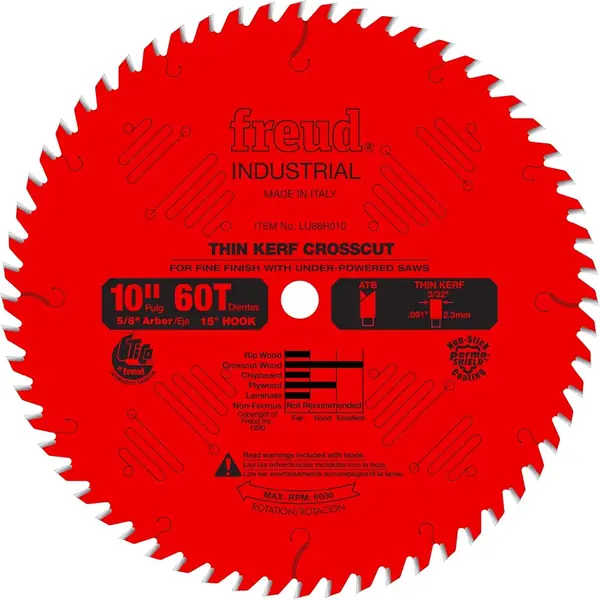
Freud LU88R010 10-Inch 60-Tooth Crosscut Blade Best Premium Crosscut

Freud LU88R010 10-inch 60-tooth ATB thin-kerf crosscut table saw blade

Premium crosscuts

Shop Score 93/100
Kerf
0.090 in
Arbor
5/8 in
Teeth
60
Grind
ATB
View on Amazon

The Freud LU88R010 is a dedicated crosscut blade with a traditional 60-tooth ATB grind and a thin 0.090-inch kerf. It is the one we choose when we want the familiar ATB cut rather than the Hi-ATB finish of the Diablo blades, and the 15-degree hook angle gives it an easy, positive feed through solid wood.

That hook angle is a big part of the blade's character. It pulls the teeth into the wood with less pushing than a low-angle finishing blade, so long crosscuts in oak and maple don't wear you out. The thin kerf keeps the cut light and quick, and it leaves more of the saw's power at the teeth.

The finish is squarely in fine-crosscut territory: clean end grain, little tearout on trim, and enough smoothness that light sanding is usually all that follows. It is a good match for a contractor saw that is not over-endowed with horsepower, and it feels balanced in the cut rather than fussy.

We like the blade most as a dedicated crosscut companion rather than an only blade. It is not the choice for heavy ripping, but if you want a traditional ATB crosscut with a smooth feed and a clean finish, it has a distinct feel from the Hi-ATB picks.

Worth Noting

  • Premium price against the budget picks
Our Verdict

For a traditional ATB crosscut with a smooth feed and a premium feel, we like the Freud LU88R010 as a dedicated companion blade.

Check Latest Price
4.

WEN BL1080 10-Inch 80-Tooth Blade Best Budget

WEN BL1080 10-inch 80-tooth carbide-tipped saw blade in silver

Budget fine finish

Shop Score 92/100
Kerf
0.1 in
Arbor
5/8 in
Teeth
80
Max Speed
6000 RPM
View on Amazon

Eighty carbide teeth, a 5/8-inch arbor, and a kerf just over 2 millimeters: the WEN BL1080 puts the numbers of a fine-finish blade on a budget saw. It is a thin-kerf 10-inch blade rated to 6000 RPM, and it is aimed at the same trim, plywood, and melamine cuts as the premium 80-tooth picks. The 80-tooth count is the same fine-finish territory as blades costing several times as much, which is the first thing that makes it worth a look.

The cut quality is the reason it earns a place. The high tooth count leaves trim and plywood with a clean edge and little need for sanding, and the thin kerf keeps the feed light on a smaller table saw. We like that it doesn't ask for a fancy saw. It is not as refined as the Diablo D1080X, and the finish is not quite as glassy, but the gap is smaller than the price difference suggests.

We think this is the right budget pick for clean crosscuts in trim and plywood. It makes the most sense for a weekend shop or a second blade that stays on the saw for finish work. If you cut a lot of abrasive material or want the longest edge life, step up; otherwise, it is a lot of blade for the money.

Worth Noting

  • Cut finish is slightly less glassy than premium blades
  • Shorter edge life when cutting abrasive sheet materials
Our Verdict

We think this is the budget blade to beat for clean crosscuts in trim and plywood, with an 80-tooth count that punches above its price.

Check Latest Price
5.

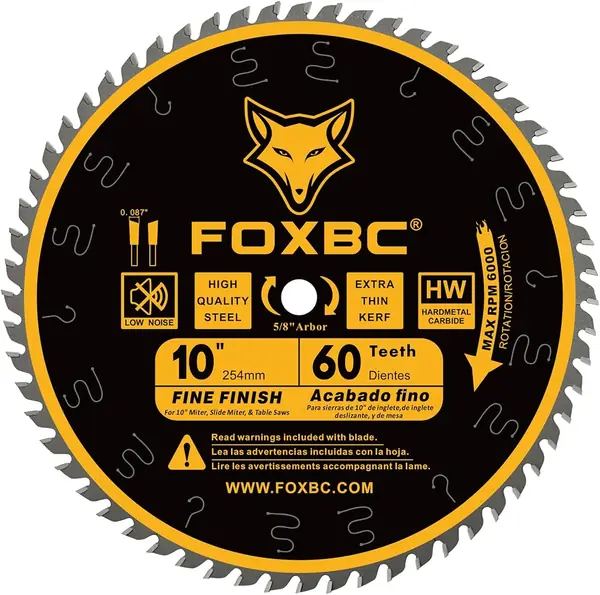
FOXBC 10-Inch 60-Tooth Crosscut Blade Best Thin-Kerf Value

FOXBC 10-inch 60-tooth ATB thin-kerf table saw blade in black

Thin-kerf crosscuts

Shop Score 91/100
Kerf
0.087 in
Arbor
5/8 in
Teeth
60
Grind
ATB
View on Amazon

The kerf is the first thing we look at on a blade meant for a smaller table saw, and the FOXBC 60-tooth comes in at 0.087 inch. That is one of the narrowest cuts in this group, and it is paired with a 5/8-inch arbor and an ATB grind for crosscutting oak, pine, plywood, and molding. The ATB teeth are not as steep as the Hi-ATB finishing grinds, so it is a general crosscut blade rather than a veneer specialist.

A narrow kerf is not just about saving wood. It also reduces the load on the motor, so a jobsite saw can keep its speed through a crosscut instead of bogging down. The 60-tooth count is the practical middle ground: cleaner than a general-purpose blade, but easier to feed than the 80-tooth finishing blades. On a smaller saw, that is the difference between a clean cut and a bogged-down one.

We recommend this as the value choice for a smaller saw or a shop that wants a clean crosscut without spending much. It leaves trim and plywood with a nice edge, and the thin plate runs quietly when the blade is true. It is not the blade for heavy production or the most fragile veneer, but for everyday crosscuts it is an easy one to keep on hand.

Worth Noting

  • Not built for heavy production or fragile veneer
Our Verdict

We recommend this thin-kerf 60-tooth blade for smaller saws and clean general crosscuts without spending much.

Check Latest Price
6.

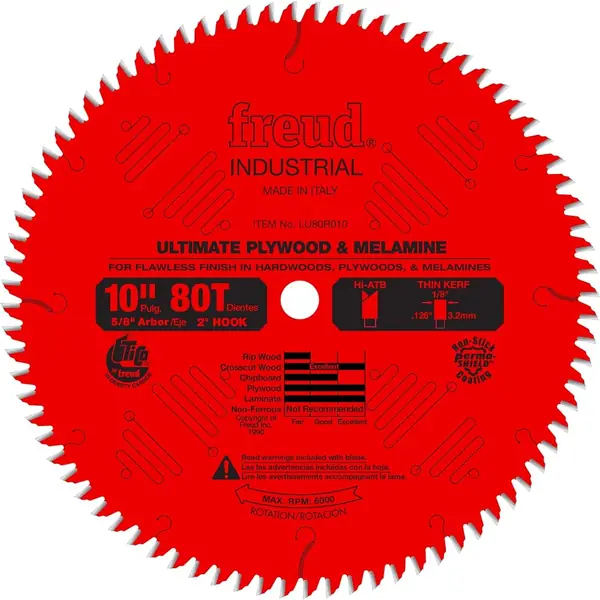
Freud LU80R010 10-Inch 80-Tooth Plywood Blade Best for Plywood and Melamine

Freud LU80R010 10-inch 80-tooth Hi-ATB plywood and melamine blade

Plywood and melamine

Shop Score 90/100
Kerf
0.126 in
Arbor
5/8 in
Teeth
80
Grind
Hi-ATB
View on Amazon

The Freud LU80R010 is a plywood and melamine specialist, with 80 Hi-ATB teeth and a 0.126-inch kerf that is wider than the other crosscut blades here. The high alternate bevel is designed to shear through veneered faces and laminates without chip-out, and the 2-degree hook angle keeps the cut controlled. The 80-tooth count and Hi-ATB grind are aimed at engineered wood, not framing stock.

We pick it when the face veneer is the part that cannot be replaced. The Hi-ATB geometry leaves clean edges on plywood and melamine, and the wider plate feels steady in the cut. It is a specialist, and it rewards a saw that can pull the wider kerf without straining.

It is not the all-around blade in this group, and it is not the first choice for thick solid stock. But for cabinet parts and shop-built plywood cases, the clean edge is worth the extra care. We keep it in the drawer for the cuts where a tearout means a do-over.

Worth Noting

  • Wide 0.126-inch kerf needs more saw power
Our Verdict

This is the blade we pick when plywood or melamine edges cannot chip, and we reserve it for a full-size saw with power to spare.

Check Latest Price
7.

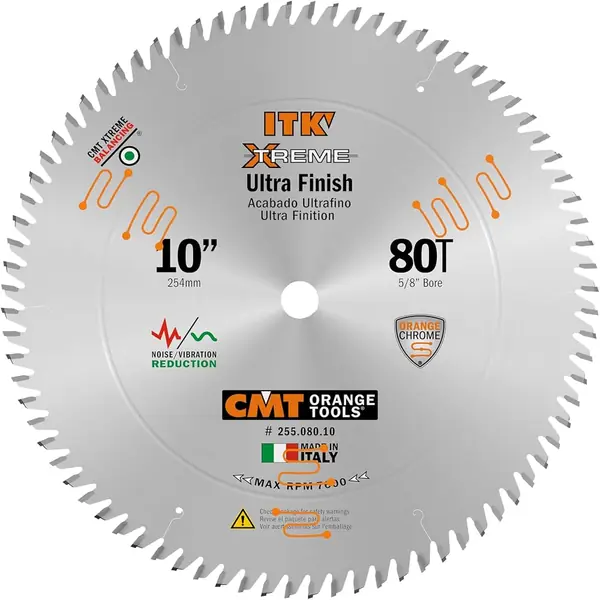
CMT 255.080.10 10-Inch 80-Tooth Blade Best for Fine Finishing

CMT Orange Tools 255.080.10 10-inch 80-tooth Hi-ATB saw blade in steel

Fine finishing

Shop Score 89/100
Kerf
0.110 in
Arbor
5/8 in
Teeth
80
Grind
Hi-ATB 30 degrees
View on Amazon

Cabinetmakers who want a polished finish from a 10-inch table saw will recognize the CMT Orange Tools 255.080.10 by its 30-degree Hi-ATB grind and 0.110-inch kerf. The 80-tooth blade is built for fine finishing, with a 5-degree hook angle and a thin-kerf plate that fits a standard 5/8-inch arbor.

The cut is the attraction. The steep Hi-ATB bevel shears through hardwood and veneer with very little tearout, and the finish is close to what you expect from a blade with even more teeth. On a full-size saw, it feels controlled and leaves edges that need only a light touch before glue-up.

The blade is not cheap, and it is a finishing blade rather than a daily workhorse. We treat it accordingly: keep it clean, avoid overheating it, and it rewards that care with a very fine cut.

We reach for the CMT when the project is furniture rather than framing and the surface is going to be seen. It is a premium choice for a shop that already has a general-purpose blade and wants a dedicated finishing companion. The Diablo and Freud picks cover the same ground with an easier value case.

Worth Noting

  • Durability can be inconsistent over time
Our Verdict

We reach for the CMT when furniture surfaces need a polished finish, thanks to its 30-degree Hi-ATB grind and clean-cutting 80-tooth plate.

Check Latest Price

How We Tested Crosscut Blades for Table Saws

We started with research rather than cutting: we read spec sheets and owner reviews, sorted the field by tooth count, grind, kerf, and arbor size, and dropped anything whose arbor or maximum-speed rating didn't match the 10-inch saws most people own. That left 12 blades, split across premium and budget pricing, which we ran for eight months on a cabinet saw and a job-site saw.

Out of the box, we checked each plate against a straightedge and looked at the braze on every tooth. Before mounting, the saw was unplugged, the arbor and RPM rating were checked against the plate, and the guard and riving knife went on wherever the cut allowed; any blade with a chipped or cracked tooth came out of the rotation.

The work was ordinary shop work: crosscutting white oak shelf parts to length, breaking down plywood for cabinet sides, trimming melamine shelving, and mitering prefinished trim. After each cut we looked at the exit edge under a raking light and ran a fingernail along it to feel for tearout, then counted how many passes with 220-grit it took before the edge was ready to finish. We also timed how hard we had to push to keep the saw moving, since a slow feed rate is where burn marks and overheated teeth come from.

Balance and stability showed up in use rather than on paper: we listened at startup and spool-down for the wobble of an out-of-true plate and watched for a telltale sing in the cut. To judge sharpness retention, the same blades stayed on the saw for the full eight months, and we logged the cut count when one started needing extra sanding. Price came last, weighed against how long a blade held its edge rather than against its sticker alone.

How to Choose a Crosscut Blade for a Table Saw

Start With Tooth Count and Grind

Tooth count sets the finish. A 60-tooth blade is the practical general-purpose crosscut choice for solid wood, trim, and cabinet parts: clean enough for most joinery, but still able to feed at a reasonable rate. An 80-tooth blade is the finishing step, with a smoother edge in hardwood and less chip-out in plywood and melamine. The grind matters just as much. ATB is the traditional crosscut geometry; Hi-ATB adds a steeper bevel that helps on veneered faces. We choose a 60-tooth Hi-ATB as the default and add an 80-tooth only when the cut will show.

Match the Kerf to the Saw

A thin kerf removes less wood and takes less power, which is why it suits contractor and jobsite saws. The trade is a slightly less rigid plate, so a steady feed and a sharp blade matter. A full kerf is heavier and can feel steadier in deep cuts, but it asks more of the motor. If your saw bogs down on thick stock, a thin-kerf crosscut blade is usually the easier fix. If you have power to spare and want the most stable plate, a full-kerf finishing blade can be the better match. We treat the 0.087- to 0.098-inch kerfs here as the easygoing choices; the 0.126-inch Freud LU80R010 is the one to reserve for a full-size saw.

Check the Arbor and Saw Ratings

Every pick here is a 10-inch blade with a 5/8-inch arbor, which covers most full-size table saws. Before ordering, confirm your saw's arbor size and maximum blade speed; a blade rated below the saw's no-load speed is the wrong blade. Also check that your saw accepts a 10-inch blade with the thickness of the one you choose. A zero-clearance insert is worth adding for finish work, but it has to be made or bought for your specific saw.

Think About Balance and Longevity

A crosscut blade lives or dies by its plate. A blade that wobbles or has a chipped tooth will leave a worse finish than a cheaper blade that runs true. When a new blade arrives, mount it, spin it by hand, and make a test cut in scrap before the return window closes. Keep pitch off the teeth; buildup causes friction and a slower feed. A clean blade cuts cooler and leaves a better edge. We check every new blade for runout before trusting it with a finish cut.

Frequently Asked Questions

Final Verdict

For most table saws, the Diablo D1060X is the crosscut blade we recommend first. Its 60-tooth Hi-ATB grind leaves a clean edge, the thin kerf is easy on a contractor saw, and it covers trim, cabinet parts, and general joinery without asking for a specialized setup.

If your cuts are mostly visible trim or veneered plywood, the Diablo D1080X is the finer-finish step up; if the budget is tight, the WEN BL1080 gets you into 80-tooth territory for much less.