↑↓ navigate ↵ open Esc close All results →

Best Dead Blow Hammers of 2026

A dead blow hammer looks like a mallet and behaves like a brake. The head is packed with steel shot that shifts forward on impact, so the face stops dead against the work instead of bouncing off it and more of your swing goes into the joint. That fixes the two things that go wrong with a regular hammer on finished material: the dent and the skid.

We tested a dozen dead blow hammers over eight months, tapping flooring into place, seating cabinet joints, and breaking loose parts on a project car. One lesson kept repeating: weight class matters more than the label. A light nylon-faced head belongs over joinery, a mid-weight hammer handles assembly and flooring, and a sledge-weight head is for seized components and wants a long handle you can hold with both hands.

The picks below cover that range, sets included if you'd rather have three weights than one. Each one keeps a non-marring face flat on the work and a grip that doesn't twist out of a gloved hand.

Our Top Picks

The Best Dead Blow Hammers

1.

Estwing CCD45 Dead Blow Hammer Best Overall
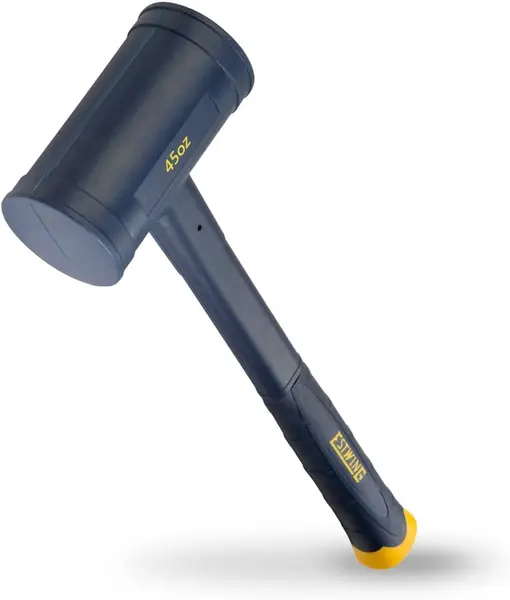
Blue Estwing dead blow hammer with polyurethane-jacketed head and cushion grip handle

Assembly and flooring

Shop Score 95/100
Handle
Steel core, cushion grip
Head Weight
45 oz (2.8 lb)
Overall Length
15 in
Face
Non-marring polyurethane
View on Amazon

Under the blue skin, Estwing builds this hammer around a steel canister packed with shot and a steel handle, then encases both in polyurethane. That is why the 45 oz version feels dense rather than bulky: the mass sits where it meets the work, and the jacket keeps it from printing on tile, trim, or a machined hub. At 15 inches overall it swings like a hand hammer, not a sledge.

We put it through floor planks, cabinet frames, and a corroded brake rotor, and what stands out is how squarely it lands. The shot settles, the head stops dead, and you get one hit instead of a bounce followed by a sloppier second one. The poly jacket is also holding up with no sign of the seam splitting that spells the end of a dead blow, which is the single biggest reason this one sits at the top of our list.

The grip is the other thing we appreciate: cushion over a steel core, it stays planted with oily hands, and the polyurethane shrugs off brake fluid and shop solvents, so this hammer is as comfortable in a garage as it is at a bench. For delicate chisel taps you want something lighter — at 45 oz this is a tool with real momentum, and it swings like one.

Worth Noting

  • Too heavy at 45 ounces for delicate chisel taps
Our Verdict

For most buyers we recommend the 45 oz Estwing: enough mass for flooring and rotor work, a no-mar face, and a poly jacket that hasn't split at the seams.

Check Latest Price
2.

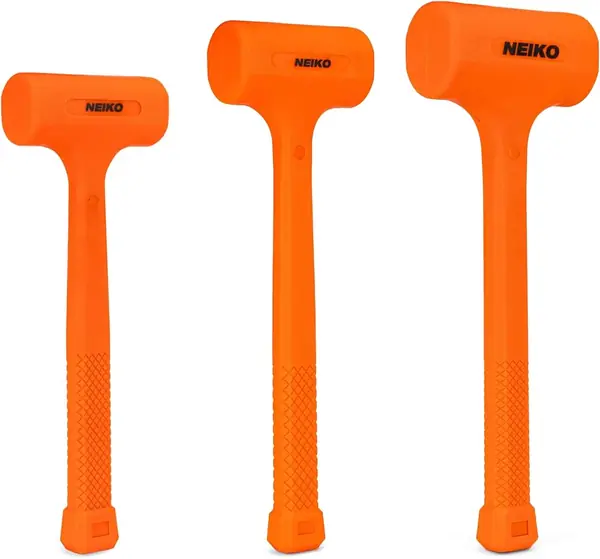
NEIKO 02888A Dead Blow Hammer Set Best Set

Three neon orange NEIKO dead blow hammers with checkered grips and molded bodies

All-round shop use

Shop Score 94/100
Overall Length
13-3/8 to 14-3/8 in
Set Contents
1 lb, 2 lb, 3 lb
Grip
Checkered textured
Head Material
Polyurethane (PU)
View on Amazon

Three hammers arrive in one box, which sounds like overkill until you are mid-assembly: the 1 lb taps dowels home and closes a joint with two fingers of pressure, the 2 lb is the everyday driver, and the 3 lb seats floor planks or knocks a stuck hub loose. Bought together they cost less than most of the single hammers on this list, and that arithmetic is exactly why this set made our cut.

The sizes are graded sensibly. The 1 lb carries a 1-3/4 inch face and a 14-3/8 inch overall length, the 3 lb grows to a 2-1/2 inch face, and each one is molded as a single piece of polyurethane, so there is no head-to-handle joint to work loose. The neon orange body and checkered grip mean you can grab the right weight without reading a label.

In use, the shot settles fast and the hammer goes inert on contact — one clean hit, no chatter. The short handles let you choke up for a tap and slide your hand back for a real swing, and the checkered texture holds when your palms are sweaty. The 3 lb is a compact hammer rather than a sledge, so leave the rusted hubs to the heavier picks below.

Worth Noting

  • Head skin can split under sledge-style blows
Our Verdict

Three molded hammers — 1, 2, and 3 lb — cover tapping through heavy seating, and we like that buying them together costs less than most single hammers here.

Check Latest Price
3.

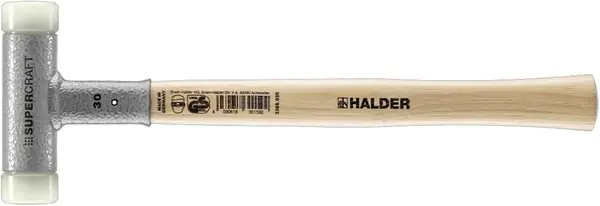
Halder SuperCraft Dead Blow Mallet Best for Precision Work

Halder SuperCraft mallet with white nylon striking faces and a slim hickory handle

Joinery and finishing

Shop Score 93/100
Handle
Hickory with overstrike protector
Head Weight
1 lb
Inserts
Replaceable hard nylon
Face Diameter
30 mm
View on Amazon

Thirty millimeters across the face and about a pound in the hand: the SuperCraft is the smallest hammer in this roundup, and it is aimed squarely at cabinetmakers. A steel housing holds the shot, and both faces are extruded nylon rather than molded, so the striking surface is dense and flat instead of rubbery.

What that buys is control. The shot transfers energy with a slight delay, so the mallet goes quiet at contact instead of kicking back into your wrist — the difference shows up when you are tapping a joint closed and cannot afford a crescent in the wood. The slim head also slips between clamps and into drawer boxes where a 45 oz hammer simply will not fit.

It costs more than any other small hammer here, and the faces are where that money goes: they swap out instead of condemning the whole tool when they finally wear. We also came to trust the overstrike sleeve at the top of the handle — a misjudged swing on a narrow workpiece is how thin-handled dead blow mallets die.

Worth Noting

  • 1 lb head is too light for heavy striking
Our Verdict

Precision work is what we use the SuperCraft for: a 30 mm nylon face, true non-rebound action, and replaceable inserts that keep it running long after a molded face quits.

Check Latest Price
4.

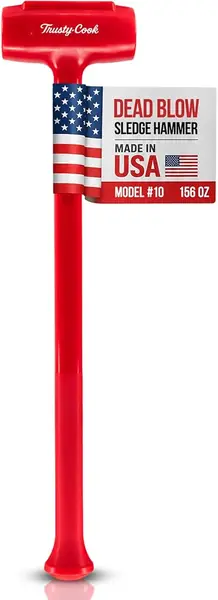
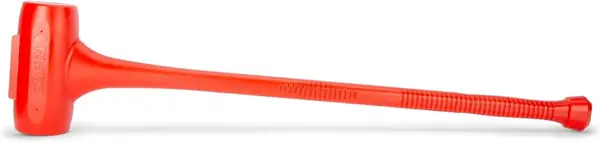
Trusty-Cook 156 oz Dead Blow Sledge Best Heavy-Duty

Red Trusty-Cook dead blow sledge with 3-inch polyurethane head and 30-inch handle

Heavy disassembly work

Shop Score 92/100
Handle
Steel core, polyurethane jacket
Head Weight
156 oz
Overall Length
30 in
Head Diameter
3 in
View on Amazon

Every shop has a part that has decided to stay where it is: a seized hub, a wedged fitting, a shaft that will not seat. This is the hammer for that moment — 156 oz, a 3 inch polyurethane head, and a 30 inch handle, all built around a steel-core shaft so a two-handed swing arrives with real force behind it.

What we noticed is how little comes back. Round steel shot moves inside the head, the head stays put on contact, and there is no recoil to absorb, so a second corrective tap is easy to place rather than a fresh swing. The body is one continuous red polyurethane jacket over a steel-cored handle, with no seam for a hard strike to catch, and the whole tool is made in the USA from domestic materials.

At just under ten pounds it is a cart tool, not a belt tool, and the price reflects a professional instrument rather than a shop accessory. That trade is worth it if heavy components cross your bench even occasionally; if they do not, a 3 lb hammer covers the same ground with less effort.

Worth Noting

  • Nearly ten-pound weight makes it a cart-only tool
  • Premium price is steep for occasional light jobs
Our Verdict

When a part will not budge, we hand over this 156 oz sledge: it moves in a couple of swings and leaves the surface intact, heavy and premium but worth it for the hardest jobs.

Check Latest Price
5.

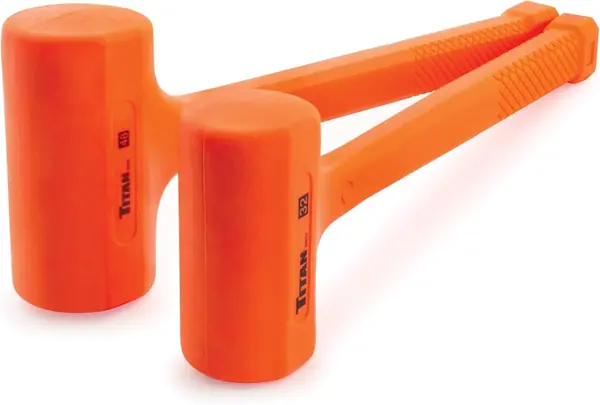
Titan 63142 Dead Blow Hammer Set Best Budget

Two black Titan dead blow hammers with diamond-textured handles in 32 and 48 oz

Budget shop use

Shop Score 91/100
Handle
Steel core, diamond texture
Set Contents
32 oz and 48 oz
Head
Double-faced steel shot
Face Material
Urethane rubber
View on Amazon

Two hammers for less than the price of most singles here is the headline, and the value holds up when you pick them up: a 32 oz for general knocking about and a 48 oz for seating planks, driving stakes, or breaking a rotor loose. Both carry a double-faced shot head, a diamond-textured handle over a steel core, and a urethane jacket that will not mark a machined surface.

In the hand they feel closer to the expensive hammers on this list than the price suggests. The handles are straight and stiff over the steel core, the faces are flat and square, and the shot does its job — strikes land with a thud and stay put instead of chattering back. For installing vinyl plank or hammering suspension parts into place, that is the whole job description.

For a home garage, or a second set that lives in the truck, this is the buy we point to first. All-day professional swinging is a different assignment, and that is where the Estwing or the Trusty-Cook earns its price. The pair also stows in one drawer, which is more than we can say for the sledges here.

Worth Noting

  • 3 lb hammer can crack under repeated hard use
Our Verdict

We call it the cheapest way to put two shot-filled hammers in your toolbox, and plenty of tool for weekend brake jobs, plank floors, and furniture assembly.

Check Latest Price
6.

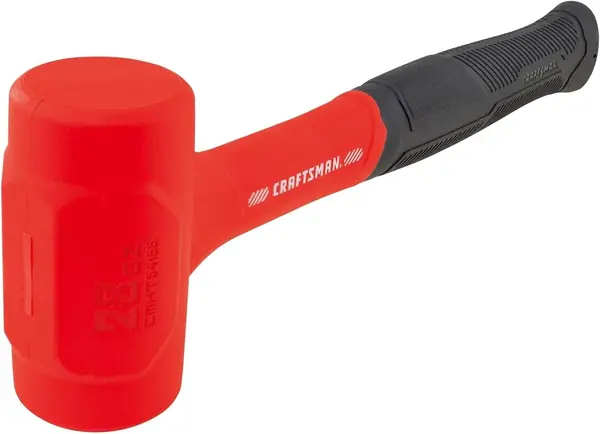
Craftsman CMHT54166 Dead Blow Hammer

Red Craftsman 28 oz dead blow hammer with textured rubber grip and flat soft face

Cabinet assembly

Shop Score 90/100
Handle
Steel-reinforced with overstrike guard
Head Weight
28 oz
Face
Soft, non-marring
Head
Steel shot-filled, molded
View on Amazon

Twenty-eight ounces is an awkward-sounding weight until you use it. It is light enough to swing one-handed along the top of a cabinet run and heavy enough to seat a biscuit joint or nudge a warped stud into line, which is a range neither the 1 lb mallets nor the big hammers here cover comfortably.

Craftsman got the details right: a steel shot-filled head molded in one piece, a soft face that has not printed on any finished surface we have hit, and a steel-reinforced handle with an overstrike guard where the head meets the grip. The balance sits where you want it, so the hammer does most of the work and your wrist does not.

Compared with the Estwing, you are trading about a pound of mass for a shorter, faster swing; on trim and cabinet work that is the right trade, and it is the hammer we hand to anyone who says a dead blow feels clumsy. It is one hammer, though, not a set, so it will not cover heavy seating.

Worth Noting

  • Sold as a single 28-ounce hammer, not a set
  • Lacks the mass needed for heavy seating work
Our Verdict

A 28 oz hammer is the one we hand to anyone assembling cabinets or hanging trim — light enough to swing all afternoon, heavy enough to seat a joint.

Check Latest Price
7.

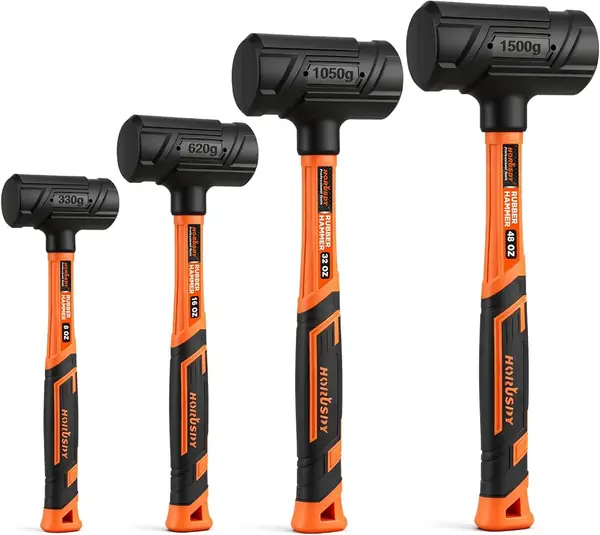
HORUSDY 4-Piece Dead Blow Hammer Set

Four orange and black HORUSDY dead blow hammers in sizes from 0.5 to 3 lb

Starting a shop

Shop Score 89/100
Set Contents
0.5 lb, 1 lb, 2 lb, 3 lb
Grip
Textured non-slip
Body
One-piece molded
Pieces
4
View on Amazon

Half a pound is a weight nothing else in this roundup offers, and it is the reason to look at this set: for tapping a drawer front into alignment, setting a hinge, or closing a tight dovetail, the smallest hammer does the job with a control none of the bigger ones can match.

The other three — 1, 2, and 3 lb — step up in the usual way, and all four share a one-piece molded body, a steel shot fill, and a textured grip. They are orange and black, easy to spot on a crowded bench, and having four graduated sizes on the wall means you stop improvising with whatever is closest.

Molding is the feature we appreciate most in handling them: there is no head-to-handle joint to loosen, and the weight sits right behind the face where it belongs. The 3 lb hammer is compact enough to swing one-handed for a few hits, which is not true of the sledges here.

Where we land is that this set makes the most sense for a new shop or a second bench: the spread is genuinely useful, and the half-pound hammer is the one you reach for more than you expect. If you want one good hammer rather than four, the Estwing is the better use of the money.

Worth Noting

  • Overlaps with hammers you may already own
Our Verdict

Four graduated dead blows from half a pound to 3 lb, and the smallest one is the hammer we reach for when a joint needs a nudge and nothing more.

Check Latest Price
8.

Capri Tools C102 Dead Blow Sledge Best for Seized Heavy Components

Orange Capri Tools 12 lb dead blow sledge hammer with long steel-core handle

Seized heavy components

Shop Score 88/100
Handle
Steel core, polyurethane body
Head Weight
12 lb
Overall Length
36-1/2 in
Striking Face
Machined flat, non-marring
View on Amazon

About two pounds heavier and six inches longer than the Trusty-Cook sledge, the Capri C102 is the biggest hammer in this roundup — twelve pounds of shot-filled head on a 36-1/2 inch handle with a steel core, so you can swing it two-handed and get real speed behind the blow.

The polyurethane body is what keeps it useful instead of destructive: strikes land with a thud and leave polished chrome, painted steel, and machined faces alone, which a steel sledge cannot promise. The face is machined flat and square, so the hit goes where you aim it.

Capri backs the hammer with a 10-year warranty, the longest coverage here, and the length is the part we appreciate most in use — you can stand back from a hot rotor and still land a square blow. At this weight it is a shop sledge, not something you keep in a bag.

Our honest reading is that this one earns its place for fleet, trailer, and heavy equipment work, where a dead blow has to hit like a sledge. For anything you would describe as assembly, the extra mass is a liability, and the Estwing or the Halder will do the job with far more control.

Worth Noting

  • Grip turns slick under heavy swings
  • Outer coating can crack with hard use
Our Verdict

Twelve pounds of polyurethane-jacketed persuasion on a 36-1/2 inch handle; we keep it for the day nothing lighter will move the part.

Check Latest Price

How We Tested Dead Blow Hammers

We built the shortlist from listings rather than reviews, filtering on head weight, whether the face or the inserts could be replaced, what the handle core was made of, and price per pound of head. That narrowed the field to twelve hammers across the weight range, from a one-pound nylon-faced mallet to a sledge that takes two hands and a wide stance. Then we worked with them for eight months.

They went where dead blows actually go: tapping laminate and vinyl plank home against a pull bar, seating cabinet joints and hinges on a bench, driving dowels and closing joinery, and breaking loose brake and suspension parts on a project car. Goggles on, and on anyone standing within swinging distance. We struck finished oak, painted cabinet stock, and raw steel, then checked each surface under a work light for dents, scuffs, and face marks.

Grip got tested the way it fails, with gloves on and tired forearms, watching for a handle that twisted or slid. We noted whether the head drove the work forward or bounced off it, landed heavy strikes on and above the collar to see if the overstrike protection held, checked the seam between jacket and head after every session, and struck scrap steel in a dim corner of the shop to see whether anything flashed. Any hammer whose jacket cracked or started to lift was benched on the spot.

Every head went on a kitchen scale, and we divided price by usable pounds to see what the weight actually cost, which is where the sets pulled ahead of the singles. We also recorded where each hammer was made, compared a set covering four weights against buying two singles, and checked what arrived against what the listing promised.

How to Choose a Dead Blow Hammer

Match Head Weight to the Job

A 1 to 2 lb hammer is the woodshop weight. It seats joints, taps dowels, and closes a dovetail without crushing the fibers around it. Step up to 28 to 48 oz for flooring, framing adjustments, and automotive work, where you need mass to move a part rather than finesse to place it. Above 9 lb you are in sledge country, for brake drums, ball joints, and equipment that has rusted itself into place.

Buying one very heavy hammer and using it for everything is the common mistake — a 12 lb sledge on a cabinet joint is worse than a 1 lb mallet, both for the wood and for your elbow. Our set picks, the NEIKO three-piece and the HORUSDY four-piece, exist because most shops need two or three of these weights rather than one.

What the Shot Actually Does

Steel shot lags behind the head for a fraction of a second on impact, then catches up and pushes. That is why a shot-filled head stops dead instead of rebounding the way a solid rubber mallet does, and why the energy goes into the part rather than back into your wrist and shoulder. It is also why the strike is quieter than a steel hammer and why the face does not spark on most surfaces.

None of that works if the head is solid. When you shake a dead blow you should hear and feel the shot sliding inside the canister; a dull thud with no rattle is a rubber mallet with better marketing, not a dead blow.

Faces, Handles, and Overstrike Protection

Polyurethane faces are the standard for general work: soft enough to protect finished surfaces, dense enough to survive tile and concrete. Nylon faces, like the ones on the Halder, are harder and more precise, and the best of them are replaceable, so the wear part becomes a small purchase instead of a whole new tool.

Look for a steel core in the handle and a guard where the head meets the grip. A dead blow can fail at the shoulder as easily as at the face, and an overstrike guard — the sleeve on the Halder, the reinforced collar on the Craftsman — is what saves a thin handle from a misjudged swing. Grip texture matters too, but less than people expect; a handle you can reposition beats a tacky one you cannot.

One Hammer or a Set

Sets are the better value per weight. The NEIKO three-piece and the Titan two-piece cost less than a single premium hammer in this group. What you give up is depth: the hammers in an inexpensive set are usually the same design in several sizes, while one expensive hammer may carry a tougher jacket, a better grip, or replaceable faces.

Buy the set if you are stocking a shop from scratch or want a second set for the truck. Buy one good hammer if you already own a weight you like and want it to last; the Estwing and the Trusty-Cook are the two here built that way.

Frequently Asked Questions

Final Verdict

Most shops should buy the 45 oz Estwing. It covers furniture, flooring, and garage work in one tool, it leaves finished surfaces alone, and its poly jacket has held up without the seam splitting.

If you want light and heavy work handled by a single purchase, the NEIKO three-piece set is the better value. And if your work is joinery rather than assembly, the Halder's 30 mm nylon face is the one we keep by the bench.