↑↓ navigate ↵ open Esc close All results →

Best Flush Cut Saws of 2026

Trimming an oak plug with a standard carpenter's backsaw leaves a familiar ring of scratches around the joint that takes twenty minutes to sand away. A flush cut saw avoids that damage by pairing a thin plate with teeth ground to zero side set, allowing the blade to lie flat against the workpiece rather than riding up on kerf clearance.

Four months of slicing dowels, plugs, and wedges in white oak, pine, and maple across 12 flush cut saws showed that handle shape matters far less than how dead flat the steel sits under a light stroke. A double-edge layout adds both fine and coarse tooth patterns, and a flexible plate forgives a slightly elevated pull angle only when the steel starts thin enough.

Depending on the joinery at hand, the lineup splits between short blades for tight trim work, longer plates for proud tenons, replaceable-blade frames, and a capable budget option for occasional bench use.

Our Top Picks

The Best Flush Cut Saws

1.

SUIZAN 5-Inch Flush Cut Saw Best Overall
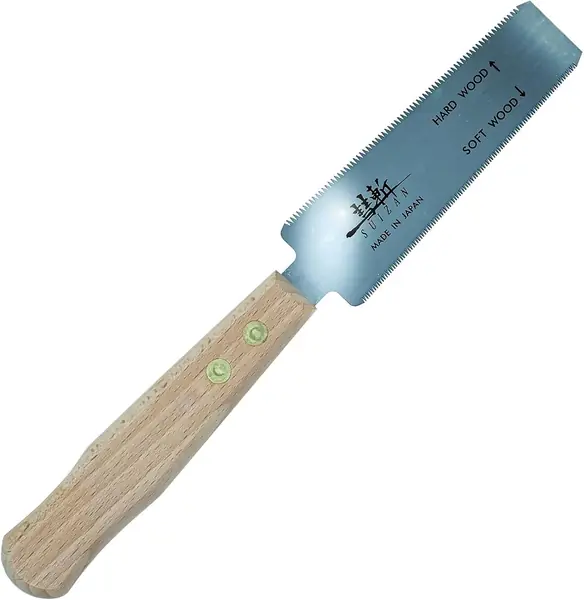
SUIZAN SFL-001 Japanese flush cut pull saw with brown beech handle and thin steel blade

Flush dowel trimming

Shop Score 96/100
Blade Length
5 in (120 mm)
Teeth
17 TPI hardwood / 25 TPI softwood
Blade Thickness
0.012 in (0.3 mm)
Blade Mount
Fixed, non-replaceable
View on Amazon

The 0.012-inch blade is why this saw is our top pick. With no set on the teeth, the blade can sit flat against the surface while the teeth cut only the protruding dowel, so you are not fighting a kerf that wants to ride up and scratch the surrounding wood. We used it on a batch of glue plugs and found the cut needed only a light sanding. At 1.76 ounces, it is easy to control with one hand in a tight corner.

Two edges give you a practical range: 17 TPI for hardwood and 25 TPI for softwood. We preferred the finer edge on pine plugs because it left fewer fibers standing, while the coarser side moved faster on oak dowels. The beech handle is slim and comfortable, and this Japanese pull saw tracks straight on the pull stroke. The 5-inch blade is short enough for small work but long enough for most plug and peg trimming.

Where it stops is heavy work. This is a finish saw, not a demolition tool; we kept it for plugs, pegs, and small tenons and reached for a bigger saw when the cut got thick. For the trimming jobs this article is about, that focus is exactly what makes it useful.

Worth Noting

  • Blade is fixed and cannot be replaced
Our Verdict

We recommend the SUIZAN as the default flush cut saw: its no-set 0.012-inch blade trims dowels and plugs cleanly, and the low weight makes tight work easy.

Check Latest Price
2.

Gyokucho Razorsaw 125 mm Flush Cut Saw Best for Fine Work

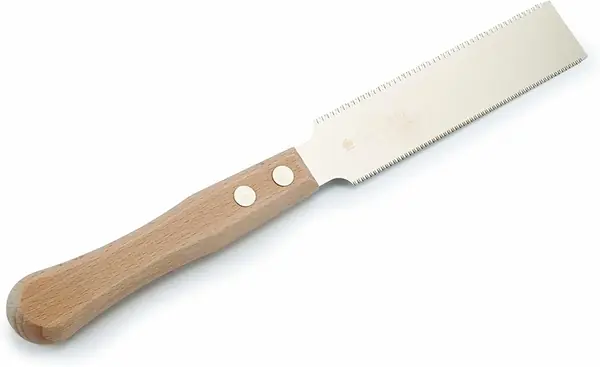
Gyokucho Razorsaw 125 mm flush cut saw with beech handle and double-edge blade

Fine furniture work

Shop Score 95/100
Teeth
32 TPI hardwood / 21 TPI softwood
Handle
Beechwood, riveted
Weight
1.92 oz
Blade Size
5 x 1-1/4 in
View on Amazon

The 32/21 TPI tooth count is the first thing we noticed, and it is what makes this saw feel different. The 32 TPI edge is fine enough to leave a polished surface on a hardwood plug, while the 21 TPI side handles softer stock without clogging. The blade is thin and flexible, so it can sit close to the surface in tight work.

We reach for the Gyokucho when the plug will show. It leaves the finest surface of the saws here, and the pull stroke is smooth and controlled. The trade-off is that the ultra-thin blade rewards a light touch; forcing it or twisting it can kink the blade. Treat it as a precision tool and it will reward you.

The beech handle is comfortable and the saw is compact enough to keep in a drawer. The 5-inch blade is not the longest here, but the fine teeth make it feel more precise than its size suggests. At 1.92 ounces, it does not tire your hand during a run of small cuts. For furniture work and small repairs, the cut quality is worth the care. It is the one we pick when the surface matters more than speed.

Worth Noting

  • Blade is not replaceable
Our Verdict

We reach for the Gyokucho when the plug will show: its 32/21 TPI blade leaves the finest surface here, as long as you let the teeth do the work.

Check Latest Price
3.

Temple Tool Co. 6-Inch Flush Cut Saw Best 6-Inch Reach

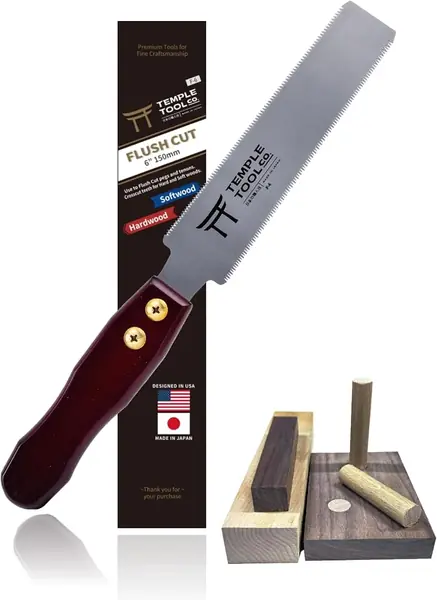
Temple Tool F-6 Japanese flush cut saw with beech handle brass fittings and case

Thicker tenon trimming

Shop Score 94/100
Blade Length
6 in
Handle
Beechwood with brass
Blade Replaceable
Yes, replacement blade sold separately
Includes
Case
View on Amazon

The six-inch blade and brass-and-beech handle make the Temple Tool feel like a step up from the plastic-handled saws in this group. The extra length reaches across a thicker tenon or a deep plug, and the handle is comfortable when you are making a long run of cuts. It weighs 3.17 ounces, so it is still light enough to control one-handed.

We like it for deeper trim work and for anyone who wants to keep a saw for years. The blade is replaceable, and the saw comes with a case, so it is easy to store and maintain. The cut is clean on both hard and soft wood, though you need to keep the blade flat and let the teeth do the work.

The trade-off is size. The longer blade is less nimble in a tight cabinet corner, and you may reach for a 5-inch saw when the cut is shallow. If you regularly trim thicker stock or want one saw to last, the extra reach and replaceable blade are worth it.

Worth Noting

  • Premium price for a simple hand saw
Our Verdict

We like the Temple Tool for deeper cuts and long-term value: the six-inch blade reaches farther, and a fresh blade is available when this one dulls.

Check Latest Price
4.

ZETSAW Life Saw S-145 Best Thin-Kerf

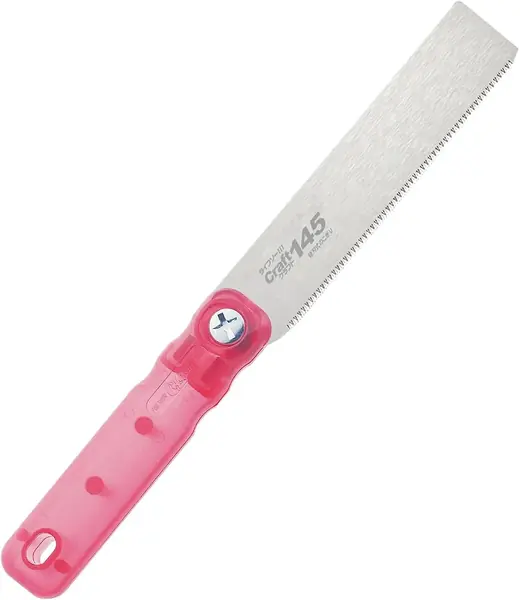
ZETSAW Life Saw S-145 flush cutting Japanese handsaw with pink handle and replacement blade

Visible joint trimming

Shop Score 93/100
Blade Length
150 mm
Blade Thickness
0.40 mm
Blade Replaceable
Yes
Kerf
0.40 mm
View on Amazon

At 0.40 mm, the Life Saw's kerf is the thinnest here, and the no-claw tooth line is designed to sit against the surface without scratching it. That combination makes it a natural for trimming a dowel in a visible joint: the blade removes very little material and leaves a narrow, clean line. We also like that the blade is threaded for replacement, so the saw is not disposable when the teeth dull.

The 150 mm blade is a little longer than the 5-inch saws, which helps on larger plugs but still feels compact. The saw tracks well if you keep a light pull and do not twist the blade. The included case is a nice touch for a tool that will live in a drawer or toolbox.

The blade is very flexible, which is what you want for flush work, but it can bend if you force a cut. We kept our strokes light and let the teeth clear the kerf. For clean work in a tight spot, that thin kerf is worth the care.

Worth Noting

  • Plastic handle feels less refined than wood
Our Verdict

We keep the ZETSAW in the toolbox for its 0.40 mm kerf and replaceable blade, a combination that makes clean flush cuts with little waste.

Check Latest Price
5.

Jorgensen 5-Inch Flush Cut Saw Best Budget Replaceable Blade

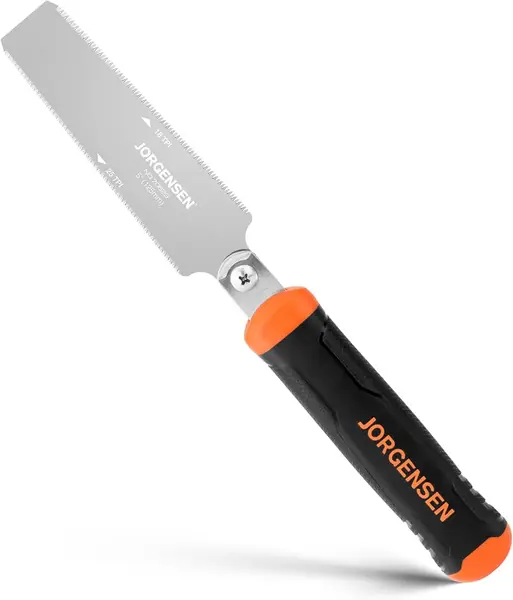
Jorgensen 70628A 5-inch flush cut saw with orange plastic handle and SK5 blade

Bench and shop

Shop Score 92/100
Blade Length
5 in
Teeth
18 TPI hardwood / 25 TPI softwood
Handle
Plastic
Blade Replaceable
Yes
View on Amazon

The replaceable SK5 blade is the practical reason to look at the Jorgensen. When the teeth dull, you loosen the handle and fit a new blade instead of retiring the whole saw. The plastic handle is not as warm in the hand as beech, but it is shaped well and keeps the saw light enough for quick trim work.

The two edges are 18 TPI for hardwood and 25 TPI for softwood, so you can match the tooth count to the plug. We found the finer edge useful on pine and the coarser side faster on oak. The blade cuts on the pull stroke, which helps it sit flat against the surface.

We recommend it as a budget shop saw for people who expect to replace blades and do not need the prettiest handle. It is not as refined as the SUIZAN or Gyokucho, but the replaceable blade and low price make it a sensible shop tool. For a bench saw that handles a mix of plugs and trim, that practicality is the point.

Worth Noting

  • Flexible blade can wander in thick cuts
Our Verdict

We recommend the Jorgensen to shoppers who want a replaceable blade and a low-cost saw for everyday shop trimming, provided they use a light touch.

Check Latest Price
6.

RUITOOL 6-Inch Ryoba Pull Saw Best for Rough Trim Work

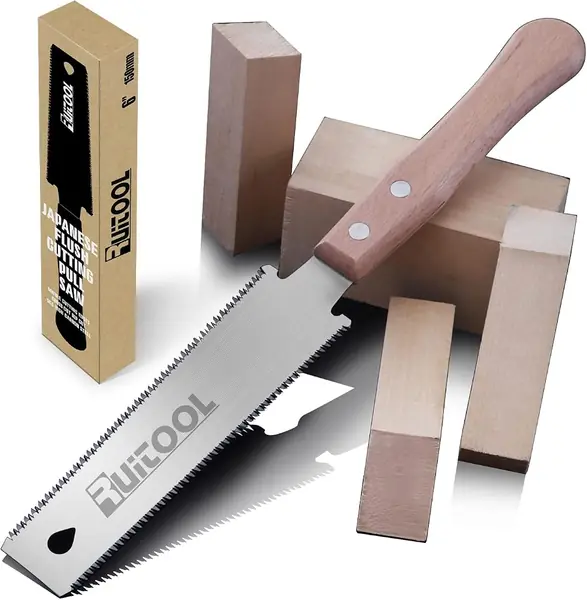
RUITOOL 6-inch Japanese Ryoba pull saw with beech handle and double-edge blade

Rough trim work

Shop Score 91/100
Blade Length
6 in
Teeth
17 TPI hardwood / 14 TPI softwood
Handle
Beechwood
Blade Thickness
0.67 mm
View on Amazon

This is a Ryoba at heart, not a dedicated no-set flush saw. The 17 TPI edge is the finer one, and the 14 TPI side is for faster cuts. The 6-inch blade gives you more reach than the compact 5-inch saws. For rough trim, cutting a plug down before sanding, or a toolbag saw that can also rip a small piece, that versatility is useful.

The 0.67 mm blade is thicker than the dedicated flush saws here, and the teeth have a more general-purpose profile. The beech handle is comfortable and the saw is light enough to carry, though at 3.88 ounces it is not as feathery as the smallest saws. The 6-inch length is handy for reaching across a joint.

We see it as a budget general-purpose pull saw that can handle flush cuts, not the one we choose for show-surface plugs. If you need one inexpensive saw for rough trim and occasional dowel work, it earns a place in the bag; if the plug will be visible, choose a dedicated flush saw.

Worth Noting

  • General-purpose teeth need more cleanup
Our Verdict

We see the RUITOOL as a budget general-purpose pull saw that can trim plugs, not the dedicated flush saw we choose for fine furniture work.

Check Latest Price
7.

Frocopo 6-Inch Pull Saw

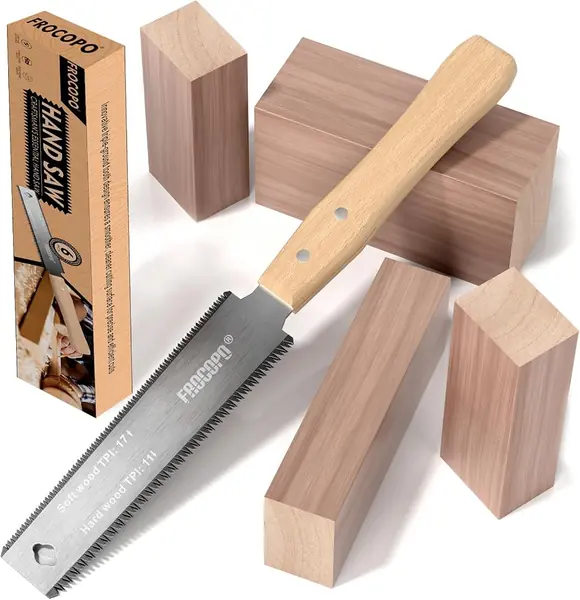
Frocopo FRHS6 6-inch pull saw with wood handle and double-edge steel blade

Toolbag backup

Shop Score 90/100
Blade Length
6 in
Teeth
11 TPI coarse / 17 TPI fine
Handle
Wood
Weight
2.82 oz
View on Amazon

At 2.82 ounces, the Frocopo adds almost no weight to a bag, and it is priced like a spare rather than a primary tool. The 6-inch blade has 11 TPI on one side and 17 TPI on the other, so it can handle quick cuts and finer trim. The wood handle is comfortable for a saw this small.

The 11 TPI side is coarse for flush work; we used the 17 TPI edge on plugs and still needed more sanding than with the dedicated saws. The blade is flexible and cuts on the pull stroke, which helps it sit flat. That is a lot of saw for the money, as long as you treat it as a light-duty tool.

We kept it in a toolbag for quick trim and garden chores. The saw is short enough to keep in a small bag, and the wood handle is more comfortable than the price suggests. For rough work, the low weight and low cost are genuinely useful.

This 6-inch pull saw earns its keep as an inexpensive spare for rough trim and bag carry rather than delicate plug work. If you want one saw for occasional dowel trimming and garden work, it is an easy purchase; if you want a furniture-grade flush cut, start with the SUIZAN.

Worth Noting

  • Riveted handle cannot be tightened if it loosens
Our Verdict

We treat the Frocopo as a light cheap backup for rough trim and toolbag duty, not the saw we trust for show-surface plugs.

Check Latest Price

How We Tested the Best Flush Cut Saws

We built the shortlist by reading listings for plate thickness, tooth count, edge configuration, handle material, and whether a replacement blade is sold separately, then filtered by price and availability down to 12 saws. Anything whose plate looked too thick to sit flush came off the list before testing started.

Four months of testing happened on a workbench and in a garage shop: trimming dowels and plugs flush on white oak shelving, cutting pine trim and maple wedges, and carrying a few saws back and forth in a toolbag. Every workpiece went into a vise with hands behind the tooth line, every cut went on the pull stroke, and eye protection went on whenever we trimmed anything at or near eye level.

For each saw we laid the plate flat on a scrap of pine, pulled, and checked the surrounding surface for scratches; counted teeth on both edges and noted which side we reached for on oak versus softwood; and cut the same joint with a 5-inch and a 6-inch blade to see what the extra reach cost in control. We watched whether the plate stayed straight and the handle stayed tight after steady use, weighed each saw for fatigue during long sessions, and set the price of a replacement blade against the price of the saw.

Sharpness showed up fast — a good one takes a plug down in three or four light pulls — but we kept cutting to see how long the edge lasted and whether the saw was still worth its price once a blade needed replacing.

How to Choose a Flush Cut Saw

Start With the Blade, Not the Handle

A flush cut saw earns its keep through the blade. You want a thin flexible plate with minimal or no set, so the teeth can cut the dowel while the flat side rides on the surrounding wood. If the teeth are set wide, the blade can scratch the surface or leave a visible kerf. The SUIZAN's 0.012-inch no-set blade is the clearest example of the idea; the ZETSAW's 0.40 mm kerf is the thinnest here.

Flexibility matters too. A blade that bends lets you keep the handle out of the way when you are working beside a cabinet or inside a joint. The trade-off is that a very thin blade can kink if you twist it, so light pull strokes are not just technique—they are how you keep the saw alive.

Match the Teeth to the Wood

Most flush cut saws here are double-edged, which gives you a fine side and a faster side. The SUIZAN uses 17 TPI for hardwood and 25 TPI for softwood; the Jorgensen is 18/25, and the Gyokucho goes up to 32 TPI for hardwoods. Higher tooth counts leave a smoother surface but cut more slowly. For plugs that will be sanded and finished, we favor the finer side. For construction-grade trim, the coarser side is fine.

Do not assume a double edge makes a saw a flush saw. A general-purpose Ryoba with coarse teeth can trim a dowel, but it may tear the fibers or leave more cleanup. Look for a saw that is sold for flush cutting and has a thin plate, not just two rows of teeth.

Pick a Length You Can Control

A 5-inch blade is the sweet spot for plugs, pegs, and small tenons. It is short enough to steer with one hand and light enough to keep close to the surface. The SUIZAN and Gyokucho are both 5-inch saws, and they feel more precise in a tight cabinet corner than the longer picks.

A 6-inch blade gives you more reach for thicker stock or a deep tenon, but it can feel less nimble in a shallow cut. The Temple Tool and RUITOOL are the 6-inch options here. If most of your work is small plugs, start with a 5-inch saw; if you regularly trim thicker material, the extra length is worth it.

Decide on a Replaceable Blade

A fixed blade keeps the saw light and simple, but the whole tool is done when the teeth dull. The SUIZAN and Gyokucho are fixed-blade saws. A replaceable blade costs more up front, but it extends the life of the handle and lets you keep a spare. The Temple Tool, ZETSAW, and Jorgensen all take a replacement blade.

If you cut plugs every week, replacement matters. If you reach for a flush saw a few times a year, a fixed blade is fine and often feels more precise. Check that replacement blades are actually available for the model you choose before you rely on that feature.

What Not to Buy for Finish Work

The trap is buying a general-purpose pull saw and expecting a furniture-grade flush cut. A coarse 11 TPI edge or a thick blade can cut the dowel, but it can also scratch the surface or leave a ragged plug. We keep those saws for rough trim and garden work. For a visible plug, choose a dedicated flush saw with a thin plate and fine teeth.

The same goes for a saw with a lot of set. If the teeth stand proud of the blade, the saw cannot sit flat. Test a new saw on a scrap dowel before you use it on a finished piece; one cut will tell you whether the blade marks the surface.

Frequently Asked Questions

Final Verdict

We start with the SUIZAN 5-Inch. Its no-set 0.012-inch blade and 17/25 TPI edges make clean work of dowels and plugs, and the light body is easy to control in tight spots. If you want the finest surface and do not mind a more fragile blade, the Gyokucho is the precision choice. For deeper cuts or a replaceable blade, the Temple Tool is the better long-term buy.