↑↓ navigate ↵ open Esc close All results →

Best Hand Saws of 2026

What separates a dependable hand saw from a frustrating one comes down to tooth pitch and plate geometry: a thin plate with a narrow kerf tracks a layout line cleanly, while mismatched teeth either tear dry lumber or bog down in green wood. Force a thin pull saw on the push stroke and the blade buckles; pick teeth too coarse for dry oak and the edge splinters.

Across eight months of cutting with 12 folding, Japanese pull, and flush-cut saws—pruning green maple limbs, sizing dry oak at the bench, and trimming dowel plugs flush—first impressions of handle ergonomics rarely predicted real performance. Tracking accuracy and clean chip clearance proved far more reliable once the kerf deepened.

Two practical details easy to overlook on a product page are blade replacement availability when teeth eventually dull and whether a folding pivot stays tight after a full season of work. From single-piece pull saws to locking folders, each model proved itself in actual timber rather than a studio photo.

Our Top Picks

The Best Hand Saws

1.

Bahco 396-LAP Laplander Folding Saw Best Overall
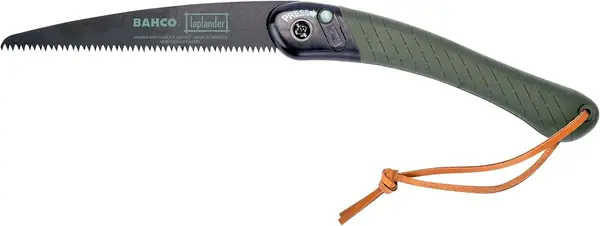
Bahco Laplander folding saw with green handle and 7-1/2-inch steel blade

Green wood cutting

Shop Score 99/100
Teeth
7 TPI XT toothing
Blade Length
7-1/2 inches
Weight
7.52 oz
Blade Material
Swedish steel
View on Amazon

Seven teeth per inch is a coarse, aggressive pitch, and it explains what the Laplander is for: green wood, sappy conifer, brush, and soft deadfall, all of which it clears without clogging. The 7-1/2-inch blade is short enough to work under a limb or inside a tangle without the tip catching on whatever is behind it.

We paid close attention to how it behaves in the hand, and the answer is that it barely asks anything of you. It weighs 7.52 ounces, the two-component handle stays grippy whether your hands are wet or gloved, and the XT teeth bite on both strokes, so an awkward reach never turns into a wrestling match.

The lock works in the open and closed positions, which sounds like a small thing until the saw is riding in a pack beside a rope and a shell jacket. A leather strap comes in the box, and it is the reason ours ends up on a belt rather than buried at the bottom of a bag.

Of everything here, this is the saw we hand to someone who wants one tool for outdoor wood: the balance of weight, pitch, and grip is right, and there is no learning curve to speak of. The habit worth forming is to fold it and check the lock before it goes back in the pack, because those teeth will find a strap otherwise.

Worth Noting

  • Coarse 7 TPI leaves a rough cut
Our Verdict

For green limbs, brush, and camp firewood, we take the Laplander first: the best-proven saw in this guide, light enough to carry all day, with coarse teeth that clear sappy wood fast.

Check Latest Price
2.

SUIZAN Ryoba Double Edge Pull Saw 7-Inch Best for Joinery

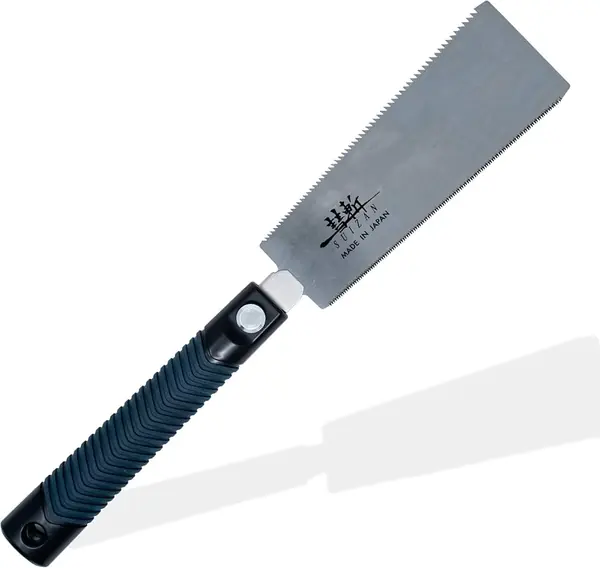
SUIZAN ryoba pull saw with black handle and thin double-edge steel blade

Joinery and trim cuts

Shop Score 98/100
Teeth
7-11 TPI rip / 19 TPI crosscut
Blade Length
7.09 in (180 mm)
Weight
6 oz
Blade Thickness
0.02 in (0.5 mm)
View on Amazon

One edge rips, the other crosscuts. The 180 mm SUIZAN carries 7-11 TPI teeth on one side for cutting along the grain and 19 TPI crosscut teeth on the other, so a single tool covers the two cuts a small shop makes most. Flip the blade over and you have changed operations.

The plate is the reason it works: 0.02 in (0.5 mm) thick and leaving roughly a 0.03 in (0.8 mm) kerf, so the saw starts on a pencil line with almost no walk and removes little enough that the piece you are fitting stays where you marked it. Cut on the pull and the plate stays straight in the kerf; a push saw this thin would buckle.

We're pleasantly surprised by how much bench work one saw covers: trimming a rail, cutting a small tenon, parting off a dowel. The handle screw comes off by hand, so a dull blade is a swap rather than a retirement, and the same saw is sold in 8- and 9.5-inch lengths when you need more blade in the cut.

Worth Noting

  • Thin plate can kink under force
Our Verdict

Our pick for joinery and trim: two tooth pitches on one blade, a thin plate that starts accurately on a marked line, and a blade we can change by hand.

Check Latest Price
3.

Silky PocketBoy Folding Saw 170mm Best Compact Folding Saw

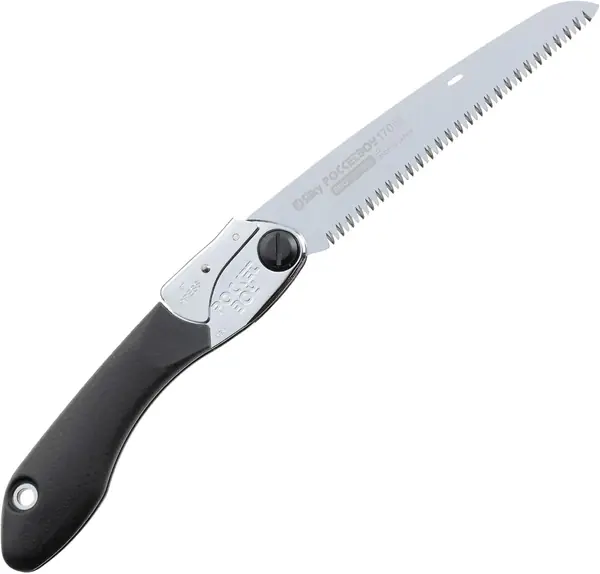
Silky PocketBoy folding saw with rubber handle and clear belt-clip carrying case

Pruning and backpacking

Shop Score 97/100
Teeth
Medium, 8.5 TPI
Blade Length
6.75 in (170 mm)
Blade
Hard chrome plated, impulse-hardened
Cut Capacity
3.4 inches
View on Amazon

The clear plastic case with its flip lock and belt clip is the reason this saw goes everywhere with us: it rides on a hip, and the teeth are covered when you set it down on a bench or a tailgate.

The tool inside earns that carrying. Its 6.75-inch blade is hard chrome plated, taper ground, and cut with impulse-hardened, non-set teeth, and Silky rates it to cut 3.4 inches, so a branch that looks too big for a pocket saw goes through in a handful of strokes. Two open locking positions let you set the blade inline for reach or angled for flush work.

It is one of the pricier folding saws here, and the cut is smooth enough that you stop noticing it, which is the whole argument for paying up. Factory replacement blades mean the handle outlives the teeth. There is no closed-position lock; the case covers that gap, and it is one more reason the saw lives on a belt rather than loose in a pack.

Worth Noting

  • Most expensive folding saw in the lineup
  • No built-in lock holds the blade closed
Our Verdict

We think the PocketBoy justifies its premium: a pocket-size saw with the capacity and finish of something much larger, plus a case that keeps it on your belt.

Check Latest Price
4.

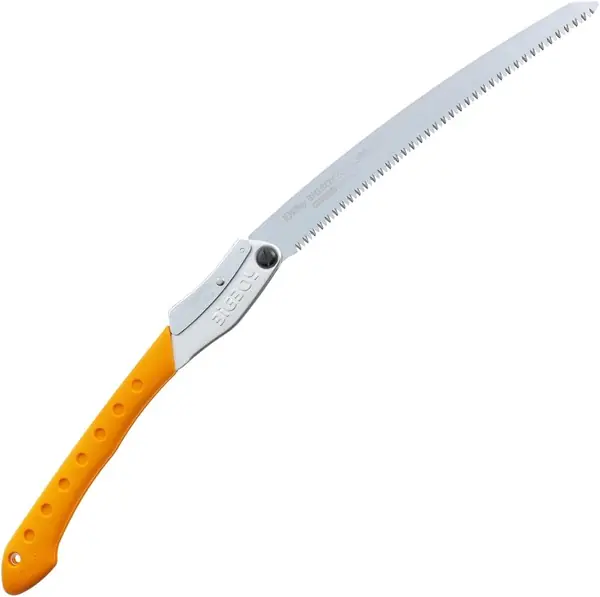
Silky BIGBOY 2000 Folding Saw 360mm Best for Thick Limbs

Silky BIGBOY folding saw with yellow two-handed handle and long chrome blade

Logs and limbs

Shop Score 96/100
Teeth
Extra large, 78 teeth
Blade Length
14.2 in (360 mm)
Blade Thickness
1.8 mm
Folded Length
15.94 in (405 mm)
View on Amazon

Folded, it runs nearly 16 inches long, which is a serious thing to commit to a day pack and more than most people will want to carry. What the length buys is a 14.2-inch blade with extra-large teeth and the reach to take a limb in one pass instead of working at it from three angles.

The blade is 1.8 mm SK4 carbon steel, hard chrome plated and taper ground, with non-set teeth that slice a narrow kerf rather than scraping one open. It locks in two positions, inline for reach or angled for flush cutting, and the double-fist rubber handle is shaped for two hands, which tells you what this saw expects of the work.

Long strokes are what it wants. With this much blade in the wood, the teeth clear chips fast and the saw keeps its rhythm instead of stalling, and the weight forward of the handle does the pushing for you once you are through the bark.

We are sold on it for logs and trail clearing, where reach matters more than packability; it is the closest thing here to carrying a bow saw. The part we watch is the joint, because a folder this long puts real leverage on its lock and that is where a hard-used saw shows its age first.

Worth Noting

  • Premium price for a folding saw
Our Verdict

We reach for the BIGBOY when the wood is bigger than the saw: 14.2 inches of blade, a two-handed grip, and the most aggressive cut of any folder here.

Check Latest Price
5.

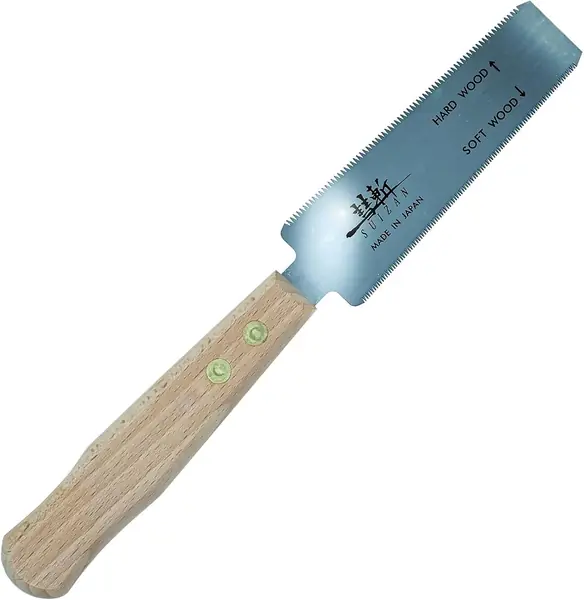
SUIZAN Flush Cut Saw 5-Inch Best Flush-Cut Saw

SUIZAN flush-cut pull saw with brown wooden handle and thin double-edge blade

Flush trimming plugs

Shop Score 95/100
Teeth
17 TPI hardwood / 25 TPI softwood
Blade Length
4.72 in (120 mm)
Weight
1.76 oz
Blade Thickness
0.012 in (0.3 mm)
View on Amazon

Trimming a dowel plug, a spline, or a tenon end flush with a face is the job, and this saw is shaped entirely around it. The teeth have no set at all, running straight out of the plate, so the blade lies flat against the workpiece and cuts only what stands proud of it.

What we loved most is how little marking it leaves behind. One edge carries 17 TPI teeth for hardwood, the other 25 TPI for softwood, both ground on a 0.012 in (0.3 mm) plate that starts a cut with a couple of light pulls. At 1.76 ounces it barely registers in the hand, and the compact beech handle keeps your strokes short and controlled.

Because it cuts on the pull, the blade stays flat against the surface while you draw it toward you; pushing is what buckles a plate this thin, and a buckled plate is what leaves a scar beside the plug. For anything wider than a plug the 5-inch blade runs out of stroke, and the same saw is sold in 6- and 7-inch lengths.

Worth Noting

  • Fixed blade cannot be replaced
Our Verdict

Nothing here trims a plug, dowel, or spline as cleanly: we keep this pull saw for any cut that has to end flush without marking the wood around it.

Check Latest Price
6.

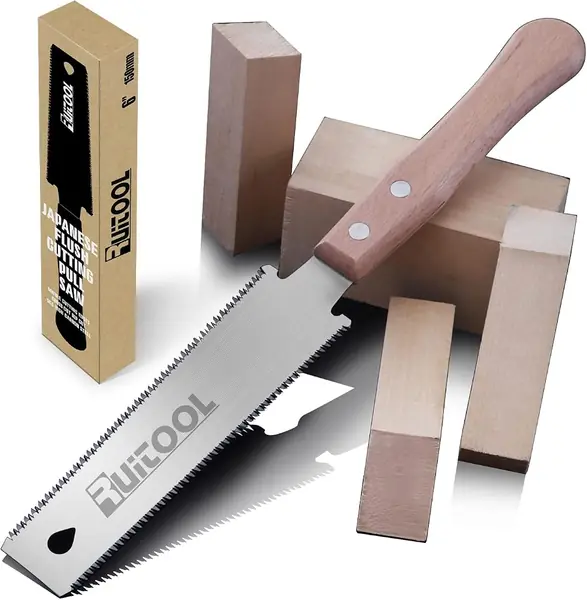
RUITOOL Japanese Hand Saw 6-Inch Best Budget Pull Saw

RUITOOL Japanese pull saw with beech handle and slim double-edge SK5 blade

First pull saw

Shop Score 94/100
Teeth
17 TPI / 14 TPI double edge
Blade Length
6 inches
Weight
3.88 oz
Blade Thickness
0.67 mm
View on Amazon

Cheapest of the pull saws here, and that is exactly its job: this is the saw we hand someone who has never cut on the pull stroke and wants to find out whether the style suits them. Nothing about it is precious, so you saw with it instead of saving it for good work.

Two edges, 17 TPI for hardwood on one side and 14 TPI for softwood on the other, ground on a 0.67 mm SK5 plate with three-sided hardened teeth. The beech handle is comfortable in a normal grip and the whole thing weighs 3.88 ounces, which makes it the saw that lives in a toolbox drawer or a glove box without being noticed.

The blade is six inches, and that is the honest limit. It is a trim saw: dowels, small stock, PVC, and pruning are all fine, while breaking down a sheet of plywood is not. Within that range it tracks a line well and leaves a cut that needs very little sanding.

Worth Noting

  • No hang hole in the handle
Our Verdict

We hand this to anyone curious about pull sawing: the least expensive way into the style, and accurate enough that you keep using it.

Check Latest Price
7.

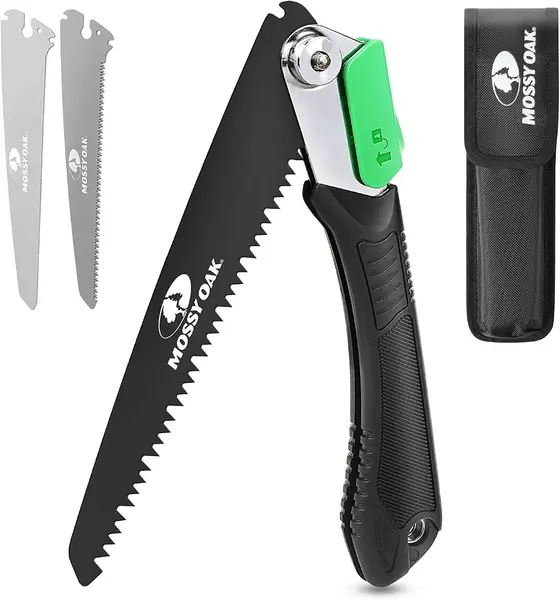
Mossy Oak 3-in-1 Folding Saw Best for Yard and Camp

Mossy Oak three-in-one folding saw with black and gray handle and nylon pouch

Yard and camp

Shop Score 93/100
Teeth
5 TPI pruning blade
Blade Length
7.5 inches
Weight
12.3 oz
Included
Three blades and nylon pouch
View on Amazon

Three blades in one handle sounds like a novelty until you are sawing something you would rather not spend a good blade on. The kit pairs a black-coated 5 TPI pruning blade rated for branches up to about 70 mm with two spares and a nylon pouch that holds the saw and the extra blades together.

Changing a blade is a knob you loosen and tighten by hand, and the lock is a green button you push to fold. Open, the saw runs 7.5 inches of blade in a rubber-coated handle that suits a gloved hand; closed, it drops into the pouch and out of the way.

We wondered whether the three-blade idea would feel like a compromise, and for pruning and camp wood it does not: a dulled blade is a swap rather than a dead tool, and the pouch keeps the spare where you can find it. One habit worth forming is checking which way the teeth point after a blade change, because the saw will happily cut on the wrong stroke and chew instead of slice.

Worth Noting

  • Lock and blade change need two hands
  • Feels light during heavy cutting
Our Verdict

Our budget pick for yard and camp wood: three interchangeable blades and a pouch, so a dull edge is a swap rather than a dead tool.

Check Latest Price
8.

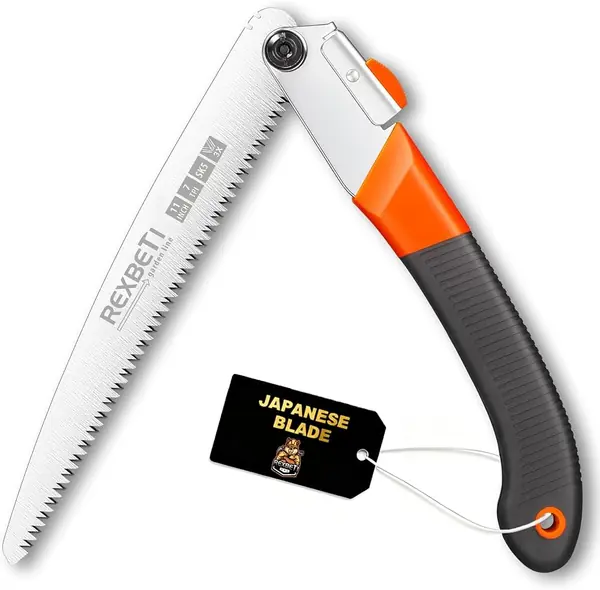
REXBETI 11-Inch Folding Saw

REXBETI folding pruning saw with orange and black rubber-coated handle

Reaching into brush

Shop Score 92/100
Teeth
7 TPI staggered
Blade Length
11 inches
Weight
14.9 oz
Blade Material
SK-5 steel
View on Amazon

Eleven inches of blade changes what a folding saw can do: more teeth in the wood on every stroke, and enough reach to take a branch out of a hedge or a downed top without stepping into it. Open, the saw runs 22 inches overall; closed, it fits behind a truck seat.

We rate the reach highly for trail work and fence lines, where a bow saw is too much to carry and a seven-inch folder is too little. SK-5 steel, 7 TPI staggered teeth, and a rubber-coated polymer handle that stays put in wet or cold weather add up to a saw that clears green wood without tiring your wrist out.

Against the Silky BIGBOY the trade is easy to see: you give up three inches of blade and a finer grind, and you pay a great deal less for a saw that lives in a truck box and cuts whatever needs clearing. With a bow saw in the garage and this one in the pack, we have not needed a third option for brush.

Worth Noting

  • Blade can travel past its open stop
  • Long thin blade can buckle in thick cuts
Our Verdict

We keep the REXBETI for reach on a budget: 11 inches of blade that gets into brush and through green limbs without a bow saw.

Check Latest Price

How We Tested the Best Hand Saws

We started by gathering every hand saw shoppers actually buy — folding camp saws, Japanese pull saws, flush-cut trim saws — and sorting them by tooth pitch, cut type, blade length, and whether a replacement blade existed. From that pool we bought 12 and put them to work for eight months.

Testing happened where saws get used, not on a bench with a stopwatch. We took them into a backyard to drop green limbs, into a shop to crosscut and rip dry oak and pine and flush dowel plugs, and into a pack for trail work. We counted strokes through the same wrist-thick limb, watched where wet sawdust started packing into the teeth, and checked each kerf against a penciled line to see whether the plate wandered. On the pull saws, testers kept hands behind the cut and out of the kerf line.

Durability got checked the slow way: we opened and closed each folding joint a few hundred times and loaded the locking positions mid-cut to see whether the blade shifted under pressure. We weighed every saw and measured folded length against a jacket pocket and a pack lid, then carried every folder locked shut. Grips were handled bare, then wet, then in work gloves.

Where a blade could be replaced, we swapped one and timed it; on double-edge blades we made both rip and crosscuts and compared the finish. Sharpness was judged by whether the saw still pulled itself into the wood without pressure. Value came down to whether the edge outlasted what we paid.

How to Choose a Hand Saw

Match the Teeth to the Wood

Tooth pitch decides what a saw is good at, and it is the first thing we check. A coarse 5 to 7 TPI blade, like the one on the Laplander, clears green wood, sappy conifer, and soft deadfall without loading up, but it leaves a torn edge on dry lumber. A 14 to 25 TPI blade cuts dry hardwood slowly and cleanly, and it is the pitch for trim, dowels, and joinery.

The mistake we see most is buying one saw for both jobs. A pruning saw's coarse teeth chatter and tear their way through kiln-dried oak, and a fine-toothed bench saw clogs solid within a few strokes of green pine. Decide which of those two describes most of your cutting, then buy for it.

Pull Stroke or Push Stroke

Japanese saws cut on the pull, and that changes what the blade can be. Because the plate is in tension while it works, it can be thin, from 0.012 to 0.02 inches on the saws here, which gives you a narrow kerf, an easy start on a pencil line, and less force from your shoulder. A western push saw needs a stiffer plate to stay straight under compression.

The trap is that a thin pull blade punishes forcing. Long, light strokes let the teeth work; leaning on the handle is how plates kink and teeth chip. If you have only used push saws, plan on a few practice cuts before you trust yourself on a visible joint.

Blade Length, Reach, and Folded Size

Longer blades put more teeth in the wood on each stroke and reach further into a tangle. An 11- or 14-inch folder handles logs and brush that a 6-inch saw has to work around from two sides, but it costs weight and pack space, and it is a different tool to swing in a tight spot.

Measure the folded length rather than the blade. The BIGBOY's 360 mm blade folds to nearly 16 inches, which is a real commitment in a day pack, while the 7-1/2-inch Laplander disappears into a side pocket. For a saw that rides in a bag, folded length and weight decide whether it comes along at all.

The Lock and the Folding Joint

Folding saws fail at the joint more often than at the teeth, so check the lock before anything else. You want a blade that sits solidly with no wobble when you load it, a closed position that keeps the teeth out of your pack straps, and, on larger saws, a second open position that lets you cut flush against a surface.

Put the saw in your hand and open it a few times before you commit. A lock that needs two hands or a stiff button is the kind of thing that stops you carrying the saw, and a joint that flexes under a hard stroke tells you more about long-term life than any specification.

Frequently Asked Questions

Final Verdict

For the work most people actually do, including pruning, camp wood, storm cleanup, and the occasional rough cut, the Bahco Laplander is the one we take: weight, grip, and a coarse tooth pitch add up to a saw that goes where the work is instead of staying in the garage.

Bench work points elsewhere. The SUIZAN ryoba covers joinery and trim with two tooth pitches and a thin plate, and the Silky PocketBoy is the choice when a saw has to live in a pocket and still cut like something larger. Buy for the cuts you make most, then add the specialist later.