↑↓ navigate ↵ open Esc close All results →

Best Electric Hand Planers of 2026

A door that shuts cleanly in January and binds against the jamb in July calls for removing thin, even shavings along the edge—control neither a circular saw nor an aggressive belt sander provides. An electric hand planer shaves a swollen stile down pass by pass until the reveal sits even again.

Cutting width rarely narrows this class, since nearly all models measure 3-1/4 inches; eight months of running 11 units on sticking doors, overhead trim, framing, and grimy reclaimed lumber put the focus elsewhere. Repeatable depth-knob detents, manageable weight at shoulder height, and effective chip ejection divided the field alongside the familiar choice between corded bench power and cordless freedom around sawhorses.

Our Top Picks

The Best Electric Hand Planers

1.

Makita KP0800K Planer Best Overall
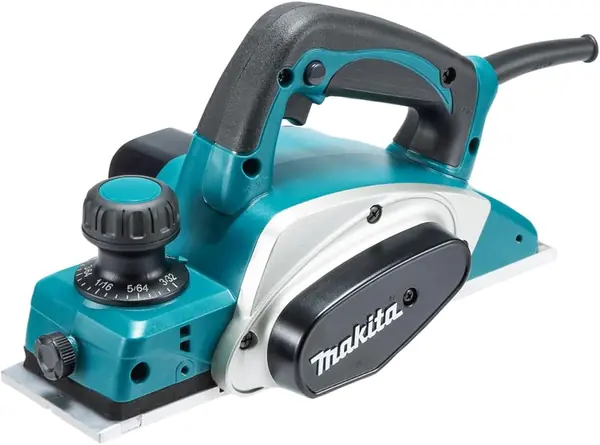
Makita KP0800K blue corded planer with tool case and guide rule

Doors and framing

Shop Score 95/100
Maximum Cut Depth
3/32 in
Weight
10.1 lb
Amperage
6.5 A
Planing Width
3-1/4 in
View on Amazon

A door that drags on a new rug is the job that sold us on a corded planer, and the KP0800K is the one we reach for first. Its 6.5-amp motor turns a two-blade cutterhead at 17,000 rpm, and the 3-1/4-inch width covers a door edge or a joist face in one pass. The 3/32-inch maximum cut is deep enough to true up a crowned joist without turning the job into an afternoon of shallow passes.

We recommend it as the default for anyone who wants one planer for door fitting, deck framing, and general lumber cleanup. The spring-loaded stand lifts the base when you set the tool down, so the blades stay off the bench, and the included case keeps the blade gauge, guide rule, and wrench together. The depth knob is easy to read, and the two-blade cutterhead leaves a clean finish when you take a light final pass.

At 10.1 pounds, the KP0800K is heavier than the lighter cordless models here, and you feel that on overhead work. The weight is also what keeps a full-width pass steady, so we accept it for the door and joist work this planer is built for. If you mostly trim doors on a ladder, a lighter cordless pick makes more sense; for a corded tool that stays planted, this is the one.

Worth Noting

  • No dust bag included
Our Verdict

The KP0800K is our default corded planer for door fitting and framing: 6.5 amps, a 3/32-inch cut, and a case that keeps the setup together.

Check Latest Price
2.

DEWALT 20V MAX DCP580B Planer Best Cordless for DEWALT Battery Owners

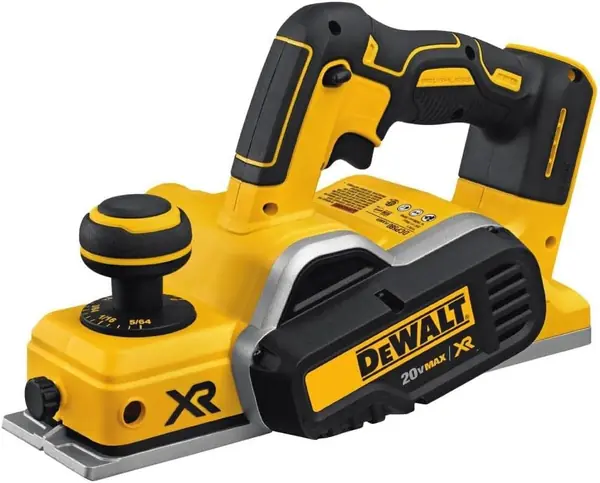
DEWALT 20V MAX brushless cordless planer in black and yellow

DEWALT battery owners

Shop Score 94/100
Maximum Cut Depth
5/64 in (2 mm)
Weight
7.4 lb
Battery Platform
20V MAX
Cuts Per Minute
30,000
View on Amazon

We recommend the DCP580B if you already own DEWALT 20V MAX batteries and want to leave the extension cord behind. The brushless motor drives 30,000 cuts per minute, and the 3-1/4-inch cutterhead takes a 2 mm pass, enough for sticking doors and trimming joists. It is a tool that makes the most sense when the batteries are already on your shelf.

The depth knob is calibrated to 1/256 inch, which is finer than most of the other planers here. We needed a few test passes to trust the scale, but once set it held a light cut on door edges. The front and rear aluminum shoes are machined to stay parallel, and at 7.4 pounds the tool feels balanced in one hand without being toy-light.

For a trim carpenter moving between rooms, the cordless reach is easy to accept. For a shop that runs a planer for long stretches, the corded Makita is the more sensible default.

Worth Noting

  • Bare tool; battery and charger extra
  • Dust bag sold separately
Our Verdict

We keep the DCP580B for DEWALT 20V MAX owners: it turns existing packs into a brushless cordless planer with a 1/256-inch depth knob.

Check Latest Price
3.

Makita XPK01Z Cordless Planer Best Cordless for Finish Work

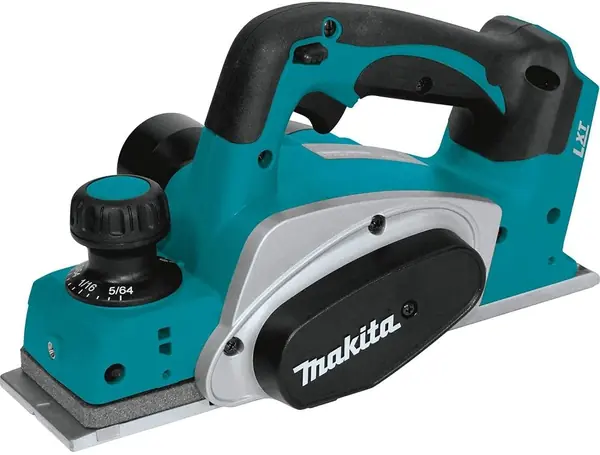
Makita XPK01Z green and black cordless planer with depth knob

Finish carpentry

Shop Score 93/100
Maximum Cut Depth
5/64 in
Weight
7.2 lb
Speed
14,000 rpm
Battery Platform
18V LXT
View on Amazon

The finish is the reason to notice the XPK01Z. Its two-blade cutterhead uses double-edge carbide blades, and at 14,000 rpm it leaves a smooth surface on door edges and trim without the tear-out we associate with a dull or misaligned cutter. The 3-1/4-inch width and 5/64-inch depth are sized for finish passes rather than heavy resurfacing.

Makita's 18V LXT body is 7.2 pounds, and the click depth knob has an easy-to-read scale from 0 to 5/64 inch. We like the cordless reach on a ladder and the aluminum base, which gives the tool a stable feel through a pass.

We recommend the XPK01Z for finish carpenters who are already on the LXT platform and want a planer that lives in the truck for door adjustments. It is not the stock remover in this group; the 5/64-inch cut is shallower than the WEN's 1/8 inch, so a badly crowned joist will take more passes. For clean, controllable trim work, that is a fair trade.

Worth Noting

  • Bare tool; battery sold separately
Our Verdict

Finish carpenters on Makita's 18V platform get smooth, controllable passes from the XPK01Z, and we like that it does it without a cord.

Check Latest Price
4.

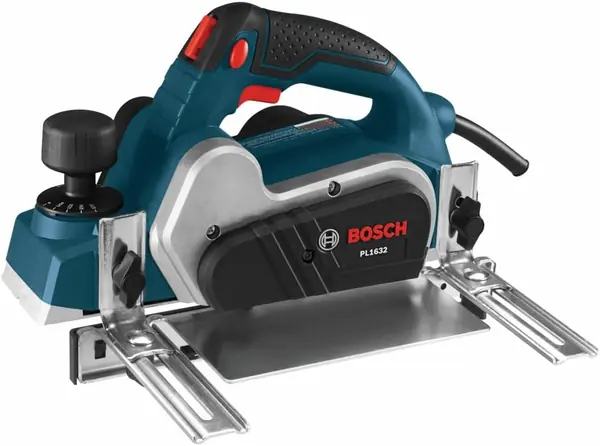
Bosch PL1632 Planer Best for Door Edges

Bosch PL1632 blue and black corded planer with guide fence

Door trimming

Shop Score 92/100
Maximum Cut Depth
1/16 in
Weight
6.3 lb
Speed
16,500 rpm
Amperage
6.5 A
View on Amazon

The dual-mount guide fence is what makes the PL1632 a door tool rather than a general-purpose stock remover. It mounts on either side, and the no-mar plastic overshoe lets the fence ride against a finished door face without leaving a mark. The 6.5-amp motor spins at 16,500 rpm, and the 3-1/4-inch cutterhead is paired with a spring-loaded stand that keeps the blade off the workbench.

We recommend it for trimming door edges and light fitting work, especially when you need a fence to keep the cut square. At 6.3 pounds it is light enough to control on a ladder, and the separate inch and metric depth scales are easy to read. The ratcheting knob gives repeatable stops, which matters when you are taking a door down a little at a time.

The PL1632 is a finish planer, and the light body makes it easy to move from one door to the next. We reach for it when the cut needs to be clean and square, not when we need to move a lot of stock in one pass.

Worth Noting

  • 1/16-inch maximum depth needs extra passes
Our Verdict

The PL1632 earns our nod for door edges and light trimming because its guide fence and no-mar shoe make clean passes easier.

Check Latest Price
5.

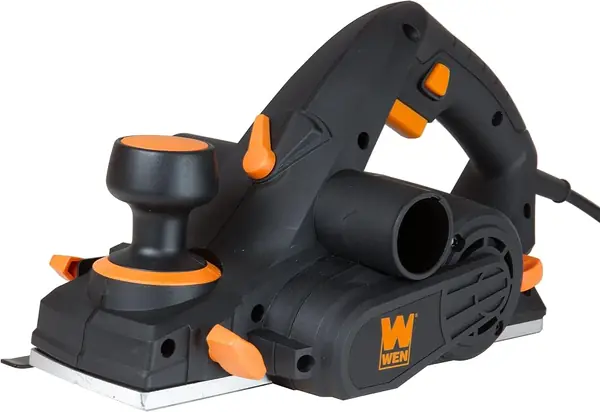
WEN 6530 Electric Hand Planer Best Budget Corded

WEN 6530 orange corded hand planer with dust bag and fence

Weekend repairs

Shop Score 91/100
Maximum Cut Depth
1/8 in
Weight
6.5 lb
Amperage
6 A
Cuts Per Minute
34,000
View on Amazon

The WEN 6530 is the least expensive way into a 3-1/4-inch electric hand planer, and it does not feel like a toy. The 6-amp motor delivers 34,000 cuts per minute, and the 1/8-inch maximum depth is the deepest single-pass cut in this group. For a homeowner facing a sticking door or a high joist, that is a lot of capability for the money.

The 16 positive stops adjust in 1/128-inch increments from zero to 1/8 inch, so you can sneak up on a fit instead of guessing. The 6.5-pound body is easy to carry around a deck, and the rabbeting guide adds a useful second job for edges. The base has a V-groove for chamfering, which is a nice detail at this price.

We used it on occasional door and deck work and came away thinking it is a good value. The body is easy to carry around a deck, and the 16 positive stops let us dial in a light pass without counting turns. For weekend repairs, the WEN earns its place.

We recommend the 6530 for budget-minded homeowners who want one planer for odd jobs and small deck repairs. The low price leaves room for a spare set of blades, which is the practical way to own a budget planer. It is the tool we keep for odd jobs around the house.

Worth Noting

  • Dust bag fills quickly
  • Blade and belt durability is a weak point
Our Verdict

Budget-minded homeowners should look at the WEN 6530 for occasional door and deck fixes; we do not treat it as a daily production planer.

Check Latest Price
6.

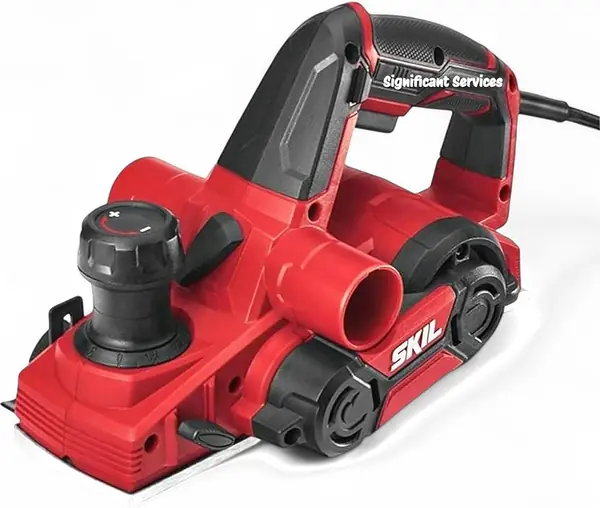
Skil PL2012-00 Planer Best Lightweight Corded

Skil PL2012-00 corded planer in black and red with dust bag

Overhead trimming

Shop Score 90/100
Maximum Cut Depth
5/64 in (2 mm)
Weight
6 lb
Speed
16,000 rpm
Amperage
6.5 A
View on Amazon

We recommend the Skil PL2012-00 for DIYers who want a light corded planer that is easy to control overhead. At 6 pounds it is one of the lightest corded models here, and the 6.5-amp motor turns a 3-1/4-inch cutterhead at 16,000 rpm. The 5/64-inch depth is a trim cut, not a resurfacing cut, which suits door edges and small adjustments.

The dual chip exhaust is the feature we appreciate most: you can point the shavings left or right, away from your face and the cut line. The kickstand keeps the blade off the workbench, and the lock-off switch is a sensible safety touch. The front depth knob is easy to reach and simple to set before a pass.

For occasional door fitting and deck repairs, the light weight and dual exhaust make it a pleasant tool to use. It will not match the Makita's finish on hard maple, but it costs far less.

Worth Noting

  • One-year warranty is short
  • Front depth knob can be bumped
Our Verdict

We suggest the Skil PL2012-00 for DIYers who want a light corded planer with dual chip exhaust and simple depth control.

Check Latest Price
7.

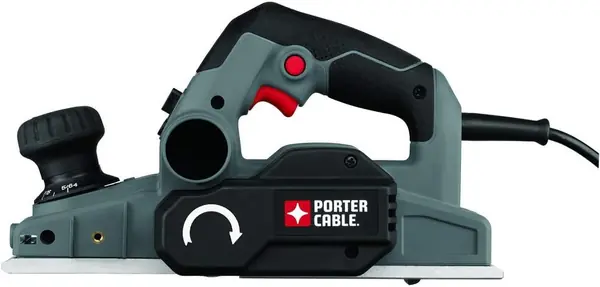
Porter-Cable PC60THP Planer Best for Small Shops

Porter-Cable PC60THP corded planer in black and red with dust bag

Small shops

Shop Score 89/100
Maximum Cut Depth
5/64 in
Speed
16,500 rpm
Amperage
6 A
Dust Port
Dual side
View on Amazon

The dust bag on the PC60THP can mount on either side of the tool, which sounds like a small thing until you are planing a door with the hose draped across the cut line. The 6-amp motor runs at 16,500 rpm, and the 5/64-inch depth is set by a 10-position overmolded knob. It is a simple, direct planer with no battery and no learning curve beyond the blade setting.

Three chamfering grooves in the base give it a second job on edge work, and the 11.5-inch cast-aluminum shoe adds stability through a pass. At 8.2 pounds it is not the lightest corded model here, but the weight sits low and the tool feels planted on a door edge. The 10 depth steps are easy to repeat and simple to set.

We like the PC60THP for a small shop that wants one corded planer for door fitting, chamfering, and light trim without paying pro-tool money. The reversible bag is the detail we keep coming back to, because it keeps the hose and shavings out of the way on either side of the work. It is a practical tool for the money.

Worth Noting

  • Ten depth steps limit fine adjustment
Our Verdict

Small shops get a reversible dust bag, chamfering grooves, and a stable cast-aluminum shoe from the PC60THP, which we like for trim work.

Check Latest Price
8.

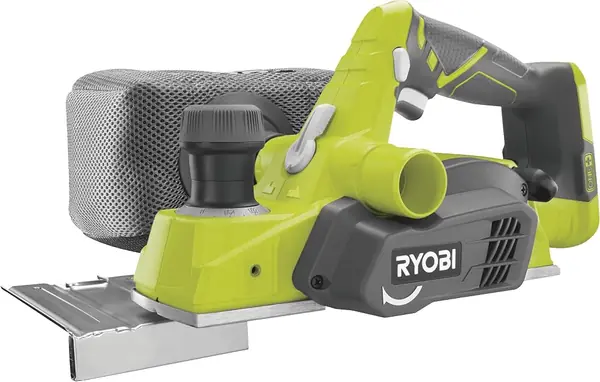
RYOBI P611 Cordless Planer Best for Quick Trim Jobs

RYOBI P611 green and black cordless planer with dust bag

Quick trim jobs

Shop Score 88/100
Maximum Cut Depth
0.06 in
Weight
5.6 lb
Speed
11,000 rpm
Battery Platform
18V
View on Amazon

The RYOBI P611 is the planer we grab when the job is a sticking door and the nearest outlet is down the hall. It runs on the 18V battery platform, weighs 5.6 pounds, and planes a 3-1/4-inch width at an 11,000-rpm cutter speed. The 0.06-inch depth is shallow, so it is a trim tool rather than a stock remover, but that is exactly what many door and trim jobs need.

The depth knob clicks through clear settings, and the body is light enough to use one-handed on a ladder. The guide and dust bag are included, which is more than some bare-tool cordless planers offer. We like the balance: the battery sits at the rear, so the nose stays easy to place on a door edge.

The 0.06-inch cut is shallow, so a crowned joist will take more passes; this is a trim planer, not a framing tool. For door edges and small adjustments, the light body and cordless reach are the right combination.

We recommend the P611 for RYOBI 18V owners who want a dedicated trim planer without adding another battery platform. It is the lightest full-width planer here, and that matters on a ladder. For quick trim jobs, it is the cordless planer we reach for.

Worth Noting

  • Bare tool; battery and charger extra
  • Battery life depends on the pack you use
Our Verdict

RYOBI 18V owners who need quick door and trim adjustments will find the P611 a light cordless option we recommend.

Check Latest Price

How We Tested Electric Hand Planers

We started by pulling every 3-1/4-inch corded and cordless hand planer we could find from brands we trust, then filtered by maximum cut depth, weight, dust port design, blade type, and whether the cordless models ran on a battery platform people already own. That left 11 units, which we ran for eight months in a working shop and on job sites. Safety gear went on before anything plugged in, and every blade change or chip clear happened with the tool unplugged or the battery pulled.

Most of the testing happened on doors and on a pile of reclaimed boards we sized for a shop bench. We trimmed sticking slabs in an old house, shaved edges to fit new hardware, and planed overhead framing from a ladder — which is where weight and balance separated the field, since we held each planer at shoulder height for a full ten minutes and noted which ones we wanted to put down. Depth adjustment got its own drill: set a cut, plane a scrap, dial back to zero, return to the same setting, and check whether the second pass matched the first.

Dust collection earned its own test: we planed a six-foot length of pine, weighed the chips that landed in the bag against the pile on the floor, and compared the stock bag with a shop vac on the port. We timed blade changes, judged finish on figured stock where tear-out shows, and tracked cordless runtime in linear feet per charge. We also counted what came in the box and read the warranty terms side by side, since a bare tool and a kit are two different purchases.

How to Choose an Electric Hand Planer

Corded Power or Cordless Reach

Corded planers hold speed through long runs and usually cost less per unit of power. A 6- to 7.5-amp model is the sweet spot for doors, joists, and reclaimed lumber. Cordless planers trade that endurance for freedom from a cord, which matters on a ladder or in a finished room. The catch is the battery platform: a bare tool is only a bargain if you already own the packs. We weigh the platform before the tool, because a cheap bare tool with no batteries is not cheap. For most buyers with a shop outlet, we start with corded.

Match Cut Width and Depth to the Work

Full-size electric hand planers are typically 3-1/4 inches wide, enough to cover a door edge or joist face in one pass. Depth per pass separates the trim tools from the stock removers: 1/16 inch is for door fitting and finish work, 5/64 to 3/32 inch is a good all-around range, and 1/8 inch removes material fast but can leave a rougher surface. The trap is chasing the deepest cut. A lighter pass with a sharp blade usually leaves a flatter surface and fewer tear-outs.

Weight, Balance, and Control

Light planers in the 6- to 7-pound range are easier to hold overhead and on a ladder; heavier models feel steadier on a bench but tire your arms. We pay attention to where the handle sits and whether the tool has a kickstand or spring-loaded stand, because setting a running planer down on its blade is how edges get nicked. If most of your work is door edges, prioritize light weight and a fence. For joists and slabs, a heavier tool with a broad shoe is easier to keep flat.

Depth Adjustment, Blades, and Dust

Repeatable depth adjustment matters more than a long spec list. Click stops or a calibrated knob let you sneak up on a fit; a loose scale makes every pass a guess. Two-blade cutterheads with double-edge carbide are common, and replaceable blades are worth checking before you buy. Dust bags catch some chips, but they fill fast; a side-swapping port or a vacuum adapter makes a real difference in a finished room. We treat the bag as a convenience, not a substitute for a shop vac.

Frequently Asked Questions

Final Verdict

We recommend the Makita KP0800K as the best electric hand planer for most buyers. Its 6.5-amp motor, 3/32-inch cut, and 3-1/4-inch width handle door fitting and joist work without the battery anxiety of a bare tool, and the included case keeps the blade-setting parts together.

If you already own DEWALT 20V MAX batteries and work mostly on doors, the DCP580B is the cordless alternative we choose; its 1/256-inch depth knob is finer, but you supply the battery and dust bag. For a tighter budget, the WEN 6530 gives you a deeper 1/8-inch cut for weekend repairs.