↑↓ navigate ↵ open Esc close All results →

Best Benchtop Jointers for Small Shops of 2026

A benchtop jointer is the machine you buy when the shop is a corner of a garage rather than a building out back, and the trade-off is honest: short tables give you less support under a long board than a floor model ever would. What you shouldn't trade away is flat. Truly flat tables and a fence that still holds square after a few months of use are what turn a bowed board into something you can edge-glue without fighting it.

We ran eight of these jointers for nine months, face-jointing and edge-jointing rough hardwood until the motors got hot, and checked table flatness with a straightedge instead of trusting the spec sheet. The cutterhead shapes the decision as much as the cutting width does: a spiral insert head leaves a glue-ready finish and lets you rotate a dull tip, while a straight-knife head costs less and asks for more fiddling. The four picks below are the ones that held their settings, cleared their chips, and stayed put under a long board.

Our Top Picks

The Best Benchtop Jointers for Small Shops

1.

WEN JT630H 6-Inch Benchtop Jointer Best Overall
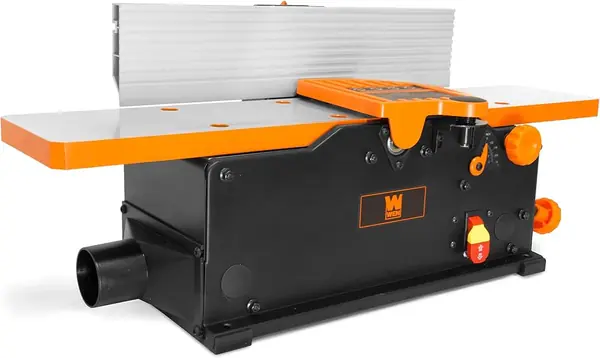
WEN JT630H 6-inch benchtop jointer with gray cast iron tables and spiral cutterhead

Small shops

Shop Score 91/100
Cutterhead
12-blade spiral, HSS
Cutting Width
6 inches
Table Size
30 x 6 inches
Depth Of Cut
0 to 1/8 inch
View on Amazon

Twelve staggered edges on a spiral cutterhead are why we put the WEN at the top of this list. Boards come off the outfeed needing a light sanding rather than a session with a belt sander, and the head leaves noticeably less tear-out on figured stock than the two-knife machines here. The cutterhead spins up to 12,000 rpm off a 10-amp motor, which is not the biggest number in this group, but head geometry does more for surface quality than raw speed does.

The rest of the machine is sized for a real bench. The table runs 30 by 6 inches, long enough to true the edge of a four-foot board if you shift your pressure to the outfeed side once the board is across it, and at 36.8 pounds one person can lift it into place and slide it back against the wall afterward. Depth of cut goes from zero to 1/8 inch per pass on an onboard scale; we set the first pass with calipers and trust the pointer after that.

The fence is the one part that fights back. A 19-3/4-by-4-1/4-inch fence that bevels to 45 degrees is generous for the money, but bringing it to 90 degrees takes a square and the right sequence of tightening, and clamp it down in the wrong order and it walks off square. Set it once, check it again after the first hour of cutting, and it holds. The 2-1/2-inch dust port takes a shop vac hose, and chips clear cleanly as long as the vac has a bag in it.

Worth Noting

  • Six-inch width will not take wide panels
Our Verdict

We recommend it without much hedging: the spiral head gives the cleanest finish here, the price is the lowest, and one person can move it.

Check Latest Price
2.

Wahuda 8-Inch Benchtop Jointer Best for Wide Boards

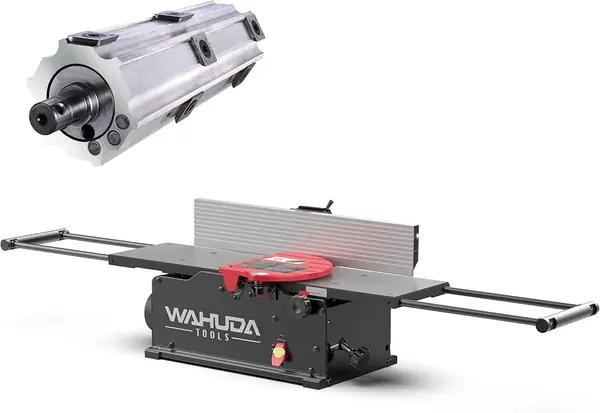
Wahuda 8-inch benchtop jointer with black cast iron tables and spiral carbide cutterhead

Wide stock

Shop Score 88/100
Cutterhead
Spiral, 4-sided carbide inserts
Weight
49.9 lb
Cutting Width
8 inches
Tables
Cast iron with pull-out extensions
View on Amazon

Eight inches of cutting width is the reason this machine exists, and it is the only jointer here that will face a board wide enough for a tabletop glue-up in a single pass. The cast iron tables carry pull-out extensions that give a long edge somewhere to ride, and the whole thing still measures 34 by 14 inches, so the extra width does not turn into a floor-standing footprint.

We rank it behind the WEN rather than ahead of it because that width arrives with a setup bill. Getting the two table halves coplanar can take a straightedge, a square, and shims under a corner, and the fence can need the same patience before it sits at 90 degrees. Do that work on day one and the machine rewards it: a 10-amp motor, four-sided carbide inserts that rotate to a fresh edge instead of being sharpened, and cuts on hard maple as clean as anything in this group.

Where it stops making sense is the small shop that never sees a board over six inches. The machine weighs 49.9 pounds, wants a solid stand rather than a shelf, and costs the most here by a wide margin, money better spent on lumber if the width goes unused. If your projects do run wide, nothing else on this page can do the job.

Worth Noting

  • No variable speed; motor is fixed at 12,000 RPM
Our Verdict

Buy this one when your boards run wider than six inches; the 8-inch capacity and carbide inserts are worth the premium, provided you will do the setup.

Check Latest Price
3.

Craftsman CMEW020 Benchtop Jointer Best Variable Speed

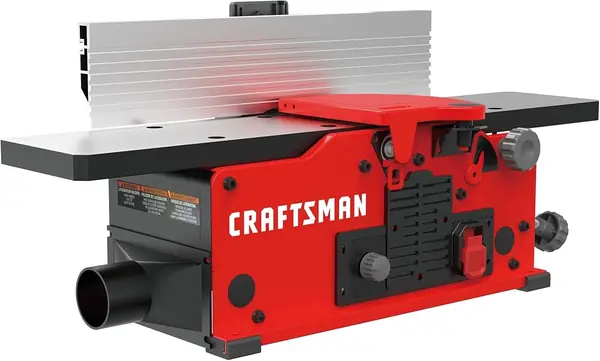
Craftsman CMEW020 red benchtop jointer with center-mounted fence and two-knife cutterhead

Hobbyists

Shop Score 87/100
Motor
10 amp
Cutterhead Speed
6,000 to 11,000 RPM
Fence
4-1/4-inch center mount
Cuts Per Minute
12,000 to 22,000
View on Amazon

A dial that moves the cutterhead between 6,000 and 11,000 rpm is what this Craftsman leads with, and the feature earns its place: dropping the speed changes how a two-knife head meets figured wood, and slowing down is how you keep tear-out off a piece of quartersawn oak. Cuts per minute run from 12,000 to 22,000, and the 10-amp motor takes hard stock without complaint.

Setup is the pleasant surprise. The machine goes together in well under an hour, and the jackscrew knife leveling makes a knife change an evening job rather than a lost weekend. The fence is the weak link, a 4-1/4-inch center-mounted unit that is fussy about reaching exactly 90 degrees, so bring an engineer's square and expect to spend a few minutes on it before the first board. The instructions are vague enough that a ten-minute video will teach you more.

Set against the WEN, this machine trades the spiral head for a little more money and hands back speed control, quick assembly, and a knife change you can manage yourself. That is a fair trade for a hobbyist jointing several species who wants to match the cutterhead to the wood rather than feed everything at one speed.

Worth Noting

  • Motor failures can take it out of service
Our Verdict

Our pick if you want to slow the cutterhead for figured wood: variable speed, fast assembly, and a fence that takes a few minutes to square.

Check Latest Price
4.

Porter-Cable PC160JT Benchtop Jointer

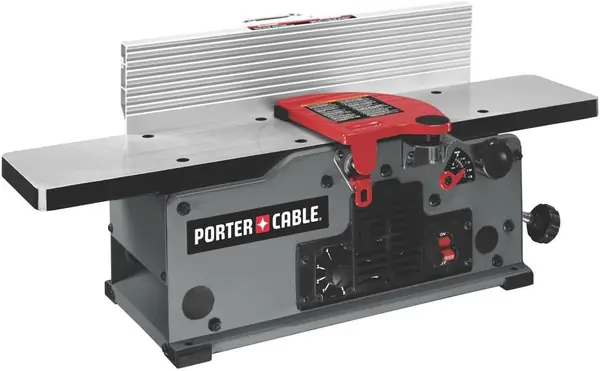
Porter-Cable PC160JT black benchtop jointer with two-knife cutterhead and cast iron base

Warranty coverage

Shop Score 86/100
Motor
10 amp
Weight
35 lb
Cutterhead Speed
6,000 to 11,000 RPM
Warranty
3-year limited
View on Amazon

Three years of limited warranty, plus a year of free service, is the longest coverage on this page, and it is what puts the Porter-Cable on it at all. A benchtop jointer lives in a garage, eats knots, and gets fed by someone still learning the machine, so backing counts for something with us. The jointer itself is the same variable-speed, two-knife layout as the Craftsman: 10 amps, 6,000 to 11,000 rpm, jackscrew knife leveling, and at 35 pounds the lightest of the four.

Alignment is where our confidence drops. The infeed and outfeed tables have to arrive flat and stay coplanar, and on this model they do not always, and a table that shifts out of parallel will taper every board that crosses it. You will chase that error with a square for an hour before you believe it. Check both tables with a straightedge on the day the machine arrives and shim before the first cut. The fence follows the same pattern: it adjusts, but it takes a while to trust.

The 32-inch overall length and the 120-volt, 10-amp motor are what you expect at this size, and the machine does the work once the tables are true. It sits in also-consider because the Craftsman delivers the same speed control with fewer alignment questions and the WEN beats both on finish for less money. Buy this one when the warranty is the thing that lets you sleep at night.

Worth Noting

  • Motor or switch failure can stop it cold
Our Verdict

The longest warranty here is the reason to consider it, though the alignment record keeps this variable-speed machine behind the Craftsman.

Check Latest Price

How We Tested Benchtop Jointers

We started with twenty-odd benchtop jointers, reading manuals before buying anything and comparing cutting width, head type, table material, motor rating, footprint, weight, and warranty. Models whose fence we couldn't reasonably square, or that gave chips nowhere to go, came off the list. Eight came home with us, all bought at retail.

Each arrived in a garage shop and on a basement bench, where we timed setup from box to first board and checked the tables with a machinist straightedge and feeler gauge, lengthwise, across, and corner to corner, before and after bolting the machine down. We set the fence with an engineer's square, jointed an edge, and held it back against the square to look for light. A month in, we rechecked the setting to see whether it had moved.

Then the stock: rough oak, maple, and walnut, plus figured maple for the machines with speed control. We measured depth of cut with calipers after each pass, stayed inside each machine's stated maximum, and noted where a slow feed left tearout. Boards went through on push blocks with hands clear, and we watched the spring-loaded guard drop back over the head between passes. We weighed each machine, had one person lift it onto the bench, and ran a long board to see whether the base walked or tipped.

Chips went into a shop vac on the port, and we noted how much stayed in the chute or landed on the bench. To judge motor and switch, we logged start-and-stop cycles and ran back-to-back passes on hard stock until the housing got warm. Both shops still have jointers set up, and we'll update if anything drifts out of square.

How to Choose a Benchtop Jointer

Width First, Then Bench Space

Six inches covers the faces and edges on most cabinet and furniture parts, and that is what three of the four machines here offer. Eight inches buys you a glued panel or a wide board flattened in one pass instead of two, which is the only reason to spend more, and the Wahuda is the one 8-inch machine we recommend. Then measure the wall: these machines run roughly 30 to 34 inches long, and you need room to stand behind the infeed and ahead of the outfeed for your longest board.

A benchtop jointer does not fold away between projects. Plan on a permanent spot on a sturdy bench or stand, because lifting 35 to 50 pounds into position every session is the fastest way to stop using the tool.

Spiral Inserts or Straight Knives

The cutterhead decides your finish and your maintenance. A spiral head carries a dozen or more small edges set at a shearing angle, which is why the WEN JT630H leaves fewer tear-out marks than the two-knife machines in this group. A two-knife head costs less and, with jackscrew leveling, is no longer miserable to set, but you are sharpening or replacing knives on a schedule. Indexable carbide inserts rotate to a fresh edge and get replaced in packs.

Flat Tables and a Fence That Squares

The two table halves have to be coplanar, with the outfeed level with the infeed, and the fence has to sit at 90 degrees to both. That is the whole job. A machine with a sagging table or a fence that drifts will cut a taper, and no amount of technique fixes it. Check yours with a straightedge and an engineer's square the day it arrives, and keep the box until you have.

Treat the depth-of-cut pointer as a rough guide as well. Set the first pass with calipers, note where the scale sits, and you have a reference you can trust afterward.

Power, Speed, and Depth of Cut

Every machine here runs a 10-amp motor on 120 volts, which is enough for hard maple as long as you take light passes. The maximum cut on the WEN machines is 1/8 inch, and a heavy pass in hard wood is how you get chatter and a burned edge rather than a faster job. Variable speed, on the Craftsman and the Porter-Cable, lets you slow the cutterhead for figured stock; it is useful rather than essential.

Cuts-per-minute figures sound impressive and tell you less than the shape of the head does. Ignore them when you are comparing finish quality.

Frequently Asked Questions

Final Verdict

Buy the WEN JT630H. It is the best combination here of finish quality, price, and a body you can carry to the bench alone, and the spiral cutterhead is the feature that keeps paying off long after you have forgotten what you spent.

Step up to the Wahuda 8-inch if your projects routinely start with stock wider than six inches, because nothing else in this group will flatten it in one pass.