↑↓ navigate ↵ open Esc close All results →

Best Epoxy Resin Mixers of 2026

Hand-stirring two-part epoxy feels simple until twenty minutes of mixing leaves your wrist sore, the surface speckled with air, and unblended resin clinging to the bottom corner of the cup. Mechanical mixers solve the fatigue, yet paddle geometry still has to match batch volume—a blade sized for a gallon bucket splashes and traps air inside a small mold cup.

Drill trigger control mattered more than exotic blade shapes when running 14 mixers for four months across silicone mold pours, quart batches, and full gallon mixes: a helix head at low rpm folds resin smoothly, whereas wide-open speed whips in bubbles you end up chasing with a heat gun. Covering multi-size drill attachments, disposable paddles for small cans, and a dedicated rechargeable mixer, the lineup breaks down by batch size and bubble control.

Our Top Picks

The Best Epoxy Resin Mixers

1.

Edward Tools Paint Mixer Drill Attachment Best Overall
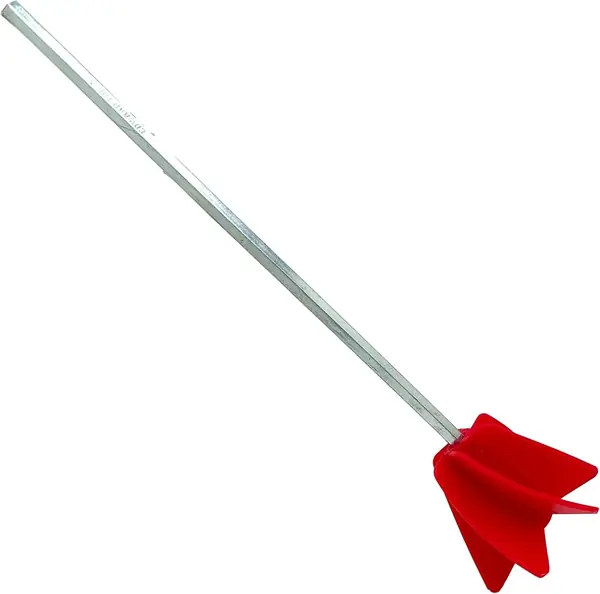
Edward Tools paint mixer drill attachment with an even-flow paddle head and metal shaft

General resin work

Shop Score 95/100
Drill Fit
3/8-inch and larger
Weight
3.2 oz
Warranty
Lifetime
Head Design
Even Flow paddle
View on Amazon

A screw-shaped helix is the paddle everyone pictures, and it is the wrong shape for resin. This one uses a flat even-flow head on a light shaft, and the difference shows the moment you pull the trigger: the resin circulates instead of climbing the walls of the cup. The whole mixer weighs 3.2 ounces and fits any 3/8-inch or larger drill, so the only thing you are buying is the part that touches the resin.

That is why this is the one we hand to most people. A drill you already own supplies the power, your trigger finger supplies the speed, and the slow, controllable stir a clear casting needs is right there under your index finger. The head is small enough for a quart cup and the shaft is long enough for a gallon can, which covers nearly everything a hobby pour asks for. Push it hard through something very thick and the plastic head is what gives, but Edward Tools backs this mixer for life, so the wear part is covered.

Cleanup is a wipe with denatured alcohol or acetone before the resin sets; leave it overnight and you will be picking cured plastic out from between the blades. If your batches run past a gallon, the Youtex pair further down has the shaft for it. Up to that point, this is the mixer we keep closest to the resin.

Worth Noting

  • Shaft is short for five-gallon buckets
Our Verdict

We point most people here: a light, calm paddle for the drill you already own, backed by a lifetime warranty that covers the part that wears.

Check Latest Price
2.

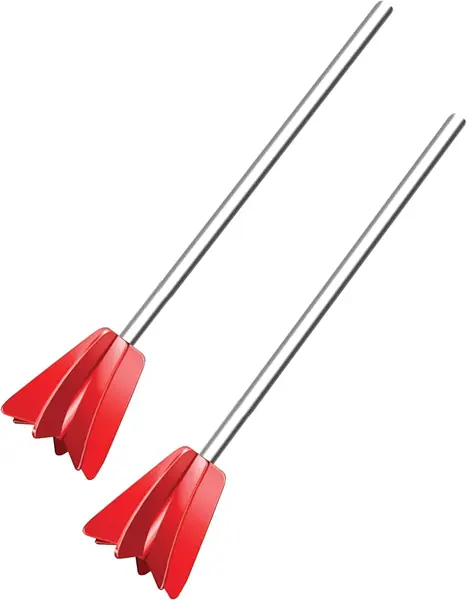
ALLWAY HMQ Helix Paint Mixer, 2-Pack Best for Small Batches

ALLWAY HMQ helix paint mixer two-pack with spiral mixing heads for quart containers

Small batches

Shop Score 94/100
Pack Count
2 mixers
Drill Fit
3/8-inch and larger
Shaft
1/4-inch hex
Container Size
1-quart and 1-cup
View on Amazon

Small pours are where this one earns its place. The head is a compact helix sized for a 1-quart can or a measuring cup, on a 1/4-inch hex shaft that fits any 3/8-inch drill or larger, and two of them come in the pack — which we like, because the paddle that has been in epoxy should not go back into the paint can. In a cup, that small head is genuinely easier to control than a full-size paddle that barely clears the rim.

The helix is an aggressive shape, and epoxy punishes aggression: spin it fast and you will pull air into a pour that was meant to be water clear. Feather the trigger, keep the head under the surface, and stop the drill before you lift it out. The polypropylene is the reward at cleanup time, since cured epoxy releases from the head in one piece, so a wipe now saves you picking at it later. If your work runs to gallons, this same mixer is sold with larger heads; the quart version here is the small-batch tool.

Worth Noting

  • Aggressive helix whips air into resin if spun fast
  • Small quart-sized head is undersized for gallon batches
Our Verdict

Buy the two-pack if your pours happen in measuring cups: this is the small head that fits inside them, with a spare kept for paint.

Check Latest Price
3.

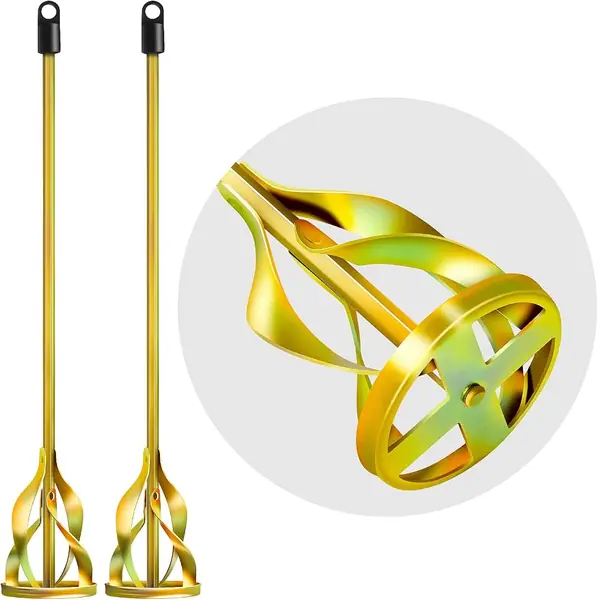
Youtex 4-Blade Paint Mixer, 2-Pack Best for Large Batches

Youtex four-blade paint mixer two-pack with zinc-plated shafts and 2.76-inch helix heads

Large batches

Shop Score 91/100
Pack Count
2 mixers
Head Diameter
2.76 inches
Overall Length
16.54 inches
Container Range
1 to 5 gallons
View on Amazon

Sixteen and a half inches of shaft is the number that matters here. Put that in a five-gallon pail and you are mixing standing up, with the drill well clear of the rim instead of hanging over it. The four-blade head measures 2.76 inches across, wide enough to move a whole batch rather than cut a stripe through the middle of one.

We picked these for the big jobs and the messy ones: tabletop pours, sealing a slab, anything with filler stirred in. The blades are zinc-plated steel, so they do not flex the way a plastic paddle does under load, and the two-pack means one can be soaking while the other works. This is also the pair we hand over when someone is mixing more than resin — the steel shrugs off thickened epoxy and filler-loaded mixes that chew up a plastic head.

A rinse in a bucket of clean water straight after the pour is the entire cleaning routine, and timing is everything; once the resin sets, the gaps between the blades are the hard part. The head is also simply too wide for a 4-ounce cup, so keep a small paddle around for touch-up pours.

Worth Noting

  • Dried resin is stubborn in the blade gaps
Our Verdict

For buckets rather than cups, we reach for this pair — 16 inches of steel that gets to the bottom without dunking your chuck.

Check Latest Price
4.

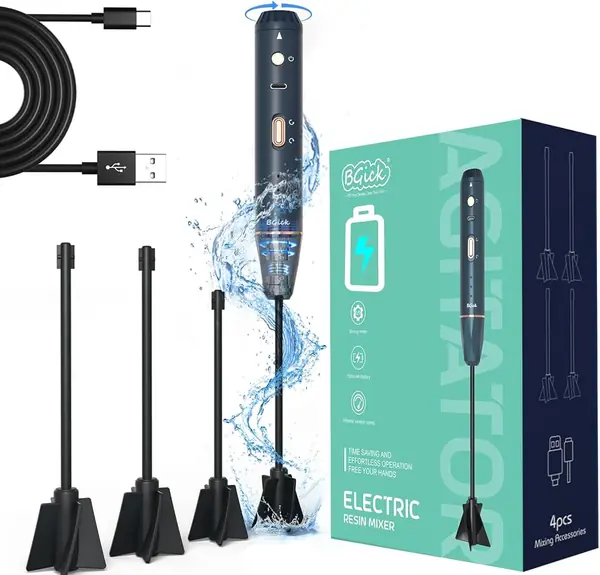
BGick Handheld Resin Mixer Best Without a Drill

BGick handheld rechargeable resin mixer in blue with four silicone mixing paddles

Drill-free mixing

Shop Score 88/100
Battery
1500 mAh rechargeable
Charging
USB-C
Speed Range
50 to 300 RPM
Included Paddles
Four, in two sizes
View on Amazon

Not everyone wants to hold a drill over a resin cup, and for small mold work neither do we. This handheld tops out at 300 RPM, charges over USB-C, and ships with four spiral silicone paddles in two sizes; you set it running and keep both hands free for the mold, which is the part we appreciated most during a run of small castings.

The speed ceiling is the whole argument for it. Resin does not want horsepower, it wants a slow, steady stir that will not fold air into the mix, and a machine that physically cannot spin fast keeps you honest. The 1500 mAh battery means no cord trailing across the bench either. Where it gives ground is thick material: 300 RPM is a slow way to move a heavy batch, so plan on working at it.

The silicone paddles are the easy part, releasing cured resin far more readily than a plastic head, and warm water finishes the job. What you are paying for is the motor, the battery, and freedom from a chuck — considerably more than any drill attachment here, and worth it if the drill is the thing that has been keeping you out of the resin.

Worth Noting

  • Slow going in thick casting resin
  • Pricier than any drill attachment here
Our Verdict

Our pick when there is no drill on the bench: a rechargeable mixer slow enough for clear casts, though it takes its time on thick resin.

Check Latest Price
5.

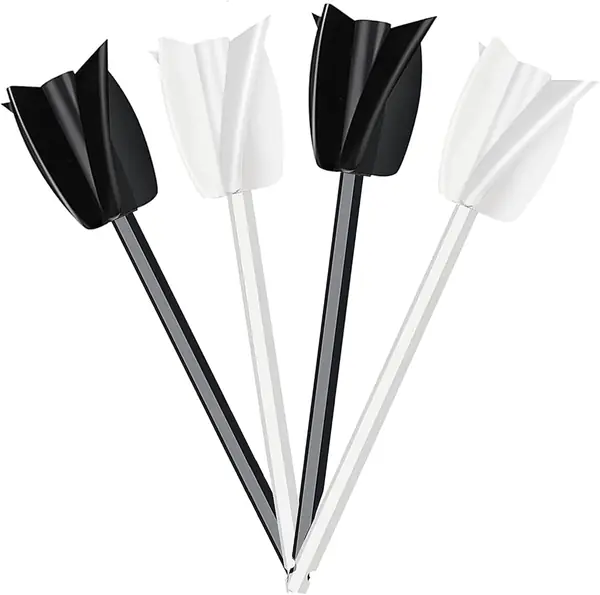
Riomh Resin Mixer Paddles, 4-Pack Best for Disposable Paddles

Riomh four-pack of black and white plastic spiral resin mixer paddles for drills

Disposable paddles

Shop Score 87/100
Pack Count
4 paddles
Material
Reinforced plastic
Blade Design
Spiral four-blade
Intended Containers
Small cans and plastic cups
View on Amazon

Four paddles in one pack changes how you use them. Instead of scrubbing one head between batches, you give each batch its own: one for resin, one for paint, one for the glaze you will never get fully clean anyway. The heads are a spiral four-blade design in reinforced plastic, and they chuck into a standard drill the way a bit does.

Size is the thing to get right before you order. The head measures just over an inch across and the shaft is short, which is exactly right for a mixing cup and wrong for a gallon can, where the head barely clears the material. Small pours, pigment tests, and little mold batches are this set's whole territory.

We treat these as consumables, and at this price that is a fair deal rather than a compromise: when one comes out of a batch looking grim, it goes in the bin and you reach for the next. That is a different job from the Edward Tools above, which is the paddle we keep and clean. Both belong on a resin shelf; they just answer different questions.

Worth Noting

  • Short plastic shafts flex in thick mixes
  • Solvents can melt the plastic heads
Our Verdict

We keep this four-pack around as resin consumables — small paddles for small pours, priced so you never have to scrub one.

Check Latest Price

How We Tested Epoxy Resin Mixers

We started with a couple dozen drill attachments, paddle sets, and standalone mixers, narrowing the field by chuck size, head diameter, shaft length, and what came in the box. Fourteen mixers made it into testing, and we used them for four months on small mold pours, quart batches, and full gallon mixes.

Every batch got nitrile gloves and eye protection, and we clamped or held the container each time — a spinning paddle will climb the side of a cup and tip it if you let it. We ran each drill at the lowest speed that still moved the resin, watching whether the head pulled material up from the bottom or just swirled the top, then poured thin castings and counted the bubbles that rose to the surface.

Head diameter and shaft length were checked against real containers: a couple of ounces in a plastic cup, a quart can, a five-gallon bucket. We noted whether the shaft reached the bottom without dunking the chuck, and whether the head bent, wobbled, or spun loose in thickened resin. On the drill-powered models we also paid attention to trigger feel, since most triggers jump from nothing to too fast in the first quarter inch of travel.

Cleanup went the way it does in a real shop: we let resin cure on each head, then tried to snap or peel it off, and on the reusable ones followed with a solvent wipe to see if the finish survived. The rechargeable mixer got run down through back-to-back batches to see how many pours a charge covered and whether its slowest setting was slow enough. We finished by counting usable pieces per pack and working out a cost per mixer.

How to Choose an Epoxy Resin Mixer

Drill Attachment or Standalone Mixer

A drill attachment — often sold as a paint mixer — is a shaft and a head; you supply the motor. It is the least expensive way in, it stores in a drawer, and your drill's variable trigger gives you the fine speed control resin wants. A rechargeable handheld gives you a fixed low range instead, the BGick runs 50 to 300 RPM, plus its own battery and no chuck to keep clean, for a good deal more money.

If there is a 3/8-inch drill in the shop, buy the attachment. If there is not, or if you mix at a kitchen table and would rather not keep a cordless drill in the house, the handheld is the one that actually gets used.

Speed Is What Decides Your Finish

Epoxy's enemy is air. A paddle turning fast folds air into the mix and those bubbles end up in the casting; a paddle turning slowly moves the resin without whipping it. That is why we care more about slow, controllable speed than about motor power. On a drill, that means feathering the trigger, which is your speed control, rather than leaning on the gear switch.

The trap is assuming more machine is better. A high-torque drill at half trigger will still sling resin up the sides of a cup, and once it is on the wall it is not going back in. Mix at the lowest speed that keeps the resin moving, and lift the head out while it is still turning so it drains back into the cup instead of onto the bench.

Match the Head and Shaft to Your Batch

Batch size sets the paddle. A head around an inch across suits mixing cups and small cans, while the 2.76-inch four-blade on the Youtex is built for gallon buckets and is far too wide for a 4-ounce pour. Shaft length matters just as much: 16.54 inches keeps a drill clear of a five-gallon pail, while a short paddle in a deep bucket puts the chuck down near the resin.

Before you order, run a tape measure down your deepest mixing container and compare it with the shaft length. If you work in cups most of the time and buckets occasionally, buy both — a two-pack of small heads costs less than one spoiled batch.

Cleaning, Materials, and Reuse

Resin is easy to remove until it gels and stubborn afterward, so cleanup happens while the pour is still wet: wipe the head with denatured alcohol or acetone, then wash it with warm water and soap. Polypropylene and silicone heads release cured resin in one piece, and steel is indifferent to solvents.

Plastic is the material that limits you. Acetone and lacquer thinner can attack a plastic paddle, and a thin plastic shaft flexes in thick resin. If you clean with solvent every time, buy steel; if you would rather throw a paddle away than scrub it, buy a cheap four-pack and treat them as consumables.

Frequently Asked Questions

Final Verdict

Our default is the Edward Tools attachment. With a drill you already own, it handles anything from a quart cup to a gallon can, wipes clean before the resin sets, and the lifetime warranty covers the head that wears out.

Go to the Youtex pair when your batches live in buckets, and to the BGick when there is no drill on the bench and you want a mixer that cannot spin fast enough to ruin a pour.