↑↓ navigate ↵ open Esc close All results →

Best Epoxy Wood Fillers of 2026

Press a screwdriver tip beside an old window frame and it sinks straight into soft fibers that tap back hollow. Epoxy wood filler binds that punky wood back together, curing hard enough to shape, sand, and paint over so the damaged section holds fasteners and weather again.

Across eight months of testing 11 epoxy wood fillers, format proved just as decisive as strength. A kneaded stick handles a quick gouge in a chair leg, a non-sag paste stays put on a vertical sill, and a moldable putty lets you rebuild a missing corner, while an accurate mix ratio keeps the batch from staying tacky under sandpaper.

Drying time, adhesion, and cured hardness separated the lineup alongside kit size, since a pocket stick and a quart set solve very different repairs. From quick furniture touch-ups and detailed trim to structural rot rebuilds and liquid consolidants for spongy wood, each recommended formula matches a specific stage of repair.

Our Top Picks

The Best Epoxy Wood Fillers

1.

PC-Woody Wood Repair Epoxy Paste Best Overall
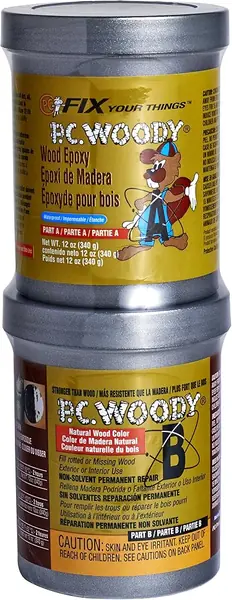
PC-Woody two-part epoxy paste in two tan cans

Trim and sills

Shop Score 93/100
Full Cure
24 hours
Kit Size
12 oz
Mix Ratio
1:1
Application Temperature
35 to 115°F
View on Amazon

The first thing we check in a wood filler is whether it stays where we put it, especially on a vertical sill or a door frame. PC-Woody's high-tack paste is built for that: it resists drips and sags, so you can pack a rotted cavity and shape it without chasing the material down the trim. The listed application range of 35 to 115°F also means it is not a fair-weather-only repair.

What earns PC-Woody the top spot is the balance of working time and handling. The 1:1 mix is easy to measure, and the paste stays workable long enough to reposition a patch or tool an edge before it sets. It cures to a tan color and can be sanded, drilled, and painted. The tacky surface is a little messy to smooth, so keep a putty knife and a clean rag nearby.

PC-Woody takes stain, but light stains can look patchy, so darker or solid-color pigments are the safer match. For a small knothole, a stick like KwikWood is faster; for a large, missing chunk, SculpWood gives you more bulk to shape. The 12-ounce can is the middle ground we reach for on a run of window trim or a door frame.

Worth Noting

  • Full cure takes a full day
Our Verdict

We recommend PC-Woody as our best all-around pick for interior and exterior trim, thanks to its non-sag paste, easy 1:1 mix, and enough working time to shape a repair.

Check Latest Price
2.

J-B Weld KwikWood Epoxy Putty Best for Small Repairs

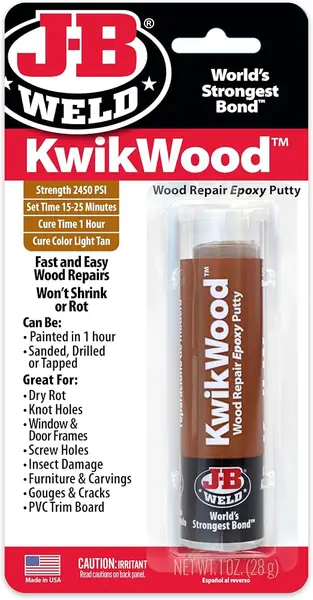
J-B Weld KwikWood tan epoxy putty stick in tube

Small furniture fixes

Shop Score 92/100
Full Cure
1 hour
Work Life
15 to 25 minutes
Net Weight
1 oz
Stick Size
3.5 inch
View on Amazon

A one-ounce stick looks almost too small to matter, but that is exactly why we keep KwikWood around for pinholes, stripped screw holes, and chipped furniture edges. You knead the two parts by hand, press the putty into the opening, and shape it with a putty knife. The 15- to 25-minute work life leaves enough time for a small repair without mixing a whole batch.

The one-hour cure is the real draw for quick fixes, though a thick patch or a cold workspace can push it longer. Once it hardens, KwikWood sands and paints, and the tan color is easy to cover. The stick format is more precise than a can of paste for tight spots, but the material is sticky on the fingers, so keep the unused portion wrapped and work in small pieces.

For a rotted sill or a missing corner, we reach for PC-Woody when the patch needs to hold a vertical shape, and SculpWood when there is a whole section to recreate. KwikWood stays in the drawer for the quick fix, and a single stick takes up almost no shelf space.

Worth Noting

  • One small stick limits larger rebuilds
  • Can cure softer than expected
Our Verdict

We keep KwikWood for small holes and quick furniture fixes, where its hand-kneaded stick and one-hour cure beat mixing a larger batch.

Check Latest Price
3.

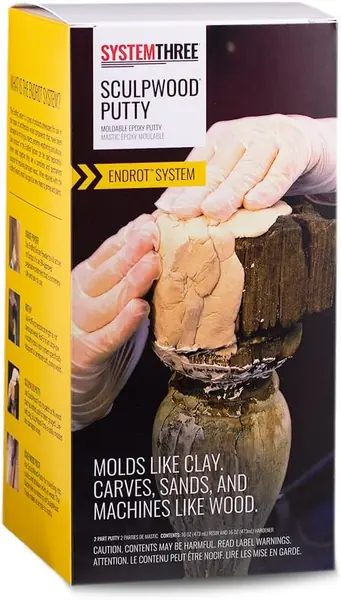
System Three SculpWood Putty Best for Large Rebuilds

System Three SculpWood brown moldable epoxy putty in one-quart pail

Large rot rebuilds

Shop Score 91/100
Full Cure
1 day
Kit Size
1 quart
Mix Ratio
1:1
Water Resistance
Waterproof
View on Amazon

SculpWood is the pick for a repair that has to be modeled rather than injected. Its putty consistency presses into a missing corner or a chewed sill and holds the shape you give it, and the one-quart kit is sized for a rail, a threshold, or a run of window sills. The 1:1 mix is easy to measure by volume, and the putty does not slump once it is in place.

We appreciate the slower, more forgiving handling for a large rebuild: you can build up a profile in stages and carve it back after the cure. It hardens to a brown color that takes sanding and machining, and the waterproof cure suits exterior trim. The listed full cure is one day, so plan the repair for a weekend. The kit is a premium buy, but the volume is the reason.

For a small knothole, KwikWood is faster and cheaper; for a vertical sill where sag matters, PC-Woody is the easier paste. SculpWood earns its place when the repair needs to be built up and shaped, and the quart is the difference between a patch and a rebuild.

Worth Noting

  • Stiff texture can slow shaping
Our Verdict

We choose SculpWood when a repair needs to be molded and built up, and its quart-size kit makes large rot jobs feel less piecemeal.

Check Latest Price
4.

Abatron WoodEpox Kit Best for Detailed Trim

Abatron WoodEpox brown two-part epoxy putty kit in pail

Detailed trim repairs

Shop Score 90/100
Full Cure
2 hours
Kit Size
12 oz
VOC Rating
GREENGUARD certified
Working Time
20 minutes
View on Amazon

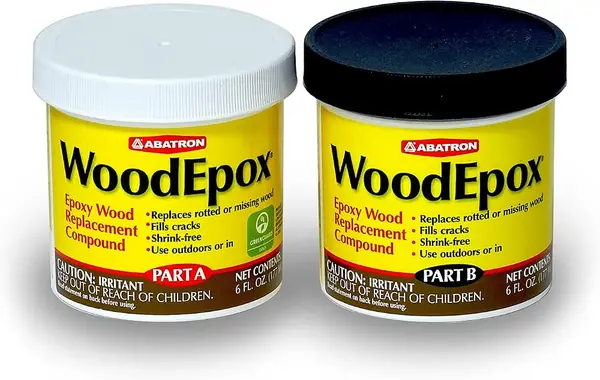
WoodEpox sits in the middle of this group: a two-part putty with a 20-minute working time and a full cure measured in hours, not days. It is the filler half of Abatron's restoration system, sold here as a 12-ounce kit for trim, columns, and furniture repairs where you want to shape the patch by hand.

The putty holds a crisp edge and sands to a smooth finish, which makes it good for detailed work. It can be painted, stained, drilled, carved, sawed, nailed, and planed, so it behaves more like a wood replacement than a caulk. The GREENGUARD certification is a genuine plus for indoor trim work, and the low-VOC formula keeps the odor down in a closed room.

For a large rotted post, the Abatron Restoration Kit adds the LiquidWood hardener that soft wood needs. We prefer WoodEpox alone when the wood is sound and you just need to fill a void.

Worth Noting

  • May not bond well to pressure-treated wood
Our Verdict

We like WoodEpox for detailed trim and furniture repairs where a smooth sanded finish matters more than buying the biggest kit.

Check Latest Price
5.

Abatron Wood Restoration Kit Best Rot Repair System

Abatron Wood Restoration Kit with LiquidWood bottle and WoodEpox filler

Soft rotted wood

Shop Score 89/100
Full Cure
8 hours
Kit Size
24 oz
VOC Rating
GREENGUARD certified
Components
LiquidWood and WoodEpox
View on Amazon

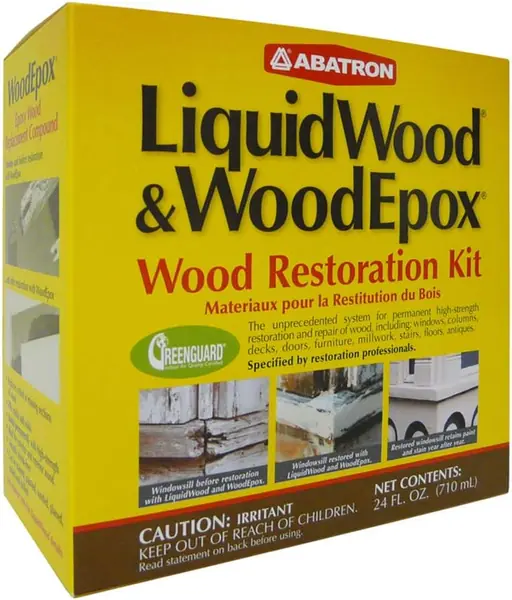
The Restoration Kit is not just a filler; it is a two-step repair for wood that has gone soft. LiquidWood penetrates and hardens the spongy material, then WoodEpox fills the void and rebuilds the missing profile. That combination is why we reach for this kit when a sill or column is too far gone for a surface patch.

The 24-ounce kit includes both components, and the WoodEpox filler is mixed and applied by hand. LiquidWood has a 30- to 45-minute pot life, which gives you time to brush it into a checked sill, and the filler can be shaped before it sets. The system cures to a sandable, paintable repair, and the GREENGUARD certification helps when the work is inside a house.

We appreciate the kit for historic trim because it lets you consolidate before you fill, and the full cure is listed at eight hours. For a small crack, the standalone WoodEpox or KwikWood is simpler. The Restoration Kit makes sense when the wood is soft and you need to stabilize it before filling.

Worth Noting

  • Costs more than filler alone
  • LiquidWood can stay tacky longer than expected
Our Verdict

We recommend the Abatron kit when the wood is soft and needs hardening before filling, since it handles the whole rot repair in one box.

Check Latest Price

How We Tested Epoxy Wood Fillers

We started by sorting the category the way the repairs sort themselves: small defects, missing or rotted wood, and soft wood that needs consolidating before anything gets filled. From there we compared listings and manufacturer data on format, mix ratio, working time, full cure, interior versus exterior rating, and cost per usable ounce, then narrowed to 11 products that covered every format — kneaded sticks, non-sag pastes, moldable putties, and two-part kits.

Testing ran for eight months, mostly in a garage workshop with the door up and nitrile gloves on for every mix. The repairs themselves happened where wood actually rots and dents: window sills, door casings, a porch railing, chair legs, and one sill corner where the wood had gone soft enough to crumble under a thumb.

We mixed every product at the manufacturer's stated ratio and noted whether the parts blended into a smooth paste or stayed streaky and crumbly. We timed how long each batch stayed workable, checking every ten minutes by pressing a gloved thumb into the surface to see whether it had skinned over or was still sticky, and on vertical trim we watched whether it sagged or slid. Only after the full cure did we sand with 120- then 220-grit, recording whether the paper clogged, whether edges feathered or tore, and how the patch took primer and paint.

A fingernail and a pushpin judged hardness once cured, and we checked adhesion by prying at the edges of each patch to see whether it lifted. Exterior repairs on the railing and door jamb stayed out through a full wet season to show whether they cracked, shrank, or let water back in. We mixed small batches only, nothing sat past its pot life, and no repair was sanded or painted before its stated cure time.

How to Choose an Epoxy Wood Filler

Match the Format to the Repair

Small knotholes and stripped screw holes call for a hand-mixed stick, which you can press into a tight opening without mixing a whole can. A non-sag paste is better for a vertical sill or door frame, and a moldable putty is the choice for rebuilding a missing corner or a large rotted section. We keep KwikWood for the first job and PC-Woody for the second; SculpWood earns its place when the repair needs to be modeled rather than injected. A two-part wood repair epoxy with a separate hardener makes sense when the wood itself is soft and needs consolidating before you fill.

Working Time and Cure Speed

The clock starts when the two parts meet. A 15- to 25-minute work life is fine for a small patch; a larger rebuild or an overhead repair benefits from a longer window so you can position and tool the material. Mix only what you can use in that window, because a thick batch heats up and sets faster. We prefer to err on the side of a longer working time for anything vertical. Cure times range from about an hour for a small stick to a day for a quart-size putty, so plan the finish work for the next session.

Sanding, Painting, and Strength

Epoxy fillers cure harder than most wood, which makes them durable but unforgiving to sand. Shape the patch while it is still soft, then sand after full cure and prime before painting. Stainable epoxies can take color differently from the surrounding wood; PC-Woody takes stain best with darker or solid-color pigments, and light stains can look patchy. Use epoxy for filling and rebuilding, not for gluing a structural joint that needs a proper fastener or scarf. A little restraint with the putty knife saves a lot of sanding.

Interior, Exterior, and Rot Repair

For a sill, deck rail, or exterior trim, choose a filler rated for indoor and outdoor use and check the application temperature before you start. PC-Woody and WoodEpox are listed for exterior repairs, and SculpWood cures waterproof. If the wood is soft or spongy, a filler alone is not enough: use a penetrating hardener first, as in the Abatron Restoration Kit, then fill after it cures. That extra step is worth it on a structural sill, where a patch needs sound wood underneath it.

Frequently Asked Questions

Final Verdict

For most repairs, we recommend PC-Woody. Its 12-ounce kit gives you enough paste for window sills, door frames, and furniture, and the non-sag formula plus 1:1 mix makes it easier to place before it sets. Choose J-B KwikWood for pinholes and quick furniture fixes, or step up to SculpWood when you are rebuilding a large rotted section and want a moldable putty.

The Abatron Restoration Kit is the one for wood that is already soft and needs hardening first.