↑↓ navigate ↵ open Esc close All results →

Best Wood Veneer Glue of 2026

Veneer exposes adhesive mistakes that solid lumber hides: a sheet thin enough to wrap a curved caul will telegraph every dried lump of squeeze-out underneath, and a glue that grabs in ten seconds freezes a panel out of square before clamps even close. Even after a tight press, a gummy or dark glue line can bleed through clear finishes or dish the surrounding veneer during final sanding.

Gluing veneer onto plywood, MDF, and solid cores across flat panels, curved cauls, and finished-furniture repairs with a dozen bottles over five months showed the core tension in every formula. Long open time buys alignment room at the expense of longer clamp sessions, while fast-grabbing PVAs demand swift assembly in exchange for firmer, sandable joints.

Separating permanent aliphatic and cross-linking PVAs from reversible liquid hide glue, the four adhesives ahead cover structural panels that must hold indefinitely as well as antique repairs meant to steam back apart.

Our Top Picks

The Best Wood Veneer Glue

1.

Titebond Original Wood Glue Best Overall
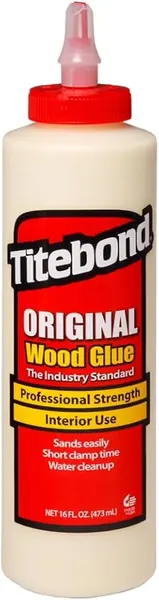
Titebond Original Wood Glue bottle with aliphatic resin formula

Interior veneer projects

Shop Score 96/100
Size
16 Fluid Ounces
Formula
Aliphatic resin
Glue Line
Translucent film
Water Cleanup
Yes
View on Amazon

The glue line is what sold us on Titebond Original for veneer. On a scrap of pale maple, the squeeze-out dried to a translucent film, so the joint read as wood rather than a tan seam once we sanded it. It also has the strong initial tack and quick set we want when a thin sheet keeps trying to slide before the clamps are on. For interior panels, that combination is the most useful default in this group.

What we appreciate most is how forgiving it is at the finish stage. It sands without softening under the paper, and it does not fight most stains, paints, or clear coats. The low-VOC formula keeps the shop air pleasant, and cleanup is water before the glue sets. We also like that it bonds hardboard and particleboard, which covers the substrates most veneer panels actually use.

For a veneered cabinet door, headboard, or repair, this is the bottle we reach for first. It is not the choice for a damp exterior panel, but that is a different job with a different glue. It rewards a thin, even coat and a patient clamp-up more than a heavy bead.

Worth Noting

  • Fast set can be tight on large panels
Our Verdict

We recommend Titebond Original as the default veneer glue because it sets fast, sands clean, and leaves a translucent line that disappears under finish.

Check Latest Price
2.

Titebond Liquid Hide Glue Best for Reversible Work

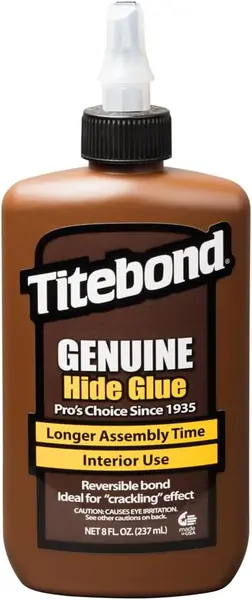
Titebond Liquid Hide Glue bottle with tan liquid formula for reversible joints

Reversible repairs

Shop Score 95/100
Size
8 Fluid Ounces
Water Resistance
Not water resistant
Type
Liquid hide glue
Shelf Life
12 months
View on Amazon

A veneer repair on an antique chair is a different assignment from a new panel, and that is where Titebond Liquid Hide Glue earns its place. The bond stays reversible: moisture lets you soften the glue and open a joint that may need another repair years from now. That is why we keep it for restoration work and for pieces where the veneer may need to be lifted again.

We also like the long open assembly time. It gives us room to position a patch or a strip of veneer before the glue grabs, and the slow set rewards a careful dry fit instead of a frantic clamp-up. The cured bond is strong and sands well, and any excess wipes away with water before it sets. It is a traditional adhesive for a reason, and it behaves like one in the shop.

For a repair that may need to come apart again, or for traditional work where hide glue is the expected adhesive, this is the one. It rewards a careful fit and a patient clamp-up, and it is the pick we trust when reversibility matters more than convenience.

Worth Noting

  • Not water-resistant
  • Short shelf life once opened
Our Verdict

We choose this liquid hide glue when a veneer repair may need to come apart later, thanks to its long working time and moisture-reversible bond.

Check Latest Price
3.

Gorilla Ultimate Waterproof Wood Glue Best for Long Open Time

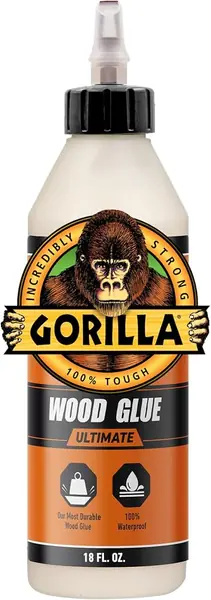
Gorilla Ultimate Waterproof Wood Glue bottle with natural tan PVA formula

Large outdoor panels

Shop Score 94/100
Size
18 Fluid Ounces
Water Resistance
Waterproof
Clamp Time
20 to 30 minutes
Open Time
Up to 15 minutes
View on Amazon

A full sheet of veneer is where a few extra minutes of open time stop feeling like a luxury. Gorilla Ultimate gives up to 15 minutes of assembly time, and we noticed the difference when positioning a large panel before the clamps went on. The glue stays workable long enough to slide the veneer into place, then clamps in 20 to 30 minutes.

We reach for it when the job is damp or outdoor: it is waterproof, cures in 24 hours, and leaves a natural tan bond line that sands and paints cleanly. The thicker PVA also stays where it is spread instead of running off a vertical edge. It is more glue than an interior panel needs, but that is the point of keeping a bottle for the jobs that leave the shop.

For a veneered exterior panel, a damp basement repair, or a large sheet that needs alignment time, this is our pick. For everyday interior work, Gorilla Wood Glue or Titebond Original is easier to handle and just as clean under finish.

Worth Noting

  • Bottle tip can clog between uses
  • Costs more than interior PVA
Our Verdict

We reach for Gorilla Ultimate on large or damp veneer jobs where the extra open time and waterproof bond are worth the premium.

Check Latest Price
4.

Gorilla Wood Glue Best Budget

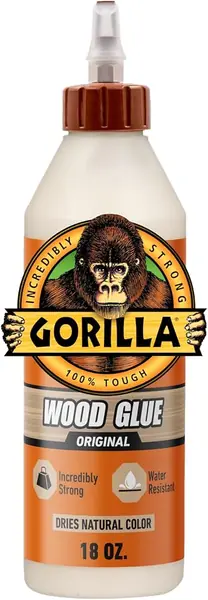
Gorilla Wood Glue 18-ounce bottle with natural tan PVA adhesive

Budget workshops

Shop Score 93/100
Size
18 Fluid Ounces
Water Resistance
ANSI/HPVA Type II
Clamp Time
20 to 30 minutes
Cure Time
24 hours
View on Amazon

The 18-ounce bottle is the first thing that makes Gorilla Wood Glue easy to live with in a small shop: it is a lot of glue for the money, and the applicator tip puts down a controlled bead without a lot of waste. We liked having enough volume to lay up a utility panel without stopping to refill.

It is a water-resistant PVA that passes ANSI/HPVA Type II, with 20 to 30 minutes of clamp time and a 24-hour cure. We found it well suited to utility veneer, shop jigs, and repairs where a natural tan glue line is acceptable. It cures to a natural wood color, sands and paints, and cleans up with water before it sets.

We think it earns its place as the budget bottle for utility veneer, shop jigs, and repairs. The big bottle means less refilling, and the water-resistant bond covers more than a plain interior glue. For a show-face panel, we still reach for Titebond Original.

Worth Noting

  • Tan glue line on pale veneer
  • Tip can gum up if not wiped
Our Verdict

We think Gorilla Wood Glue is the easy budget bottle for everyday veneer and shop repairs, with a water-resistant bond that suits utility panels.

Check Latest Price

How We Tested Wood Veneer Glue

We started by sorting through what's actually sold as wood veneer glue — aliphatic resin PVA, cross-linking waterproof PVA, and liquid hide glue — and skipped epoxy and polyurethane, which solve a different problem. From there we narrowed by formula, bottle size, and cost per ounce, favoring glues sold in eight- to eighteen-ounce bottles you can reasonably finish before they skin over. Twelve bottles moved on to hands-on testing.

Testing ran five months in a home shop, on veneer laid over plywood, MDF, and solid pine cores, along with repairs to finished furniture and one curved caul. To judge open time, we laid a sheet onto glued substrate and slid it into pencil marks, timing how long before it grabbed; then we clamped and checked every few minutes to see when the veneer stopped shifting under light finger pressure. Glue line came next: we sanded each sample flush, wiped on a clear finish, and held the panel at an angle in daylight to see whether a dark stripe or a pale halo showed through.

For hold and durability, we let panels cure fully, then tried to lift an edge with a chisel and hung a weighted offcut from a small glued block overnight. Outdoor samples got spritzed and left on a shaded porch through a rainy stretch, and everything sat through a humid summer and a cold snap in an unheated garage so we could watch for lifting and creep. To check reversibility, we ran a warm iron over hide-glued patches through a damp cloth and lifted them. We used each bottle the way you would, on vertical edges, counting drips and wipe-ups, and checked bottles left on the shelf monthly for skinning, gelling, and clogged tips.

How to Choose Wood Veneer Glue

Open Time and Clamp Time

Veneer is thin and slippery, so the glue has to stay workable long enough to position the sheet before it grabs. A fast PVA like Titebond Original is fine for a small patch or a repair, but a full panel is easier with 8 to 15 minutes of open time; Gorilla Ultimate lists up to 15 minutes. We prioritize enough slip time to align the grain and set clamps without panic. Clamp time is separate: most PVA formulas here want 20 to 30 minutes under pressure, then a full cure before trimming or sanding.

Glue Line and Sandability

On pale veneer, the glue line is part of the finish. A translucent PVA such as Titebond Original disappears under a clear coat, while tan or honey-cream formulas can leave a visible seam on maple or birch. We test a scrap before committing a whole panel, and we wipe squeeze-out while it is still wet; cured PVA can repel stain. Sandability matters too: a glue that softens or balls up under paper makes a clean veneer job harder than it needs to be.

PVA or Hide Glue?

PVA is the practical choice for new interior veneer: strong, water-resistant enough for most panels, and easy to clean up. Hide glue is the repair and restoration choice. It stays reversible, so moisture can soften the joint later, and it gives a long open time for careful alignment. We keep Titebond Liquid Hide Glue for antiques and instruments where a future repair is likely. It is not the adhesive for a damp location, and a bottle has a shorter useful life than PVA.

Water Resistance and Where the Panel Lives

Water resistance is a rating, not a guess. ANSI/HPVA Type II covers occasional moisture, while Type I is the waterproof standard; Gorilla Ultimate is sold as waterproof, and Gorilla Wood Glue passes Type II. For a veneered cabinet door or headboard, a standard interior PVA is enough. We pay for the waterproof formula only when the panel will see rain, a damp basement, or repeated wiping. The rating should match the room, not the label on the bottle.

Application and Clamp Pressure

A thin, even coat beats a thick one. Too much glue can bleed through open-grain veneer, while too little starves the bond and leaves a weak patch. We spread with a small roller or a notched spreader, then use a rigid caul or a veneer hammer to press the sheet flat. Clamp pressure should be even, with no gaps at the edges. Test the glue on a scrap of the same veneer before you commit a show panel, especially with water-based PVA.

Frequently Asked Questions

Final Verdict

For most veneer jobs, we reach for Titebond Original. Its translucent glue line and easy sanding matter more than a waterproof rating on an interior panel, and it gives us the cleanest result with the least fuss. If the veneer may need to come apart later, Titebond Liquid Hide Glue is the better repair adhesive. If the panel will face moisture or you need a long open time, Gorilla Ultimate earns its higher price. Gorilla Wood Glue is the budget bottle for utility work.