↑↓ navigate ↵ open Esc close All results →

Best Glue for Acrylic to Wood

Wood absorbs liquid adhesive readily, whereas smooth acrylic rejects it, creating a material mismatch that causes many mixed-media joints to pop loose under light stress. Glues built only for porous lumber either skate across slick plexiglass without biting or leave a cloudy white bloom that cannot be sanded out of clear sheet.

Bonding acrylic shelf dividers and trim to wood with 14 adhesives over four months—spanning thin capillary liquids, no-run gels, and thicker gap-fillers—highlighted how strongly open time dictates joint fit. A two-second grab works well when parts are clamped tight beforehand, while a 90-second window gives space to align long edges before the bond locks.

Packaging also affects value more than expected: a precision cap that resists clogging keeps the remaining glue usable months later, and each adhesive below suits a specific joint geometry rather than acting as a single universal fix.

Our Top Picks

The Best Glue for Acrylic to Wood

1.

Starbond Medium Super Glue Pro Kit Best Overall
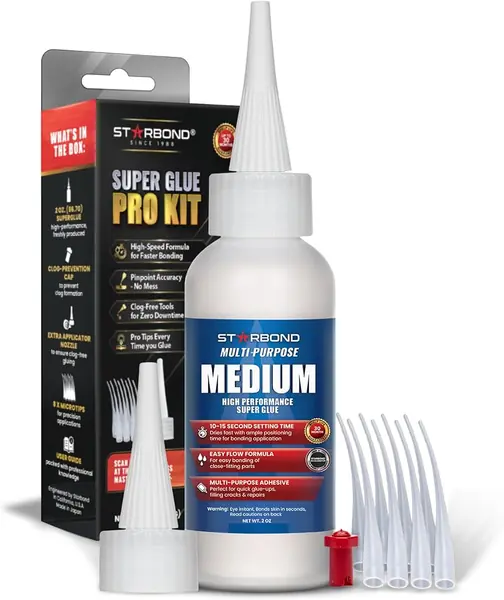
Starbond medium CA glue bottle with microtips, applicator nozzles, and an empty dispensing bottle

Acrylic-to-wood joints

Shop Score 96/100
Bottle Size
2 ounces (60 ml)
Set Time
10 to 15 seconds
Viscosity
Medium
Included
Eight microtips and two nozzles
View on Amazon

The material list is what sold us. Starbond names acrylic outright — wood, metal, glass, ceramic, rubber, then acrylic and a run of 3D-printing filaments — where several bottles in this guide stop at the word plastic and leave you to guess. For a plexiglass panel set into a wood frame, that is the line we want to read before buying. The medium body then sets in 10 to 15 seconds: long enough to slide a sheet into place, short enough that you are not standing there holding it.

The kit is where the woodworking shows. Two applicator nozzles, a pin cap, and eight microtips let you run a thin line along a rabbet or reach into the corner of a small acrylic box. The microtips are the part we reach for most. A standard nozzle lays down more adhesive than a clean acrylic-to-wood seam needs, and the excess is what squeezes out and clouds the face; snapping on a finer tip is the difference between a clear panel and one with a white ring around the joint.

In use it behaves like a good medium cyanoacrylate: a quick grab, a clear cure, and a waterproof bond once it is set. What struck us is how little it takes. A thin line from a microtip along one edge is enough for a joint, and using more only pushes adhesive toward the face you were trying to keep clean.

One detail from the label is worth copying. Starbond backs a 30-month shelf life on bottles stored under 40°F, because cyanoacrylate degrades in a warm shop. Keep the rest of the bottle in the refrigerator, let it come to room temperature before you open it, and condensation will not turn a good bottle into a clogged one.

Worth Noting

  • Weak bonds on metal and unfriendly plastics
Our Verdict

For acrylic to wood, this is the bottle we recommend: its maker lists both materials, and the medium body leaves time to align a panel.

Check Latest Price
2.

Gorilla Super Glue Gel XL Best No-Run Gel

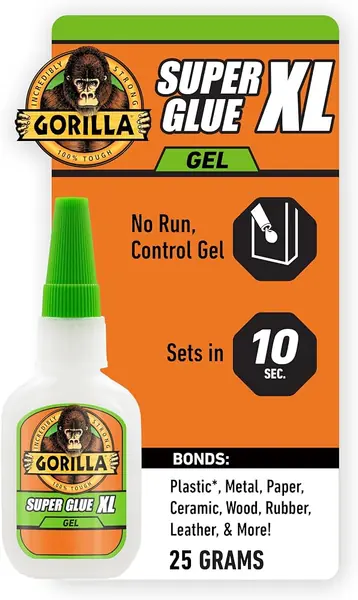
Gorilla Super Glue Gel XL clear 25-gram bottle with a metal pin anti-clog cap

Vertical joints

Shop Score 95/100
Bottle Size
0.88 fluid ounces (25 g)
Set Time
10 to 45 seconds
Form
Gel
Finish
Clear
View on Amazon

A vertical glue line is where thin cyanoacrylate gives itself away: you touch the nozzle to the seam and watch the bead run down the acrylic before you can set the wood. Gorilla's gel does not do that. It comes out thick, sits where the nozzle left it, and stays there while you bring the two surfaces together, which is the reason we keep this bottle on the bench for repairs and running trim rather than flat panel work.

The bottle is the other half of the appeal. At 25 grams it holds far more adhesive than the small tubes sold at hardware-store counters, and the metal pin in the cap seats down into the nozzle to keep the tip clear between uses. That pin matters more than it sounds: a bottle that sits for weeks between repairs is a bottle whose cap is either sealing the tip or ruining it.

Cured, the bond is clear and slightly flexible, which tolerates the small knocks a shelf or a display case takes without cracking the acrylic. The gel also fills the tiny mismatch you get when a saw cut is a degree off square, so a plastic panel laid against a wood rail does not need a perfect joint to hold. On a piece where the joint shows, that forgiveness is worth as much as the strength.

Worth Noting

  • Not water resistant for outdoor use
  • Acrylic is not named in its material list
Our Verdict

A vertical joint is where we reach for it, because the gel stays where the nozzle leaves it instead of running down the sheet.

Check Latest Price
3.

WoldoClean Super Glue for Plastic Best for Tight Seams

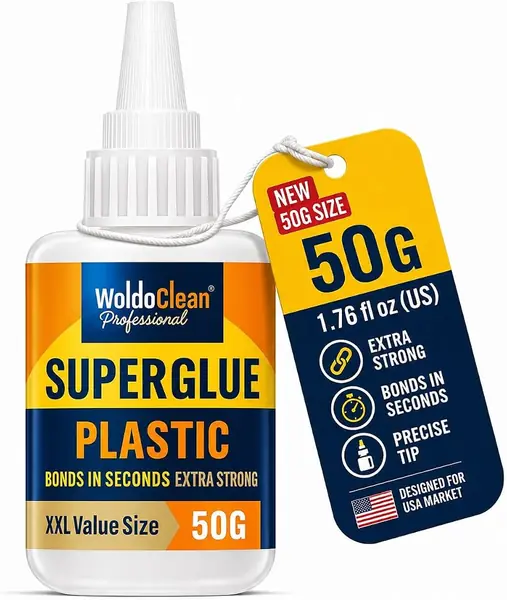
WoldoClean 50-gram clear plastic adhesive bottle with a precision nozzle and anti-clog cap

Tight acrylic seams

Shop Score 94/100
Bottle Size
1.76 oz
Form
Thin liquid
Water Resistance
Waterproof once cured
Working Time
Press for 30 seconds
View on Amazon

A close-fitting seam between an acrylic edge and a planed wood rail has almost no gap to fill, and a gel can sit on top of it rather than inside it. WoldoClean's thin formula is built for the opposite job: it flows into a hairline joint and sets within seconds of the two faces being pressed together, which is what you want when the parts already fit.

The compatibility claims are unusually direct. The listing names acrylic and plexiglass, then PVC, ABS, vinyl and polystyrene, and says the same bottle bonds plastic to wood, ceramic, glass, stone and concrete in one step, so you are not translating plastic into plexiglass in your head. The 50-gram bottle with a precision nozzle and an anti-clog cap means you are not rationing drops, either.

Vertical work is not its job. A liquid this thin runs, and a gel or a thicker cyanoacrylate is the better answer the moment a seam is overhead or loose. We rate it as the tight-joint specialist in this group: the bottle we pick when the acrylic has been cut clean and the wood has been planed true, and the joinery does the work the glue cannot.

Worth Noting

  • Bond is uneven on glossy unprepared acrylic
Our Verdict

We keep it for close-fitting seams, where a thin glue wicks in and a gel would only sit on top.

Check Latest Price
4.

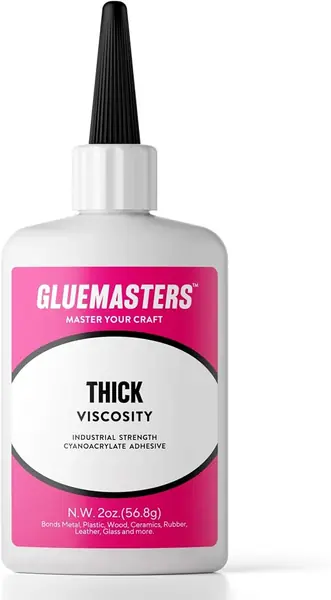
Glue Masters Thick CA Super Glue Best for Positioning

Glue Masters thick cyanoacrylate glue in a clear two-ounce bottle

Aligning panels

Shop Score 93/100
Bottle Size
2 ounces (56 g)
Set Time
45 to 90 seconds
Viscosity
1500 cps
Gap Filling
Small gaps and cracks
View on Amazon

Forty-five to ninety seconds is an eternity in cyanoacrylate terms, and it is why this bottle gets used for anything bigger than a repair. At 1500 cps it pours like honey: you can lay a panel down, see the overhang, shift it, and only then let the bond take hold.

The body does a second job in a joint that is not perfect. Acrylic sheet and a wood frame rarely meet with the precision of two machined parts, and a thick glue bridges the small voids that a thin one leaves starved. We reach for it when the wood has been sanded by hand or the cut is a degree off square, and the gap has to be filled rather than merely joined.

Thickness is also where it varies most. The 1500 cps figure describes the formula, and bottles turn up at both ends of it: some pour like honey, some run like a medium. Nothing about the cured bond changes, but if the whole point for you is a glue that stays on a vertical face, squeeze a test drop before you commit a panel to it.

It is one of the pricier bottles in this group, and it earns its cost only when slow positioning or a gappy joint is the problem. On tight, flat work the Starbond wicks in with less fuss and less waste, and we would rather spend the difference on microtips than on volume.

Worth Noting

  • Not water resistant for outdoor use
Our Verdict

Buy it when a panel needs nudging into place, because the thick body buys 45 to 90 seconds of working time.

Check Latest Price
5.

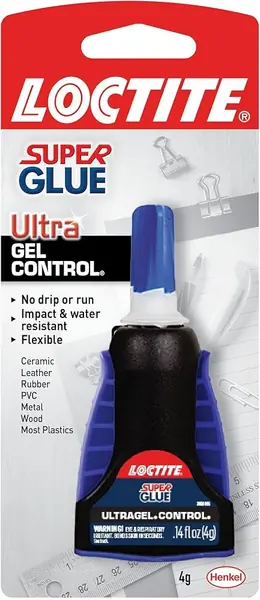
Loctite Super Glue Ultra Gel Control Best for Small Repairs

Loctite Ultra Gel Control clear super glue in a small side-squeeze bottle

Small precision repairs

Shop Score 92/100
Form
Gel
Cure Time
24 hours
Tensile Strength
3625 psi
Volume
0.14 fluid ounces (4 g)
View on Amazon

The side-squeeze bottle is the reason we keep this one in the drawer. Pinching the two panels pushes out a single controlled drop exactly where the nozzle points, which is what you want at a chipped corner or a small bracket on a wood base, places where a squeeze tube delivers a puddle.

The formula is rubber toughened and rated at 3625 psi, high for this group, and it is rated water resistant, which most of the bottles here are not. It also sets without clamping, so a small joint that will not take a spring clamp is still workable. For a repair on a piece that gets handled, the toughening matters more than the tensile number.

Cured, it stays transparent and holds its shape on a vertical repair instead of sliding, and it takes a knock without shattering the way a brittle cyanoacrylate can. Control is what you are paying for here: a fraction of a drop is the right amount at this scale, and the nozzle puts it exactly there.

Worth Noting

  • 0.14-ounce bottle runs out fast
  • Can dry out between projects
Our Verdict

Our pick for small awkward repairs, where one controlled drop from the squeeze bottle beats a bigger tube.

Check Latest Price
6.

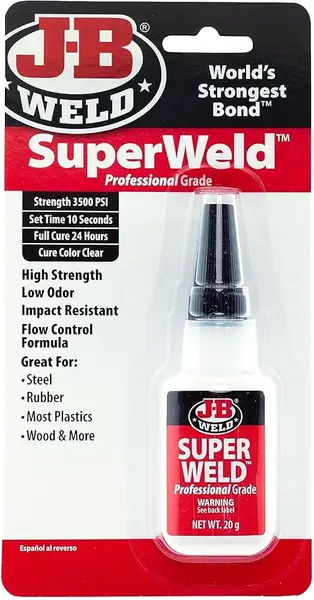
J-B Weld SuperWeld Best for Mixed-Material Repairs

J-B Weld SuperWeld clear cyanoacrylate adhesive in a 20-gram bottle with precision tip

Mixed-material repairs

Shop Score 91/100
Bottle Size
0.71 oz
Water Resistance
Water resistant
Cure Time
24 hours
Tensile Strength
3500 psi
View on Amazon

J-B Weld built its name on two-part epoxy, and SuperWeld is the company's cyanoacrylate: clear, instant, and rated at 3500 psi, which puts it just behind the Loctite bottle here on paper. The 20-gram bottle will last a season of small repairs.

The material list is broad: steel, ceramic, glass, leather, metal, plastic, rubber, vinyl and wood. The clear cure takes 24 hours, the bond is water resistant, and the precision tip lays a thin line rather than a bead, so the adhesive goes where the joint is instead of spreading across the acrylic.

What keeps it out of the top tiers for this job is surface prep. Holding strength is uneven, and where the wood has been dusty or the acrylic still carries a film, the bond is the first thing to go. Clean both faces and scuff the bond strip, and it behaves like the 3500 psi label suggests.

Worth Noting

  • Acrylic is not named on its compatibility list
  • Sets in seconds with no repositioning
Our Verdict

We reach for it on mixed-material repairs around the shop, where a clear 3500 psi bond and a precision tip do the work.

Check Latest Price
7.

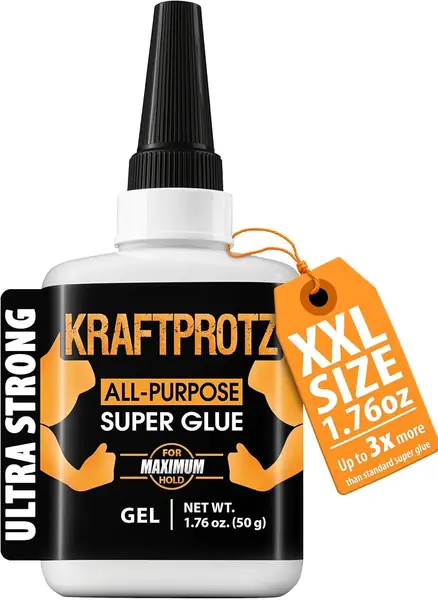
KRAFTPROTZ All-Purpose Gel Best for Budget Shop Work

KRAFTPROTZ all-purpose gel adhesive in a 1.76-ounce tube with an anti-clog cap

Budget shop work

Shop Score 90/100
Bottle Size
1.76 ounces (50 g)
Set Time
15 seconds
Form
Gel
Water Resistance
Water resistant
View on Amazon

Per ounce this is the least expensive gel in the group, and the long nozzle is genuinely useful: it reaches past a wood rail into the seam behind it, where a stubby tip cannot go. For a shop that goes through adhesive on jigs and spacers, that combination is hard to argue with.

The cure is quick, with the listing claiming 15 seconds and a clear finish that leaves no white residue on the face of a panel. That last part is what makes it usable on a visible joint at all: a haze or a chalky ring is the giveaway that a repair was made.

How much to use is the thing to get right. A thin line along one edge is enough, and anything more squeezes out at the joint and has to be dealt with while it is still soft, because a cured bead on acrylic is a scraping job.

We file it as the budget bottle for flat shop work: jigs, spacers, hobby assemblies, anything where a big bottle at a low cost per ounce matters more than a perfect bond line. The one thing to check on arrival is flow, since the gel can come out thinner than the last bottle did.

Worth Noting

  • Tensile rating is listed at only 25 pounds
Our Verdict

Our budget choice for jigs and shop fixtures, where a low cost per ounce matters more than a perfect bond line.

Check Latest Price
8.

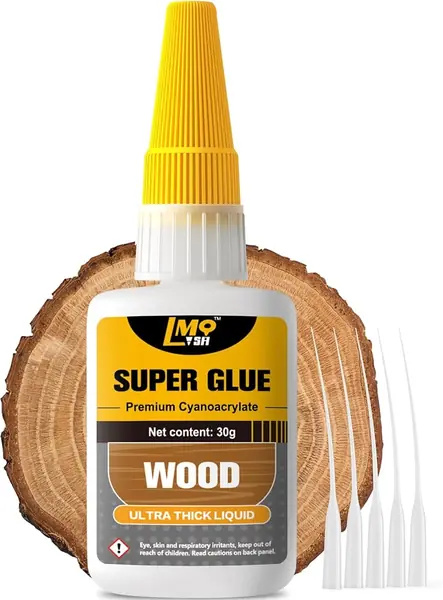
LMQ LASH Wood Super Glue Best for Small Fast Assemblies

LMQ LASH wood super glue in a one-ounce bottle with a precision tip

Small fast assemblies

Shop Score 89/100
Bottle Size
1 oz
Set Time
30 to 60 seconds
Water Resistance
Waterproof
Cure Time
24 hours
View on Amazon

Selling a cyanoacrylate as wood glue is a little misleading, and it is worth knowing before you order: this is a CA, not a PVA, so it grabs in half a minute rather than overnight, and it will bond a wood edge to plastic, glass, ceramic or metal as readily as to another piece of wood.

The 30-to-60-second working time is the useful part. It is long enough to line a small acrylic piece up against a wood block and short enough that you are not waiting, and the precision tip puts the drop where you aimed it rather than in a ring around it.

One ounce suits a run of small assemblies, and the same formula is sold in a two-ounce size if a project turns out bigger than expected. The waterproof cure is a small bonus for a piece that lives near a window or a sink, and full cure runs to 24 hours, so leave a loaded joint overnight before you stress it.

We treat it as a small-shop bottle for jigs, models and repairs rather than panel work. Judged that way, the fast grab is an asset: a spacer block or a template stays where you set it without a clamp, and the joint is ready to handle by the time the tools are put away.

Worth Noting

  • Acrylic is not on its compatibility list
  • Thick and liquid descriptions contradict each other
Our Verdict

It earns a place for small assemblies where a fast grab matters and one ounce is enough.

Check Latest Price

How We Tested Glue for Acrylic to Wood

We built the shortlist by reading material lists first: if a bottle didn't name acrylic and wood on its own label, it didn't come to the bench, no matter how good the reviews were. From there we sorted by body — thin capillary liquid, no-run gel, thick gap-filler — and by price per ounce. Fourteen bottles made the cut.

Testing ran on a shop bench over four months, on real projects rather than scrap coupons: acrylic display panels glued to oak rails, shelf dividers, a small cabinet door with a vertical face, and laser-cut edges that needed a tight seam. We wore safety glasses and nitrile gloves for every bond, worked with the window open, and kept the bottles in a locked drawer between sessions, well away from the cotton rags.

Each joint got a stopwatch. We timed how long the two pieces could slide against each other before the glue grabbed, pressed by hand for the full working time, and noted whether a gel held its place on a vertical face or crept downhill. Each bottle was used with the tip it shipped with — microtips, precision nozzles, anti-clog caps — so the applicators got judged on the same seam. After 24 hours we checked every joint under a bright light at a low angle for the white haze that shows up around a bad cure.

Between projects we let the bottles sit, then came back to see whether the cap had sealed or the nozzle had crusted over; a bottle you have to clear with a pin every time is one that gets thrown out half full. We also tracked how much glue each joint actually used, so a big bottle that flowed everywhere didn't get credit for being a bargain.

How to Choose a Glue for Acrylic to Wood

Why a Cyanoacrylate, Not Wood Glue or Acrylic Cement

Two obvious products do not solve this joint. PVA wood glue needs porous faces on both sides and will sit on acrylic without bonding. Acrylic cement, the solvent that welds plexiglass to plexiglass, has nothing to dissolve in wood. A cyanoacrylate — the family sold as super glue — is the practical bridge, because it cures without air or water from the substrate and grips hard, non-porous plastics.

Look for a listing that names acrylic rather than just plastic, and names wood in the same breath. Two of our picks do exactly that; the rest bond plastic to wood and leave the acrylic to your judgment and a scrap test.

Match the Body of the Glue to the Joint

Viscosity decides which joints a bottle can serve. A thin liquid wicks into a close, well-machined seam by capillary action and disappears from view, which is what you want on a clean acrylic edge against a planed rail. The trap: the same thin glue vanishes into end grain before it reaches the plastic, so seal or size a porous wood edge first, or the joint starves.

A gel or a thick body sits on the surface, fills small gaps, and stays on a vertical face. If your two parts do not mate closely, choose thick; if the parts were cut and planed to fit, thin will get in where thick cannot.

Working Time, Clamping and Accelerator

Set speed runs from a couple of seconds to a minute and a half, and that difference decides how you assemble the piece. Fast formulas are one-shot: dry-fit, mark, then commit, because there is no sliding a panel once it grabs. Slow ones let you position and clamp at leisure, which is worth paying for on anything bigger than a repair.

Tape or a spring clamp for the first minute buys security on a small joint. A CA accelerator does the same job faster, at the cost of a bond line that can look chalky on a clear panel.

Surface Prep and the Haze Problem

Two minutes of prep decides most of these bonds. Wipe the acrylic with isopropyl alcohol, abrade the bonding strip with fine paper, and let it dry; skip it and the glue is only as strong as the layer of contamination it bonded to.

Use less adhesive than feels right. A thin film, not a bead: squeeze-out is what produces the white bloom that creeps across a clear panel. Mask along the glue line with tape, pull the tape while the squeeze-out is still soft, and keep the smear narrow.

Bottle Size, Tips and Shelf Life

Cyanoacrylate is a perishable. Opened bottles thicken, tips clog, and a year on a warm shelf turns a good formula into a lump. Buy for the project in front of you: a small bottle with a precision tip or microtips suits detail work, and a large one only makes sense if you will use it within a season.

Keep the cap sealed, store the bottle upright and cool — the Starbond kit backs a 30-month shelf life on bottles held under 40°F — and let it come to room temperature before opening, so condensation does not do the clogging for you.

Frequently Asked Questions

Final Verdict

The Starbond Medium kit is what we recommend for acrylic to wood. It names both materials on the label, the medium body leaves 10 to 15 seconds to slide a panel into line, and the eight microtips keep adhesive off the face you just polished. For a close, well-machined seam, the thin WoldoClean formula wicks in where a gel sits on top; for a vertical joint, the Gorilla gel stays where you put it.

Buy a bottle sized to the project in front of you rather than the biggest one on the shelf, scuff and wipe both surfaces, and glue a scrap pair first. Two minutes of scrap testing tells you more about a new bottle than any label does.