↑↓ navigate ↵ open Esc close All results →

Best Glues for Composite Wood of 2026

MDF and particleboard consist of wood fibers and resin pressed into sheet form, leaving every machined edge full of open pores that drink up thin adhesive. Without enough body and wet-out time, a standard glue line disappears into the edge and leaves a starved seam that splits apart weeks later.

Clamping MDF shelves, particleboard cabinet carcasses, and rain-exposed test joints across four months with 14 glues underscored two practical realities: water-resistance classification on the label matters far more than headline strength numbers, and oversized jugs often skin over before a small shop uses them up.

Each adhesive selected wets out thirsty composite edges in a single pass and sands flush under paint, dividing by exposure—from exterior planters and humid bath vanities to quick interior repairs.

Our Top Picks

The Best Glues for Composite Wood

1.

Titebond III Ultimate Wood Glue Best Overall
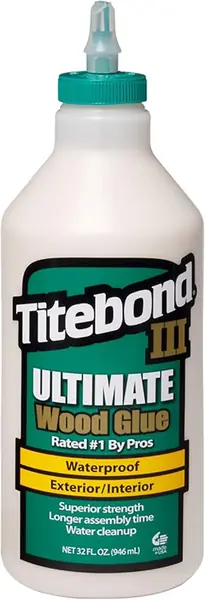
Titebond III Ultimate Wood Glue in a 32-ounce tan bottle

Waterproof outdoor projects

Shop Score 97/100
Volume
32 fluid ounces
Water Resistance
ANSI/HPVA Type I waterproof
Minimum Application Temp
45°F
Full Cure Time
24 hours
View on Amazon

The ANSI/HPVA Type I rating is what settled this pick. Type I is the waterproof classification, and it's why Titebond III is the bottle we keep on the bench for composite work: MDF, particleboard, and plywood all fail ugly once a glue line takes on moisture, and the swelled fiber never comes back. Paying for the waterproof grade is cheap insurance against redoing a panel, and it means one jug covers a bathroom vanity and a porch bench without a second trip.

Working time is the second reason it holds the top spot. The open assembly time runs longer than the fast-tack formulas here, which matters once you're spreading a bead down a two-foot plywood joint or fitting a dozen dowels before the clamps go on. The 45°F minimum application temperature is the lowest in this group, so an unheated shop in late fall doesn't automatically end gluing season.

One technique note from our testing: machined MDF edges are thirsty, and a joint that looks generously glued can still pull a starved bond. We brush a thin sizing coat onto the edge, give it a minute to soak in, then lay the working bead. The cured adhesive sands without softening or balling up under the paper, and it doesn't fight the stain or finish you put over it.

Worth Noting

  • Tan glue line shows on pale woods
Our Verdict

We recommend Titebond III as the default for composite wood because its Type I waterproof bond covers interior panels and damp or outdoor work alike, with enough open time to clamp a wide glue-up.

Check Latest Price
2.

Gorilla Wood Glue Best Value for Big Glue-Ups

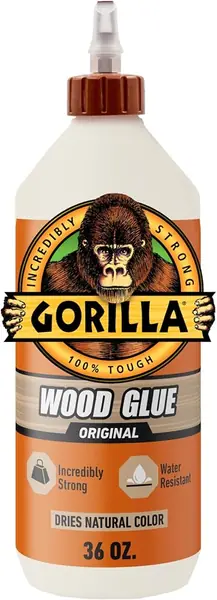
Gorilla Wood Glue in a 36-ounce natural tan bottle

Interior panel gluing

Shop Score 96/100
Volume
36 fluid ounces
Water Resistance
ANSI/HPVA Type II water resistant
Clamp Time
20 to 30 minutes
Cured Color
Natural wood tan
View on Amazon

A plywood cabinet swallows more adhesive than most people budget for — every dado, every edge band, every cleat. That's the case for this bottle. At 36 ounces it's the largest format in this group, it's the least expensive per ounce of the mainstream glues here, and we never had to tilt it and shake it to finish an assembly.

Gorilla rates it for natural wood composites on the label, and that's exactly where we put it to work: MDF shelves, particleboard carcasses, plywood drawer boxes. The Type II rating handles humidity and the occasional wipe-down but not standing water, so it's the interior and covered-porch formula rather than the one for a planter box. Clamp time runs 20 to 30 minutes with a 24-hour full cure — standard for PVA rather than a reason to choose it.

The one habit worth building is at the tip. This glue skins over between sessions, and a plugged nozzle is how a half-full bottle ends up in the trash; wipe it with a damp rag before you cap it and the problem disappears. Cleanup is otherwise painless — water on the squeeze-out, warm soapy water on your hands, and a cured line that sands and paints without a foaming halo.

Worth Noting

  • Thin formula runs on vertical joints
Our Verdict

We keep Gorilla Wood Glue for panel work because the big bottle lets us lay a full bead without rationing, and its Type II rating is enough for most interior builds.

Check Latest Price
3.

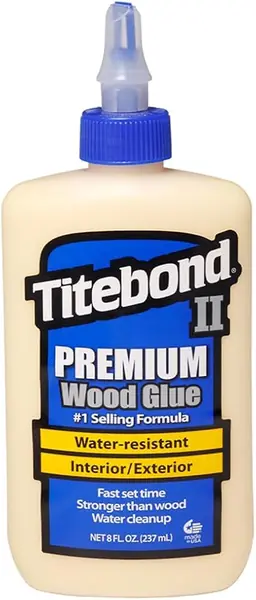
Titebond II Premium Wood Glue Best for Small Repairs

Titebond II Premium Wood Glue in an 8-ounce honey cream bottle

Small interior repairs

Shop Score 95/100
Volume
8 fluid ounces
Water Resistance
ANSI/HPVA Type II water resistant
Shelf Life
12 months
Listed Tensile Strength
3750 psi
View on Amazon

An eight-ounce bottle suits the way most of us actually glue: a loose cabinet shelf this weekend, a split drawer box next month. We've thrown out more half-full quarts of PVA than we care to admit, so the small format is a practical virtue here, not a compromise. It also carries a Type II water-resistance rating and the highest listed tensile figure of any glue on this page — though we read that number as a label-to-label comparison, not a promise about your joint.

Where it beats the bigger bottles is speed. It tacks faster than the waterproof Titebond III, so a small joint with plenty of contact area grabs and stays put while you get the clamp into position — we noticed the difference on drawer corners and dowel joints, where the parts wanted to skate. Cleanup is water as long as you catch the squeeze-out before it hardens, and the listed shelf life runs 12 months, which is worth writing on the bottle in marker.

For interior composite work — kitchen cabinets, closet shelving, a desk apron — that's plenty of glue and plenty of protection. What it isn't is a bottle for a full sheet-goods build; you'll be buying a second one before the carcass is done.

Worth Noting

  • Honey tint stands out against pale woods
Our Verdict

For a single repair on composite wood, we point people to Titebond II: Type II water resistance and the highest listed strength here in a small bottle you will actually finish.

Check Latest Price
4.

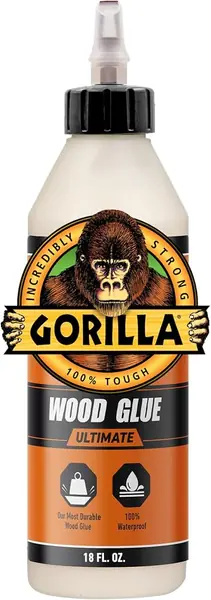
Gorilla Ultimate Waterproof Wood Glue Best for Slow Outdoor Assemblies

Gorilla Ultimate Waterproof Wood Glue in an 18-ounce natural tan bottle

Slow outdoor assemblies

Shop Score 93/100
Volume
18 fluid ounces
Water Resistance
Waterproof, unclassified
Minimum Application Temp
50°F
Open Assembly Time
Up to 15 minutes
View on Amazon

Fifteen minutes of open assembly time is the reason to look at this bottle. That's generous for a waterproof PVA, and it's the difference between positioning six slats calmly and rushing them into place. Clamp time is 20 to 30 minutes, full cure is 24 hours, and the minimum application temperature is 50°F — all squarely in line with the rest of the group.

The bottle is where this one asks for patience. The formula is thick enough to hang up in the neck, and once it cures there it doesn't come back; the failure mode is a bottle that won't dispense rather than a joint that won't hold. Wipe the threads and the tip after every session, store it upright, and you sidestep most of it. We treat a squeeze bottle of this stuff as consumable maintenance, not a lifetime tool.

We still reach for Gorilla Ultimate when an assembly is fussy and the finished piece will spend time outdoors — that open time is genuinely useful, and the non-foaming tan line sands flat without a halo. Test it on scrap before you commit a piece that stays outside year-round, and keep the neck clean; those two habits are the whole ownership story.

Worth Noting

  • 100% waterproof claim cites no ANSI/HPVA class
Our Verdict

Gorilla Ultimate buys you fifteen minutes of open time on a waterproof glue, a real advantage for slow, complex assemblies, provided you keep the bottle working.

Check Latest Price
5.

Boncart Super Strong Wood Glue Best for Light-Wood Repairs

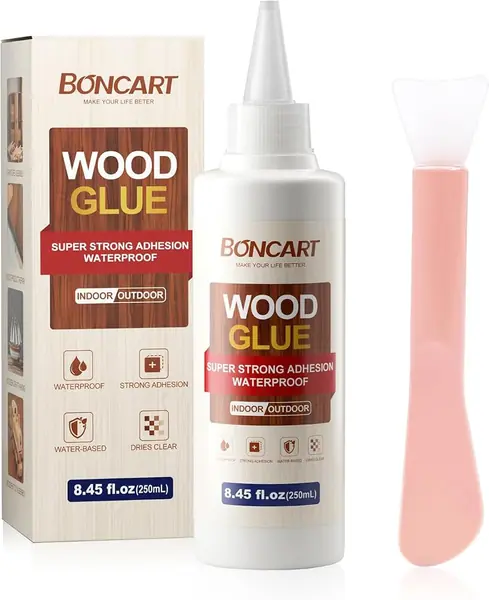
Boncart wood glue in an 8.45-ounce clear formula bottle with brush

Light-wood repairs

Shop Score 90/100
Volume
8.45 fluid ounces
Water Resistance
Waterproof, unclassified
Clamp Time
20 to 30 minutes
Included Applicators
Brush and precision nozzle
View on Amazon

A brush and a precision nozzle come in the box, and on composite wood that matters more than it sounds. Machined MDF edges are crumbly and thirsty, and the brush lets you work a thin coat into the fiber before the working bead goes down — the same sizing trick we do with a finger and a rag on the other bottles, minus the mess.

It dries clear, and that's the actual selling point. Every other PVA here cures tan, honey, or cream, so on birch plywood or a pale particleboard edge the clear bond line stops drawing the eye. Clamp time of 20 to 30 minutes and a 24-hour cure put it alongside the rest of the set, and a brush is easier to control near a veneer edge than a squeeze tip.

The bottle is small and, per ounce, the most expensive glue here: worth it for a clear seam on a display piece, harder to justify for a run of cabinet panels. Keep it for the light-wood repairs and buy a larger format when the job is a whole sheet of joints.

Worth Noting

  • No certified water-resistance class stated
Our Verdict

Clear-drying Boncart is the pick when a visible seam on light composite wood matters more than a certified water-resistance class.

Check Latest Price

How We Tested Glue for Composite Wood

We started with bottles we already reach for in our own shops, then filtered by water-resistance class — waterproof, water-resistant, or interior-only — along with bottle volume and whether the label printed a minimum application temperature, a spec that quietly decides whether a glue can live in an unheated garage. That left 14 glues, from small squeeze bottles to a shop jug.

For four months those bottles sat on a bench in a garage workshop and got used the way glue actually gets used: MDF shelf edges, particleboard cabinet sides, a split chair rail, plus a planter box and a small bench that stayed outdoors through two rainstorms. We spread each one on a freshly machined edge and watched how quickly it soaked in rather than pooled on the surface, then timed how long we could shift a board before the glue grabbed. After a day we put the offcuts in a vise and leaned on them until something gave, noting whether wood fibers tore or the glue line popped clean.

Squeeze-out got sanded with 150-grit, and half of it got painted, so we could see which cured lines disappeared and which left a tan stripe. We also tracked how long each joint needed before it took weight without creeping, how far a bottle went across a run of shelves, and whether the tip laid a clean bead or dribbled. Bottles were marked and checked again months later to see which caps sealed and which glue skinned over between projects.

One cold morning we glued in the unheated garage to see which formulas still flowed and grabbed at low shop temperatures. Nothing here was asked to carry a load on glue alone, either — anything structural got screws or dowels alongside the adhesive.

How to Choose a Glue for Composite Wood

Start With the Water-Resistance Class

Woodworking adhesives carry an ANSI/HPVA water-resistance class, and that class tells you where a joint can live. Type I is waterproof and handles full weather exposure; Type II shrugs off humidity and a wipe-down but not standing water; an unrated interior wood glue shouldn't see moisture at all. Match the class to the worst condition the piece will meet, not the average one — a bathroom vanity lives a harder life than a bookshelf. On anything within a splash zone, we pay for Type I and stop worrying about it.

Buy Enough Working Time for the Size of the Glue-Up

Open assembly time is the window you have before the glue starts to grab. On a small repair, a fast tack is a gift; on a two-foot plywood glue line or an assembly with a dozen dowels, it works against you. Look for a longer open time on complex builds, expect clamp times in the 20-to-30-minute range, and leave the piece for the full 24-hour cure before you put a load on it. Spreading the bead with a small brush or a roller buys extra seconds when a wide panel has to go together in one pass.

Prepare the Panel, Not Just the Joint

Composite wood is not solid wood, and the surface is where joints go wrong. Machined MDF and particleboard edges are loose fiber that drinks adhesive, so a joint can look generously glued and still starve; a thin sizing coat on the edge, left to soak for a minute, keeps the working bead where you put it.

Melamine and factory laminate are the opposite problem. A fused, non-porous face gives PVA nothing to bite, so these glues will not hold a factory finish however long you clamp. Scuff back to bare substrate or use a specialty adhesive made for the laminate.

Match Bottle Size and Shelf Life to How Often You Glue

A quart is the economical way to buy glue and often the wrong way to buy it if you glue twice a year. PVA skins over, tips clog, and an opened bottle has a shelf life measured in months — one product here lists 12. Small bottles cost more per ounce and waste less. Whatever the size, wipe the tip and the threads after every session. A cured plug in the neck is how most half-full bottles get thrown out, and it's entirely avoidable.

Watch the Bond Line Where the Seam Will Show

PVA colors run from clear through honey cream to tan, and the difference only matters on an exposed joint. On maple or birch a tan bond line reads as a shadow; on walnut it disappears. Clear-drying formulas cost more per ounce and give you slack on pale wood, which is the whole reason to pay for one. All of these sand flat and take finish, so a tight, well-clamped joint on a hidden carcass side is invisible whichever you buy.

Frequently Asked Questions

Final Verdict

Buy Titebond III and stop thinking about it. Water resistance is the one property you can't add later, and Type I covers a kitchen cabinet and a porch bench from the same jug. Add the lowest application temperature here and the longest working time in the group, and it's the bottle that suits both a first glue-up and a fussy one.

If your work stays indoors and you're going through panels by the sheet, Gorilla Wood Glue costs less per ounce and is rated for the same composites. And for the single loose shelf that started the whole search, Titebond II is the small bottle we hand people — enough glue for the job, and not so much that it sits in the cabinet turning solid.