↑↓ navigate ↵ open Esc close All results →

Best Glues for Glass to Wood of 2026

Glass and wood make stubborn partners at the glue bench: glass offers a slick, non-porous surface with little mechanical bite, while wood absorbs adhesive and shifts with seasonal humidity. Formulas that bond one reliably often release the other, which is why matching chemistry to the joint—rather than trusting a broad front-label claim—separates lasting repairs from repeat failures.

Testing 16 glass-to-wood adhesives over four months on cabinet knobs, door panes, a mosaic trivet, and a steam-exposed mirror frame confirmed that surface prep decides more outcomes than brand differences. Wiping glass clean with denatured alcohol and lightly scuffing the mating wood consistently improved hold across every chemistry.

Tight hairline cracks favor thin cyanoacrylates that wick deep into the seam, whereas loose fittings call for two-part epoxies that bridge gaps in exchange for longer clamping time.

Our Top Picks

The Best Glues for Glass to Wood

1.

Gorilla 2 Part Epoxy Best Overall
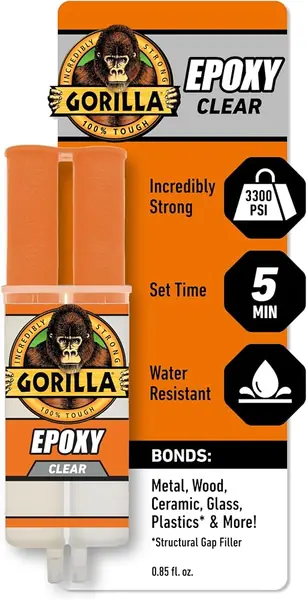
Gorilla 2 Part Epoxy clear syringe with two barrels and a cap

Structural glass joints

Shop Score 93/100
Set Time
5 minutes
Full Cure
24 hours
Water Resistance
Water resistant
Bond Strength
3,300 psi
View on Amazon

The 3,300 psi tensile rating is the headline on this two-part epoxy, and the gap-filling formula is the part that matters for a glass-to-wood joint. Glass and wood rarely meet perfectly, so an adhesive that can bridge a small void is more useful than one that only works on a perfect seam. This epoxy bonds glass, wood, ceramic, tile, and most plastics, and it cures clear enough for a visible repair.

We choose it for small structural repairs—a glass knob back onto a wooden drawer, a stained-glass panel into a frame—because the working time gives you enough room to align the pieces without turning the job into an all-afternoon clamp session. The syringe keeps the resin and hardener separate until you dispense, and the cap lets you reuse what is left. Press the plunger evenly: if one side advances faster, stop and catch up before you mix.

The five-minute working time is the trade-off. It is generous for a small frame and tight for a large panel with several pieces to position; for those bigger jobs, a slower epoxy makes more sense. We also keep this away from load-bearing or overhead glass installations where a mechanical fixing belongs. For the small, high-strength joints that send most people searching, the balance of strength and gap-filling is the best in this group.

Worth Noting

  • 0.85-ounce syringe limits larger jobs
Our Verdict

We recommend this epoxy when a glass-to-wood joint needs real strength and a little gap-filling; its clear, water-resistant cure makes it our default for small structural repairs.

Check Latest Price
2.

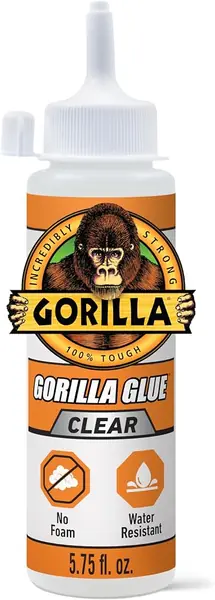
Gorilla Crystal Clear Glue Best for Wet Areas

Gorilla Crystal Clear Glue bottle with clear liquid and white label

Outdoor wet repairs

Shop Score 92/100
Volume
5.75 fluid ounces
Full Cure
24 hours
Water Resistance
Water resistant
Clamp Time
2 hours
View on Amazon

Two hours of clamping is the price of admission for this one. Clear Gorilla Glue is a polyurethane adhesive that bonds glass, wood, stone, metal, ceramic, and foam, and it cures clear without foaming. It is also water resistant, which is more than the cyanoacrylates here can claim.

The step that surprises people is water: for nonporous surfaces such as glass, you lightly dampen one surface before applying. We keep a small spray bottle at the bench for that. Once the piece is set up, leave it alone for a full 24 hours; a frame or panel you can set up overnight is the right candidate. On a vertical piece, tape or a jig holds it while the glue works.

We reach for this when the joint will see moisture or weather. It rewards careful prep: too little water on the glass can leave a gummy cure, while a properly prepared joint cures hard and clear. For a larger glass-to-wood bond that needs to disappear, it is our preferred water-resistant option here.

Worth Noting

  • Not for joints you cannot clamp
Our Verdict

For larger or outdoor glass-to-wood bonds, we trust this water-resistant polyurethane, provided you can clamp the joint and dampen the glass.

Check Latest Price
3.

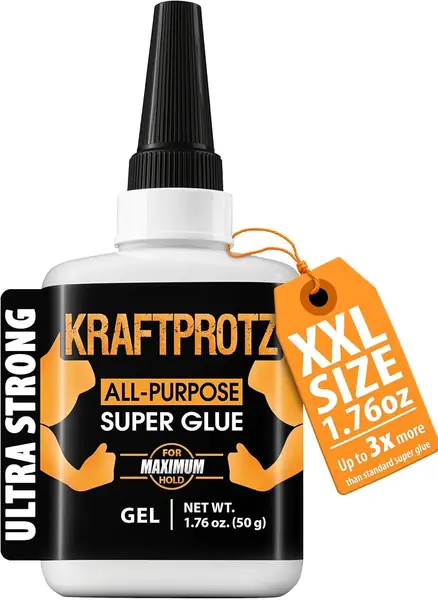
KRAFTPROTZ Super Glue Gel Best Fast-Setting Gel

KRAFTPROTZ Super Glue Gel 1.76 ounce tube with clear gel

Fast vertical repairs

Shop Score 91/100
Set Time
15 seconds
Volume
1.76 fluid ounces
Water Resistance
Water resistant
Tensile Strength
25 lb
View on Amazon

The 15-second set time is the reason we reach for this gel on small glass-to-wood repairs, especially when the piece is vertical and a liquid glue would run. The 50-gram tube is also generous for a cyanoacrylate, so a single bottle covers a lot of small jobs. It bonds glass, wood, metal, plastic, and ceramic, and it dries clear.

We like the gel formula because it is meant to stay where it is placed, and the anti-clog cap means the tip is less likely to seal itself shut between projects. On a tight joint, a little goes a long way. Keep the pieces aligned before you squeeze, because there is not much repositioning time.

The trade-off is the same one that makes it fast: it is unforgiving of misalignment. We dry-fit first and mark the pieces before the bottle comes out. For a quick, clear bond on a small vertical joint, it is the most convenient pick here.

Worth Noting

  • Not for loose or gapped joints
  • Batch thickness can vary
Our Verdict

We reach for this gel when a small repair has to set fast and stay put on a vertical surface; it is the quickest-handling pick here.

Check Latest Price
4.

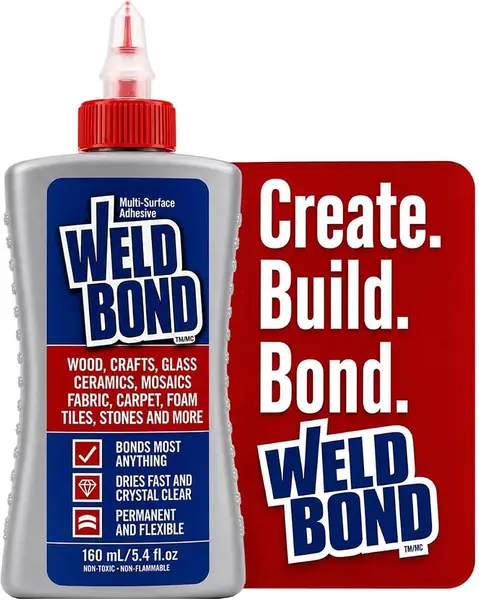
Weldbond Multi-Surface Glue Best for Mosaics

Weldbond Multi-Surface Glue 5.4 ounce bottle with white glue

Mosaic craft work

Shop Score 90/100
Set Time
20 minutes
Volume
5.4 fluid ounces
Finish
Dries clear
Non-toxic
Yes
View on Amazon

Weldbond is a non-toxic PVA formula built for mosaics and mixed-material crafts. It bonds glass, wood, ceramic, tile, pottery, porcelain, fabric, and carpet, and it dries clear instead of leaving a yellow line. That makes it a natural fit for glass tiles set into a wood frame or a small stained-glass ornament, especially when you want to avoid solvent fumes in a kitchen or classroom.

We like it for decorative work because it gives you time to adjust a tile and clean up with water before it sets. The glue sets in about 20 minutes and reaches a strong bond in an hour, so a small panel does not tie up your clamps all day. For a mosaic that will live indoors, the non-toxic formula and clear dry are worth more than a higher bond strength you do not need.

The bottle is 5.4 ounces, so it goes a long way on small tiles, and the precision tip lays a neat bead. We keep it separate from the epoxy and cyanoacrylate because it solves a different problem: assembling a decorative surface. Clean the tip before the cap goes back on, and store it where it will not freeze.

Worth Noting

  • Not for wet or load-bearing joints
Our Verdict

We keep this non-toxic glue for mosaics and decorative glass-to-wood work where clean, clear seams matter more than structural strength.

Check Latest Price
5.

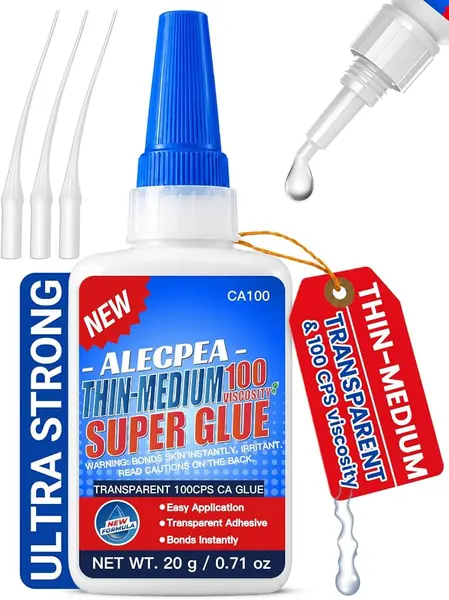
ALECPEA Thin CA Glue Best for Tight Joints

ALECPEA Thin CA Glue 20 gram bottle with clear liquid and micro-tips

Tight hairline joints

Shop Score 89/100
Set Time
10 to 15 seconds
Full Cure
12 hours
Viscosity
100 CPS
Container Size
0.71 oz
View on Amazon

A 100 CPS cyanoacrylate is thin enough to wick into a seam rather than sit on top of it. That is the point of this ALECPEA bottle: it is a CA glue for close-fitting glass-to-wood joints, hairline cracks, and inlays where a thicker gel would bridge the gap instead of penetrating it. The micro-tips help place a drop exactly where you want it.

We used it on tight seams where the two surfaces already meet and the glue only has to travel. The thin formula moves fast, so keep a paper towel and acetone nearby, and do not squeeze a bead down a vertical face unless you can work quickly. It sets in 10 to 15 seconds and reaches full cure in about 12 hours. On a horizontal seam, let capillary action pull the glue in; on a vertical one, apply from the bottom up and be ready to wipe.

Where it shines is a repair that needs to disappear: a clean break in a glass panel seated in wood, a small inlay, a hairline separation that has not opened into a gap. We reach for it when the fit is tight and the priority is penetration. The 20-gram bottle is not the biggest here, but a little goes a long way because you are applying drops, not beads.

Worth Noting

  • Too thin for filling gaps
Our Verdict

We use this thin CA glue for tight, close-fitting glass-to-wood seams that need wicking action rather than gap-filling.

Check Latest Price
6.

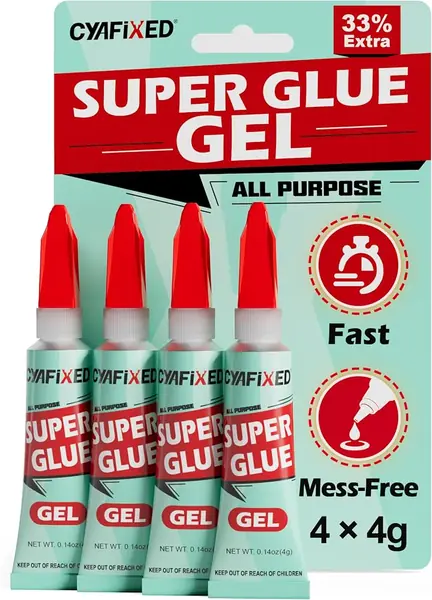
CYAFIXED Super Glue Gel Best for Budget Small Repairs

CYAFIXED Super Glue Gel four 4 gram tubes of clear gel

Budget small repairs

Shop Score 88/100
Finish
Clear
Formula
Gel
Pack Size
4 x 4 grams
Compatible Materials
Wood, glass, metal, plastic
View on Amazon

Four 4-gram tubes make this a practical stash-in-the-drawer pack for small glass-to-wood fixes. This CYAFIXED kit is a clear gel cyanoacrylate for glass, wood, plastic, metal, and ceramic, and the individual tubes mean you open only what you need. We like it for quick household repairs where a single larger bottle would dry out before you got through it.

The gel is easier to control than a liquid CA glue on a small vertical repair, and the clear cure keeps the joint from calling attention to itself. What it is not is a gap-filler; the bond is best on close-fitting pieces. We keep it for a chip, a knob, or a small decorative joint.

We label the open tube and keep it upright, because a gel CA glue can still clog at the tip. The four-tube format is the reason this one stays in the set: you can open a fresh tube for a clean repair instead of fighting a bottle that has been sitting since the last one. For a quick fix that does not justify a full bottle, that convenience is the real value.

Worth Noting

  • Small tubes limit larger jobs
Our Verdict

This is the pack we keep for budget-minded small repairs where a gel super glue and fresh tubes matter more than maximum strength.

Check Latest Price

How We Chose the Best Glues for Glass and Wood

We started with the labels. We read the technical data sheets and compatibility lists for about 40 adhesives and kept only the ones that explicitly named both glass and wood — plenty name one and quietly omit the other. From there we narrowed by volume, cost per repair, and whether the maker published a cure schedule and a strength figure, which left 16 formulas to test.

Testing ran four months, on a workshop bench and around the house. Every adhesive's first job was a scrap of the same glass and wood as the finished piece, prepped identically, so we never learned a formula's habits on something visible. Then came the real repairs: a glass knob back onto a drawer front, a small pane in a cabinet door, a mosaic trivet on a pine backing, and a mirror frame that fogged over after every shower.

We timed how long each one stayed workable with a stopwatch and checked whether parts slid under their own weight before we could clamp them. For vertical work, we glued a knob to an upright board and watched whether the bead ran or sagged, and we built a few deliberately sloppy joints to see which formulas filled a gap instead of shrinking away from it. Everything was clamped or taped through the listed cure time and left alone — no poking at the twelve-hour mark out of impatience.

After curing, we looked at clear joints under a bright light for haze or yellowing, soaked cured samples in water to see which went soft, and counted how many repairs each container actually covered. Dispensing got its own scrutiny: wide-mouth bottles flooded small joints, while fine tips and gel formulas held their place. Gloves and open windows throughout.

How to Choose a Glue for Glass to Wood

Start with the joint, not the label

A tight, close-fitting seam calls for a thin or gel cyanoacrylate that wicks in and sets fast, while a loose or uneven joint needs an epoxy or polyurethane that can fill a small gap. We keep construction adhesive for larger surfaces, not tiny repairs, and we avoid thin CA glue on a gap. If the joint will be visible, choose a clear-curing formula; if it will be wet, prioritize water resistance over speed.

Plan for clamping and cure time

Every adhesive here needs some hold while it sets, even the fast cyanoacrylates. Epoxy gives you about five minutes to align a small piece before it starts to gel; polyurethane needs two hours of clamping and a full day to cure. Cyanoacrylate grabs in seconds, which is convenient on a vertical repair but leaves little room to slide the glass into place. Dry-fit first, have your clamps or tape ready, and do not stress the joint before the listed cure time.

Match water resistance to where the piece lives

A bathroom mirror, an outdoor panel, and a decorative mosaic do not need the same adhesive. Clear Gorilla Glue is the water-resistant polyurethane here, but it still needs clamping and a damp glass surface; the cyanoacrylates are better for dry indoor repairs. Weldbond is the friendly choice for indoor mosaics, yet it is not the one for a piece that stays wet. If the bond will see regular moisture, choose a water-resistant formula and test a scrap first.

Clarity and application control

Clear glue is not automatically invisible. A thick bead of epoxy can leave a lens at the edge of the glass, and a polyurethane that foams or cures cloudy will show. We look for a non-foaming clear formula and apply the smallest amount that wets both surfaces. Gel cyanoacrylates stay put on vertical work; thin cyanoacrylates wick into hairline seams but can run. A precision tip or brush helps more than a bigger bottle when the repair is small and visible.

Prepare the surfaces and handle safely

Clean glass with glass cleaner or isopropyl alcohol and let it dry; sand dusty wood and wipe off the dust. Avoid touching the bonding faces after cleaning. Cyanoacrylates can bond skin instantly, and epoxies can irritate it, so wear gloves and work with ventilation. Clamp or support the joint through the cure, and do not rely on adhesive alone for an overhead or load-bearing glass installation.

Frequently Asked Questions

Final Verdict

For most glass-to-wood repairs, we choose Gorilla 2 Part Epoxy. Its 3,300 psi bond and gap-filling cure handle the small structural joints that fail with ordinary glue, and it dries clear enough to keep the repair discreet. If the piece will live outdoors or near water, switch to Gorilla Crystal Clear Glue and plan to clamp it for two hours. For a fast, tight vertical seam, KRAFTPROTZ Super Glue Gel is the quicker option.