↑↓ navigate ↵ open Esc close All results →

Best Glues for Metal to Wood of 2026

A metal bracket pulls loose from a wooden shelf, and the first bottle you grab is usually the wrong one. Metal and wood move differently — one expands with heat, the other swells with humidity — so an adhesive that grips a steel plate can quietly release its hold on the wood behind it. What you need is a glue built for both materials, with enough working time to line the joint up and enough body to fill the gap where the surfaces don't quite meet.

We tested 14 adhesives over six months, and the differences that mattered weren't on the front label. Working time and cure time are two separate clocks: some products let you slide a joint for a few minutes before it grabs, while instant formulas set in seconds and give you one chance to get it right. We also watched what each seam looked like the next day — clear, cloudy, or foamed out — and how far a container stretched for what it cost.

The seven picks below cover a metal drawer pull that needs a fast fix, an outdoor bracket that has to survive the weather, and a load-bearing repair you'd rather not redo. Each one is made for bonding metal to wood, and each suits a different size of job.

Our Top Picks

The Best Glues for Metal to Wood

1.

Gorilla Epoxy Best Overall
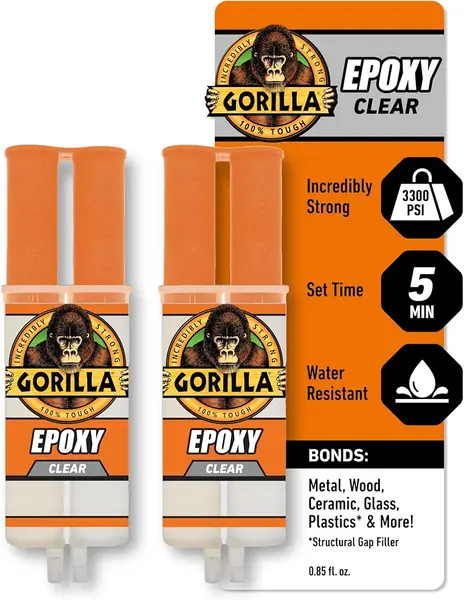
Gorilla clear two-part epoxy syringe with separate resin and hardener barrels

Structural metal-to-wood repairs

Shop Score 95/100
Cure Time
24 hours
Format
Two-part syringe
Set Time
5 minutes
Bond Strength
3,300 psi
View on Amazon

Two-part epoxy is the chemistry we trust when metal and wood meet, and Gorilla's syringe kit makes the mix straightforward: the resin and hardener stay separate until you dispense them. The 3,300 psi tensile rating is near the top of this set, and the five-minute set gives you time to align a bracket or a repaired chair leg before the clamp goes on. That combination is why this is our default.

The gap-filling formula matters as much as the strength number. Metal and wood rarely sit perfectly flush, and this epoxy fills small voids instead of demanding a perfect, clamp-tight seam. It cures clear, so it works on visible repairs where a brown glue line would be unacceptable. We also like that it is water resistant enough for a bathroom or a sheltered outdoor repair.

Dispensing takes a little care: the two barrels need even pressure, and you mix only what you can use within the working time. We dry-fit the pieces first and treat the five-minute window as a real constraint. A broad panel calls for a cartridge adhesive, but for a bracket, a handle, or a small furniture repair, the syringe format keeps the mix manageable.

Clamping is still part of the job. The epoxy needs support while it cures, and the 24-hour full cure means you should not put a loaded joint back in service the same hour. We appreciate the clear cure and the gap-filling behavior most because they let a repair look intentional rather than improvised.

Worth Noting

  • Small syringes limit larger projects
Our Verdict

We recommend this epoxy as the default for metal-to-wood joints because it gap-fills, sets in five minutes, and reaches 3,300 psi.

Check Latest Price

2.

Loctite PL Premium Best for Large Projects

Loctite PL Premium polyurethane construction adhesive cartridge in tan and white

Large outdoor projects

Shop Score 94/100
Cure Time
24 hours
Water Resistance
Waterproof
Set Time
30 minutes
Strength
3x stronger than ordinary construction adhesives
View on Amazon

A 10-ounce cartridge is a different format for a different metal-to-wood job: this is the one we reach for when the bond runs along a long seam, a subfloor patch, or a broad panel that can eat through a syringe kit. The polyurethane formula is rated three times stronger than ordinary construction adhesives and bonds wood, metal, concrete, stone, and more.

We choose it for coverage and weather resistance, not for delicate work. It spreads in a thick bead, fills gaps, and stays waterproof, which makes it a sensible pick for outdoor railings, garage repairs, and structural assemblies that will be clamped or fastened. The 30-minute set gives you time to position a long piece before the adhesive grabs.

The bead is too heavy for a tiny repair or a visible furniture joint. Inside, where appearance matters, we prefer a clear epoxy or polyurethane. For broad, hidden, load-bearing surfaces, this is the most practical way to get an even, gap-filling layer. Plan on clamping or fastening the assembly while the 24-hour cure runs.

Worth Noting

  • Requires a separate caulk gun
Our Verdict

We choose this cartridge when a metal-to-wood bond covers a broad, uneven surface and needs waterproof, gap-filling coverage.

Check Latest Price
3.

Gorilla Clear Glue Best for Visible Joints

Gorilla Clear Glue bottle with clear non-foaming polyurethane adhesive

Visible indoor joints

Shop Score 93/100
Cure Time
24 hours
Water Resistance
Water resistant
Volume
3.75 fl oz
Clamp Time
2 hours
View on Amazon

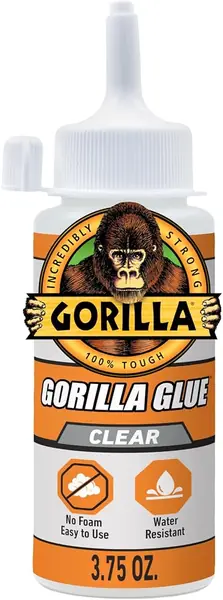
Clear Gorilla Glue is the polyurethane pick for joints that will be seen. The formula is non-foaming and dries clear, so it does not leave the brown, expanding bead that original polyurethane glue can push out of a seam. That matters on a metal bracket attached to a light wood shelf or a repaired decorative piece.

The directions call for dampening non-porous surfaces such as metal before applying the glue, then clamping for two hours. We pay attention to that prep because polyurethane needs moisture to cure and because the clamp time is not optional. The 24-hour full cure rewards patience; the water-resistant finish makes it suitable for sheltered outdoor use. We also like that the bottle size is practical for several small jobs without turning into a shelf relic.

What we like most is the discretion. A clear, non-foaming cure lets you repair a visible metal-to-wood joint without turning it into a finishing project. It is not the fastest option here, and the two-hour clamp asks you to plan ahead, but the result is a neat seam that can be sanded or painted around. That is why we choose it over a brown polyurethane for furniture.

Worth Noting

  • Requires dampening metal surfaces before glue application
  • Needs a mandatory two-hour clamp and 24-hour cure
Our Verdict

We reach for this clear polyurethane when a visible metal-to-wood joint needs water resistance without foaming or a brown glue line.

Check Latest Price
4.

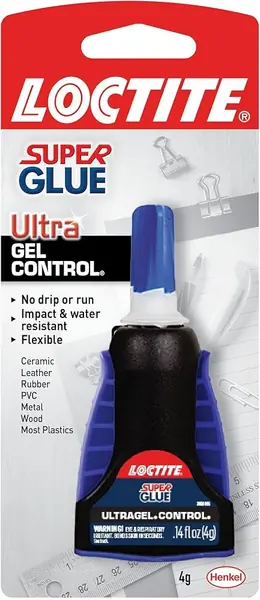
Loctite Super Glue Ultra Gel Control Best for Quick Precision Repairs

Loctite Ultra Gel Control super glue bottle with side-squeeze applicator

Tiny quick fixes

Shop Score 92/100
Cure Time
24 hours
Water Resistance
Water resistant
Volume
0.14 fl oz
Bond Strength
3,625 psi
View on Amazon

The 3,625 psi tensile rating is the headline number here, and it is the highest stated bond strength in this set. That sounds like overkill for a cyanoacrylate, but it tells you what Loctite is selling: a rubber-toughened adhesive for small joints that see handling, vibration, or a little flex.

The gel formula does not drip or run, and the side-squeeze bottle gives you pinpoint control on a vertical repair. We like it for reattaching a metal plate to a wood frame, a small hinge, or a decorative fitting where the surfaces meet tightly and you do not want a clamp sitting for hours.

Cyanoacrylate is not a gap filler. If the metal and wood do not mate closely, the glue has nothing to bridge, and the joint will starve. We dry-fit first and use the minimum amount that will cover the mating faces. The rubber-toughened formula is more forgiving of impact than ordinary super glue, but it still wants clean, dry surfaces.

We reach for it when precision and speed matter more than coverage, and we keep a cartridge or epoxy on hand for anything larger. For a small, tight metal-to-wood joint, it is the cleanest fast fix in this group.

Worth Noting

  • Tiny 0.14 fl oz bottle
Our Verdict

We keep this gel for small tight metal-to-wood fixes where the rubber-toughened formula and pinpoint bottle matter more than volume.

Check Latest Price
5.

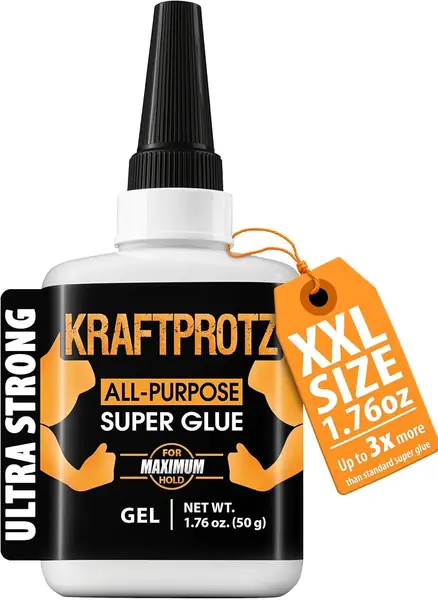
KRAFTPROTZ Super Glue Gel Best for Budget Craft Repairs

KRAFTPROTZ gel super glue tube with precision tip and clear finish

Budget craft repairs

Shop Score 91/100
Format
Gel
Set Time
15 seconds
Volume
1.76 fl oz
Bond Strength
25 lb
View on Amazon

A 1.76-ounce tube of gel for a few dollars is the value play in this group, and the 15-second set is quick enough for small assemblies that need to stay put without a long clamp. The gel consistency is meant to sit between runny cyanoacrylate and a thicker adhesive, so it stays closer to where you apply it. The airtight cap helps the tube survive between small jobs.

We like it for close-fitting metal and wood craft parts: a small plaque, a model, a repair where the pieces meet cleanly and the load is light. The 25-pound tensile rating tells you this is not a structural adhesive, and the fast set rewards a dry fit before you commit. It dries clear, which keeps the repair discreet on light-colored wood. The clear finish also means you can use it on a visible craft piece without hiding the repair under paint.

The price is the attraction, but the tube is still a cyanoacrylate: it wants clean, dry surfaces and tight joints. We keep it for small jobs and reach for epoxy when the metal and wood do not mate perfectly. For the occasional crafter or model maker, it is an easy bottle to have on the bench. We write the open date on the tube so the oldest one gets used first.

Worth Noting

  • Small 1.76 oz tube
Our Verdict

We suggest this gel for budget-minded craft and repair jobs on close-fitting metal and wood, not for structural gaps.

Check Latest Price
6.

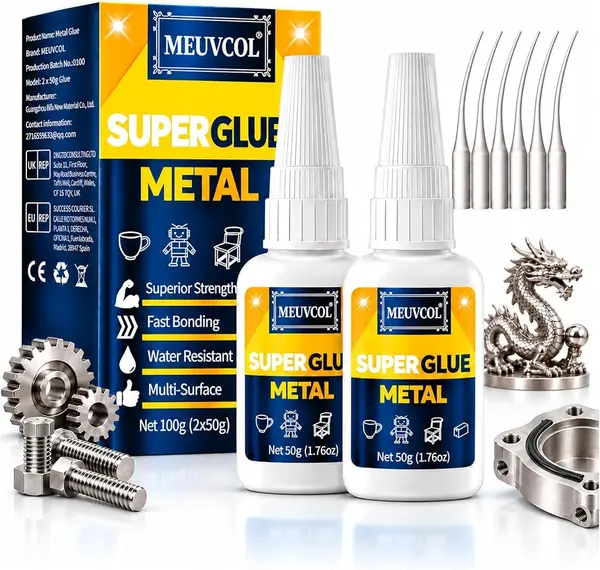
Meuvcol Metal Glue Best for Metal Fitting Repairs

Meuvcol Metal Glue bottle with precision micro-tips and clear liquid adhesive

Metal fitting repairs

Shop Score 89/100
Cure Time
24 hours
Water Resistance
Waterproof
Format
Liquid
Size
3.53 oz
View on Amazon

The label leads with metal, and that is the reason this one caught our eye for a metal-to-wood repair: it is formulated as a clear liquid cyanoacrylate for metal, aluminum, stainless steel, plastic, wood, and ceramics. The kit includes six precision micro-tips, which matters when the glue point is a small fitting rather than a broad panel.

The 100-gram supply is generous for a cyanoacrylate, and the liquid formula wicks into tight seams. We see it as a detail glue: a metal trim piece on a wood box, a small bracket, a repaired fitting where the surfaces meet closely and you want the glue to disappear.

What we appreciate most is the control at the tip. The fine applicators let you place a small amount exactly where the metal meets wood, and the clear cure keeps the repair from announcing itself. We use it on flat or well-supported work because the liquid can run on a vertical face.

The 24-hour full cure is longer than the instant set suggests, so we leave the joint supported overnight before adding stress. For a small metal-to-wood detail where appearance matters, this is a capable bottle; for a loaded joint, we choose the epoxy instead.

Worth Noting

  • Not a gap-filling epoxy
Our Verdict

We like this metal-first liquid glue for small fittings and detail work where the fine tips and large bottle help.

Check Latest Price
7.

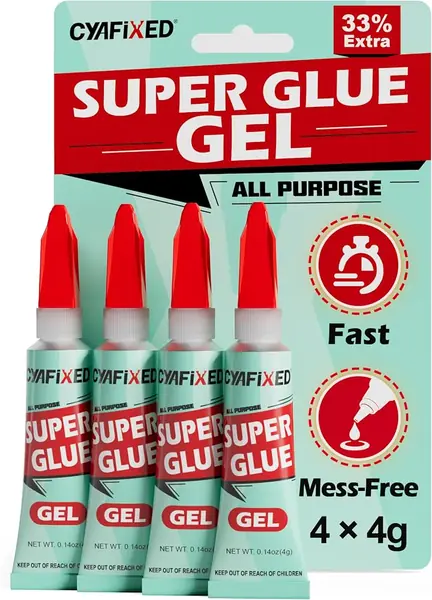
CYAFIXED Super Glue Gel Best for Occasional Small Repairs

CYAFIXED four-pack gel super glue tubes with clear adhesive

Occasional small repairs

Shop Score 88/100
Water Resistance
Waterproof
Format
Gel
Set Time
45 seconds
Size
4 x 4 g
View on Amazon

Four small gel tubes and a 45-second set make this a low-commitment kit for tiny metal-to-wood repairs. The gel is thicker than a liquid cyanoacrylate, so it stays closer to the spot on a small vertical face, and the clear cure keeps a repair from showing on light wood. That is why we keep it in the small-repairs drawer rather than on a production bench.

The four-gram tubes are a practical way to avoid a half-used bottle turning solid between projects. We use one tube for a single job and keep the rest sealed. The waterproof label is useful for a bathroom fitting or a sheltered outdoor detail, though this is still a cyanoacrylate, so the joint needs to be clean, dry, and close-fitting. We write the open date on each tube so we know which one to use first.

It is not the choice for a structural bracket or a gap-filled seam. The tubes are small, and the bond is best on light loads and small contact areas. For a quick repair where you want just enough glue and no cleanup, the multipack is easy to justify. The clear gel also cleans up with less fuss than a runny liquid on a small repair.

Worth Noting

  • Unsuitable for structural brackets or gap-filled seams
  • Works only on clean, close-fitting light-load joints
Our Verdict

We turn to this multipack for occasional tiny repairs when you want fresh gel tubes without committing to a full bottle.

Check Latest Price

How We Tested Glues for Metal to Wood

We started with the labels rather than the marketing copy, and dropped anything that didn't name both metal and wood in its own instructions. From there we sorted by format — two-part syringe, construction cartridge, squeeze bottle, gel, single-use minis — and by container size, since a 10-ounce cartridge makes sense for a fence gate and is a nuisance for a drawer pull. Fourteen adhesives made it into testing, and we used them for six months.

Most of the work happened at a garage workbench, with a second round at the kitchen table on small craft and jewelry-box repairs. We scuffed every metal surface with sandpaper and wiped the wood clean before gluing, then clamped each joint and left it for the full cure time the label stated. While the clamps were on, we timed how long we could still shift the pieces. Afterward we looked at the seam to see whether it dried clear, yellowed, or foamed out, and noted how much squeeze-out we had to scrape away.

We also built the awkward cases on purpose. Some joints were left slightly uneven, and we recorded whether the adhesive bridged the gap or ran straight out of it. Bracket repairs were hung with weight once cured. A set of outdoor samples sat on a fence through rain and heat, and we checked them for softening and for the bond receding from the edge. Throughout, we tracked how much product a small repair consumed, whether the tip clogged between sessions, and how strong the odor was in a ventilated garage with gloves and glasses on.

How to Choose a Glue for Metal to Wood

Start With the Joint, Not the Label

The same metal-to-wood repair can call for different adhesives. A tight, small joint is a job for a gel cyanoacrylate such as Loctite Ultra Gel Control. A joint with a small gap needs a gap-filling epoxy like Gorilla Epoxy. A long, broad seam on a subfloor or outdoor assembly is construction-adhesive territory, where Loctite PL Premium's cartridge format makes more sense than a syringe. We start by asking how well the parts mate, then choose the chemistry.

A multi-surface label is not a promise that the glue will fill a gap or carry a load. Cyanoacrylates are strong in thin films but brittle in thick ones; construction adhesives need surface area and often a caulk gun. Match the format to the repair before you compare strength numbers.

Prepare Metal and Wood for a Lasting Bond

Metal and wood move at different rates and have different surfaces, so prep matters. Clean both faces, sand or abrade shiny metal, and dry-fit before opening the glue. Polyurethane formulas such as Gorilla Clear Glue ask you to dampen non-porous metal first; epoxy wants a clean, slightly rough surface and an even mix. We keep a clamp and a dry-fit check in the routine because no adhesive can pull a warped joint closed.

Clamping is not optional for most structural repairs. The label's clamp time is the minimum, not a suggestion. If you cannot clamp, choose a fast gel for a small tight joint rather than a slow-curing construction adhesive.

Working Time and Cure Time Are Different

A five-minute epoxy gives you time to align a bracket, but it also starts to thicken while you fuss. A 30-minute construction adhesive lets you position a long board, while a cyanoacrylate grabs in seconds and leaves little room for adjustment. We dry-fit first and lay out clamps before mixing or dispensing. That single habit prevents most messy, misaligned repairs.

Full cure is usually longer than set. Do not load a joint just because it feels firm. The labels here list 24-hour full cures for epoxy, polyurethane, and construction adhesive, so plan the repair for a day when the piece can stay still.

Water, Heat, and Visibility

For a bathroom, kitchen, garage, or outdoor repair, choose a waterproof or water-resistant adhesive and treat water resistant as different from waterproof. Loctite PL Premium is waterproof; Gorilla Epoxy and Loctite Ultra Gel Control are water resistant. We reserve water-resistant bonds for sheltered spots and use a waterproof construction adhesive where the joint will see rain or standing water.

Appearance is the other half. Clear epoxies and non-foaming polyurethanes keep a visible joint discreet, while expanding polyurethane can push a brown foam line out of the seam. If the repair will show, we pay for clear.

Match the Container to the Size of the Repair

A 0.85-ounce epoxy syringe is enough for a bracket or a small furniture repair; a 10-ounce cartridge covers a long seam or a broad panel. Gel tubes are convenient for one-off fixes because you open only what you need. We avoid buying a large cartridge for a tiny joint unless we already have a caulk gun and a plan for the leftover adhesive.

Coverage is not the same as strength. A small bottle of high-strength epoxy can be the right buy for a critical little joint, while a larger tube of fast gel is a better value for craft work. Buy for the job in front of you, not the biggest number on the label.

Frequently Asked Questions

Final Verdict

Gorilla Epoxy is the one we recommend first for metal to wood because it does the two things a mixed-material joint needs: it fills small gaps and it reaches a high stated tensile strength without a long clamp. For a long, broad, or wet assembly, we switch to Loctite PL Premium and its waterproof cartridge.

For a small, tight repair where speed matters, Loctite Ultra Gel Control is the better fit. Start with the joint's fit and exposure, and the choice becomes clear.