↑↓ navigate ↵ open Esc close All results →

Best Glues for Leather to Wood of 2026

Because leather bends while wood stays rigid, poorly matched adhesives usually fail in one of two ways: thin liquids wick straight into the hide and starve the bond line, or brittle formulas cure rock-hard and fracture the first time the strap flexes. Even bottles that list both materials on the back rarely explain how flexible the cured seam stays.

Over three months of bonding leather to oak blocks, pine strips, and vertical shelf wraps using 14 cyanoacrylate glues, thicker gels consistently held position along upright edges without running. Buying small tubes also proved more economical than large bottles that thicken or cure in the cap between infrequent repairs.

Whether securing a flexing pull strap, wrapping a shelf edge, closing a tight seam, or fixing fine trim, all four adhesives dry clear without staining the surrounding grain or hide.

Our Top Picks

The Best Glues for Leather to Wood

1.

Loctite Super Glue Ultra Gel Control Best Overall
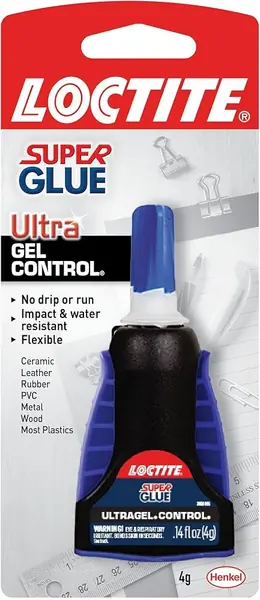
Loctite Super Glue Ultra Gel Control bottle with clear gel and side-squeeze dispenser

Flexing leather joints

Shop Score 95/100
Bottle Size
0.14 fl oz
Leather And Wood
Both listed
Formula
Rubber-toughened gel
Full Cure
24 hours
View on Amazon

Leather moves; wood does not. That mismatch is why we reach for Loctite Super Glue Ultra Gel Control first when a leather panel, strap, or patch has to sit on a wood frame. The cured film is rubber-toughened rather than glass-hard, and Loctite lists leather and wood among the materials it bonds. We want a little give at that seam, not a brittle line that cracks the first time the leather flexes.

The side-squeeze bottle is a real advantage on a narrow edge. We can place a small bead without the glue running down the wood, and the gel stays where it lands long enough to position the leather. The listed full cure is 24 hours, and the gel sets without clamping. In our sample joins, the slower gel gave us a useful moment to line up the grain and press the pieces together; a watery CA grabs before you are ready.

The clear cure is another reason we like it for a visible seam; it leaves a transparent line rather than a brown foam bead. We also appreciate the side-squeeze bottle, which stays clean between uses with its cap. We keep one with the leather scraps and reach for it when the seam is narrow and visible.

Worth Noting

  • Small 0.14 fl oz bottle
Our Verdict

We recommend Loctite Super Glue Ultra Gel Control as the default for leather-to-wood repairs because its rubber-toughened gel lists both materials and keeps a little give at the joint.

Check Latest Price
2.

Gorilla Super Glue Gel Best Budget

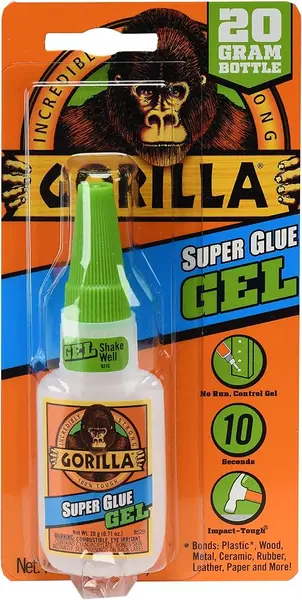
Gorilla Super Glue Gel bottle with clear gel and anti-clog cap

Vertical leather repairs

Shop Score 94/100
Bottle Size
0.71 oz
Leather And Wood
Both listed
Set Time
10–45 seconds
Formula
Thick no-run gel
View on Amazon

Twenty grams is a lot of CA glue for the money, and the thick gel is why this is the bottle we keep for vertical work. Gorilla Super Glue Gel stays where it lands instead of running down a wood face, and the anti-clog cap has a metal pin to keep the tip open between projects. When a leather strip has to go onto a cabinet face or a trim piece, that no-run body saves a lot of holding and readjusting.

The gel is easy to place in a short bead along a leather edge, and the 10-to-45-second set window is forgiving enough to shift the piece a little. We used it on a wood scrap with a leather offcut and liked that it did not soak straight into the end grain the way thin CA can. The clear finish keeps the repair discreet, and the larger bottle means we do not ration it on a repair that needs a continuous line.

We save this bottle for vertical panels, trim, and repairs where the leather is backed by wood. The big bottle means we can lay a continuous bead without stopping to hunt for more glue, and that is the practical advantage on a larger repair. It is the one we hand to someone who wants a single bottle for a run of household fixes.

Worth Noting

  • Cures rigid on leather that flexes
Our Verdict

We keep Gorilla Super Glue Gel for vertical jobs where a bigger bottle and no-run gel matter more than a flexible cure.

Check Latest Price
3.

Starbond Medium CA Glue Best for Woodworkers

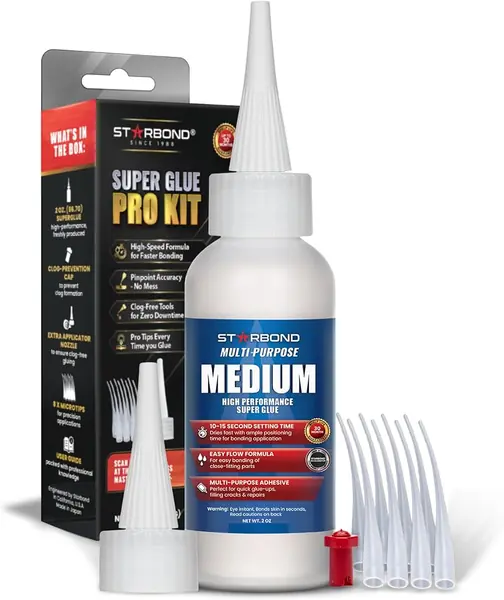
Starbond Medium CA glue bottle with microtips and spare applicator nozzles

Tight woodworking joints

Shop Score 93/100
Bottle Size
2 oz
Leather And Wood
Both listed
Set Time
10–15 seconds
Kit Includes
Two nozzles and eight microtips
View on Amazon

The eight microtips in the kit are the reason this is the bottle we hand someone joining a thin leather panel to a tight wood frame. Starbond Medium is a 2-ounce CA with a 10-to-15-second set, and the extra nozzles let you lay a narrow bead exactly on the seam instead of flooding the leather and hoping.

We tested it on a tight butt joint where the leather met a planed wood edge. The medium CA wicked into the gap and grabbed quickly, and the fine tip gave us more control than a squeeze bottle. The kit also includes a pin cap and spare nozzle, which matters because CA tips clog if you leave them sitting. For woodworking repairs, the 2-ounce bottle is a useful size; it does not feel like a single-use tube.

The thin formula is the trade-off. On open leather grain or end grain, it can travel farther than you intend, so we keep the bead small and test on a hidden scrap first. It is not the bottle for filling a gap; this one is for closing a tight seam. The applicator kit is the reason we keep it in the woodworking drawer.

Worth Noting

  • Premium price for a CA kit
Our Verdict

Our pick for woodworkers: the microtips and 2-ounce bottle make Starbond Medium the controlled way to glue thin leather into a tight wood joint.

Check Latest Price
4.

Krazy Glue Precision Control Pen Best for Tiny Detail Repairs

Krazy Glue Precision Control pen with clear adhesive and one-drop applicator

Tiny detail repairs

Shop Score 92/100
Bottle Size
0.14 oz
Leather And Wood
Both listed
Set Time
10 seconds
Applicator
One-drop precision pen
View on Amazon

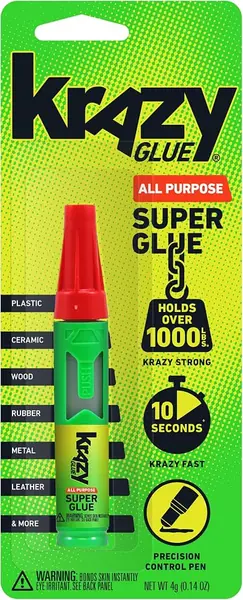
A pen-shaped bottle is the odd one out here. The Krazy Glue Precision Control Pen puts out one drop at a time through a pressure-grip body, so you can tack a curled leather edge or a small patch without opening a full bottle of CA. The clear adhesive lists leather and wood, and the fine applicator is built for a spot rather than a long seam.

We liked the leakproof cap and the glue indicator more than we expected. The cap means the pen can live in a drawer without a crust forming, and the window tells you whether there is enough left before you start. The 10-second set is quick, and the clear glue disappears on a small repair. For a quick fix on a chair arm or a decorative panel, the control is the point.

The pressure grips take a firm squeeze, and that can be awkward if you have limited hand strength or you are working upside down. We treat it as a detail tool: one drop, one small patch, then back in the drawer. It is not the pen for a long leather panel, but for a tiny repair the short reach is the whole point.

Worth Noting

  • Small 4 g fill
Our Verdict

For tiny touch-ups, we reach for Krazy Glue's pen because the one-drop applicator puts glue exactly where a leather edge meets wood.

Check Latest Price

How We Tested Glues on Leather-to-Wood Seams

We started with labels, because the claim that matters here is printed small: does the bottle name both leather and wood, and does it say anything about how hard it cures? We dropped thin, water-clear liquids meant for hairline cracks in rigid material and kept gels and medium-viscosity formulas with some gap-filling body, favoring bottles that came with a fine applicator tip. Then we bought 14, from workshop kits to the small tubes sold at hardware counters.

Testing ran three months at a workbench, with a fan pulling fumes away and nitrile gloves and safety glasses on. We glued leather scraps to oak and pine blocks, clamped them for the full set time, then flexed each seam by hand an hour later and again the next day; anything that cracked at the leather edge got marked down, however strong the first grab felt.

We also wrapped leather around the vertical edge of a shelf to see which formulas ran and which stayed put, and timed how long each gave us to slide the leather into place. On narrow edges we watched how much came out of the tip, since a bottle that floods ruins a small repair.

Bottle size got weighed against the actual repair: a workshop-size bottle for a two-inch seam is money thickening in the drawer. After a full cure we held each seam against pale and dark leather to see whether the glue dried clear or amber, and checked whether it filled a gap at a rough wood edge or sank in and left a void. Every bottle got the same handling: gloves, eye protection, an open window, cap on and out of reach between uses. We never put any of these near skin.

How to Choose a Glue for Leather to Wood

Check compatibility before strength

Start by looking for both leather and wood in the stated materials, not just 'all purpose' on the label. Cyanoacrylate, or CA, is the practical family for a leather-to-wood repair because it bonds quickly and needs little clamping. A rubber-toughened CA is our preference for a leather edge that may flex; a standard CA cures hard and can crack at the seam. Loctite Ultra Gel Control and Gorilla Super Glue Gel both list leather and wood, while Starbond Medium lists both among its compatible materials.

Match the formula to the joint

Gel is the safest default for a vertical edge or a porous leather surface because it stays where you put it. A thin CA, like Starbond Medium, wicks into a tight seam and sets fast, which is useful when the leather and wood already fit closely. A pen applicator, like the Krazy Glue Precision Control Pen, is for a small patch or a curled edge, not a long run. If the joint has a visible gap, a medium-thick gap filler makes more sense than a watery glue, but test it on scrap because the thicker bead can show.

Plan for a fast set and a longer cure

Most CA glues grab in seconds, so dry-fit the leather and wood before you open the bottle. Keep clamps or painter's tape within reach, and press the pieces together with light, even pressure. Loctite lists a 24-hour full cure, while Gorilla gives a 10-to-45-second set window; those numbers describe different stages, not competing promises. Do not stress the joint until the cure is complete, and do not use more glue to buy yourself time.

Protect the leather and the wood finish

CA can darken or stiffen leather and leave a white bloom on nearby wood, so test on a hidden scrap before you commit. Mask the wood beside the seam, use a small bead, and wipe squeeze-out immediately with a clean cloth. A clear CA keeps the repair discreet, but a hidden test is still the only way to know how a particular hide will react. If the leather is oily or heavily finished, clean and lightly scuff it first, then let it dry completely.

Buy enough glue and store it upright

Bottle size matters more on a broad repair than on a tiny patch. The Loctite bottle is a small 0.14 fluid ounces, the Gorilla gel is 20 grams, and the Starbond kit is 2 ounces; match that to the area you need to cover. CA glues clog at the tip and degrade over time, so store bottles upright, wipe the tip, and keep the cap sealed. A larger bottle is only a value if you can keep it usable.

Frequently Asked Questions

Final Verdict

We recommend Loctite Super Glue Ultra Gel Control for most leather-to-wood repairs. Its rubber-toughened gel lists both materials, stays slightly flexible at the seam, and gives you pinpoint control on a narrow edge. For a vertical repair where you need more glue for less, Gorilla Super Glue Gel is the budget choice. Choose Starbond Medium when the seam is tight and you want microtips; choose the Krazy Glue pen for tiny touch-ups. The deciding factor is whether the leather needs to move.