↑↓ navigate ↵ open Esc close All results →

Best Glue for Rubber to Wood

Rubber stretches and tugs along the edge of a bond line while rigid wood refuses to yield, causing brittle adhesives that look solid on day one to fracture the moment a foot or gasket flexes. Fast super glues lock quickly but often snap under shear, whereas flexible contact cements move with the elastomer in exchange for clamping pressure and a full day of cure time.

Bonding rubber sheeting, weatherstripping, and bumper feet to wood with 16 adhesives over four months revealed that surface prep outranks formula tweaks. Most rubber arrives slightly oily and non-porous, so scuffing the mating face with sandpaper improved bond survival more than switching brands—with viscosity second, split between wicking liquids for tight seams and non-sag gels for upright trim.

Each included adhesive explicitly lists both rubber and wood on its technical sheet, separating quick two-minute indoor fixes from weather-resistant porch joints.

Our Top Picks

The Best Glue for Rubber to Wood

1.

Gorilla Super Glue Gel XL Best Overall
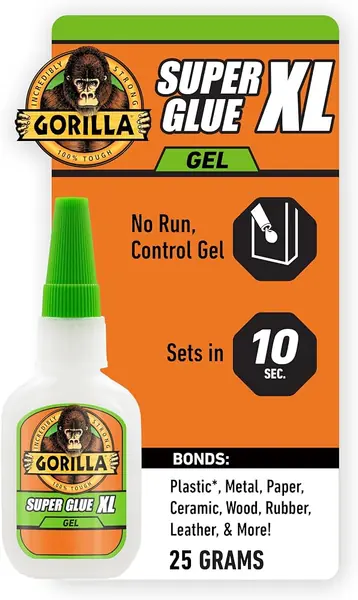
Gorilla Super Glue Gel XL clear gel adhesive in a 25 gram squeeze bottle

Quick indoor repairs

Shop Score 94/100
Water Resistance
Not water resistant
Form
Gel
Set Time
10 to 45 seconds
Bottle Size
0.88 oz
View on Amazon

A liquid glue on a vertical repair is a race you lose: it runs down the wood, soaks in, and leaves the rubber face almost dry. Gorilla's gel is thick enough to sit in a bead exactly where you place it, and that is the single reason it is our top pick here. Lay a thin line on the wood, press the rubber down, and hold for about half a minute; the maker puts the set at 10 to 45 seconds, and in our repairs it grabbed inside that window on hand pressure alone.

The bottle earns its place too. A 25 g squeeze bottle with a steel pin in the cap is easier to live with than a strip of tiny tubes, and the pin keeps the tip clear between sessions — worth a lot when your glue use is one repair every few months rather than a production line. The gel is also reinforced for impact, which is the property you want under a rubber foot that takes weight or a bumper that gets knocked.

What the listing does not advertise is water: the specification rates the cured bond not water resistant. Indoors that is irrelevant — a gasket on a shop jig, a rubber pad on a cabinet door, a bumper on a drawer. On a porch, in a boat, or anywhere that sits out in the rain, choose one of the waterproof picks below instead.

Worth Noting

  • Small bottle for covering a large rubber sheet
  • Thick gel will not wick into tight seams
Our Verdict

For most rubber-to-wood fixes around the house, we point you here: the gel stays where you put it, grabs in under a minute, and holds without a clamp.

Check Latest Price
2.

RH Adhesives S-18 Best for Flexible Bonds

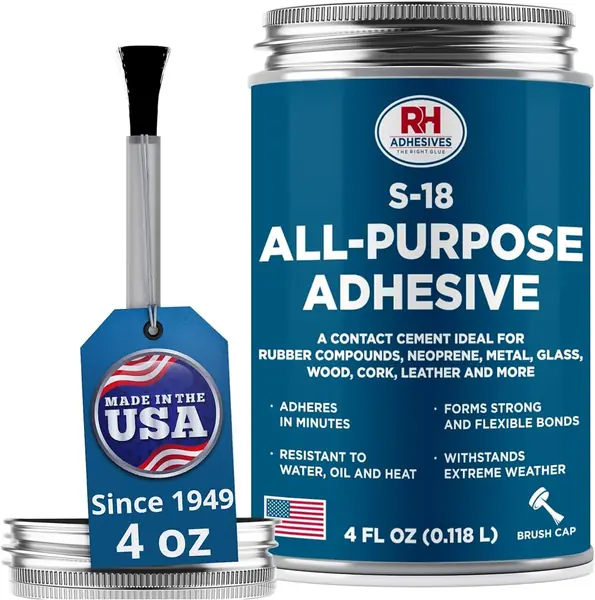
RH Adhesives S-18 off-white neoprene contact cement in a four ounce can

Flexible rubber sheeting

Shop Score 93/100
Water Resistance
Waterproof
Volume
4 fl oz
Full Cure
24 hours
Adhesive Type
Neoprene contact cement
View on Amazon

S-18 is a neoprene contact cement, which means it works nothing like an instant glue. You spread a coat on the wood and a coat on the rubber, let both films go tacky, and then press the parts together. The bond forms on contact, so there is no long clamp and no waiting for squeeze-out to harden.

We think that two-surface process is worth the extra few minutes whenever the rubber is going to move. A cyanoacrylate sets hard, and a hard bond under a soft rubber mat is where peeling starts; this film stays rubbery, and the maker's own examples are SBR and neoprene rubber, leather, felt, and wood. It is waterproof once cured as well, so a mat by a door or a seal on a vehicle does not need a second thought.

The can is a patch-and-repair size. Four ounces handles small laminations and touch-ups, but if you are covering a whole sheet, buy the larger tin rather than rationing this one out. Prep matters as much as it does with any instant glue: a slick new rubber mat has to be scuffed and degreased, or the cement sits on the surface instead of bonding to it.

Worth Noting

  • ⚠️ Solvent fumes need ventilation and a mask
Our Verdict

When the rubber has to keep flexing, we reach for this neoprene contact cement: the film stays rubbery, so the joint moves with the material instead of cracking away from it.

Check Latest Price
3.

Bondtech Rubber Glue Best Rubber-Specific Formula

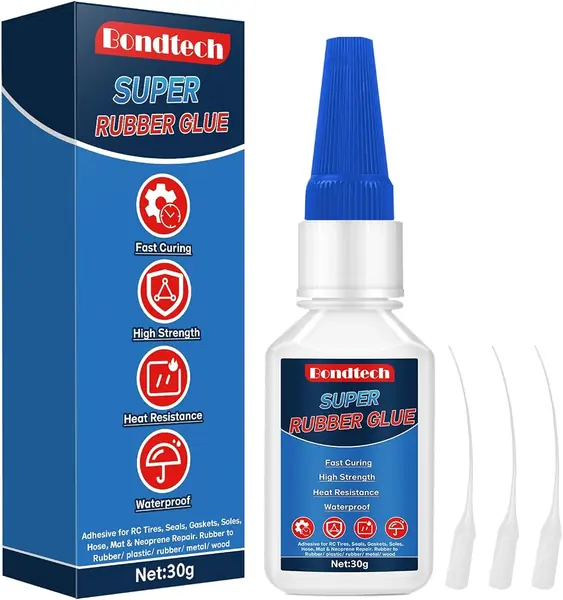
Bondtech clear rubber glue in a 30 gram can with three fine dropper tips

Rubber sheet and trim

Shop Score 92/100
Water Resistance
Waterproof
Volume
30 ml
Temperature Range
-40°C to +100°C
Precision Tips
Three fine droppers
View on Amazon

Only one tube in this lineup says rubber to wood in writing. Bondtech's listing names rubber to rubber, rubber to plastic, rubber to metal, and rubber to wood as jobs the formula is built for, and that specificity is why we kept it on the bench instead of treating it as another generic instant glue.

What we noticed in use is how well the thin liquid finds its way along a seam. Two things help: three dropper tips with fine nozzles for getting into a gap, and an anti-clog cap that lets you put the bottle away and pick it up again later. It cures clear, so a repair on a visible edge does not announce itself. The trade-off is rigidity — this sets hard, and on a rubber flap that bends every time a door closes, the bond is fighting the material. A mat lying flat is a different story.

Prep decides the outcome. A wiped, scuffed rubber face holds; a dusty or oily one is where failures start. The formula is rated from -40°C to +100°C and called waterproof, which covers a cold shop and a hot truck cab.

Worth Noting

  • Thin liquid can soak into open-grained wood
Our Verdict

This is the one to buy if you want the maker's own word that it bonds rubber to wood, and it works best on flat rubber that is not constantly bending.

Check Latest Price
4.

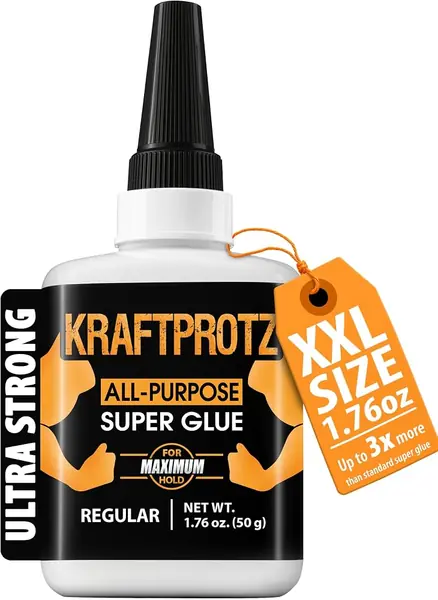
ARKA Kraftprotz All-Purpose Glue Best Value for Larger Jobs

ARKA Kraftprotz clear liquid all-purpose adhesive in a 50 milliliter squeeze bottle

Bigger surface-area jobs

Shop Score 91/100
Water Resistance
Waterproof
Volume
50 ml
Full Cure
3 hours
Viscosity
Medium
View on Amazon

Most instant glue arrives in tubes that are finished after two repairs. This one is a 50 ml bottle, roughly double the usual hobby size, and the difference shows the first time you are coating the underside of a whole rubber strip instead of dabbing at a chip.

We like it for anything with more surface area than a fingertip — a rubber gasket run around a shop jig, a strip of tread on a wooden step, a pad under a bench. The medium-viscosity liquid wets out the wood side evenly, and the long tip reaches into a seam without flooding it. It is a liquid, though: on a vertical face it will run, and the gel above is the better tool for that job.

The detail worth knowing is the cure. The seller lists a three-hour full cure alongside a grab that happens in seconds, so the joint feels done long before it is. Leave a weighted rubber foot alone for the afternoon before you put a chair back on it.

Worth Noting

  • Far more glue than a single small repair needs
Our Verdict

Buy this when the job is bigger than a dab: a 50 ml bottle lets you coat a whole rubber strip, and the medium liquid wets out wood evenly.

Check Latest Price
5.

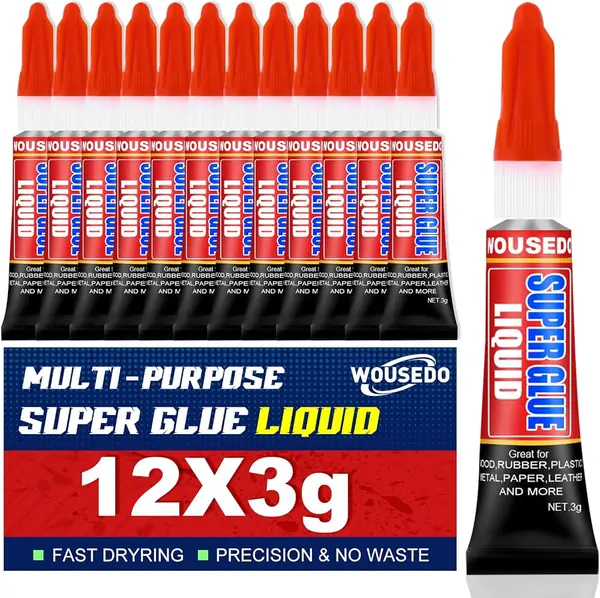
WOUSEDO 12-Pack Glue Tubes Best for Occasional Repairs

WOUSEDO twelve-pack of small clear liquid glue tubes with twist-off caps

Occasional small repairs

Shop Score 90/100
Water Resistance
Waterproof
Volume
3 g per tube
Viscosity
Medium
Tubes Per Pack
12
View on Amazon

The tube you used six months ago is the real competition. An instant glue bottle that welds its own cap shut is money in the trash, and a 3 g tube solves that by holding just enough for one repair. Twelve sealed tubes cost less than the big bottle above, which is why this pack lives in our shop drawer for the small jobs.

Performance is what you would expect from a name you have never heard of: it grabs in seconds, dries clear, and holds a light joint fine. The liquid runs on the thin side, so it wicks into wood fast — good on a close-fitting seam, less good across a gap that needs filling. The nozzle is generous for a tube this small, so squeeze gently or you will flood a small repair.

Where it stops being the right answer is scale. Covering a rubber sheet or running a long seal means opening tube after tube and working faster than you would like. That is a job for the contact cement or a bottle, not for a 3 g tube.

Worth Noting

  • One tube is enough for a small repair only
Our Verdict

For occasional repairers we recommend this pack: twelve sealed tubes mean every job starts with fresh glue instead of a bottle welded shut.

Check Latest Price
6.

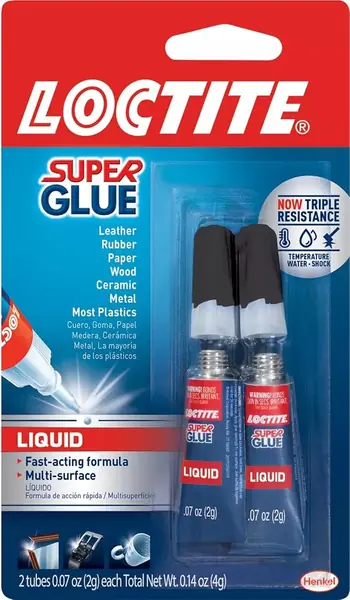
Loctite Super Glue Liquid Best for Tight Close-Fitting Joints

Loctite Super Glue Liquid two-pack of small clear self-piercing tubes

Tight close-fitting joints

Shop Score 89/100
Water Resistance
Water resistant
Form
Liquid
Set Time
15 to 30 seconds
Tube Size
0.07 fl oz each
View on Amazon

Loctite's liquid is the thinnest glue here, and that is the point of it. Rather than sitting on top of a joint, it wicks along a close-fitting seam and cures where the two surfaces meet — which is what you want when a rubber gasket is pressed flat against a wooden frame and there is no room for a bead.

We reach for it on small, tight work: a gasket, a rubber foot, a strip of weather seal on a jig. It sets in 15 to 30 seconds with no clamp, and the tube pierces itself, so there is no pin to lose and no dried plug to dig out. It is a light-duty glue, though — under a joint that takes real load, plan on one of the stronger picks.

Two things to know before you order. The tubes are tiny, so one tube is a couple of small repairs and no more. And the cured bond is rated water resistant rather than waterproof, so keep it indoors rather than on anything that sits out in the rain.

Worth Noting

  • Tiny tubes cover only a few small repairs
Our Verdict

A light-duty liquid we keep for gaskets and seams that fit tight, where a thin glue can wick in and a bead would only get in the way.

Check Latest Price
7.

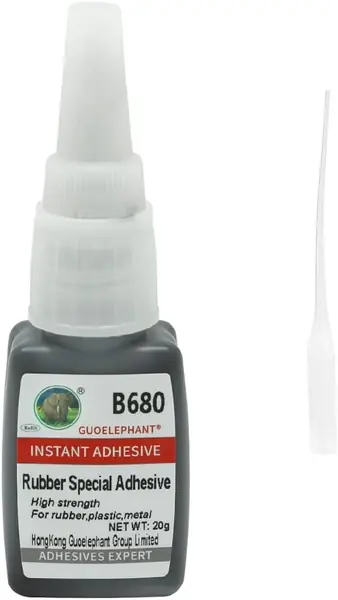
Guoelephant B680 Rubber Glue Best for Black Rubber Seals

Guoelephant B680 black thick rubber glue in a 20 milliliter bottle with tips

Black rubber seals

Shop Score 88/100
Volume
20 ml
Viscosity
High
Temperature Range
-30°C to 110°C
Tips Included
Three precision tips
View on Amazon

Black glue reads like a gimmick until you are repairing the rubber seal along the bottom of a garage door or the trim on a wheel well, where a clear glue leaves a pale line that catches the eye every time you walk past.

The formula is thick, which we appreciated on a vertical seal: it stays where it is put instead of running down onto the wood, and the three twist-on tips let you lay a narrow line along an edge. It grabs fast, and it is an instant glue rather than a rubber cement, so it sets hard instead of staying tacky.

Wood is on the maker's compatibility list, but the formula is built around rubber: where the wood face will stay visible, the black seam shows and a clear glue is the better choice. Where the rubber is black and the wood is hidden, nothing here looks better.

Worth Noting

  • Only 20 ml in the bottle
Our Verdict

A thick black formula for rubber seals and trim, where the color disappears against the rubber and a clear glue would leave a pale line.

Check Latest Price
8.

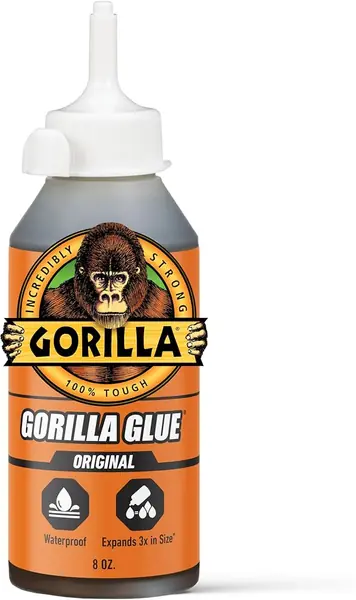
Gorilla Original Glue Best for Outdoor Wood Joints

Gorilla Original polyurethane glue in an 8 ounce brown plastic bottle

Outdoor wood joints

Shop Score 87/100
Water Resistance
Waterproof
Volume
8 fl oz
Full Cure
24 hours
Material Type
Polyurethane
View on Amazon

Polyurethane glue is the woodworker's answer to a joint that does not fit well. It cures on moisture, foams out of the seam, and fills the gap as it expands, so a rubber pad going onto rough-sawn or weathered boards does not need a machined surface to hold.

We keep it for outdoor work. It is fully waterproof once cured, it holds through heat and cold, and it fills voids a thin instant glue cannot bridge. It is a clamping glue, though: the maker calls for dampening a surface, the cure runs about a day, and the foam expands to roughly three times what you apply, so a thin drizzle is plenty.

Here is the limit, and it is worth being straight about: rubber is not on Gorilla's own materials list for this formula, which names wood, stone, metal, ceramic, foam, glass and concrete. On the wood half of the joint it is excellent. If your joint needs gap filling and can sit clamped overnight, use it — scuff and dampen the rubber as the maker directs for non-porous surfaces. For a quick pad or gasket, take the gel instead.

Worth Noting

  • Dries brown rather than clear on visible joints
Our Verdict

The woodworking answer for a poor-fitting outdoor joint: waterproof, gap-filling, and worth the overnight clamp when the board is rough.

Check Latest Price

How We Tested Glues for Rubber to Wood

We started with technical data sheets rather than the front of the bottle, and set aside anything that didn't name both rubber and wood as suitable surfaces. From there we bought across the price and format range — gels, thin liquids, a solvent-based contact cement, a polyurethane — in sizes from small single-use tubes to bottles meant to live on a shelf for years. Sixteen of them made it to the bench, and we kept using them for four months.

Each test piece was a pine offcut with a rubber strip or a rubber foot glued to it, prepped the way the label instructed, with gloves on and the garage door open. To see how much preparation really mattered, we scuffed half the rubber with 80-grit, wiped half of those with denatured alcohol, and glued the remainder straight out of the package. We timed how long each adhesive stayed workable, noted whether the joint needed clamps or tape, and watched whether a bead applied to a vertical face held its place or ran down the wood.

Once cured, we flexed the rubber at the joint, hung a weight from it, and checked the edge for lifting or cracking. The outdoor samples sat through sun and rain on a door frame and a step, a tray of them rode a dashboard through a week of summer heat, and another set soaked in a bucket to see which bonds clouded or let go.

Last, we lived with the containers: recapping between sessions, noting which nozzles clogged or skinned over within a week, and tracking how far a small tube stretched versus a full bottle. That is where value showed up — a big bottle is only a bargain if what's left in it is still usable at the next repair.

How to Choose Glue for Rubber to Wood

Start With How the Joint Will Move

If the rubber is a foot, bumper, or gasket that stays put, a cyanoacrylate (CA) glue — the instant adhesive most of us call super glue — gives you a bond in under a minute with no clamp. If the rubber is sheeting, a mat, or a seal that flexes, use a contact cement: the neoprene film stays rubbery while a hard glue cracks at the edge. Polyurethane covers the third case, rough wood and outdoor service where the joint can be clamped overnight. Choose by movement first, strength second.

Viscosity Decides Whether Glue Reaches the Joint

The trap here is the thin liquid that seems to soak in beautifully. On a rubber-to-wood joint it is not penetrating better — it is wicking into the wood and leaving the rubber face starved, which is the failure people blame on the glue. A gel stays in a bead on a vertical face and on open-grained wood; a thin liquid is right only for a seam that fits tight, where capillary action pulls it in. For a wide, flat area, a spreadable film beats both.

Preparation Is Half of the Bond

Nothing sticks to a slick, mold-release-coated rubber face. Scuff it with 120-grit until the shine goes, wipe it with isopropyl alcohol or acetone and let it dry, then keep your fingers off the surface — skin oil is enough to spoil the bond. The wood side wants to be dry, sanded, and dust-free. Plan the pressure too: a CA wants firm hand pressure for half a minute, contact cement wants a hard roll or a weight, and polyurethane wants clamps.

Water, Heat, and Sunlight

Read the rating rather than the marketing. Water resistant and waterproof are not the same promise, and one of our favorite instant glues here is explicitly not water resistant at all. For a porch, a vehicle, or a bathroom, choose a formula the maker calls waterproof, and check the temperature range if the joint lives in a hot car or an unheated shop. Heat aging is also why we favor contact cement for anything outdoors that has to flex.

Buy the Quantity You Will Actually Use

Large bottles are the worst deal in adhesives if they set in the drawer. A 50 ml bottle is right when you are coating a strip or building a jig; a box of small sealed tubes is right when your repairs are occasional, because each one opens fresh. Whichever you choose, wipe the tip and stand the container upright — most of the waste in this category comes from a cap that glued itself shut, not from a weak formula.

Frequently Asked Questions

Final Verdict

For most rubber-to-wood repairs around the house, we point you to Gorilla Super Glue Gel XL. The gel stays where you put it instead of wicking away into the wood, it grabs in under a minute, and it needs no clamp — which is what a pad, bumper, or gasket job actually asks for.

When the rubber has to keep flexing, switch to RH Adhesives S-18 contact cement and give it a ventilated room; the film stays rubbery and survives the movement. And if the wood is rough and the joint lives outdoors, Gorilla Original polyurethane clamped overnight is the better bond, as long as you accept that rubber is not on its own materials list.