↑↓ navigate ↵ open Esc close All results →

Best Exterior Wood Fillers of 2026

Too many exterior repairs fail because the tub gets picked by dry time instead of exposure rating and finish compatibility. A patch on a porch rail can look smooth in October and lift off in a single sheet after the first March thaw if it cannot handle rain, UV, and freeze-thaw movement, or if it gets smeared over punky fibers that were never scraped back to sound wood.

After filling, sanding, and painting 14 exterior fillers across eight months on window sills, porch rails, a garage door frame, and a soft shed sill, two rules held across every test. Soft, crumbling wood has to come out before any patch goes in, and deciding between paint and stain beforehand prevents surprises, since stainable formulas behave very differently from paint-grade tubs.

Two-part epoxies handle structural rot rebuilds, water-based latex tubes suit painted trim, and hand-mix sticks take care of small nail holes. Matching the chemistry to the repair and temperature range keeps the patch anchored when spring arrives.

Our Top Picks

The Best Exterior Wood Fillers

1.

Bondo Wood Filler Best Overall
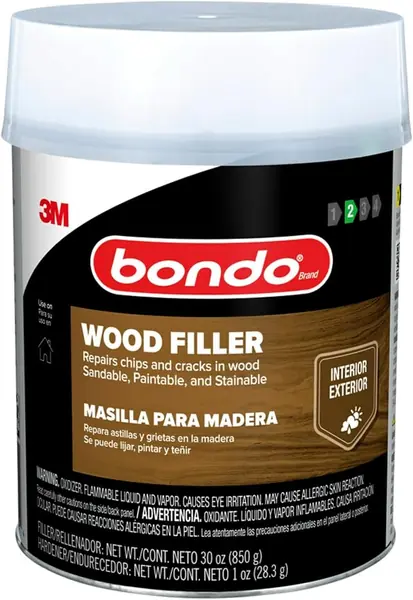
Bondo Wood Filler 30-ounce tub with cream hardener, light brown two-part repair compound

Exterior trim repairs

Shop Score 94/100
Formula
Two-part resin with cream hardener
Container Size
30 oz
Sandable
15 minutes
Water Resistance
Water resistant
View on Amazon

Two parts and a cream hardener sounds fussy for a job you want finished before lunch, but the chemistry is the reason this is our pick for outdoor work. A catalyzed resin cures by reaction rather than by drying, so it locks into the wood and stays there through wet-dry cycles and freeze-thaw instead of shrinking back out of the crack. The label's 15-minute sand window is the other half of the appeal: a repair you can shape and paint the same afternoon changes how a weekend goes.

That speed is also the catch. Once the hardener goes in you have minutes, not hours, so mix only what you can place and stay with the repair until it is shaped, because a batch that sits while you fetch a ladder is a batch you throw away. It handles like auto body filler, staying where you press it on a vertical door frame, and a chisel run over the excess while it is still green saves most of the sanding.

Paint is the finish to plan on. A cured patch takes primer and topcoat cleanly, and on sills, frames, and fascia that is what you were applying anyway. Cool weather is another place it earns its keep: it keeps working when water-based fillers have to come inside for the season.

Thirty ounces covers a lot of repair, and it works out to the most economical way to buy exterior filler here. Where it does not fit is small work, since nobody mixes a batch for one nail hole. For window frames, rotted door bottoms, fascia, and landscape timbers, it is the first thing we hand people.

Worth Noting

  • Stain color rarely matches the wood
  • Sharp solvent smell while mixing
Our Verdict

For permanent exterior repairs that have to survive weather, we reach for this first: it cures hard without shrinking and sands in about 15 minutes, so long as you plan on paint rather than stain.

Check Latest Price
2.

PC-Woody Wood Repair Epoxy Paste Best for Rot Repair

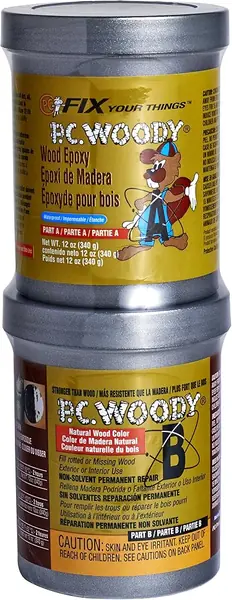
PC Products PC-Woody two-part epoxy paste in two tan 12-ounce cans

Rotten sills and posts

Shop Score 93/100
Formula
Two-part epoxy paste, 1:1 mix
Container Size
12 oz
Full Cure
24 hours
Application Temperature
35 to 115 degrees F
View on Amazon

A sill with a soft, crumbling corner and a sill with a chipped edge are two different repairs, and only one of them is a filler job. Where material is actually gone, you want a paste that rebuilds it, and PC-Woody is that: a two-part epoxy with structural strength greater than most wood and enough tack to hang on a vertical face without sagging into your lap.

We like that it stays workable long enough to think. Mix equal volumes on a flat scrap with a stiff putty knife, not on your gloved hand, since the paste grabs anything porous, then press it into the cavity and shape the surface while it is soft. The -20 to 200 degree F service range, plus resistance to UV, fresh and salt water, and the chemicals in pressure-treated lumber, is why it belongs on a list of exterior fillers rather than a general-purpose one.

Full cure takes 24 hours, after which you can drill, tap, sand, and paint it. Staining only works with darker or solid-pigment colors, so use paint or a dark stain and save the light tones for something else. It does cost more per ounce than the latex fillers here, and for a nail hole that is absurd. For a post bottom or a sill you intend to keep another decade, it is the right money.

Worth Noting

  • Sticky paste is messy to mix and smooth
  • Costs more per ounce than latex fillers
Our Verdict

If wood is missing or soft rather than just dented, this is the paste we want in the joint: it hangs on vertical faces and cures strong enough to hold a hinge.

Check Latest Price
3.

FamoWood Water-Based Wood Filler Best Water-Based Filler

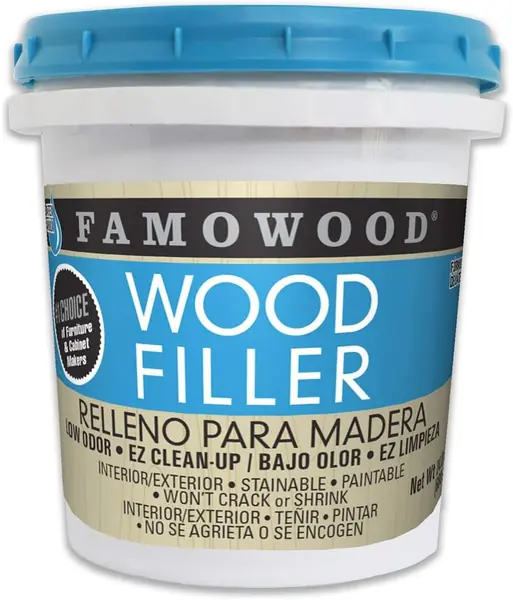
FamoWood natural water-based latex wood filler in a one-pint tub

Painted exterior trim

Shop Score 92/100
Formula
Water-based latex
Container Size
1 pint
Use
Interior and exterior
Dry Time
15 minutes
View on Amazon

Sandpaper tells you more about a filler than the label does. This one powders off in clean passes instead of balling up and tearing the wood around the patch, which is why it is the filler we reach for when a repair has to disappear under paint. Fifteen minutes to dry, soap-and-water cleanup, and no solvent fumes filling a closed garage in January.

It is a latex paste, so it behaves like one: easy to spread with a knife, forgiving if you lay it a little proud, and happy to be sanded flush. It fills deep grooves and old hardware holes without pulling away from the sides, and it dries hard rather than rubbery. The natural shade is more pink than wood-colored, which is fine under two coats of paint and jarring if you were hoping to leave it bare.

We recommend it for painted exterior wood, siding, trim, and window frames, with two boundaries. It is a filler, not a rebuild: on a surface that stays wet, such as a pool deck, it can crack and let go, and a cavity that has to carry load wants epoxy. And like any water-based product it needs dry wood and mild temperatures to cure properly.

Worth Noting

  • Natural shade runs pink until painted
  • Not for continuously wet surfaces
Our Verdict

For painted trim and siding, we like this water-based filler because it sands to a feather edge, cleans up with water, and dries fast enough to finish in a day.

Check Latest Price
4.

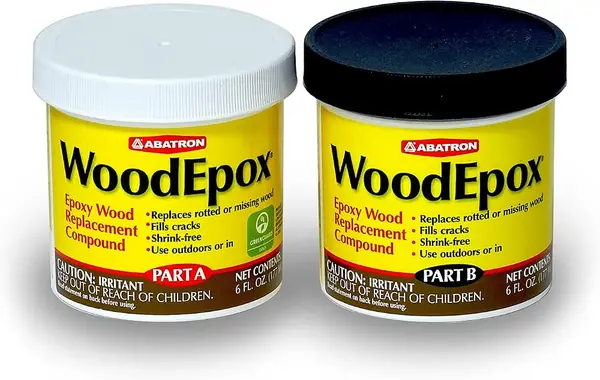
Abatron WoodEpox Kit Best Low-Odor Epoxy

Abatron WoodEpox 12-ounce two-part structural epoxy filler kit with tan putty

Rebuilding shaped trim

Shop Score 91/100
Formula
Two-part structural epoxy putty
Container Size
12 oz
Working Time
20-30 minute pot life
Certification
GREENGUARD certified
View on Amazon

Almost no VOCs and a low odor sounds like a line from the label until you are working in a closed garage in February. WoodEpox is a two-part epoxy putty that barely smells, and that alone makes it the one we choose when the repair has to happen indoors-ish: a door taken off its hinges, a window sash laid across a bench, a column base a few feet from the kitchen.

It is a structural filler rather than a cosmetic one. Mix equal parts, press it into the cavity, and it bonds to sound wood, cures shrink-free, and can be painted, stained, drilled, carved, sawed, nailed, planed, and sanded. The cured material mimics wood closely enough that shaping the surface is part of the job, not an afterthought.

Where it separates itself from the other epoxies here is the clock. A 20- to 30-minute pot life is generous, long enough to mix a batch, place it, and still come back for a second pass on a profile before it stiffens. That is the reason we trust it on a curved sill edge or a profiled casing where a rushed repair shows.

What we do not love is the price for what looks like a small kit. The 12-ounce size covers less ground than the tubs here and costs more than most of them, which stings on a two-minute repair. Set it against a restoration you expect to hold and it reads differently. Just do not open it to fill a nail hole.

Worth Noting

  • Premium price for a modest 12-ounce kit
Our Verdict

Our pick when a shaped piece of wood needs rebuilding: the long pot life lets us mix a batch and sculpt it calmly, and it cures without shrinking.

Check Latest Price
5.

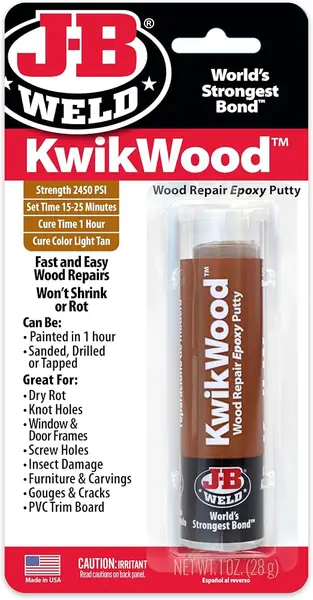
J-B Weld KwikWood Best for Small Repairs

J-B Weld KwikWood tan epoxy putty stick in a one-ounce tube

Small exterior touch-ups

Shop Score 90/100
Formula
Hand-mix epoxy putty stick
Size
1 oz
Work Life
15 to 25 minutes
Lap Shear Strength
900 PSI
View on Amazon

Cut open the stick, knead a pinch between your fingers until the color is even, and press it into the hole. No measuring, no tub to reseal, nothing to mix on a scrap of cardboard. For a chewed sill corner, a gouge in a door frame, or a hinge-screw hole that keeps stripping, that is the entire appeal, and it is enough.

We keep coming back to it for small outdoor repairs because it cures to something you can actually machine. Work life runs 15 to 25 minutes, and within the hour it can be drilled, sanded, and painted. The cured color is a light tan, so darker or solid-pigment stains cover it better than pale ones. Listed lap shear strength is 900 PSI, more than a filler needs and about right for a screw hole that has to hold again.

One ounce disappears quickly once you are patching more than a handful of defects, so treat the stick as a spot-repair tool and buy a tub for volume work. There is also a shelf-life catch worth a ten-second check: a stick that sat too long can arrive hard and unusable, so knead a corner before you cut it open.

Worth Noting

  • One-ounce stick runs out on bigger jobs
Our Verdict

We keep a stick in the toolbox: knead what you need, press it into the hole, and there is no tub to reseal or batch to measure.

Check Latest Price
6.

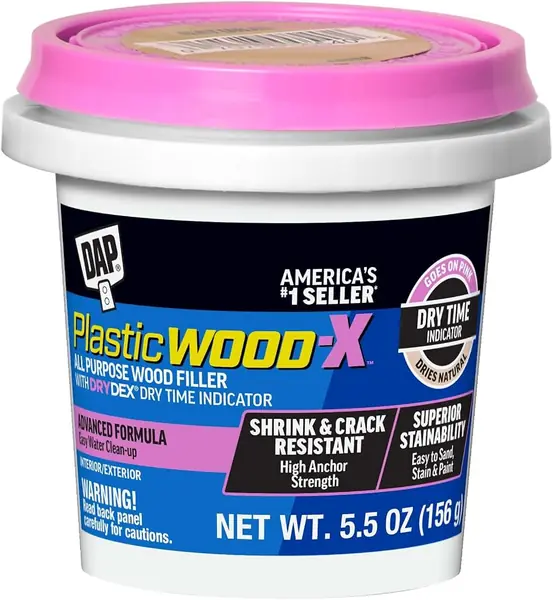
DAP Plastic Wood-X Best for Beginner Trim Touch-Ups

DAP Plastic Wood-X wood filler in a 5.5-ounce tub with pink-to-natural formula

Beginner trim touch-ups

Shop Score 89/100
Formula
Latex polymer
Container Size
5.5 oz
Use
Interior and exterior
Dry Indicator
Pink that dries natural
View on Amazon

Pink is a strange color for wood filler and a genuinely useful one. This paste goes on pink and dries to a natural tone, so you can see exactly where you have been and exactly when it is ready for paper. Anyone who has sanded a soft patch too early and torn it out of the hole will understand why we think the indicator is worth having.

It is a thick, knife-grade latex that stays put on a vertical door frame, dries in three to six hours on fills up to an eighth of an inch, and sands and paints cleanly. Two things to know before ordering: the tub is smaller than most people picture, about the size of a coffee cup, and deeper fills of a quarter inch or more need a day and a half, so build them in layers. Painted exterior trim is where it makes sense.

Worth Noting

  • Tub is smaller than most shoppers expect
  • Quarter-inch-deep fills need 36 hours
Our Verdict

We point beginners to this one: the pink-to-natural color change takes the guesswork out of sanding, and the paste holds on vertical trim.

Check Latest Price
7.

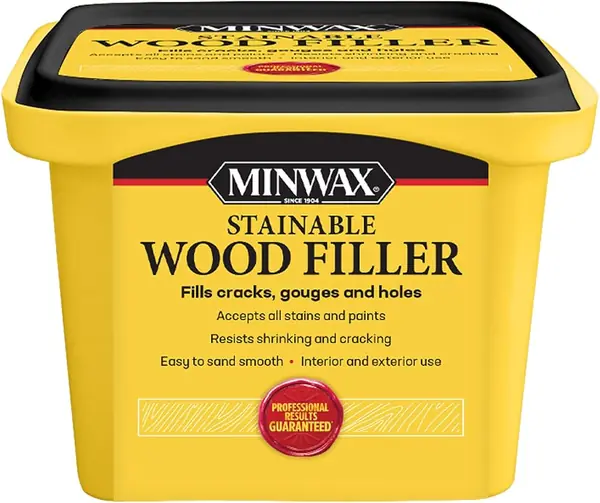
Minwax Stainable Wood Filler Best for Painted Exterior Repairs

Minwax stainable wood filler in a 16-ounce tub, natural color

Painted exterior repairs

Shop Score 88/100
Formula
Water-based latex
Container Size
16 oz
Dry Time
2 to 6 hours
Finish
Stainable and paintable
View on Amazon

What you get is a 16-ounce tub of water-based latex paste, thick enough to press into a crack with a knife, that dries in two to six hours depending on depth and cleans up with soap and water. It sands to a smooth surface without tearing, and it takes paint without flashing through. For filling a lot of small defects on one wall of siding, that is exactly the profile you want.

The word that sells this tub is stainable, so be clear about what that means. Pigment does land on it, but it does not absorb the way the wood around it does, so a patch under a clear or natural finish usually reads as a slightly different material. On a painted surface none of that matters, which is why so many of these tubs end up on trim.

We recommend it for painted exterior repairs and for anyone with a batch of small defects to fill at once, where the tub size pays off. If the surrounding wood is getting a clear finish, reach for a two-part epoxy instead and plan on a color that hides rather than one that blends.

One housekeeping habit keeps the rest of the tub usable: the surface skins over between sessions, so scrape that film aside, add a splash of water, stir it back to a paste, and press the lid down hard. A tub that has gone hard all the way through cannot be revived.

Worth Noting

  • Stain does not blend with surrounding wood
  • Two to six hours before you can sand
Our Verdict

We recommend it for painted exterior repairs, where a big tub and easy sanding matter more than a stain match that disappears.

Check Latest Price
8.

Minwax Color-Matched Wood Filler Best for Finished Trim Touch-Ups

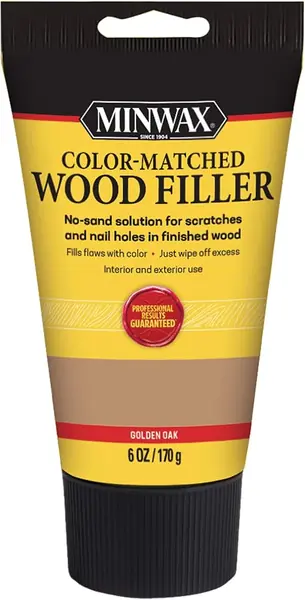
Minwax color-matched wood filler in Golden Oak, six-ounce container

Finished trim touch-ups

Shop Score 87/100
Container Size
6 oz
Use
Interior and exterior finished wood
Color
Golden Oak
Sanding
No sanding needed
View on Amazon

Nail holes in finished exterior trim are a five-minute problem that becomes a repaint if you use the wrong product. This is the right product for that job: a putty that comes in Golden Oak, goes in with a knife, and needs no sanding at all. Press it flush, wipe the edge, and the color is already in the neighborhood.

Five tones cover most trim, from Walnut and Cherry through Natural and White, and a six-ounce container is small enough to live in a drawer and be there the next time a brad hole shows up. The material is soft and easy to work, which is exactly right at a nail hole and exactly wrong in a crack that opens and closes with the seasons.

For that moving crack, or a gouge with some depth to it, mix a two-part epoxy and paint over the result. This one will not hold a screw, bridge a deep cavity, or do anything structural, and asking it to is how people end up disappointed with a product that was never meant for the job.

We treat it as cosmetics, and we are glad to have it in the kit for weathered trim where a full refinish is not happening this year. One practical note: the color name is a starting point rather than a match, so on sun-faded wood work a little of the surrounding tone over the top and let the repair recede.

Worth Noting

  • Not for deep gouges or structural repairs
  • Color name will not match weathered wood
Our Verdict

We keep one for finished trim: it fills small Golden Oak defects without sanding, so a touch-up takes a minute instead of a repaint.

Check Latest Price

How We Tested Exterior Wood Fillers Through a Full Winter

We pulled spec sheets and read customer reviews for dozens of exterior fillers, keeping only those with a stated exterior rating, a published application temperature range, and a chemistry we could explain: two-part epoxy, water-based latex, or a hand-mix stick. Anything without a temperature range was cut. From there we tested 14 fillers over eight months, starting in late fall so the patches would live through a full winter and spring thaw.

Two-part products were mixed by hand with gloves on, outdoors rather than in a closed garage, and we noted whether the components came together smooth or lumpy and how easy the ratio was to eyeball. A stopwatch and a thumb press tracked working time and tack. We also watched how each one behaved going into nail holes on vertical trim versus cracks in horizontal sills and a porch rail, where sag and runoff show up first.

Pencil lines marked the fill level, which we rechecked after a week and again after a freeze-thaw to see what shrank. Sanding was 120-grit then 220 by hand, with notes on clogging and whether edges feathered or tore. Once cured, we pressed a thumbnail into each patch for hardness, painted half and stained the other half to compare color match and blotching, and hosed down the bare patches to see if water beaded or soaked in.

On a soft shed sill we dug out crumbly wood until we reached solid material and confirmed what remained was sound before filling — filler goes over good wood, it doesn't replace rot. Water-based products waited for dry wood and above-freezing days, and on cold snaps we switched to two-parts with a published range. We also tracked how far each container went, since a tub that skins over after one repair is a worse deal than a stick you actually finish. Then we left everything alone until spring, checking for lifting, cracking, and patches that popped out whole.

How to Choose an Exterior Wood Filler

Two-Part or Ready-Mixed

Two-part products, whether a resin with a cream hardener or an epoxy paste mixed one-to-one, cure by chemical reaction. They bond into the wood, do not shrink back out of the repair, and shrug off wet-dry cycles, which is why our top pick and both epoxy pastes here are two-part. Ready-mixed latex pastes open faster, sand more easily, and clean up with water, but they belong on painted, shallow, protected repairs. If the damage is structural, mix two parts.

The practical cost of two-part is time discipline: you have minutes to place the material, not an afternoon. The practical cost of latex is durability in a joint that moves. Decide which cost you can live with before you read another label.

Match the Filler to the Damage

Nail holes and hairline cracks want a soft, sandable paste pushed in with a knife. Gouges and missing chunks want something that can be built up in layers without slumping. Depth guidance matters more than most shoppers expect: many latex fillers dry in a few hours at an eighth of an inch and take a day and a half at a quarter inch, so a deep cavity goes in lifts rather than one thick plug.

If a section of wood is gone and something has to attach there later, such as a hinge or a bracket, you have left filler territory and need a structural epoxy.

Plan the Finish Before You Open the Tub

Nearly every exterior filler says paintable and stainable, and those two claims are not equal. Paint covers a filler completely and forgivingly. Stain does not: pigment sits on a filler differently than it sits in wood grain, so a repair under a clear or natural finish usually reads as a patch no matter what the container promises.

If the surrounding wood is stained, use a darker or solid-pigment stain over the repair, or hide the spot with paint. The one place a color makes the decision for you is finished trim, where a color-matched putty and no sanding beats a perfect mix every time.

Temperature, Moisture, and Working Time

Filler bonds to dry wood, not damp wood, and water-based products generally want temperatures above about 40 degrees F. Two-part epoxies publish their own ranges, one here is rated from 35 to 115 degrees F, and they are far less fussy about humidity. Probe the repair with an awl before you start; if water squeezes out of the wood, come back in a dry week.

Working time is the other clock. A fast resin can stiffen in five or ten minutes, so mix only what you can place and never scrape a fresh batch into the container of a batch that is already setting.

Buy the Container You Will Actually Finish

A big tub is cheaper per ounce than a tube and it is a false economy if it skins over in the garage before your next repair. Latex tubs dry from the lid down; a tight seal and a splash of water revive a skin, but nothing revives a block that has cured. Small, occasional repairs store better as a squeeze tube or a kneading stick.

Prepping a whole house for paint is the opposite case: buy the large tub and plan to use it in one season rather than saving half for next spring.

Frequently Asked Questions

Final Verdict

For most exterior repairs, the answer is the Bondo two-part filler. It cures hard without shrinking, stands up to weather, and sands in about fifteen minutes, which makes a permanent repair feel like a quick one. Plan on paint rather than stain and you will be happy with it.

Change the job and the pick changes. Missing or rotted wood that has to carry structure calls for PC-Woody, and a water-based paste that sands to a feather edge under paint is the FamoWood. If you want a single small tube in the toolbox for touch-ups, the KwikWood stick is the one we grab.