↑↓ navigate ↵ open Esc close All results →

Best Tape for Epoxy Resin Pours of 2026

Epoxy is unforgiving about edges. The first time a river table form let go on me, a half-gallon of resin ran across the shop floor at eleven at night, and tape was the only thing that had been holding the line. Tape does two jobs in a pour: it seals the seam so resin can't creep under the edge, and it gives the cured piece a face it can release from cleanly. The wrong roll fails at one job or both.

We tested 14 rolls over four months on sealed wood, MDF, melamine, cured resin, and silicone, in widths running from 2-inch seams up to 5-inch form faces. A roll that grips hard can still shed fibers halfway through a long peel, and a heat rating only means something relative to the pour behind it. A thick pour runs hotter than a thin flood coat, and no tape is a clamp.

The eight picks below cover jewelry pours, wide form faces, hot cures, and plain shop stock. What they share is the thing you notice at the end of a build: an edge that stayed sealed and a piece that let go.

Our Top Picks

The Best Tape for Epoxy Resin Pours

1.

Tuck Tape Epoxy Resin Tape Best Overall
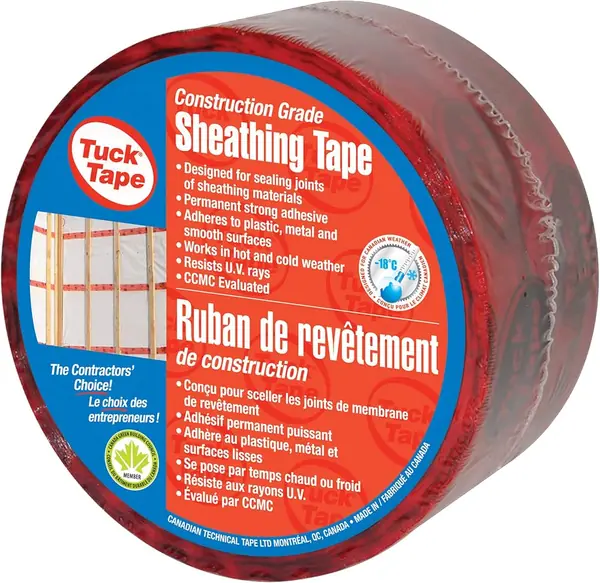
Red Tuck Tape roll of 2.4-inch waterproof polypropylene sheathing tape for epoxy forms

River table forms

Shop Score 94/100
Width
2.4 in
Roll Length
180 ft
Material
Polypropylene film, acrylic adhesive
Water Resistance
Waterproof
View on Amazon

A roll of Tuck Tape isn't sold as craft supplies. It's house-sheathing tape — red polypropylene film over an acrylic adhesive, waterproof, rated at 30 pounds per inch of tensile strength — and it landed on epoxy benches because the film face doesn't bond to cured resin. The 2.4-inch width turns out to be a quiet advantage: it laps over a three-quarter-inch form wall with enough left to press flat onto the face.

What makes it our overall pick is that the seal is the one part of a pour you can't fix afterward, and this is the roll that keeps one. The adhesive bites into sealed wood, melamine, and MDF without lifting at a corner, and the waterproof film doesn't soften when a deep pour heats up underneath it. A 180-foot roll runs a river-table form twice with laps at every joint, which is the margin we want on a pour we can't redo.

Its film is the thing to learn. Pulled fast off the roll it tears into short segments, which is maddening halfway around a corner; fed off slowly and at a low angle it behaves, and a tear that does happen mid-form is sealed by an overlapping lap. We also noticed how hard the adhesive grips, which is what you want on a form and less of what you want on a finished surface you plan to leave bare.

Against the purpose-built silicone rolls here, this is the blunter instrument: more hold, slightly less slick release, and a much longer roll. For form work — the bottom of a mold, the outside of a dam, a knot you're filling — that's the right way round.

Worth Noting

  • No wider version for covering form faces
Our Verdict

For most pours this is the tape we hand over first: the acrylic hold and waterproof film keep a form sealed and cured epoxy lifts off the face cleanly.

Check Latest Price
2.

LET'S RESIN Epoxy Resin Tape Best for Clean Release

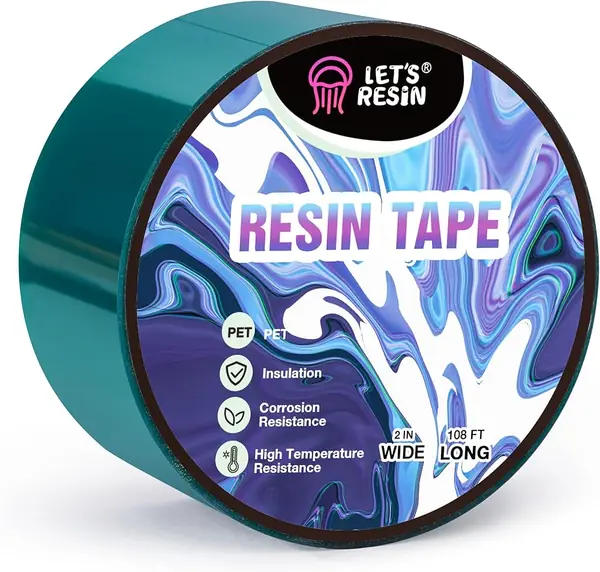
Green LET'S RESIN epoxy tape roll of 2-inch silicone-coated PET release film

Jewelry pours

Shop Score 91/100
Width
2 in
Roll Length
108 ft
Heat Resistance
200 °C
Material
PET film, silicone adhesive
View on Amazon

The interesting thing about this roll isn't how hard it sticks; it's how completely it lets go. PET film carries a silicone adhesive rated to 200 °C, and cured epoxy lifts off the face in one piece rather than tearing into crumbs. That's the whole reason we pick it for small, fussy work — bezels, pendant molds, thin dams — where a torn release means sanding back into the piece.

Its grip is the particular part. On sealed wood, cured resin, glass, and silicone it holds well; laid over raw or dusty material, rub the strip down along its full length and press it again a minute later before you trust it with liquid. That isn't a fault so much as a reminder that tape sticks to what's under it, which is why the first pass with any of these rolls is a wipe-down.

At 2 inches by 108 feet it's shaped for the way small pours actually consume tape: a few feet at a time. It's also the opposite bet from Tuck Tape — less brute hold, cleaner release, and far less tape in the drawer. Building a river table, buy two rolls; making earrings, one will last months.

Worth Noting

  • One 108-foot roll only, no spare included
Our Verdict

Clean release matters more than brute grip on jewelry and bezels, which is why we choose this roll for small work.

Check Latest Price
3.

Midiza Epoxy Resin Tape Best Long Roll

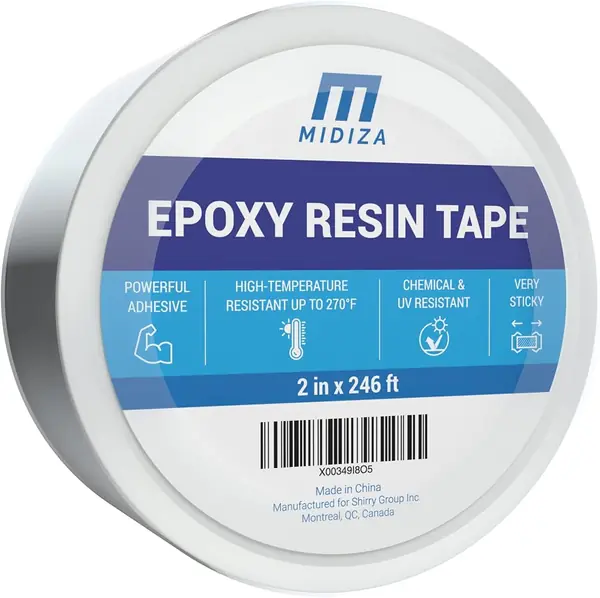
White Midiza epoxy resin tape roll, 2 inches wide by 246 feet of silicone film

Large pours

Shop Score 87/100
Width
2 in
Roll Length
246 ft
Heat Resistance
250 °C
View on Amazon

Two hundred and forty-six feet. That number separates this roll from everything else in the guide — a single 2-inch roll of silicone-coated film, rated to 250 °C and finished in white rather than the usual green.

The white backing is more useful than it sounds. Against a dark mold or a walnut blank the tape edge is easy to see, so lining up a second lap or finding the end of a strip takes a glance instead of a fingernail. The film doesn't curl around a corner, and the moderate tack lifts off a sealed surface without pulling fibers.

Where we reach for it is the big pour that eats tape: a table-sized form can take most of a roll, and one long run beats splicing three short ones. Wipe the surface and press each strip flat before you pour — grip is the variable with this film, and it follows whatever is underneath. Peel the tape while the piece is still fresh rather than leaving it on the form for weeks.

Worth Noting

  • Film can hold epoxy where a pour runs hot
Our Verdict

Big pours that eat tape are what this roll is for: 246 feet on one roll and a 250 °C rating, though grip depends on the surface.

Check Latest Price
4.

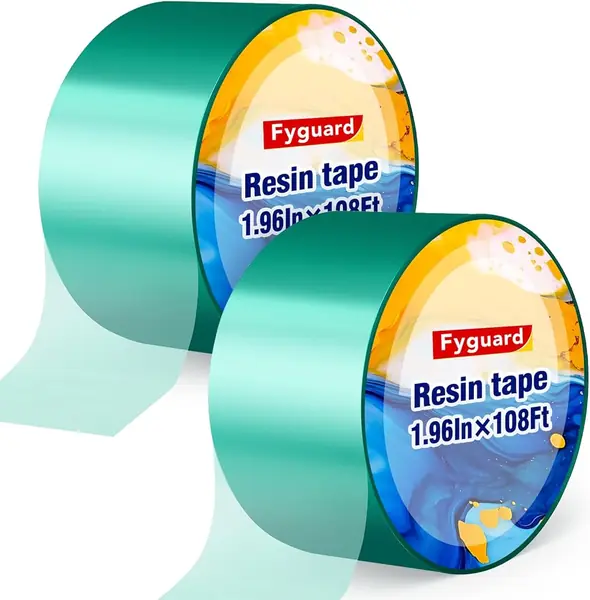
Fyguard Resin Tape, 2 Rolls Best Two-Roll Value

Two green Fyguard resin tape rolls, each 1.96 inches wide by 108 feet long

Shop stock

Shop Score 86/100
Width
1.96 in
Heat Resistance
220 °C
Total Length
216 ft (2 rolls)
View on Amazon

Two rolls of 1.96 inches by 108 feet, so 216 feet in the pack. Green PET film, a 220 °C rating, and the same width on both rolls — nothing here is a sample or a stub end.

Buying tape two rolls at a time sounds trivial until the roll in your hand runs out with half a form still to wrap. A sealed spare on the shelf is the least glamorous upgrade in this guide, and we rate that over a slightly slicker release from a single-roll tape.

The film is well behaved around corners — it doesn't curl or fight a fold, which is more than we can say for thinner rolls, and it lays down flat enough that a lap at a joint actually seals. At 220 °C it clears a standard epoxy cure with room to spare. What you're buying is the second roll rather than a fancier coating, and for a shop that pours every few weeks, that's the better use of the money.

Worth Noting

  • Adhesive grabs itself more than dusty surfaces
Our Verdict

Two rolls is the practical buy for shop work, and we like that a spare stays wrapped until the first one runs out mid-form.

Check Latest Price
5.

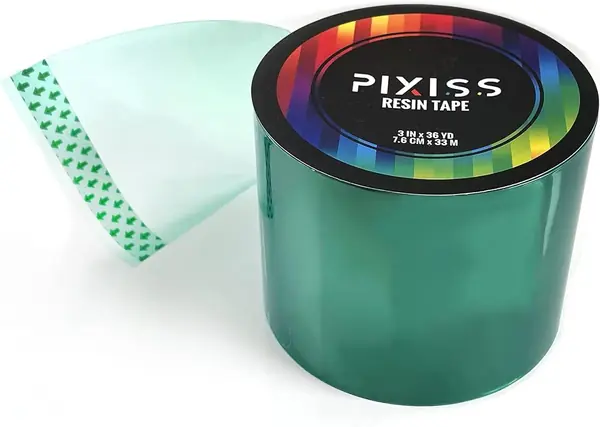
Pixiss Extra Wide Resin Tape Best Budget

Emerald green Pixiss resin tape roll, 3 inches wide by 108 feet of polyester film

Small molds

Shop Score 85/100
Width
3 in
Roll Length
108 ft
Material
PET film, silicone adhesive
View on Amazon

Three inches wide and the least expensive roll here — that combination is the whole pitch. The PET film takes a silicone adhesive, so cured epoxy releases cleanly, and the extra inch over a standard 2-inch roll caps a bezel or a coaster mold in one strip instead of two passes and a seam down the middle.

That extra inch does more work than you might expect. A bezel that takes two overlapping strips of 2-inch tape takes one of these, and every overlap you skip is one fewer place resin can creep under. It also cuts down cleanly with scissors, so a roll of 3-inch tape becomes whatever width a narrow dam needs.

Where it asks for care is at the edges. If the surface under the strip isn't wiped clean, resin finds the gap, and a leak at the perimeter is the kind that ruins a small piece completely. Wipe the mold, press the strip along its full width, and run a fingernail around the corner before you pour.

Worth Noting

  • One 108-foot roll runs out on bigger forms
Our Verdict

At the lowest price here and 3 inches wide, this is the roll we keep on hand for small molds and short runs.

Check Latest Price
6.

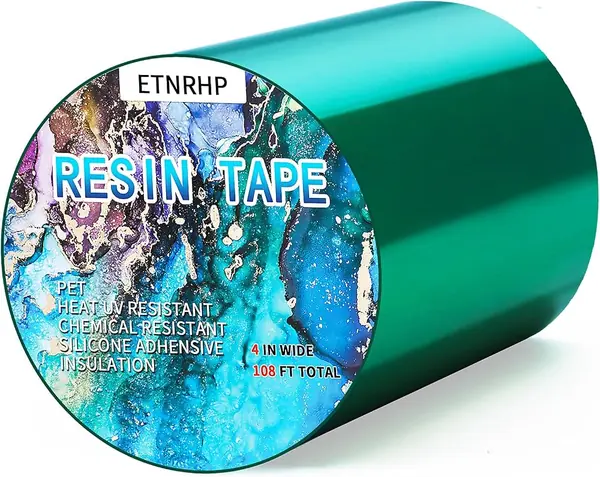
ETNRHP Resin Tape 4-Inch Best Extra-Wide

Green ETNRHP 4-inch wide resin tape roll with silicone adhesive coating

Wide form faces

Shop Score 84/100
Width
4 in
Roll Length
108 ft
Adhesive
Silicone
Rolls Per Pack
1
View on Amazon

Four inches is the measurement that decides this one: a 108-foot roll of green PET film with a silicone adhesive and a heavier coat of glue than the 2-inch rolls here carry.

Width pays off on a form face. Covering a 3-inch dam or the whole bottom of a box mold in one pass means fewer overlaps, and every overlap is a place resin can creep under. On a flat panel you can run the full width down each edge and be done in four strips instead of eight.

We treat it as a face-capping roll rather than a form-building one, and we're glad to have it in the drawer for the pour where coverage matters more than yardage. The adhesive is the strong half of the design — it holds along a panel edge where a thin tape lifts — and the silicone face lets a cured flood coat come away without a sanding pass. Where the budget allows one wide roll beside a longer 2-inch tape, this is the one that saves the most time.

Worth Noting

  • Premium price for a single 108-foot roll
Our Verdict

Covering a form face fast is where this one earns its place: 4 inches wide, one pass, fewer seams to leak.

Check Latest Price
7.

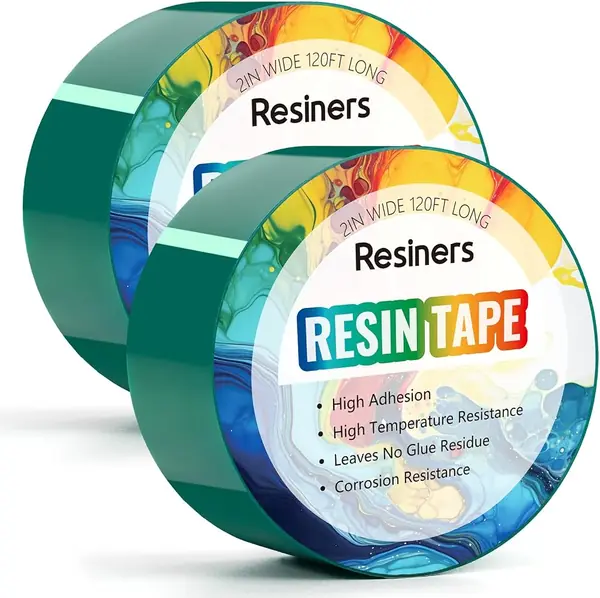
Resiners Resin Tape Best for Hot Cures

Two green Resiners resin tape rolls, 2 inches wide by 120 feet each

Hot cures

Shop Score 83/100
Width
2 in
Heat Resistance
446 °F
Total Length
240 ft (2 rolls)
View on Amazon

At 446 °F, this has the highest heat rating in the guide — comfortably past what an epoxy cure reaches and into powder-coat and heat-masking territory.

Two rolls, 2 inches by 120 feet each, 240 feet in total. The green PET film carries a silicone adhesive, and the release is the good part: on cured resin and silicone molds the tape comes away with the surface underneath intact.

Bare wood is where it stops being generous. On raw lumber and painted surfaces the adhesive gives up early, and a tape that lifts at a corner is a tape that lets resin under the form. Press it down along the whole strip, run a fingernail along the edge, and give the corners a second look before you pour.

What earns it a place is heat headroom plus the two-roll format — 120 feet per roll splits easily between a shop drawer and a tool bag, and the higher rating is worth having if the same tape also masks for powder coating or heat-set work. It's a masking tape that pours well rather than a pour tape that also masks.

Worth Noting

  • Thin film can seep at a lapped seam
Our Verdict

Heat-heavy masking is its strength, and we rate the 446 °F film for it, with bare wood as the surface it does not like.

Check Latest Price
8.

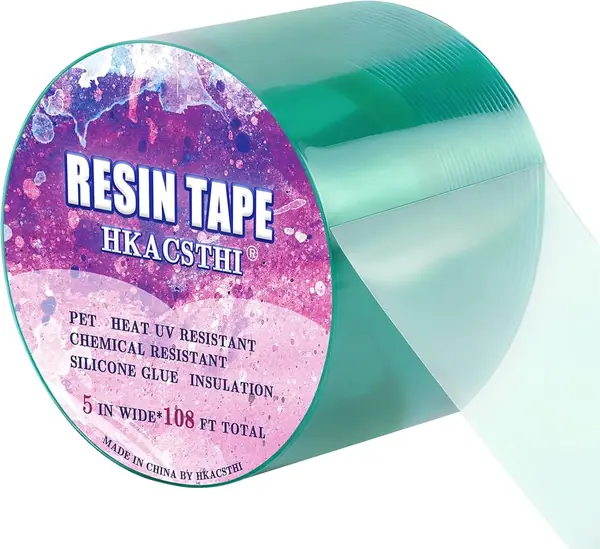
HKACSTHI Resin Tape Best for Flat Wide Molds

Green HKACSTHI resin tape roll, 5 inches wide by 108 feet of silicone film

Flat wide molds

Shop Score 82/100
Width
5 in
Roll Length
108 ft
Heat Resistance
428 °F
View on Amazon

Five inches wide, 108 feet long, silicone-coated PET, rated to 428 °F. This is the widest roll here by a full inch, and it is a different tool from the 2-inch tapes most pours are sealed with.

Width at this scale changes what the tape is for. A 5-inch strip caps a whole mold face or wraps an edge in one go, and the silicone surface sheds cured epoxy with almost no persuasion. That part of the design is the reason it's here.

Grip is a different story. On a flat, sealed face it holds; on a curved mold, a vertical dam, or anything that needs the tape to stand up while the resin sets, it isn't tacky enough to trust. Narrow strips cut from the roll behave better on shaped work.

What surprised us is how much clean-up it spares: one 5-inch strip comes off a cured surface in a single motion instead of six, and there's no seam in the middle to scrape. We keep it for flat, wide work — capping a tabletop mold, masking a full edge before a flood coat — and cut it down for anything narrower.

Worth Noting

  • Not tacky enough for curved or vertical molds
Our Verdict

Wide, flat forms are what we point to here: 5 inches of silicone film that releases fast, as long as the mold is flat.

Check Latest Price

How We Tested Tape for Epoxy Pours

We built the shortlist from the specs that actually decide a pour: film material, adhesive type, the temperature rating the maker states, and the width and total footage on the roll. Rolls that didn't publish a heat rating, or that came only in a 2-inch width, didn't make it into the box. That left 14 rolls, and we spent four months with them.

Most of the work happened on Saturday form builds in a garage shop: melamine and MDF forms for river tables, sealed walnut slabs, and silicone molds for jewelry pours at the kitchen table. We burnished each roll into the corner of a form with a felt squeegee, ran a dyed epoxy bead along the seam, and checked the underside after cure for any creep under the edge. Then we cast against each tape face, peeled it back, and looked at the resin under a shop light for haze, gum, or a torn surface.

For heat, we noted the rating printed on the roll, poured thicker sections, and read the form temperature with an infrared thermometer to see how close a deep pour ran to that number, since a thick pour gets hotter than a thin flood coat. On long runs we pulled six feet of tape in one go and recorded whether it came off in a single strip or shredded into short pieces. We compared price per foot across widths and two-roll packs, and every session ran with the epoxy maker's ventilation and gloves in place.

The picks are the rolls that held a seal, released clean, and stayed inside their stated rating on a form that was already braced and supported. Tape seals an edge; it doesn't hold a form together.

How to Choose Tape for Epoxy Resin Pours

Match the Adhesive to the Surface

Silicone-coated PET film releases cured epoxy more cleanly than anything else here, which is why it dominates the purpose-built resin tape you'll find. Its weakness is grip: silicone adhesive wants a clean, sealed, low-dust surface, and on raw end grain or a dusty MDF form it needs a firm rub before it holds. Acrylic tapes such as Tuck Tape grip harder and can be harder to pull cleanly.

The trap is choosing on release alone. A tape that peels beautifully off a cured river table still leaks at the corner if it never bonded to the form. Decide which surface you're actually taping first, then pick the adhesive.

Width and Length: Do the Perimeter Math

Two inches handles seams, damming, and jewelry work; 3 to 5 inches is for covering a face, where a single wide pass removes overlaps and overlaps are where resin creeps under. Measure the perimeter of your form, add a foot for each corner you wrap, and multiply by the number of laps — a 2-by-6-foot river table has about 16 feet of perimeter, so two laps with corner overlaps runs close to 35 feet.

That arithmetic explains why we lean toward 180- to 246-foot rolls and two-roll packs for table work, and toward a single short roll only when the work is small. A spare roll costs less than a ruined pour.

Heat Ratings and Deep Pours

Every tape here carries a temperature number, from 200 °C to 446 °F, and it describes the tape, not your pour. A thin flood coat barely warms the film; a 2-inch-thick river table can push an exotherm well past what a craft tape expects, which is when a film softens, curls, or grabs the resin instead of releasing it.

Treat the rating as headroom. If you pour thick sections or also use the roll for powder coating and heat masking, the higher-rated films earn their price. For thin decorative pours, 200 °C is plenty.

Peeling, Residue, and Storing the Roll

How you pull the tape matters as much as which tape you bought. Peel at a low angle, close to the surface, and feed it off the roll slowly — a fast pull is what turns a strong film into short torn strips. Pull toward the cured piece rather than away from it so the release face does the work.

Residue comes from time and heat more than from tack. Peel a form within a day or two of cure rather than leaving the tape on through a hot week in the shop, and if you're masking a finished surface, use the least tacky roll that will hold.

Frequently Asked Questions

Final Verdict

For most pours we point you to Tuck Tape. The 2.4-inch waterproof film holds a form better than anything else here, the 180-foot roll wraps a table form twice, and cured epoxy lifts off the face without a chisel. The trade is a roll that tears if you pull it fast and no wider option when you need to cover a big face in one pass.

If clean release on small, fussy work matters more than brute hold, take LET'S RESIN's 2-inch silicone roll. If you need that wide-face coverage, ETNRHP's 4-inch roll is worth the premium, and Pixiss gives you a similar idea three inches wide for the least money here.