↑↓ navigate ↵ open Esc close All results →

Best Fast-Drying Wood Glues of 2026

A wobbly chair leg announces itself at the worst moment — mid-dinner, usually, with someone leaning back. The repair itself takes ten minutes; what takes luck is finding a glue that grabs fast enough that the joint doesn't creep under the clamp, stays workable long enough to line up the second piece, and dries stronger than the wood around it. That balance is the whole game with fast-drying wood glue.

We tested 14 bottles over four months — clamping, sanding, and leaving sample joints out in the weather — and the biggest thing we learned is that fast is a slippery word. Nearly all of these glues take a full day to cure; the speed that actually matters is clamp time, and whether a bottle holds a joint for 20 minutes or 30 changes how you work. Water resistance is the other split, between exterior-rated formulas and interior-only ones.

Some of these are built for everyday furniture repairs, one for outdoor projects, one for assemblies that have to survive a soaking. Different jobs, same requirement: a glue line you stop thinking about.

Our Top Picks

The Best Fast-Drying Wood Glues

1.

Gorilla Wood Glue Best Overall
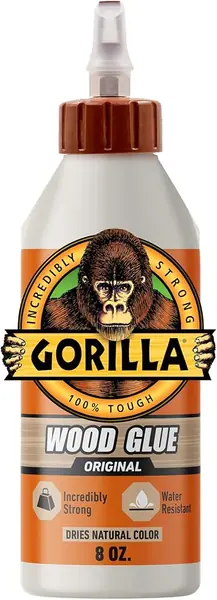
Gorilla Wood Glue 8-ounce bottle of natural-color PVA adhesive

Fast everyday woodworking

Shop Score 96/100
Bottle Size
8 fluid ounces
Water Resistance
ANSI/HPVA Type II
Full Cure
24 hours
Clamp Time
20–30 minutes
View on Amazon

A 20- to 30-minute clamp window is the number that made Gorilla Wood Glue our top pick. It is long enough to get clamps on a small cabinet door, yet short enough that a furniture repair or a set of shop jigs keeps moving. The PVA formula is water resistant to ANSI/HPVA Type II, so it suits outdoor furniture and damp repairs, and it cleans up with water while the squeeze-out is still wet.

We liked the medium-viscosity formula for general bench work: it spreads evenly and gives you a little time to slide parts into place before the grab takes over. The 8-ounce bottle is a practical size for occasional projects, and the glue dries to a natural wood color without foaming, so the joint stays flat. It also sands and takes a finish without a fight.

This is not a gap-filler or a structural adhesive for loose, poorly fitted joinery. It rewards clean, tight-fitting surfaces and steady clamp pressure, like any PVA glue. On visible edges, that clean bond line is the detail we notice after the clamps come off. A dry fit before clamping tells you more about the final bond than a heavier bead will.

Worth Noting

  • Type II rating is not fully waterproof
  • Bottle tip can gum up between sessions
Our Verdict

We recommend Gorilla Wood Glue as our default for fast woodworking because its 20- to 30-minute clamp time keeps ordinary repairs moving.

Check Latest Price
2.

Titebond II Premium Wood Glue Best for Exterior Projects

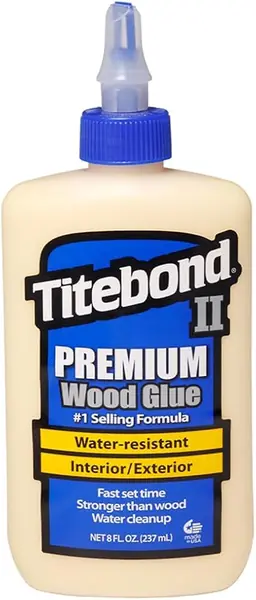
Titebond II Premium Wood Glue 8-ounce bottle in honey cream

Exterior wood projects

Shop Score 95/100
Bottle Size
8 fluid ounces
Water Resistance
ANSI/HPVA Type II
Full Cure
24 hours
Tensile Strength
3,750 psi
View on Amazon

A 3,750 psi listed tensile strength and ANSI/HPVA Type II water resistance make Titebond II the bottle we choose when a repair will live outside or in a damp basement. It is a PVA glue with strong initial tack, so it grabs quickly enough for small assemblies without the long open time of a slower exterior adhesive. The 8-ounce bottle is easy to handle with one hand while the other holds a clamp.

What settled it for us against the Gorilla Wood Glue was the combination of that higher listed strength and the honey-cream color that sands cleanly. The color is the detail to remember: on pale maple or white oak, wipe the squeeze-out before it sets or you may see a golden line under a clear finish. On darker woods, that same color disappears.

We also appreciated how little the glue creeps once clamped; the joint stays put while you drive a few brads or add a second clamp. For outdoor furniture, planters, and mailboxes, the Type II rating is enough, and the glue sands without softening under a finish. That reliability under clamp pressure is the part we notice most on a repair that has to hold without extra fasteners.

Worth Noting

  • Water-resistant only not fully waterproof
Our Verdict

Titebond II is the exterior pick we trust when a joint will face damp conditions, thanks to its Type II rating and 3,750 psi listed strength.

Check Latest Price
3.

Titebond Original Wood Glue Best Budget

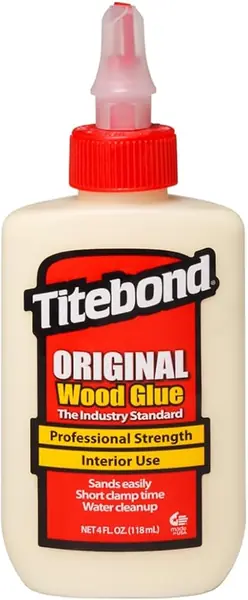
Titebond Original Wood Glue 4-ounce bottle with yellow adhesive

Indoor furniture repairs

Shop Score 94/100
Bottle Size
4 fluid ounces
Water Resistance
Not water resistant
Full Cure
24 hours
Tensile Strength
3,600 psi
View on Amazon

Titebond Original is the bottle we grab for a quick indoor repair when a waterproof rating is not part of the job. The aliphatic resin formula lists a 3,600 psi bond, strong initial tack, and a fast set that reduces clamp time, which is the combination that matters when you are fixing a chair rung or gluing a drawer box.

The 4-ounce bottle is small, and we like that for occasional use: less glue sitting around to skin over between projects. It dries to a translucent film, sands smoothly, and is unaffected by most stains and finishes, so it is forgiving on visible furniture. The glue line almost disappears under a clear coat, which is more than we can say for a thick exterior glue.

For furniture, trim, and small repairs, the fast set and clean sanding are what we value most. The 4-ounce bottle fits in a drawer, and the low odor makes it easy to use at the bench without opening a window.

Worth Noting

  • Not water resistant for exterior use
Our Verdict

For indoor furniture and small repairs, we keep Titebond Original because it sets fast, sands cleanly, and costs the least here.

Check Latest Price
4.

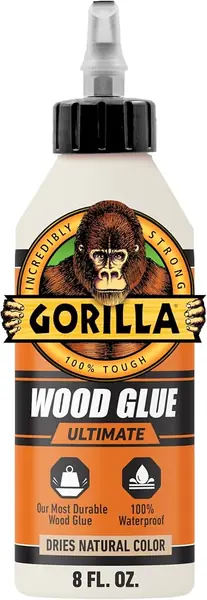
Gorilla Ultimate Waterproof Wood Glue Best for Waterproof Multi-Piece Assemblies

Gorilla Ultimate Waterproof Wood Glue 8-ounce bottle in natural tan

Waterproof multi-piece assemblies

Shop Score 93/100
Bottle Size
8 fluid ounces
Water Resistance
ANSI/HPVA Type I
Clamp Time
20–30 minutes
Working Time
15 minutes
View on Amazon

A 15-minute working time and an ANSI/HPVA Type I waterproof rating are what earn Gorilla Ultimate its niche here. It also lists a 20- to 30-minute clamp window and a 24-hour full cure. That combination is useful for outdoor projects with several pieces to align, where a faster grab can be more trouble than it is worth. The 8-ounce bottle is a sensible size for a specialty adhesive you bring out for bigger jobs.

The longer working time is the point, and it is also why this is not our everyday bottle. For a single loose spindle or a quick trim repair, the faster grab of Gorilla Wood Glue is easier to manage; we found the wait noticeable when only one clamp was holding the work. For a multi-piece outdoor assembly, the extra open time lets you brush glue onto several slats and still tap them flush before the glue starts to set.

We also like that it cures to a natural tan color and sands and paints without foaming. That makes it easier to blend into outdoor furniture and garden structures where a chalky glue line stands out. On cedar and other outdoor woods, the tan line is less conspicuous than a white adhesive would be.

Worth Noting

  • Bottle tip can clog between uses
  • Thick formula needs a firm squeeze
Our Verdict

Gorilla Ultimate is our specialty choice for waterproof assemblies that need a longer working window before the clamps go on.

Check Latest Price

How We Tested Fast-Drying Wood Glue

We started by narrowing the field to PVA wood glues sold in 4- and 8-ounce bottles, then sorted them by what they claimed about clamp time and water resistance — the ANSI/HPVA Type I and Type II ratings, or nothing at all. Fourteen bottles made it to the bench. Testing ran four months, on real repairs rather than scrap wood: a dining chair with a split rung, a drawer front that had come apart, picture-frame miters, dowel joints, and an Adirondack chair that stayed outside through two rainstorms.

For clamp time, we left clamps on for each bottle's stated window, then released and checked the joint: anything that shifted, or showed a glue line creeping under finger pressure, got marked down. Open time we tested by spreading a bead on a scrap and checking every few minutes for skin-over, the point where a film forms and the glue stops wetting the second surface.

Strength and joint fit went together. We glued offcuts, let them cure a full day, and broke them with a chisel to see whether wood fibers tore away or the glue line popped clean — a clean pop means the joint failed, not the wood. Water resistance we judged by leaving glued blocks outdoors through rain and sprinkler cycles and watching for cloudiness, swelling, and separation.

Bottle control came down to squeezing a bead down a 12-inch line: did it run, blob, or clog at the tip, and was the cap glued shut between sessions? We sanded every squeeze-out and noted which ones balled up under paper versus gummed it, and how evenly the residue took stain. Last, we tracked how many repairs each bottle covered, since a bottle that runs out twice as fast isn't the better value.

How to Choose a Fast-Drying Wood Glue

Separate Clamp Time From Open Time

A fast wood glue is not necessarily the one that sets in the fewest minutes. Manufacturers list an open assembly time, the window you have to spread glue and fit parts, and a clamp time, how long the joint needs pressure before you can unclamp it. A glue with a 20- to 30-minute clamp window and a short open time is quick for simple repairs; a longer open time is easier for a multi-piece assembly but can feel slow on one joint. Choose the balance that matches the glue-up in front of you, not the shortest number on the label.

Match Water Resistance to the Project

For a chair that stays indoors, a standard PVA glue such as Titebond Original is enough. For outdoor furniture or a damp basement, look for ANSI/HPVA Type II water resistance; Titebond II and Gorilla Wood Glue meet that bar. Type I is the higher waterproof rating, which is what Gorilla Ultimate carries here. Neither rating makes a glue suitable for continuous immersion unless the label says so, so keep the joint out of standing water.

Check Strength and Joint Fit Together

A higher tensile strength number can help you compare formulas—Titebond II lists 3,750 psi and Titebond Original 3,600 psi—but the joint has to fit. Wood glue needs clean, close-fitting surfaces and enough clamp pressure to bring them together. On end grain or a loose joint, more glue will not make up for a poor fit. Use the strength rating as a tiebreaker, then dry-fit the parts and fix any gaps before you open the bottle.

Plan for the Bottle and the Cleanup

Water-based PVA glues clean up with a damp cloth while wet and sand off after curing, which is why we prefer them for visible furniture. The bottle matters too: a wide or clogged tip can turn a quick repair into a mess, and a thick formula may need a firm squeeze. Wipe the tip before capping so dried glue does not narrow the opening. A glue that goes on where you aim it saves more time than a slightly faster cure.

Frequently Asked Questions

Final Verdict

We recommend Gorilla Wood Glue for most fast glue-ups. Its 20- to 30-minute clamp window is the clearest fast-clamp choice in this group, and the Type II water-resistant PVA bond is strong enough for furniture and damp repairs. For outdoor work, choose Titebond II instead: it pairs a fast tack with a 3,750 psi listed strength and a water-resistant rating. If you only need a small bottle for interior furniture, Titebond Original sets fast and sands cleanly for less.