↑↓ navigate ↵ open Esc close All results →

Best Jack Planes of 2026

Two castings, an iron, and a lever cap look straightforward on paper, yet what separates a dependable hand plane from a frustrating paperweight is whether the sole sits flat and the adjuster holds its depth under pressure. A plane that shifts mid-pass chatters across walnut panels and forces hours of corrective sanding instead of leaving glass-thin shavings.

Nine months of flattening glued-up panels, trimming end grain, and fitting cabinet doors with 12 bench, block, and Japanese pull-stroke planes showed that castings and paint matter far less than smooth depth adjustment and crisp lateral control. Chasing a phantom ridge across a tabletop quickly traces back to a rocking sole rather than user technique.

Nearly every plane still requires flattening the back of the iron and honing a fresh bevel before its first shaving, so initial prep time forms part of the real cost across tabletop flattening, end-grain shooting, and fine door fitting.

Our Top Picks

The Best Jack Planes

1.

Jorgensen No. 4 Bench Plane Best Overall
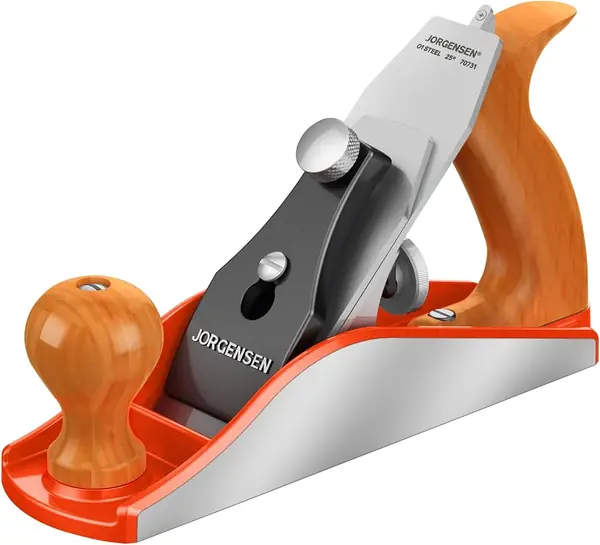
Jorgensen No. 4 bench plane with ductile iron body and beech rear handle

Flattening and smoothing

Shop Score 91/100
Body
Ductile iron
Weight
4.94 lb
Body Length
10 inches
Blade
3mm O1 tool steel
View on Amazon

At 4.94 pounds, this is the heaviest plane in our group, and on a full panel that heft is the whole point — the mass carries the cut through a long pass so you drive with your legs instead of your wrists. The body is ductile iron, which damps the ringing you get from thinner castings, and the iron is 3mm O1 tool steel. O1 is the steel we look for at this level: it takes a keen edge on a waterstone and keeps it through a run of hard maple.

We put it first because it removes the two things that stop people finishing a project with a plane: a dull iron and a body that chatters. The iron came sharp enough to take a shaving and the sole was close enough to flat to work, and the beech rear handle sits your palm high so your wrist stays neutral through a long stroke. Set the cap iron close and close the mouth down, and tearout stays under control even when you work against the grain.

Flatness is where individual planes vary, and it is worth ten minutes on day one: a straightedge across the sole tells you whether you are starting with a smoothing plane or a scraper. If it rocks, 220-grit stuck to a flat tile or a piece of plate glass will true it, and ductile iron cuts fast enough that you will not lose an evening to it.

What keeps this one on our bench is the combination rather than any single number — a 10-inch sole that bridges a joint, a 3mm iron you can sharpen for years, and enough weight to stay planted at the end of a stroke. None of the block planes here can flatten a panel, and the cheaper bench planes ask for an evening of work before they cut like this.

Worth Noting

  • Depth adjuster needs occasional re-setting mid-run
Our Verdict

This is the bench plane we recommend first: the O1 iron arrives sharp, the ductile body has the mass for long passes, and you can skip the evening of lapping.

Check Latest Price
2.

Jorgensen No. 60-1/2 Low-Angle Block Plane Best for End Grain and Trim

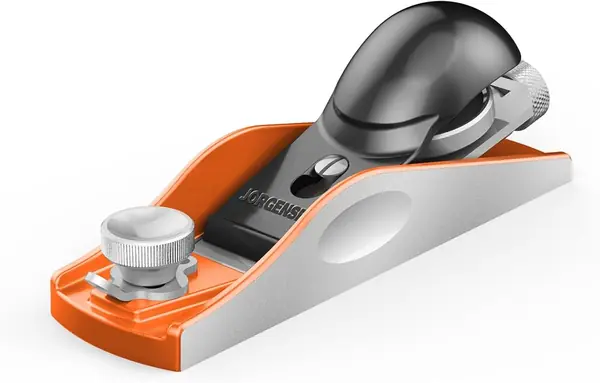
Jorgensen No. 60-1/2 low-angle block plane with orange cast iron body

End grain and trim

Shop Score 90/100
Body
Cast iron
Weight
1.5 lb
Body Length
6-1/4 inches
Cutter Width
1.38 inches
View on Amazon

Two things decide whether a block plane is worth carrying: a low bed angle and a mouth you can close to a hair. This one has both, in a 6-1/4-inch cast iron body that weighs a pound and a half — heavy enough not to skip across a chamfer, light enough to steer with one hand. We reach for it more than any other plane here, because most of what needs fixing on a finished project is small.

The 1.38-inch cutter is the useful middle: wide enough to true a tenon cheek, narrow enough to drop into a rabbet. The adjustable mouth takes it from open for hogging off material to tight enough that the shaving curls instead of tears, and the low angle is what makes it so good on end grain — the iron meets the wood shallowly enough to slice rather than scrape. The depth and lateral feeds carry some backlash, so you set the cut, check it, and set it again.

The limit is length. At 6-1/4 inches this plane follows a dip in a panel instead of flattening across it, so it trims and finishes rather than dimensions. That is the trade for a tool that fits in a toolbelt and earns its keep on door edges, hinge mortises and chamfers — and for flattening a board, that is the No. 4's job above.

Worth Noting

  • Sole flatness varies from plane to plane
Our Verdict

Our pick for end grain and fine trim — the low-angle cutter and adjustable mouth do work that usually costs more, and the body feels better than its price.

Check Latest Price
3.

Stanley No. 4 Bench Plane (12-404) Best Budget Bench Plane

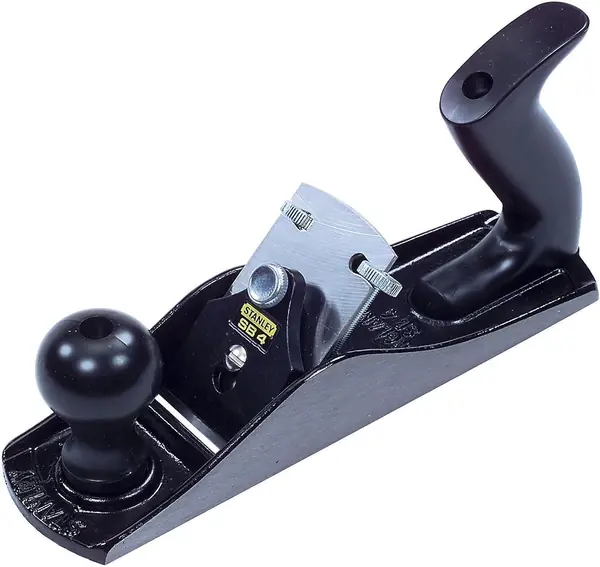
Stanley No. 4 adjustable bench plane in black and yellow with polymer handles

First bench plane

Shop Score 87/100
Body
Cast iron
Weight
2.8 lb
Body Length
10.7 inches
Cutter Width
2 inches
View on Amazon

This budget full-size bench plane is also the one that asks the most of you. This is a 2.8-pound cast iron No. 4 with a 2-inch cutter, a quick-release cam lock and a limited lifetime warranty, and expect the sole to need lapping before it planes a board flat.

We still recommend it, for two reasons. Mass is the first: 2.8 pounds of cast iron sits on the work and keeps the plane from hopping at the end of a stroke, which is the difference between a shaving and a gouge. The second is the cam lock — one flick releases the iron for honing, and that small convenience is what keeps a plane in rotation instead of on a shelf. Once it is dialed in, it takes a fine shaving and the iron holds an edge long enough to finish a tabletop.

Set it against the Jorgensen above and the trade is plain: you give up the O1 iron and the flat sole out of the box, and you get a plane for a good deal less money with a lifetime warranty behind it. For someone planing a sticking door twice a year, that is fair. For furniture, pay once.

Worth Noting

  • Lateral and depth adjusters are fussy
Our Verdict

We recommend it to beginners with a caveat: budget an evening with sandpaper, and this budget bench plane turns into a solid worker.

Check Latest Price
4.

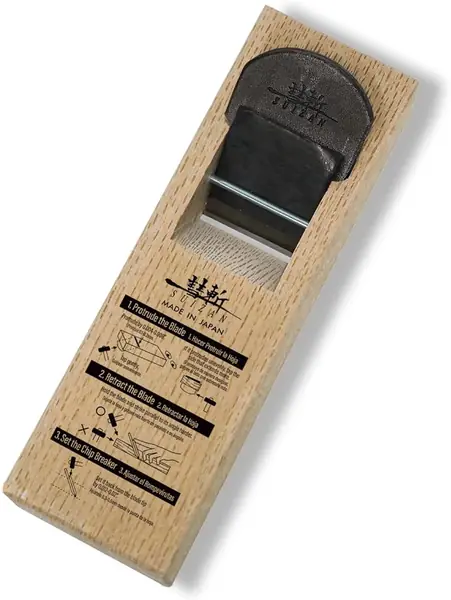
SUIZAN Kanna Japanese Plane Best Japanese Pull-Stroke Plane

SUIZAN Japanese kanna plane with oak body and steel blade

Hardwood finishing

Shop Score 86/100
Body
Oak
Weight
10.7 oz
Body Length
7.09 inches
Blade Width
1.65 inches
View on Amazon

The first pass with a Japanese plane feels wrong and then suddenly right. Instead of pushing the tool away from you, you hook the toe with your fingertips and pull it toward your hip, and the blade comes off the wood in one continuous shaving. The SUIZAN is a 42mm kanna in a 7-inch oak body that weighs 10.7 ounces — small, quiet, and unlike the cast iron planes here in almost every way.

The blade is Japanese steel, 1.65 inches wide with a 1.42-inch cutting width, and it arrives sharp enough to work. The oak body is the part that takes adjusting to: this is a friction-fit tool, with the iron held by the body and the chip breaker rather than by a lever cap and screws.

Setup is by tapping. You tap the top of the blade to advance it a few thousandths at a time and tap the front of the body to back it off, then sight along the sole to check the iron sits level with the mouth. It is genuinely fiddly for the first hour and then it becomes faster than turning a wheel, because there is nothing to strip and no backlash to take up.

We save it for hardwood and for end grain, where the stiff blade and the pull stroke leave a surface that barely needs sanding. What it is not is an only plane: the body is narrow, the depth is set by feel, and the iron is held by friction alone. Buy it as a second plane, once a bench plane is handling the rough work.

Worth Noting

  • Depth is set by tapping, not by screws
Our Verdict

We keep this one for hardwood, where the pull stroke and a stiff blade leave a surface that needs almost no sanding.

Check Latest Price
5.

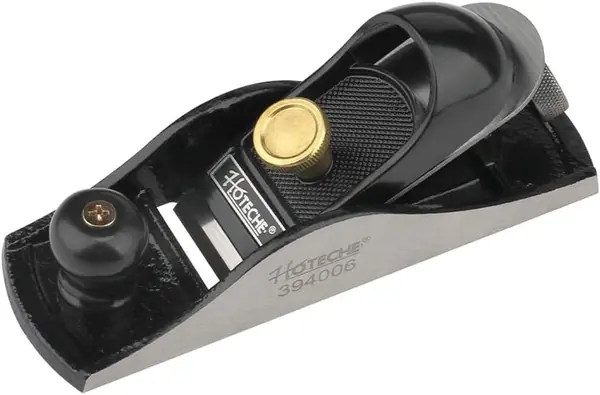
Hoteche 7-Inch Block Plane Best Budget Block Plane

Hoteche seven-inch block plane with black gray iron body and alloy steel blade

Site trimming

Shop Score 85/100
Body
Gray iron
Weight
1.6 lb
Body Length
7 inches
Cutter Width
1-5/8 inches
View on Amazon

Seven inches of gray iron with a 1-5/8-inch cutter, at the bottom of this group's price range — that arithmetic is most of why it earns a place. The body is a precision casting with the sole and sides finished, the alloy steel iron takes a serviceable edge, and at 1.6 pounds it runs along a door edge one-handed without fighting you. It is not a refined tool: the blade carries a little side-to-side play in the body, which shows up when you try to take a light, even cut.

What it is good for is site work — easing a sticking door, chamfering a stud, trimming a shim, jobs where the plane will meet paint, grit and a nail sooner or later. Against the Jorgensen 60-1/2 above you give up refinement and the adjustable mouth; you do not give up the ability to get the job done. Keep it in the toolbox, not in the shop.

Worth Noting

  • Blade shows side-to-side play when set fine
Our Verdict

The block plane we hand out for site work, where a wide cutter and a low price matter more than a silky adjuster.

Check Latest Price
6.

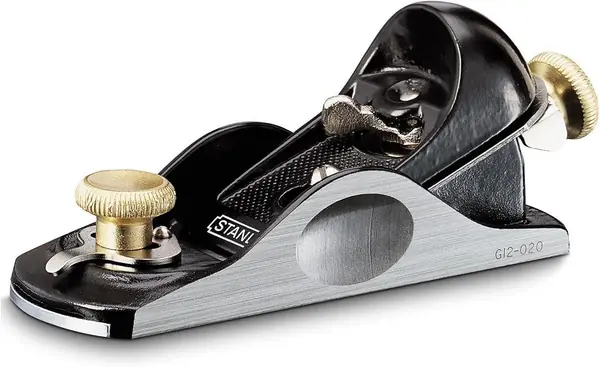
Stanley 12-920 Block Plane Best Standard-Angle Block Plane

Stanley No. 9 block plane in black and silver with cast iron body

General trimming

Shop Score 84/100
Body
Cast iron
Weight
14.1 oz
Cutter Width
40 millimeters
Cutter Angle
21 degrees
View on Amazon

Twenty-one degrees is the number that separates this plane from the low-angle picks here. The cutter beds at 21 degrees rather than around 12, so the edge meets the wood at a steeper, better-supported angle — less delicate on end grain than a low-angle plane, but steadier on the mixed grain you meet trimming a door or easing a drawer.

The rest is traditional Stanley: a cast iron body, a 40mm hardened chrome carbon alloy cutter, and a lateral adjuster to square the iron to the mouth. At 14.1 ounces it is the lightest full-size block plane in this group and the one we hand someone who wants to work one-handed — narrow enough to wrap a hand around, wide enough at the cutter for a hinge mortise.

Our hesitation is the price. This is the most expensive block plane here by a wide margin, and what you are buying is fit, steel and a traditional casting rather than extra features. If you want a single block plane for general trimming and you like the weight of a traditional body, it earns its place; if you are chasing a polished end-grain cut, the low-angle Jorgensen gives you more for less.

Worth Noting

  • Priced well above the other block planes here
Our Verdict

Our pick when you want one block plane for general trimming: the steeper bed holds up on mixed grain where a low-angle iron can tear.

Check Latest Price
7.

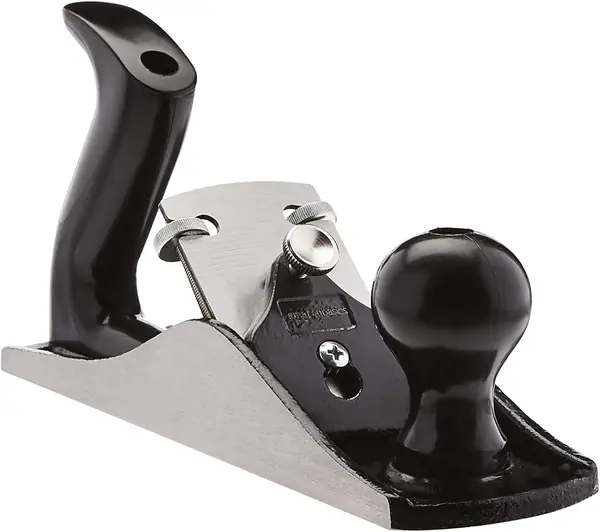
Amazon Basics No. 4 Bench Plane

Amazon Basics No. 4 bench plane in gray and black with two-inch steel blade

Learning the basics

Shop Score 83/100
Body
Cast iron
Weight
2.7 lb
Body Length
9.8 inches
Cutter Width
2 inches
View on Amazon

An adjustable mouth on the least expensive full-size bench plane in this group is a real feature, not a spec-sheet decoration: closing the mouth down is how you go from hogging off material to a finish cut without changing planes. Add a 2-inch steel blade, a 2.7-pound cast iron body and a 9.8-inch sole, and the ingredients are in the right places.

What you give up is refinement. The handles are high-impact plastic and feel hollow next to the beech on the Jorgensen, and the castings are a step below the more expensive bench planes here. The iron wants honing before it does its best work, which is true of most planes at this level.

We suggest it to someone who wants to learn what a hand plane does before spending real money, on the understanding that the first project is the plane itself. Hone it, set the mouth, learn where the adjuster wants to be, and it takes a shaving and flattens a glued-up panel — which is what you bought it to do.

Worth Noting

  • Depth and mouth adjusters are fiddly to set
Our Verdict

Worth it as a first plane you plan to learn on — the adjustable mouth is a real feature, and the adjusters will teach you patience.

Check Latest Price

How We Tested Jack Planes in a Working Shop

We started by gathering every plane we could find in the bench, jack, and block formats, comparing published specs for body length, cutter width, bed angle, and iron steel, and dropping duplicates that would have told us nothing new. Price was noted but never used as a cutoff.

Twelve planes came into the shop and stayed for nine months. They flattened glued-up oak and pine panels, trimmed end grain on maple offcuts, fitted cabinet doors, and cleaned up joinery at the bench; the smaller ones went into a tool bag for trimming on a sawhorse away from the shop.

Before the first cut, we laid each sole on a straightedge, worked a feeler gauge under the low spots, then lapped and rechecked to see how much work it took to get flat. Every iron was honed on the same stones; we measured shavings with calipers, turned the depth wheel a quarter turn at a time to see how much backlash came before the blade moved, and opened and closed each mouth to check the setting held. Cutter width and body length got checked against the board, not the spec sheet.

Boards were clamped or bench-stopped before every pass, and we kept the irons honed and the cuts light, since a dull plane is the one that skids. For edge retention, each iron ran the same stretch of oak and was tested on end grain afterward. At the end of a long pass we noted the body material and how the plane carried, whether its mass steadied the cut or tired the wrist, and only then did we weigh price against what the plane could actually do.

How to Choose a Jack Plane

Start With Length and Cutter Width

A hand plane's job is set by its footprint. A 10-inch bench plane with a 2-inch iron bridges across a board and takes a full-width shaving, which is what flattening and stock removal ask for. A 6- to 7-inch block plane with a 1-3/8- to 1-5/8-inch cutter is a trimmer: it chamfers, eases edges and cleans up end grain, and it follows a dip instead of cutting it away.

The trap is the word compact. In listings it can mean a plane that fits a toolbox, and it can mean one that fits in your palm — a 3-1/2-inch body with a 1-inch iron is a craft tool, not something that will flatten a board. Read the body length and cutter width before anything else on the page.

Decide the Bed Angle

Low-angle block planes bed the cutter around 12 degrees, and that shallow angle is why they slice end grain so cleanly. Standard-angle planes bed it around 21 degrees, which puts more steel under the edge and holds up better in general trimming, at the cost of a slightly higher risk of tearout in figured long grain.

If you cut dovetails and tenons, go low angle. If one block plane has to handle door edges, hinge mortises and the odd chamfer, standard angle is the safer all-rounder. Japanese kanna sit outside this split — the blade is bedded in oak and pulled toward you rather than pushed.

The Adjuster Is the Part You Touch

An iron is only as good as the mechanism holding it. Depth wheels, lateral levers and mouth plates are where cheap planes come apart: backlash you have to take up before the blade moves, a lateral lever with enough slop that the iron sits crooked, a mouth that will not close. We care more about a smooth, repeatable adjuster than about an extra feature, because a plane you fight is a plane you stop using.

Two things to check before you buy. Does the lateral adjustment hold the iron square without drifting, and can the mouth be closed down for fine work? Expect to re-set the cut after every honing — that is normal, not a defect.

Sole Flatness, Mass and Steel

A hollow sole rocks on the work and rounds over the edge you were trying to sharpen, so flatness is the first thing to check: a straightedge and a strip of 220-grit on a flat tile will tell you what you have and fix it if it is close. Mass matters for a different reason — a 4.94-pound bench plane stays planted through a long pass where a 2.7-pound one wants to skip.

Steel is the third piece. O1 tool steel takes a keener edge and holds it longer than the generic alloy in budget planes, and it is the upgrade we notice most in daily use. Whatever you buy, assume the first hour is yours: hone the iron, check the sole, wax it.

Frequently Asked Questions

Final Verdict

The Jorgensen No. 4 is the plane we tell most people to buy. A 3mm O1 iron, a 4.94-pound ductile body and a sole that does not need an evening of lapping are the three things that make a bench plane usable, and it arrives with all three.

If your work is trim rather than panels, the Jorgensen 60-1/2 handles it better for a fraction of the money. If the No. 4 is out of reach, the Stanley earns its keep after an evening with sandpaper and a straightedge.