↑↓ navigate ↵ open Esc close All results →

Best Jigsaws for Woodworking and DIY of 2026

A jigsaw is the saw that's supposed to follow the line you drew, and it's the one most likely to wander off it — the blade flexes, the base tips, and your curve picks up a kink. What a good one actually fixes is that gap between the pencil line and the finished cut.

We put 12 jigsaws through nine months of cuts — corded and cordless, top-handle and barrel-grip — and the first decision isn't the saw at all, it's the battery. If you already have chargers on the shelf, a bare tool gets you a better saw for the money. After that it's how the saw sits in your hand: a heavier corded body steadies a long straight run, while a lighter barrel grip gets you close to the work for tight curves.

Some of these saws are built around a pack you already own, others for a bench near an outlet. Different situations — the same standard at the cut line.

Our Top Picks

The Best Jigsaws for Woodworking and DIY

1.

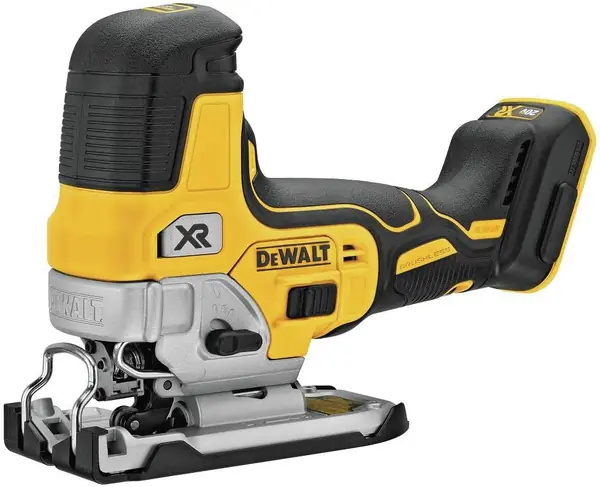
DEWALT 20V MAX XR Jig Saw (DCS334B) Best Overall
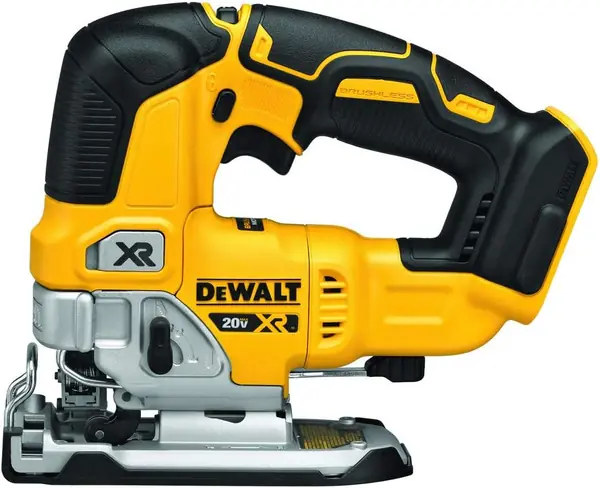
DEWALT 20V MAX XR cordless jigsaw in yellow with black handle and bare tool body

DEWALT 20V users

Shop Score 98/100
Power Source
20V DEWALT battery (bare tool)
Weight
4.2 lb
Blade Speed
3,200 spm
Bevel Capacity
45 degrees
View on Amazon

At 4.2 pounds, the DCS334B is the lightest full-size cordless jigsaw in this group, and that is the first thing we appreciated. It is easy to hold out over a board and steer through a curve without the saw fighting your wrist. The brushless motor and 3,200-spm top speed give it more than enough speed for hardwood and plywood, and the variable-speed trigger and dial let you slow down for metal or a clean start.

The blade clamp is all-metal and lever-action, so you do not need a wrench. We like that because blade changes happen often when you move between wood and metal. The shoe bevels to 45 degrees with detents at 0, 15, 30, and 45, and the LED light is useful when the cut line falls under the body of the saw. Four orbital settings let you choose a cleaner finish or a faster, more aggressive cut.

This is a bare tool. If you already have DEWALT 20V batteries and a charger, that is the smart way to buy it; if you do not, factor in the cost of a battery and charger. We also noticed that the saw is compact enough to keep in a small tool bag, but the dust blower is not as refined as the best corded saws here. It clears most chips, though you may still need to brush the line.

For most woodworkers, the combination of low weight, brushless power, and easy blade changes makes this the one we reach for first. The Bosch JS470E is the better choice if you want maximum plug-in power and do not mind the weight.

Worth Noting

  • Bare tool requires batteries and charger
Our Verdict

The DCS334B is our best overall pick for DEWALT 20V users: it is light, brushless, and quick to change blades.

Check Latest Price
2.

Bosch JS470E Top-Handle Jig Saw Best Corded

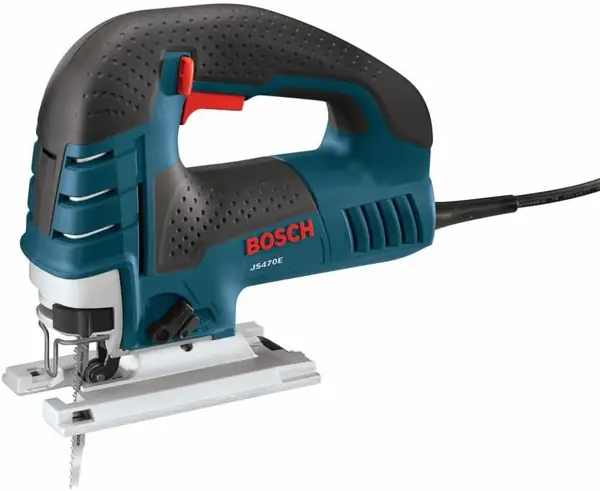
Bosch JS470E corded top-handle jigsaw in blue with black soft-grip handle

Bench woodworking

Shop Score 97/100
Power Source
120V corded
Weight
10 lb
Blade Speed
3,100 spm
Amperage
7.0 amps
View on Amazon

The 7-amp motor is the reason to put up with the JS470E's 10 pounds. It keeps the blade moving through thick hardwood without the bogging or stalling that a smaller saw can show, and the constant-response circuitry helps hold speed under load. We found the weight becomes an advantage on a benchtop: the saw sits steady, and you can concentrate on steering rather than holding it up.

The control layout is what makes it a woodworking favorite. The variable-speed dial sets the ceiling and the trigger controls the cut, so you can start slowly and then open it up. Four orbital settings change the blade stroke from a clean finish to a more aggressive cut, and the multidirectional blade clamp grips T-shank blades firmly. The die-cast foot is large and stable, with a steel insert that helps the shoe stay flat.

Blade changes are tool-free, and the blade ejection lever means you do not have to touch a hot blade. We appreciate that when swapping between a fine wood blade and a metal blade. The dust blower is adjustable, and the 45-degree bevel is easy to set with the on-board wrench. The ergonomic top handle is comfortable, though the saw is nose-heavy and not the one we reach for on a ladder or overhead cut.

If your work stays on a bench and you want corded power without a battery platform, this is the best corded saw here. The DEWALT DCS334B is lighter and more convenient for quick cuts, but it cannot match the JS470E's planted feel in thick stock.

Worth Noting

  • Heavy 10-pound body limits overhead work
Our Verdict

For plug-in power and smooth, controlled cuts, we pick the Bosch JS470E; just be ready for its heft.

Check Latest Price
3.

SKIL JS314901 6-Amp Jig Saw Best Budget Corded

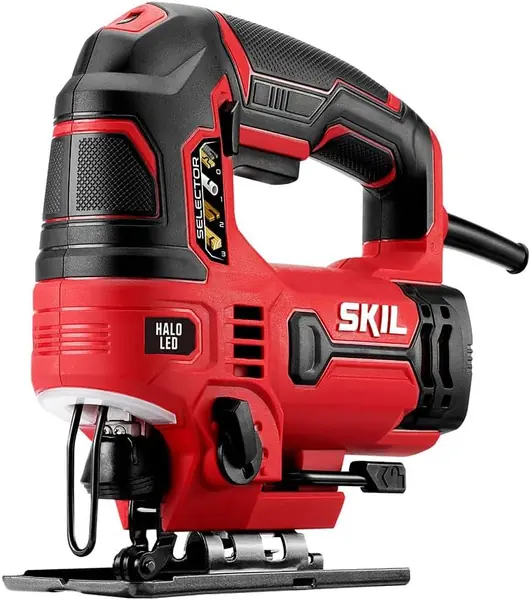
SKIL corded jigsaw in blue and black with halo light around the blade

Budget home projects

Shop Score 96/100
Power Source
120V corded
Weight
4.9 lb
Amperage
6.0 amps
Orbital Settings
4-stage
View on Amazon

The halo light wraps around the blade and lights the cut line from both sides, so you can see the pencil mark even when the saw body is between you and the work. At 4.9 pounds, the SKIL is light enough to use one-handed for short cuts, and the 6-amp motor has enough power for 2x4s, decking, and plywood. The four-stage orbital function changes the blade stroke for different materials.

We think this is the best value here for corded cutting. A lower orbital setting leaves a cleaner edge; a higher setting moves faster through rough work. The two-finger trigger gives you good speed control, and the tool-free blade clamp is quick to operate. The shoe bevels to 45 degrees without a tool, and the dust blower can be switched off when you want to see the line without a stream of air.

The blade can wander if you push it hard through thick stock. We noticed that slow, steady feed and a good blade make a bigger difference here than they do on the premium saws. The body is mostly plastic, but it feels solid for the price, and the light is genuinely useful rather than a gimmick.

For a first jigsaw or a second saw for quick jobs, this is the one we point to first. It gives you features that usually cost more, without asking you to buy into a battery system. The Bosch JS470E is the step up for daily furniture work; the SKIL is the smart buy for occasional cuts and home repairs.

Worth Noting

  • Base is small for fine furniture cuts
Our Verdict

We think the SKIL JS314901 is the best value here for corded cutting, with a bright halo light and enough power for most home projects.

Check Latest Price
4.

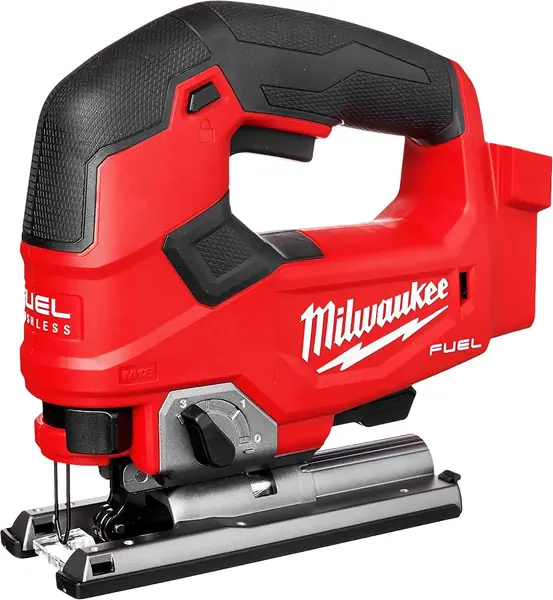
Milwaukee M18 FUEL D-Handle Jig Saw Best Premium Cordless

Milwaukee M18 FUEL cordless jigsaw in red with black D-handle and bare tool body

Heavy cordless cuts

Shop Score 95/100
Power Source
18V Milwaukee M18 (bare tool)
Weight
5.4 lb
Bevel Capacity
45 degrees
Voltage
18 volts
View on Amazon

The D-handle is the first thing you notice, and it changes how the saw feels. Your hand sits behind the blade rather than on top, which gives you a straight push through thick stock and a comfortable grip for long cuts. The brushless motor has the power to cut 8/4 cherry and metal without the saw feeling strained, and the variable-speed trigger gives you a slow start when you need it.

We recommend the M18 FUEL for heavy cordless cuts and a comfortable D-handle, provided you already own M18 batteries. The tool-free blade change and LED light are useful, and the blower keeps most chips off the line. The shoe bevels to 45 degrees, and the saw accepts T-shank blades. The body is 5.4 pounds, which is heavier than the DEWALT DCS334B but still manageable for a saw with this much power.

The caveat is straight-line accuracy. Some of these saws develop blade drift, and a few cut at an angle unless you hold the saw at a slight correction. It is not a furniture-grade jigsaw for fine joinery without checking the blade alignment first. Durability is less certain: the tool feels solid, but early breakdowns are part of the risk. For heavy framing and rough work, those are risks some users accept.

If you are already on the M18 platform and want one cordless saw for tough cuts, this is a strong choice. The DEWALT DCS334B is the better all-around pick for most woodworkers because it is lighter and has fewer accuracy questions. The Milwaukee earns its place when power and handle comfort matter more than finesse.

Worth Noting

  • Bare tool requires M18 batteries and charger
Our Verdict

For heavy cordless cuts and a comfortable D-handle, the Milwaukee M18 FUEL earns our recommendation if you already own M18 batteries.

Check Latest Price
5.

DEWALT 20V MAX Barrel-Grip Jig Saw (DCS335B) Best Barrel-Grip

DEWALT 20V MAX barrel-grip jigsaw in black with compact body and bare tool

Trim and curves

Shop Score 94/100
Power Source
20V DEWALT battery (bare tool)
Weight
4.76 lb
Blade Speed
3,200 spm
Bevel Capacity
45 degrees
View on Amazon

Barrel grip is a different way to saw: your hand wraps around the body close to the blade instead of sitting on top. That lower position puts your eye nearer the cut line and gives you finer control through tight curves. The 3,200-spm brushless motor and four orbital settings are the same basic recipe as the top-handle DEWALT, and the tool-free blade change is just as quick.

The saw is 4.76 pounds, so it is not a burden to hold, and the compact body fits into spaces where a top-handle saw feels tall. We found the lower grip especially useful when the saw has to follow a pencil line around a corner. The LED light helps, and the bevel shoe adjusts to 45 degrees with detents. The variable-speed dial lets you set a ceiling, but there is no trigger; you control speed with the dial and the on/off switch.

We like the DCS335B for trim work and tight curves where a barrel grip gives you more control. The switch is the sticking point: it sits on the left side of the tool, and for left-handed users it can end up under the palm. We had to think about hand position before starting a cut. The switch is also not a trigger, so it takes some getting used to if you are coming from a top-handle saw.

For right-handed trim carpenters who want a low, controlled grip, this is a specialized saw that earns its place. The top-handle DCS334B is the better all-around choice for most people. Choose the barrel grip only if you do enough curved work to justify the different feel and can live with the switch placement.

Worth Noting

  • Barrel grip is large for smaller hands
Our Verdict

We like the DCS335B for trim work and tight curves where a barrel grip gives you more control, but left-handed users should try the switch first.

Check Latest Price
6.

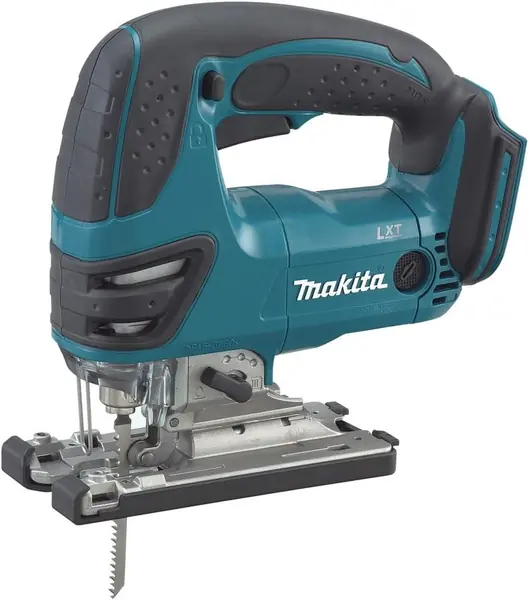
Makita XVJ03Z 18V LXT Jig Saw Best for Makita 18V Users

Makita 18V LXT cordless jigsaw in teal with black grip and bare tool body

Makita 18V users

Shop Score 93/100
Power Source
18V Makita LXT (bare tool)
Weight
6 lb
Blade Speed
0-2,600 spm
Bevel Capacity
45 degrees
View on Amazon

The reason to consider the Makita is the battery you already own. If you are on the 18V LXT platform, the XVJ03Z is a bare tool that slides onto the packs you use for drills and drivers, and that makes it an easy addition. The saw is 6 pounds, heavier than the DEWALT and Milwaukee options, but the weight gives it a settled feel on the workpiece.

We found the cut quality steady, with a heavy-gauge base and a blade guide that helps keep the blade from wandering. The 0-2,600-spm motor is not the fastest here, but it has enough torque for 2-inch maple and typical cabinet work. Three orbital settings plus straight cutting cover a useful range, and the tool-less blade change lever is quick. The two-finger trigger is comfortable and gives you good speed control.

We recommend the XVJ03Z to anyone already invested in Makita 18V batteries who wants a stable, accurate saw. The saw is on the heavy side for overhead work, and the 2,600-spm top speed is lower than the 3,200-spm saws. The base bevels to 45 degrees, but the adjustment is not as refined as the Bosch's. We also wish the blower were stronger; it clears some dust but not all.

For Makita users who value a solid, accurate saw over the latest features, this is a dependable choice. The DEWALT DCS334B is lighter and faster, and the Bosch JS470E is the corded step up.

Worth Noting

  • Bare tool requires batteries and charger
  • No LED light for dim work areas
Our Verdict

We like the Makita XVJ03Z for Makita 18V users who want a stable, accurate saw and can live without a light.

Check Latest Price
7.

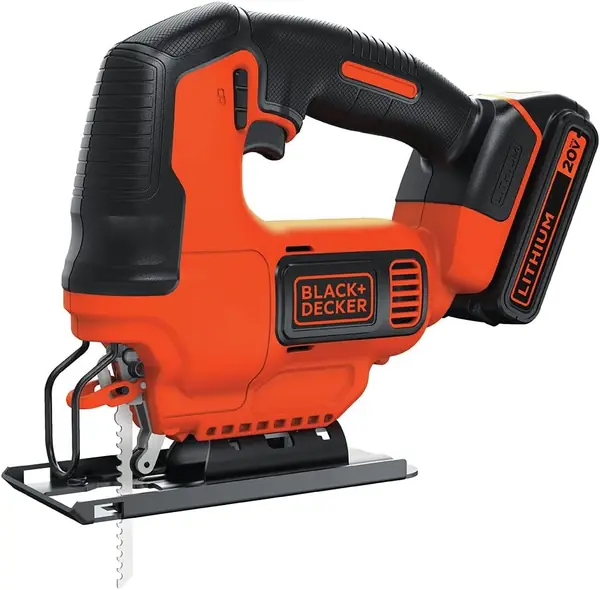
BLACK+DECKER 20V MAX Cordless Jig Saw (BDCJS20C) Best for Occasional Cordless Cuts

BLACK+DECKER 20V MAX cordless jigsaw in black with battery and charger included

Occasional cordless cuts

Shop Score 92/100
Power Source
20V BLACK+DECKER battery (included)
Blade Speed
2,500 rpm
Bevel Capacity
45 degrees
Battery And Charger
Included
View on Amazon

A battery and charger in the box is the whole point of this BLACK+DECKER. If you do not already own a cordless tool platform, it is the least expensive way here to get a working cordless jigsaw without buying those items separately. The saw is 5 pounds, has a variable-speed trigger up to 2,500 rpm, and accepts both U- and T-shank blades.

For quick cuts in plywood, fence boards, and light metal, it does the job. We like the tool-free blade change and the 45-degree bevel shoe, and the wire guard gives you a clear view of the line. The built-in dust blower helps, though it is not strong enough to keep up with a long cut. The handle is comfortable and the saw is easy to control with one hand.

The trade-offs show up as the work gets harder. The plastic housing and base feel built to a price, and long-term durability is the biggest question. The saw is happiest in light-duty work, and the cut quality is not in the same class as the premium saws.

We see the BDCJS20C as a reasonable first cordless saw for light weekend work. If you cut every week, the DEWALT DCS334B or Makita XVJ03Z is worth the step up.

Worth Noting

  • Short battery life limits bigger jobs
  • Blade alignment can drift on straight cuts
Our Verdict

We see the BDCJS20C as a budget cordless kit for occasional cuts, not a saw for all-day work or long straight rips.

Check Latest Price
8.

CRAFTSMAN V20 Cordless Jig Saw (CMCS600B) Best for CRAFTSMAN V20 Users

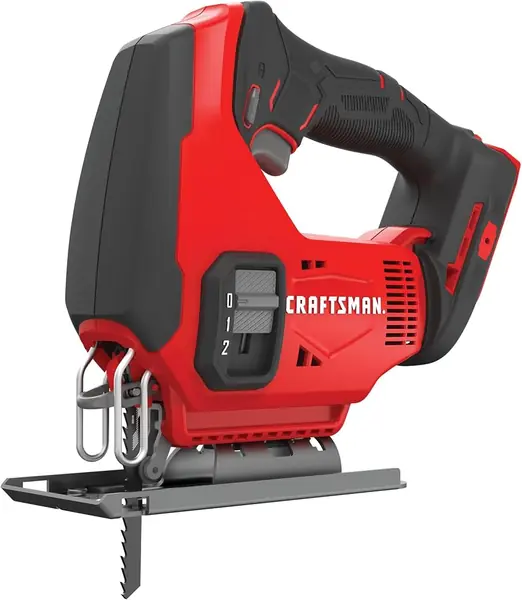
CRAFTSMAN V20 cordless jigsaw in red and black, bare tool without battery

CRAFTSMAN V20 users

Shop Score 91/100
Power Source
20V CRAFTSMAN V20 (bare tool)
Weight
4.76 lb
Blade Speed
0-2,500 spm
Bevel Capacity
45 degrees
View on Amazon

The CRAFTSMAN takes both T- and U-shank blades, which is a small thing that makes a difference when you are digging through a drawer of mixed blades. The 2,500-spm variable-speed motor and three orbital settings are enough for plywood, pine, and light metal, and the bevel shoe goes to 45 degrees.

We found the saw comfortable in hand at 4.76 pounds, with a balanced feel that makes it easy to follow a line. The tool-free blade change is quick, and the trigger gives you a smooth start. The base is not as large as the premium saws, and the cut is not as clean as the Bosch or DEWALT in thick hardwood, but for framing and rough carpentry it is predictable.

The saw is not brushless, and the top speed is lower than the DEWALT and Milwaukee options. The durability is also less certain, with some saws lasting and others failing early. This is not the primary saw for daily professional use.

We recommend the CRAFTSMAN V20 for V20 users who want a spare bare-tool jigsaw, as long as they already have a fresh battery. The DEWALT DCS334B is the better all-around cordless saw, and the Makita is the more established platform.

Worth Noting

  • Battery life varies with pack size
Our Verdict

Our pick for V20 users who want a spare bare-tool jigsaw is the CRAFTSMAN, as long as you have a fresh battery.

Check Latest Price

How We Tested Jigsaws on the Bench and Overhead

We started with research across the major battery platforms and the corded models that turn up in home shops, filtering by price, handle style, orbital settings, and whether each saw ships as a bare tool or with a battery and charger. Twelve made the cut, and we spent nine months with them — plywood shelves and curved brackets, a sink cutout in laminate, porch decking, and conduit cut with a metal blade.

Every blade change happened with the saw unplugged or the battery pulled, and we timed each one to see whether it took a wrench or a thumb. With the workpiece clamped and eye and hearing protection on, we matched blade and speed to the material and let each saw reach full speed before the blade entered the cut. Then we watched the cut itself: whether the blade ran square after a change, whether it drifted from the pencil line in thick stock, and how much tear-out showed at each orbital setting.

Visibility got its own check, since a light and dust blower only help if they keep the line readable through the chips. We weighed each saw and ran it overhead to see how long the handle stayed comfortable, and found the power switch with a gloved hand to check we could lock it on without looking. Battery life was logged the boring way — a fresh pack, a stack of the same plywood, and a stopwatch until the saw slowed.

Durability showed up months later in base plates scuffed out of flat, cords with strained reliefs, and gritty switches. At the end we counted what came in the box, since blades, cases, and edge guides change what a saw is worth. The saws that made the list were the ones still cutting on the line we drew.

How to Choose a Jigsaw

Corded or Cordless Comes Down to Your Battery Shelf

A cordless jig saw is only a bargain if you already own the batteries and charger. Bare tools are sold without them, so price the whole setup before you commit. If you are starting fresh, a corded saw gives you more power per dollar and no battery anxiety. We reach for cordless when the cut is away from an outlet; we keep a corded saw for long sessions in thick stock. The DEWALT DCS334B is our default for 20V users, while the Bosch JS470E is the bench-bound corded choice.

Power and Orbital Settings Need to Match the Cut

A jigsaw does not need the highest amp rating to cut pine, but power matters in thick hardwood and metal. Look for a motor that holds speed under load and a variable-speed trigger so you can start slowly. Orbital settings are just as important: a low orbit gives a cleaner edge, while a high orbit cuts faster and leaves a rougher surface. We use the lowest orbit for visible furniture cuts and the highest for framing. The Bosch JS470E's 7 amps and four orbital settings make it the most capable corded saw here for heavy stock.

Handle Style and Weight Change How Long You Can Work

A top-handle saw is the familiar shape and the best all-around choice for most people. A barrel-grip saw puts your hand lower and closer to the blade, which gives you finer control for trim and tight curves, but the switch placement can be awkward if you are left-handed. Weight matters more than the spec sheet suggests: a 10-pound corded saw feels planted on a bench, while a 4.2-pound cordless saw is easier to steer overhead. We choose the lighter saw for installs and the heavier one for bench work.

Blade Changes, Bevels, and Light Are the Daily Conveniences

Tool-free blade changes save time when you move between wood and metal, and a blade ejection lever keeps your fingers away from a hot blade. Bevel stops at 0, 15, 30, and 45 degrees make common angles repeatable; a single locking knob is fine for occasional bevels. An LED or halo light is worth having if you cut in dim corners, but it does not replace a clear line. A dust blower helps, though most saws still leave chips at the line. The SKIL's halo light is the best lighting feature in this group; the Makita has none.

A Stable Base and Blade Guidance Keep Cuts True

The base is what keeps the saw flat on the workpiece, and a larger die-cast foot is less likely to tip on narrow stock. Blade guidance matters just as much: a good clamp holds the blade steady, while a loose one lets it wander. Check that the blade sits square to the base before you start a straight cut; if it does not, no amount of pushing will fix it. We also look for a base that bevels without tools and stays locked at the angle you set. The Bosch's die-cast foot and the DEWALT's lever clamp are the details that separate them from the budget saws.

Frequently Asked Questions

Final Verdict

We recommend the DEWALT DCS334B as the best all-around jigsaw for most woodworkers. It is light enough to steer through curves, has the brushless power for thick stock, and changes blades without a wrench. If you already own DEWALT 20V batteries, it is the easy default.

If you work at a bench and want maximum corded power, the Bosch JS470E is the better saw for thick hardwood, provided you can handle its weight. For a tight budget, the SKIL JS314901 gives you a halo light and four orbital settings for very little money. Start with the work you do most, then choose the saw that fits it.