↑↓ navigate ↵ open Esc close All results →

Best Milwaukee Sawzalls of 2026

Slide a full-size Sawzall into a cabinet base or tight joist bay, and its long body and two-handed heft quickly fight the workspace where a one-handed Hackzall fits effortlessly. Reverse the job—tearing apart a deck or cutting thick framing lumber—and the full-size saws pull ahead with longer strokes and faster cutting speed.

Across eight months of cutting basement PVC and copper, framing a garage, pruning maple limbs, and demolishing a shed with 12 Milwaukee reciprocating saws, the practical split between form factors showed up immediately. Most models ship as bare tools rather than kits, making compatible batteries already on hand more decisive than a modest sticker discount.

Covering both shapes and voltage lines, these five reciprocating saws avoid overlapping roles and all include keyless blade clamps that open easily with gloved hands.

Our Top Picks

The Best Milwaukee Sawzalls

1.

Milwaukee 2719-20 M18 FUEL Hackzall Best Overall
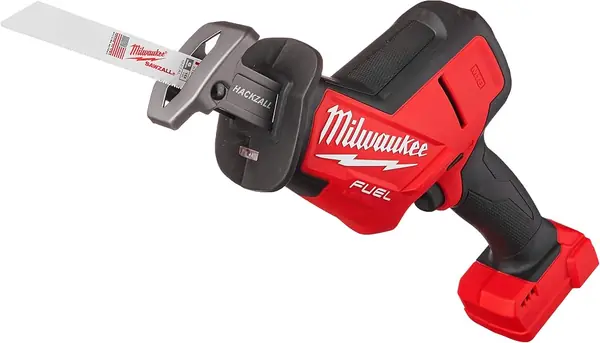
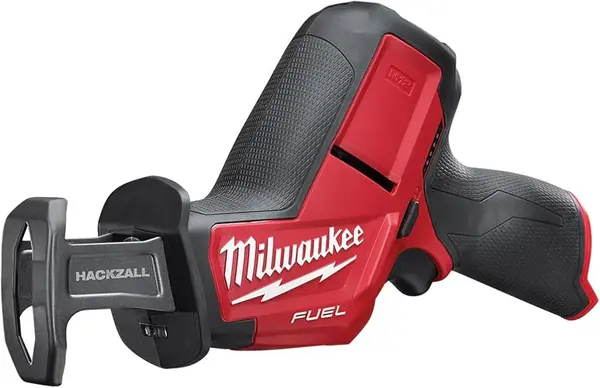
Milwaukee M18 FUEL Hackzall one-handed reciprocating saw in red and black, bare tool

One-handed all-around cutting

Shop Score 96/100
Voltage
18 volts
Tool Weight
3.97 lb
Battery Included
No
Stroke Length
7/8 in.
View on Amazon

Cutting a pipe stub inside a cabinet, or a branch over your head, is the moment the M18 FUEL Hackzall justifies itself: at 3.97 pounds it is a genuine one-hand tool, so the other hand stays on the work instead of on the saw. What we like most is the 7/8-inch stroke, long enough that the blade clears material on each pass instead of grinding at it, which is the difference between a one-handed saw that cuts and one that only shakes.

The brushless motor and the REDLINK electronics show up in tougher stock. PVC, nail-embedded framing, cast iron pipe, and brush all go without the bogging that makes cheap reciprocating saws so frustrating, and blade changes are quick enough to do mid-job. One-handed control also means you can start a cut in a place you cannot comfortably reach with two hands, which is most of the reason to own this shape of saw at all.

Fit a 5.0 Ah pack and the balance is right: the saw sits flat in the hand and the vibration stays low. It will pull a pack down faster than you expect in thick material, so a spare is cheap insurance. Against the full-size M18 FUEL Sawzall here, you give up some raw cut speed in exchange for getting into places a two-handed saw cannot reach, and that is a trade we make most days.

Worth Noting

  • Motor failures can occur in the first few uses
Our Verdict

The one Milwaukee reciprocating saw we recommend to most people: light enough to run one-handed, strong enough for most cuts, and it shares the M18 packs Milwaukee owners already have.

Check Latest Price
2.

Milwaukee 2821-20 M18 FUEL Sawzall Best for Heavy Cutting

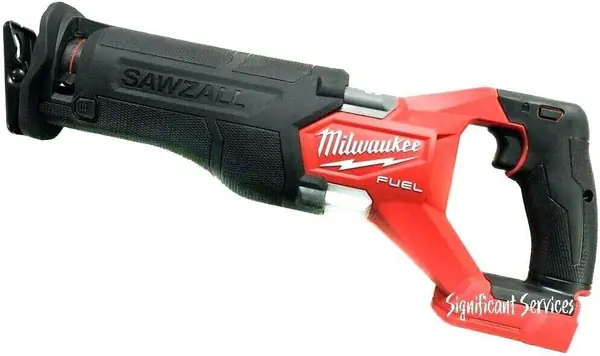
Milwaukee M18 FUEL Sawzall cordless reciprocating saw in red and black, bare tool

Demolition and teardown

Shop Score 94/100
Voltage
18 volts
Tool Weight
6.8 lb
Battery Included
No
Speed
3,000 rpm
View on Amazon

Ripping a deck apart or bucking a felled trunk into firewood is where this saw stops being convenient and starts being the right tool. The M18 FUEL Sawzall is the only full-size two-handed saw on this list, and the difference shows in long cuts through thick stock, where a longer blade and a two-handed grip keep the cut tracking instead of wandering.

We noticed the details that come from a saw built to be used hard. The lever-actuated blade clamp bites and releases without a wrestling match, the metal-reinforced battery connection keeps a pack from rocking loose when you are working upside down under a floor, and the hook on the housing hangs the saw off a rafter between cuts. The built-in LED helps when the work sits in a shadowed corner.

The trade-off is heft: it is the heaviest saw here, so anything overhead belongs to a Hackzall instead. That same weight is why it tracks so well, since you are not fighting the saw through a long cut, and a fair trade is what it is for the work this tool is meant to do.

Worth Noting

  • Drains packs quickly in sustained cutting
Our Verdict

For demolition, deck teardown, and bucking logs, the full-size M18 FUEL Sawzall is the one we hand to whoever has both hands free and a spare battery.

Check Latest Price
3.

Milwaukee 2520-20 M12 FUEL Hackzall Best Compact

Milwaukee M12 FUEL Hackzall compact one-handed reciprocating saw in red, bare tool

Tight-space pipe cutting

Shop Score 93/100
Voltage
12 volts
Tool Weight
3.09 lb
Battery Included
No
Warranty
5 years
View on Amazon

Twelve volts sounds like a compromise until you are up a ladder with one hand on a branch and the other on the saw. At 3.09 pounds and a little over two inches wide, this Hackzall goes where the 18-volt tools will not fit, between studs, inside a cabinet, up in a tree, and the counterbalance mechanism keeps it smooth enough to control with one hand.

Power is the surprise. The brushless motor works through cast iron pipe, thin-wall tubing, and limbs without stalling, and a 4.0 Ah pack keeps it cutting instead of sagging. For most of the cutting a homeowner or remodeler actually does, we never felt the extra voltage was missing.

We reach for it ahead of the bigger saws more often than not, and the honest limit is thick pressure-treated stock, where it has to work for every inch. If M12 packs are already in your shop, that is an easy trade; if they are not, price the bare tool plus a charger and two packs before you commit.

Worth Noting

  • Bogs down in pressure-treated 4x4s
Our Verdict

Don't let the 12-volt pack fool you: this is the saw we grab for pipe, trim, and limbs in tight spots, and it weighs barely three pounds.

Check Latest Price
4.

Milwaukee 2625-20 M18 Hackzall Best Value

Milwaukee 2625-20 M18 Hackzall cordless reciprocating saw in red, bare tool

Homeowners on M18

Shop Score 92/100
Voltage
18 volts
Tool Weight
4 lb
Battery Included
No
Blade Clamp
Keyless Quik Lok
View on Amazon

If you already run M18 packs, this is the least expensive way into a one-handed Milwaukee saw, and we think it is the right first reciprocating saw for a lot of homeowners. The anti-vibration handle, the on-board LED, and the keyless blade latch are all present, so nothing about it feels like a stripped-down special.

It handles the jobs most people actually have: branches after a storm, PVC and ABS pipe, pallet slats, and the nails hiding inside them. At four pounds it is steady enough to run one-handed in a crawlspace, and the LED earns its place when you are working inside a cabinet with the power off. It is a light-to-medium-duty tool, though, and it makes that clear when you hand it something thicker than it wants.

Where the older design shows is stamina: a long run of cuts pulls a pack down quickly, and a spare battery is the whole fix. On a weekend list that never becomes an issue, which is the buyer this saw is priced for.

Worth Noting

  • Uneven durability over months of steady use
Our Verdict

The least expensive way into a one-handed M18 saw, and still plenty for branches, PVC, and demo, as long as you aren't cutting all day.

Check Latest Price
5.

Milwaukee 2420-20 M12 Hackzall Best for Pruning and Pipe

Milwaukee 2420-20 M12 Hackzall compact cordless reciprocating saw in red and black, bare tool

Pruning and pipe

Shop Score 91/100
Voltage
12 volts
Tool Weight
2.1 lb
Battery Included
No
Warranty
5 years
View on Amazon

Two pounds and change, ten inches long, and narrow enough to disappear into a gap: the M12 Hackzall is a problem solver rather than a production saw. A short stroke is the price of that size, and you feel it the moment you ask the tool to work through anything thicker than pipe or a branch.

It takes both Hackzall-style and Sawzall-style blades, so you can run a longer blade when you need reach, and the variable-speed trigger and battery fuel gauge are the right features for a tool this size. A pruning blade turns it into a one-handed limb saw; a fine bi-metal blade handles copper and plastic pipe.

Where it earns its keep for us is as the second saw: it lives in a bag with two blades and comes out for copper pipe, vinyl trim, and limbs above your head, without dragging a cord or a five-pound tool up a ladder. That is a narrow job description, and it is one nothing else here fills for less money.

Worth Noting

  • Early failures on some units
Our Verdict

The lightest saw here at 2.1 pounds, and the one we keep for PVC, branches, and trim in places a full-size blade can't reach.

Check Latest Price

How We Tested These Reciprocating Saws

We started with the current lineup rather than a bestseller list, then narrowed by shape, voltage, stroke length, whether each saw ships as a bare tool or a kit, whether the blade clamp is keyless, and where each one sits against the rest of the range on price. Anything that duplicated another saw's job got set aside. From that shortlist we ran 12 saws for eight months, putting each one on the work we'd actually buy it for and keeping a running note on power, control, and how it felt after an hour in hand.

In the basement we cut copper and PVC overhead in a finished ceiling, one-handed, with safety glasses and ear protection on and the pipe clamped in a vise. On the garage build we clamped framing lumber to sawhorses, seated a wood blade fully in the clamp, let the saw reach speed before the blade touched, timed cuts through doubled studs, and kept our hands clear of the blade path — a recip saw cuts on the return stroke too. In the yard we pruned limbs from a ladder, and during the shed teardown we ran each saw through nails, plywood sheathing, and pressure-treated posts.

We weighed every tool with one of our own battery packs in it, then ran that pack down in continuous cutting to count how many cuts it delivered before it quit. Blade changes were timed with work gloves on, and after each session we checked the clamp for slop, the shoe for play, and the housing for heat. Durability and reliability don't surface on day one, so the saws stayed in rotation and we went back over the same checks at the end of eight months.

How to Choose a Milwaukee Sawzall

Start With the Shape: Hackzall or Sawzall

A Hackzall is built to run with one hand: shorter body, lighter, and easy to control overhead or inside a cabinet. A full-size Sawzall puts both hands on the tool and uses the extra mass to keep a long blade tracking through thick stock. If most of your cutting is branches, pipe, and demo inside a wall, the one-handed saw is the one that actually gets used. If it is decks, posts, and firewood, the full-size saw earns its weight.

The trap is assuming a compact saw can substitute for a big one on lumber. Short-stroke, one-handed models grind rather than cut in thick material, so pick the shape for the work you do most, not the work you do once a year.

Buy for the Batteries You Already Own

Milwaukee splits its cordless tools across two platforms, M12 and M18, and the packs do not cross over. Every saw here is a bare tool, so if you are starting from nothing, add two packs and a charger to the outlay before you compare anything.

That math usually decides it. If you already own M18 tools, a bare M18 Hackzall is the least expensive way to add a reciprocating saw to the kit. If you are already on M12, the compact saws make sense; buying into a new platform for one tool rarely does.

Stroke Length and Speed Decide How Fast It Cuts

Reciprocating saws cut by clearing material a little at a time, so stroke length matters as much as the speed figure on the box. A longer stroke, like the 7/8 inch on the M18 FUEL Hackzall, carries more teeth through the cut on each pass and clears chips instead of powdering them.

Blades matter just as much, and they are the usual reason a saw feels weak. A dull or wrong-pitch blade turns a good saw into a slow one, so keep a coarse wood blade and a bi-metal metal blade on hand and swap them before they stop cutting.

Weigh Weight and Runtime Together

The saws here run from 2.1 to 6.8 pounds, and that spread decides where each one is pleasant to use. Under four pounds is comfortable one-handed and overhead; over six pounds is steadier in a long cut but tiring on a ladder. Fit the biggest pack the saw will balance with, because a compact saw with a large pack goes nose-heavy.

Runtime is the complaint that comes up most across this group, and it has more to do with the material than the tool. Thick stock and metal pull a pack down quickly on any of these, so two packs is the realistic minimum for a day away from an outlet.

Frequently Asked Questions

Final Verdict

The M18 FUEL Hackzall is the one we recommend to most people, because it covers the widest range of work: light enough to run one-handed inside a cabinet, long enough in stroke to handle a 2x4, and built on the battery platform most Milwaukee owners already have.

Two buyers should go elsewhere. If your cutting is posts, trunks, and deck teardown, the full-size M18 FUEL Sawzall pays you back in tracking and cut speed. If it is a few branches a season, the M18 Hackzall at the lower price does everything you need.