↑↓ navigate ↵ open Esc close All results →

Best Pocket Hole Jigs for 2x4s of 2026

One slight shift in a pocket hole jig mid-plunge on 1-1/2-inch framing lumber sends a coarse screw poking straight through the show face of a table leg or apron. Pocket joinery makes quick, rigid joints for shop carts and workbenches, yet thick 2x4 stock demands solid clamping force and a wide guide block that stays locked under drill torque.

Putting 12 jigs through nine months of 2x4 joinery immediately disqualified units unable to reach full 1-1/2-inch capacity. Across thick construction lumber, clamp security and repeatable stop-collar depth settings separate clean, concealed pockets from wasted boards.

All four models ahead grip 1-1/2-inch stock securely, minimize setup fiddling between holes, and hold accurate drill angles through long sessions.

Our Top Picks

The Best Pocket Hole Jigs for 2x4s

1.

Kreg Pocket Hole Jig K4 Best Overall
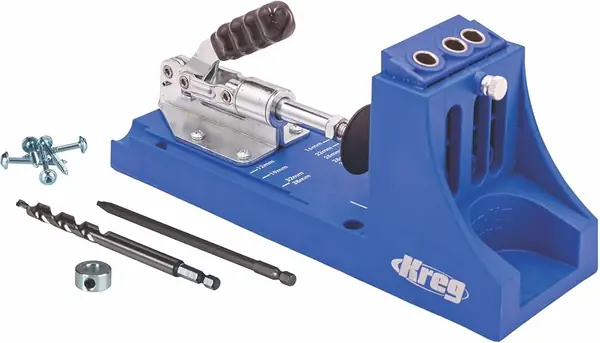
Kreg K4 pocket hole jig in blue and black with three-hole drill guide

2x4 benchtop joinery

Shop Score 96/100
Item Weight
1.3 lb
Material Thickness
1/2 to 1-1/2 inches
Drill Guide
3-hole
Clamping Recess
Large
View on Amazon

A 2x4 gives you a 3-1/2-inch face, and the K4's three-hole drill guide is the detail that makes it our first choice for that stock. We set it for 1-1/2-inch material and drilled a row of pockets across the width without repositioning between every hole. The large clamping recess also gives a clamp a solid place to grab, which matters when the stock is thick and the bit is pulling against the jig.

What sold us is how little fuss the rest of the setup adds. The drill guide lifts out, so the same jig can sit on the bench for a run of parts or ride on the workpiece for a repair. The 3-hole guide is the real advantage on 2x4s: it puts more screws across the face, and more screws mean a joint that resists twisting better than a single pocket. We also appreciate that the jig is only 1.3 pounds, so moving it around the shop is no chore.

It is not the smallest jig here. If you need something that lives in a toolbox and goes to a job site, the R3 is the easier carry. But for a bench that sees 2x4s regularly, the K4's combination of capacity, clamp room, and three-hole spacing is the one we reach for first.

Worth Noting

  • Bulkier than compact pocket-hole jigs built for toolbox carry
Our Verdict

We recommend the K4 as our default 2x4 jig because its three-hole guide and large clamp recess make solid joints across the width of the stock.

Check Latest Price
2.

Kreg R3 Pocket-Hole Jig System Best Budget

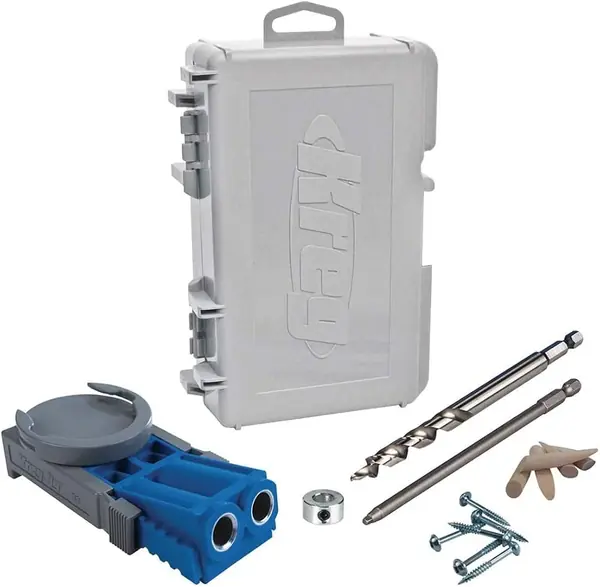
Kreg R3 pocket hole jig in blue with carrying case and drill guide

Portable budget work

Shop Score 95/100
Item Weight
1 lb
Material Thickness
1/2 to 1-1/2 inches
Carrying Case
Included
Depth Settings
9
View on Amazon

The R3 is the jig we grab when the work is not at the bench: it weighs about a pound and lives in its own case, so it can go in a toolbox or a truck without taking over. We set it to 1-1/2 inches and the stop collar held the setting through a run of holes. The guide handles a pair of holes at a time, so a 2x4 face takes a second setup for a third pocket; that is the main capacity difference from the K4. The compact body also fits into spots where a full benchtop jig is awkward, such as the inside of a cabinet or a repair against a wall.

The R3 is the budget end of this group, and that is the main reason it earns a place. Nine depth settings cover the 1-1/2-inch 2x4 setting plus thinner drawer and cabinet stock, and the clamp pad adaptor lets it work with the clamps you already own. We set the clamp firmly every time; a loose clamp lets the jig walk before the bit bites. The case keeps the bit, collar, and wrench together, which is one less thing to lose. For a first jig or a portable repair kit, that is a fair swap.

Against the K4, the R3 gives up the third hole and the larger clamp recess; against the Milescraft, it gives up the included face clamp and the second guide. What it keeps is a low carry weight and a budget price that leaves room for a good clamp. That is the trade we accept for a jig that can live in a toolbox.

Worth Noting

  • Plastic body is the durability weak point
Our Verdict

For occasional 2x4 work and jobs away from the bench, the R3 is our pick; it is light, affordable, and easy to carry.

Check Latest Price
3.

Milescraft Pocket Jig 200XCJ Best Complete Kit

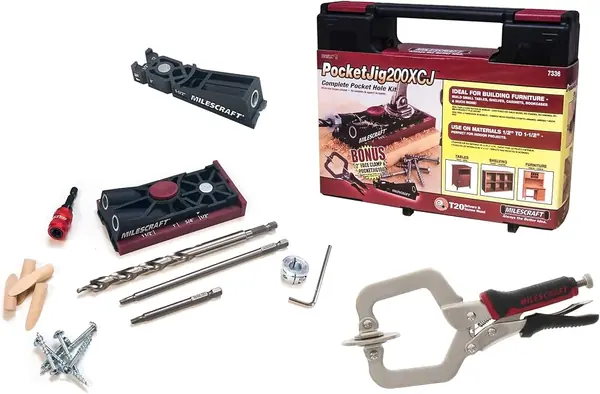
Milescraft Pocket Jig 200XCJ with double and single barrel guides and face clamp

Starter 2x4 kit

Shop Score 93/100
Scales
Imperial and metric
Drill Guides
Double and single barrel
Included Clamp
2-inch face clamp
Board Thickness Settings
Four settings, 1/2 to 1-1/2 inches
View on Amazon

The first thing we noticed in the box is that Milescraft gives you a face clamp and both a double-barrel and single-barrel guide, so a beginner can start a 2x4 project without stopping to buy the usual extras. The four common board settings include 1-1/2 inches, and the imperial and metric scales help when you are working with odd stock or metric plans. The recessed clamp pocket has a magnet to keep the clamp in place as you move it, and the spring-loaded sled adjust button makes thickness changes quicker when you move between 2x4s and 1-by material.

We don't treat it as a production tool; it is the kit we hand to someone who wants everything in one box. The separate guides mean more handling than the K4's fixed three-hole block, but that is the price of the single-barrel option for tight spots. The double-barrel guide handles the wide 2x4 face, while the single-barrel guide is the one to reach for inside a cabinet or against a wall. For a first jig, that trade is easy to live with, and the clear scales make the 1-1/2-inch setting less intimidating. It is a strong first purchase for someone who has been putting off pocket-hole joinery because the setup looked fussy.

Worth Noting

  • Separate drill guides require more handling than a fixed block
  • Better suited to first projects than heavy production work
Our Verdict

First-time 2x4 builders who want the jig, clamp, and guides in one purchase should look at the Milescraft kit.

Check Latest Price
4.

Massca M1 Pocket Hole Jig

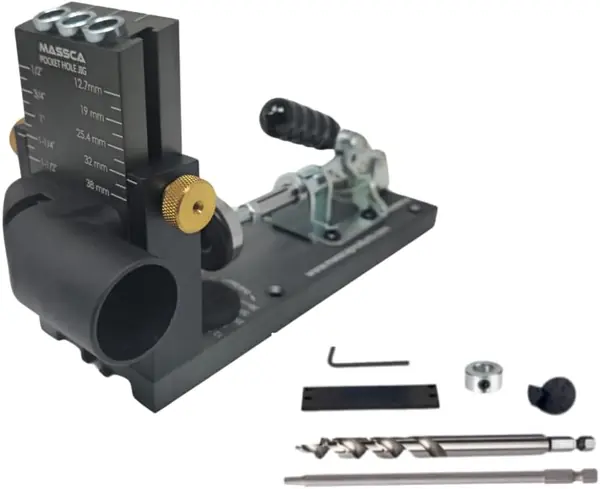
Massca M1 aluminum pocket hole jig with built-in clamp and dust spout

All-metal shop jig

Shop Score 92/100
Dust Port
Yes
Body Material
Aluminum
Built-in Clamp
Yes
Included Screws
50
View on Amazon

The M1 is the one that feels like a shop tool: the body is aluminum, the dust spout gives you a place to hook up a shop vacuum, and the 50 included screws get you started on a project. The kit also includes a portable base adapter plate, depth gauge, and hex key, so the main pieces are there. We noticed the weight right away—at 4.64 pounds it is not a jig you toss in a bag, but it sits still on the bench.

The built-in clamp is the reason to consider it over the compact jigs here; you are not juggling a separate clamp while you position a 2x4. The all-metal build also feels solid, and that solidity is what makes it pleasant to use on a bench, even if the jig is heavier than the Kreg R3.

We choose the M1 when the shop vacuum is already set up and we want less cleanup. It is not our default for 2x4s because the listing does not state a maximum board thickness, so confirm the 1-1/2-inch setting before you buy. If it fits your stock, the aluminum body and dust collection make it a satisfying jig to use.

Worth Noting

  • Heavy 4.64-pound body is awkward for tossing in a bag
  • Listing does not state a maximum board thickness capacity
Our Verdict

We like the M1 for its all-metal build, built-in clamp, and dust control; it is a solid upgrade for a shop that drills a lot of pocket holes.

Check Latest Price

How We Tested Pocket Hole Jigs on 2x4 Stock

Every jig we considered had to state a capacity of 1-1/2 inches, since that's a 2x4 on edge. From there we read specs and owner reviews, favored guides that spread across a wide face — three-hole or double-barrel — and built a shortlist running from bare-bones portable models to full kits with clamps and screws. Then we brought in 12 and spent nine months with them.

The work was ordinary shop stuff: carts, shelving, storage cubbies, and face frames, plus a few driveway sessions where the jig had to travel instead of staying clamped to a bench. Nothing went into a structural connection — pocket screws are joinery, not a framing connector. Each jig drilled test pockets in 2x4 offcuts at every thickness setting, and we checked where the bit exited on the far face with a square, drove the screw, and looked for splits, gaps, and how tightly the joint pulled closed. Entry tear-out and pocket walls got the same scrutiny.

Clamping got its own abuse. Where a jig allowed bench mounting we bolted it down, then clamped stock and tried to rock the jig by hand before drilling, eye protection on and hands clear, noting which ones crept on thick stock and threw the bit off line. Depth stops were set once and left alone for 50 holes to see what drifted. Guides and bits ran until they scorched or wandered, and we cleared chips between holes to see how fast a packed guide slowed us down. Finally we weighed each kit in its case and tallied what came in the box against what a first-timer would still have to buy.

How to Choose a Pocket Hole Jig for 2x4s

Start With the 1-1/2-Inch Capacity

We start with the stated 1-1/2-inch capacity, because a nominal 2x4 is 1-1/2 inches thick. A jig that stops at 3/4 inch is not a 2x4 jig, even if the price is tempting. Look for a material range or a dedicated 1-1/2-inch stop; the Kreg K4 and R3 both list a 1/2- to 1-1/2-inch range, and the Milescraft kit includes a 1-1/2-inch setting. If a listing gives no thickness range at all, confirm the depth setting before you buy, especially with a compact or mini model.

Match the Drill Guide to a 2x4 Face

A 2x4 gives you a 3-1/2-inch-wide face, and that width is why guide count matters. A three-hole guide, like the one on the K4, lets you put three pockets across the face in one setup; a two-hole guide usually means shifting the jig for a third hole. More pockets spread the clamping force and make a wide joint less likely to twist. For a few repair holes, two is fine. For a bench full of 2x4 parts, we prioritize the extra guide.

Clamp Security Matters More on Thick Stock

We treat clamp security as the second half of capacity: the bit pulls against the jig as it enters 1-1/2-inch stock, so a jig that shifts will drill a ragged or misplaced pocket. A large clamp recess gives a separate clamp a solid place to bite; a built-in clamp, like the Massca M1's, removes one thing from your setup; and an included face clamp, as with the Milescraft kit, gets you started without a trip to the hardware store. Whatever the design, clamp the jig firmly and test the hold before the bit touches wood.

Set the Depth Once and Repeat It

Pocket-hole depth is set with a stop collar on the stepped bit, and the jig's thickness setting tells you where to put it. For 2x4s, you want the 1-1/2-inch setting and a collar locked at the matching depth. More settings help when you move between 2x4s and thinner drawer or cabinet stock; the R3 has nine depth settings, while the Milescraft kit uses four common board settings. Drill a test hole in scrap, check the screw seat, and only then start on the project.

Decide How Much Portability and Extras You Need

We look at portability last, because a jig that stays on a bench needs clamp room and repeatability more than a carrying case. If it travels, the R3's one-pound body and case make more sense than a larger system. A kit with screws and a clamp, like the Milescraft, is the easiest first purchase; a bare jig asks you to supply those pieces. Dust collection is a convenience rather than a requirement, but the Massca M1's spout is welcome when you are drilling a long run and do not want chips around the guide.

Frequently Asked Questions

Final Verdict

For most 2x4 projects, the Kreg K4 is the jig we recommend first. Its three-hole guide puts more screws across the 3-1/2-inch face, and the large clamp recess keeps it steady on 1-1/2-inch stock.

If you need to carry a jig to the work or spend less, the R3 is the budget alternative. The Milescraft kit is the easiest first purchase because the clamp and both guides come in the box; the Massca M1 is the all-metal choice, provided you confirm its depth range for 2x4s.