↑↓ navigate ↵ open Esc close All results →

Best Router Bits for Door Hinges of 2026

Few cuts on a door leave less room for error than a hinge mortise: cut too deep and the hinge binds, stop shallow and the door hangs proud of the jamb, or wallow a corner and the gap shows on every swing. Using a bearing-guided bit shifts that precision from freehand skill to a rigid template.

Hanging and re-hanging doors with 14 bearing-guided bits over four months highlighted a spec quirk buyers often miss: cutting length and usable mortise depth are not identical because the template thickness eats into the cutter reach before the bit touches wood. Checking bearing diameter against existing hinge templates also avoids slop along the perimeter.

Riding templates directly without a guide bushing on 1/4-inch shanks suited to trim routers, these cutters mainly trade extra reach for thick templates against tighter diameters that leave less corner square-up for a chisel.

Our Top Picks

The Best Router Bits for Door Hinges

1.

Yonico 14169q Hinge Mortise Bit Best Overall
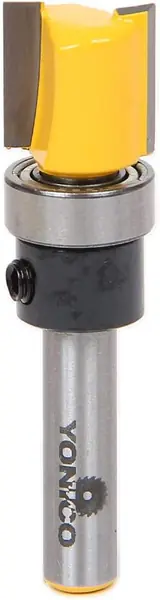
Yonico 14169q hinge mortise router bit with 1/2-inch carbide cutter, ball bearing and 1/4-inch shank

Door hinge mortises

Shop Score 91/100
Shank Diameter
1/4 inch
Cutting Diameter
1/2 inch
Cutting Length
1/2 inch
Number Of Flutes
2
View on Amazon

A hinge mortise is a flush-trim cut with a floor. The template defines the opening, a bearing the same diameter as the cutter carries that opening down into the wood, and the depth stop decides how deep it goes. The Yonico 14169q is built as exactly that kind of bit: a 1/2-inch two-flute carbide cutter, a bearing mounted on the shank, half an inch of cutting length, and a 1/4-inch shank that fits trim routers and full-size machines alike.

That half inch of cutting length is the number we keep coming back to. A standard residential hinge leaf runs about 1/8 inch thick, so half an inch of cutter clears the mortise, clears a template that isn't sitting perfectly flat, and still has room for strike plates and shallow lock faces later. The 1/2-inch diameter leaves a 1/4-inch radius in the corners, two or three chisel taps per mortise, and the price is low enough that a spare in the drawer is an easy call.

In our cuts the walls came out clean enough that a leaf beds flat without paring, and the floor of the mortise was flat rather than scalloped. Two flutes also leave a smoother finish than a single-flute bit at the same feed rate. And because the bearing does the guiding, there's no bushing to install and no sub-base to center — the template does the measuring, which is the whole reason we like this geometry for door work.

Worth Noting

  • Bearing can work loose and spoil a template
Our Verdict

If you're cutting hinge mortises with a template, this is the bit we reach for: the shank bearing is the same size as the cutter, so your jig's opening comes out at full size.

Check Latest Price
2.

Whiteside 3000 Template Bit Best Premium Pick

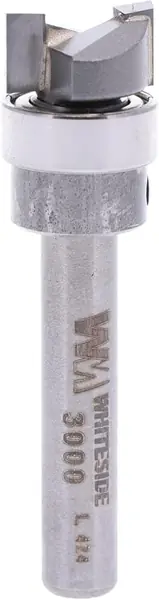
Whiteside 3000 carbide-tipped template router bit with 1/2-inch cutter, ball bearing and 1/4-inch shank

Clean shallow mortises

Shop Score 90/100
Shank Diameter
1/4 inch
Cutting Diameter
1/2 inch
Cutting Length
1/4 inch
Overall Length
1-7/8 inches
View on Amazon

The first thing you notice about the Whiteside 3000 is how little bit there is: a short carbide head on a steel body, 1-7/8 inches overall, with the bearing sitting right above the cutter. That build is the point, and it's also the reason we treat this as a hinge specialist. It leaves a quarter inch of cutting length, which clears a standard leaf with room to spare and stops there; strike plates, lock faces, and heavy commercial hinges need a longer cutter and a second bit.

What the low head buys is rigidity. Nothing flexes, nothing chatters, and in our cuts it produced the cleanest walls and floor of anything here — no marks at the template edge and no fuzz to sand back before the hinge goes on. The shank bearing is the same diameter as the cutter, so a hinge template transfers at full size with no offset math, and the 1-7/8-inch overall length shows enough bit below the collet to watch the bearing against the jig without feeling whippy in a trim router.

Where it earns its keep is a run of interior doors you'll be looking at for twenty years: the difference between this and a budget cutter shows up under a clear finish, where a burnished mortise wall reads as a shadow line around the hinge. In painted jambs the advantage mostly disappears, and that's when the cheaper picks start making sense.

Worth Noting

  • Priciest bit in this group
Our Verdict

For the crispest mortise in this group, we reach for the Whiteside; the stubby carbide head leaves walls you can bed a hinge leaf into without paring.

Check Latest Price
3.

Milescraft 2216 Bearing-Guided Bit Best for Hinge Jigs

Milescraft 2216 carbide-tipped bearing-guided straight router bit with 1/2-inch cutter and 1/4-inch shank

Hinge mortise kits

Shop Score 89/100
Shank Diameter
1/4 inch
Cutting Diameter
1/2 inch
Cutting Length
1/2 inch
Bearing Position
Above the cutter
View on Amazon

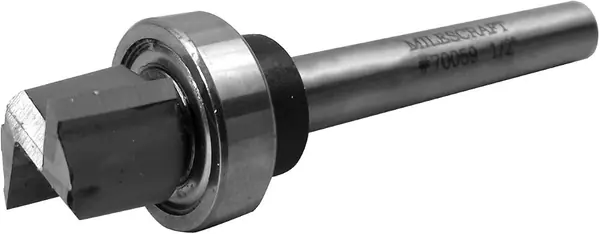
Every hinge jig comes with a bit, and every one of those bits eventually stops cutting cleanly. The Milescraft 2216 is the replacement for the bit in the Milescraft Door Mortise Kit and Hinge Mortise Kit, sold on its own, and it also suits the strike plate kit and other jigs built the same way.

The layout is why it works in a jig. The bearing rides above the cutter, so the template sits flat on the door and the bit follows it directly: no guide bushing in the base, no offset to subtract, nothing to set but depth. Half an inch of cutting length is enough to cover a typical template plus the mortise underneath, which is the part that catches out shorter bits.

We rate it the least fussy bit here for someone following a jig's instructions step by step, and it's happiest doing exactly that: hinge after hinge, jamb after jamb, with nothing to adjust between doors. Fit it in a Milescraft kit and the depth stop is the only thing you touch all afternoon.

Worth Noting

  • Template has to be sized to the bit, not the hinge
Our Verdict

Own a hinge mortise kit? This is the replacement bit that kit was built around, and it's the one we hand a first-time door hanger.

Check Latest Price
4.

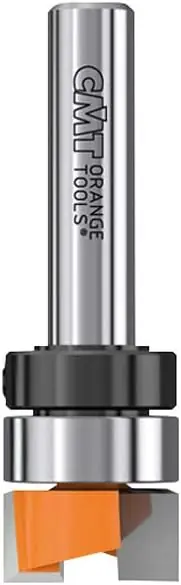
CMT 801.128.11B Mortising Bit Best Step-Up Pick

CMT 801.128.11B mortising router bit with 1/2-inch carbide cutter, two flutes and 1/4-inch shank

Hardwood doors

Shop Score 88/100
Shank Diameter
1/4 inch
Cutting Diameter
1/2 inch
Overall Length
1-3/7 inches
Number Of Flutes
2
View on Amazon

Same 1/2-inch cutter, same 1/4-inch shank, a good deal more money than the Yonico: on paper the CMT 801.128.11B looks like the same bit in orange. The difference is in the edge. Two flutes of CMT's carbide shear end grain at the template walls cleanly enough that the hinge goes on without sanding, and the cut stays cool in hardwood where a cheaper bit starts to burnish.

We like it most on doors that will be seen. A trim router at full speed is a lot of rpm for a 1/2-inch bit, and this one stays smooth and balanced in the cut, which is what keeps a mortise floor flat instead of dished. The bearing sits above the cutter and seats firmly, and a pilot that doesn't wander is the difference between a mortise in the right place and a template with a new notch in it.

CMT sells it as fitting most popular mortising jigs, and it dropped into the setups we tried without complaint. It's the bit we recommend when the doors are hardwood, visible, and there are enough of them to justify the extra outlay — the clean edge saves a sanding step at every hinge, and that adds up over a house.

Worth Noting

  • Costs noticeably more than the budget hinge bits
Our Verdict

When the doors are hardwood and visible, we step up to this bit: the carbide cuts clean at the template walls, provided your jig is set up for it.

Check Latest Price
5.

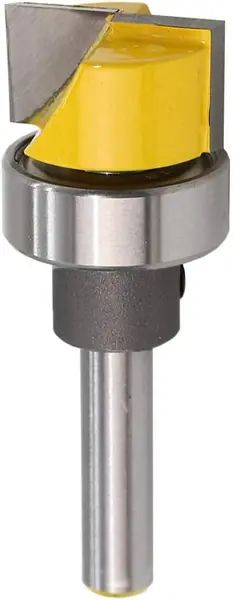
Yakamoz Hinge Mortising Template Bit Best for One-Off Door Repairs

Yakamoz hinge mortising template router bit with 3/4-inch carbide cutter, ball bearing and 1/4-inch shank

One-off door repairs

Shop Score 87/100
Shank Diameter
1/4 inch
Cutting Diameter
3/4 inch
Cutting Length
7/16 inch
Bearing Diameter
3/4 inch
View on Amazon

Three-quarters of an inch is a big cutter for a hinge mortise, and it's the first thing to weigh with the Yakamoz. The bearing matches the cutter at 3/4 inch, so a template still defines the mortise, but the corners come out with a 3/8-inch radius, and on a square-cornered residential hinge that's real chisel work at every corner. A 1/2-inch bit halves that.

The rest is honest budget-bit work. The 7/16-inch cutting length covers a standard leaf under a thin template, the two-flute carbide leaves a clean wall in softwood, and nothing about the bit asks you to be careful in a way a more expensive one wouldn't.

We keep it as the spare and the loaner. For a one-door repair the wide cutter isn't a problem, since you're squaring one corner anyway, and if the mortise comes out ugly you haven't spent much finding out. For a run of eight doors, step up: the extra corner work at every hinge will outlast the saving.

Worth Noting

  • 3/4-inch bearing leaves 3/8-inch corner radii
Our Verdict

We keep this one for a handful of hinges a year; the price is the lowest here, and the wide cutter makes more chisel work for you at the corners.

Check Latest Price

How We Tested Door Hinge Router Bits

We started with every bearing-guided mortising and flush-trim bit we could find that fits a quarter-inch collet, then cut the list to bits whose bearing sits above the cutter and rides a template edge without a guide bushing. Bearing diameter had to match the openings in the hinge templates we already owned, so anything that only worked behind a bushing was out. Cutting length and cutting diameter sorted the rest: short cutters for shallow pockets, longer ones for full-depth runs, wider ones for repairs where we'd accept some chisel work. Fourteen bits came into the shop, and each stayed in rotation for four months.

Every bit went into the same trim router and the same shop-made templates. We unplugged the router before each change, set the shank at least half an inch into the collet and tightened it fully, and put on eye and hearing protection before anything spun up. Each mortise came out of two shallow passes, never one full-depth cut. We cut pine jamb stock and red oak, watched the template walls for burn and fuzz, and noted whether end grain came up clean or needed sanding.

The real sorting happened over a run of thirty hinge pockets across five door slabs. After each door we checked the bearing for slop and drift and looked at the collet for spin marks. We taped the cutter to see how much of it a thick template swallowed before it reached wood, and we counted the chisel time each diameter left at the corners.

At the end we re-cut every bit against fresh oak to see which edges had dulled, then priced each one against the cost of buying a second, since a bit that gives out halfway through a run stops the job.

How to Choose Router Bits for Door Hinges

Bearing or Bushing: How the Bit Follows Your Jig

There are two ways a router follows a hinge template. A bit with a bearing on its shank, often sold as a template bit, carries its own pilot: the bearing rides the opening in the jig and the cutter follows a fixed distance below it. A plain straight bit needs a guide bushing in the router base instead, and then the template has to be sized around the difference between the bushing and the cutter.

Buy for the jig you already own. If your mortise kit came with a bearing-guided bit, replace it with one; a plain bit leaves the bushing nothing to follow. If your jig is drilled for a bushing, a bearing on the shank gets in the way rather than helping.

Match the Bearing to the Template Opening

On a flush-trim bit the bearing and the cutter are the same diameter, which means the mortise comes out the same size as the opening in your template. That's the geometry to insist on for hinge work: measure the template opening and it should equal the hinge leaf. When the bearing is smaller than the cutter, the mortise grows by the difference and you're doing arithmetic on a door you can't un-cut. Building your own template? Work from the bearing diameter, not the cutter's, and check the bearing spins free with its retaining screw snug before the first cut.

Cutting Length: What the Template Takes From You

Cutting length is the number buyers overlook, and it decides whether a bit works in a jig at all. With a shank bearing, the template sits between the bearing and the door, so the cutter has to clear the template's thickness before it starts on the mortise: a 1/4-inch cutter under a 3/8-inch template cuts nothing. Half an inch covers most plastic and plywood jigs with a hinge leaf's depth left over. A quarter inch is enough with a thin template or a metal plate, and no more.

Cutting Diameter and the Corners Left for the Chisel

A standard residential hinge has square corners, and no round bit cuts those. What the diameter decides is how much is left for the chisel: a 1/2-inch cutter leaves a 1/4-inch radius at each corner, two taps with a sharp chisel, while a 3/4-inch cutter leaves 3/8 inch and noticeably more paring. Wider cutters remove material faster and suit wide template openings, but for door hinges we default to 1/2 inch and reach for the chisel.

What to Spend, and When to Buy Two

The gap between the cheapest bit here and the most expensive is smaller than one ruined door, which is worth remembering before you talk yourself into the bargain. We spend more when the mortises will show, because a clean wall under a clear finish is hard to fake, and buy the cheap one when the doors are painted and a jig is doing most of the work. Either way, buy two for a whole house: a dull bit burns, and a burn is permanent.

Frequently Asked Questions

Final Verdict

The Yonico 14169q is the bit we put in our own routers for door hinges. A bearing that matches the cutter lets the jig do the measuring, half an inch of cutting length handles any leaf you'll meet, and the price keeps a spare in the drawer instead of in a shopping cart.

If a Milescraft mortise kit is already on your shelf, order its 2216 replacement and skip the guesswork. If the doors are hardwood and on show, the CMT's cleaner edge is worth the step up.