↑↓ navigate ↵ open Esc close All results →

Best Router Bits for Juice Grooves

Carving a chicken on a flat board is how you end up chasing juice across the counter. A juice groove — the shallow channel routed around the perimeter — catches the runoff before it reaches the edge, and the bit you cut it with decides whether that channel looks machined or chewed.

Start with the radius rather than the diameter on the label, since a quarter-inch radius opens a groove about a half inch wide — right for a roast, too much for a cheese board. Shank size narrows the field just as fast, because a half-inch bit won't chuck into the trim router most of us keep on the bench. We routed grooves into hard maple and walnut with 14 bits and sets over six months.

The gap between a good bit and a mediocre one shows up around the tenth board, when a dull edge starts burnishing maple instead of shearing it. Every bit here cuts a groove that actually holds liquid; what's left to sort out is channel width and which router sits under your bench.

Our Top Picks

The Best Router Bits for Juice Grooves

1.

Whiteside 1404 Round Nose Bit Best Overall
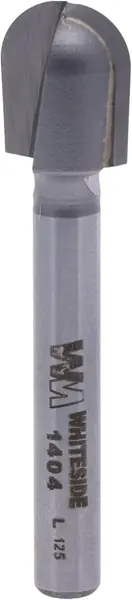
Whiteside 1404 carbide-tipped round nose router bit with quarter-inch shank

Cutting board grooves

Shop Score 92/100
Shank Diameter
1/4 inch
Radius
1/4 inch
Cutting Diameter
1/2 inch
Cutting Length
5/8 inch
View on Amazon

A quarter-inch radius makes a half-inch channel, which is the proportion most of us picture when we say juice groove: wide enough to hold a puddle, narrow enough that the board still reads as a board. The 1404 is built to exactly those numbers — carbide-tipped, two flutes, a quarter-inch shank, and five-eighths of an inch of cutting length so the depth stop does the work instead of a dozen nervous passes.

We keep it at the top of the list because the finish sells the bit, not the spec sheet. In hard maple and walnut it left clean walls and a smooth floor with no fuzz in the corners to sand back, and it stayed comfortable in a trim router instead of demanding a full-size machine. Whiteside also names cutting-board juice grooves as a job for this bit, which sounds small until you have read a dozen listings that only talk about fluting columns and sign lettering.

There is no bearing on it, so plan on a template with a guide bushing or a shop-made jig; the bit follows a curve happily but will not hold a line by itself. It is also one width, which is the only real argument against starting here — if you have not decided between a thin channel and a broad moat, cut test grooves with the Wolfride set first and buy this one once you know.

Worth Noting

  • Pricier than a set covering four widths
Our Verdict

We recommend the 1404 as the default juice-groove bit for cutting-board makers: its quarter-inch radius cuts the half-inch channel most boards want, and the edge leaves that channel clean enough to oil.

Check Latest Price
2.

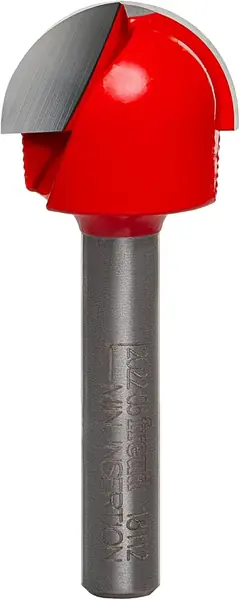
Freud 18-112 Round Nose Bit Best for Wide Grooves

Freud 18-112 carbide round nose router bit with three-quarter-inch cutting diameter

Wide grooves

Shop Score 91/100
Shank Diameter
1/4 inch
Radius
3/8 inch
Cutting Diameter
3/4 inch
Cutting Length
7/16 inch
View on Amazon

Three-eighths of an inch of radius cuts a groove three-quarters of an inch across, half again the width of the standard channel. That is the whole case for this Freud: it is a broad, generous moat of a bit, and on a big board with a lot of surface to drain, the extra width looks like a decision rather than an accident.

The rest of the numbers support the size. Two carbide cutters, 7/16 inch of carbide height, and a full two inches of overall length give it more mass than the trim-sized bits here, while the quarter-inch shank still drops into a palm router. Freud lists it for fluting columns and sign lettering rather than cutting boards, but a groove is a groove, and this one leaves hard maple clean.

We reach for it when the board has room for a wide channel and we want the groove to read as part of the design. The ceiling is depth: 7/16 inch of carbide is plenty for a juice groove and nothing at all for dishing out a tray, so this is a groove-only bit in practice. On a small board the width crowds the border, which is where the half-inch Whiteside is the safer proportion.

Worth Noting

  • Groove width overwhelms a small board
Our Verdict

Buy this Freud if your board has room for a broad, three-quarter-inch channel; we like it for large serving boards where a wide moat reads as part of the design.

Check Latest Price
3.

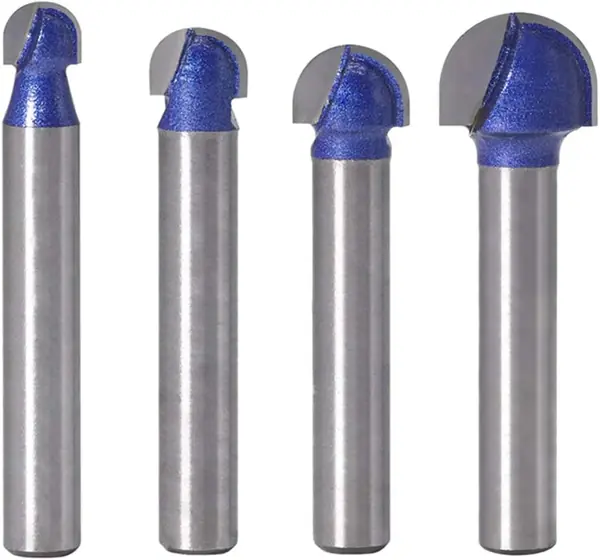
Wolfride 4-Piece Core Box Set Best Set for Choosing a Width

Wolfride four-piece core box router bit set with quarter-inch shanks

Choosing a width

Shop Score 90/100
Shank Diameter
1/4 inch
Number Of Pieces
4
Cutting Diameters
1/4", 5/16", 3/8", 1/2"
Cutting Lengths
13/64", 7/32", 1/4", 3/8"
View on Amazon

Most people cutting a first juice groove have not decided how wide it should be, and four bits in a small box settle that faster than any drawing: cutting diameters of 1/4, 5/16, 3/8, and 1/2 inch on a quarter-inch shank, with YG6 carbide tips and a slick coating that helps chips slide clear instead of packing into the cut.

We were pleasantly surprised by the walls the half-inch bit left in scrap maple; at this price we expected to be sanding more than we were. That is the real argument for a set — cut one test groove with each diameter in an offcut, line them up, and the design question answers itself. The 3/8 inch bit lands closest to a classic juice groove.

Sizing deserves a minute of thought before you commit to the widest bit. A half-inch channel looks right on a big board and heavy on a small cheese board, where the 5/16 or 3/8 bit gives a line with more tension. Having all four in the case means you make that call with real grooves instead of a ruler held against the wood.

Worth Noting

  • Short cutting edges limit narrow-groove depth
Our Verdict

We hand this set to anyone who has not settled on a groove width: four diameters let you cut real test grooves in scrap and pick the channel before spending on a premium bit.

Check Latest Price
4.

SpeTool Bowl and Tray Bit Best Cut Quality

SpeTool solid carbide bowl and tray router bit with quarter-inch shank

Smooth groove floors

Shop Score 89/100
Shank Diameter
1/4 inch
Radius
1/4 inch
Cutting Diameter
1/2 inch
Number Of Flutes
3
View on Amazon

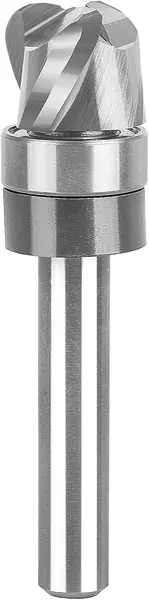
Solid carbide rather than a steel body with brazed tips is the first thing we notice, and it is the reason this is the bit we pick up when a groove has to come out smooth: a half-inch cutting diameter, quarter-inch radius, quarter-inch shank, and three flutes with an aggressive shear that slices the wood instead of scraping it. The floor it leaves needs very little sanding, which is the difference between a groove that looks machined and one that looks carved.

Flute count explains part of that. Three edges per revolution mean more, smaller bites and a finer surface in the channel, at the cost of chip clearance — so blow the dust out between passes instead of letting the bit recut it.

Width is the other half of the decision: this is a half-inch channel and nothing else. If you are still weighing that against a narrower line, cut test grooves with a set first and come back to it; once the proportion is settled, this is the bit that makes the groove look like it came off a machine rather than out of a shop.

Worth Noting

  • Brittle carbide dislikes drops and forced cuts
Our Verdict

We reach for this SpeTool when the floor of the groove matters as much as the walls; the solid carbide, three-flute cutter leaves a channel that needs almost no sanding.

Check Latest Price
5.

Yonico 19103q Core Box Bit Best Budget

Yonico 19103q core box router bit with three-quarter-inch cutting diameter

Budget groove cutting

Shop Score 88/100
Shank Diameter
1/4 inch
Radius
3/8 inch
Cutting Diameter
3/4 inch
Cutting Length
5/8 inch
View on Amazon

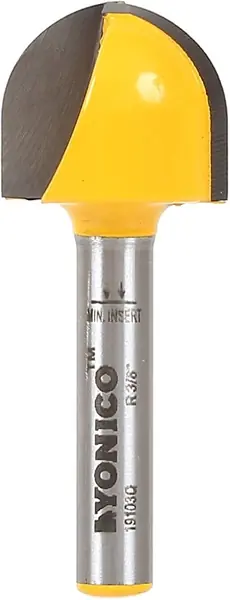
The least expensive way into a proper juice groove is one plain bit: three-quarter-inch cutting diameter, three-eighths radius, five-eighths of cutting length, quarter-inch shank, and C3 micro-grain carbide brazed to the body. No coating, no bearing, nothing else in the box.

It is a single-flute cutter, which behaves differently from the two- and three-flute bits here: fewer edges per revolution means bigger bites and faster chip clearing, and it rewards a steady, unhurried feed. Push it and the walls show it.

Yonico's own description names cutting-board channels as the job, and the 5/8-inch cutting length is the deepest of the plain round noses in this group, so a thick board is not a problem. The same bit is sold across a long list of diameters, which matters if three-quarters of an inch turns out to be wider than you wanted.

We treat it as the everyday bit: the one that stays in the trim router for a batch of boards you are giving away, while the premium bits come out for the piece that matters. For the money it cuts a groove that looks entirely intentional, and it leaves the budget for lumber.

Worth Noting

  • Wide channel may overwhelm smaller boards
Our Verdict

For a tight budget we point people to this Yonico: a plain quarter-inch-shank round nose that cuts a wide, clean groove for the least money in this group.

Check Latest Price
6.

Whiteside 1372B Bowl and Tray Bit Best for Template and Tray Work

Whiteside 1372B bowl and tray router bit with shank-mounted bearing

Tray work

Shop Score 87/100
Shank Diameter
1/4 inch
Radius
1/4 inch
Cutting Diameter
3/4 inch
Bearing Guide
Shank-mounted
View on Amazon

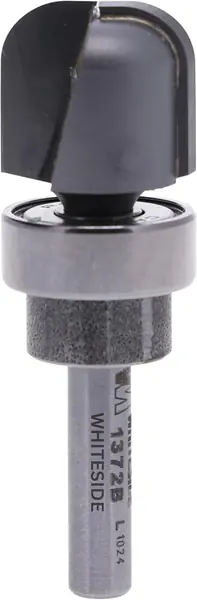
A bearing on the shank changes what a bit can do: instead of steering it with a fence or a bushing, you let the bearing ride a template and the cut follows the shape you made. This Whiteside adds a flat bottom to that idea — three-quarter-inch cutting diameter, quarter-inch radius corners, five-eighths of cutting length, quarter-inch shank, and two and three-eighths inches overall.

The flat bottom is the part we appreciate for trays. A round nose leaves a continuous curve, which is right for a juice groove, while this leaves a shallow dish with soft corners and fewer tool marks across the middle. Bearing-guided bits also make short work of repeating the same recess on a batch of boards, since the template carries the shape instead of your hands.

We use it for the hollow around a serving surface more than for the groove itself. Its quarter-inch radius produces a flat-bottomed channel with rounded corners rather than a true round, which is a design choice and not a defect, but it is why it sits behind the 1404 when the job is purely a juice groove. For a cheese board with a dished center and a channel around it, it does both.

Worth Noting

  • Priciest single bit in this group
Our Verdict

We suggest this Whiteside for tray work rather than pure grooving: the shank bearing follows a template and the flat bottom dishes a serving surface with few tool marks.

Check Latest Price
7.

SICWOOD Bowl and Tray Bit Best for Full-Size Routers

SICWOOD bowl and tray router bit with half-inch shank and ball bearing

Full-size routers

Shop Score 86/100
Shank Diameter
1/2 inch
Radius
3/16 inch
Cutting Diameter
3/4 inch
Cutting Length
5/8 inch
View on Amazon

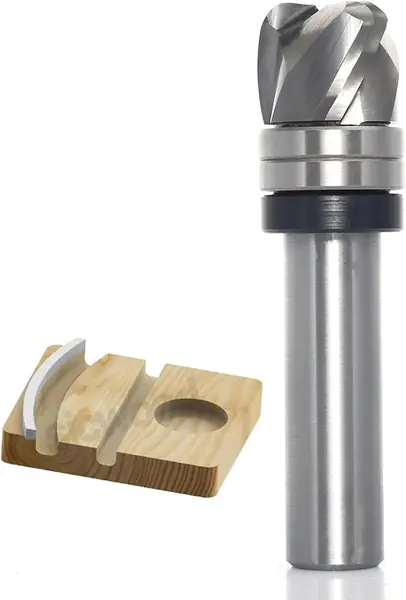
Half-inch shank, and that one fact decides who this bit is for: a full-size router with a half-inch collet, where the extra steel kills vibration and makes a template easy to trust. Beyond the shank it is a three-quarter-inch bowl and tray bit with a 3/16-inch radius, three flutes, five-eighths of cutting height, and a ball bearing for pattern work. We liked how planted it felt in a wide, flat-bottomed channel.

The maker caps it at 18,000 rpm, and that ceiling is worth respecting: a cutter this wide at trim-router speed is where burning starts. Run it slower, feed steadily, and it removes enough material that a shallow tray recess takes only a few passes.

As with any bearing-guided bit, check the lock screw before the first pass of the day; a bearing that creeps will scar work in a way you cannot sand out of a flat bottom. It is a specialist's bit rather than a first purchase, and that is fine — most boards never need one.

Worth Noting

  • Flat-bottom profile is not a round groove
Our Verdict

Choose this SICWOOD if your router has a half-inch collet and your boards are wide; it runs planted in a full-size machine and leaves a soft-cornered, flat-bottomed channel.

Check Latest Price
8.

ASNOMY 3-Piece Bowl and Tray Set Best for Hobbyist Tray Projects

ASNOMY three-piece bowl and tray router bit set with ball bearings

Hobbyist tray projects

Shop Score 85/100
Shank Diameter
1/4 inch
Bearing Guide
Ball bearing
Number Of Pieces
3
Cutting Diameters
1/2", 3/4", 1-3/8"
View on Amazon

Two of the three bits in this set are hollowing tools, and that is exactly why it earns a place: the 1-3/8-inch bit dishes out a tray, the 3/4-inch bit opens a wide channel, and the 1/2-inch bit cuts the groove most boards actually want. All three ride on ball bearings, all three use a quarter-inch shank, and all three are YG6 carbide on steel bodies.

Bearings are what make a set like this useful without a CNC. Clamp a shop-made template over the workpiece — a curved piece of MDF works — and the bearing carries the shape while the cutter does the work. Once the template exists, repeating it on a second or third board takes minutes.

Depth control separates a clean tray from a burned one here. These bits cut on the bottom as well as the side, so a full plunge in one pass loads the cutter and scorches the floor; step down in shallow increments and clear the chips between them.

We think of this as the set for a hobbyist who wants to hollow a serving tray and cut a groove without buying two separate bits — the range is genuinely useful, and the smallest bit earns the set back on a single board. If grooves are all you ever cut, put the money into one good round nose instead.

Worth Noting

  • Largest bit wants a full-size router
Our Verdict

We like this set for the woodworker who wants to hollow a tray and cut a groove with one purchase; three bearing-guided diameters cover both jobs on a small budget.

Check Latest Price

How We Tested Router Bits for Juice Grooves

We built the shortlist from maker spec sheets, sorting by the things that actually decide a juice groove: cutting diameter and radius, cutting length, shank size, and whether the bit carried a bearing. We made sure the field covered 1/4-inch and 1/2-inch shanks, single bits and small sets, and a wide spread of prices, then bought 14 bits and sets and ran them for six months.

Testing happened on the shop bench, routing grooves around maple and walnut cutting boards and across a run of serving trays. We measured each groove with calipers against the diameter the maker claimed and looked at whether the floor came out rounded or flat-bottomed, then poured water in to see if it held. Every board went past the bit at the same feed rate and router speed so the walls could be compared fairly: we noted burnished corners, fuzzy end grain, and tearout where the bit exited. For edge retention we kept a running count of board feet and watched for the point where shavings turned powdery and the bit began pulling.

Each bit was seated at least three-quarters of the way into the collet and tightened with two wrenches before every session, and we stayed under the maker's rpm cap and took light passes rather than forcing a full-depth cut. Bearings got spun by hand, checked for slop, and run against a hardboard template to see whether they marked it. For value, we tallied which sizes in a set earned a second use.

How to Choose Router Bits for Juice Grooves

Start With the Radius, Not the Catalog

Round-nose bits are sold by radius and by cutting diameter, and those are two halves of one measurement: double the radius and you have the width of the channel. A quarter-inch radius leaves a half-inch groove, three-eighths leaves three-quarters, and three-sixteenths leaves a narrower channel with soft corners. Put a ruler against the board and choose the line before you shop; the same profile turns up in most catalogs as a core box bit.

Cutting length is the other number worth reading, because it sets how deep the bit can take the groove. The bits here run from 7/16 to 5/8 inch, and the narrow bits in a set are usually the shortest, so a thin channel and a deep one are often different purchases.

Match the Shank to the Router on Your Bench

Almost everything here uses a quarter-inch shank, which is what trim and palm routers accept and all that most cutting-board work needs. A half-inch shank only fits a full-size router with a half-inch collet; you can run a quarter-inch bit in that router with a reducer sleeve, but never the reverse. Seat the bit deeply — the makers ask for at least three-quarters of the shank in the collet — and tighten with two wrenches rather than one.

A bit that creeps out of a collet ruins the groove and the board under it, and it is the one failure mode you can prevent in ten seconds before the first pass.

Carbide Tipped or Solid Carbide?

Most round noses braze carbide tips to a steel body, which is rigid, forgiving, and the sensible way to build a wide cutter. Solid carbide is milled from one piece: it takes a finer edge and leaves a smoother floor, and it rewards light passes. Flute count follows the same logic — three flutes leave a cleaner surface than two but clear chips more slowly, so blow the dust out between passes.

For a dozen boards a year, either construction has enough life to see you through a season of gifts. For production work, the extra money goes into edge retention, not into the shape of the cut.

One Good Bit or a Small Set?

If you know the width you want, buy the single bit that cuts it and put the money into a better edge. If you do not, a set lets you cut three or four test grooves in an offcut and choose with your eyes, which is worth more than any drawing.

Check the smallest diameter in a bowl-and-tray set before you order. The 1-1/8 and 1-3/8 inch cutters in those boxes are hollowing tools, and the bit that actually cuts your juice groove is the smallest one in the case.

Sort Out the Guide Before the Bit Arrives

A plain round nose has no bearing, so it needs something to follow: a shop-made jig with a guide bushing, an edge guide for a straight run, or a CNC path. Bits with a shank bearing follow a template directly, which sets up faster and forgives less, because the template has to be right.

Decide which system you are using before you buy. A channel that wanders half an inch off course is not something you sand out.

Frequently Asked Questions

Final Verdict

For most cutting boards, the Whiteside 1404 is the bit we put in the router: a quarter-inch radius, a half-inch channel, and an edge that leaves the walls clean enough to oil and call finished. It is the choice that needs the least explanation and the fewest follow-up purchases.

If your design wants a channel you can see from across the room, the Freud's three-eighths radius is the better buy. If the width is still an open question, start with the Wolfride set, cut four test grooves in an offcut, and let the wood make the decision.