↑↓ navigate ↵ open Esc close All results →

Best Router Collets of 2026

One poorly machined steel collet can turn a straightforward rabbet into burned edges or chipped tearout if the bit shank creeps mid-pass. Viewing the collet as a precision clamping component—rather than an afterthought—ensures the shank locks concentric, matches the router's spindle nut and thread, and releases predictably during bit changes.

We tested 14 replacement collets and complete chucks over six months across 1/4-inch and 1/2-inch shanks in both handheld routers and a router table, checking seating, grip under deep passes, and release behavior between cuts. Compatibility leaves no wiggle room: shank size and spindle threads must match exactly, bare cones differ from full chuck assemblies, and crisp machining matters far more than surface coatings whether a collet self-releases or needs a light tap.

Our Top Picks

The Best Router Collets

1.

Whiteside 6400 Steel Router Collet Best Overall
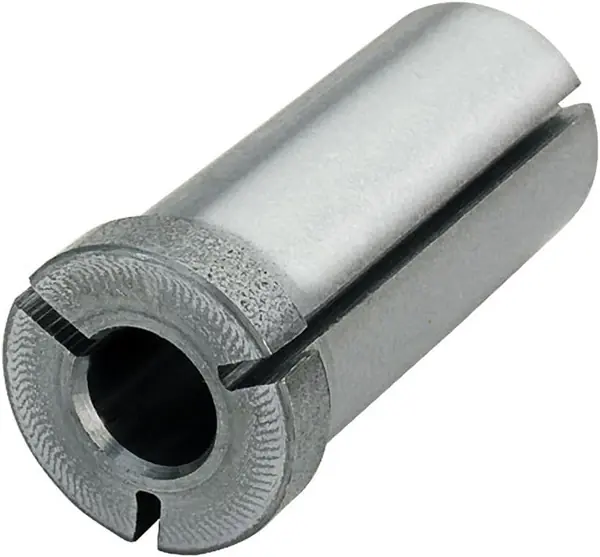
Whiteside 6400 steel router collet with quarter-inch inside diameter and half-inch outside diameter

Running 1/4-inch bits

Shop Score 92/100
Overall Length
1-1/4 inches
Inside Diameter
1/4 inch
Outside Diameter
1/2 inch
View on Amazon

Most collets in this group arrive as a complete chuck; this one is a bare steel cone, 1/4 inch inside and 1/2 inch outside, and that is exactly why we like it. The half-inch outside diameter is the whole trick — it fits the half-inch seat on routers from several makers, so a half-inch machine can run every quarter-inch bit in the drawer without chasing one brand's part number. In our testing it sat square with no rock before the nut took up.

The machining is what earns it the top spot. Whiteside has been making router tooling in western North Carolina since 1970, and the 6400 is cut from industrial-grade steel to a 1-1/4-inch overall length, long enough to swallow a full shank with room to spare. Snugged down, the cone closes evenly around the shank. We paid close attention to whether a bit would creep under a heavy side load, and it did not move. Precision is where this collet is strongest against the rest of the group.

Seating is the one thing to slow down for. Set the cone squarely in the nut before you tighten and it behaves; set it crooked and the threads feel like they are fighting you. It costs about what the Bosch chuck here does, and for our money the wider fit is worth more than a factory-specific part number.

Worth Noting

  • Bare cone with no self-releasing action
  • Priced like a factory chuck, not a bargain part
Our Verdict

For a half-inch router that needs to run quarter-inch bits, this is the collet we reach for: clean machining, an even grip, and no brand lock-in.

Check Latest Price
2.

Bosch 2610906284 1/2-Inch Collet Chuck Best for Bosch Routers

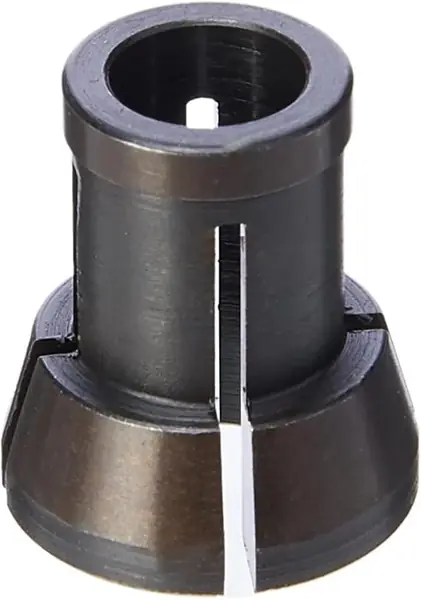
Bosch 2610906284 half-inch router collet chuck for 1613 and 1617 series routers

Bosch 16-series routers

Shop Score 91/100
Item Weight
1.76 oz
Included
One collet chuck
Collet Capacity
1/2 inch
Compatible Router Series
Bosch 1613, 1617, 1618, 1619
View on Amazon

The detail that makes this chuck worth buying is the release: back the nut off and the collet extracts itself, dropping the bit instead of leaving you to pry a warm cutter out of a warm router. Anyone who has had a bit seize after a long pass will feel the difference.

Bosch sells it as a service part for the 1613, 1617, 1618, and 1619 families, the EVS and EVSPK versions included, and it arrives as a complete chuck, so there is no hunting for a nut to go with a bare cone. In our testing it seated like the factory part it replaces — same seat height, no shims, no surprises. Grip is the other half of the story. Snugged onto a half-inch shank it applies even pressure, and it held through heavy profiling without a hint of creep. On grip alone, we trust it as far as anything in this group.

The catch is the list. Bosch built this for its own 16-series routers, and the fitment you can count on stops there. Keep the quarter-inch cone that came with your router for small bits, or add the Whiteside, and you have the pairing most shops settle into: the Bosch chuck for panel bits and rail-and-stile work, a quarter-inch cone for everything lighter.

Worth Noting

  • Fits Bosch 16-series routers only
Our Verdict

If you own a Bosch 1613, 1617, 1618, or 1619, this is the chuck we buy: factory fitment, a firm grip on half-inch shanks, and a release that saves your fingers.

Check Latest Price
3.

Thaekuns Router Collet Set, 1/2-Inch and 1/4-Inch Best Two-Size Set

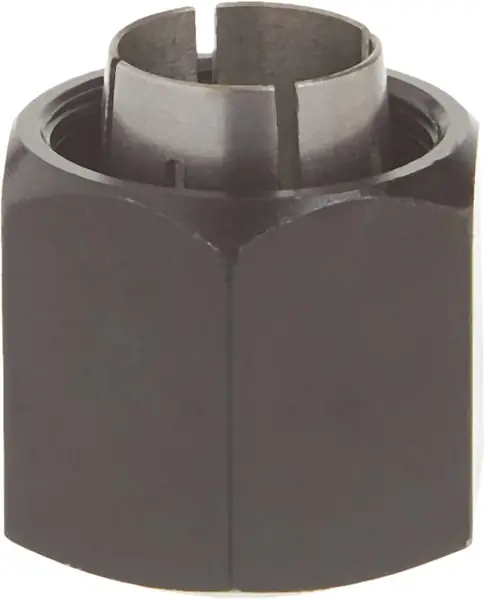
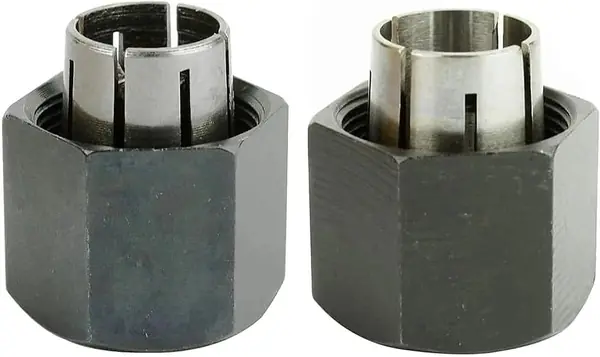
Thaekuns two-piece router collet set with quarter-inch and half-inch cones and black hex nuts

DeWalt router owners

Shop Score 88/100
Thread Size
M19
Piece Count
2
Slot Design
Three-split hardened steel
Collet Sizes
1/4 inch and 1/2 inch
View on Amazon

Two collets for roughly the price of one brand-name chuck is the reason to open the listing; the design is why we kept it in the guide. Both cones are three-slot hardened steel, and the matte black hex nut gives a wrench something flat to bite on instead of a knurled ring you fight with in the middle of a setup.

Fitment is the question with any aftermarket part, and this set answers more of it than most. It replaces DeWalt 326286-04 for the DW616, DW618, and DW621, stands in for Craftsman 323-293 and Bosch 2610906283, and uses the M19 thread common to a lot of mid-size routers. In our testing it threaded on cleanly and seated without slop, and the self-releasing action let go of the bit as soon as we backed the nut off.

Where the set earns its keep is the swap. If you move between quarter- and half-inch bits during a project, having both cones in the drawer turns a shutdown into a minute at the bench. Two collets also means two things to keep track of, and the smaller one disappears easily in a drawer of wrenches. If your work stays on one shank size, buy a single cone and put the difference toward a bit.

Worth Noting

  • Fitment limited to the listed router models
Our Verdict

Two collets, both shank sizes, and the cleanest value in this group — we recommend it for DeWalt DW616 and DW618 owners who switch between bit sizes.

Check Latest Price
4.

Makita 763637-1 Collet Cone Best for Makita Routers

Makita 763637-1 quarter-inch steel collet cone for RT0700C and RP0900K routers

Makita trim routers

Shop Score 87/100
Material
Steel
Collet Size
1/4 inch
Item Weight
0.25 oz
Compatible Models
Makita RP0900K, RT0700C, RT0701C
View on Amazon

Trim routers live on small bits, and Makita's own quarter-inch cone is what lets an RT0700C, RT0701C, or RP0900K run the quarter-inch shanks most projects call for. It is a direct replacement for the original, so there is nothing to adapt and nothing to file.

Steel, made in Japan, and a quarter of an ounce on the scale — which tells you how thin the wall of a trim-router collet is, and why they eventually wear out. In our testing it dropped in and seated without wobble, and a bit sat true. The practical win is the shank: if your router came set up for 6 mm bits, this cone is how you move to the quarter-inch bits that American catalogs are built around.

Scope is the only real limit: Makita lists its own models and nothing else, so treat this as a Makita part rather than a universal cone. That will not bother the person it is for. If you already own the router, the alternative is a third-party cone that may or may not seat as cleanly, and the price of the factory part is close enough that it is the easy call. It is the one pick here that is a straight replacement rather than an upgrade.

Worth Noting

  • Quarter-inch shank sizes only
Our Verdict

Makita's own quarter-inch cone is what we buy for an RT0700C, RT0701C, or RP0900K: a factory part that installs in a minute and holds a small bit steady.

Check Latest Price
5.

Thaekuns 42950 1/2-Inch Router Collet Best for Porter-Cable Routers

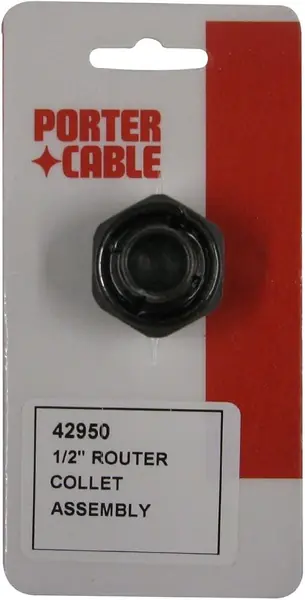
Thaekuns 42950 half-inch steel router collet with black finish for Porter-Cable routers

Porter-Cable routers

Shop Score 86/100
Material
Steel
Collet Size
1/2 inch
Overall Length
1.5 inches
Thread Size
20 tpi
View on Amazon

Where the two-piece kit covers both shank sizes, this is the narrow play: one half-inch cone for Porter-Cable, Delta, and Black+Decker routers, priced at the bottom of this group. It is also the simplest part here — no set to keep track of, no second cone to lose.

The specifications are ordinary and correct: 20 tpi thread, 1.5 inches long, steel body, and an auto-release design that keeps a bit from freezing in the cone. What put it in the guide is fit. Of everything here, this is the collet with the surest record of threading straight onto the routers it names, and the Porter-Cable 6902 is the model it is made for.

Finish is where it gives ground to the Bosch and the Whiteside parts. The steel is plainer and the machining does not have the same polish, though none of that showed up in how it held a bit in our testing. Spend more only if this is the router you reach for every day; if the goal is to get a Porter-Cable cutting again without much outlay, this one does the job.

Worth Noting

  • 20 tpi thread limits it to Porter-Cable-style routers
Our Verdict

If a Porter-Cable router needs a half-inch collet and you want to spend little, this is the one we point to — the fit is right, even if the finish is plain.

Check Latest Price

How We Tested Router Collets

We started by researching the collets sold as replacements and complete chucks, then narrowed the field by shank size, router fitment, thread and nut design, and whether the part was a bare cone or a complete chuck. We ended up with 14 collets and tested them over six months.

Testing happened in a working shop rather than on a shelf. We used each collet in the routers it was listed to fit, switching between handheld and table-mounted work, and moved between quarter-inch and half-inch bits for rabbets, dados, and trim profiles. Before every bit change we unplugged the router, matched the shank to the collet, and never shimmed a smaller shank into a larger one.

At each change we noted whether the bit seated cleanly, whether the nut threaded without grit or cross-threading, and whether the collet released the bit on its own or needed a tap or wiggle. During cuts we watched for run-out, listened for a change in pitch, and checked that the shank did not creep after repeated deep passes.

We compared the steel and slot geometry side by side, inspecting threads and slot edges for burrs, uneven machining, or softness. Any collet that cracked, showed burrs, or looked like it had spun a bit was pulled from testing. We also compared what each one included against its price, since a complete chuck and a bare cone are not the same value even when they look similar.

How to Choose a Router Collet

Start With the Router, Not the Bit

Collets look interchangeable and are not. Some routers take a bare cone that seats in the nut you already own; others use a complete chuck with its own threaded body, like the Bosch 2610906284. A half-inch cone from one maker will not screw onto another maker's spindle just because both hold half-inch bits.

Match your model number to the compatibility list before you order. The Thaekuns kit, for instance, is built around the M19 thread that DeWalt, Bosch, and Craftsman routers use, and the Porter-Cable family runs a different 20 tpi thread. If your router is not listed, pull the old collet and measure the thread rather than guessing.

Quarter-Inch or Half-Inch Shanks

Half-inch shanks carry panel bits and heavy profiles; quarter-inch shanks cover small bits, trim work, and most laminate jobs. Buy for your bits, not for your router. A half-inch machine can run quarter-inch bits once you fit a quarter-inch cone, which is what the Whiteside 6400 does and the reason it leads this list.

What you should not do is shim a small shank into a big collet with tape or a sleeve that was not made for the job. The bit will creep, and a creeping bit ruins the cut and the collet with it.

Complete Chuck or Bare Cone

Look at what you are replacing. If the nut and cone come off as one unit, or the nut threads are damaged, buy a complete chuck — the Bosch and the Thaekuns 42950 both arrive ready to thread on. If the nut is fine and only the cone is worn or missing, a bare cone does the job for less.

Self-extracting chucks also release the bit as you loosen the nut, which matters most on a router table where both hands are busy holding the work.

What Separates a Good Collet From a Cheap One

A collet works by closing evenly, and even closure comes from steel quality and slot geometry. Three-split hardened steel, as on both Thaekuns parts, closes more symmetrically than a soft cone with two cuts.

Run-out is the symptom to watch: a bit that leaves a ragged edge, a burn, or a ridge on a straight cut is often being held off-axis. Feel a new cone for burrs before it goes in, wipe the shank clean with denatured alcohol, and seat the bit fully before you tighten.

What You Get for the Money

Collets are cheap enough that buying twice is the real expense. The least expensive part here is a solid single-size collet for one family of routers; the priciest is still a service part you buy once every few years.

We think two-piece sets earn their price for anyone who changes shank sizes mid-project, and that a factory part is worth its small premium when one exists for your router — fitment is the one thing you cannot fix later.

Frequently Asked Questions

Final Verdict

The Whiteside 6400 is the collet we buy first. It lets a half-inch router run quarter-inch bits, it is machined to hold a shank true, and it is not tied to one brand's collet nut.

If your router is a Bosch 1613 through 1619, though, buy the Bosch chuck — the factory fitment and the self-extracting release are worth more than the wider fit. DeWalt owners who swap shank sizes mid-project should start with the two-piece Thaekuns set.