↑↓ navigate ↵ open Esc close All results →

Best Sandpaper for Wood of 2026

Buying a single middle-ground grit to save time usually adds hours to a woodworking project. Attempting to jump straight through a pine shelf or dresser with 120-grit paper leaves hidden swirls that vanish under dust and jump straight back out the moment stain or topcoat hits the wood. Smooth finish prep relies on a complete grit progression, tear-resistant backing, and sheets sized for either a sanding block or palm sander.

Running 15 packs through four months of hand-block leveling, palm-sander passes, and wet finish rubbing exposed which minerals keep fracturing cleanly and which glaze over in minutes. Grit numbers do not step at even intervals either: moving from 80 to 120 erases saw marks quickly, whereas the slower refinement between 120 and 220 takes most of the effort.

Covering heavy paint stripping, bare-wood prep, and fine topcoat polishing, the seven packs ranked below match standard sheet and strip formats to the exact stage of the build.

Our Top Picks

The Best Sandpaper for Wood

1.

Fandeli Multi-Purpose Sanding Paper Best Overall
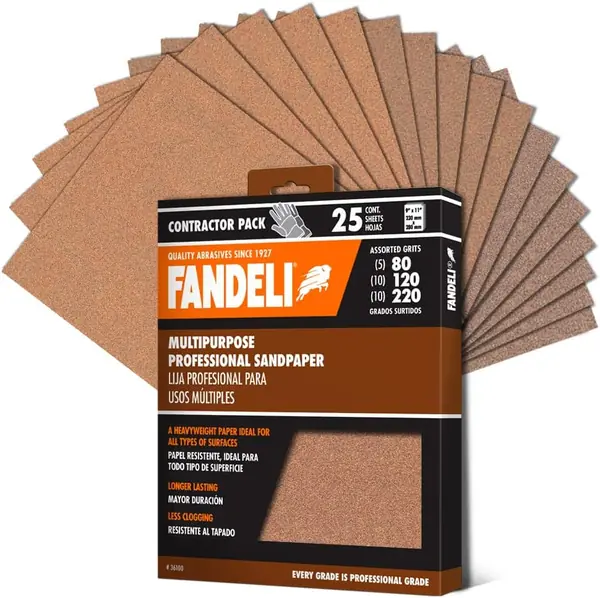
Fandeli multi-purpose sanding paper sheets in assorted grits, 9 by 11 inches

General wood sanding

Shop Score 96/100
Sheet Size
9 x 11 inches
Sheet Count
25
Abrasive
Aluminum oxide
Grits Included
80, 120, 220
View on Amazon

A wood project needs three grits, used in order: something coarse to flatten mill marks and level a joint, a middle grit to erase those coarse scratches, and a fine grit that leaves an even surface for stain. Fandeli builds its pack around exactly that run — 80, 120 and 220 — in 25 full 9-by-11-inch sheets. Nothing in the box is filler, and that is the main reason it is our top pick for general wood sanding.

Full-size sheets are the flexible format. Fold one over a sanding block for a flat edge, tear it into thirds for a curved leg, or cut it down to fit a quarter-sheet orbital sander — you decide the size rather than working around a pre-cut shape. The aluminum oxide mineral is the standard choice for wood because it stays sharp long enough to finish a panel and leaves a consistent scratch pattern rather than polishing the surface. And 25 sheets go a long way when a single sheet yields several hand-sized pieces.

What we keep coming back to is the balance: full sheets, a grit range that matches how wood is actually sanded, and a per-sheet cost that makes it easy to grab a fresh piece instead of nursing a worn one. The sanding paper is not the toughest here — under hard hand sanding at 80 grit it can tear along a fold — but a block behind the sheet solves most of that, and the coarse sheets are the ones we use least. If a big project is coming, buy two packs; the 80 grit disappears first.

Worth Noting

  • Finest grit is 220, with no polishing sheets
Our Verdict

Our default recommendation: 80, 120 and 220 in full cut-to-fit sheets, and the best balance of grit range, sheet size and cost in this group.

Check Latest Price
2.

3M Aluminum Oxide Sandpaper 9005NA Best Small Pack

3M aluminum oxide sandpaper sheets in assorted 100, 150 and 220 grits

Small repairs

Shop Score 95/100
Sheet Size
9 x 11 inches
Sheet Count
10
Abrasive
Aluminum oxide
Grits Included
100, 150, 220
View on Amazon

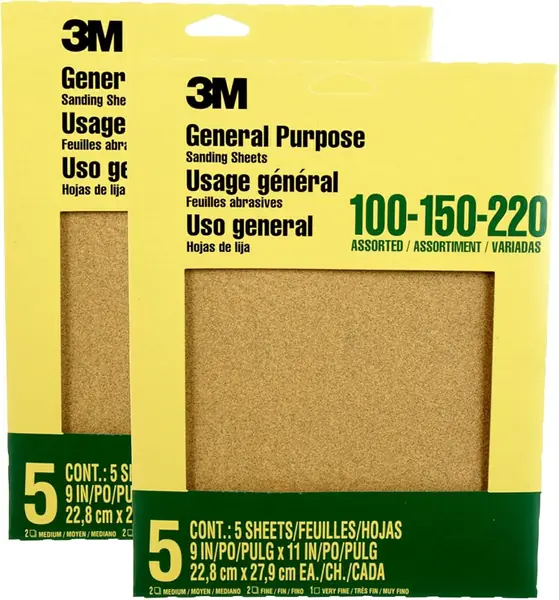
Ten sheets in three grits is a small pack, and that is the point: we think it is the right amount for someone who sands a repair, a shelf or a set of drawers a few times a year and does not want a drawer full of paper slowly going stiff. The 100, 150 and 220 grits step from smoothing to finish prep, and the sheets are the standard 9-by-11 size, so you can fold one over a block or cut it down for a sander. The aluminum oxide mineral handles wood, paint and metal, which matters if your projects wander.

Compared with the Fandeli pack, you give up the 80-grit sheet — the one that does the fast work on a board with mill marks — and you pay more per sheet for half as much paper. What you get is a smaller commitment and a mineral most woodworkers already trust to cut consistently. For touch-ups, trim and small furniture repairs that is an easy trade to make; for a full dining table you will be reordering before you are done.

Worth Noting

  • No 80 grit for heavy stock removal
  • Paper is thin compared with premium sheets
Our Verdict

Buy this if you sand occasionally and want three usable grits in a pack small enough to finish before it goes stale.

Check Latest Price
3.

BOSHCRAFT 1/4 Sheet Sandpaper Assortment Best for Palm Sanders

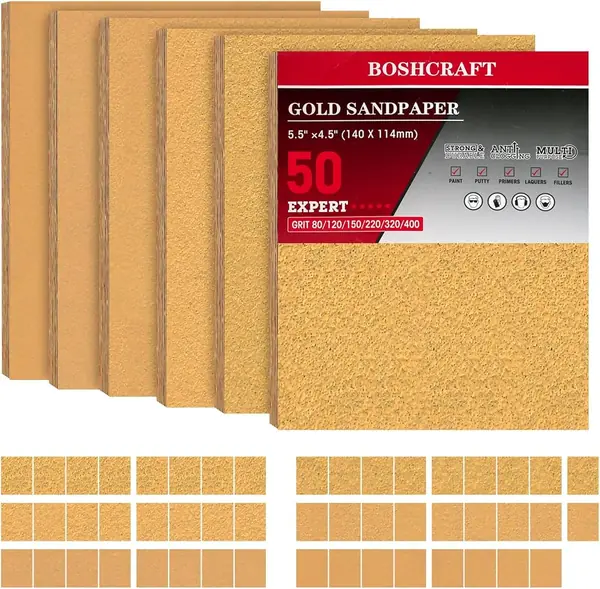
BOSHCRAFT pre-cut quarter sheet sandpaper in six grits, 4.5 by 5.5 inches

Palm sander users

Shop Score 94/100
Sheet Size
4.5 x 5.5 inches
Sheet Count
50
Abrasive
Aluminum oxide
Grits Included
80, 120, 150, 220, 320, 400
View on Amazon

Quarter-sheet sanders eat paper, and cutting a 9-by-11 sheet into fours with scissors gets old by the second project. BOSHCRAFT skips that step: 50 sheets arrive already cut to 4.5 by 5.5 inches, sized for the clamps on a quarter-sheet palm sander, in six grits. The 80 and 120 do the shaping, 150 and 220 the smoothing, and 320 and 400 take you to the point where finish goes on.

What we like most is that the grit spread is honest. Plenty of pre-cut packs give you four grits and call it a variety pack; this one runs from a genuinely coarse 80 up to a 400 that is useful before the first coat, so one box can carry a whole project. The aluminum oxide paper holds up in the clamps, too — we did not have edges tearing out mid-pass the way they do on thinner sheets, which is the failure that wastes a quarter sheet each time it happens.

The catch is the format itself. A 4.5-by-5.5-inch sheet is right for a sander and small for a hand block, so if most of your sanding happens on wide panels by hand, a full sheet cut to size gives you more to hold onto. That is a narrow objection, and it is the only one we have: for sander work, this box covers the job.

Worth Noting

  • Fit can be snug in some sander clamps
Our Verdict

For quarter-sheet palm sander owners this is the easy choice: pre-cut sheets in six grits that carry a project from shaping to finish prep.

Check Latest Price
4.

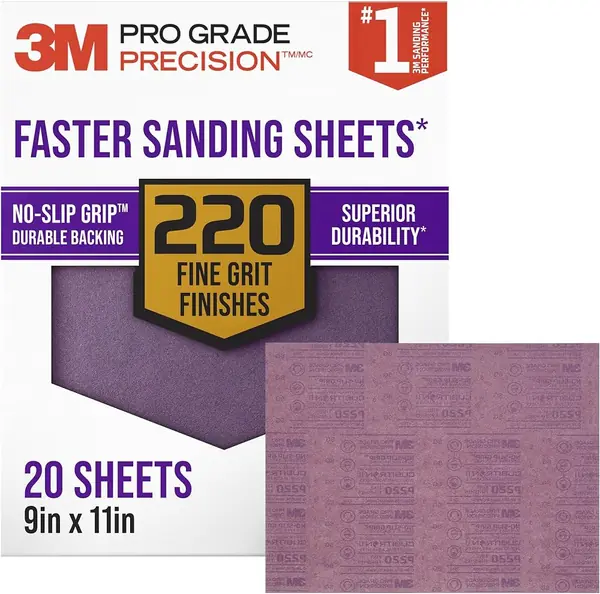
3M Pro Grade Precision Faster Sanding Sheets 220 Grit Best for Finish Sanding

3M Pro Grade Precision 220-grit sanding sheets with purple no-slip backing

Finish sanding

Shop Score 93/100
Sheet Size
11 x 9 inches
Sheet Count
20
Grit
220
Backing
NO-SLIP GRIP
View on Amazon

We keep a pack of this in the shop for the final pass before finish, and that is the recommendation: one grit done well rather than a spread of mediocre ones. 220 is where most wood projects stop before stain or polyurethane, and this paper keeps cutting longer between changes than the plain sheets we started out with. The backing is the reason — the no-slip grip surface grabs a sanding block instead of skating across it, so the sheet stays where you put it while you work an edge.

The coating resists loading, which is the failure that ends most sanding sessions: on softwoods and on finishes, cheap paper fills its grit with dust and starts burnishing instead of cutting. We noticed the difference most on pine, where a sheet kept cutting well past the point we would normally have swapped it out. It is rated for wet or dry use as well, though we treat it as a dry sheet for wood.

Where this paper earns its cost is repetition: the same 220 surface, sheet after sheet, with no surprises when you move to the next piece. We keep it for tabletops and drawer fronts, where a consistent scratch pattern matters more than speed. On construction lumber or paint stripping the extra money buys you nothing — that is work for a coarse sheet and a cheaper one.

Worth Noting

  • Single grit only, with no coarse sheets
  • Premium price per sheet
Our Verdict

We keep it for the last pass before finish; the no-slip backing and clog resistance earn the premium when the surface is nearly done.

Check Latest Price
5.

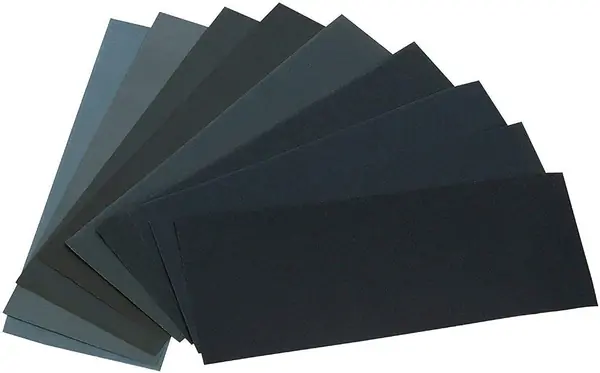
HSYMQ 24-Piece Sandpaper Variety Pack Best for Small-Part Finishing

HSYMQ wet dry sandpaper assortment, twelve grits in 9 by 3.6 inch sheets

Small-part finishing

Shop Score 92/100
Sheet Size
9 x 3.6 inches
Sheet Count
24
Abrasive
Silicon carbide
Grits Included
12 grits, 120 to 3000
View on Amazon

Twenty-four sheets, twelve grits, two of each, running from 120 up to 3000 — as a way to have a wide grit range on the shelf for very little money, this pack is hard to argue with. The sheets are 9 by 3.6 inches, roughly a third of a full sheet, which makes them handy for hand sanding small parts without cutting anything down.

Where a range like that pays off is the long tail: 400 through 1000 for leveling a finish between coats, 1500 and up for polishing plastics, resin and metal. We used the mid grits on trim and small furniture parts and found them consistent enough for that work. Silicon carbide is the right mineral for fine, hard surfaces, and the flexible backing follows a curve when you fold a piece around a dowel or a molding profile.

What we did not find was toughness. The paper is thin, and the fine sheets wear smooth quickly — they will get you through a small job and then want replacing, which is why the two-per-grit count matters more than it looks. Where it lands for us is small work: trim, toys, patches, drawer runners, anything you sand in one hand. On a wide panel you will notice the sheet size before you notice the grit.

Worth Noting

  • No grits coarser than 120
  • Thin paper wears smooth quickly
Our Verdict

A low-risk way to own twelve grits at once, best suited to small parts and finishing rather than flattening boards.

Check Latest Price
6.

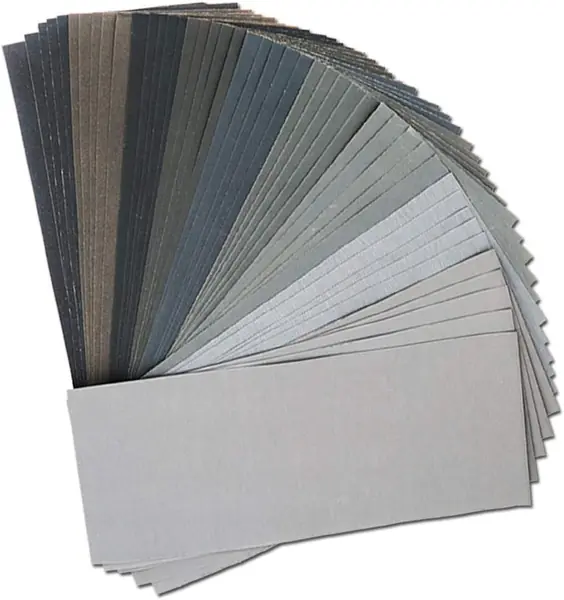
YXYL 48-Piece Wet Dry Sandpaper Assortment Best for Hobby and Craft Work

YXYL 48-piece sandpaper assortment with grit numbers printed on the backing

Hobby and craft work

Shop Score 91/100
Sheet Size
9 x 3.6 inches
Sheet Count
48
Abrasive
Silicon carbide
Grits Included
16 grits, 120 to 5000
View on Amazon

Forty-eight sheets with three of every grit from 120 to 5000 is a lot of sanding paper for the shelf, and the detail that makes it usable is printed right on the back: every sheet carries its grit number, so you are not holding two gray rectangles up to the light trying to remember which one is 800. The sheets are 9 by 3.6 inches, easy to cut down or fold around a block.

Sixteen grits means you can step through a sequence without skipping: 240 to 320 to 400 to 600, then the polishing grits above 1000 for finishes and plastics. The silicon carbide mineral and flexible backing suit contoured work, and the anti-clog coating is a real benefit on softer woods and on finish coats. We used the mid and fine grits on small parts and trim and got a consistent scratch pattern out of them.

The wet-sanding claim deserves a caveat of its own. Silicon carbide is the right mineral for it, and the top grits polish well when the surface stays damp, but we avoid dunking a sheet: a soaked sheet softens and the paper starts to break down before the grit does. Damp, not soaked, is how we use these.

Three sheets of every grit also changes how you work. You can dedicate one to a jig, one to a block and keep one clean for the final pass instead of rationing. We ended up keeping the high grits in a marked envelope and the working grits loose in the drawer, which is about as organized as our sandpaper gets. It is a hobbyist's box, and a good one.

Worth Noting

  • Sheets tear through quickly on hard stock
  • Coarse grits crack when folded
Our Verdict

We like it as a big, inexpensive grit ladder for hobby work, provided you do not expect the sheets to survive heavy stock removal.

Check Latest Price
7.

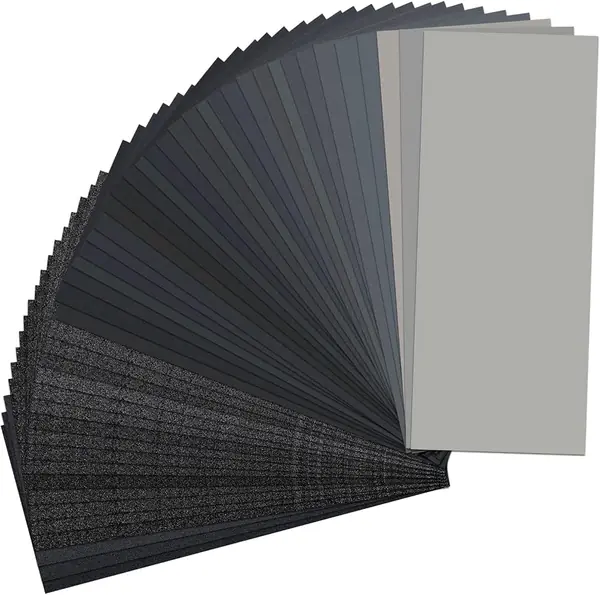
BAISDY Wet Dry Sandpaper 45-Piece Set Best for Polishing and Buffing

BAISDY wet dry sandpaper sheets, 45 pieces in nine fine grits

Polishing and buffing

Shop Score 90/100
Sheet Size
9 x 3.6 inches
Sheet Count
45
Abrasive
Silicon carbide
Grits Included
9 grits, 400 to 3000
View on Amazon

Nine grits from 400 to 3000, five sheets of each, and no coarse grit anywhere in the box — which tells you exactly what this set is for. The sheets are silicon carbide on a waterproof backing, 9 by 3.6 inches, meant for wet or dry fine work: leveling a film finish between coats, polishing metal and plastic, bringing a resin casting up to a shine. On bare wood that still needs shaping it does nothing for you.

Where we reach for it is the end of a project. A 400 sheet knocks down raised grain or a dusty coat, 800 to 1500 refines the surface, and the 2000 and 3000 sheets polish out a film finish. Five sheets per grit is enough for a real finishing sequence, and the small sheet wraps a block or folds into a pad easily. On panel work you will want to cut two sheets to cover more ground; on small parts it is exactly right.

Worth Noting

  • Grit ratings vary between sheets
Our Verdict

Reach for this when the shaping is done and you need wet or dry sheets from 400 up for polishing, not for removing wood.

Check Latest Price

How We Tested Sandpaper for Wood

We started with a list of every grit assortment we could find in the formats woodworkers actually buy: full sheets you cut down for a hand block or a palm sander, and narrow strips that suit fine grits and wet work. We compared abrasive mineral, grit range, sheets per grit, and cost per sheet, then bought 15 packs to put through real projects.

Over four months those packs went to work in a garage: stripping paint from window trim, leveling a pine dresser top, running a palm sander over plywood shelves, wet-sanding a polyurethane topcoat on a cutting board, and cleaning up small craft parts. Every session ran with a respirator on and a fan pulling dust out of the garage.

At each grit we looked at the scratch pattern under a raking light to see whether it cut evenly or gouged at the edges, and timed how long a sheet kept cutting on pine before it glazed. We watched whether dust balled up on the surface or fell away, tore sheets on purpose to see if the backing shredded, and checked whether trimming a full sheet left an offcut big enough to wrap a hand block.

The fine grits went into a tray of water to see if the backing held, and we divided each pack's cost by the sheets we actually used at each grit, since a cheap pack with three usable sheets of the grit you need is no bargain.

How to Choose Sandpaper for Wood

Work Through the Grits in Order

Sanding is subtraction by sequence: each grit removes the scratches the previous one left. Jump from 80 straight to 220 and you will spend far longer with the 220 trying to erase scratches that are deeper than it can reach. A practical wood sequence is 80 for mill marks and joint leveling, 120 for general smoothing, and 220 before stain or a first coat. Sand with the grain on the final passes, and never skip more than one step on the way up.

This is why a pack built around 80, 120 and 220, like our top pick from Fandeli, is the shape most projects actually want. Packs that start at 100 or 120 are workable for finishing and trim; they just leave the flattening to a sheet you buy separately.

Match the Sheet to Your Hands and Your Sander

Full 9-by-11 sheets are the most flexible: cut one into quarters and it fits a quarter-sheet palm sander, fold it over a block, or tear a strip for a curve. Pre-cut quarter sheets, like the BOSHCRAFT pack, save the cutting but commit you to that size. The 9-by-3.6-inch sheets that turn up in most wet/dry sets are hand-sanding size — good for small parts, cramped on a big panel.

The trap here is buying a size that does not fit your tool. Sheets that are too small will not clamp down, and a sander with a hook-and-loop pad needs loop-backed paper rather than plain sheets, whatever the grit.

Mineral, Backing and Clogging

Aluminum oxide is the default for wood: sharp, durable, and inexpensive enough to replace often. Silicon carbide cuts finer and harder materials and is what most wet/dry sheets use, which is why those packs skew toward fine grits. The other half of the sheet is the paper and its coating. An anti-clog or stearate coating keeps dust from welding to the grit, which is what turns a working sheet into a polishing one on pine and paint.

We pay for the coating when we know we are sanding softwoods or leveling a finish — the 3M Pro Grade sheet is the clearest example of a coating doing real work. For rough carpentry and paint removal, a plain sheet is fine.

What the Fine Grits Are Actually For

A 24-piece pack with grits up to 3000 looks generous until you count how many of those sheets will ever touch bare wood. On raw lumber you rarely go past 220; beyond that you are polishing, which is work for finishes, plastics, metal and resin. Fine grits earn their place between coats of polyurethane and on small turned or carved pieces.

The trap is buying a big fine-grit assortment as your only sandpaper, then discovering there is nothing in the box coarse enough to flatten a board. Buy the coarse-to-medium pack first and add the fine grits when a finishing project asks for them.

Frequently Asked Questions

Final Verdict

Buy the Fandeli pack unless your sander or your finishing schedule says otherwise. Three grits, full sheets and a sensible cost per sheet make it the box that takes a project from bare stock to ready for stain, and it is the one we would put in a beginner's hands without a second thought.

If a quarter-sheet palm sander does most of your work, the BOSHCRAFT pre-cuts save you the trimming. If your sanding is mostly final passes on finished furniture, skip another coarse assortment and put the money into the 3M Pro Grade 220 sheets instead.